

Child and Adolescent Health
Graduate Diploma in Child and Adolescent Health Programme
PROGRAMME DATES
AY2025/2026
Graduate Certificate in Child Development and Adolescent Health: 31 January 2026 to 19 June 2026
AY2026/2027
Graduate Certificate in Child Health: 1 August 2026 to 12 December 2026
GDCAH Application via GDA3 (only if you have taken GC2 previously)
GC1 Application via OAP
APPLICATION PERIOD
The Graduate Diploma in Child and Adolescent Health (GDCAH) consists of:
- Graduate Certificate in Child Health
- Graduate Certificate in Child Development and Adolescent Health
| Programme Type | A. Graduate Certificate in Child Health (GC1) | B. Graduate Certificate in Child Development and Adolescent Health (GC2) | Graduate Diploma in Child and Adolescent Health (GDCAH) A + B (GC 1 + GC 2) |
| Courses | Courses 1 – 3 | Courses 4 – 6 | Courses 1 – 6 |
| Registration Period | May 2026 to June 2026 (Semester 1 AY26/27) (Semester 1 AY24/25) | 06 October to 03 November 2025 (Semester 2 AY25/26) | Applicants who are interested to sign up for the Graduate Diploma, please email us directly. |
To receive exclusive updates on future registration periods and course dates, register your interest here.
*Learners are required to sign up for all 3 GC1 or 3 GC2 individual courses (CAH5101, CAH5102 and CAH5103 or CAH5104, CAH5105
and CAH5106) during the registration period.
Jointly organised by the Division of Graduate Medical Studies and the Department of Paediatrics, NUS Yong Loo Lin School of Medicine, the Graduate Diploma in Child and Adolescent Health (GDCAH) is designed to provide continued professional development for physicians (general practitioners, family physicians and community paediatricians) who are motivated to advance their clinical expertise in the delivery of child and adolescent health in the community and in their family practice.
The GDCAH intends to build a community of practice made up of community physicians serving in our primary healthcare who are driven to pursue a journey of lifelong learning to continually improve our practice in delivering care to children and adolescents. This community of practice is scaffolded by provision of longitudinal mentorship and development of an enduring, interprofessional, collaborative relationship amongst family physicians and paediatricians.
Programme Structure
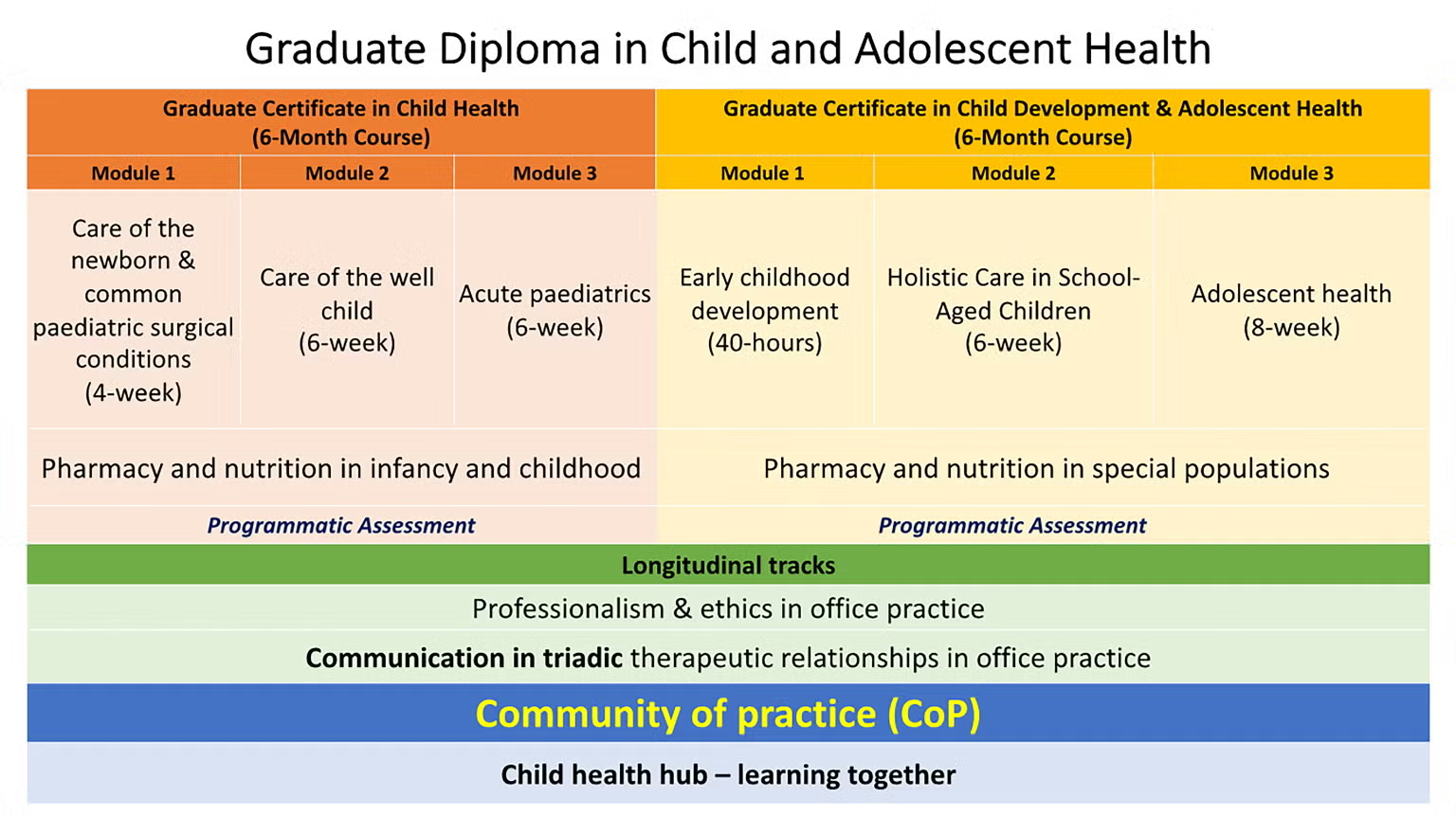
The GDCAH is a 1-year part time graduate diploma programme made up of 6 academic courses (4 modular credits per course, therefore a total of 24 modular credits). Participants can choose to complete either Graduate Certificate in Child Health (comprising Courses 1 – 3) and/or Graduate Certificate in Child Development and Adolescent Health (comprising Courses 4 – 6). Participants who successfully complete the 2 Graduate Certificates are eligible to be conferred the Graduate Diploma in Child and Adolescent Health (GDCAH). Email us for details.
Programme Schedule
The Graduate Diploma in Child and Adolescent Health (GDCAH) Programme will be taking place during the following periods:
- Graduate Certificate in Child Health (Courses 1 – 3): 1 August 2026 to 12 December 2026
- Graduate Certificate in Child Development and Adolescent Health (Courses 4 – 6): 31 January 2026 to 19 June 2026
Please click here to view the detailed GDCAH schedule.
Learning Together Clinics (LTC) will be conducted once every two weeks (weekday AM/PM) or weekend (AM only).
Successful applicants may be able to choose their preferred LTC sessions based on the availability of clinic slots. More details will be shared closer to the clinic dates.
Trainers
The GDCAH faculty consists of specialists working in related fields including paediatrics, child development, adolescent medicine, family medicine, lifestyle and weight management, psychiatry and psychology, sexual health, dental, dietetics and complementary health, etc.
From Our Past Participants
“The course has been very useful, and I have definitely gained more confidence seeing paediatric cases. The faculty and trainers are so nice and encouraging too.”
|
“For those who are joining the GDCAH, my advice would be: Participate and take away valuable pearls to improve your future practice. Also build a community of physicians who you can tap on for wisdom.”
|
“This module on Acute Paediatrics is relevant for the Family Physician. I gained a lot of insight and confidence to practice and see young patients after refreshing my memory at this course and learning from the experts!”
|
Graduate Certificate in Child Health
| Course | Title | Description | NUS Programme Code | SkillsFuture TGS No. |
| Course 1 | Care of the Newborn and Common Paediatric Surgical Issues | This course emphasises on the general practitioner’s (GP’s) role in the care and management of common neonatal conditions and paediatric surgical conditions that present within the community, including neonatal rash, neonatal jaundice, lumps and bumps, common urogenital and umbilical complaints in children. Parental counselling techniques, including knowledge on expected weight gain, breastfeeding and other feeding techniques, fussing, sleeping habits and safe positions, stool changes, will be imparted in this course. Up-to-date knowledge on how socioeconomic status and psycho-emotional health of parents may affect neonatal outcomes and a young child’s neurodevelopment will be addressed. | CAH5101 | TGS-2024049037 |
| Course 2 | Care of the Well Child | This course emphasises on the general practitioner’s (GP’s) role in the care of the well child – It will enable and empower our learners to understand and differentiate between the normal, normal variants and abnormalities in a child's growth and development, including knowing the importance of childhood vaccinations and how to manage parental concerns regarding vaccines, dietary habits and requirements in a growing child, toilet training and achieving bladder and bowel control. Learners will also acquire knowledge and experience communicating and counselling parents and patients, and providing anticipatory advice through clinical exposure at our 'Learning Together' clinics. | CAH5102 | TGS-2024048790 |
| Course 3 | Acute Paediatrics | This course emphasises on the general practitioner’s (GP’s) role in managing common acute medical conditions in children and adolescents presenting to primary healthcare. Learners will also be proficient in recognising and stabilising common paediatric emergencies such as acute respiratory distress, severe infections, shock states and more. In addition, learners will gain insight on how to refer to specialist care appropriately after initial management. | CAH5103 | TGS-2024048805 |
Graduate Certificate in Child Development and Adolescent Health
| Course | Title | Description | NUS Programme Code | SkillsFuture TGS No. |
| Course 4 | Early Childhood Development | Touchpoints are periods in the first years of life during which the child’s spurts in development result in disruption in the family. The succession of touchpoints in a child’s development functions as a map that can be identified and anticipated by both parents and care providers. As parents would benefit from affirmation of their child’s development and the nurturing environment they have provided for their child, this short intensive 3-day course teaches healthcare professionals caregiving themes that matter to parents (as opposed to traditional milestones). It will develop a model of practice that establishes collaborative relationships with families presenting to our primary healthcare, laying the foundation for strong family bonds. | CAH5104 | TGS-2024048800 |
| Course 5 | Holistic Care in School-Aged Children | This course emphasises the general practitioner’s (GP’s) role in prevention and early identification of common learning, emotional, behavioural and health problems in school-going children – learners will be equipped with skills to recognise these problems as school-going children frequently present to the primary are setting for minor ailments. Apart from timely and appropriate referral to specialist care when required, learners will be imparted skills to provide advice to parents, offer community-based resources, and lifestyle modification counselling to these children. | CAH5105 | TGS-2024048802 |
| Course 6 | Adolescent Health | This course emphasises the general practitioner’s (GP’s) role in providing holistic management for or of an adolescent/young adult (10 – 24 years old) presenting to primary healthcare and identifying biopsychosocial risks and/or conditions requiring specialist referral. Learners will be imparted skills on understanding psychosocial assessment such as H.E.A.D.S.S, how to conduct a youth-friendly consultation while effectively applying respect for the young adult and patient confidentiality. Common medical problems in adolescence will also be taught, and learners will also be equipped with motivational interviewing strategies to facilitate adolescent behaviour change. | CAH5106 | TGS-2024044672 |
Programme assessment will be conducted longitudinally throughout the programme using the following formats:
- Attendance (at least 80%)
- Assignments
- Demonstrations
- Online self-assessments
- Key Feature Problems and/or Script Concordance Tests
As this is a SSG-approved programme, learners must record attendance as per the programme assessment requirements (at least 80%), and pass all assessment components in order to be eligible for SSG funding.
The Programme commences in August annually for Grad Cert in Child Health and in February annually for Grad Cert in Child Development and Adolescent Health. The maximum capacity for each intake is 20 students. If there is an oversubscription, applicants may be placed on the waiting list and will be contacted once a vacancy becomes available.
CME points will be awarded to doctors registered under the Singapore Medical Council (SMC). The number of points to be awarded will be subjected to the discretion of SMC.
Learners must meet the following prerequisites for all courses:
- Hold a recognised basic medical degree or equivalent
- Have a minimum 2 year(s) of experience post-registration.
- For overseas foreign doctors whose native tongue or medium of undergraduate instruction is not in English:
- Meet the minimum level of English language proficiency requirement (TOEFL).
Graduate Certificate in Child Health (GC1): 1 August 2026 to 12 December 2026
The application period for courses under the Graduate Certificate in Child Health (GC1) is from 4 May 2026 to 1 June 2026. The 3 courses are to be registered individually via the NUS Online Application Portal.
Please refer to the NUS Lifelong Learning Online Application Portal User Guide.
For assistance with the NUS Online Application Portal, contact lifelonglearning@nus.edu.sg.
For course enquiries, contact nusmedcet@nus.edu.sg.
All applications must be submitted by the closing date as stipulated above. Late or incomplete applications will not be entertained. Hardcopy and email applications will not be accepted.
The following documents must be submitted by the closing date:
- Certified true copy / scanned coloured copy of the following documents (Official English translations will be required for stamps or certificates sent that are not in English):
- Identification documents:
- NRIC: for locals / Permanent Residents
- Employment Pass and Passport: for foreigners
- Recognised basic medical degree
- Certificates of other medical qualifications, where applicable
- A copy of personal indemnity insurance (Medical Malpractice Insurance)
- Singapore Medical Council (SMC) Practising Certificate (can be downloaded from SMC website)
- Updated CV
- Motivation letter (maximum word limit: 1000 words):
- Tell us about yourself and your current job, the different roles and responsibilities you hold.
- Tell us what motivate you to take on the Graduate Diploma in Child and Adolescent Health/ Graduate Certificate programme.
- What are you expecting to take home after completion of the programme.
- What are you intending or hoping to change (can be at a personal, professional and societal levels) after acquiring new skills and knowledge.
Eligible Singaporeans and Permanent Residents may be able to enjoy up to 70% - 90% SSG subsidies. All self-sponsored Singaporeans aged 25 and above can use their existing SkillsFuture Credits to offset for the nett programme fees.
Pricing and Subsidies Summary
| Programme types | A. Graduate Certificate in Child Health (GC1) | B. Graduate Certificate in Child Development and Adolescent Health (GC2) | Graduate Diploma in Child and Adolescent Health (GDCAH) A + B (GC 1 + GC 2) |
| Total Full Programme Fee [Without SSG Subsidy & with GST] | SGD 17,658.00 | SGD 17,658.00 | SGD 35,316.00 |
| With SSG Subsidy & GST (All GC1 3 courses will be SSG subsidised.) |
With SSG Subsidy & GST (All GC2 3 courses will be SSG subsidised.) |
With GST (Only one GC will be SSG subsidised.*) |
|
| Total Nett Programme Fee for Singaporeans 39 years and below, PRs and eligible LTVP+1 holders | SGD 5,297.40 | SGD 5,297.40 | SGD 22,955.40 (SGD 5,297.40 + SGD 17,658.00) |
| Total Nett Programme Fee for Singaporeans 40 years (MCES2) and learners eligible ETSS3 | SGD 1,765.80 | SGD 1,765.80 | SGD 19,423.80 (SGD 1,765.80 + SGD 17,658.00) |
- *Only 1 Graduate Certificate (either GC1 or GC2) will be SSG subsidised for the GDCAH.
- If applicants are interested in applying for the entire GDCAH; they will have to pay the full programme fee for the other GC.
- If both GCs are SSG subsidised, the learner will not be conferred the GDCAH but will receive 2 GCs instead.
Footnotes:
- Long Term Visit Pass+ (LTVP+) Holders are also eligible for SSG funding. Terms & Conditions Apply.
- Mid-Career Enhanced Subsidy (MCES) - Singaporeans aged 40 and above may enjoy subsidies up to 90% of the programme fee.
- Enhanced Training Support for SMEs (ETSS) - SME-sponsored employees (Singapore Citizens and PRs) may enjoy subsidies up to 90% of the programme fee.
Student Services Fee
| Description | Fees |
| Student Services Fee# (Application through OAP) |
SGD 25.70 |
| Application Fee* (Application through GDA3) |
SGD 98.10 |
| Payment Mode | PayNow / Credit Card |
- All fees listed are in Singapore Dollars, including the prevailing Goods and Services Tax (GST) rate unless stated otherwise.
- #In addition to the programme fee, you are required to pay a non-refundable and non-transferrable Student Services Fee (SSF) of S$25.70 (incl. GST) for enrolling into the programme every semester.
- *The Application fee for submissions via GDA3 is non-refundable and must be paid at the time of application.
- All successful payments will receive a Tax Invoice (also known as the receipt) via a system-generated email.
- Student bill will be generated after you have completed your online Registration (Part One), from end July (for August intake) or end December (for January intake) onwards.
- Successful applicants will be notified via email to accept placement. Placement will be confirmed only after a successful payment transaction.
- DGMS reserves all rights to review and adjust fees as necessary and accordingly without prior notice.
The Programme is eligible for the following funding schemes:
- Eligible Singaporeans and Permanent Residents may be able to enjoy up to 70% - 90% SSG subsidies. Subject to SSG Funding availability.
- Claim Skillsfuture credit - All self-sponsored Singaporeans aged 25 and above can use their existing SkillsFuture Credits to offset for the nett programme fees. At the point of programme registration, please inform the programme administrator that you intend to use your SkillsFuture Credit in part or in full for the qualifying programme fee. You should then submit your claim on the MySkillsFuture Portal within 60 days before the programme start date (date inclusive). Please visit the Skillsfuture site for more information.
For Graduate Diploma (GDCAH):
- All withdrawal and refund requests will be subjected to 10% administrative charges capped at SGD500.00. To submit your request, please use this form.
- All requests must be submitted within 14 calendar days from the last day of Examination end date or before the programme commencement date, where applicable.
For Graduate Certificate (GC1 and GC2):
If you wish to withdraw from a course enrolled under NUS lifelong learning programmes, please email to lifelonglearning@nus.edu.sg for advice. Withdrawal without penalty is only allowed if your request is submitted before end of 2nd instructional week and refund of paid programme fee will be arranged after the withdrawal request is processed.
Depending on when (within the academic calendar) you submit your withdrawal, a corresponding letter grade ("W" for withdrawn or "F" for failed) may be recorded, and if you are taking a course on an Audit Basis, the letter grade "W" will be recorded. Please refer to this link for more information.
Please note that the Tuition Fee and Student Services Fee (SSF) are non-refundable and non-transferable.
Please note that if you have taken a SSG-funded course, you may be liable to pay back the SSG training grant plus the prevailing Goods and Services Tax (GST) to NUS if you have received the grant for the course and fall into any of the following categories:
- Failure to fulfil a minimum attendance of 80% for the programme
- Premature withdrawal from the programme
- Failure to complete and pass all prescribed coursework, examinations and/or assessments for the programme
For further inquiries, please contact:
For course enquiries, contact nusmedcet@nus.edu.sg
For assistance with the NUS Online Application Portal, contact lifelonglearning@nus.edu.sg