News

NUS scientists uncover a missing link between poor diet and higher cancer risk

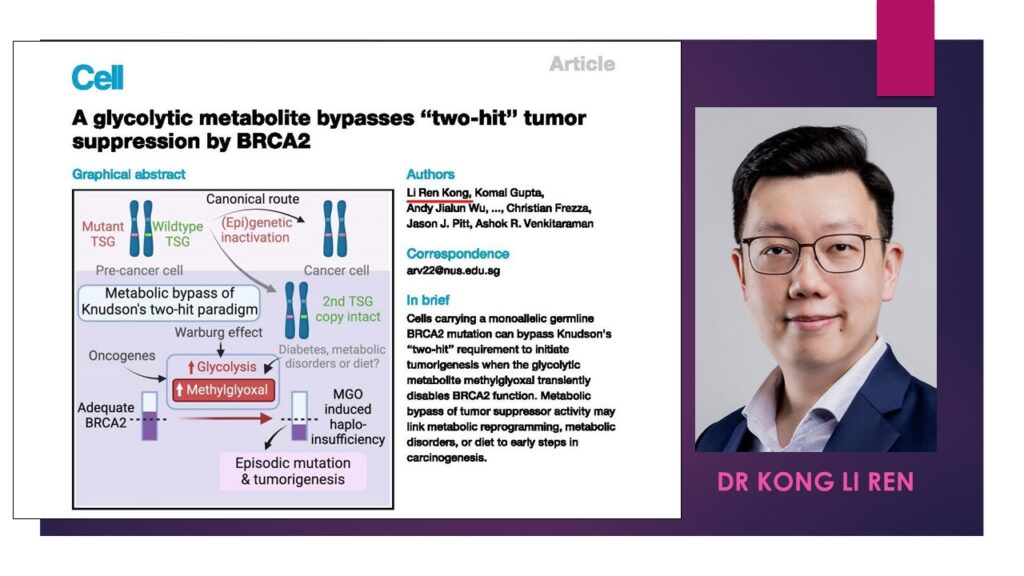
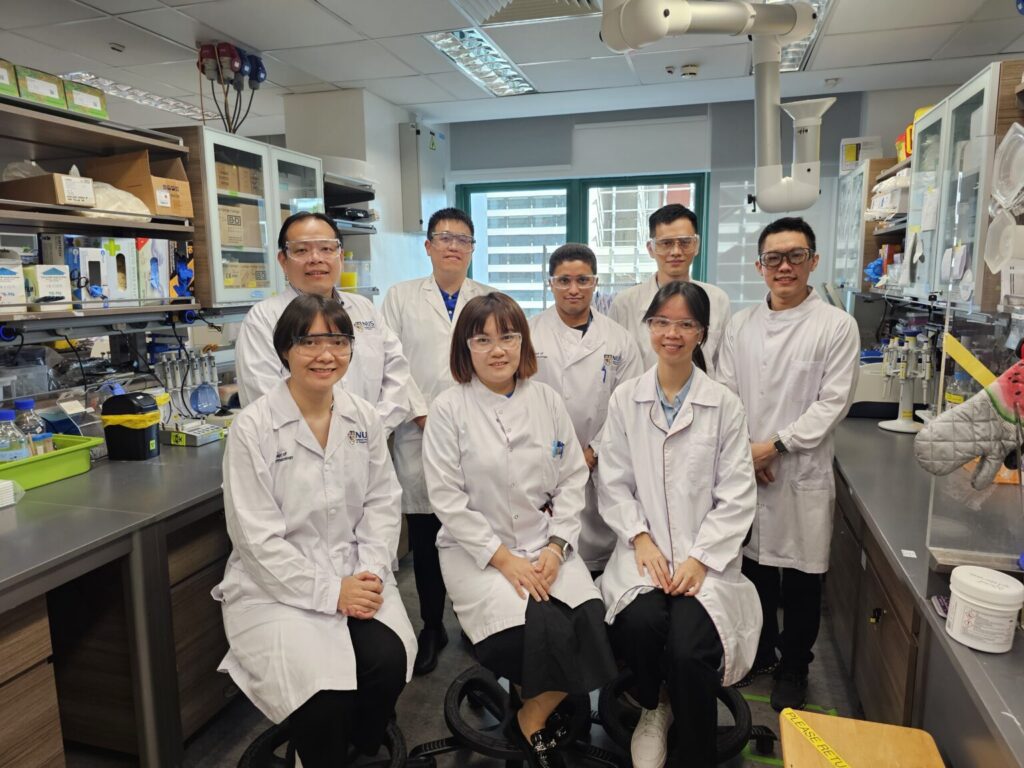
A research team from the National University of Singapore (NUS) has unearthed new findings which may help explain the connection between cancer risk and poor diet, as well as common diseases like diabetes, which arise from poor diet. The insights gained from this study hold promise for advancing cancer prevention strategies aimed at promoting healthy ageing.

Led by Professor Ashok Venkitaraman, this ground-breaking study was conducted by scientists from the Cancer Science Institute of Singapore (CSI Singapore) at NUS and NUS Centre for Cancer Research (N2CR) under the Yong Loo Lin School of Medicine, with colleagues from the Agency for Science, Technology and Research (A*STAR).

Prof Venkitaraman elaborated, “Our research suggests that patients with high methylglyoxal levels may have higher cancer risk. Methylglyoxal can be easily detected by a blood test for HbA1C, which could potentially be used as a marker. Furthermore, high methylglyoxal levels can usually be controlled with medicines and a good diet, creating avenues for proactive measures against the initiation of cancer.”

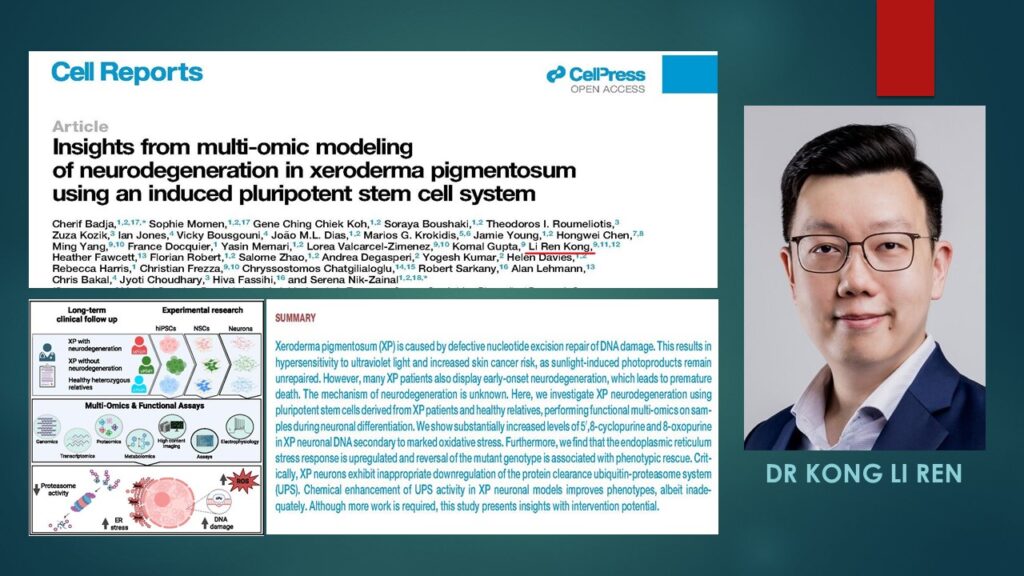
The study’s first author, Dr Li Ren Kong, Lee Kuan Yew Fellow from N2CR (joint staff at Department of Pharmacology), added, “We started the study aiming to understand what factors elevate risk in families susceptible to cancer, but ended up discovering a deeper mechanism linking an essential energy consumption pathway to cancer development. These findings raise awareness of the impact of diet and weight control in the management of cancer risks.”

For more details: https://news.nus.edu.sg/poor-diet-and-higher-cancer-risk/

NUS scientists uncover a missing link between poor diet and higher cancer risk Read More »

Winners of Student Presentations in Graduate’s Academic Progress in Pharmacology (GAPP) Meeting

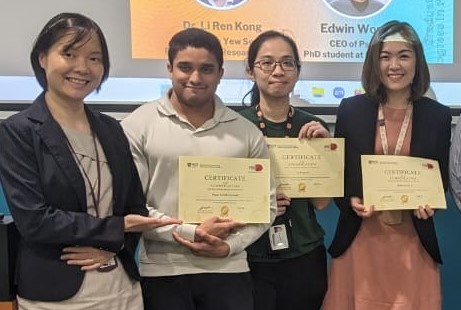
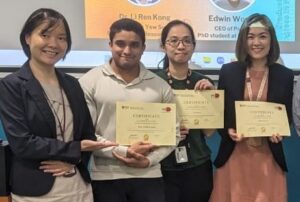
The three winners of Student Presentations in GAPP Meeting and Dr LE.

From right:

Winner 1 – Phyllis GAN Xiu Li (Supervisor: Prof Fred WONG), Title: Corticosteroids Reverse Severe Eosinophilic Asthma by Reprogramming Lung Metabolism

Winner 2 – LE Hong Anh (Supervisor: Dr LE Thi Nguyet Minh), Title: Novel insights in the intracellular mechanism of drug delivery

Winner 3 – Migara Kavishka JAYASINGHE (Supervisor: Dr LE Thi Nguyet Minh), Title: Serum Brevican as a Biomarker of Cerebrovascular Disease in an Elderly Cognitively Impaired Cohort

Winners of Student Presentations in Graduate’s Academic Progress in Pharmacology (GAPP) Meeting Read More »

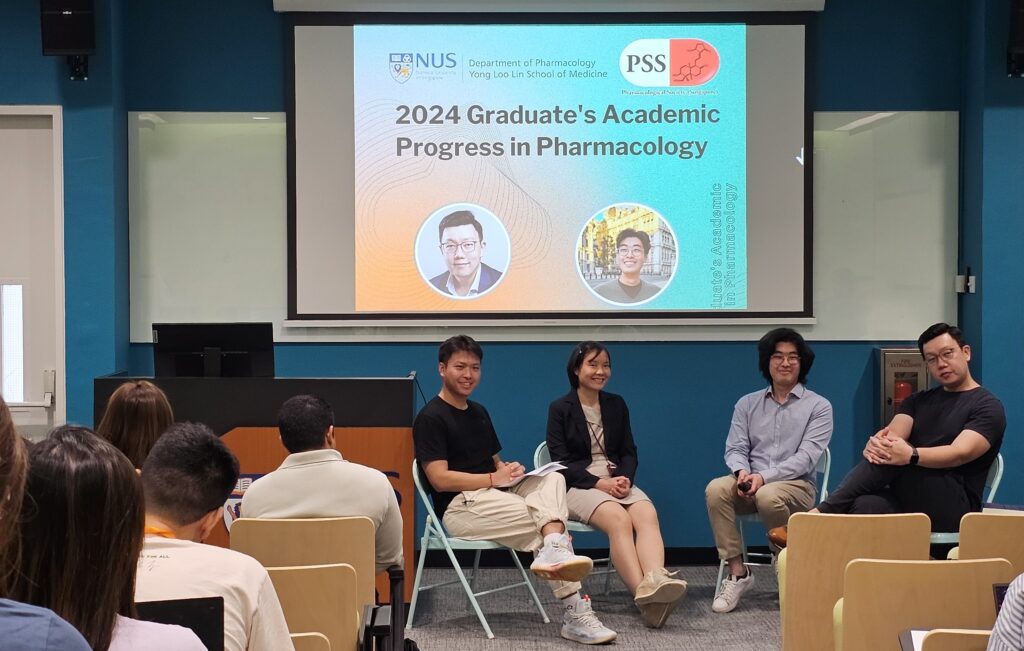
Congratulations to Dr LE, MA Yuanhe and Brendon YEO on success of Graduate’s Academic Progress in Pharmacology (GAPP) Meeting!

From left: Yuanhe (emcee), Dr LE, Edwin WONG, Dr KONG (panellists)

Congratulations to Dr LE, MA Yuanhe and Brendon YEO on success of Graduate’s Academic Progress in Pharmacology (GAPP) Meeting!

The objective of GAPP Meeting is for research fellows and student representatives to share the research highlights and experiences at Department of Pharmacology.

GAPP 2024 Organizing Committee: Dr LE Thi Nguyet Minh, Bredon YEO and MA Yuanhe.

Keynote Speaker: Dr KONG Li Ren

Panellists: Dr LE Thi Nguyet Minh, Dr KONG Li Ren and Edwin WONG

Host and Support: Department of Pharmacology and Pharmacological Society of Singapore

Congratulations to Dr LE, MA Yuanhe and Brendon YEO on success of Graduate’s Academic Progress in Pharmacology (GAPP) Meeting! Read More »

Modifying brain molecule relaxin-3 can potentially reduce side effects in treating anxiety, depression and more

Drugs that treat conditions like depression and anxiety often come with varying side effects, as they regulate various functions within the human body at the same time. What if these drugs  could activate only the functions that target the specific conditions that they are designed to treat?

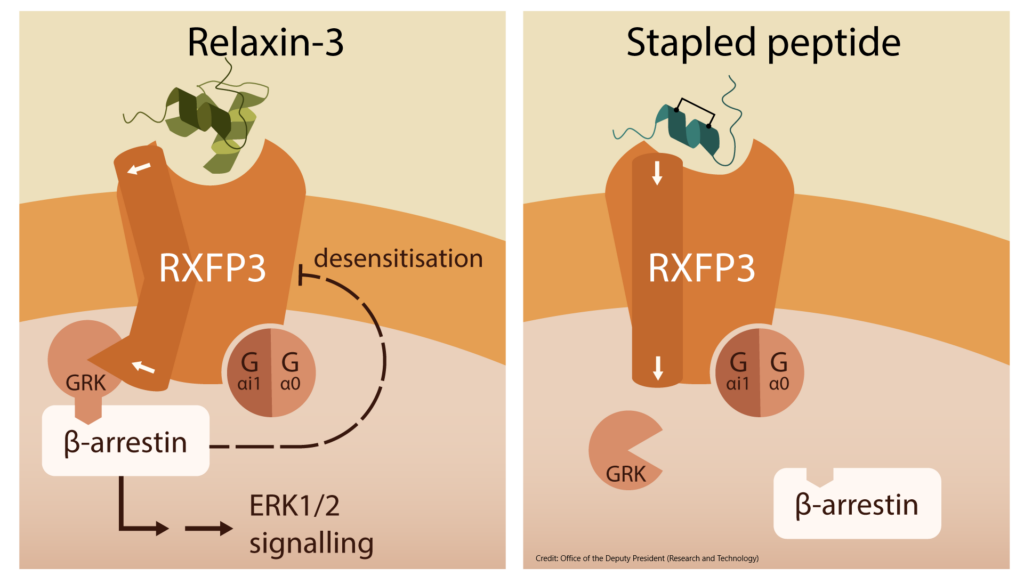
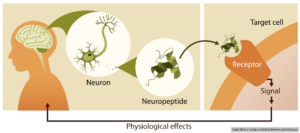
A team of researchers has found a potential way to treat these conditions with fewer side effects. Led by Professor Gavin Dawe, Head of the Department of Pharmacology at the Yong Loo Lin School of Medicine, National University of Singapore (NUS Medicine), the team conducted modifications of relaxin-3—a neuropeptide, or molecule, found mainly in the human brain and nervous system—which regulates a wide range of physiological functions, including stress responses, appetite, mood and pain perception. When relaxin-3 is released in the brain, it binds to a target receptor RXFP3—to trigger a variety of signalling responses among the cells, which affect the body’s physiological processes.

For more details: https://medicine.nus.edu.sg/wp-content/uploads/2024/02/2024-02-19-Press-Release-Modifying-Relaxin-3-can-potentially-reduce-side-effects_final.pdf

Image credit: Office of the Deputy President (Research and Technology)

Modifying brain molecule relaxin-3 can potentially reduce side effects in treating anxiety, depression and more Read More »

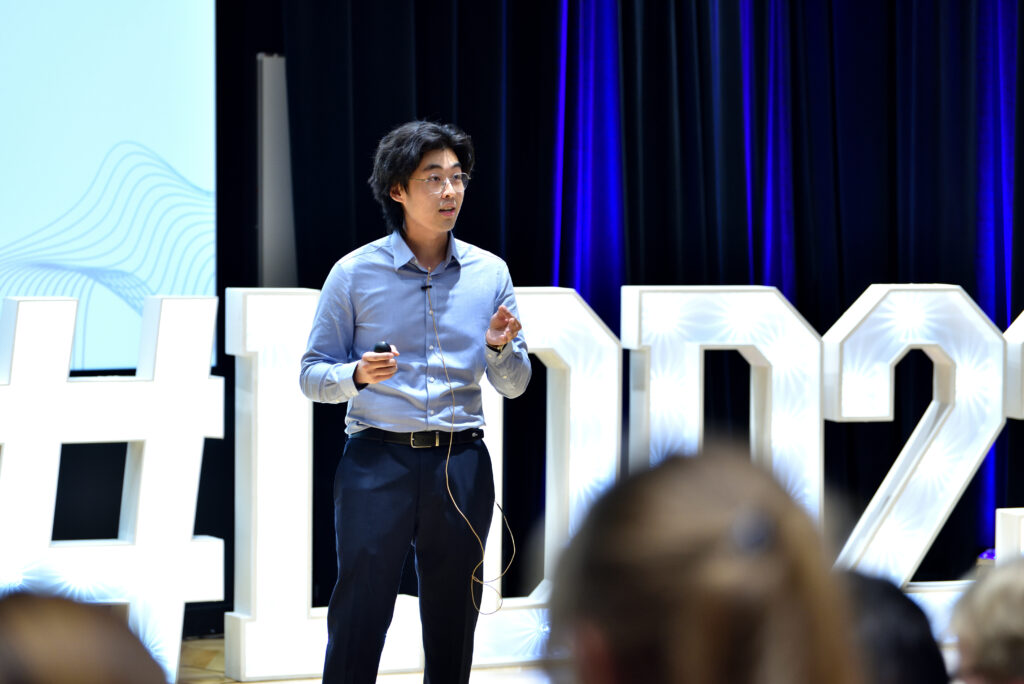
While Pursuing PhD, Edwin WONG Founds Psyrin as CEO to Innovate in Mental Health with AI

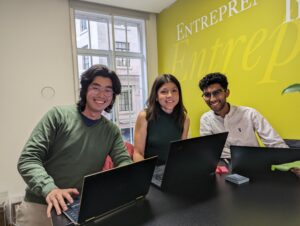
Founding a startup alongside your PhD: a Q&A with Edwin Wong

Edwin (left of the photo) is a final-year PhD candidate at the NUS Department of Pharmacology and King’s College London (co-supervisors Prof Allan Young and A/Prof Gavin Dawe). He’s also co-founder and CEO at Psyrin, a venture-backed startup developing objective biomarkers for serious mental illness. Here, he offers some reflections on his journey to date.

Q: Can you share with us a little about your journey founding Psyrin?

A: It was really a string of good fortune – I started going to a bunch of startup events and met some great founders. I was inspired enough to host an event, where my eventual co-founders showed up! We were all working in mental health, so there was an easy ‘click’. On a whim, we pitched an idea at a university “idea competition” and ended up winning! From there, we just started having a ton of conversations. It took a lot of active seeking of opportunity but just as much luck.

Q: When and how did you realize that founding a startup was possible? Where did you learn the fundamental tools?

A: It was a leap of faith. There’s no threshold where you’re suddenly ready. Getting some external validation of our core principles helped, but by then, we’d already committed to building a startup. People often wait for an idea, but a startup is far more about execution and iterative thinking, so there’s no point obsessing over the “right” idea. Ultimately, founding a startup is always a possibility; it just takes some faith and determination to commit.

Q: Academia and entrepreneurship seem vastly different – how did you adapt to this transition?

A: I approached it by immersing myself in the world of startups (it’s smaller than you think!) There are tons of online resources – Y Combinator lectures, blogs by legends like Paul Graham, industry pieces by investors, etc. Pair that with non-stop interaction with other founders (especially academic founders), and the transition becomes quite natural. It helps that the two worlds are not actually that different – it’s a different mentality, but the skill overlap is strong.

Q: Balancing the demands of a PhD program with a startup sounds challenging – how did you manage this effectively?

A: Sadly, I don’t have a clear, step-by-step answer to this, but I want to emphasize that it is absolutely possible! It’s been helpful to set clear milestones, both with the PhD and the startup. I also rely heavily on Google Calendar, blocking out time and recording this explicitly. I’m also lucky to have supportive supervisors who trust me to get my work done; it’s so important to have them on board!

Q: What were some of the key challenges you encountered while building your startup?

A: The first thing that comes to mind is all the rejection. I expected some rejection – but the sheer volume was shocking. It’s why I’m so grateful for a great support system that keeps me optimistic. It’s also challenging to balance idealism and pragmatism. A lot of what we do is aspirational and disruptive, but it’s so important to keep your user (and customer) in mind, a process that’s not necessarily intuitive.

Q: Did you find your PhD training helpful while building Psyrin?

A: There is certainly overlap, it’s why academics often make great founders! This is a bit cliche, but a PhD really does foster soft skills – resilience, persistence, critical thinking – that translate to a startup. Plus, the actual work overlaps. At Psyrin, I’ve written grants, coordinated partnerships, and made tons of presentations, just like academics do!

Q: And finally, what advice would you have for a new PhD student thinking about founding a startup?

A: Go for it! Nothing is stopping you. There are a million reasons not to start a startup – but most either don’t matter or aren’t worth worrying about. If you want to start smaller, I’d encourage talking to founders. It costs nothing to approach people, whether that’s at one of many events (there are several in Singapore!) or over a cold LinkedIn message.


While Pursuing PhD, Edwin WONG Founds Psyrin as CEO to Innovate in Mental Health with AI Read More »

NUS Centre for Cancer Research Newsletter


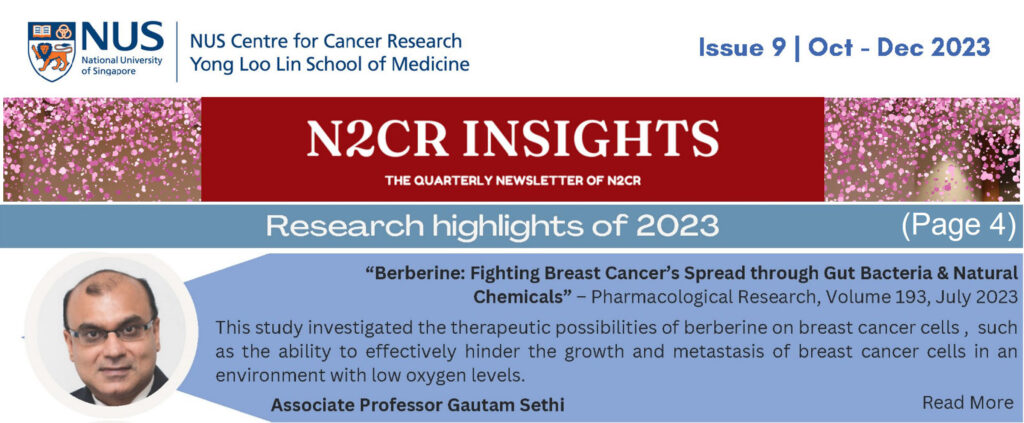
A/P Gautam Sethi’s research work, Berberine inhibits breast carcinoma proliferation and metastasis under hypoxic microenvironment involving gut microbiota and endogenous metabolites, is highlighted in “Research highlights of 2023” of the N2CR INSIGHTS Issue 9, a quarterly newsletter of NUS Centre for Cancer Research Newsletter.

Read more: https://medicine.nus.edu.sg/trp/n2cr/wp-content/uploads/sites/8/2024/01/N2CR-INSIGHTS-Issue-9-Oct-Dec-2023-4.pdf

NUS Centre for Cancer Research Newsletter Read More »

Nano-sized Cell Particles are Promising Intervention Tools in Treating Infectious Diseases


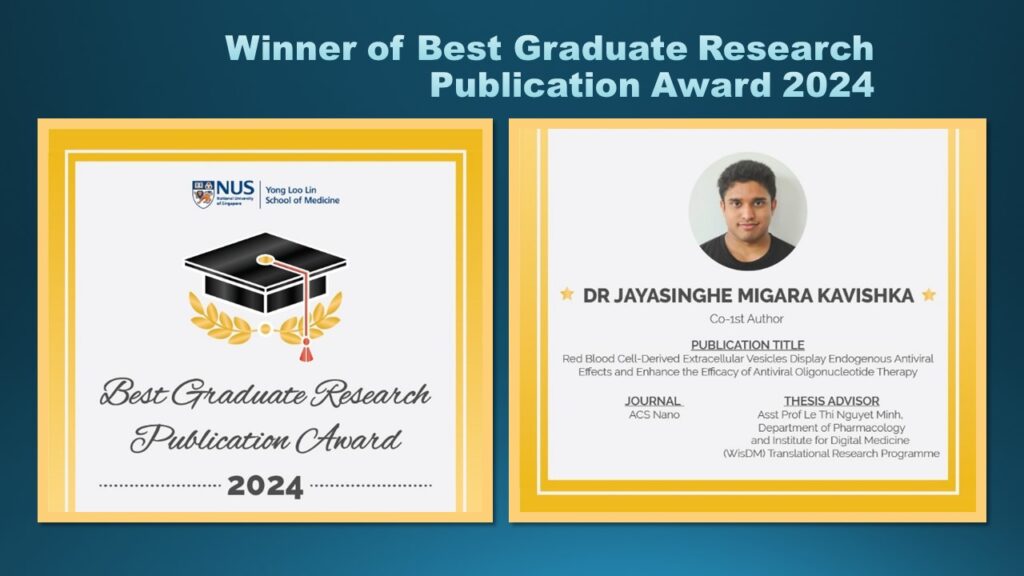
Authors of the study, from NUS Medicine: (Back row, from left) Assoc Prof Justin Chu, Dr. Kai Sen Tan, Migara Jayasinghe (Pharmacology), Dr. Dai Cao Phung (Pharmacology), Brendon Zhi Jie Yeo (Pharmacology); (Front row, from left) Asst Prof Minh Le (Pharmacology), Gao Chang (Pharmacology), Rebecca Carissa Prajogo (Pharmacology).

The COVID-19 pandemic demonstrated the importance of being prepared with drug interventions to contain viral outbreaks that can otherwise have devastating consequences. In preparing for the next pandemic—or Disease X, there is an urgent need for versatile platform technologies that could be repurposed upon short notice, to combat infectious outbreaks.

A team of researchers, led by Assistant Professor Minh Le from the Institute for Digital Medicine (WisDM) and Department of Pharmacology at the Yong Loo Lin School of Medicine, National University of Singapore (NUS Medicine), discovered that nano-sized particles released by cells, termed “extracellular vesicles” (EVs), can curb the viral infectivity of SARS-CoV-2—its wild type and variant strains—and potentially other infectious diseases. Asst Prof Le said, “Our study showed that these cell-derived nanoparticles are effective carriers of drugs that target viral genes precisely. These EVs are therefore an efficient tool for therapeutic intervention in patients who are infected with COVID-19 or other infectious diseases.”

The study, conducted in collaboration with NUS Medicine’s Biosafety Level 3 (BSL3) Core Facility, the Cancer Science Institute of Singapore, and the School of Physical and Mathematical Sciences at Nanyang Technological University (NTU), demonstrated potent inhibition of COVID-19 infection in laboratory models using a combination of EV-based inhibition and anti-sense RNA therapy mediated by antisense oligonucleotides (ASOs).

Read more: https://medicine.nus.edu.sg/news/nano-sized-cell-particles-are-promising-intervention-tool-in-treating-infectious-diseases/

Nano-sized Cell Particles are Promising Intervention Tools in Treating Infectious Diseases Read More »

IES and ASEAN Outstanding Engineering Achievement Award

A team led by Professor Dean HO, Director of the Institute for Digital Medicine (WisDM) at the NUS Yong Loo Lin School of Medicine, Director of the N.1 Institute for Health, and Joint Professor at Department of Pharmacology, was awarded the Prestigious Engineering Achievement Award from the Institution of Engineers, Singapore (IES) as well as the ASEAN Outstanding Engineering Achievement Award.

The team includes a few other members from Department of Pharmacology: A/Prof Edward CHOW Kai-Hua, Dr Agata BIASIAK (Joint Staff) and Lissa HOOI.

The IES Prestigious Engineering Achievement Award and the ASEAN Outstanding Engineering Achievement Award were created to recognise outstanding engineering achievements that have made significant contributions to engineering progress and quality of life in Singapore and ASEAN.

Read full news here: https://medicine.nus.edu.sg/news/ies-and-asean-engineering-achievement-awards/

IES and ASEAN Outstanding Engineering Achievement Award Read More »

Department of Pharmacology researchers featured in “Decoding the Brain”

In a new Hello Singapore feature segment titled “解密大脑” (Decoding the Brain) on Channel 8, researchers from the Yong Loo Lin School of Medicine, National University of Singapore (NUS Medicine) explain the functions of the human brain and its multiple stages of growth and development, and aim to use scientific reasoning to debunk common myths about the human brain.

From cognitive abilities to memory enhancement and retention, viewers will be able to understand the intricate process of how short-term memory progresses to become long-term memory, as explained by Assoc Prof Sajikumar from the Synaptic Plasticity and Memory Lab.

Premonition versus intuition – Dr Eric Tan from the Memory, Ageing and Cognition Centre (also from Department of Pharmacology) offers the science behind experiencing a premonition.

Research Fellows Dr Yap Kwong Hsia and Dr Joyce Chong (both from Department of Pharmacology) elaborate how the multi-domain lifestyle interventions in the SINGER study have proven to slow down the rate of Alzheimer’s disease in the elderly.

Department of Pharmacology researchers featured in “Decoding the Brain” Read More »

Scroll to Top