
- Home
- CREST-SG
ABOUT CREST-SG
Collective Reflective Equilibrium for Science Translation – Singapore
CREST-SG is a national ethics research programme that supports the responsible translation of biomedical science and health innovation in Singapore.
Led by the Centre for Biomedical Ethics at the Yong Loo Lin School of Medicine, National University of Singapore, CREST-SG brings together ethical analysis, legal research and evidence from patients, the public and other stakeholders. We work with national programmes and healthcare partners to develop practical guidance for research, policy and practice.
CREST-SG is supported under Singapore’s Research, Innovation and Enterprise 2030 Biomedical Research Ethics Funding Initiative. The programme runs from 1 October 2026 to 31 March 2031.
Our Purpose and Approach
What we aim to do
Advances in medicine and health technology can create difficult questions about benefits and harms, fairness, privacy, autonomy, responsibility and public trust. These questions often arise while research, policy and services are still developing.
CREST-SG works with researchers, healthcare professionals, policymakers, patients and members of the public to:
- identify ethical and legal issues early;
- understand how different groups view the choices and trade-offs involved;
- develop guidance that reflects Singapore’s social, cultural, legal and healthcare context;
- test and refine recommendations with the people and organisations that may use them; and
- strengthen national capability in biomedical research ethics.
Our work includes ethical and legal analysis, interviews, focus groups, surveys, public deliberation, workshops and collaborative policy development. Outputs may include policy and practice guidance, decision frameworks, codes of practice, implementation tools, reports and academic publications.
How we work
CREST-SG uses Collective Reflective Equilibrium in Practice, or CREP, to connect ethical reasoning with evidence about public and stakeholder values.
Theory
We examine the relevant ethical concepts, principles, evidence and legal or policy frameworks.
Values
We study the perspectives of patients, members of the public, clinicians, researchers, institutional leaders, policymakers and other stakeholders.
Recommendations
We bring the ethical analysis and empirical evidence together to develop practical recommendations. These recommendations are reviewed and refined with partners and intended users.
The process is iterative. Evidence may lead us to revise the ethical analysis, reconsider how a question has been framed or gather further views before making a recommendation.
Our areas of work
CREST-SG is organised around four priority domains, supported by a cross-cutting legal theme.
The Healthy Longevity domain examines how ethics should inform research, clinical practice and policy intended to extend healthy life.
Areas of work include:
- how health and biological ageing should be understood and measured;
- communicating information about biological age, risk and biomarkers;
- supporting health-promoting behaviour without unfairness or undue pressure;
- equitable access to healthy longevity services and interventions; and
- the responsible regulation and use of emerging, repurposed and off-label interventions.
The domain will work with researchers, healthcare professionals, patients and policymakers to develop ethically workable approaches to healthy longevity research and care in Singapore.
Domain Coordinator: Assoc Prof Michael Dunn, Associate Professor and Co-Director of Education, Centre for Biomedical Ethics (CBmE), Yong Loo Lin School of Medicine, National University of Singapore (NUS).
Anchoring Partner: Professor Andrea Britta Maier, Oon Chiew Seng Professor in Medicine, NUS Academy for Healthy Longevity, National University of Singapore (NUS); Professor of Gerontology, Department of Human Movement Sciences, Vrije Universiteit Amsterdam (VU Amsterdam).
Collaborators:
Assoc Prof Christopher Chen Li Hsian, Associate Professor, Department of Pharmacology, National University of Singapore (NUS); Director, Memory Aging & Cognition Centre, National University Health System (NUHS); Visiting Senior Consultant, Department of Psychological Medicine, National University Hospital (NUH).
Dr Daniel Ting Shu Wei, Senior Consultant, Singapore National Eye Centre (SNEC); Associate Professor, Duke-NUS Medical School; Adjunct Clinical Associate Professor and Innovation Mentor, Stanford University; Director, Singapore Health Services (SingHealth) AI Office; Chief Data and Digital Officer, Singapore National Eye Centre (SNEC); Head, AI and Digital Innovation, Singapore Eye Research Institute (SERI).
Professor Johannes Jacobus (Hans) Meij, Co-Founder, NUS Academy for Healthy Longevity, National University of Singapore (NUS); Vice-President, International Affairs, Amsterdam University Medical Center (Amsterdam UMC), The Netherlands.
Professor Jose Maria Valderas, Head, Department of Family Medicine, National University Health System (NUHS);
Director, Centre for Health Services Research, National University Health System (NUHS); Professor, Division of Family Medicine, Yong Loo Lin School of Medicine, National University of Singapore (NUS).
Dr Low Lian Leng, Chairman, Division of Population Health and Integrated Care, Singapore General Hospital (SGH); Senior Consultant, Family Medicine and Continuing Care, Singapore General Hospital (SGH); Director, SingHealth Centre for Population Health Research and Implementation; Co-Director, INSPIRE; Academic Vice Chair, Research and Innovation, SingHealth Duke-NUS Family Medicine Academic Clinical Programme.
The Artificial Intelligence domain examines the ethical and governance questions raised by the development and use of foundation models and large language model-based clinical decision-support systems.
Areas of work include:
- accountability for the development and use of health AI;
- safety, effectiveness and appropriate human oversight;
- interpretability, reliability and the communication of uncertainty;
- bias, fairness and data provenance;
- consent, privacy and data governance;
- factors that affect clinician and public confidence in AI; and
- practical responsibilities for developers, healthcare institutions, clinicians, regulators and policymakers.
CREST-SG will work with the Singapore Medical Foundation AI Model Programme, or SIMFONI, and other partners to develop ethics frameworks, codes of practice and implementation guidance for health AI.
Domain Coordinator: Assoc Prof Brian David Earp, Associate Professor and Director, Oxford-NUS Centre for Neuroethics and Society (OCNS) and Experimental Bioethics, Artificial Intelligence, and Relational Moral Psychology (EARP) Lab, Centre for Biomedical Ethics (CBmE), Yong Loo Lin School of Medicine, National University of Singapore (NUS).
Anchoring Partner: Dr Daniel Ting Shu Wei, Senior Consultant, Singapore National Eye Centre (SNEC); Associate Professor, Duke-NUS Medical School; Adjunct Clinical Associate Professor and Innovation Mentor, Stanford University; Director, Singapore Health Services (SingHealth) AI Office; Chief Data and Digital Officer, Singapore National Eye Centre (SNEC); Head, AI and Digital Innovation, Singapore Eye Research Institute (SERI).
Collaborators:
Assoc Prof Liu Nan, Associate Professor, Department of Biomedical Informatics, Yong Loo Lin School of Medicine, National University of Singapore (NUS); Director, Duke-NUS AI + Medical Sciences Initiative (DAISI); Co-Director, SingHealth Duke-NUS AI in Medicine Institute (AIMI); Associate Professor, Centre for Quantitative Medicine (CQM) and Programme in Health Services and Systems Research (HSSR), Duke-NUS Medical School.
Adj Prof Ngiam Kee Yuan, Head, Department of Biomedical Informatics, Yong Loo Lin School of Medicine, National University of Singapore (NUS); Head, Artificial Intelligence Office, National University Health System (NUHS); Head and Senior Consultant, Division of General Surgery (Endocrine & Thyroid Surgery), Department of Surgery, National University Hospital (NUH); Senior Consultant, Division of Surgical Oncology, National University Cancer Institute, Singapore (NCIS).
Professor Robert Morris, Chief Technology Strategist, Ministry of Health Office for Healthcare Transformation (MOHT); Professor, Yong Loo Lin School of Medicine, National University of Singapore (NUS); Executive Director, Singapore Medical Foundation AI Model (SIMFONI) Programme, Consortium for Clinical Research and Innovation, Singapore (CRIS).
The Pandemics domain examines the ethical questions that arise in preparing for and responding to infectious disease emergencies.
Areas of work include:
- mandates, coercion and proportionality during emergencies;
- the fair allocation of scarce healthcare resources;
- the ethical conduct and oversight of higher-risk challenge studies;
- assumptions, uncertainty and fairness in infectious disease modelling; and
- the values, processes and communication practices that support trust in science and medicine.
The domain will combine ethical analysis with stakeholder and public engagement to develop decision frameworks and practical guidance suited to Singapore’s public health and healthcare context.
Domain Coordinator: Professor Julian Savulescu, Chen Su Lan Centennial Professor in Medical Ethics and Head,
Centre for Biomedical Ethics (CBmE), Yong Loo Lin School of Medicine, National University of Singapore (NUS).
Anchoring Partner: Assoc Prof Barnaby Young, Senior Consultant, Department of Infectious Diseases, National Centre for Infectious Diseases (NCID) and Tan Tock Seng Hospital (TTSH); Joint Appointee, Lee Kong Chian School of Medicine (LKCMedicine); Director, Singapore Infectious Disease Clinical Research Network (SCRN), Communicable Diseases Agency (CDA); Clinical Research and Databases Core Lead, Programme for Research in Epidemic Preparedness and Response (PREPARE), Ministry of Health (MOH).
Collaborators:
Professor Dale Andrew Fisher, Director, NUS Centre for Infectious Disease Emergency Response (CIDER); Professor, Yong Loo Lin School of Medicine, National University of Singapore (NUS); Group Chief of Medicine, National University Health System (NUHS); Senior Consultant, Division of Infectious Diseases, Department of Medicine, National University Hospital (NUH).
Professor Jenny Low Guek Hong, Senior Consultant, Department of Infectious Diseases, Singapore General Hospital (SGH); Professor, Programme in Emerging Infectious Diseases, Duke-NUS Medical School; Deputy Medical and Scientific Director, SingHealth Investigational Medicine Unit.
Professor Paul Ananth Tambyah, Senior Consultant, Division of Infectious Diseases, National University Hospital (NUH); Professor of Medicine, Yong Loo Lin School of Medicine, National University of Singapore (NUS); Honorary Joint Professor, Centre for Biomedical Ethics (CBmE), Yong Loo Lin School of Medicine, National University of Singapore (NUS); Secretary-General, Asia Pacific Society of Clinical Microbiology and Infection; Immediate Past President, Society of Infectious Diseases (Singapore).
The Precision Medicine domain examines how genomic information and health data can be used responsibly in research, clinical care and population health.
Areas of work include:
- consent for the collection and future use of genomic information;
- communicating findings to patients and families;
- the use of family information to guide genetic testing;
- privacy, autonomy and the prevention of harm;
- public views on genetic testing and incidental findings;
- fair participation and access; and
- adapting international genomics standards to Singapore’s legal, social and cultural context.
The domain will work with national precision medicine partners to develop governance and communication approaches that can be used as precision medicine moves from research into routine care.
Domain Coordinator: Asst Prof G. Owen Schaefer, Research Director, Centre for Biomedical Ethics (CBmE), Yong Loo Lin School of Medicine, National University of Singapore (NUS); Co-Lead, Professional Practice 2 Course, NUS Medicine Common Curriculum.
Anchoring Partner: Professor Tai E Shyong, Professor, Yong Loo Lin School of Medicine and Saw Swee Hock School of Public Health, National University of Singapore (NUS); Senior Consultant, Division of Endocrinology, National University Hospital (NUH); Chief Medical Officer, Precision Health Research, Singapore (PRECISE).
Collaborators:
Adj Assoc Prof Saumya Jamuar, Board-Certified Clinical Geneticist, Centre for Precision Health & Paediatrics; Chair, Chapter of Genomic Medicine, Academy of Medicine, Singapore.
Dr Seow Shih Wee, Chief of Staff and Senior Director, Precision Health Research, Singapore (PRECISE).
Dr Tan Ee Shien, Head, Genetics Service, Department of Paediatric Medicine, KK Women’s and Children’s Hospital (KKH); Senior Consultant, Department of Paediatric Medicine, KK Women’s and Children’s Hospital (KKH); Visiting Consultant, National University Hospital (NUH); Director, National Newborn Screening Programme, Singapore; Clinical Associate Professor, SingHealth Duke-NUS Paediatrics Academic Clinical Programme.
Legal analysis is integrated across all four domains. The legal theme examines how ethical recommendations can be implemented within Singapore’s laws and regulatory arrangements.
Its work includes:
- identifying legal issues early in research and programme design;
- monitoring relevant legislation, regulations, codes and official guidance;
- preparing legal issue briefs and horizon scans;
- examining consent, data use, accountability and safeguards;
- developing model clauses and implementation materials where appropriate; and
- distinguishing current legal requirements from areas in which policy or regulation remains unsettled.
The legal theme provides analysis and implementation support. It does not make regulatory decisions or speak on behalf of government agencies.
Theme Lead: Dr Sumytra Menon, Director, Centre for Biomedical Ethics (CBmE), Yong Loo Lin School of Medicine, National University of Singapore (NUS).
Leadership
Co-Lead Principal Investigators

Professor Julian Savulescu
Chen Su Lan Centennial Professor in Medical Ethics and Head
CBmE, NUS
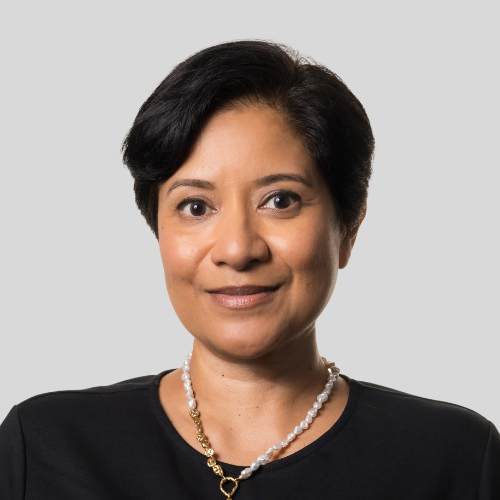
Dr Sumytra Menon
Director
CBmE, NUS
Co-Principal Investigators

Assoc Prof Brian David Earp
Associate Professor and Director
Oxford-NUS Centre for
Neuroethics and Society (OCNS) and Experimental Bioethics, Artificial Intelligence, and Relational Moral
Psychology (EARP) Lab
CBmE, NUS

Assoc Prof Michael Dunn
Associate Professor and Co-Director of Education
CBmE, NUS

Asst Prof G. Owen Schaefer
Research Director and Co-Lead, Professional Practice 2 Course
CBmE, NUS
Partners and collaborators
Anchoring partners
CREST-SG’s anchoring partners connect each domain with major research and health programmes in Singapore. They contribute subject-matter expertise, help shape domain priorities and support the translation of findings into research, policy and practice.
|
Domain |
Anchoring partner |
Programme or institution
|
|
Healthy Longevity |
NUS Academy for Healthy Longevity, National University of Singapore (NUS) |
|
|
Artificial Intelligence |
Singapore Health Services (SingHealth) AI Office |
|
|
Pandemics |
National Centre for Infectious Diseases (NCID) and Programme for Research in Epidemic Preparedness and Response (PREPARE) |
|
|
Precision Medicine |
Precision Health Research, Singapore (PRECISE) |
Collaborators
CREST-SG works with collaborators from universities, healthcare institutions and national programmes. Collaborators contribute relevant scientific, clinical, technical, legal and methodological expertise.
Healthy Longevity
Assoc Prof Christopher Chen Li Hsian | Dr Daniel Ting Shu Wei | Professor Johannes Jacobus (Hans) Meij | Professor Jose Maria Valderas | Dr Low Lian Leng
Artificial Intelligence
Assoc Prof Liu Nan | Adj Prof Ngiam Kee Yuan | Professor Robert Morris
Pandemics
Professor Dale Andrew Fisher | Professor Jenny Low Guek Hong | Professor Paul Ananth Tambyah
Precision Medicine
Adj Assoc Prof Saumya Jamuar | Dr Seow Shih Wee | Dr Tan Ee Shien
Cross-programme collaboration
Assoc Prof Konstantina Griva contributes expertise in patient and public involvement in research.
Dr Yeo Shang Long contributes to the application and development of the CREP methodology.
Patient and Public Involvement (PPIE)
Members of the public and people affected by biomedical research and health innovation may understand risks, benefits and practical consequences differently from researchers, institutions or policymakers.
Patient and public involvement and engagement will therefore be incorporated across CREST-SG’s domains. Depending on the question, this may include involvement in study design, interviews, focus groups, surveys, workshops and structured public deliberation.
This work will help CREST-SG understand different perspectives, identify overlooked effects and develop recommendations that respond to Singapore’s diverse communities and healthcare context.
News and Activities
|
Updates to CREST-SG research and engagement activities will be published here. |
Publications and Resources
CREST-SG publications, reports, guidance, and other resources will be added as they become available.
Work with Us
CREST-SG welcomes engagement with researchers, healthcare professionals, policymakers, patient and community organisations, and others working on the ethical and legal questions raised by biomedical research and health innovation.
Opportunities to participate in research, public engagement activities, workshops and events will be published on this page.