
NUS Medicine winners of the National Medical Excellence Awards (NMEA) 2026
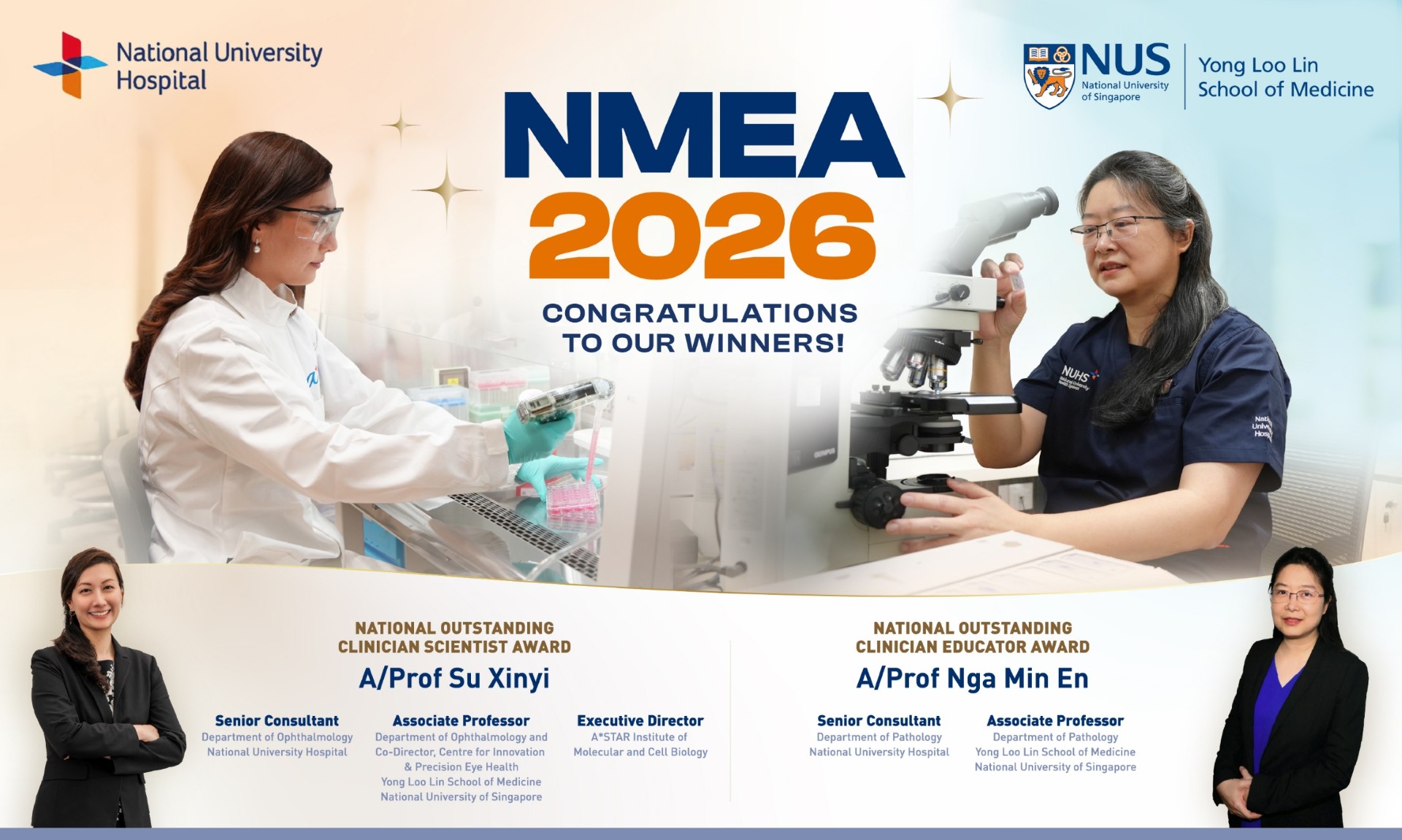
Photo credit: NUS Medicine
Congratulations to A/Prof Su Xinyi on receiving the National Outstanding Clinician Scientist Award at the National Medical Excellence Awards (NMEA) 2026!
Assoc Prof Su Xinyi is an internationally recognised clinician-scientist and pioneer in retinal regenerative medicine whose work is transforming the treatment of blinding diseases. As a translational ophthalmology leader, she has built a distinctive programme that brings scientific discoveries closer to clinical application. In Singapore, she has built a translational ecosystem spanning NUS Medicine, National University Hospital, Agency for Science, Technology and Research (A*STAR) and Singapore Eye Research Institute. Her work has advanced precision medicine for age-related retinal degenerative diseases through the development of a comprehensive genotype-phenotype database and tertiary referral service, enabling patients to access emerging gene therapy clinical trials and novel therapeutics. Her scientific work has also produced landmark advances in retinal repair, including the first demonstration of vitreous body regeneration using injectable biomaterials, the development of bio-functional polymers to prevent retinal scarring, and pioneering work in hypoimmunogenic stem cell therapies to overcome barriers in transplantation.
Assoc Prof Su has also driven the translation of scientific discoveries into clinical applications while contributing to the development of Singapore’s biomedical research ecosystem. She has secured over S$38 million in competitive national research funding and co-founded Vitreogel Innovations, an ISO-certified MedTech spin-off advancing next-generation vitreous substitutes into clinical trials. She has established clinical trial infrastructure and advanced imaging platforms within the National University Health System and, as Research Director of Ophthalmology, contributed to strengthening the clinician-scientist pipeline. As the Executive Director of the A*STAR Institute of Molecular and Cell Biology, she provides strategic leadership for one of Singapore’s flagship research institutes, advancing disease-focused science and interdisciplinary collaboration. A committed mentor and advocate for women in science, Assoc Prof Su has also supported the development of the next generation of clinician-scientists through structured programmes and close mentorship, with many of her mentees going on to receive national awards and take on research and clinical leadership positions.
Full Article
NUS Medicine: NUS Medicine, DayOne and Cortical Labs Unveil Biological Data Center Prototype in Singapore
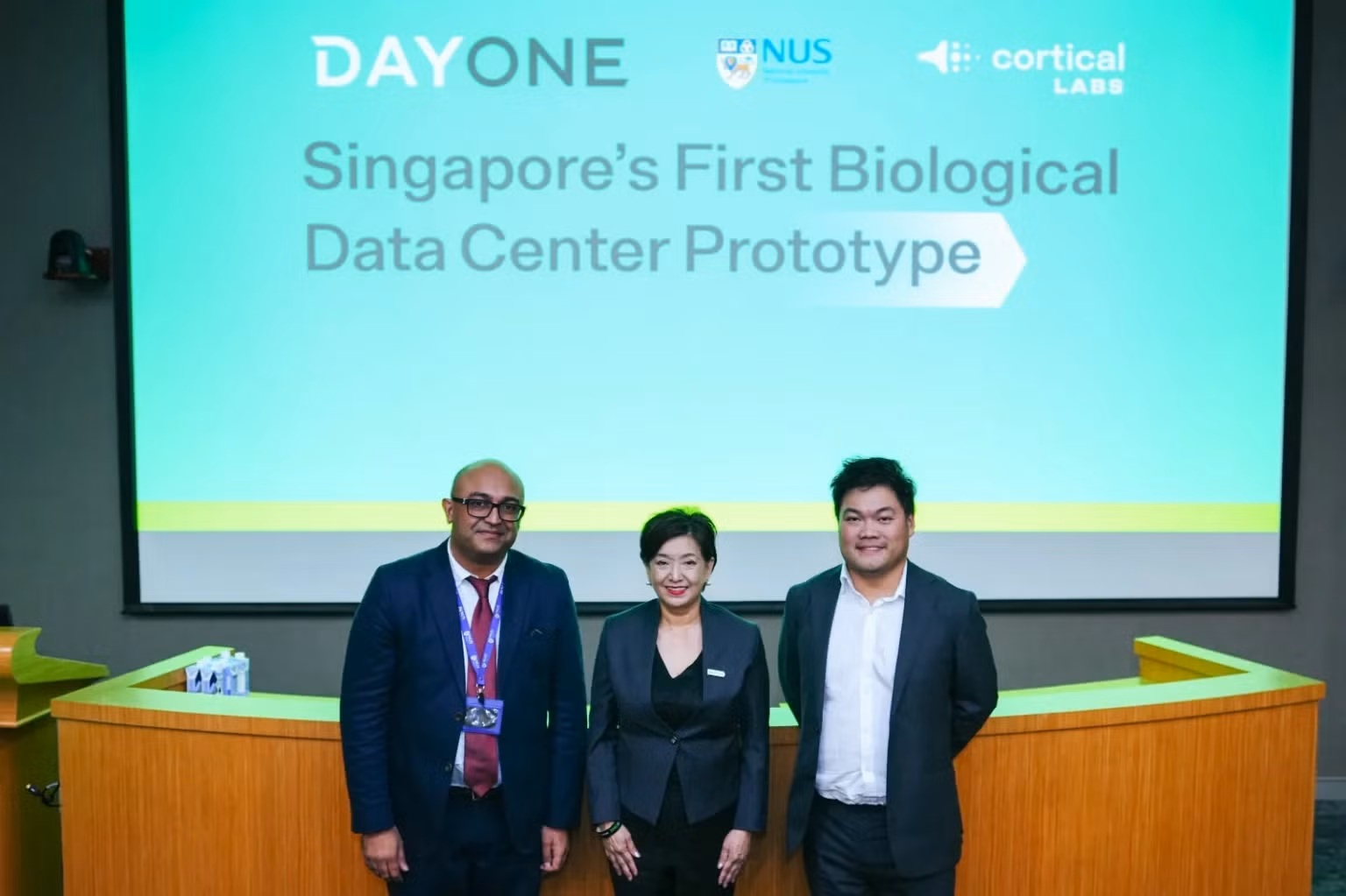
Photo credit: NUS Medicine
The Yong Loo Lin School of Medicine, National University of Singapore (NUS Medicine) is partnering with DayOne, a Singapore-headquartered global data centre developer and operator, and Cortical Labs, a Melbourne-based biological computing startup, to establish a groundbreaking Biological Data Centre prototype at the NUS Life Sciences Institute. A Biological Data Centre represents a new generation of computing infrastructure. Instead of relying solely on conventional silicon chips, it uses “wetware” — living biological neurons derived from stem cells — to process information and support AI systems. In contrast to traditional data centres, which depend on energy-intensive servers, biological computing offers the potential for significantly greater efficiency by harnessing brain-like organoids that can operate using only a fraction of the power required by digital computers. At the heart of this effort is NUS Medicine’s expertise in neurobiology. The cells will be cultured and grown under the supervision of Professor Rickie Patani, Professor of Neuroscience at NUS Medicine, Director of the Neurobiology Programme at the NUS Life Sciences Institute, and Chair of the Neuroscience Translational Research Programme at NUS Medicine.- NUS Medicine, 17 August 2026
Full Article
The Straits Times: Forget silicon chip servers, Singapore’s newest data centre needs to be fed
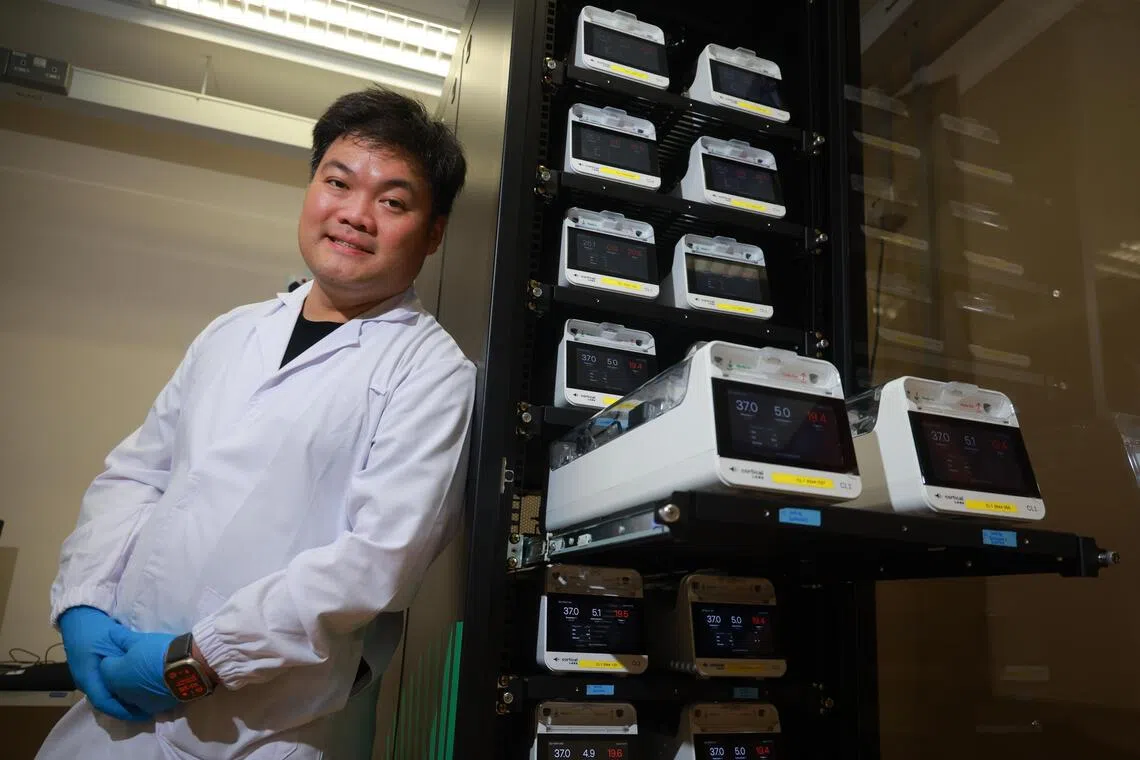
Photo credit: The Straits Times
NUS Yong Loo Lin School of Medicine Neuroscience Professor Rickie Patani, who oversees a biological data centre in National University of Singapore in collaboration with Cortical Labs and DayOne. Singapore’s first biological data centre comprises 20 units of biological computers (CL1s). Each CL1 unit houses at least 200,000 lab-grown neurons sitting on an electrode-fitted silicon chip. These living neurons, derived from blood cells reprogrammed into stem cells, exchange electrical signals with a computer, where their neural activity is translated into raw computing power. - The Straits Times, 15 August 2026
Full Article