Neuroscience
Translational Research Programme

The Neuroscience Translational Research Programme at NUS is closing the gap between what we know about neurological disease and what we can do about it.

Programme Director's Message

Neurological diseases are among the most common, most devastating, and most incurable conditions in medicine. Well over one billion people worldwide live with a neurological or psychiatric disorder. For the majority, treatments remain inadequate or entirely absent. The science needed to change that exists - in laboratories, in patient cohorts, in clinical data collected over years of meticulous work. What has too often been missing is the structure and the institutional will to connect them.

The Neuroscience Translational Research Programme was built to provide that structure. We exist at the boundary between fundamental discovery and clinical medicine - not as a bridge that hands findings from one side to the other, but as a community in which basic scientists and clinician-researchers work from shared questions, shared data, and shared ambition. Our investigators come from NUS, NUSMed, and the National University Health System. The diseases we work on - Alzheimer’s Diseases, Parkinson’s Diseases, psychiatric disorders, motor neuron disease, rare neurological conditions - are the ones where the need for progress is most urgent and the scientific opportunity is greatest.

The TRP does not operate in isolation. It draws directly on the foundational mechanistic discoveries emerging from the LSI Neurobiology Programme - NUS's programme for fundamental neuroscience research. The relationship is deliberate and essential: the LSI programme generates the deep biological knowledge that makes meaningful translation possible; the TRP takes that knowledge and drives it towards clinical application. Both are necessary. Neither alone is sufficient. This architecture - basic science and translational science in structured dialogue - is what distinguishes the most productive biomedical research institutions in the world, and it is what NUS has built here.

We are building something that takes time to establish: a scientifically excellent, clinically grounded, and internationally connected programme that will define NUS's contribution to neuroscience for the next generation. I invite you to engage with our work, to challenge our thinking, and to bring us the questions that your patients, your data, or your science has raised.
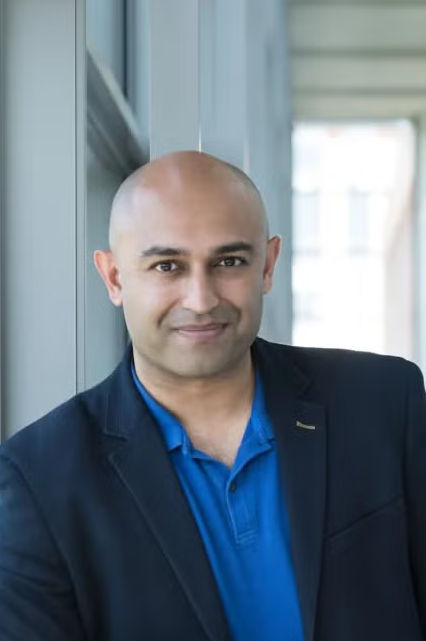
- Professor Rickie Patani

Rickie Patani photo

The NS TRP is a flagship translational neuroscience programme within the National University of Singapore School of Medicine. We unite investigators from the Life Sciences Institute (NUS), NUSMed, and the National University Health System around a shared translational mission: to ensure that the most important scientific discoveries about neurological disease reach the patients who need them.

We are not a standard research grant programme. We are a coordinated scientific community, deliberately designed to dissolve the institutional and disciplinary boundaries that separate basic research from clinical impact. Our investigators are bench scientists, clinician-scientists, and clinical researchers who work together on questions that neither community could resolve alone - and who are trained and supported to do exactly that.

The TRP is explicitly downstream of, and draws directly upon, the fundamental neuroscience research conducted within the LSI Neurobiology Programme. That programme generates the mechanistic knowledge - about RNA biology, glial dysfunction, disease-state transitions at the molecular level - that the TRP develops towards clinical application. The two programmes are sequential rather than parallel, complementary rather than competing. Both are necessary. Neither alone is sufficient to produce the step-change in neurological medicine that NUS is positioned to make.

Our work is organised around three interconnected scientific themes, with particular depth in RNA biology, glial neuroinflammation, and the molecular basis of psychiatric disease - areas where the basic science is rich, the clinical need is acute, and the translational opportunity is real.