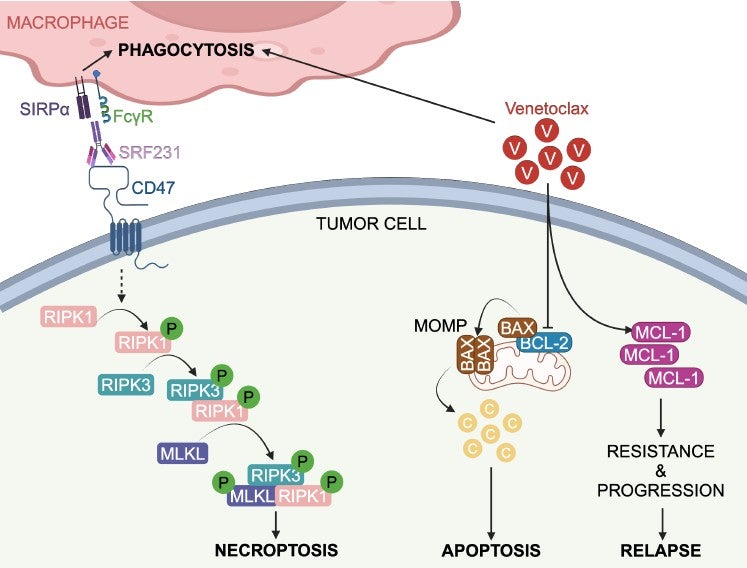



Venetoclax (VEN) is a targeted therapy used to treat chronic lymphocytic leukemia and acute myeloid leukemia. It works by blocking Bcl-2, a protein that prevents cells from undergoing programmed cell death, known as apoptosis, thus allowing cancer cells to survive. However, some cancer cells become resistant by switching to rely on another survival protein called Mcl-1.
This study led by N2CR members, Prof Shazib Pervaiz and Dr Stephen Chong, found that in VEN-resistant cells, increased levels of superoxide—a reactive oxygen molecule inside cells—activate a signaling protein called AKT which phosphorylates and stabilizes Mcl-1 to help cancer cells resist VEN and survive. Reducing superoxide or blocking AKT reverses this resistance. Combining VEN with an AKT inhibitor (capivasertib) significantly reduced resistant cancer cells and improved survival in mice, offering a promising new treatment strategy.
Click here to read more.