

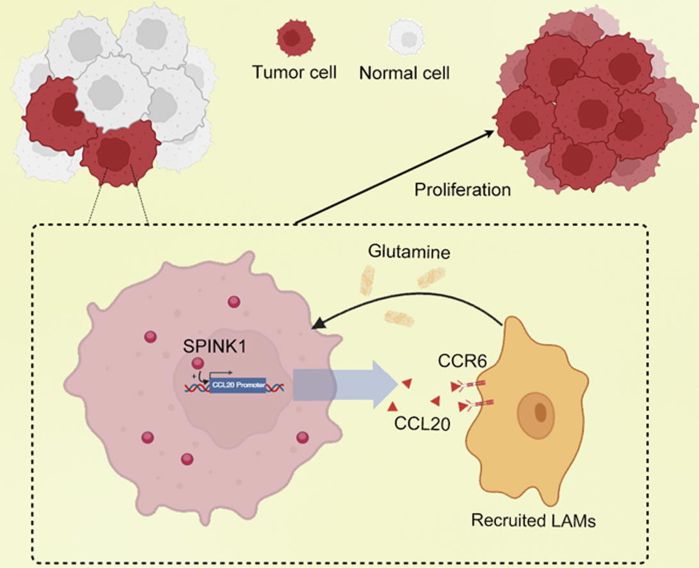
Intrahepatic cholangiocarcinoma (ICC) is a fast-growing cancer that starts in the bile ducts inside the liver, and it is difficult to treat because patients’ tumours can behave very differently. In this study, A/Prof Gautam Sethi and his collaborators used advanced laboratory methods to classify ICC tumours into distinct groups based on their molecular features. They identified a particularly aggressive group marked by high levels of a protein called SPINK1.
The team found that these SPINK1-high tumour cells can influence nearby immune cells in a way that promotes cancer growth. The tumour releases a chemical signal that attracts certain macrophages (a type of immune cell). These macrophages then help create a glutamine-rich environment—glutamine is a nutrient that cancer cells can use as fuel—allowing the tumour to grow and spread more easily. The findings suggest SPINK1 could be useful for identifying higher-risk patients and may point to new treatment strategies, such as blocking glutamine support or interrupting key tumour-to-immune signalling.
Click here to read more.