



Abstract:
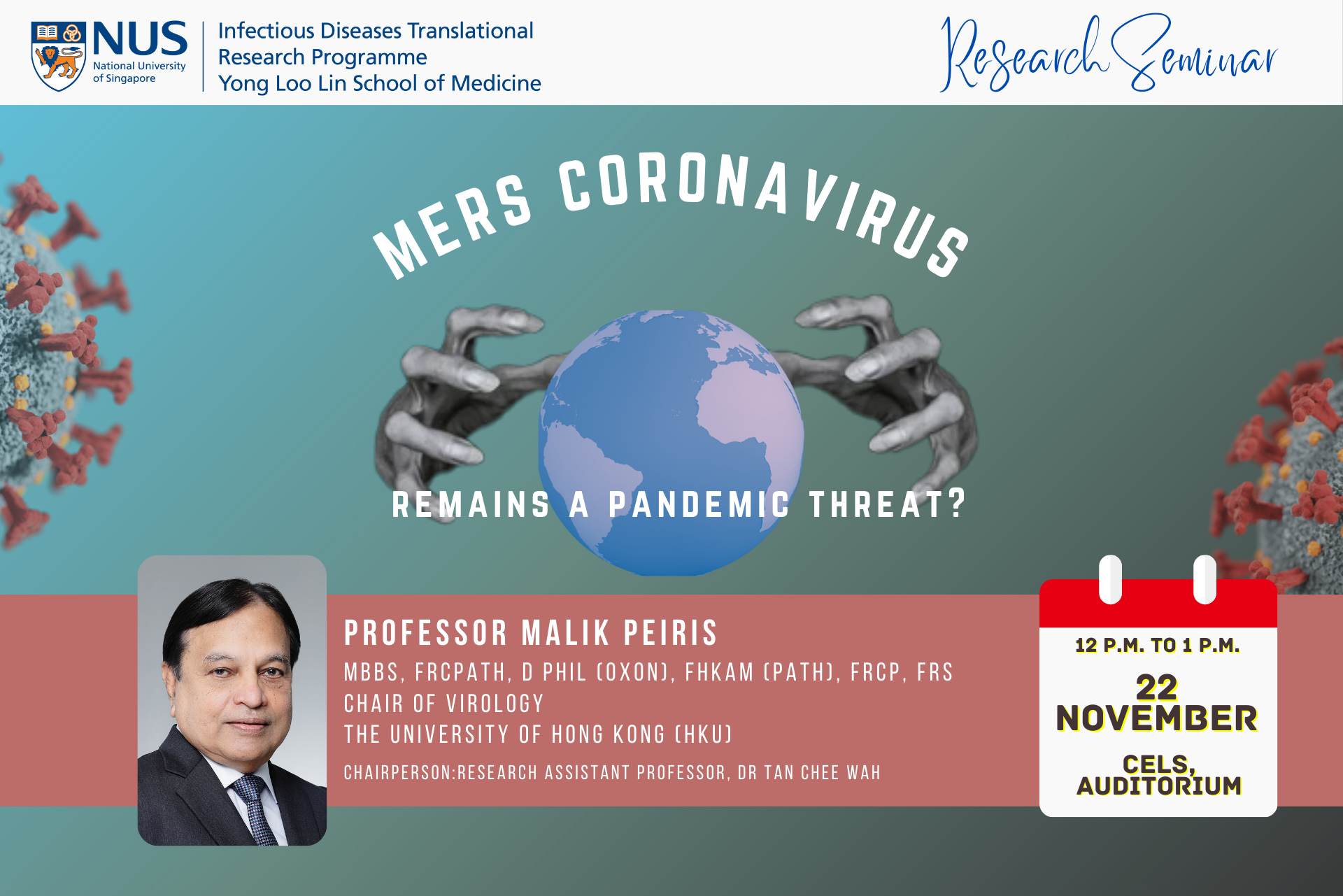
Zoonotic coronaviruses have caused repeated pandemics over the past 300 years and pose significant future pandemic threats. MERS coronaviruses (MERS-CoV) have caused repeated large outbreaks in humans with chains of multiple human-to-human transmission events. We recently identified human-adaptive amino acid substitution (nsp6 L232F) which is repeatedly emerging in MERS-CoV clade B zoonotic transmission, which increases viral replication competence in human ex-vivo respiratory tissue cultures and in lungs of hDPP4 knockin mice. Although zoonotic MERS-CoV so far has only been reported in the Arabian Peninsula, the vast majority of MERS-CoV infected dromedary camels are found in East, North and West Africa (>75% of the global dromedary population) and Central Asia, but no zoonotic disease has been reported. There is specific serological and T cell response data suggesting that unsuspected MERS-CoV infection continues to occur in Africa. Thus pandemic MERS may well emerge outside the Arabian Peninsula, in a setting of low awareness of the threat. MERS-CoV across Africa constitutes a distinct virus clade (clade C) which appears to have lower replication competence in ex vivo cultures of the human respiratory tract and hDPP4 knockin mice. Although there is evidence of MERS-CoV infection in dromedary camels in Central Asia, these viruses have not been genotypically or phenotypically characterized and evidence for zoonotic infection not systematically investigated. A greater clinical awareness and research effort of MERS-CoV threats beyond the Arabian Peninsula is critically important. Zoonotic MERS cases have apparently declined in the Arabian Peninsula in recent years. We have investigated hypothesis that may contribute to this decline, including genetic changes virus spike or due to cross-reactive population immunity arising SARS-CoV-2 infection or vaccination.
Biography:
Malik Peiris graduated from the University of Peradeniya, Sri Lanka in 1972, did his doctoral research in virology at the University of Oxford and served as Lecturer and subsequently Senior Lecturer at the University of Peradeniya, Sri Lanka till 1988. He is currently Professor of Virology at the School of Public Health at The University of Hong Kong. He is a clinical and public health virologist, with an interest in emerging virus disease at the animal-human interface, including vector-borne viruses, influenza and coronaviruses (SARS-CoV, MERS-CoV, SARS-CoV-2). In 2003, he identified the novel coronavirus that caused SARS and contributed to understanding its origins, diagnosis and control. More recently, he works on zoonotic, seasonal and pandemic influenza, MERS and COVID-19 using a One Health approach and is interested in drivers of virus spill-over at the animal human-interface and interventions to reduce spill-over risk. He has been elected as Fellow of the Royal Society of London and as a Foreign Member of the US National Academy of Sciences.