



Abstract:
Viral infections can cause disease through mechanisms that extend well beyond viral replication and direct cellular damage. Increasing evidence suggests that viral proteins can interact with and manipulate host signaling pathways, contributing to inflammation, tissue dysfunction, and longer-term disease manifestations.
In this seminar, Dr Chen will present our work investigating how viral proteins contribute to disease pathogenesis, with a particular focus on inflammatory and musculoskeletal consequences of infection. Using SARS-CoV-2 and Zika virus as examples, Dr Chen will discuss how individual viral proteins can engage host pathways to alter cellular responses and promote pathological outcomes.
Dr Chen will also highlight him and his team’s efforts to understand how these virus–host interactions contribute to tissue-specific disease, including inflammatory responses and abnormal processes associated with bone and mineralization. Together, these studies illustrate how examining viral proteins beyond their canonical roles in the viral life cycle can uncover unexpected mechanisms of disease and provide a framework for identifying potential host-directed strategies to mitigate the acute and long-term consequences of viral infections.
Biography:
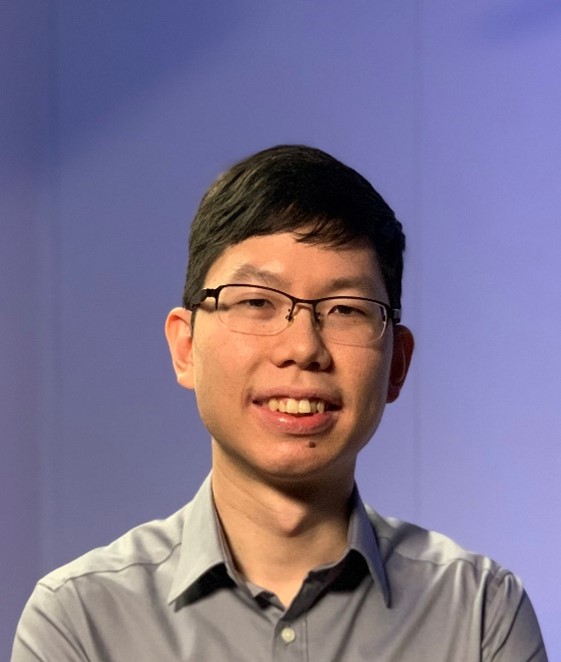
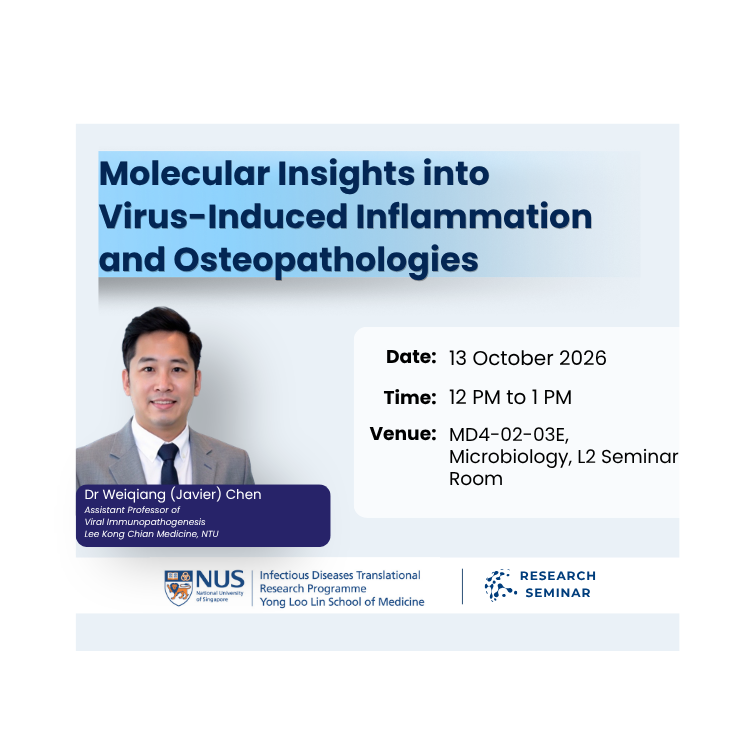
Dr. Weiqiang (Javier) Chen is an Assistant Professor in the Respiratory & Infectious Diseases Programme at Lee Kong Chian School of Medicine, Nanyang Technological University, Singapore. Previously, he was Assistant Staff at Cleveland Clinic Lerner Research Institute and Assistant Professor at Case Western Reserve University School of Medicine. He has received research support from the U.S. National Institutes of Health, including K99/R00 and R01 awards, and the F. Merlin Bumpus Junior Investigator Award. His laboratory integrates virology, immunology, and disease models to investigate viral immunopathogenesis, with particular interests in the neurological and musculoskeletal consequences of emerging viral infections.