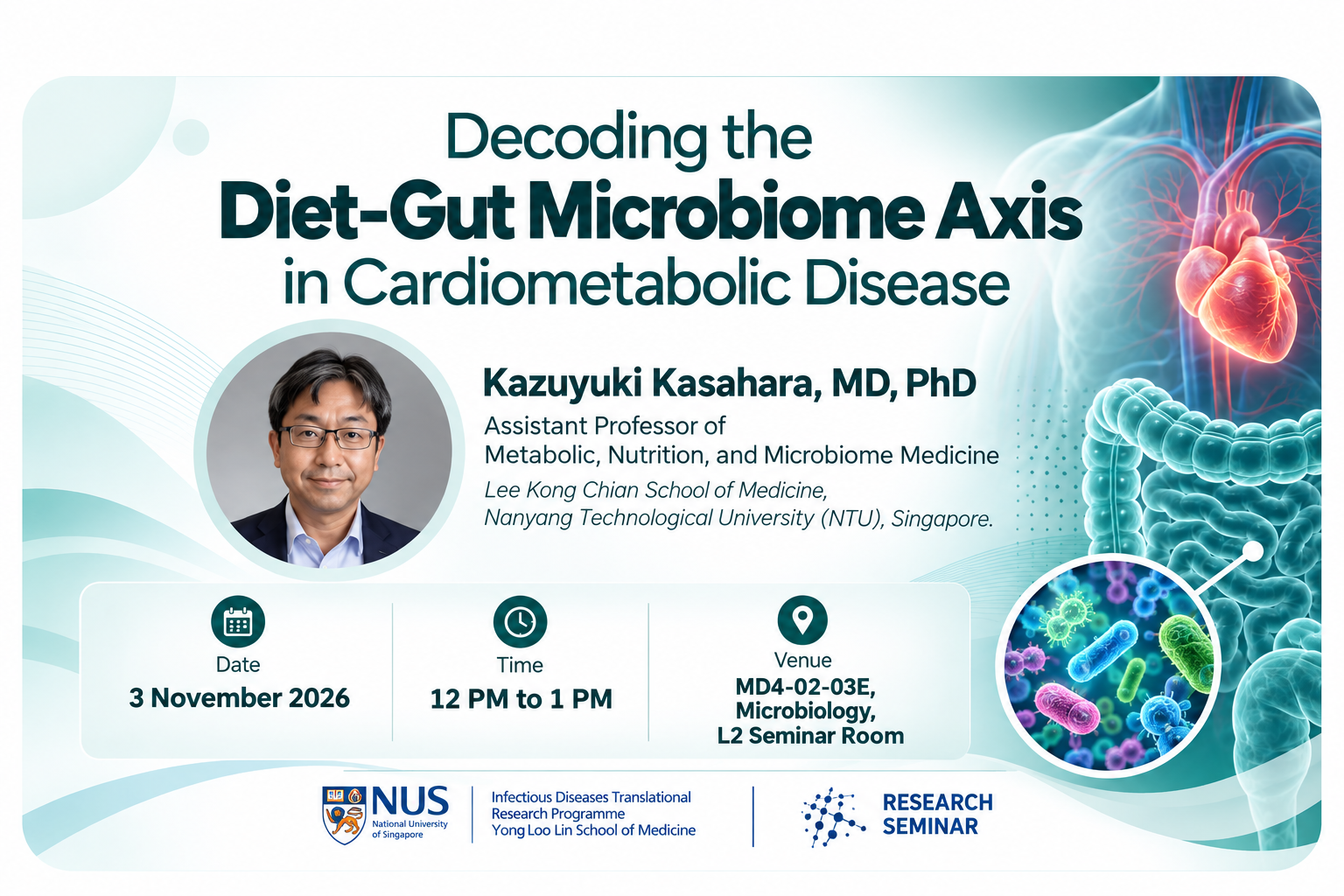
Abstract
The gut microbiome plays a critical role in shaping host metabolism and susceptibility to cardiometabolic diseases. However, the molecular mechanisms through which specific gut microbes and their metabolic activities influence host physiology remain incompletely understood. In this seminar, Asst. Prof Kazuyuki Kasahara will present our recent work investigating how diet–microbiome interactions contribute to cardiometabolic conditions. First, Asst. Prof Kasahara will discuss how dietary protein availability influences the contribution of gut microbiota to MASLD, highlighting the role of microbial phenylalanine metabolism and its downstream metabolites in promoting hepatic steatosis.
Second, Asst. Prof Kasahara will highlight the diverse functions of Roseburia intestinalis, a prominent gut butyrate-producing bacterium, beyond its well-established role in short-chain fatty acid production. Our studies explore how dietary substrates shape its growth and metabolic activities, including fatty acid metabolism, and how these functions may influence host physiology. Together, these findings illustrate how dissecting microbial metabolic pathways can reveal novel mechanisms linking diet, gut microbes, and cardiometabolic health.
Biography
Kazuyuki Kasahara, MD, PhD, is an Assistant Professor at Lee Kong Chian School of Medicine, Nanyang Technological University, Singapore. He received his MD and PhD from Kobe University, Japan, and completed his postdoctoral training at the University of Wisconsin–Madison, USA. His research focuses on understanding how diet–gut microbiome interactions influence cardiometabolic health and disease, particularly atherosclerosis and metabolic dysfunction-associated steatotic liver disease (MASLD). His laboratory integrates gnotobiotic mouse models, microbial genetics, metabolomics, and multi-omics approaches to uncover the molecular mechanisms linking gut microbial metabolism to host physiology and identify novel therapeutic targets.