

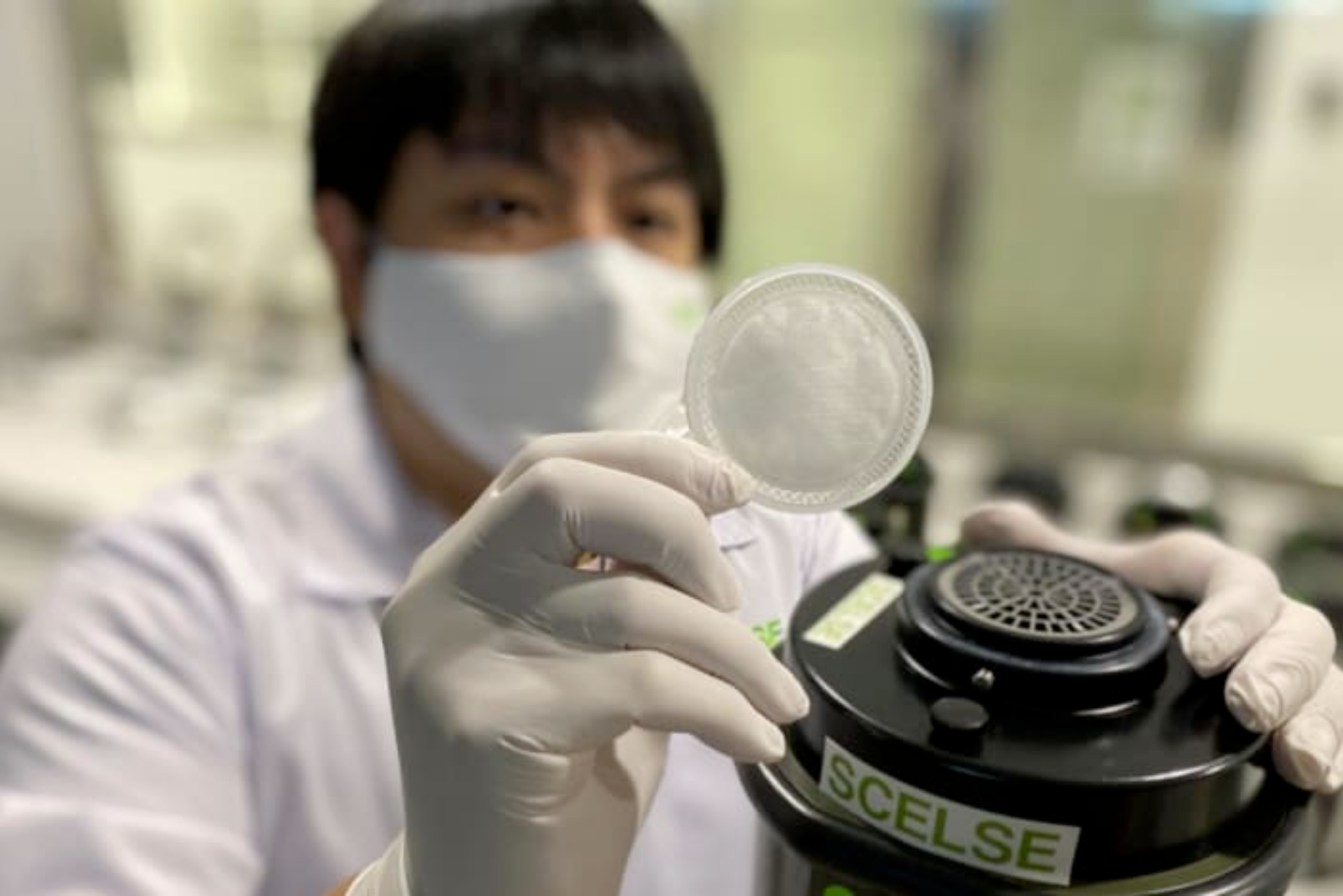
SINGAPORE: Scientists and doctors from the National University of Singapore and Nanyang Technological University have developed a way to detect SARS-CoV-2 RNA in the air in indoor settings.
SARS-CoV-2 RNA refers to the nucleic acid coding for the COVID-19 virus.
The team, comprising scientists and doctors from NTU’s Singapore Centre for Environmental Life Sciences Engineering (SCELSE) and NUS’ Yong Loo Lin School of Medicine, trialled the method in two inpatient wards at a hospital caring for active COVID-19 patients.
The study found that their air surveillance approach produced a “higher detection rate” of environmental virus RNA, compared to surface swab samples collected in the same area, said NUS and NTU in a joint news release on Friday (Oct 8).
The study demonstrated the detection of viral RNA in the air, which is the “strength” of the device and method, said Professor Paul Tambyah, deputy director of NUS Medicine’s Infectious Diseases Translational Research Programme.
“If we can put it in a place where we think that there’s no COVID patients, then if you find viral RNA, then that’s like doing a swab PCR for 30 people. Instead of doing a swab PCR for 30 people you’re doing it just through one filter. And then you can know what are the targeted precautions that you need to take,” he added.
Between February and May 2020, the team conducted the study in two hospital wards – a naturally ventilated open-cohort ward and a mechanically ventilated isolation ward.
After the COVID-19 outbreak across migrant worker dormitories last year, patients were moved to open cohort wards from single isolation rooms, and conducting the study in these wards was “much closer to what happens in the real world”, said Prof Tambyah.
“And so this was something like what we thought would happen, say if a family of infected people got on board an aeroplane, or a group of presymptomatic people walked into a conference hall for a meeting,” said Prof Tambyah, who is also President of Asia Pacific Society of Clinical Microbiology and Infection.
“The key was to find out if we could find live virus in the air. And even if we didn’t, to see whether these devices can be used to detect the virus in a public place, so that we wouldn’t need to go on a blanket lockdown or travel ban or even potential quarantine,” he added.
Beyond identifying whether there was an infected person in the room or setting, the device can help to make the assessment if the level of SARS-CoV-2 RNA is too high and generates an infection risk, said Professor Stephan Schuster, deputy centre director of SCELSE.
“Of course what we want to create is ventilation situations where it is always too low for people to be at risk.”
Source: Channel News Asia