Mild cognitive impairment affects up to
20%
of older adults worldwide, of which nearly
40%
will progress to dementia if left untreated

Issue 57
Feb 2026
NURSING
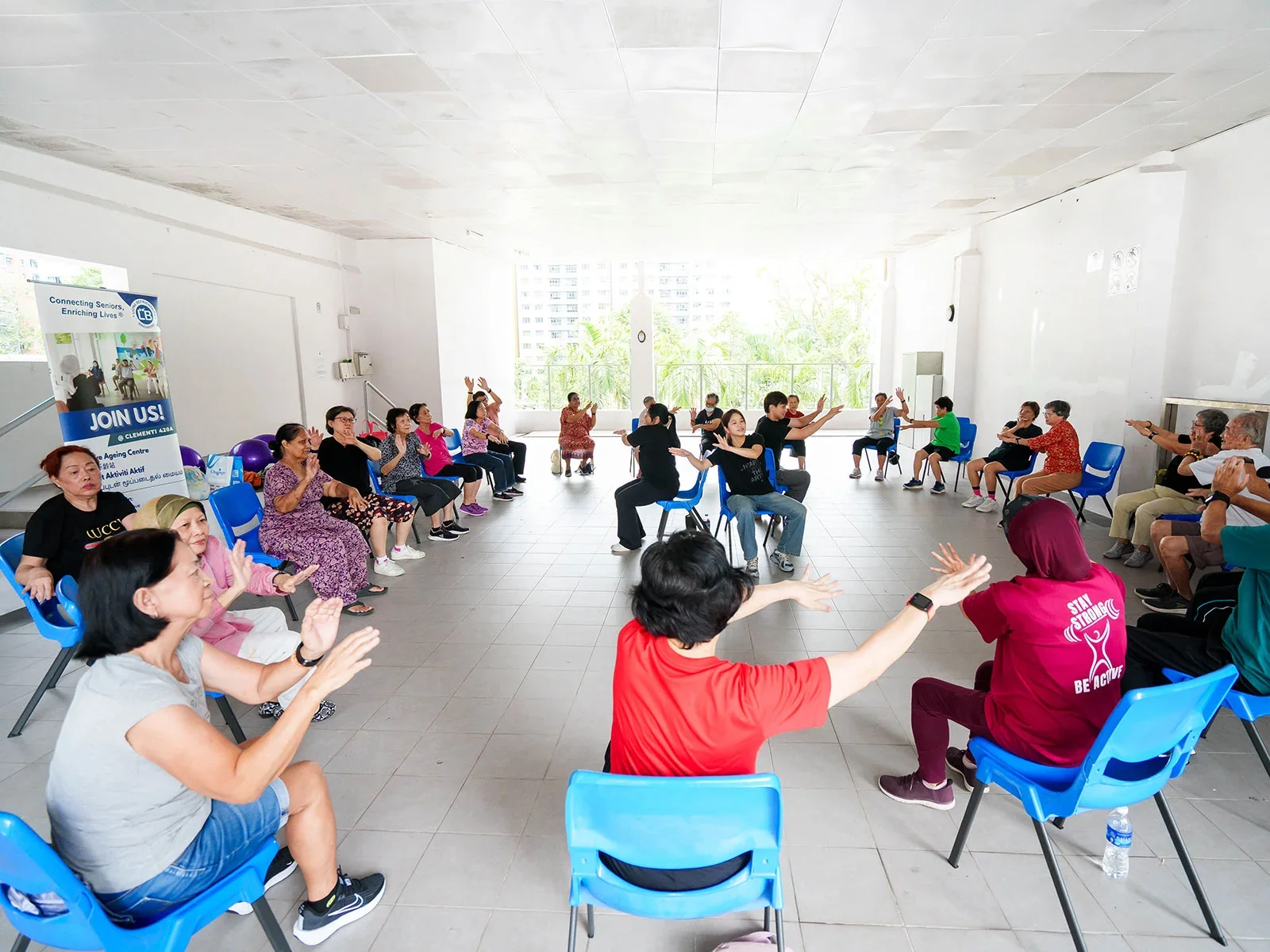
An intergenerational community dance programme co-developed by researchers from the National University of Singapore (NUS) and Lions Befrienders (LB) is being introduced across 10 Active Ageing Centres (AACs) from 2025 to 2027. The large-scale implementation is expected to benefit more than 280 seniors, marking Singapore’s first nationwide use of dance as a health intervention for pre-frail and mildly frail older adults.
Jointly run by the Alice Lee Centre for Nursing Studies (NUS Nursing), National University of Singapore Yong Loo Lin School of Medicine, and LB, and co-designed with geriatric and exercise experts, dance professionals, student instructors, seniors and AAC staff, the programme takes a distinctive intergenerational approach. NUS students, trained as dance instructors through the “Dancing Communities” module, lead sessions that bring youthful energy to seniors, turning each class into a space where generations learn, move, and connect together.
About the Intergenerational Community Dance Programme
The Intergenerational Community Dance Programme is a structured 12-week initiative for pre-frail and mildly frail older adults. The programme combines movement, rhythm and storytelling to improve physical health, stimulate cognition, and foster emotional well-being while also strengthening bonds between generations.
Each weekly session, lasting about 60 to 75 minutes, includes warm-ups to improve mobility and balance, simple choreographed routines built around themes like nature and travel, and cool-down stretches. Sessions are held at Lions Befrienders AACs across the island, led by NUS student instructors, supported by AAC staff and guided by professional dance instructors. The student instructors are enrolled in the “Dancing Communities” course and come from campus dance groups such as IIsa Tari, NUS Dance Blast, NUS Dance Synergy and BreakiNUS.
Beyond boosting mobility, balance and cognitive engagement, the programme nurtures social and emotional well-being. Music, group participation and storytelling create a warm, joyful environment, while themes like nature and travel invite seniors to reminisce. Student instructors add enthusiasm and support, forging strong intergenerational connections.
The long-term vision is to integrate community dance into Singapore’s fall-prevention and ageing strategies, making dance-based interventions accessible to seniors nationwide. By embedding evidence-based programmes like the Intergenerational Community Dance Programme into AACs, we can reimagine ageing in Singapore—not as decline, but as a stage of life filled with movement, joy, memory and meaning.”
Research-backed benefits

The scale-up builds on more than four years of research by NUS Nursing and its partners, including a 2021 systematic review published in the International Journal of Nursing Studies and a 2023 qualitative study in Nursing & Health Sciences, both of which demonstrated the benefits of dance for cognition, mobility, and well-being among older adults. These findings were reinforced by a pilot trial conducted in 2022 at four neighbourhood Senior Activity Centres operated by LB, where an eight-week programme improved seniors’ physical health, sharpened their memory, lifted their moods, and reduced loneliness.
The programme’s Principal Investigator, Assistant Professor Vivien Wu from NUS Nursing, said, “Mild cognitive impairment, or MCI, affects up to 20% of older adults worldwide. Nearly 40% of those with MCI will progress to dementia, if left untreated. Currently, there are no approved pharmacological treatments for MCI. Dance offers a holistic, enjoyable, and culturally adaptable intervention that engages the body and mind while simultaneously fostering social connection. With Singapore placing strong emphasis on Healthier SG and Age Well SG, our findings show that dance is a low-cost, scalable way to help seniors not only live longer—but also live better.”
Dr Chew Suyin, Senior Lecturer from NUS College and Yong Siew Toh Conservatory of Music, added, “Movement is a universal language—it transcends boundaries and breaks down the barriers in communication. Dance provides physical well-being and allows for meaningful social connection and the development of aesthetic sensibilities. Community dance is inclusive, collaborative, accessible, empowering and transformational. The programme that the students are conducting is focused on engagement and process, emphasising the fact that all arts have healing properties.”
Karen Wee, Executive Director of LB said that social connection and engagement are just as vital as physical activity for the well-being of seniors. The Intergenerational Community Dance Programme perfectly exemplifies this belief, addressing the crucial psychosocial health of elderly residents. “This programme is more than just dance; it’s also about reducing isolation, building friendships, and creating a sense of joy and community. We are deeply grateful for our valued partners, like NUS and their dedicated student volunteers, whose collaboration has made this programme a resounding success. Together, we are not only delivering a beneficial service but also building a stronger, more inclusive community that supports our seniors in their journey of healthy ageing,” she added.
Looking ahead
The NUS Nursing team plans to expand the programme islandwide and develop digital training modules to support wider adoption. Future phases will build on its intergenerational teaching model, extending the benefits of dance while strengthening community bonds across age groups. “The long-term vision is to integrate community dance into Singapore’s fall-prevention and ageing strategies, making dance-based interventions accessible to seniors nationwide. By embedding evidence-based programmes like the Intergenerational Community Dance Programme into AACs, we can reimagine ageing in Singapore—not as decline, but as a stage of life filled with movement, joy, memory and meaning,” added Dr Wu.
More from this issue