Issue 57
Feb 2026
INSIGHTS
Students learn from their teachers. But who teaches the teachers? In medical education, the quality of education directly determines the quality of healthcare patients receive. Associate Professor Judy Sng, Education Lead in the Department of Pharmacology at Yong Loo Lin School of Medicine, National University of Singapore (NUS Medicine) is acutely aware of this reality.
Among one of the first to be promoted to an open-contract position in the preclinical educator track at NUS Medicine, she is a strong advocate for educators to go beyond simply fulfilling teaching hours to actively seek opportunities to improve curriculums, refine teaching methodologies and showcase their educational findings—even if it means stepping outside their comfort zone.
“Amid the hectic schedule of preparing for and teaching classes, it is easy to forget that imparting knowledge and fulfilling teaching hours is just one part of the equation. It is equally, if not more, important to innovate and transform our teaching,” she explained. “But how do we know what to innovate and whether the innovation works?” Her answer: “Research.”
Embracing education research
Her belief shapes her day-to-day practice. A veteran educator with 16 years of teaching experience, Assoc Prof Sng frequently experiments with new teaching approaches and tech tools and believes in questioning the status quo even as she continually refines her craft. “After every semester, I take time to review my teaching and the things I tried in class. Usually, that sparks questions like how did that work, or could I have done it better? And that is the research gap.”
Recognising that healthcare is transforming and digitalising at an accelerating pace, she sees an urgency to plug the gaps in medical education. “Clinical practice is evolving, with hospitals incorporating technologies such as Artificial Intelligence (AI) into routine workflows, for example, using AI-assisted algorithms to analyse X-rays, flag abnormalities, prioritise urgent cases, and support diagnostic decision-making. If we want our students to graduate as competent and future-ready medical professionals, we must equip them with an understanding of these tools and their limitations. Failing to do so would place them at a disadvantage in modern clinical environments. This makes it essential for us to conduct research into current industry practices and ensure that our curricula remain aligned with real-world healthcare needs.”
Coming from a science research background, she shared that venturing into education research was what fast-tracked her growth as an educator. “Being an educator in a tertiary institution is unique—we are all PhD‑trained in specific domains, like neuropharmacology for me, but we don’t receive formal training in teaching. And although we have the Centre for Teaching, Learning and Technology (CTLT) at NUS and Centre for Medical Education (CenMED) at NUS Medicine, much of the learning still happens on the job. That’s how I started developing, researching, running usability tests and reviewing teaching tools’ efficacy.”
This commitment to improving teaching quality led her to set up the NUSMed Educator Club. “We first created this club to support both young and seasoned medical education faculty in their career and pedagogical development. But along the way, we’ve seen participation from colleagues in other departments—and even other medical schools.”
Harvard connections
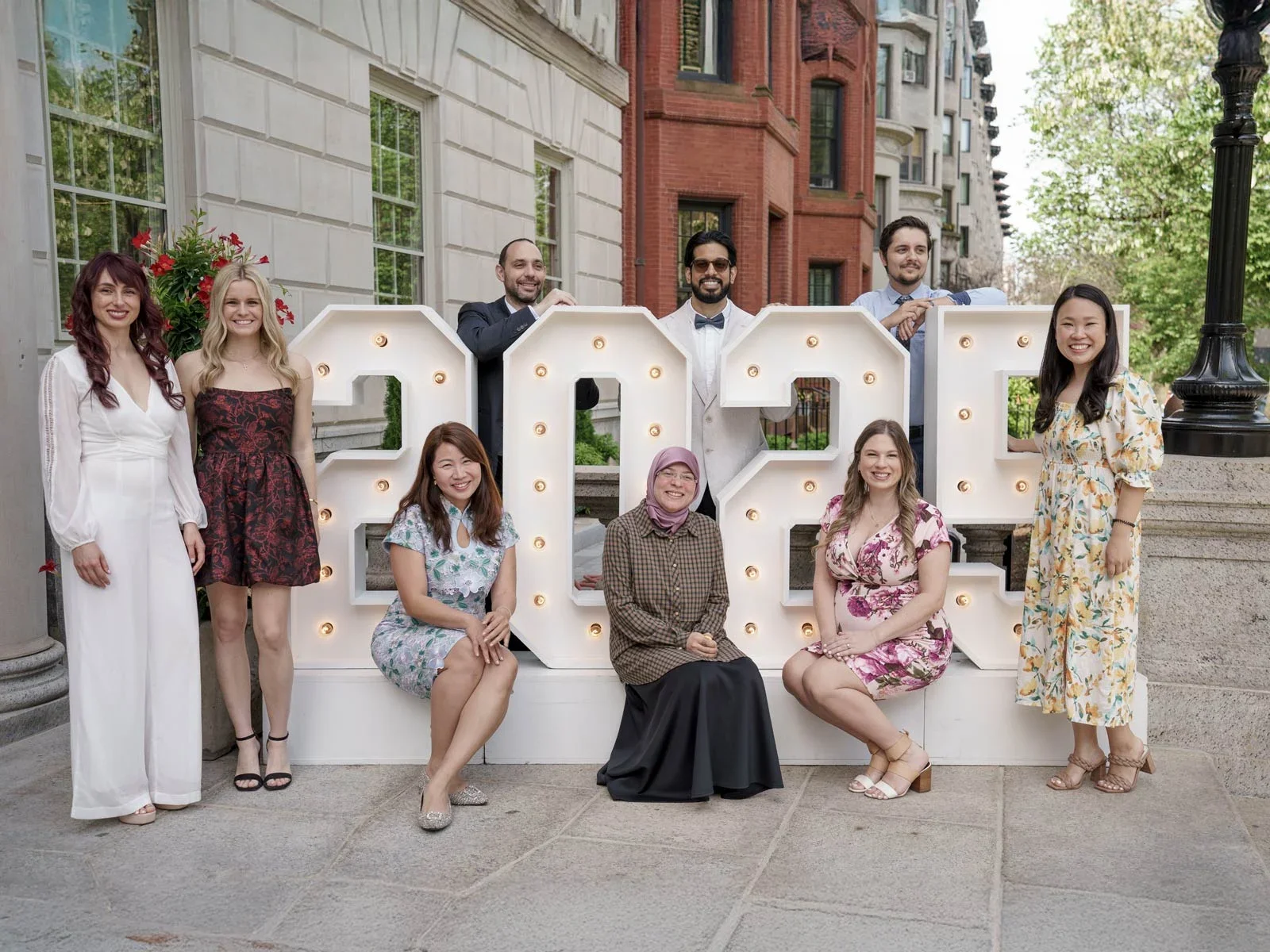
Assoc Prof Sng’s commitment to improve her teaching skills saw her enrol in the Master of Medical Sciences in Medical Education programme at Harvard Medical School in 2023. “For years, my head of department had been telling me that I should do something like a Master’s in Medical Education because it will help me grow as a leader. But I put it off as my children were young. Then the opportunity came up at the right time, so I put in my application in 2022 and started in the following year.”
Juggling the two-year, full-time course with her work at NUS and caring for her family was challenging. But true to form, she wasn’t content with simply attending classes and completing assignments: she wanted to do well. “It’s exciting to have my work critiqued after having done the same thing with my students’ work for over 15 years. It challenges me to think and go further—and I would much rather have that than being told everything is good, because then the learning wouldn’t have been as rich.”
Another highlight of the programme was the opportunity to meet other seasoned educators like herself. “Unlike an MBA course, the niche nature of the programme meant that the cohort was small, and my coursemates were all leaders from other medical schools. Through them, I got to learn about medical education in the US and build connections that pave the way for future collaborations.”
Learning, growing and sharing
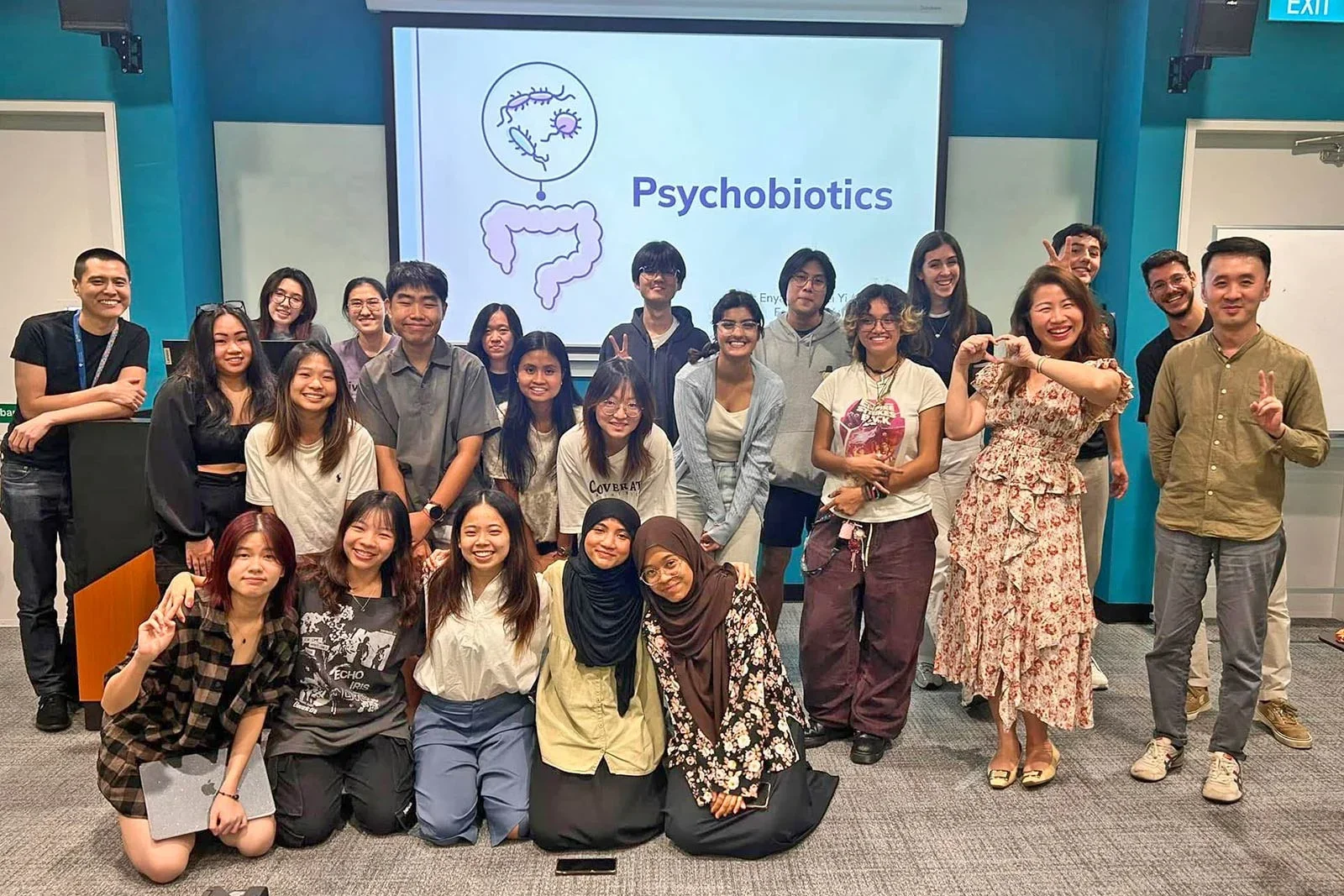
Assoc Prof Sng completed her Master’s studies in June 2025. However, her ties with Harvard are far from over. “I am currently in my second year of co-facilitating the Harvard Macy Institute course ‘Transforming Your Teaching Using Technology’—a class I took in my first year of the Master’s programme. The team felt that I would make a good facilitator, so I tried my hand at it last year. They invited me back again this year. I said yes because it opens opportunities for other NUS Medicine faculty to also become facilitators with the institute and showcase their work beyond NUS in the future.”
A firm believer of knowledge sharing, she also plans to share what she has learnt from her Master’s and her journey as an educator with other educators. “After the Master’s, I feel more equipped to help others, particularly young faculty. So I have accepted CTLT’s invitation to conduct a three-day workshop for educators across NUS, sharing how to get started in education: finding their research question, designing surveys, conducting interviews to get answers and—importantly—translating findings into implementation and evaluating their effectiveness.”
Her hope is that this will get the ball rolling and encourage other seasoned educators to contribute to the culture of sharing. “There are many educators doing interesting things in their classes. But if no one is asking them to share, then the impact of that innovation is limited. If everyone came forward, I am confident we would all learn something we could inject into our future classes to bring about positive change for the school, for education—and for healthcare.”
She isn’t done learning herself either. “I never want to stop learning.” Among the early adopters of generative AI tools in her teaching, the seasoned educator proactively encouraged her peers to get comfortable—creating guides and materials to help them navigate these tools. “There’s of course discomfort and some resistance in the beginning—just like when we had to teach classes on Zoom during the pandemic or moved from paper to electronic tests—but our strong teaching, sharing and exploring culture here helps.”
“I recall a senior colleague who initially found it very challenging to use electronic assessment platforms. I would literally sit beside him and guide him step by step to click here, then click there. Today, not only is he highly proficient with the system, he is also so at ease with digital tools that he now runs his own TikTok channel,” she said with a smile. “To me, that’s a clear sign that I’ve done my job.”
More from this issue
IN VIVO
To Teach is to Learn Twice
STUDENT MATTERS
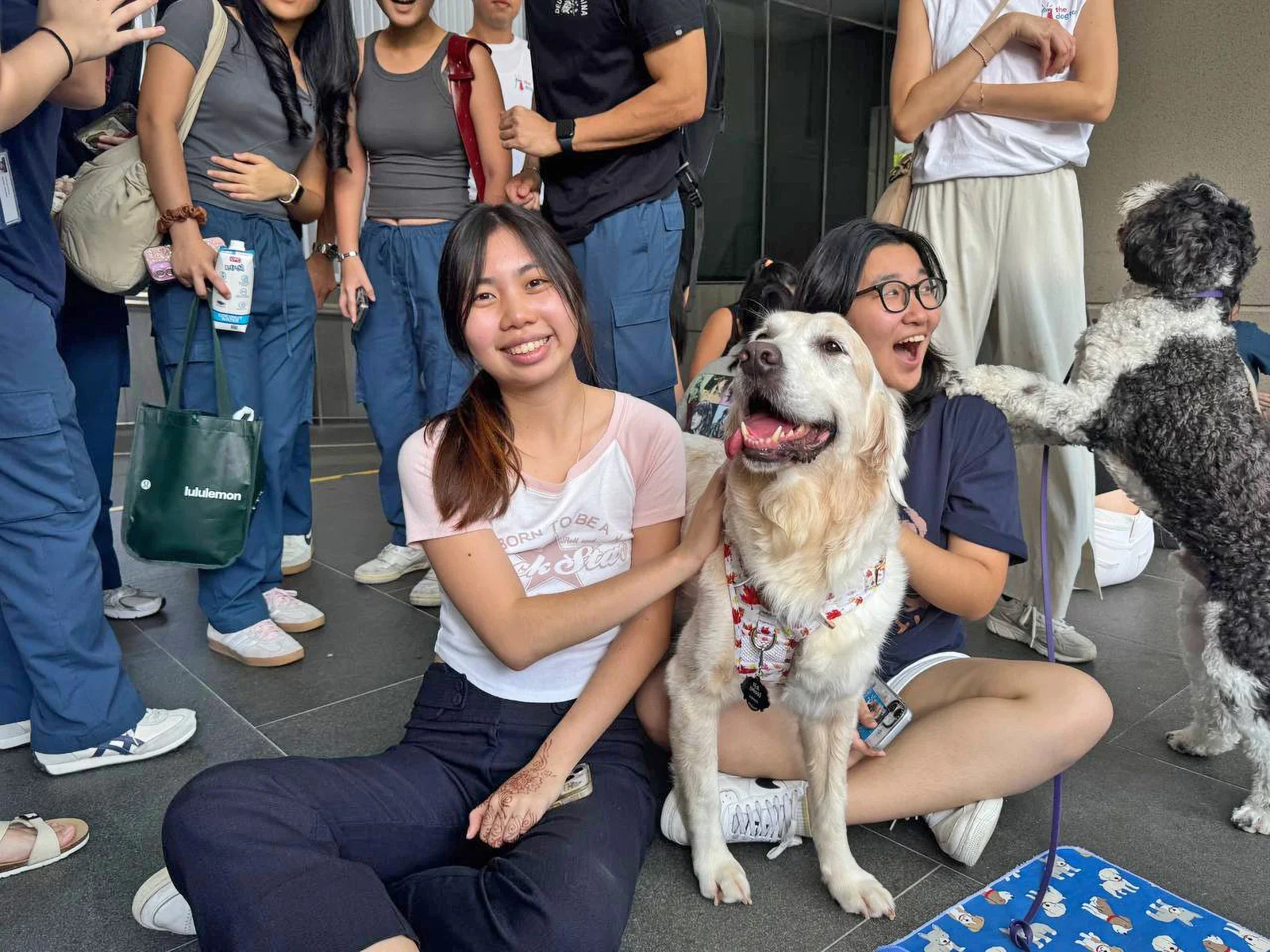
Take A Paws with The Dogtors