Issue 56
Nov 2025
PEOPLE OF NUS MEDICINE
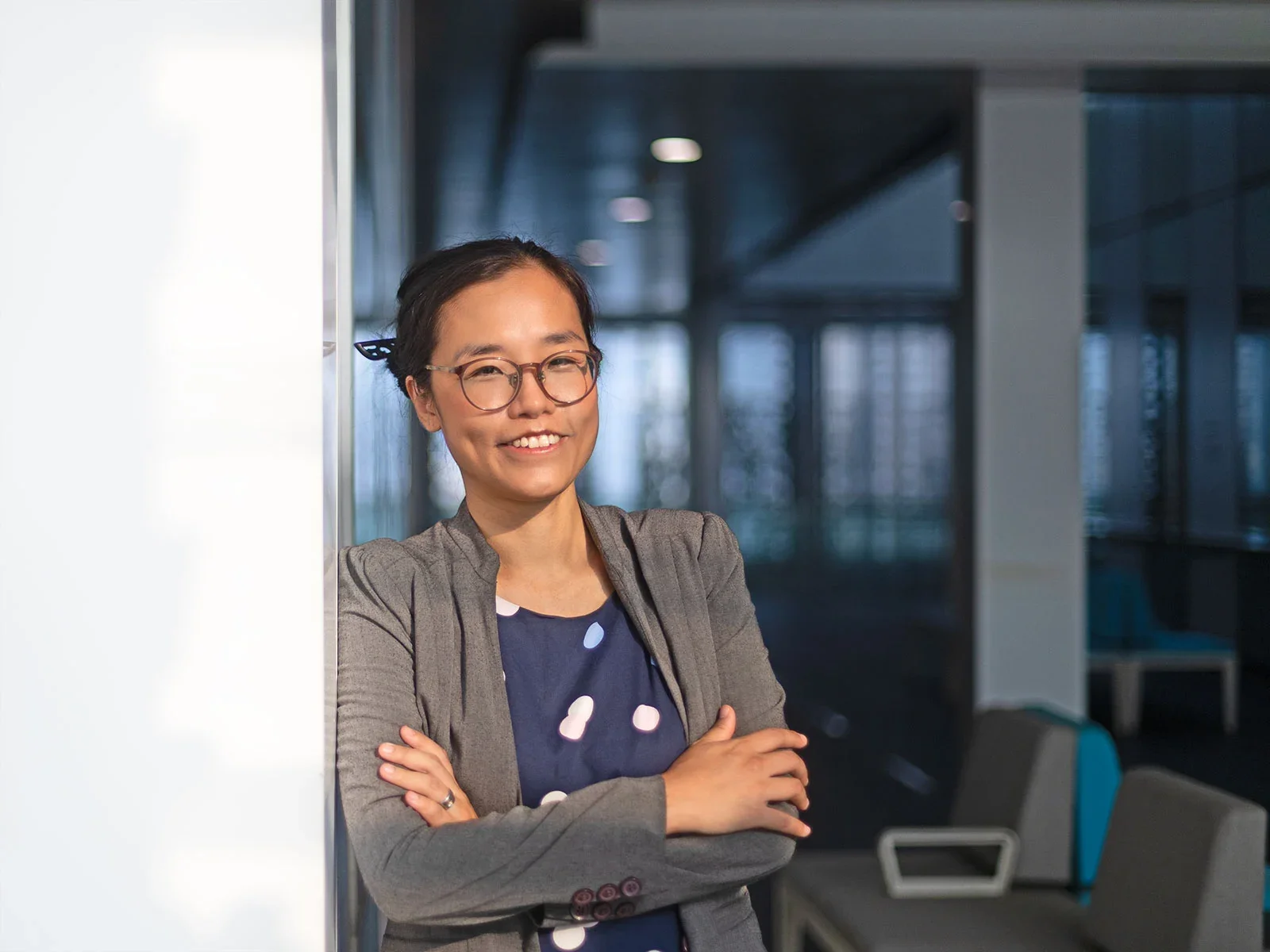
For over a decade, Ms Liu Ching Man has played a quiet yet pivotal role in shaping how future doctors are trained at the Yong Loo Lin School of Medicine, National University of Singapore (NUS Medicine). As Senior Manager in the Curriculum Planning and Development team, her contributions have brought innovation and relevance to the way medical students learn.
In the 120 years since its founding, NUS Medicine has evolved through the dedication of countless individuals working behind the scenes. Among these unsung heroes is Senior Manager Liu Ching Man, whose decade-long career in the Education Division’s Curriculum Planning and Development team exemplifies the transformative power of collaboration and resilience in reshaping medical education. From navigating pandemic challenges to embracing innovation, her journey reflects the School’s enduring commitment to excellence in nurturing future healthcare professionals.
The art of educational transformation
When Ching Man joined NUS Medicine in 2012 after her stint as a Ministry of Education (MOE) Education Officer, she witnessed firsthand how an NUS Medicine task force tackled the monumental challenge of transforming theoretical concepts into practical implementation. The 2018 Curriculum Rationalisation Exercise became a learning experience early in her career, as she observed senior faculty members undertake the complex process of reducing thousands of line items to more focused topics that truly mattered in Singapore’s healthcare system.
“The concept of outcome-based medical education was something that started gaining traction in Asia in the late 2000s,” Ching Man explains. “The essence is that you focus on designing the curricula with the end in mind.” Observing how the task force navigated potentially contentious conversations while keeping focus on educational outcomes provided her with important lessons that would shape her work later in her career.
The rubber hits the road
The COVID-19 pandemic tested Ching Man’s adaptability when clinical electives were suddenly cancelled in line with social distancing measures. Drawing on pilot programmes developed earlier, Ching Man and her team supported the rapid development of a 10-week Pathway programme in March 2020, which offered students avenues to explore interdisciplinary skillsets and opportunities to nurture values in shaping medical practices. The programme covered areas such as Health Informatics, Health and Humanities, Inquiry and Thinking, Education Innovation, and Medical Innovation and Entrepreneurship.
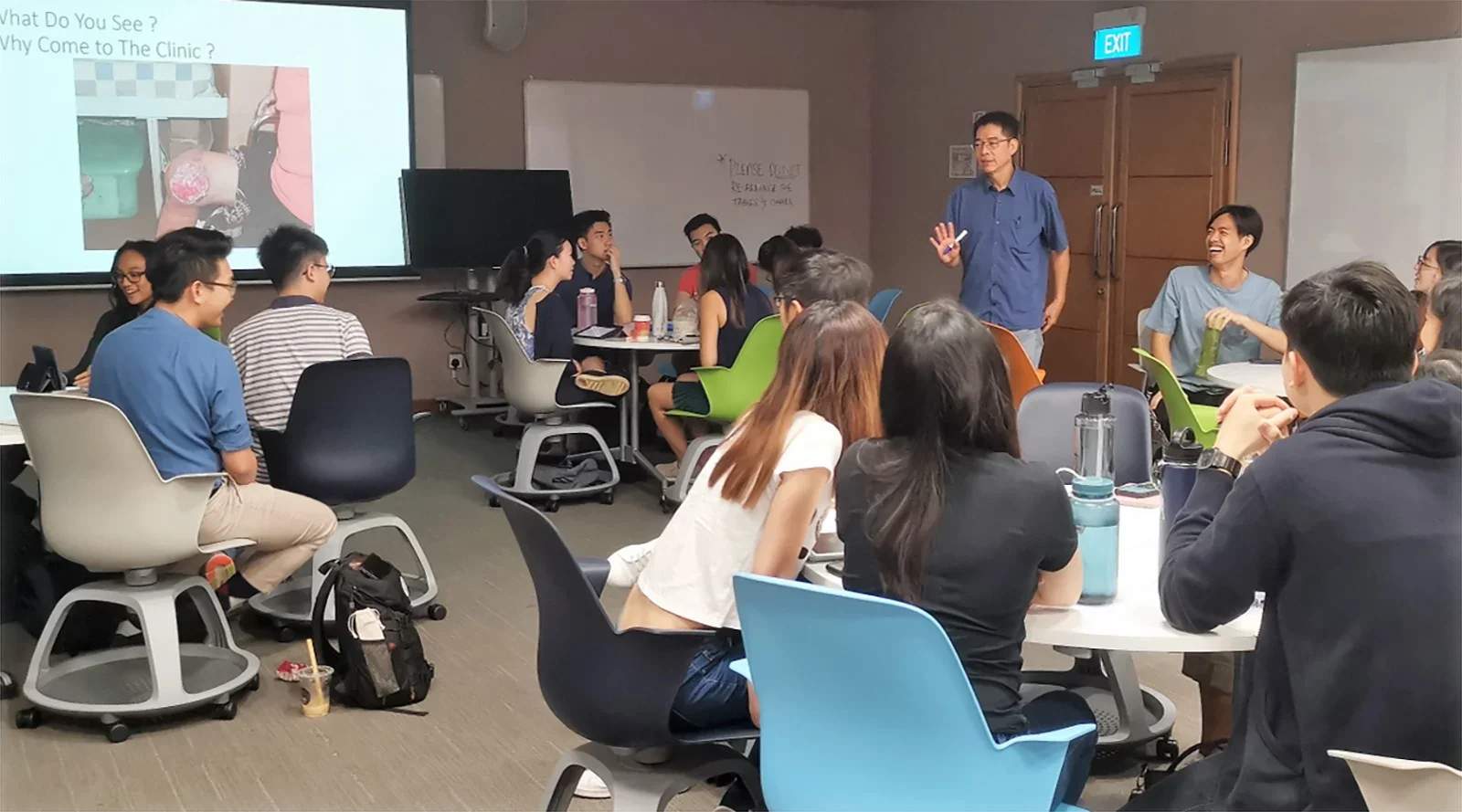
Participants attending the Pathway programme launched during COVID-19. Disclaimer: Photos were taken before the mask-wearing regulation was implemented.
“The most important lesson in adaptability that I realised from that experience was, we really need to build a network of strong relationships with a diverse team,” Ching Man reflects. This emphasis on continuous innovation proved invaluable when crisis struck. The emergency solutions developed during the pandemic eventually evolved into the Common Healthcare Curriculum implemented in 2023.
Ching Man’s journey has also been marked by her growing passion for digital enablement in education. Her enthusiasm for exploring technology-enabled solutions earned her recognition in the 2022 NUS DE’Hackathon and the 2023 NUS DE Star Award. At NUS Medicine, the team is driving the implementation of a real-time feedback system to provide unprecedented insights into teaching and learning, including the development of a real-time attendance dashboard.
“We are getting real data to support our understanding of our students’ behaviour,” she explained. “In the future, the dashboard will allow us to monitor attendance patterns, assessment scores, and learning engagement across multiple courses simultaneously. This integration will help us identify at-risk students in real-time, rather than waiting until final examinations to reveal potential problems.” These digital advances represent a shift from reactive to proactive student support, eliminating weeks of manual data gathering across different departments and enabling timely intervention when students need it most.
We don't think of a patient as a painful knee or failing eyesight, but rather as a human being who is going through different stages of life with changing bodily functions, so how do you teach our students to provide care in ways that matter?”
A personal vision
As Singapore Healthcare evolves for a Healthier SG, Ching Man eagerly anticipates a healthcare system focused on empowering patients towards better health. Her vision is deeply personal. “I have had elderly family members navigating that journey,” Ching Man reflects. “It was really difficult having to organise the care around the healthcare team. I wish it had been organised around my mother-in-law.”
She is also passionate about helping to shape a more holistic approach to medical education: “We don’t think of a patient as a painful knee or failing eyesight, but rather as a human being who is going through different stages of life with changing bodily functions, so how do you teach our students to provide care in ways that matter?”
For Ching Man, inspiration comes not from revolutionary breakthroughs but from building strong relationships, embracing innovation and maintaining a shared commitment to problem-solving. This philosophy, inspired by mentors like her boss, Vice-Dean for Education Professor Lau Tang Ching, has guided her through pandemic adaptations and digital transformations—always with the end goal of nurturing compassionate, well-rounded healthcare professionals who see their patients holistically rather than as a collection of symptoms.
As NUS Medicine continues its journey of excellence, Ching Man’s quiet dedication and collaborative spirit exemplify how individual contributions can collectively transform an institution’s legacy, inspiring health for all, for generations to come.
Click here to read other stories in the “Inspiring Heroes” series.
More from this issue

PEOPLE OF NUS MEDICINE
The Cat Whisperer
SPECIAL FEATURE
A Glimpse into the Past – Medicine in Singapore (Part 12)

SPECIAL FEATURE
A Glimpse into the Past – Medicine in Singapore (Part 14)