Each year, about
150
fourth year medical students from the NUS Medicine receive O&G training at clinics within the NUWoC at NUH and NTFGH

Issue 56
Nov 2025
IN VIVO
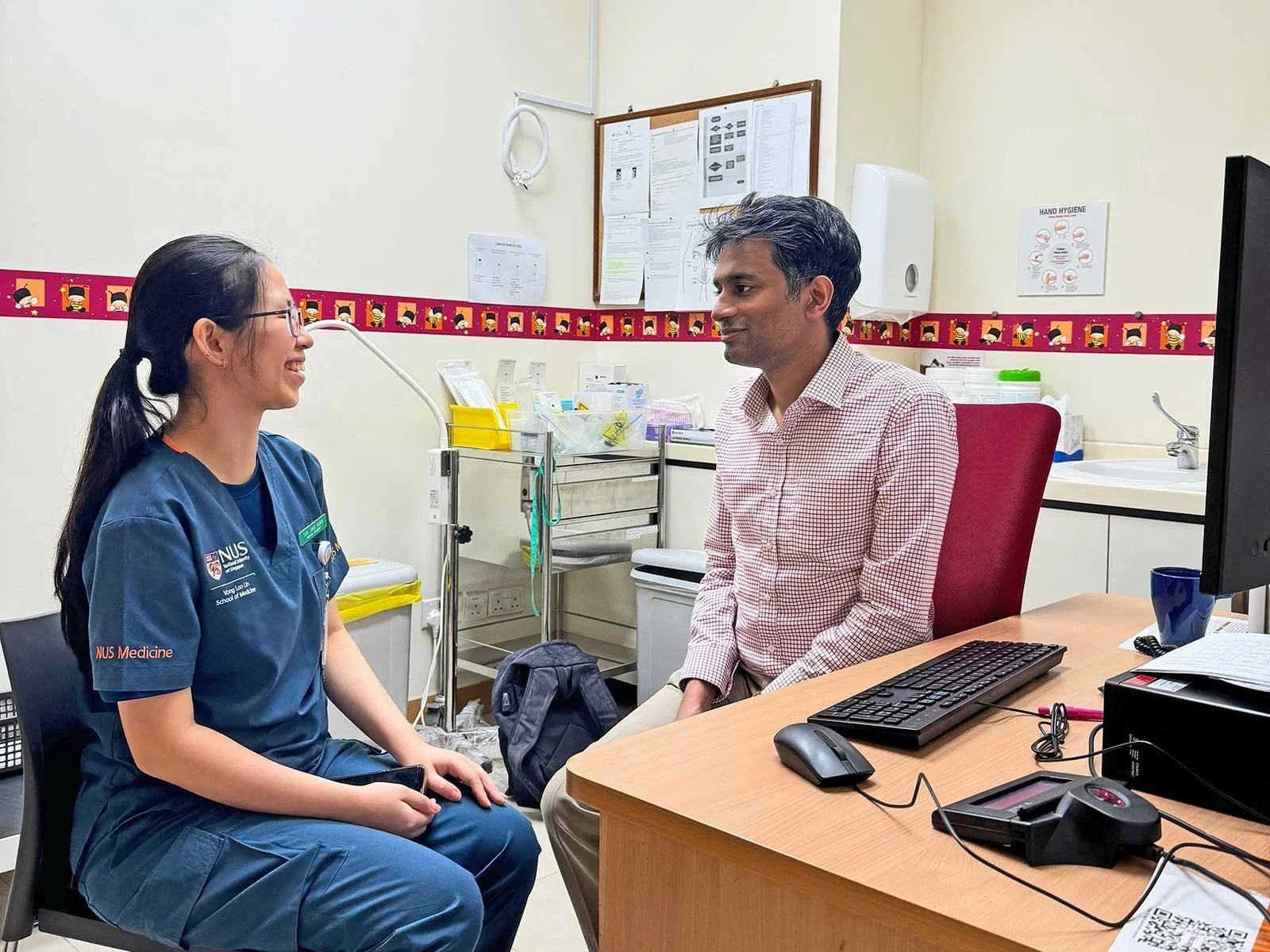
Photo credit: Dr Kanneganti Abhiram
Each year, about 150 fourth year medical students from the Yong Loo Lin School of Medicine, National University of Singapore (NUS Medicine) receive obstetrics and gynaecology (O&G) training at clinics within the National University Centre for Women and Children (NUWoC) at National University Hospital (NUH) and Ng Teng Fong General Hospital (NTFGH).
This year, the NUWoC clinic at Jurong Medical Centre (NUWoC @ JMC), an outpatient specialist centre, welcomed its first batch of students.
A Different Learning Experience
“For many years, NUH has provided core clinical teaching during students’ O&G postings. This year, JMC joined as one of the training sites, offering a different setup where consultant gynaecologists and Family Medicine residents provide general outpatient O&G services. In this less hectic environment, free from acute emergencies, medical students benefit from close guidance in clinical examination and management,” said Adjunct Associate Professor Arundhati Gosavi.

Matthias Ho, a fourth-year student who was among the first batches posted to NUWoC @ JMC, was deeply appreciative of this experience. “My JMC posting was a refreshing change from the fast-paced hospital environment. It offered a more intimate outpatient setting where patient care was deeply personal and continuous. Through the follow-up consultations, I was also able to appreciate the long-term doctor-patient relationship, which was often harder to observe in hospital postings with more hectic patient schedules.”
Michelle Yeo, from the same posting cohort, shared a similar sentiment, “The smaller pool of patients and lower doctor-to-patient ratio not only meant that patients received more undivided time and attention from their doctors, it also provided more learning opportunities for students like myself to participate in history taking and hands-on activities. It is invaluable to be able to apply my theoretical knowledge to clinical practice, strengthening the connection between textbook learning and real patient care.”
A Different Teaching Experience
The same positive experience was shared by the consultants. “I appreciate being able to take the time to explain to Matthias, who spent his clinical posting with me, how to take history for patients seeing us for the first time, and guide him through the steps of examining a pregnant patient,” said Dr Sarah Li, one of the supervising consultants at NUWoC @ JMC.
Another supervising consultant, Dr Kanneganti Abhiram, added, “We have a strong teaching environment at NUHS, so we are able to transplant the same ethos to JMC.” Dr Li agreed, “That’s right. I am a firm believer in the ‘see one, do one’ model—and with Matthias, I would always do first while he observed. Then for the next patient, he would do it independently while I observed and correct if necessary.”
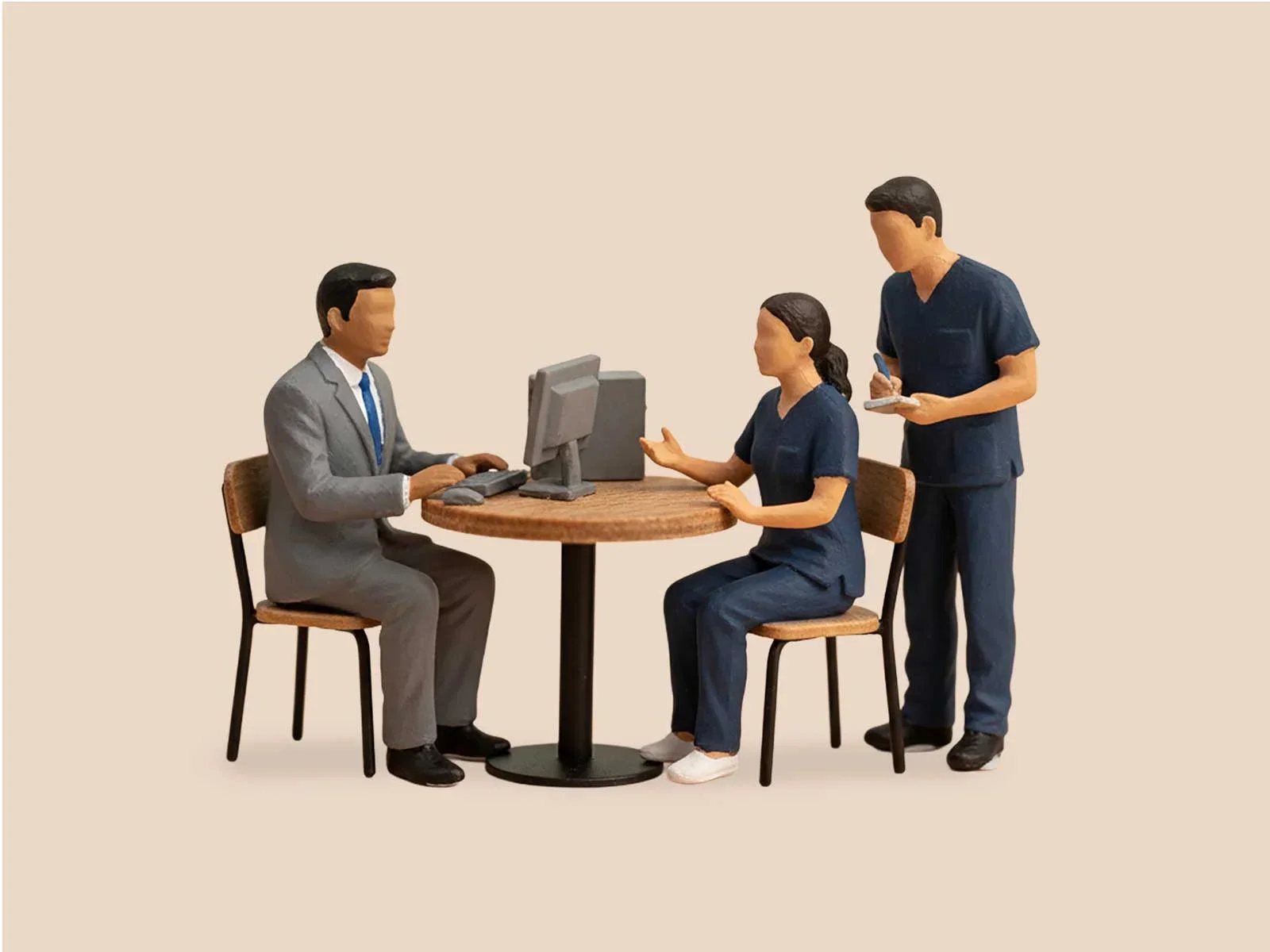
Dr Kanneganti continued, “With the more balanced patient volumes here, we have more opportunities to discuss and reflect on cases, including understanding social aspects influencing medical care, to better understand how women’s health issues interact with their lives. From a teaching perspective, it is more satisfying and enjoyable as we can spend more time addressing questions and concerns—and collectively work on meeting the educational outcomes.”
Sharing an example from his time with Michelle, he said, “We once saw a first-time mother-to-be who was feeling stressed having to juggle her pregnancy, work, family, and everything else. In a typical hospital setting, we would have checked the baby’s heartbeat and moved on to the next patient. But because we had more time, we were able to talk to the expectant mother, help unpack her stress by walking through the pregnancy process, provide a memo explaining her situation to her employer, and even check in with her husband to assess the need for women’s emotional health services. These are the kinds of learning experiences Michelle might miss in a high-volume hospital setting.”
Valuable Lessons
Recalling the same case, Michelle said, “The patient I saw with Dr Abhi left feeling reassured and excited for her next visit. That showed me the impact of Medicine’s soft skills—active listening, empathy and patience—on patient care. Sometimes, they are just as important as the medical treatment itself. It also reinforced that patients are not just ‘cases’ to be seen quickly, but individuals who are given time, space, and compassion. That human side of Medicine really stood out and reminded me why I chose this profession.”
Dr Li and Matthias also had a shared experience with a patient. Dr Li remembered, “I saw a patient who came for a routine antenatal check, but sadly, it turned out to be a pregnancy failure. Although the outcome wasn’t a desirable one, it offered Matthias an opportunity to see how routine consultations can change into a long, emotional and supportive session, with the end point being patient’s physical and mental well-being, and satisfaction. Such rich learning experiences will have lifelong impact and shape the way our future doctors care for the population.
Summing up his posting at NUWoC @ JMC, Matthias reflected, “JMC taught me that O&G is not just about procedures and diagnoses. It is also about empathy, communication, and helping patients feel safe during vulnerable moments. Medicine is as much about community as it is about clinical care. Ensuring care continues outside of the hospital through follow-ups is not only meaningful but can also truly make a difference. It was a gentle yet powerful reminder of why I chose Medicine in the first place—to walk alongside patients through their journey.”
JMC taught me that O&G is not just about procedures and diagnoses. It is also about empathy, communication, and helping patients feel safe during vulnerable moments. Medicine is as much about community as it is about clinical care. It was a gentle yet powerful reminder of why I chose Medicine in the first place—to walk alongside patients through their journey.”
More from this issue