Issue 56
Nov 2025
DOSSIER

The Yong Loo Lin School of Medicine, National University of Singapore (NUS Medicine) Class of 2025 inherits and builds on the legacy of preceding generations: dedication to excellence in patient care. Meet some of these graduates.
Bachelor of Medicine and Bachelor of Surgery (MBBS), Class of 2025
Community volunteer and dancer

Dr Thirumeninathan Thaarun
House Officer, Department of Orthopaedics, Sengkang General Hospital
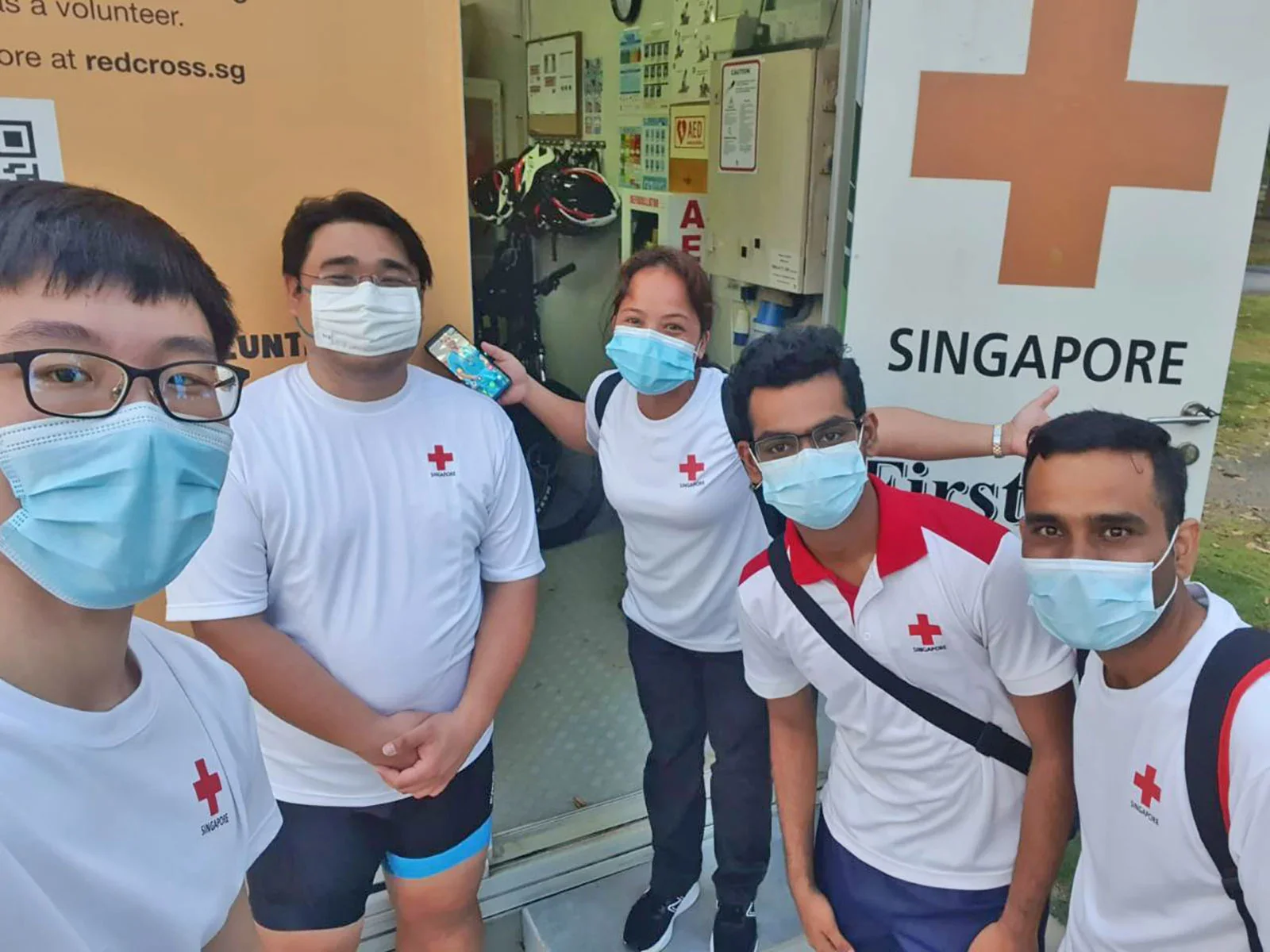
Thaarun (second from right) with the Singapore Red Cross First Aiders on Wheels team at East Coast Park in 2019. Photo credit: Singapore Red Cross Team.
Thaarun’s school years were grounded in an intensive science-based curriculum, with subjects like Chemistry, Biology, Physics and Mathematics.
But his decision to become a doctor was sparked by a strong desire to serve, something that grew from his job-shadowing stints in hospitals and hands-on experience with the Singapore Red Cross, where he assisted the injured during his first aid volunteering duties in 2019.
Apart from being on the Dean’s List and achieving MBBS with Honours, he actively contributed to community outreach efforts, including MedNurse Flag and was part of the pilot team of the Adolescents and Young Adults Oncology (AYAO) Juniors programme, an initiative that supports underserved cancer survivors aged 16 to 49.
Outside the hospital and classroom, Thaarun is an avid dancer, regularly performing with NUS Naach, a student‐led Indian dance group known for its energetic and expressive performances.
“Engaging in volunteering and the arts ensures that I continue to lead and feel with my heart while thinking as a doctor,” he said.
Drawing parallels from Medicine and the arts
Xie Jia Lin Sophie
House Officer, Department of Internal Medicine, National University Hospital (NUH)

Sophie (middle) performing at Moonfest 2021. Photo credit: @yeap.pl on Instagram.
Back in junior college, Sophie was drawn to Medicine for its blend of intellectual challenge and deep human connection. She wanted a path that demanded not just academic rigour, but also empathy, resilience and purpose. At NUS Medicine, the close-knit community and vibrant student life offered her a place to grow as both doctor and artist.
Sophie has been dancing since the age of five. She joined the NUS Chinese Dance and King Edward VII Hall Dance to continue pursuing her love. In 2023 and 2024, she choreographed for EMERGENCE, a programme led by the Singapore Chinese Dance Theatre.
In 2024, Sophie explored another creative avenue as Assistant Producer for ‘Left’, a short film directed by fellow medical student Joseph Lim. ‘Left’ is a poetic reflection on time, love and loss. The film earned international acclaim, receiving the Grand Jury Award at the Oniros Film Awards in New York and Gold Awards at the Independent Shorts Awards in Los Angeles. It was also shortlisted for the Lion City Dance Film Festival and screened at Golden Village x The Projector. For Sophie, storytelling is a way to express and preserve emotions and memories.
“I see parallels between my journey in Medicine and the arts. As I continue to deepen my clinical knowledge, I also seek growth in my artistic pursuits. Each phase has not only allowed me to express myself in different ways, it has also grounded me with a sense of clarity and purpose, allowing me to connect more meaningfully with the human experience behind every patient,” Sophie shared.
Dedicated physician and national fencer
Dr Rebecca Ong Jia Min
House Officer, Department of Obstetrics and Gynaecology, NUH

Rebecca (left) with her teammates after they received Gold for the Women’s Epee Team at the SEA Games 2022. Photo credit: Singapore Fencing Team.
A fencer, an advocate and a medical student, Rebecca exudes discipline, empathy and creativity—qualities that have earned her both sporting success and helped her to contribute meaningfully at the hospital. “The way I see myself practising Medicine, in the years to come, has been influenced largely by my journey in competitive fencing and my passion for understanding and celebrating the myriad experiences and strengths of others. Fencing has given me the chance to exercise discipline and determination in chasing my goals and taught me how to move forward from inevitable setbacks along the way. My experience with interviewing and publishing the stories of Singaporean youth in the book “Gems in the Rough” has shown me how the simple act of listening and helping to unpack emotions and experiences can be of great comfort to the people we serve.”
Her university journey also offered many opportunities to explore different areas of interest during the elective periods, from tending to snakebite victims in Taiwan as part of a rural medicine elective to studying oil painting in Rome for a fine art elective.
“Overall, the NUS Medicine curriculum has been very enriching. It has given me many eye-opening experiences and some of the fondest memories of my university days,” she reflected. Due to the demanding schedule while transitioning from student to doctor, Rebecca has scaled back on her fencing commitments for now, though she continues to wield her epee in practise sessions.
“Just like in medicine, I’ve realised that I really enjoy taking time to learn about others’ lives and offer help where I can,” she said.
Taking the plunge into medical studies and competitive diving
Dr Ashlee Tan Yi Xuan
House Officer, Department of Internal Medicine, Ng Teng Fong General Hospital
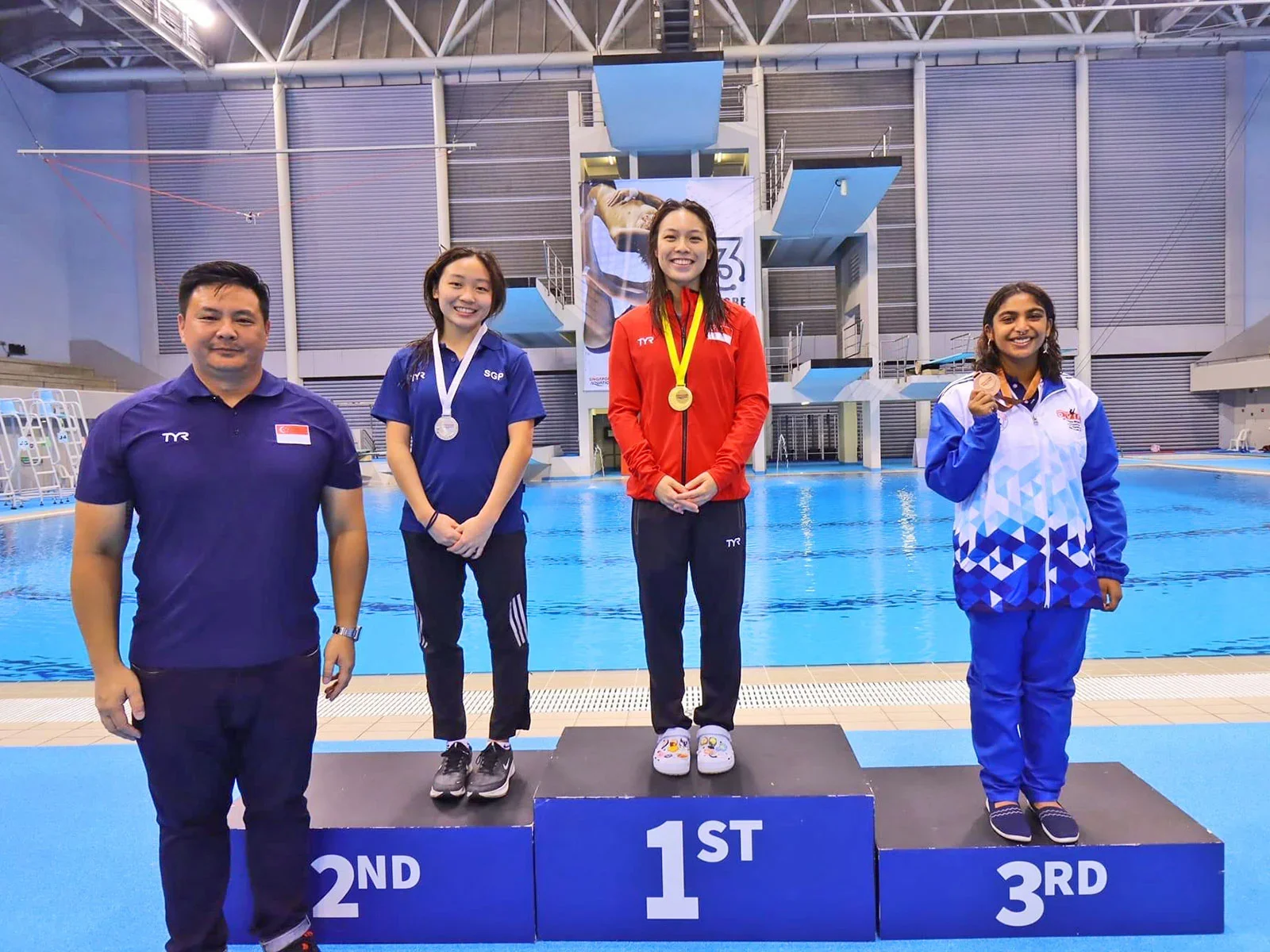
Ashlee (middle) at the 13th Singapore National Diving Championships 2024 OCBC Aquatic Centre, winning the Women’s 3m Springboard. Photo credit: Singapore Aquatics.
When her best friend said she wanted to be a paediatrician when she grew up, a young Ashlee Tan Yi Xuan adopted the same dream. This fun childhood wish turned into firm ambition as she grew older. One striking moment was a project in primary school, where she learnt about less fortunate children in impoverished parts of the world with no access to proper healthcare.
Seeing Medicine as a way to contribute to society, Ashlee, who is also a national diver, applied to study at NUS Medicine. However, at her admission interview in 2019, someone advised her to pick between her first love—diving, which she had picked up at the age of 11—and medical studies.
She was torn between the two. “I didn’t think it was possible to thrive at NUS Medicine while continuing to pursue competitive diving,” she said. “Everyone said Medicine was too intense. As it turns out, if you really want it, you’ll find a way.”
And so she did, even taking a gap year in 2023 to train full-time. The decision came after the 2021 SEA Games in Hanoi, held right after her final exams in Year 3.
“It was brutal—studying and training simultaneously. I could not even fly to Hanoi together with the rest of my team because I still had practical exams,” she recalled. “We missed out on silver, but that reignited the fire in me and I realised that I was not ready to hang up my swim suit.”
The gap year culminated in the 2024 World Aquatics Championships in Doha, where she narrowly missed out on qualifying for the Olympics. “It wasn’t the result I wanted, but it reminded me I could compete at that level. It gave me more confidence to tackle not just diving but medical school too,” she recounted.
Training 30 hours a week during her gap year and maintaining a lighter but consistent schedule after returning to school helped to hone her time management skills. Although she focused on full-time training, she still spent at least two hours studying every day, which helped make her final year more manageable.
“Planning helped me stop panicking. And nothing beats the satisfaction of striking a task off my to-do list,” she explained.M
Ashlee is still putting in the hours at the pool as she eyes the 2028 Olympics. Now undergoing clinical training at the internal Medicine division of Ng Teng Fong General Hospital, she said, “I’ve learnt to make quality count more than quantity. It’s about pacing myself and training smart.”
One piece of advice she would give her younger self? “Go all in, even from the first year. Don’t assume anything is impossible,” she laughed.
Doctor of Philosophy – Medicine (PhD-Medicine)
The drive to learn and serve characterises NUS Medicine graduates. Alongside the undergraduate Class of 2025, our PhD graduates are advancing knowledge in ways that transform healthcare, from understanding diseases to strengthening systems that safeguard communities.
Harnessing multidisciplinary approaches and new technologies in hunt for pathogens
Dr Ko Kwan Ki, Karrie
NUS Medicine
Consultant, Department of Microbiology, Singapore General Hospital
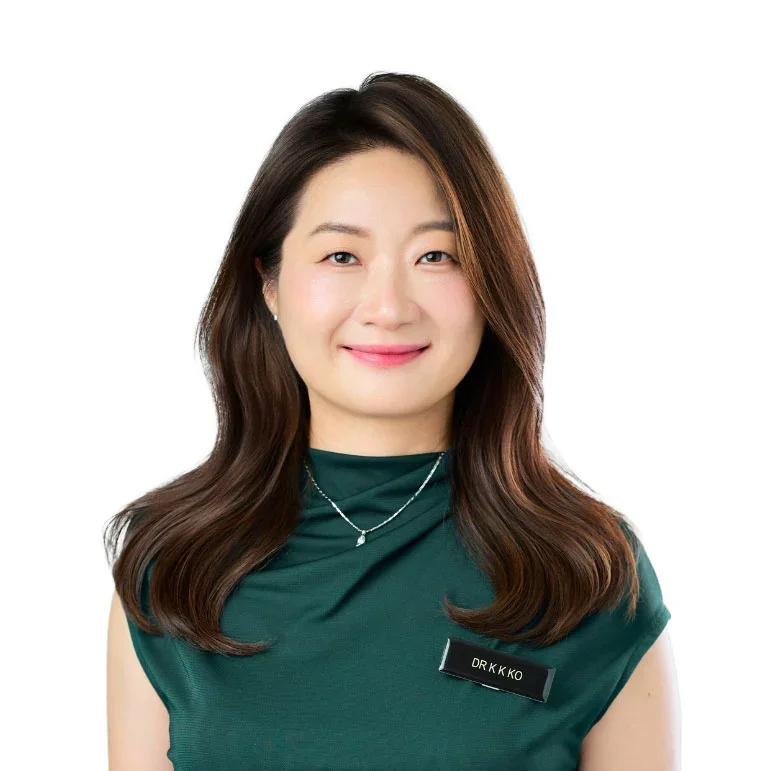
For Dr Ko, the practice of Medicine has never been confined to the clinic.
A Clinical Assistant Professor at Duke-NUS Medical School and a Consultant at the Department of Microbiology at the Singapore General Hospital, her work lies in the invisible margins—where routine diagnostic tests become early warnings, and genomic data quietly informs decisions that could protect entire populations.
A recent PhD graduate from NUS Medicine, Dr Ko’s contributions span clinical diagnostics, cutting-edge genomics, and pandemic preparedness, driven by a profound sense of duty. Her path into microbiology was lit by the memory of SARS, a defining chapter in Singapore’s medical history. From the moment she saw the devastating effects of SARS as a young medical student, Dr Ko understood how quickly pathogens could unravel even the best healthcare systems.
Later, during her specialist training, Dr Ko became involved in investigating healthcare-associated infections, including various putative transmission events, which evoked a sense of helplessness as such critical events seemed so avoidable. These events pushed her to pursue further research into clinical microbiology, where timely and accurate data can directly and systematically improve patient care and support public health action.
After years in the field, Dr Ko realised routine diagnostics alone could not meet evolving needs. “Genomics, data science, and new technologies were evolving quickly,” she said. “I wanted to bridge those innovations into everyday clinical practice.” With her clinical background highlighting the biggest unmet needs, she pursued a PhD to master the tools and evidence to address them, confident it would help her scale solutions beyond individual patients to entire communities.
Her PhD journey unfolded alongside the global COVID-19 pandemic, forcing her to balance clinical duties and research amid intense emotional and mental strain. Travel restrictions meant she could not be with her grandmother before she passed. “The stakes were too high to give up halfway,” she said. “That purpose kept me going, even when things were at their hardest.”
Her determination led to her discovery of a new variant of Candida auris, a deadly fungus, in 2023. While Candida auris cases in Singapore are typically imported, this specific variant was detected in a patient with no recent travel history. This challenged assumptions about local transmission and underscored the importance of genomic surveillance in routine hospital workflows. “Investing in real-time, scalable genomics and integrated machine-learning tools could give health systems the chance to respond earlier and limit wider transmission.”
Today, Dr Ko is focused on embedding such tools into routine diagnostics, aiming for scalable, clinically relevant, and sustainable methods. As Co-Director of the SingHealth Duke-NUS Infectious Diseases Research Institute, she champions multidisciplinary collaboration to tackle evolving infectious disease threats.
Her advice to new researchers is simple: “That willingness to take a chance, to go beyond what is strictly necessary, can lead to growth, discovery, and opportunities you’d never imagine.”
His patients are his inspiration and motivation
Dr Lee Wei Jie, Jonathan
Valedictorian, PhD, NUS Medicine; Senior Consultant, Department of Gastroenterology and Hepatology, NUH; Assistant Professor, NUS Medicine
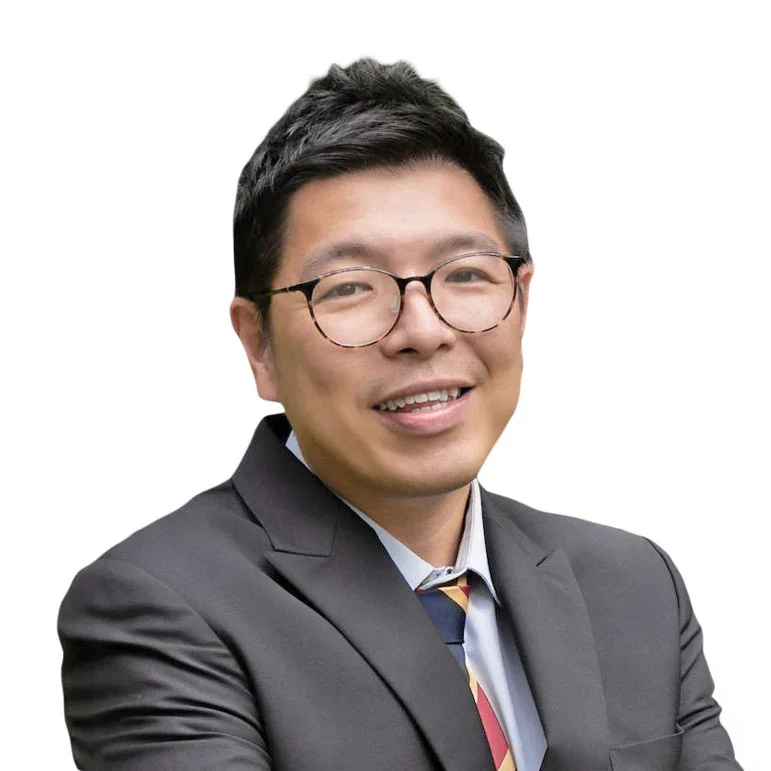
When Dr Jonathan Lee looks through the microscope, he doesn’t just see microbes, he also sees the future of personalised medicine.
A Senior Consultant in Gastroenterology and Hepatology at NUH and Assistant Professor at NUS Medicine, Dr Lee stands at the intersection of clinical care and academic research. This year, he graduated with a PhD and was named Valedictorian of the NUS Medicine Class of 2025.
Pursuing a PhD was never part of Dr Lee’s plans. “I started my research journey when I was offered the opportunity to assist a senior colleague to study gastric cancer risk in local patients,” he recalled. That project was the catalyst that encouraged Dr Lee to consider pursuing a PhD, “because the research wasn’t some abstract academic exercise—it was directly explaining what I was seeing in clinic every day.” From that moment on, he sought to ask better, deeper questions through research and ultimately transform those findings into meaningful clinical applications.
Amid the dynamic complexities of his work, Dr Lee’s guiding ethos is simple: “My research questions come from the patients I see in my practice.”
One enduring observation continues to fuel his curiosity: “You can have patients with identical risk profiles—same diets, lifestyles, and exposures—yet only some go on to develop colorectal polyps or cancer. Similarly, two individuals with near-identical Irritable Bowel Disease (IBD) presentations may respond in completely different ways to the same biologic treatment.”
These clinical puzzles sparked his deep interest in the human microbiome. As the Principal Investigator of the Gastrointestinal Molecular and Microbiome Laboratory at NUS, Dr Lee’s lab investigates how gut microbes influence inflammation, immunity, and gastrointestinal cancers. His research is helping to redefine how such diseases are diagnosed and treated. “The microbiome isn’t just a collection of bacteria. It’s a dynamic ecosystem that interprets our environment and translates it into biological signals.”
Dr Lee’s work already has real-world impact. He leads NUH’s fecal microbiota transplant (FMT) clinical service and designs microbiome-based studies that help predict outcomes in IBD and colorectal cancer. His work between the bench and bedside allows him to push science forward while keeping his research grounded in lived clinical experience.
Yet the path to discovery has not always been smooth-sailing. “I remember one project where I spent four months getting absolutely nowhere,” he shared.
“But I learnt that research doesn’t reward perfection, it rewards persistence.”
That resilience is something he now instils in his students as an Assistant Professor at NUS Medicine, encouraging them to embrace curiosity, ask bold questions, and not fear mistakes.
On being named Valedictorian, Dr Lee responded modestly, “This recognition isn’t just mine—it belongs to everyone who believed in this path before I did. My family, mentors, and the patients that kept me going. It’s a reminder that showing up every day, even when it’s hard, can take you places you never imagined.”
Looking ahead, Dr Lee is energised by how rapidly the field of precision medicine is evolving. “I see a future where we can tune someone’s microbiome like adjusting the settings on a complex system,” he explained. “Not just with drugs, but with targeted foods, prebiotics or even personalised microbial cocktails.” Achieving this, he notes, requires fluency in both patient care and cutting-edge science: “Keep one foot firmly planted in patient care, and let their needs and stories drive your research questions. At the same time, understand the science well enough to know what’s actually possible versus what’s simply hype.”
More from this issue