
Issue 55
Sep 2025
IN VIVO
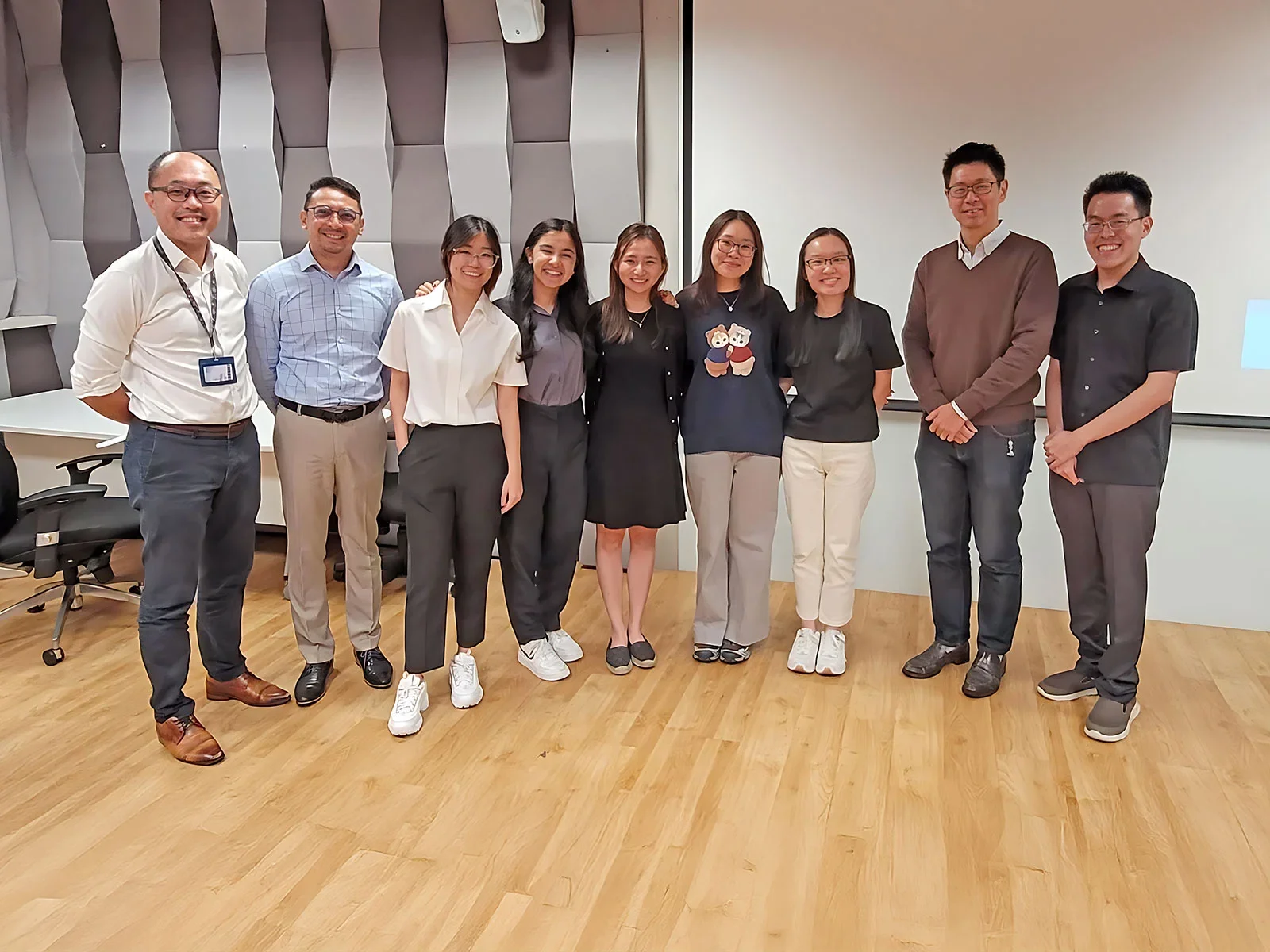
“Do I have to be a healthcare professional to make an impact on healthcare?” This question sparked the curiosity of Year 2 NUS Business student Nerissa Ng Zi Ning, leading her to join the Minor in Integrative Health (MIH) programme.
She was among the first batch of students to successfully complete the minor programme that was designed to foster interdisciplinary learning about health and healthcare among students from non-healthcare majors. “I have always aspired to join the health industry one day. But as a Business student with no prior science background, it felt like a stretch—until I came across this programme,” Nerissa said.
Debbie Goh, another Year 2 NUS Business student who recently completed the programme, was similarly intrigued. She said, “I was drawn by the course description. It offered students from non-science or non-medical backgrounds, like me, a chance to understand health and well-being from an interdisciplinary perspective.”
The experience of interdisciplinary learning
The MIH programme is offered by Yong Loo Lin School of Medicine, National University of Singapore (NUS Medicine) in collaboration with the College of Design and Engineering and School of Computing. The programme’s focus on encouraging students to integrate their discipline-specific knowledge into innovative solutions that empower health and support equitable healthcare for all was what sparked the interest of Chong Tse-Ning, a Year 3 Biomedical Engineering and Innovation & Design Programme student.
She explained, “The opportunity to interact and collaborate with peers from different majors—especially as a Biomedical Engineering undergraduate who typically attends classes with other Engineering students—really appealed to me. It felt like a unique space to learn from others and better understand how people from different fields approach health-related topics.”
Year 4 Law student Eliora Joseph shared the same sentiments. Reflecting on her MIH journey, she said, “There was a lot of focus on interdisciplinary learning and collaborating with groupmates who brought different viewpoints to discussions. It taught me the importance of keeping an open mind and appreciating the unique insights of teammates. Working together to solve problems in an interdisciplinary setting is a skill—and one that is certainly transferable and applicable in the working world and beyond.”
Notably, student majors and backgrounds are not the only interdisciplinary aspects of the MIH programme. “I really enjoyed how MIH exposed us to topics that aren’t typically associated with health. The sharing of expert insights on current healthcare issues and solutions by professors and professionals from diverse specialisations and industries was particularly fascinating,” Tse-Ning smiled.
Nerissa added, “That’s right. During our lecture ‘Design to Heal’, I had my biggest aha moment when I realised that the professor wasn’t from medicine or public health, but from the School of Design and Engineering. For the first time, it dawned on me how everything—even something seemingly unrelated like architecture or product design—could be linked to health.”
I had my biggest aha moment when I realised that the professor wasn’t from medicine or public health, but from the School of Design and Engineering. For the first time, it dawned on me how everything—even something seemingly unrelated like architecture or product design—could be linked to health.”
Newfound understanding of health and healthcare
Nerissa is not alone with her epiphany. The MIH programme had a similar effect on Tse‑Ning. “I had always thought of healthcare largely in terms of medical interventions or technological solutions. Learning about the social determinants of health made me realise how even the smallest, often overlooked details—such as access to public transport, availability of green spaces and family dynamics—can significantly impact a person’s health and well-being,” Tse-Ning explained.
She continued, “I came to understand that health is incredibly multifaceted and that we often need to tackle issues in parts, with collaboration across many different disciplines. This broadened perspective complements my Biomedical Engineering major and influences how I approach problem-solving in healthcare. Instead of focusing solely on solutions grounded in science and engineering, I now also consider context—how people live, what they value, and what influences their everyday choices—when developing user-centred medical technologies or wellness.”
Debbie is likewise taking a more nuanced and multidimensional approach to advocating for health, “Before taking this minor, I did not think much about how health intersects with other fields. But now, I find myself paying more attention to how everyday decisions, like marketing strategies, space design, or digital communication, can influence health outcomes. It has made me realise that health is not just a medical issue, but rather it is something we can all play a part in improving.”
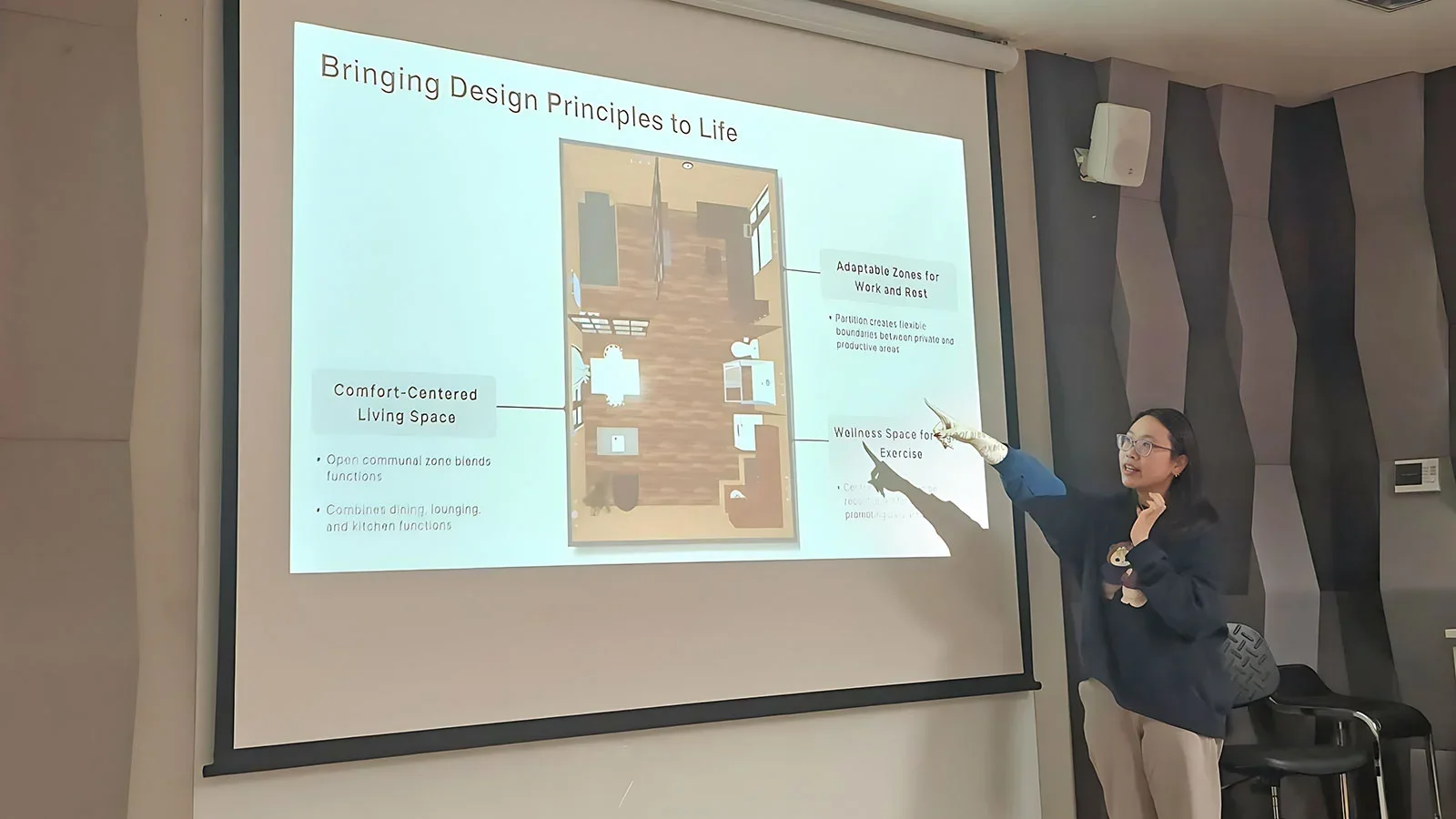
Debbie presenting the findings from her team’s capstone project.
The relevance to real world solutions
These insights were solidified and reinforced through the integrative capstone project that Debbie and Tse-Ning undertook to address a challenge issued by atomi—a furniture, lifestyle and consultancy company: “How can design be used to improve the mental wellness of the working population?”
Through the project, both Debbie and Tse-Ning noted how thoughtful, human-centred design can support ‘big living’ while enhancing functionality, comfort, and well-being. Tse-Ning said, “Our project demonstrated how health promotion does not always require large-scale interventions. Simple, low-cost changes to living spaces—like enhancing natural light, rearranging furniture and incorporating calming sensory cues—can significantly improve daily routines and well-being. It is a strong reminder that design, when rooted in empathy, can be a powerful tool in supporting and enabling meaningful change in everyday life.”
Drawing relevance to her marketing major, Debbie said, “I now think more holistically about the role businesses and brands can play in promoting well-being. As a marketing major, I used to think that the end goal of marketing and consumer behaviours was sales. Now, I see it as an opportunity to nudge healthier choices in creative and accessible ways.”
For her capstone project, Nerissa and her teammates, Eliora and Zi Ying, collaborated with the Ministry of Health Office for Healthcare Transformation (MOHT) to enhance the EAT-Lite initiative, a toolkit that supports healthier built environments by assessing walkability and accessibility in neighbourhoods. She shared, “At first, we tried to explore many bold ideas—without taking into consideration operational boundaries and practical constraints. Thankfully, our professor and the MOHT supervisors redirected us to reimagine from within by carefully weighing trade‑offs, prioritising impact and making sure our solutions were sustainable in the real world.”
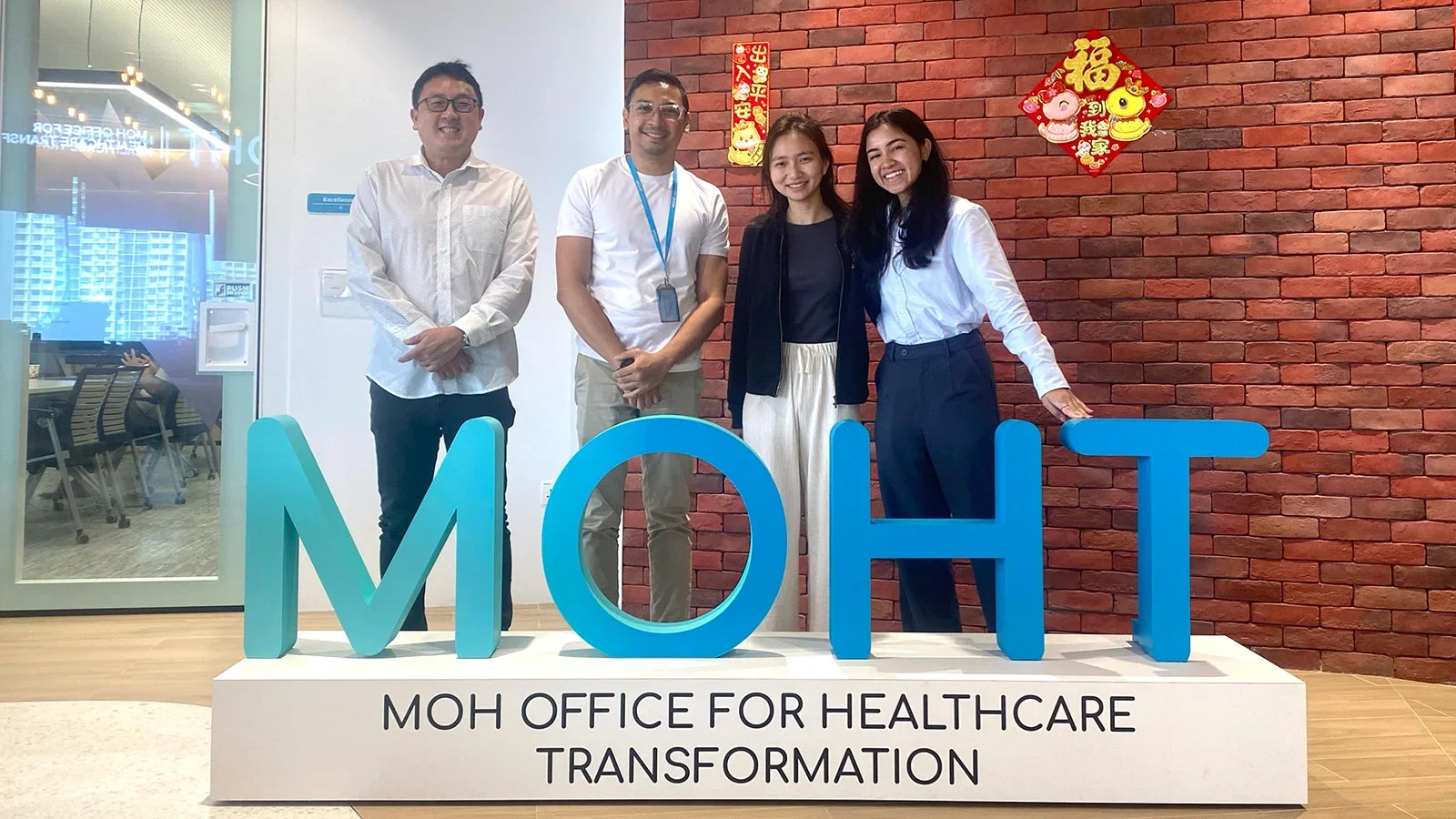
Nerissa (third from left) and Eliora (right) with their supervisors from the MOH Office for Healthcare Transformation.
With her business studies background, Nerissa found the experience to be both eye-opening and inspiring. She elaborated, “In school, it’s easy to come up with big ideas without worrying too much about implementation. But in this capstone, I learnt how to bridge that gap to design solutions that are ambitious, yet feasible. This gave me a real taste of what it means to work in cross-sector health innovation and made me even more excited to contribute to the healthcare space in the future.”
She concluded, “This minor did not just complement my major but helped shape the kind of learner, thinker and collaborator I am today. It gave me the language, frameworks, and confidence to contribute to this sector. Now, I am certain that I want to build a career where health and innovation meet.”
As for the question that led Nerissa to the MIH programme in the first place?
Associate Professor Chen Zhi Xiong summed it up perfectly in a sentence during class: “You don’t have to wear a white coat to be in the health industry.”
More from this issue

ETHICALLY SPEAKING
Weighing up Ozempic