MedSoc serves
1,500
NUS Medicine students
MedSoc organises over
70
events and services each year

Issue 54
Jul 2025
PEOPLE OF NUS MEDICINE
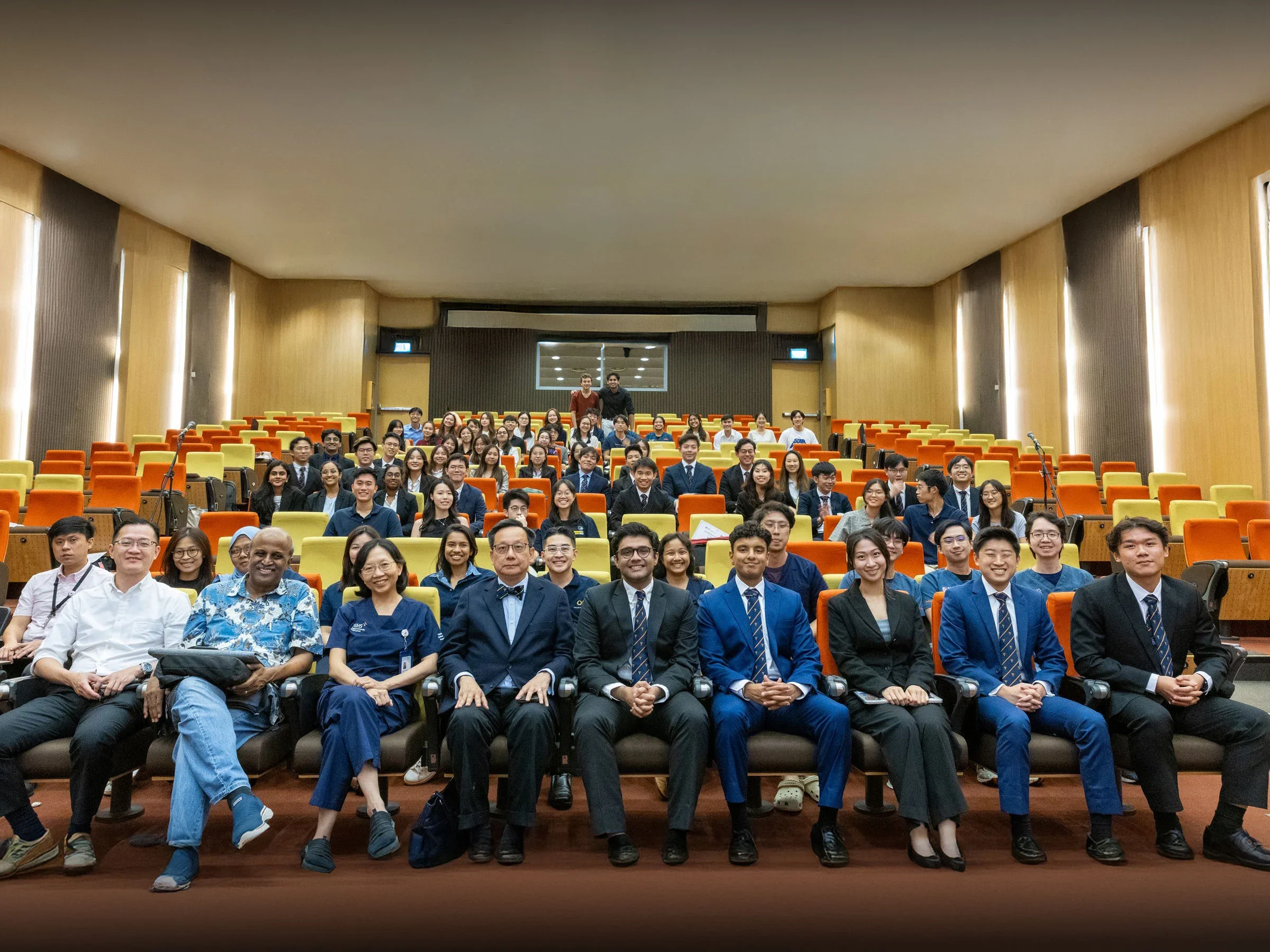
The 76th NUS MedSoc AGM was graced by Dean, Professor Chong Yap Seng, as well as other prominent faculty members, staff advisors, and students. Photo credit: 76th NUS Medical Society.
The NUS Medical Society turns 76 this year. We speak with the current president, Aravind Madabhush, MBBS Class of 2026, NUS Yong Loo Lin School of Medicine.
When was MedSoc formed, and how has its role evolved over the decades?
A: The NUS Medical Society (MedSoc) was founded in 1949 and is the longest-serving student representative body in Singapore. We proudly carry the rich heritage and tradition of the medical fraternity, upholding the values of the great doctors who paved the way for us. Our raison d’être is to advocate for the interests of the medical student body.
MedSoc serves the entire Yong Loo Lin School of Medicine, National University of Singapore (NUS Medicine) student community, which consists of 1,500 students, by playing an integral role in their academic and extracurricular lives. We offer a diverse range of activities, including social, sporting, community service, arts, academic, and welfare initiatives. These include, but are not limited to, local and overseas community involvement projects, community health screening services, Medicamp, Dinner and Dance, the White Coat Ceremony, Playhouse, Inter‑Faculty Games, and many more. With over 70 events and services each year, MedSoc is one of the most active student representative organisations in Singapore.

How has MedSoc supported medical students historically and in recent years?
A: Medical school can be incredibly demanding, and it is not uncommon for students to feel lost or overwhelmed by the academic rigour of the programme. To support them, MedSoc’s Academic Affairs Directorate organises mentoring programmes such as Senior-Teach-Junior sessions, Pre-Exam Crash Courses, and Bridging Programmes. These initiatives foster peer teaching and learning while also providing a strong social support system for students who may need guidance.
Beyond academics, we emphasise holistic development. Our various directorates regularly organise events and initiatives that help students reach their full potential both academically and in the extracurricular areas. The Research and Careers Directorates support students interested in research and career development, keeping them informed about career paths and facilitating networking opportunities with key figures in the healthcare industry. The Outreach and Engagement cluster strengthens partnerships with other student organisations, including NUS student clubs and medical student bodies both locally and internationally.
Our Student Life cluster—the largest in MedSoc—comprises six directorates that plan events throughout the year. These range from art showcases and our annual production, Playhouse, to sporting events like MedLaw Games, social gatherings such as the Winter Ball and Seniors’ Night, and welfare distribution drives. This cluster also oversees the Freshmen Orientation Programme (FOP), which includes Medicamp and other orientation activities. Additionally, MedSoc supports over 20 local and overseas community involvement projects (LCIPs and OCIPs), providing students with meaningful opportunities to serve both at home and abroad.
In summary, MedSoc and its directorates empower students to achieve their full potential—not just academically, but also extracurricularly—while fostering strong relationships and support systems to help them navigate the challenges of medical school.
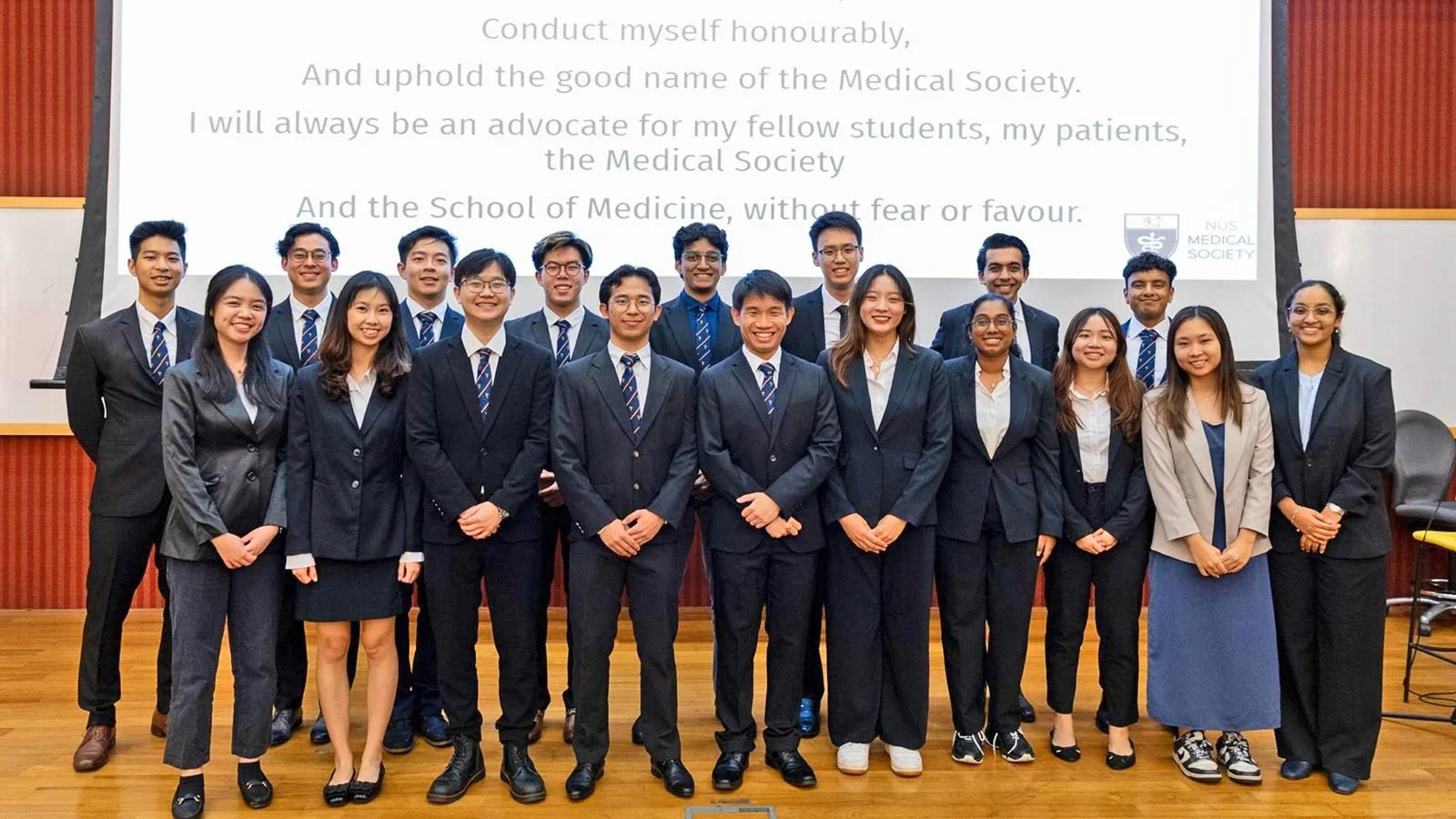
Aravind (back row, right) is swearing in at the 76th MedSoc Annual General Meeting with other Executive Committee members. Photo credit: 76th NUS Medical Society.
What are some of the most memorable MedSoc projects or initiatives that have made a lasting impact?
A: On a broader scale, MedSoc represents students’ interests to various stakeholders. We hold quarterly meetings with the faculty to discuss curriculum-related concerns, ensuring that student feedback is considered in ongoing improvements to the programme. Additionally, we engage with the Ministry of Health (MOH), having met with Minister Ong Ye Kung and Director-General of Health Professor Kenneth Mak on separate occasions to discuss the concerns of medical students—both during their studies and as they transition into the workforce.
Furthermore, MedSoc participates in regular meetings with the Singapore Medical Association’s Doctors-in-Training Committee and attends their annual meeting with MOH Holdings (MOHH) to advocate for students’ interests. These initiatives ensure that our students’ voices are heard and that their welfare and education remain a priority.
Where do you envision MedSoc in the next five to 10 years? What kind of legacy should it continue to build?
A: In the coming years, I envision MedSoc continuing to be a strong advocate for students and collaborating with the faculty to enhance the NUS Medicine programme. Recent changes to the syllabus—such as shifting the MBBS exams to November in Phase 5 and restructuring the preclinical years—highlight MedSoc’s vital role in ensuring smooth transitions by providing student feedback.
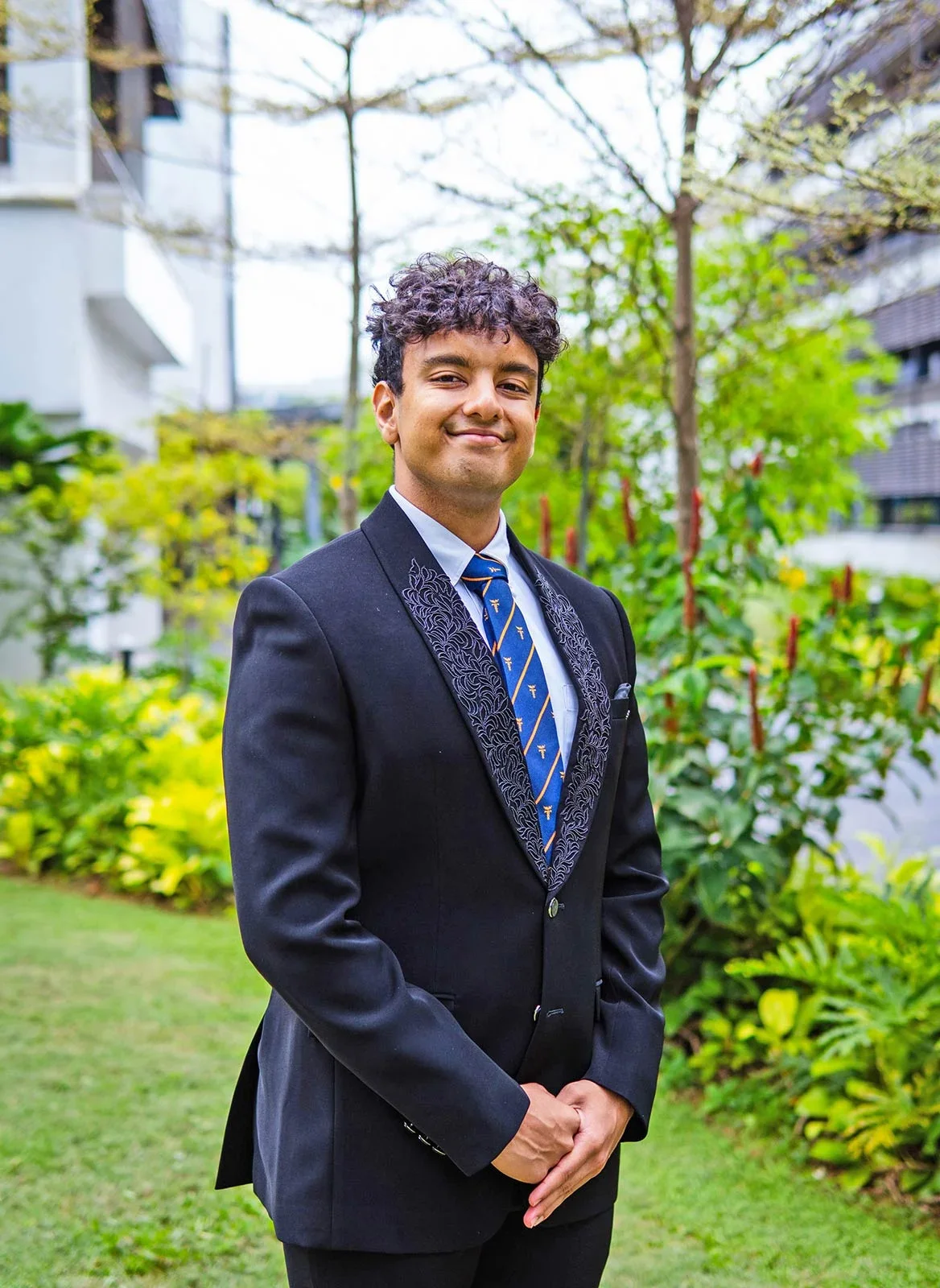
Photo credit: 76th NUS Medical Society.
As the medical landscape continues to evolve, MedSoc must remain adaptable, ensuring that students are well-prepared for changes in the healthcare system while maintaining its core mission of student advocacy, support, and community engagement.
What does NUS Medicine’s 120th anniversary mean to you, the current cohort, and MedSoc members?
A: As NUS Medicine celebrates its 120th anniversary, this milestone serves as a tribute to the legacy built by past students and faculty who have shaped our institution’s reputation. It is an inspiration for us to continue upholding excellence in all our pursuits—both academically and professionally. This anniversary is a reminder of our responsibility to contribute to the medical profession and serve our community with dedication and integrity.
What is your vision for the future of the medical profession, and how should medical students prepare for upcoming challenges?
A: As future doctors in Singapore’s healthcare system, we must continually equip ourselves with new skills to provide the best care for our patients. The healthcare landscape is rapidly evolving, with new hospitals opening in the coming years and increasing manpower demands. Being aware of these changes will help us adapt and prepare for our roles in the workforce.
However, while staying informed about the future is important, the journey ahead is long and can sometimes feel overwhelming. I encourage my fellow students to focus on doing their best in the present and to support one another throughout medical school. By fostering a strong sense of camaraderie and resilience, we can navigate challenges more effectively and emerge as compassionate and competent doctors.
I encourage my fellow students to focus on doing their best in the present and to support one another throughout medical school. By fostering a strong sense of camaraderie and resilience, we can navigate challenges more effectively and emerge as compassionate and competent doctors.”
More from this issue