Issue 54
Jul 2025
MINISTERIAL MESSAGE
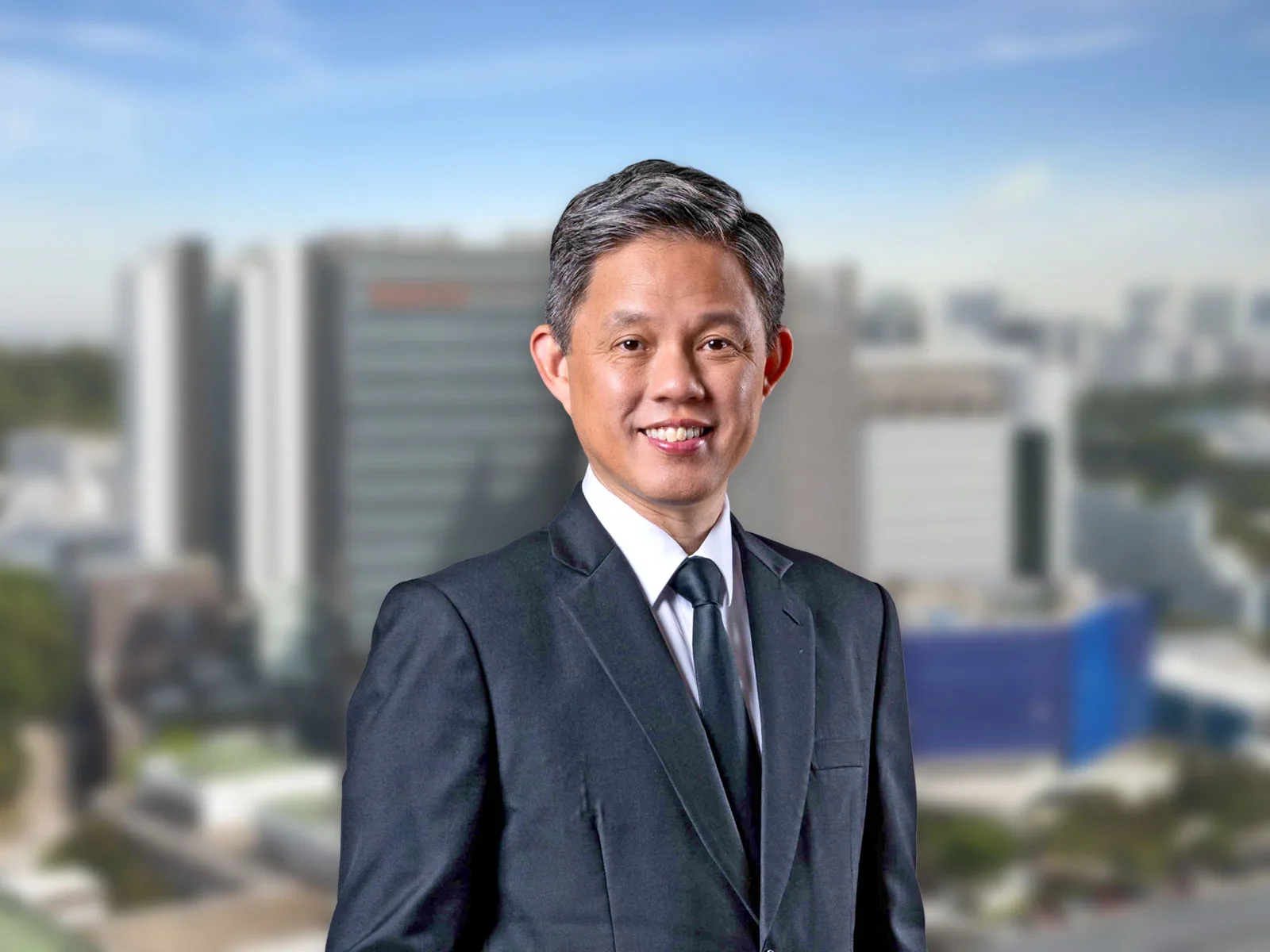
The Yong Loo Lin School of Medicine, National University of Singapore (NUS Medicine) marks its 120th anniversary on 3 July 2025. The Minister for Education, Mr Chan Chun Sing pens his thoughts on the impact of Singapore’s first medical school on the nation’s health and well-being and its continuing role in helping to shape the future of Medicine and healthcare. His message was published in a commemorative edition that outlines the history of the NUS medical school.
NUS Medicine started out in 1905 as a modest medical school with just 23 students. Its success over the years in caring for the health of the local community eventually paved the way for the country’s first university—the National University of Singapore.
In the 120 years since its establishment, NUS Medicine has nurtured generations of healthcare professionals—more than 12,000 doctors and, since 2005, more than 2,000 nurses. These ever-expanding alumni are plugged into every single part of Singapore’s healthcare network, and their work with patients and communities helps to address the evolving healthcare needs of our society.
It is befitting, then, that medical education at NUS is premised on preparing students to become competent, confident and compassionate doctors and nurses. To this end, the School continually revises its medical and Nursing undergraduate and postgraduate curriculum to help its students grow as medical professionals. Introduced in 2023, the common curriculum for NUS Medicine, Nursing, Dentistry and Pharmacy students trains them to collaborate efficiently as a healthcare team to deliver our future vision of healthcare, with a focus on preventive healthcare and facilitating ageing in place through the use of technology and analytics.
The School is already breaking new ground in several areas. It is home to 13 specialised medical research centres, which often bring together multidisciplinary expertise from clinicians and scientists from various academic medical centres, universities, hospitals and research institutes around the world. One example is the Singapore Gastric Cancer Consortium (SGCC), set up by former Medicine Dean Professor Yeoh Khay Guan, which has established itself as an international leader in gastric cancer research with extensive collaborations with academic and industrial partners worldwide.
The rapid advancement of technology will change the practice of medicine in ways we have yet to comprehend fully. The future of medicine might also see the proliferation of personalised medicine, including the mass customisation of treatment to the individual. Given these changes, the teaching and learning of medicine will need to evolve. Students need to be prepared to learn, unlearn and relearn in their medical journey and continuously upgrade their professional competencies.
Yet amidst such changes, one thing must endure—the care that one has for the patient. Hence, all medical students and professionals alike need to be guided by strong moral and ethical standards in the practice of medicine and constantly build and strengthen trust with their patients.
I thank all alumni, staff, students and donors for their invaluable contributions to Singapore’s healthcare landscape. I am confident that NUS Medicine will continue to be a premier medical school—a beacon of hope, discovery and excellence in the many years to come.
Congratulations, NUS Medicine! May you always uphold your founders’ vision of nurturing tomorrow’s healthcare leaders who will give back to the community and care for the most vulnerable amongst us.
CHAN CHUN SING
Minister for Education (May 2021- May 2025), Singapore
2 September 2024
More from this issue