Issue 54
Jul 2025
IN VIVO
By Associate Professor Marion Aw, Vice-Dean, Office for Students

A cry in the dark
YY was struggling to find time to study. He was giving eight hours of tuition each week to help defray the cost of his studies as well as hostel expenses. He felt he was burning the candle at both ends; helping his own students pass their exams, whilst at the same time struggling to find time and energy to study. He was barely scraping through his end of posting tests and was seriously concerned he would not pass his next professional examinations.
XX had been studying hard and trying her best. However, she felt that her test scores were still “below average” and she was terrified she would fail her final professional examinations. Her fear and anxiety were overwhelming and it was getting harder for her to focus when studying.
Students like YY and XX are the raison d’etre for the birth of the student affairs team. It was formed in 2010 as part of the Education department in the Yong Loo Lin School of Medicine, National University of Singapore (NUS Medicine) to provide support for academically weak students, as well as those who needed financial aid. Under the leadership of Professor Hooi Shing Chuan, Vice-Dean of Education, and Associate Professor Marie-Veronique Clement, Assistant Dean Student Affairs, the need for better psychosocial and well-being support for students was recognised. This paved the way for the development of a framework for student support in the school, as well as the model for other faculties in NUS to adopt. The main shift was moving from a reactive model of student support, to one that was proactive in identifying students who would need support, and then intervening in a timely manner. The Student Affairs team was given additional manpower and restructured to form three sub-units focussing on (1) Academic mentoring and pastoral care, (2) Financial assistance and (3) Student Life and Medical Society Liaison.
These initial thoughts and plans led to a strategic Education Team workshop in August 2011, which resulted in the establishment of a mentorship programme for all undergraduate medical students. The foundation for our House System was thus laid, and subsequently launched in August 2012, with the first cohort of 30 House Mentors under the watchful eye of Professor K Rajendran, Department of Anatomy.
At the same time, key signature events such as the White Coat Ceremony, Keynote Address and Commencement Ceremony were established (in 2012) to strengthen school identity amongst students and the wider faculty community. The Dean’s Welcome Dinner was introduced in 2019 as a key event to welcome each new cohort of students to the school, with the gifting of the school tie and scarf to male and female students respectively.
The Student Affairs team broadened its scope of support for students, establishing itself as a pivotal support hub for all student-related affairs. These included comprehensive financial support services, academic support, overseeing student life activities and community service projects both locally and overseas, as well as supporting students in disciplinary board proceedings.
In mid-2014, the team further refined the student support system into a tiered framework; where students who required more intensive support were prioritised, whilst at the same time still providing “at risk” students with proactive “light-touch” monitoring so that additional support could be provided as needed in a timely fashion. The well-being of the student body as a whole was not forgotten. Efforts at fostering well-being for the entire school population were also introduced. These included initiatives such as Wellness Talks, forming learning communities, organising various MedSoc activities, as well as strengthening mentoring through the House System. The school also leveraged the network of support through the student body via student leaders (Class Representatives, House Captains, and the Medical Society).
Student life emerged as the fastest growing and most dynamic area for students and the Student Affairs team. These student life activities allowed our students to showcase their extraordinary talents beyond the classroom in the performing arts, as well as provide opportunities for them to serve our local communities, while at the same time develop leadership and organisational skills.
Rag and Flag became one of the key highlights for our incoming students. It brought together first year students working under the leadership and guidance of their seniors. Our first-year students did the school proud during the event, clinching the top (Gold) awards annually for the RAG Day Performance since 2015.
In 2016, the Student Affairs team introduced the “Roots and Wings” programme in collaboration with the NUS Centre for Future-ready Graduates. The aims were to help our students develop personal and societal leadership skills. It started as an e-learning module covering topics around emotional intelligence as well as interpersonal awareness and effectiveness.
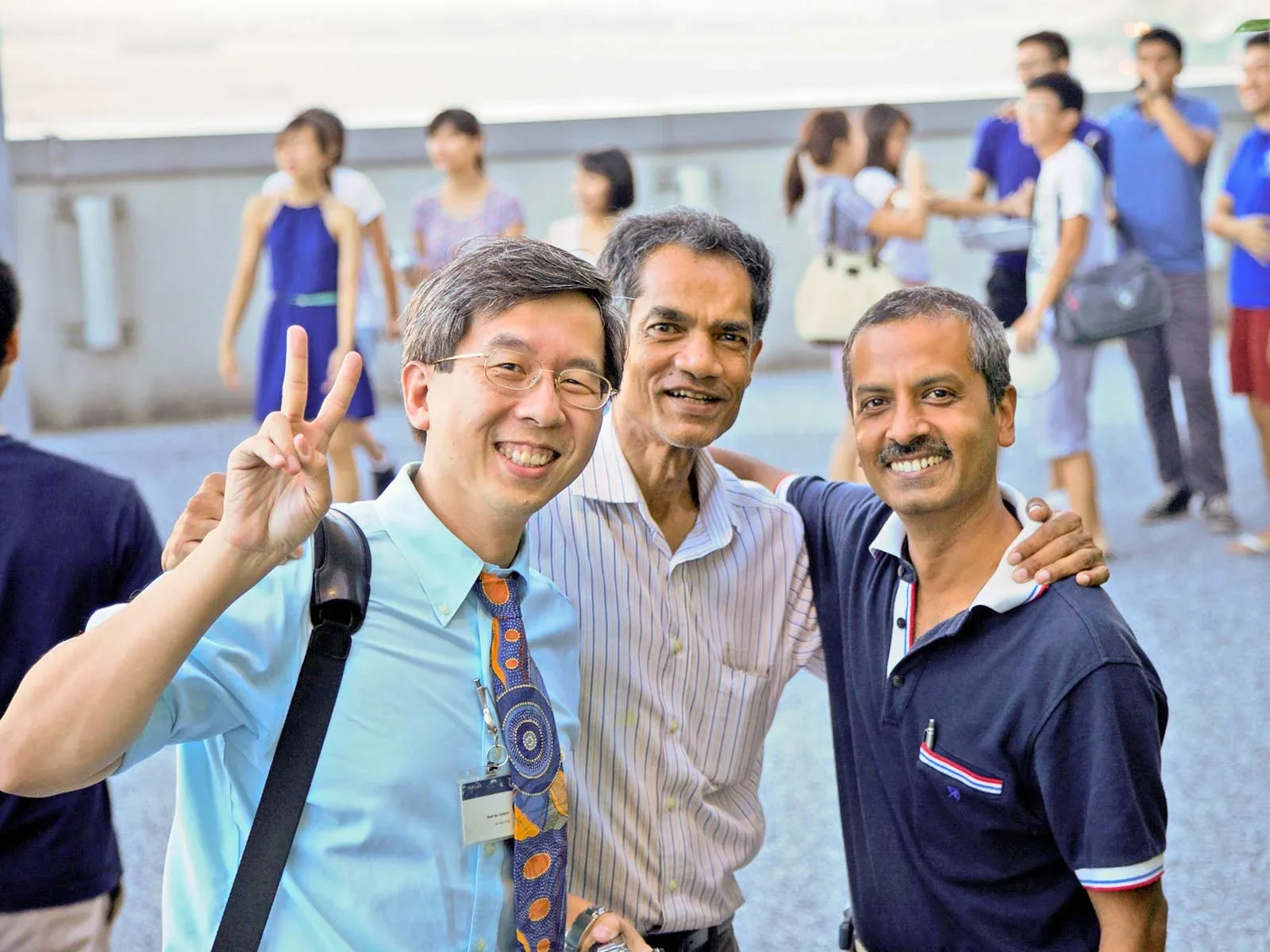
Houses Party at NUHS Tower Block level 14 on 20 July 2012.
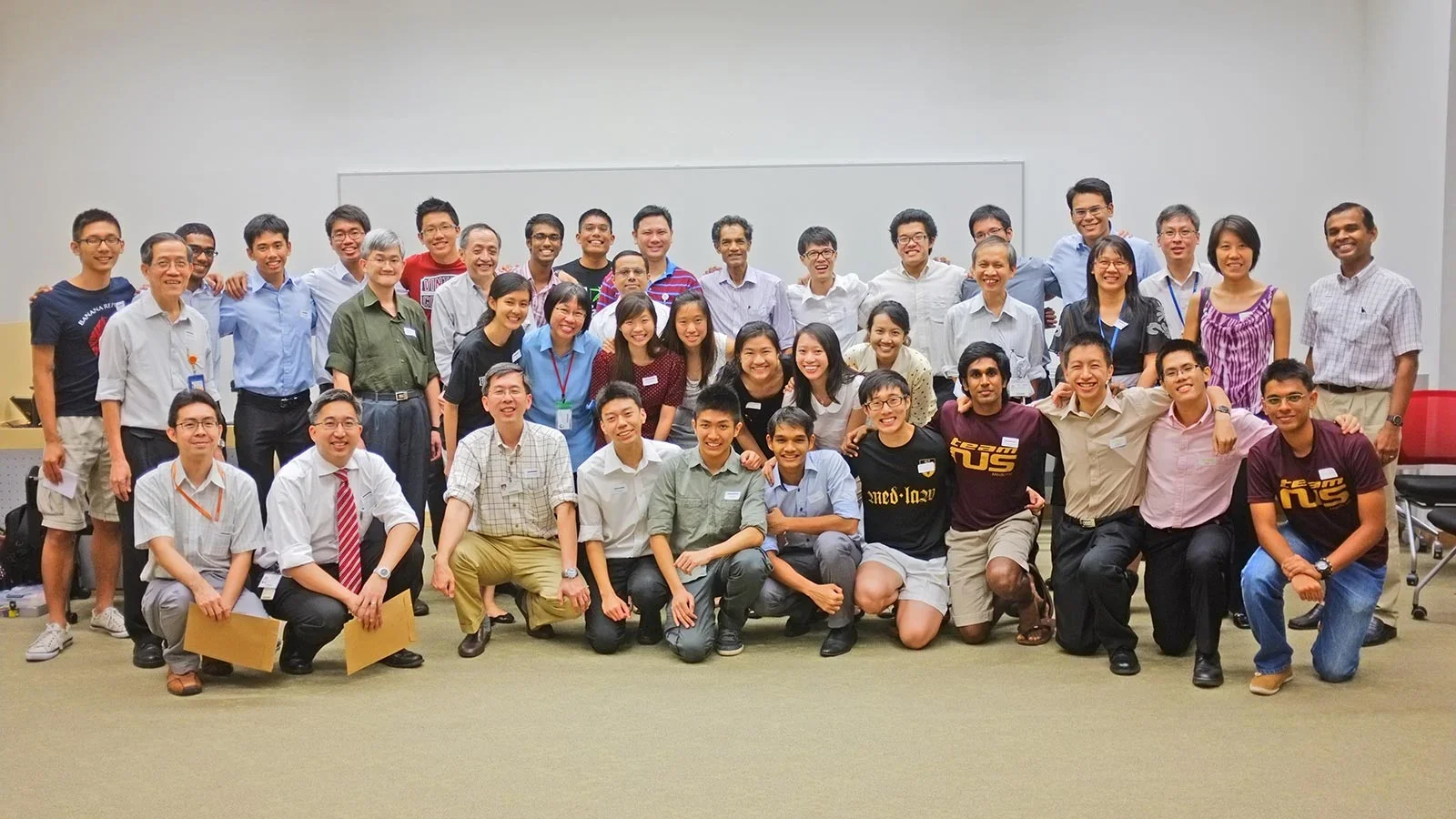
The first House Mentors 2012. Photo credit: Adj Prof Lau Tang Ching.
Evolution, consolidation and re-strategising
In 2019, “Roots and Wings” evolved into the EnRICH (Enable Respect, Integrity, Compassion and Humility) Programme. While the overarching aim remained the same; i.e. to help our students become “future-ready” graduates, the focus shifted towards specifically equipping them with the skills to cope as future healthcare professionals. The need to help our students develop greater self-awareness, better relational competence as well as personal resilience, grounded on the school’s values of respect, integrity, compassion and humility was deemed essential.
The EnRICH programme consists of a series of workshops run longitudinally over five years, as well as a mentorship initiative involving House Mentors as well as Clinical Mentors. It aims to make more explicit the hidden curriculum that students experience, and at the same time, help them build the necessary skills to cope with stressors they would face when working as junior doctors. The workshop themes are organised sequentially; the focus of Phase I and Phase II being intrapersonal awareness and interpersonal relationships respectively, Phases III and IV deal with transitioning into the clinical years and coping with various challenging clinical situations, and Phase V covers topics on transitioning into the workplace.
In 2022, the Student Affairs team was reorganised into the Office for Students (OfS), with the overarching vision of Thriving Healthcare Professionals and a five-year mission of enabling undergraduate medical students’ well-being and holistic development. The new OfS brought together the Admissions and Student Affairs teams under one roof, enabling the same team to manage students from the time of selection into medical school and then supporting them through their undergraduate journey as they develop the skills to become competent, compassionate and resilient healthcare professionals.
The school’s annual admissions exercise sees about 2,000 applicants, from whom approximately 1,000 are shortlisted for in-person interviews, before an eventual number of about 280 are selected. With the admissions team as part of OfS, we are better able to determine if our selection process has been able to identify students with the right values and attributes for a career in Medicine. At the same time, our annual outreach efforts have also increased, in the form of participation in various career and higher education fairs held by pre-university institutions. In 2022, NUS Medicine started a new initiative, an annual Engagement Programme, to provide opportunities for students, who because of family or financial reasons may not have considered Medicine as a possible career, but whose schools believe they possess the requisite aptitude and potential. This Engagement Programme consists of a non-residential camp, which provides these students with the opportunity to hear from and interact with various healthcare professionals (Nursing, medical, allied health). Following this camp, students who indicate an interest to further explore a career in Medicine are then selected for a six-month mentorship experience which allows them the chance to interact with and observe a doctor working in the clinical setting.
The foundations of student support which was developed from the earlier years were further built upon with the help of technology. Digitisation efforts saw the use of three power applications to streamline data management and reduce manpower hours for the office. At the same time the House Mentor System was further strengthened with better stakeholder engagement and recognition, as well as the curation of faculty development workshops specially for mentors. A total of 128 faculty attended these faculty development workshops in Academic Year 2023/2024. The school’s coaching programme for undergraduate students was also introduced in 2022, and in a world first, all undergraduate students are given the opportunity to be coached 1-1 by an ontologically trained coach from the school.
Student-led community service projects continue to play a significant part in our student life activities. Organised under the umbrella of the Health, Humanitarian & Leadership (HHL) Programme, we aim to develop service-oriented leaders, as well as foster meaningful and sustainable efforts to improve health outcomes, enhance health literacy, and advocate for greater awareness. These projects benefit a diverse range of beneficiaries, including children and the elderly, in both local and international communities. At the same time, these initiatives help our students build skills to solve real-world problems and to meet the needs of marginalised individuals and communities. At the heart of this service-learning programme is a humanitarian commitment to respect human life, alleviate suffering, and uphold human dignity. This commitment is realised through community-based interventions locally and globally. Designed in collaboration with community partners, the programme provides platforms to nurture community-responsive and compassionate healthcare leaders of tomorrow.
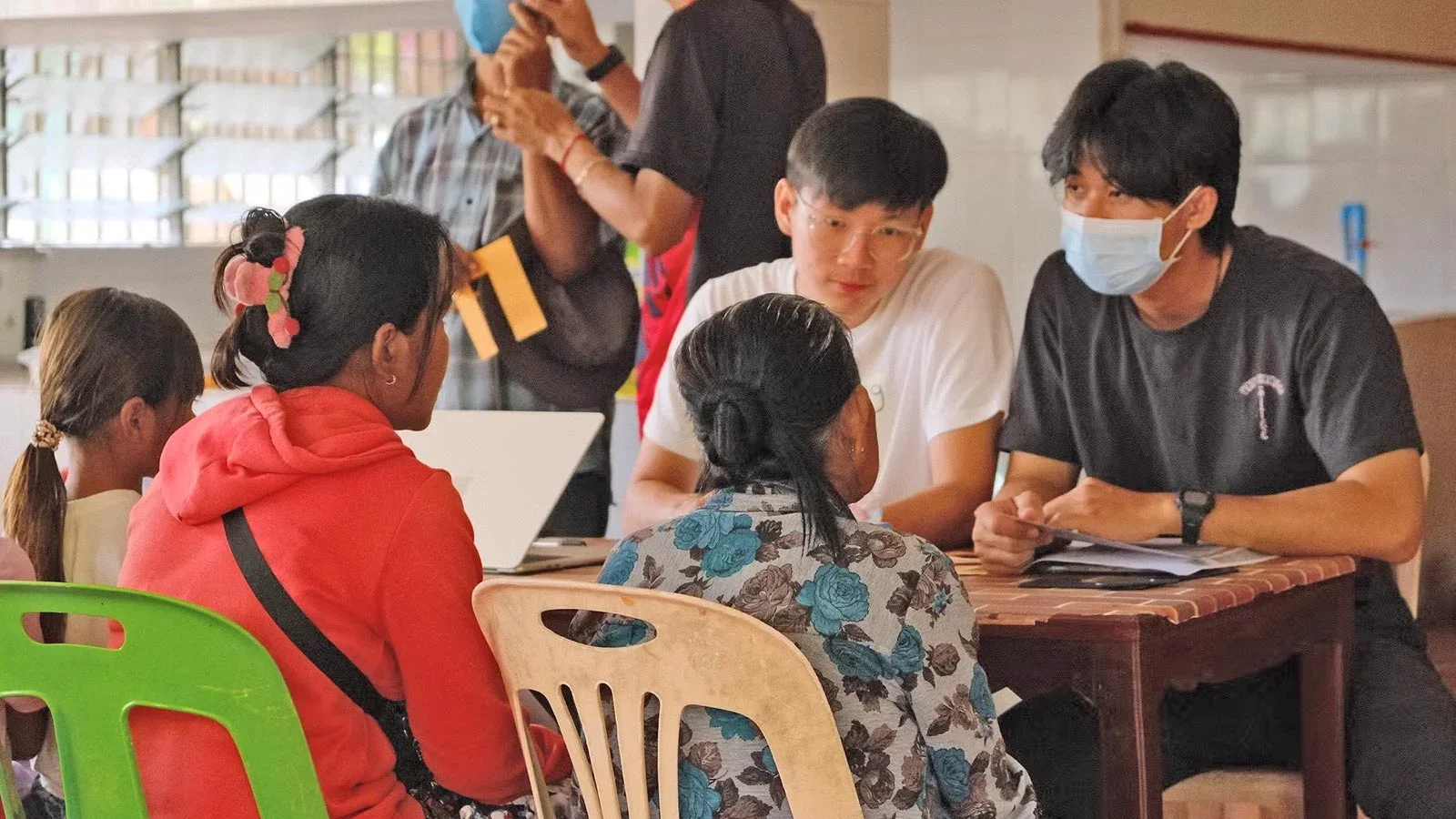
Students from Project Battambang triaging the villagers together with Cambodian volunteers. Photo credit: Project Battambang.
In Academic Year 2023/2024, the HHL Programme oversaw around 21 projects. Examples of local initiatives include Active Ageing Advocates, Project Happy Apples, Neighbourhood Health Service, NHS Kids, Public Health Service, Project Silvercare, and Project iRemember. These mobilised hundreds of volunteers from diverse healthcare disciplines—including NUS Medicine, NUS Nursing, NUS Dentistry, NUS Social Work, NUS Pharmacy, NTU Lee Kong Chian School of Medicine, and the Singapore Institute of Technology—and received support from various grassroots partners and generous philanthropists. In addition to local initiatives, our students extended their outreach to India and Cambodia through projects such as Project i2Eye, Project Lokun, Project Sa’bai, Project Sothea, and Project Battambang, providing healthcare support and education to underserved communities in these regions. Through these overseas initiatives, students not only addressed real-world challenges and needs, but also gained a deeper understanding of the underlying factors contributing to health issues in the rural communities they served.
In 2024, the OfS team worked with multiple stakeholders (faculty, students, new graduates) to put in place a framework for Professional Standards and Conduct expected of our students. This was in recognition that our medical students should be held to a certain set of standards similar to that expected of the medical profession, which are likely different from that of the rest of the NUS student body. A Professional Standards and Conduct Committee (PSCC) was appointed with faculty involved in undergraduate medical education. The PSCC works closely with OfS, in complementary roles; the PSCC investigates and determines if students have breached the professional standards expected of them and makes decisions regarding consequences, whilst OfS supports and helps these students remediate as needed.
The work of OfS has come a long way since the formation of the Student Affairs team in 2010. We owe our foundation and framework of student support to the pioneering work and leadership of Prof Hooi Shing Chuan, A/Prof Marie-Veronique Clement and Prof K Rajendran. It is only through the continued dedication and hard work of our OfS administrators and all faculty over the years that we have been able to do good work with our students and will continue to do so in the years to come. Our gratitude and thanks go to all our unsung faculty heroes—House Master Mentors and House Mentors, Clinical Mentors Coaches, advisors for all the student Overseas Community Involvement Projects and Local Community Involvement Projects, academic support advisors, financial aid committee, admissions committee, PSCC and non-academic awards committee—without whom all this work could not be done.
More from this issue

SCIENCE OF LIFE
Into the Future – The Research Journey at NUS Medicine
AFFAIRS OF THE HEART
Seeing Cardiovascular Disease in a New Light