Issue 54
Jul 2025
IN VIVO
By Adjunct Professor Lau Tang Ching (Vice-Dean, Education, 1 June 2017 to present ), Professor Hooi Shing Chuan (Vice-Dean, Education, 1 July 2010 to 31 May 2017), Professor Koh Dow Rhoon, (Vice-Dean, Education, 1 June 2000 to 30 June 2010)

The Yong Loo Lin School of Medicine, National University of Singapore (NUS Medicine) marks its 120th anniversary on 3 July 2025, standing tall as a beacon of excellence in medical education, research, and healthcare innovation. Since its founding in 1905, NUS Medicine has been instrumental in shaping Singapore’s healthcare system, producing generations of skilled and compassionate doctors who address the nation’s evolving health challenges. Over the decades, the School has earned a global reputation for its commitment to excellence, innovation, and community service, solidifying its position as a leader in medical education and research.
A legacy rooted in vision and philanthropy1
The story of NUS Medicine begins with the visionary efforts of philanthropist Tan Jiak Kim, whose advocacy led to the establishment of the Straits and Federated Malay States Government Medical School in 1905. Tan and other community leaders raised S$87,000 to convert an existing building into a medical school, addressing the urgent need for local medical professionals. This founding legacy laid the groundwork for the School’s enduring commitment to public health and community service.
Just 10 years after its inception, the School’s graduates received recognition from the General Medical Council of the United Kingdom, a testament to the high standards of education it offered. By 1929, the School’s medical education was on par with the best in the United Kingdom, a fact attested to by regular inspections from the General Medical Council. This early recognition drew students from across Malaya, setting the stage for the School’s future as a regional leader in medical education.
Visionary leadership and strategic growth
Throughout its history, NUS Medicine has been guided by a succession of visionary leaders who have shaped its strategic direction. These leaders have ensured that the School remains at the forefront of medical education, research, and clinical service. Their efforts have aligned the School’s mission with Singapore’s national healthcare goals, fostering close relationships with ministries such as the Ministry of Health (MOH), Ministry of Education (MOE), and Ministry of Trade and Industry (MTI).
One of the School’s most significant achievements was the establishment of Singapore’s first university hospital, the National University Hospital (NUH), in 1985. This partnership between the hospital and the medical school created synergies that drove excellence in medical education, research, and patient care. The move to the Kent Ridge campus in 1985, with the School sited next door to its teaching hospital, further enhanced the School’s capabilities, providing an enriching environment for interdisciplinary collaboration and innovation.
In 2005, the School was renamed the Yong Loo Lin School of Medicine following a transformative S$100 million gift from the Yong Loo Lin Trust. This generous donation enabled the School to enhance its infrastructure, support groundbreaking research, and develop advanced educational initiatives. The gift reaffirmed the School’s role as a cornerstone of Singapore’s healthcare system and a hub for global medical innovation.
Pioneering medical education and research
NUS Medicine has continually adapted its curriculum to meet Singapore’s evolving healthcare needs. From its early focus on tropical diseases like malaria and tuberculosis, the School has expanded its programmes to address chronic diseases, ageing populations, and global pandemics. The curriculum emphasises an integrated systems approach, early patient exposure, simulation training, and interprofessional collaboration, ensuring that graduates are not only skilled clinicians but also compassionate caregivers.
The School’s commitment to innovation is evident in its state-of-the-art training facilities, such as the Centre for Healthcare Simulation2, established in 2012. This centre provides students with realistic training environments in which they can refine their clinical skills and decision-making through high-fidelity simulations. The integration of virtual reality and augmented reality technologies has further enhanced clinical training, preparing students for the complexities of real-world healthcare.
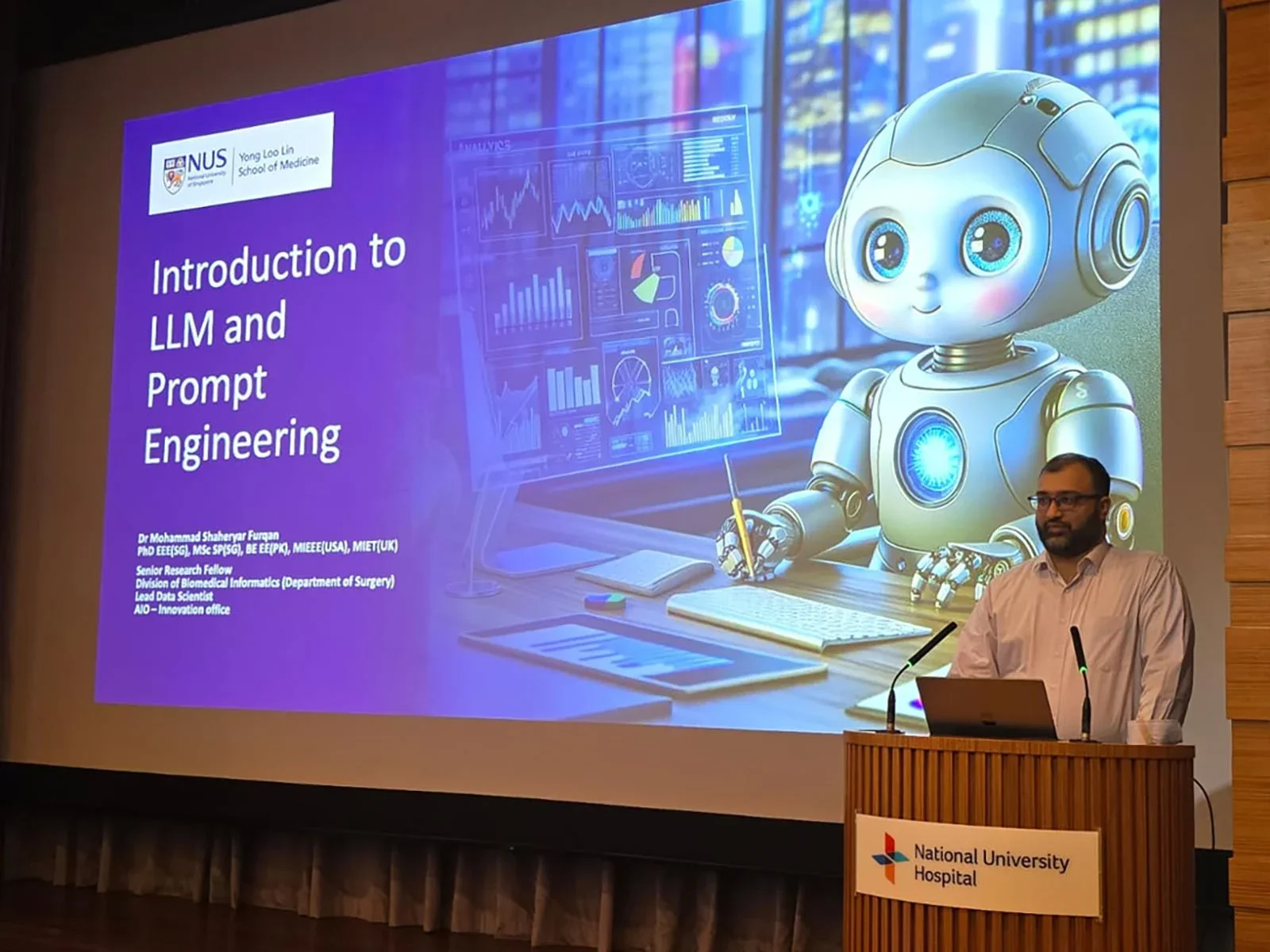
NUS Medicine is also a pioneer in integrating artificial intelligence (AI) and digital medicine into its curriculum.3 Students gain practical experience with AI-powered diagnostic tools, predictive analytics platforms, and telemedicine systems, while courses on digital ethics and data privacy ensure they are equipped to navigate the societal implications of AI‐driven healthcare. Beyond the classroom, students have opportunities to participate in research projects that explore the potential of AI and machine learning in personalised medicine, contributing to innovations that may redefine patient care standards.
Interprofessional education and holistic development
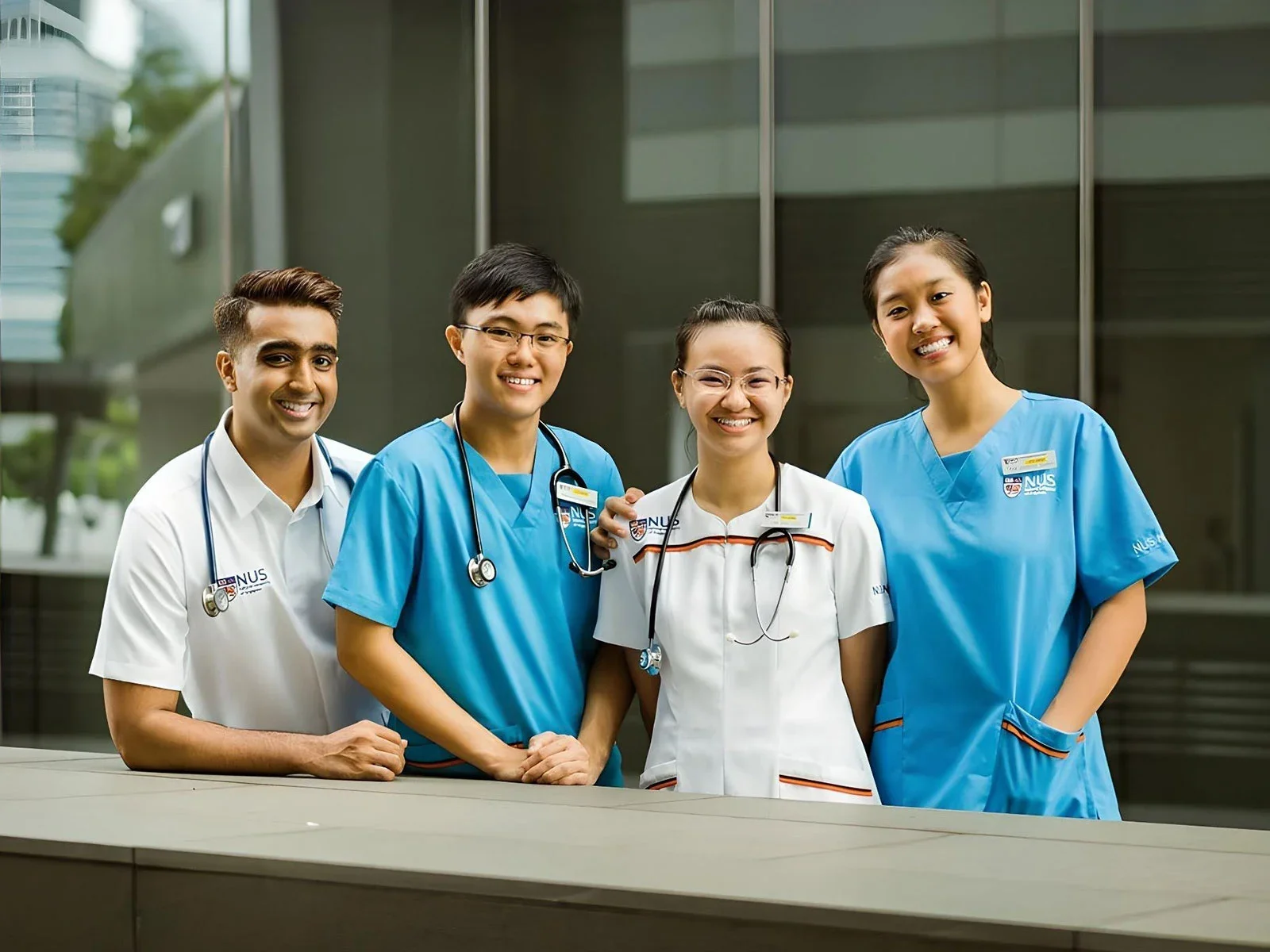
Collaboration across disciplines is a cornerstone of the NUS Medicine experience. Through interprofessional education (IPE) initiatives, students from Medicine, Nursing, and Pharmacy learn to work cohesively in teams, reflecting real-world healthcare settings. The establishment of the Alice Lee Centre for Nursing Studies in 2005, made possible by a generous donation from the Lee Foundation, professionalised nursing education and fostered interprofessional collaboration. By training doctors and nurses together, the School cultivates mutual respect and teamwork, essential for delivering holistic, patient-centred care.
Officially launched in Academic Year 2023/2024, the transformation of NUS Medicine’s medical curriculum also enables the incorporation of the new NUS Common Curriculum4 for Medical, Nursing, Dentistry and Pharmacy students.
This initiative fosters interdisciplinary collaboration and equips our healthcare students with the skills needed to thrive in a dynamic healthcare system.
NUS Medicine is committed to integrating emerging technologies into its curriculum and research agenda, ensuring that graduates are equipped to address future challenges. By fostering a culture of curiosity and innovation, the School prepares its students to drive progress in healthcare, both in Singapore and beyond.
The Common Curriculum (5 Pillars) was carefully crafted, to ensure that the learning outcomes are aligned with the Ministry of Health’s Healthier SG vision, with focus on integrative and preventive care, facilitating ageing in place by using technology and analytics to deliver healthcare services to people wherever they may be located. This approach requires doctors, nurses, dentists and pharmacists to work together in supporting and delivering holistic care for the community’s diverse healthcare needs. Consequently, interdisciplinary training and breaking down silos in healthcare provision are critical components of this curriculum.
NUS Medicine also prioritises the holistic development of its students, ensuring they become clinicians who are also empathetic and ethical leaders. The School’s R.I.C.H. values—Respect, Integrity, Compassion, and Humility—serve as guiding principles, shaping students into well-rounded healthcare providers. Community engagement initiatives planned, organised and led by students, such as health screenings and outreach programmes, foster a commitment to social responsibility, while mental well-being programmes and peer support networks ensure students are emotionally resilient. Mentorship and coaching initiatives connect students with experienced professionals, offering guidance and inspiration as they navigate their educational and career paths.
Overcoming challenges: The COVID-19 response
The COVID-19 pandemic presented unprecedented challenges, but NUS Medicine rose to the occasion with resilience and adaptability. When clinical postings were temporarily halted, the School swiftly transitioned to innovative teaching methods, incorporating blended learning, online sessions, and campus-based activities. This adaptive approach ensured that students’ education continued with minimal disruption, preparing them for the rigours of healthcare in a post-pandemic world.
A vision for the future
As NUS Medicine celebrates 120 years of excellence, the School remains steadfast in its mission to advance healthcare education, research, and practice. The School’s comprehensive approach—integrating Nursing, interprofessional training, and cutting-edge research—ensures that graduates are compassionate, skilled, and ready to lead in an evolving healthcare landscape. The legacy of visionaries like Tan Jiak Kim and the transformative contributions of the Yong Loo Lin Trust continue to inspire the School’s trajectory.
Looking ahead, NUS Medicine is committed to integrating emerging technologies into its curriculum and research agenda, ensuring that graduates are equipped to address future challenges. By fostering a culture of curiosity and innovation, the School prepares its students to drive progress in healthcare, both in Singapore and beyond.
As we celebrate this milestone, we honour the pioneering achievements of those who came before us and look forward to another century of impactful contributions to global healthcare. It is our cherished aim that NUS Medicine’s legacy of excellence, innovation, and compassion will continue to shape the future of healthcare, inspiring generations of healthcare professionals to come.
https://medicine.nus.edu.sg/giving/why-give/a-legacy-of-giving/.
https://medicine.nus.edu.sg/chs/.
https://medicine.nus.edu.sg/dbmi/minor-in-biomedical-informatics/.
https://medicine.nus.edu.sg/prospective-students/bachelor-of-medicine-and-bachelor-of-surgery-mbbs/nus-common-curriculum-for-health-professional-education/.
More from this issue