Issue 54
Jul 2025
ALUMNI VOICES
By Dr Ann-Hui Ching, MBBS Class of 2022, NUS Yong Loo Lin School of Medicine

Like many, I chose to be a doctor because I wanted to be certain I was going to help people. While my unusually long path in medicine has often been in question, mostly of well-meaning mentors, I find myself sitting at the awkward intersection between generations. Not uncommonly, I receive texts from peers several years my junior asking me for advice on making big decisions in navigating medicine and life.
I’ve done the same myself. A decade ago, I asked Professor Roger Foo, now Vice-Dean of Research, if I should study Medicine in London, liberal arts in the US, or stay in Singapore. In the frigid cold of his office, then in Buona Vista, the advice he gave was startlingly clear: If you are certain you want to become a doctor in Singapore, do not postpone this journey, go for it.
With undue credit, I too recycle this bit of advice—in “riskier” contexts to my peers. I’ve applied this advice to all my gap years in Medicine—going to Yale for a year to study the liberal arts, going to Oxford for postgraduate study. At every juncture, I was questioned. When I returned from Yale, a trusted educator remarked that I was an arts student who happened to be smart enough to enter medical school. Before I left for Oxford, my consultant asked me if was planning to return to clinical medicine. Last summer, before starting business school, I was told by a highly respected senior clinician that perhaps my MBA was too premature. At every unsolicited comment, I wavered.
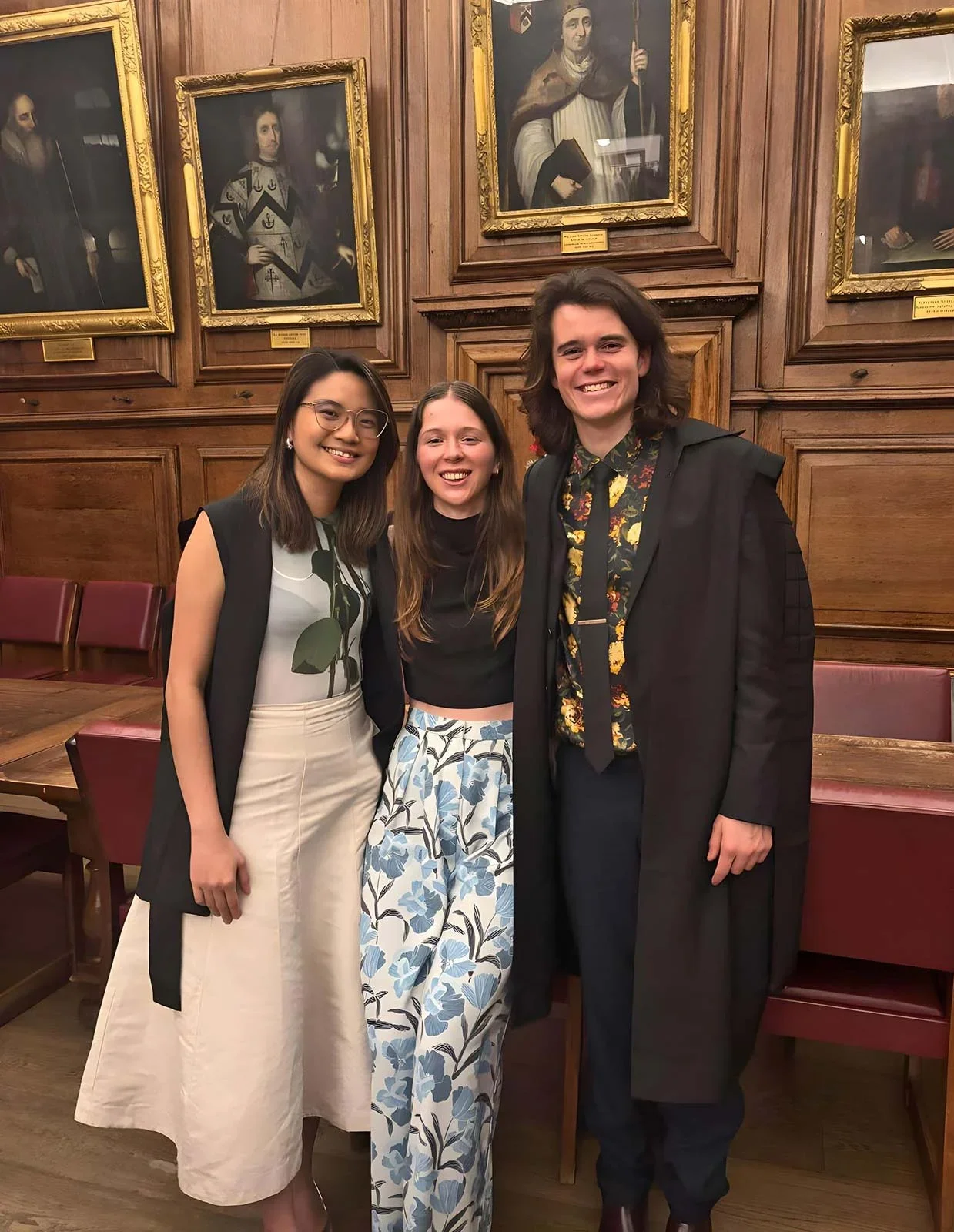
Ann-Hui (left) having dinner with fellow Rhodes Scholars at Brasenose College.
From where do we derive certainty? Last year, in my medical anthropology tutorials, I found myself questioning even the bedrock of my convictions of wanting to become a doctor. The authority that Medicine derives from scientific “objectivity” has sidelined patients’ voices and has been used as a central tool for empire expansion and a justification for the marginalisation of minority communities. After being plunged into deep reflection, I grew more certain of my purpose. Using the language of anthropology, I’ve come to know myself, through an encounter with the “other”.
What then do we do with the inevitability of uncertainty? As a medical officer in the intensive care unit before I left for Oxford, I was often faced with making time-sensitive, life-saving decisions in the absence of perfect information, or even a clear diagnosis. This year in the business school, I found the relevance of organisational strategy to Medicine, and more broadly, in retrospect, to the big decisions I’ve made thus far.
Strategy boils down to making choices to carve a firm’s unique position. In a hyper-competitive environment, firms have instead made the mistake of improving operational efficiency, rather than accepting the trade-offs that come with strategy. Speaking to my peers, I reckon that doctors, perhaps as graduates of an education system with clear rules and formalised processes, have become victims of our own success. The allure of the familiar path of training in Medicine, I suspect, has led to a focus on climbing the ranks as quickly as possible, rather than the possible trade-off of time off.
During my countless short case practices leading up to the MBBS final examinations, I often made the mistake of committing to one diagnosis too quickly. The ability to say that I’ve come up with a unifying diagnosis from many complex signs within six minutes—even if I was wrong—made me feel good in a period of overwhelming anxiety. As a house officer, I later learnt how to artfully communicate doubt, while inspiring confidence in my patients and my seniors, when leading towards an action that served my patient’s best interest.
The unknown is not to be conflated as the risky. My time away from Medicine in disparate fields has been deeply transformative: it taught me how to think independently. In a time of unprecedented global instability, I find that more than ever, being able to think for oneself, cutting through the noise, guided by a moral compass, is perhaps the single most important skill. The practice of Medicine will undergo huge upheaval with the technological advancement of artificial intelligence, and we must learn how to deal with the uncertainty in its wake. Looking back, my choice to take these years out of Medicine was not risky at all. The biggest risk is in failing to choose and instead taking on the known risk of having the carpet pulled from beneath your feet, or in living a life unlived.
Being away from home, I am always so, so proud to call Singapore home and to be an alumNUS. For the past 120 years, we have done exceedingly well, punching above our weight. For the centuries ahead, I am optimistic about NUS Medicine’s ability to embrace change.”
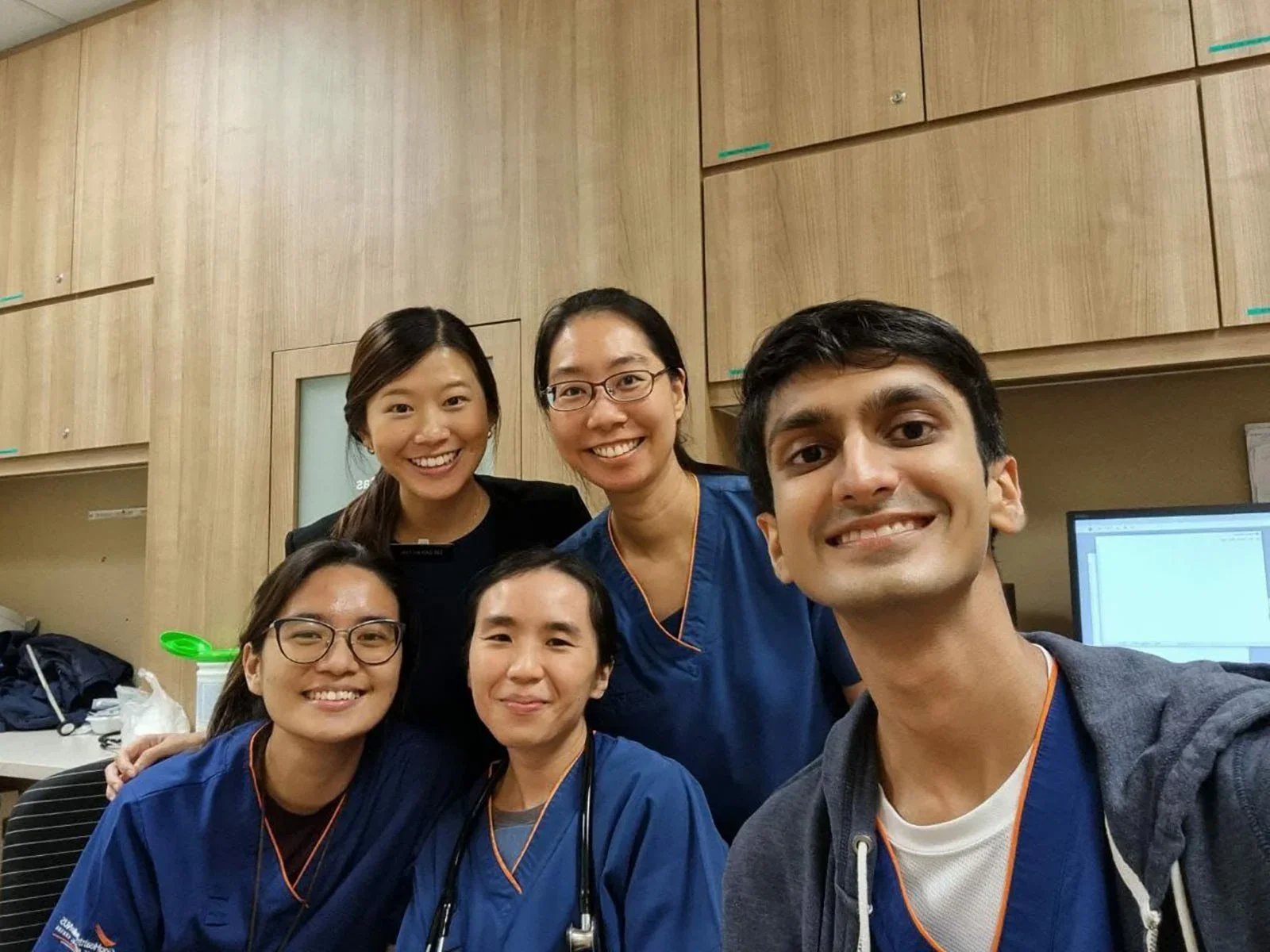
Ann-Hui (first row, left) during her stint as a House Officer in the SGH Department of Internal Medicine.
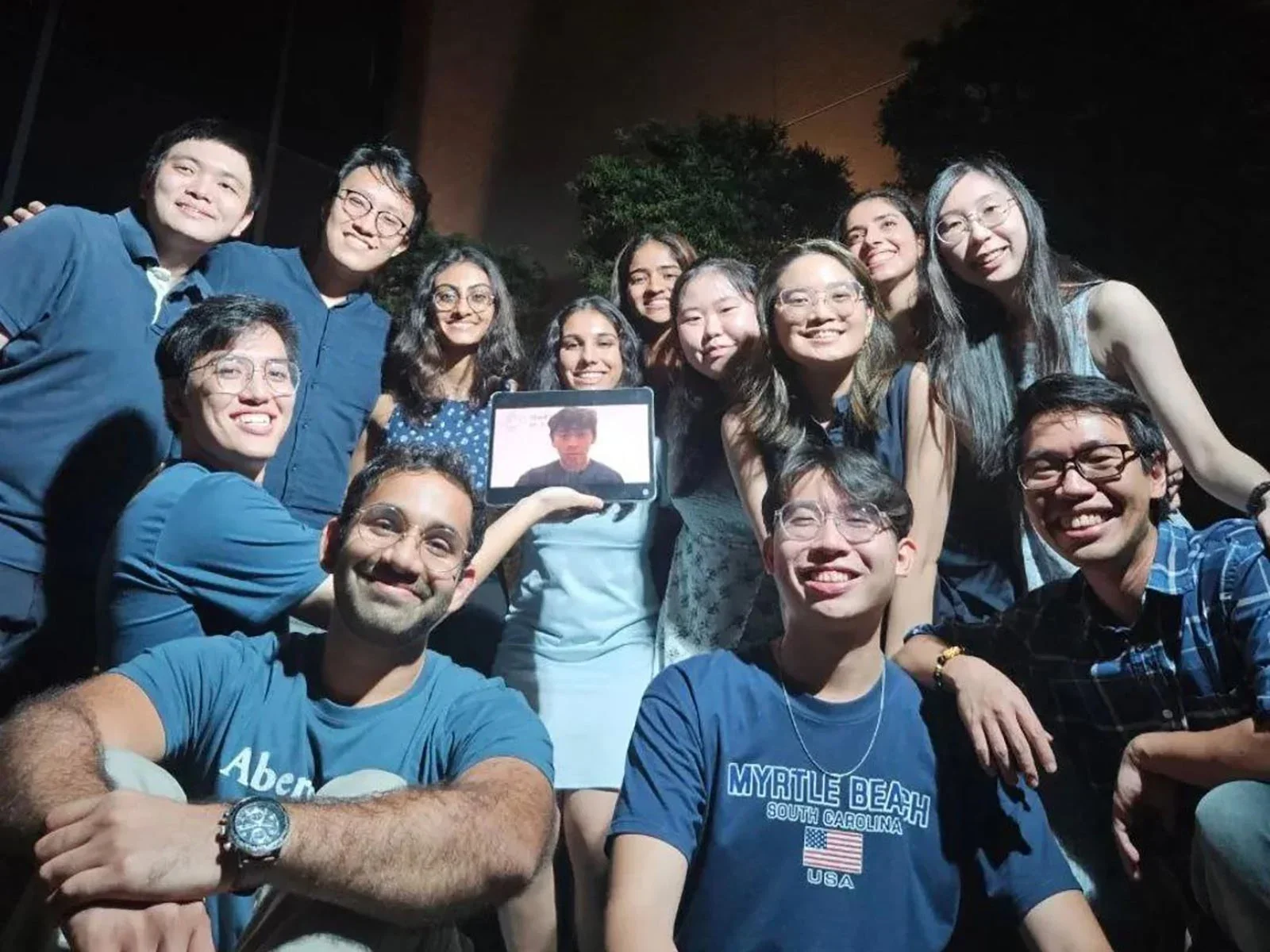
Ann-Hui (second row, second from right) with members of the Third Spacing podcast.
In my final year of medical school, I met with Prof Foo again—this time during a presentation of my Undergraduate Research Opportunity Project, which was the first project between the Faculty of Arts and Social Sciences and NUS Medicine. He hadn’t remembered our first interaction—but he encouraged me to continue that spirit of research, to wade into the unknown, pushing the frontiers of Medicine through fearlessly exhausting multiple perspectives and methodologies. So many leaders within the medical school have made my life choices possible. Amongst many, I must thank the Dean, Professor Chong Yap Seng, Adjunct Professor Lau Tang Ching, Associate Professor Marie Clement. I am also especially grateful to Professor Chow Wan Cheng and Professor Quah Thuan Chong, who have both patiently listened to my incoherent ramblings, and helped me gain clarity again, building me up every time I doubted myself.
Being away from home, I am always so, so proud to call Singapore home and to be an alumNUS. For the past 120 years, we have done exceedingly well, punching above our weight. For the centuries ahead, I am optimistic about NUS Medicine’s ability to embrace change. Twenty years before me, the change in policy to lift the cap on the numbers of females entering medical school meant I could be a doctor. Even within my short time in Medicine, I’ve noticed a cultural shift and that the School has worked on nurturing students to pursue their adjacent interests. After I took a gap year in medical school, several peers followed. More recently, after being awarded a postgraduate scholarship to study abroad, two peers have also followed suit.
In my time working in the hospitals, I have seen the kindest, most intelligent colleagues lose their sense of certainty for Medicine. My final hope is that even while we achieve excellence, we also reorientate the working environment to not just value the efficiency of processes but also account for the uncertainty that comes with being human.

Ann-Hui Ching graduated from NUS Medicine in 2022. During her time in NUS, she founded the NUS Medicine and Literature club, and Third Spacing the podcast. At graduation, she received the Outstanding Undergraduate Research Prize and the inaugural Andre Wansaicheong Arts and Culture Prize. From 2023 to 2025, she studied Medical Anthropology and Business Management at the University of Oxford as a Rhodes Scholar.
More from this issue

PEOPLE OF NUS MEDICINE
In the Neighbourhood of Excellence: Deepening NUS Medicine’s Legacy