Issue 54
Jul 2025
AFFAIRS OF THE HEART
By Associate Professor Choi Hyung Won, CHAIR, Cardiovascular Metabolic Disease Translational Research Programme
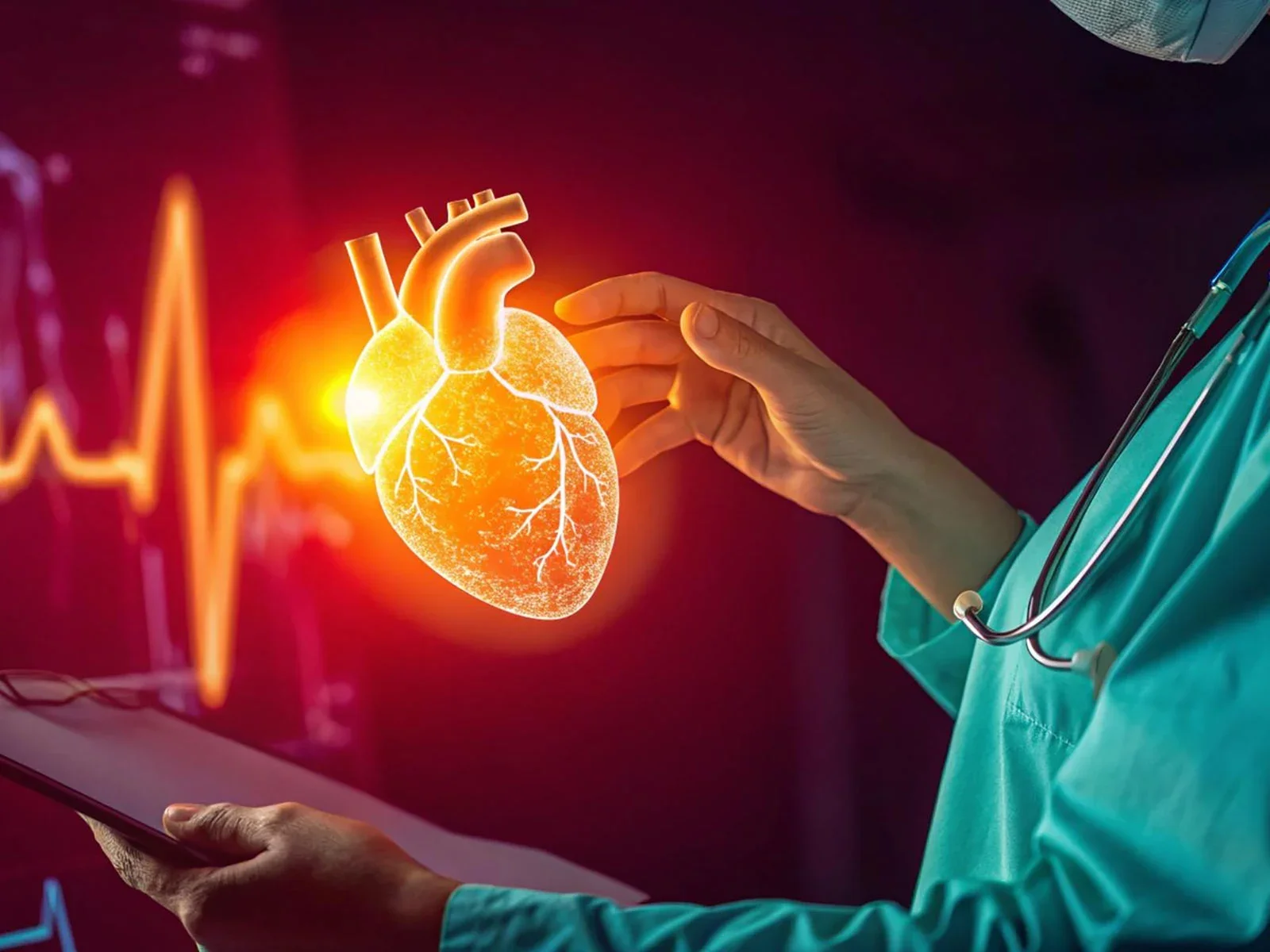
Cardiovascular disease (CVD) is a serious threat to human health in our modern society. Once studied in isolation, prevention and treatment for cardiac and vascular diseases is now gravitating towards systemic and personalised solutions, and so is the biological research related to the study of pathophysiology.
CVD is no longer viewed as an independent disease category—it is now understood as a member of a wide spectrum of metabolic diseases covering the circulatory system as well as metabolic organs such as liver, gastrointestinal tract, muscle and adipose tissues. Hence this ensemble of diseases gets a new label, “CVMD”. In recognising the trend, Yong Loo Lin School of Medicine, National University of Singapore (NUS Medicine) and Duke-NUS Medical School now have respective and collaborative Cardiovascular-Metabolic Disease research programmes to drive research innovation in this direction.
In this sense, the recent, perhaps serendipitous success of GLP-1 receptor agonists and SGLT2 inhibitors in improving clinical outcomes for CVMD patients was truly a paradigm-shifting event. The representative clinical trials clearly showed that CVMD is a systemic disease and that treatment options aiming to restore basic metabolism across the body can have significant impact on advanced diseases1. With increasing awareness and fast manufacturing capacity, we expect that those drugs will soon be an established prophylactic measure through off-the-label use or become part of routine treatment options for advanced metabolic complications. As a result, clinical practice at endocrinology or cardiology clinics will adapt to this emerging view, and the basic science research community will also begin to pose their research questions around improving patient care in a similar context.
Technological advances drive the next generation CVMD research
The good news is that, as research professionals, we can mobilise amazing technologies and resources to get onboard with this shift today. In research projects and clinical trials, investigators can easily retrieve reliable information on patients from electronic medical records, provide telehealth-based care remotely (IMMACULATE2 project by Associate Professor Mark Chan), or use artificial intelligence (AI)-assisted approaches in patient care3. In cardiology clinics, doctors can resort to appropriate imaging techniques for detailed assessment of cardiac function or blood vessel occlusions. In research applications, other non-invasive imaging modalities for different parts of the body, such as bone and joint, liver fat, brain and central nervous system, can be applied to perform “deep phenotyping” on study participants.
In addition to these tools, we are gradually learning the power of molecular biomarkers for timely diagnosis and prognosis of CVMD. For example, findings from genome-wide association studies have offered new insights into the polygenic basis for a broad range of CVDs4. Genomic information is shown to be effective in guiding the choice of optimal therapeutic agents, where the knowledge of DNA variants on the genes encoding drug metabolising enzymes can advise the physician to select the most effective drug and titrate the dose on a particular patient5. One can use other molecular profiling technologies such as mass spectrometry, nuclear magnetic resonance, and affinity capture-proteomics to measure blood levels of proteins and lipids, and these options are already making their way into medical diagnostics and population risk stratification for primary and secondary prevention6.
We are also observing transformative development in the therapeutic frontiers of CVMD as gene editing technologies are maturing and new stem cell therapies are emerging in the field. These advances, some already underway in Singapore7, will allow doctors to tailor advanced therapeutic options for each patient, considering genomic exposure to the risk, biochemical profiles and lifestyle factors, even in advanced diseases such as heart failure.
The vision of CVMD TRP
In this exciting time, the CVMD TRP is exploring various approaches to tackle this important medical and societal problem. Our basic scientists are working hard to build an integrative systems biology programme with emphasis on holistic understanding of bioenergetic balance, cellular metabolism and cell-to-cell communication in metabolic tissues. On the other hand, our clinician scientists are running rigorous clinical trials for the assessment of new therapies and non-invasive surgical procedures. More importantly, experts from these two domains are collaborating to assess the prevalence of undiagnosed metabolic, vascular and heart conditions in the Singaporean population (Project RESET8 led by Professor Roger Foo and colleagues), where the much-needed population-scale data for subclinical heart disease is being collected using a battery of technologies such as biochemistry, imaging, wearables and AI.
Aside from the impressive advances in the tools to study CVMD, we believe that human capital is the most important element to our success as an academic programme. As the technology-driven, evidence-based CVMD research continues to grow, it is our mission to groom next-generation scientists and clinicians who are trained to bring impactful innovation to the treatment of CVMD patients of all forms. To this end, we aim to improve our curriculum for a future-ready workforce and motivate them to take part in this journey at various levels. Last but not least, we continue to engage with the students beyond graduation and help them create viable career paths forward in the healthcare sector.
Prevention is the key to addressing CVMD as a societal problem
Readers will note that the obesity epidemic is real and the consequential rise of cardiometabolic diseases may be a permanent fixture of modern life in Singapore and globally. Let us take a moment to recognise that a significant proportion of CVMD cases are considered preventable by awareness and lifestyle modifications, and perhaps by early education. Active prevention is undoubtedly the best medicine for reducing the burden on individuals as well as on our healthcare system. In addition to our quest for research excellence, the NUS Medicine CVMD TRP will always be dedicated to expanding our outreach programmes in communities and promoting healthy lifestyles. I invite your unwavering support for our work.
‘Empagliflozin, Cardiovascular Outcomes, and Mortality in Type 2 Diabetes’ https://www.nejm.org/doi/full/10.1056/NEJMoa1504720, ‘Oral Semaglutide and Cardiovascular Outcomes in Patients with Type 2 Diabetes’ https://www.nejm.org/doi/full/10.1056/NEJMoa1901118, ‘Semaglutide and Cardiovascular Outcomes in Obesity without Diabetes’, https://www.nejm.org/doi/full/10.1056/NEJMoa2307563.
Remote Postdischarge Treatment of Patients With Acute Myocardial Infarction by Allied Health Care Practitioners vs Standard Care The IMMACULATE Randomized Clinical Trial https://jamanetwork.com/journals/jamacardiology/fullarticle/2774447.
‘Prospective Human Validation of Artificial Intelligence Interventions in Cardiology: A Scoping Review’ https://doi.org/10.1016/j.jacadv.2024.101202.
‘Discovery and systematic characterization of risk variants and genes for coronary artery disease in over a million participants’ https://www.nature.com/articles/s41588-022-01233-6 , ‘Genome-wide association analysis and Mendelian randomization proteomics identify drug targets for heart failure’ https://www.nature.com/articles/s41467-023-39253-3.
‘Pharmacogenomic Study of Statin-Associated Muscle Symptoms in the ODYSSEY OUTCOMES Trial’ https://www.ahajournals.org/doi/10.1161/CIRCGEN.121.003503.
‘Lipidomic Risk Score to Enhance Cardiovascular Risk Stratification for Primary Prevention’ https://www.sciencedirect.com/science/article/pii/S0735109724074321?via%3Dihub, ‘A Proteomics-Based Approach for Prediction of Different Cardiovascular Diseases and Dementia’ https://www.ahajournals.org/doi/10.1161/CIRCULATIONAHA.124.070454.
https://www.cris.sg/cadence-and-medera-launch-asia-s-first-multi-centre-gene-therapy-trial-for-heart-failure/.
https://www.project-reset.sg/.
More from this issue

THE LAST MILE
Dear Young Doctors
PEOPLE OF NUS MEDICINE
NUS MedSoc at 76