
As of August 2024, over
960,000
Singaporeans have enrolled in Healthier SG since its launch in July 2023

Issue 53
Feb 2025
INSIGHTS

As of August 2024, over 960,000 Singaporeans have enrolled in Healthier SG since its launch in July 2023. This paints a picture of success. But a deeper look suggests that the proportion of people who actually complete the health plan and follow through with it is far fewer.
Why do people not complete their health plan despite having clearly registered their interest? That is one of the questions the team from Behavioural and Implementation Sciences Interventions (BISI) at Yong Loo Lin School of Medicine, National University of Singapore (NUS Medicine) is trying to answer.

The Healthier SG journey consists of three steps—register for the programme by selecting a preferred Healthier SG clinic, create a health plan with the family doctor, and follow through with the personalised health plan. To encourage Singaporeans’ participation, messages are broadcast, guidance resources are readily available—and people who complete their first health plan consultation receive $20 worth of Healthpoints.
Professor Ayelet Gneezy, Visiting Professor at BISI NUS Medicine, said, “A lot of publicity and efforts are focused on getting Singaporeans to enrol in Healthier SG, which explains the high enrolment rate. But there’s a significant dropout rate from the point of enrolment to the first consultation. Is it because incentives are not attractive enough? Did they change their mind? Or maybe they think enrolling is all that they have to do. The reasons could be any—and many.”
She continued, “To find out, we collect data on their decision points, factors influencing their decisions, and their attitudes and beliefs towards their own health. Thereafter, we systematically conduct a cross-analysis of databases containing demographic and behavioural data, such as the time lapse between registration and the first doctor visit, to ascertain whether consistent differences exist between those who complete the health plan and those who do not. But we don’t stop there. We also look at possible interventions that can potentially reduce the dropout rate and enhance the overall effectiveness of Healthier SG in improving Singaporeans’ health.”
Understanding the problem
Newly started in 2021, BISI has bold aspirations—to improve population health and well-being by accelerating evidence-based practice through the use of behavioural and implementation science. Today, BISI collaborates with research, practice, and policy partners on research, intervention design, scale-up and spread, and implementation evaluations to translate insights into sustainable impact.
“Behavioural and implementation sciences interventions may not be a new domain—but it is a relatively new concept for healthcare professionals and policymakers in this part of the world. It is not unusual for people to think that our work is trivial, especially those who believe that we can solve humanity’s greatest challenges by nudging people in the right direction,” Prof Gneezy said.
“Although our work often seems intuitive, it is really grounded in science and carried out in a very methodological manner. For example, designing a survey that generates reliable, unbiased and valid data requires education, training, and experience. We also use tools to analyse data and distil actionable insights—which may or may not point towards incentives as the solution. But the first step is always the same—we need to have a clear understanding of the problem we are trying to solve and its root causes.”
Although our work often seems intuitive, it is really grounded in science and carried out in a very methodological manner. For example, designing a survey that generates reliable, unbiased and valid data requires education, training and experience. We also use tools to analyse data and distil actionable insights—which may or may not point towards incentives as the solution. But the first step is always the same—we need to have a clear understanding of the problem we are trying to solve and its root causes.”
She continued, “For example, we are currently collaborating with with NUHS@Home, the National University Health System’s hospital-at-home programme* to improve the patient uptake of this care service. Besides interviewing patients to understand their apprehension about the programme, we make sure we fully understand the current processes in place to qualify patients for the programme. Although we are only at the early stages of this project, our research thus far suggests that we need to address systemic hurdles and identify the right framing for communicating with patients and their families.”
Getting the implementation done right
The proper implementation of any healthcare programme involves diverse stakeholders and complex processes.
BISI’s research is similarly multifaceted. One such instance is Advanced Care Planning (ACP)—a national programme that empowers Singaporeans to choose how they would like to be cared for.
Started in 2011, the facilitation of ACP is carried out by different certified providers. As a result, there is a disparity in practices and processes. Prof Gneezy said, “ACP is important. It spares loved ones from having to guess or decide on care arrangements on one’s behalf. It also ensures that doctors are aware of their wishes and that treatment aligns with their preferences. It’s a win-win-win. However, ACP is a sensitive topic in many cultures. Therefore, when broaching the subject matter, the timing, place, and person initiating the conversation all have to be right. And that is just the beginning. The actual delivery of the message—down to the choice of words and tone used—is equally important and has a significant impact on the outcome.”
She said, “Organisations and policymakers don’t realise this, but there are really only so many opportunities to engage people before fatigue sets in and people become no longer interested or open to listening. Therefore, it is important to not just get the message right, but also the implementation—because sometimes all it takes is confusing messaging or a single bad experience to lose them. When that happens, it’ll be hard to rekindle their interest.”
Being creative with interventions
“Everyone knows the importance of being healthy and wants to be healthy. But for health programmes to achieve their expected impact, nudging alone may not always work. Instead, a deliberate strategy and implementation backed by scientific evidence and data is necessary,” Prof Gneezy shared.
“To set the record straight, an effective intervention may not always be about offering incentives. Even when incentives are helpful, it also doesn’t necessarily mean that more or larger incentives will lead to a more effective programme. In an earlier cancer screening study I conducted in the US, the results were the same. Doubling the incentives did not double the screening rate. Instead, setting a deadline for eligibility to receive the incentives yielded a better response. Sometimes, simple interventions implemented creatively work best.”
Click here to find out more about BISI’s work.
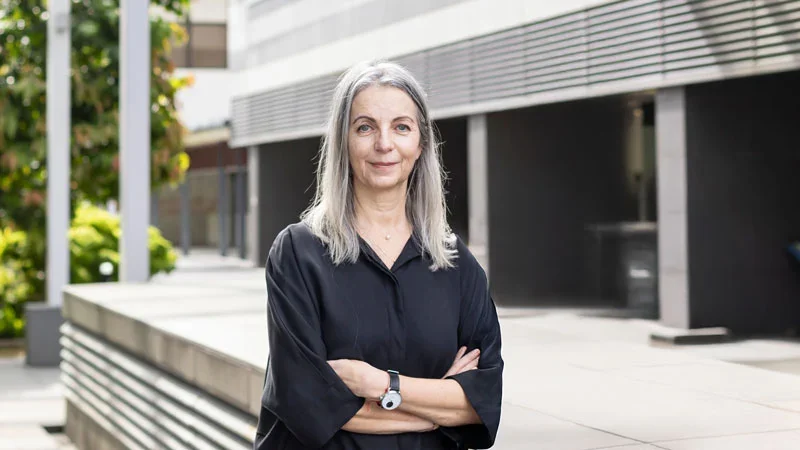
Professor Ayelet Gneezy is the co-founder and faculty director of the Centers of Excellence for US-Israel on Innovation & Economic Sustainability and Social Innovation & Impact at the Rady School of Management at the University of California, San Diego. Her research explores individuals’ prosocial choices and behaviours within the domains of charitable giving and environmental sustainability, end-of-life decisions, and health-related decision-making. Prof Gneezy is currently a Visiting Professor at BISI, where she leads behavioural and implementation studies that inform decision-making and health policies for more effective health programmes and interventions.
More from this issue

ETHICALLY SPEAKING
What Progressives Must Learn from Trump’s Campaign

