
From Gaza to Precision Medicine: Chasing the Answers Behind Every Diagnosis
6 July 2026
I vividly remember sitting on telehealth calls with patients scattered across Gaza and Egypt, watching two people with the exact same diagnosis and the exact same treatment end up with completely different outcomes. One recovered well. The other did not. I needed to know why. It was the gap between diagnosis and outcome that first pulled me toward precision medicine — long before I had a name for it.
Where the Question Started
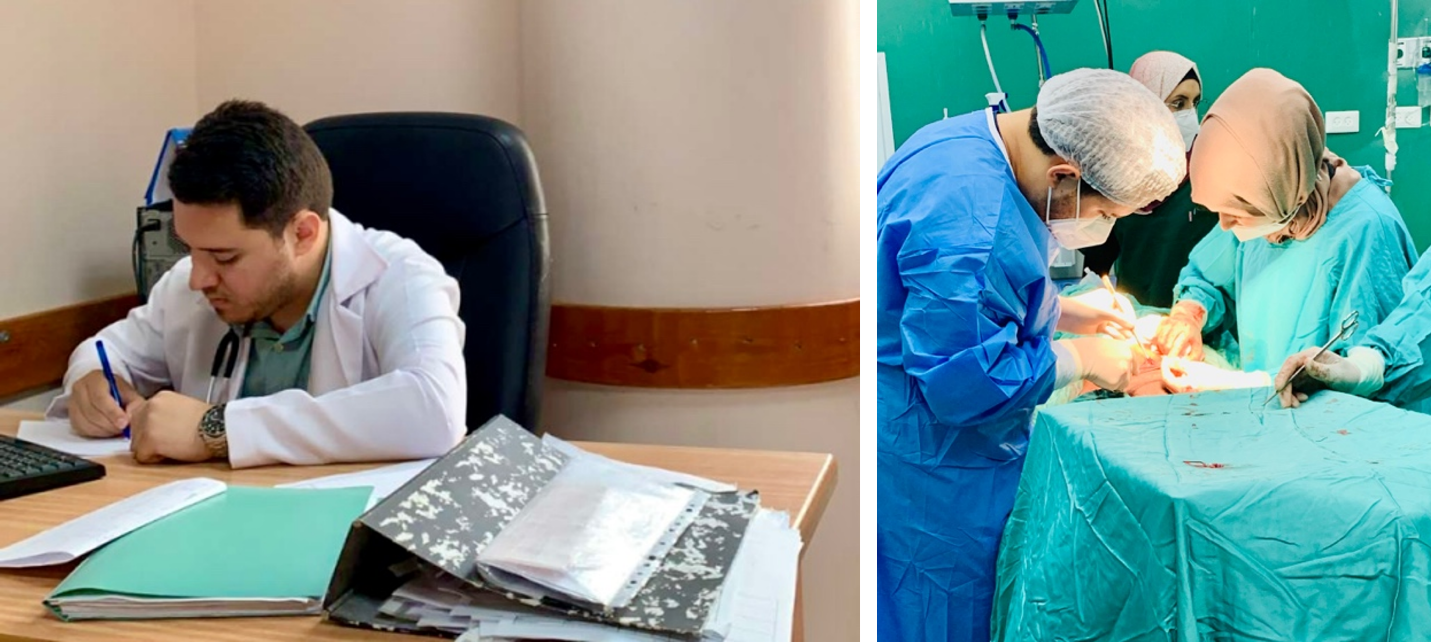
My medical journey began with an MBBCh from Zagazig University in Egypt and an internship across hospitals in Gaza. That on-the-ground training led me to the Gaza Health Organization, where I eventually served as Chief of the Family Medicine Clinic.
While leading a team of physicians and delivering telehealth care to displaced patients, I confronted medicine's central puzzle daily: why do identical diagnoses write such drastically different stories for different patients? It was this front-line clinical work that exposed the urgent need for a more individualised approach to care.
An Unexpected New Chapter
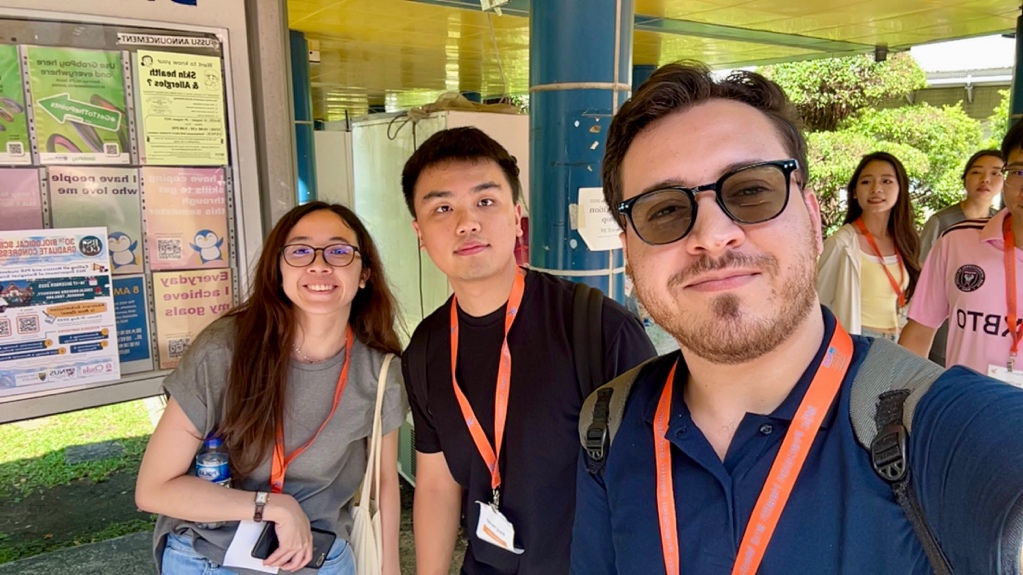
In August 2025, an unexpected chapter began. I joined the MSc in Precision Health and Medicine (MScPHM) programme at NUS Medicine, supported by the Palestinian Scholarship Initiative — a lifeline established by Singaporean academics, professionals, and volunteers for students affected by the war. It offered me a rare and profound opportunity: a dedicated year to build the exact scientific toolkit my clinical questions demanded.
Learning to See Disease Differently
The brilliance of the MScPHM programme lies in how its curriculum compounds to change your entire perspective on disease. I didn't just learn isolated subjects; I acquired a completely new vocabulary.
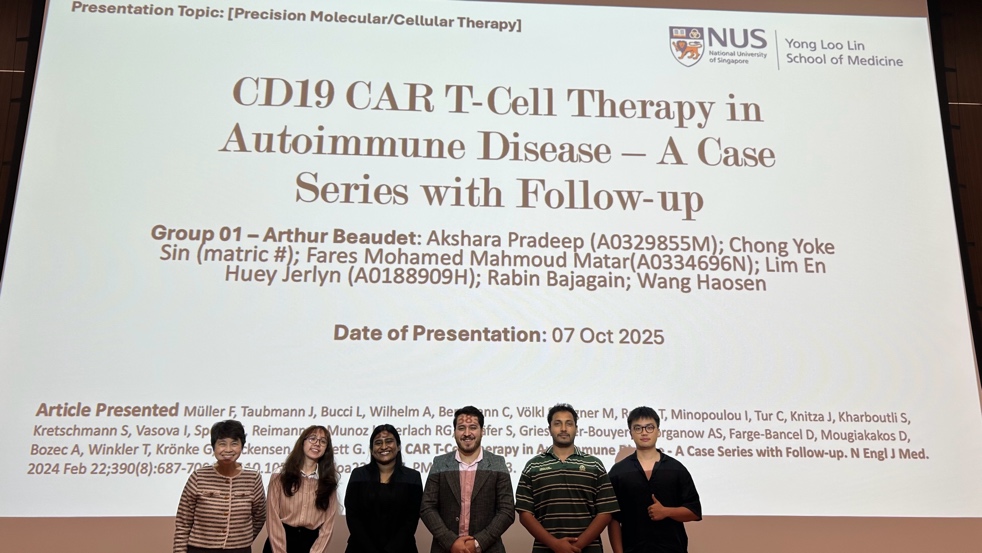
Diving into genomics, proteomics, and metabolomics allowed me to finally understand how genetic variation shapes both disease risk and drug response at a molecular level. But that biological data is only as good as our ability to interpret it. By integrating applied statistics with AI, machine learning, and high-performance computing, I learned how to process massive biomedical datasets and translate them into actionable clinical decisions.
Eventually, all these distinct threads tied together. These tools aren't abstractions — they're how molecular data, imaging, and patient history become one coherent, more precise picture of the actual patient in front of you. As an aspiring cardiologist, applying this integrated approach to cardiometabolic medicine was exhilarating. It allowed me to view cardiovascular disease simultaneously through a genetic, computational, and clinical lens.
The Question I'm Chasing Now
That classroom excitement has now evolved into my capstone project: "Influenza-Associated Cardiovascular Risk: A Proteomic Study of Host-Response Pathways in Adults with Pre-Existing Cardiovascular Disease." I am using proteomics to decode why influenza disproportionately impacts patients with underlying heart conditions, and how we might flag that risk before it becomes critical.
Where I'm Headed
My ultimate goal is to become a physician-scientist. I want to be a clinician who not only treats patients but drives the research that revolutionises their care.
The MScPHM programme has given me the scientific foundation, the analytical skills, and the interdisciplinary instincts to make that goal a reality. I arrived in this programme with a burning question from the clinic. I am leaving with the tools to answer it — equipped to translate the promise of precision medicine into tangible, life-saving cardiovascular outcomes for patients, no matter where they are.
About the student
Student: Mr Fares Mohamed Mahmoud Matar
Programme: 2025 MScPHM with Capstone
Fares earned his MBBCh from Zagazig University in Egypt and completed his internship across hospitals in Gaza, going on to serve as Chief of the Family Medicine Clinic at the Gaza Health Organization. He joined the MScPHM programme at NUS Medicine in August 2025 with the support of the Palestinian Scholarship Initiative. An aspiring cardiologist, his capstone project uses proteomics to study influenza-associated cardiovascular risk in adults with pre-existing cardiovascular disease, and he aims to build a career as a physician-scientist bridging front-line care and research.