Publications

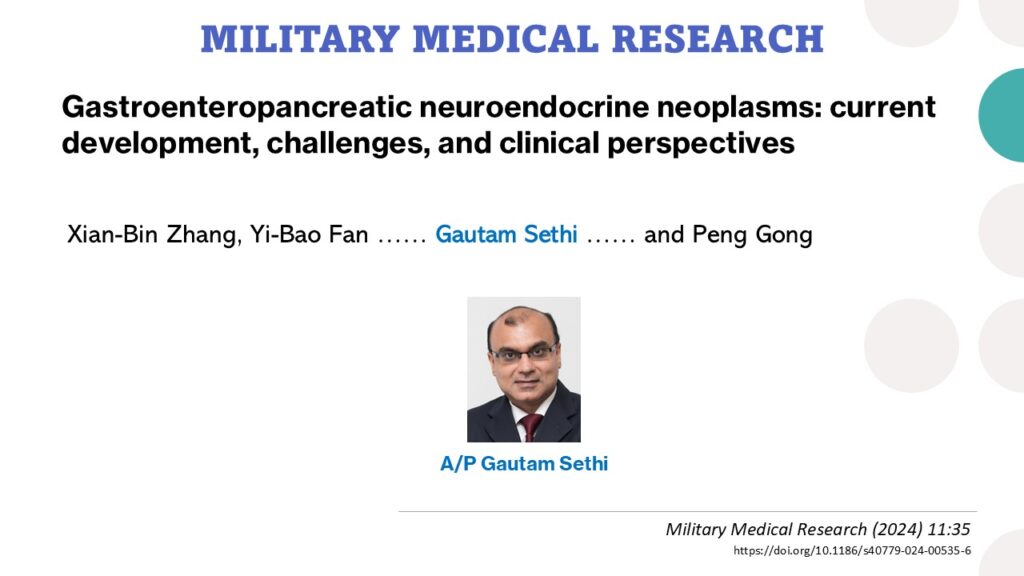
Gastroenteropancreatic neuroendocrine neoplasms: current development, challenges, and clinical perspectives

ABSTRACT

Neuroendocrine neoplasms (NENs) are highly heterogeneous and potentially malignant tumors arising from secretory cells of the neuroendocrine system. Gastroenteropancreatic neuroendocrine neoplasms (GEP-NENs) are the most common subtype of NENs. Historically, GEP-NENs have been regarded as infrequent and slow-growing malignancies; however, recent data have demonstrated that the worldwide prevalence and incidence of GEP-NENs have increased exponentially over the last three decades. In addition, an increasing number of studies have proven that GEP-NENs result in a limited life expectancy. These findings suggested that the natural biology of GEP-NENs is more aggressive than commonly assumed. Therefore, there is an urgent need for advanced researches focusing on the diagnosis and management of patients with GEP-NENs. In this review, we have summarized the limitations and recent advancements in our comprehension of the epidemiology, clinical presentations, pathology, molecular biology, diagnosis, and treatment of GEP-NETs to identify factors contributing to delays in diagnosis and timely treatment of these patients.


Full article:https://doi.org/10.1186/s40779-024-00535-6

Gastroenteropancreatic neuroendocrine neoplasms: current development, challenges, and clinical perspectives Read More »

Innovative Self-Assembly of 15-Mer Chimeric α-Peptide–Oligourea Foldamers toward Cl−-Selective Ion Channels

ABSTRACT

Constructing artificial ion channels is a challenging task. Herein, the de novo design of transmembrane ion channels made up of amphiphilic peptide–oligourea chimeric helices is described. They consist of an oligourea segment (7-mer) attached to the C-terminus of a short peptide (8-mer). Mass spectrometry (MS) and transmission electron microscopy (TEM) analyses show that in an aqueous solution, two of these chimeras (HPU-E and HPU-N) independently form defined oligomeric structures. TEM also shows that they form fiber bundles. The third related chimera HPU-F does not oligomerize (MS) but forms spherical nanostructures (TEM). HPU-E and HPU-N exhibit anion transport activity across lipid bilayers via antiport mechanism (HPU-N > HPU-E). The anion selectivity of HPU-N is Cl>NO3 > Br>SCN > I > AcO>F, which can be due to anion binding within the channels rather than size exclusion. Patch-clamp data support HPU-N’s Cl selectivity (PCl/PI = 3.26). X-ray crystal structure (1.77 Å) of HPU-N reveals well-packed α-helices, and cryo-electron microscopy data shows the formation of nanotubes (13.7 Å diameter pores) and transmembrane channels. The study shows that α-peptide–oligourea-based de novo design can yield unique bioactive molecules with defined structures and functions.


Full article:https://doi.org/10.1002/smsc.202300352

Innovative Self-Assembly of 15-Mer Chimeric α-Peptide–Oligourea Foldamers toward Cl−-Selective Ion Channels Read More »

Targeting reprogrammed metabolism as a therapeutic approach for respiratory diseases

ABSTRACT

Metabolic reprogramming underlies the etiology and pathophysiology of respiratory diseases such as asthma, idiopathic pulmonary fibrosis (IPF), and chronic obstructive pulmonary disease (COPD). The dysregulated cellular activities driving airway inflammation and remodelling in these diseases have reportedly been linked to aberrant shifts in energy-producing metabolic pathways: glycolysis and oxidative phosphorylation (OXPHOS). The rewiring of glycolysis and OXPHOS accompanying the therapeutic effects of many clinical compounds and natural products in asthma, IPF, and COPD, supports targeting metabolism as a therapeutic approach for respiratory diseases. Correspondingly, inhibiting glycolysis has largely attested effective against experimental asthma, IPF, and COPD. However, modulating OXPHOS and its supporting catabolic pathways like mitochondrial pyruvate catabolism, fatty acid β-oxidation (FAO), and glutaminolysis for these respiratory diseases remain inconclusive. An emerging repertoire of metabolic enzymes are also interconnected to these canonical metabolic pathways that similarly possess therapeutic potential for respiratory diseases. Taken together, this review highlights the urgent demand for future studies to ascertain the role of OXPHOS in different respiratory diseases, under different stimulatory conditions, and in different cell types. While this review provides strong experimental evidence in support of the inhibition of glycolysis for asthma, IPF, and COPD, further verification by clinical trials is definitely required.


Full article:https://doi.org/10.1016/j.bcp.2024.116187

Targeting reprogrammed metabolism as a therapeutic approach for respiratory diseases Read More »

Brassinin alleviates cancer cachexia by suppressing diverse inflammatory mechanisms in mice

ABSTRACT

Cancer cachexia is a multifactorial condition that contributes to the death of about 20% of cancer patients. It has the potential to cause weight loss, reduction in muscle mass, and loss of fat tissue, significantly lowering the quality of life. Currently, there are no approved drugs for cancer cachexia. Here, we have explored the possible impact of brassinin (BSN) on cancer cachexia under in vitro and in vivo settings. After differentiation, C2C12 and 3T3-L1 cells were incubated with colorectal carcinoma cells conditioned media or BSN. For preclinical studies, mice were injected with HT-29 cells followed by intraperitoneal administration of BSN, and muscle and adipose tissues were evaluated by Western blotting and hematoxylin and eosin staining. BSN effectively suppressed muscle atrophy by down-regulating the levels of Muscle RING-finger protein-1 and Atrogin-1, while also increasing the expression of myosin heavy chain in cachexia-induced-C2C12 myotubes. The induction of adipogenesis by BSN prevented adipocyte atrophy in cachexia-induced 3T3-L1 adipocytes. We also noted that BSN disrupted the interaction between COX-2 and signaling transducer and activator of transcription 3 (STAT3) promoter, leading to down-regulation of STAT3 activation. Moreover, it was found that BSN inhibited weight loss in mice and demonstrated anti-cachexic effects. Overall, our observations indicate that BSN can attenuate cancer cachexia through diverse mechanisms.


Full article:https://doi.org/10.1002/mco2.558

Brassinin alleviates cancer cachexia by suppressing diverse inflammatory mechanisms in mice Read More »

A glycolytic metabolite bypasses ‘‘two-hit’’ tumor suppression by BRCA2


ABSTRACT

Knudson’s “two-hit” paradigm posits that carcinogenesis requires inactivation of both copies of an autosomal tumor suppressor gene. Here, we report that the glycolytic metabolite methylglyoxal (MGO) transiently bypasses Knudson’s paradigm by inactivating the breast cancer suppressor protein BRCA2 to elicit a cancer-associated, mutational single-base substitution (SBS) signature in nonmalignant mammary cells or patient-derived organoids. Germline monoallelic BRCA2 mutations predispose to these changes. An analogous SBS signature, again without biallelic BRCA2 inactivation, accompanies MGO accumulation and DNA dam­ age in Kras-driven, Brca2-mutant murine pancreatic cancers and human breast cancers. MGO triggers BRCA2 proteolysis, temporarily disabling BRCA2’s tumor suppressive functions in DNA repair and replication, causing functional haploinsufficiency. Intermittent MGO exposure incites episodic SBS mutations without permanent BRCA2 inactivation. Thus, a metabolic mechanism wherein MGO-induced BRCA2 haploinsufficiency transiently bypasses Knudson’s two-hit requirement could link glycolysis activation by onco­ genes, metabolic disorders, or dietary challenges to mutational signatures implicated in cancer evolution.

Link to full article: https://pubmed.ncbi.nlm.nih.gov/38417710/

A glycolytic metabolite bypasses ‘‘two-hit’’ tumor suppression by BRCA2 Read More »

Nanoparticles in tumor microenvironment remodeling and cancer immunotherapy


ABSTRACT

Cancer immunotherapy and vaccine development have significantly improved the fight against cancers. Despite these advancements, challenges remain, particularly in the clinical delivery of immunomodulatory compounds. The tumor microenvironment (TME), comprising macrophages, fibroblasts, and immune cells, plays a crucial role in immune response modulation. Nanoparticles, engineered to reshape the TME, have shown promising results in enhancing immunotherapy by facilitating targeted delivery and immune modulation. These nanoparticles can suppress fibroblast activation, promote M1 macrophage polarization, aid dendritic cell maturation, and encourage T cell infiltration. Biomimetic nanoparticles further enhance immunotherapy by increasing the internalization of immunomodulatory agents in immune cells such as dendritic cells. Moreover, exosomes, whether naturally secreted by cells in the body or bioengineered, have been explored to regulate the TME and immune-related cells to affect cancer immunotherapy. Stimuli-responsive nanocarriers, activated by pH, redox, and light conditions, exhibit the potential to accelerate immunotherapy. The co-application of nanoparticles with immune checkpoint inhibitors is an emerging strategy to boost anti-tumor immunity. With their ability to induce long-term immunity, nanoarchitectures are promising structures in vaccine development. This review underscores the critical role of nanoparticles in overcoming current challenges and driving the advancement of cancer immunotherapy and TME modification.


Full article:https://doi.org/10.1186/s13045-024-01535-8

Nanoparticles in tumor microenvironment remodeling and cancer immunotherapy Read More »

Blood-based biomarkers of cerebral small vessel disease

ABSTRACTS

Age-associated cerebral small vessel disease (CSVD) represents a clinically heterogenous condition, arising from diverse microvascular mechanisms. These lead to chronic cerebrovascular dysfunction and carry a substantial risk of subsequent stroke and vascular cognitive impairment in aging populations. Owing to advances in neu-roimaging, in vivo visualization of cerebral vasculature abnormities and detection of CSVD, including lacunes, microinfarcts, microbleeds and white matter lesions, is now possible, but remains a resource-, skills- and time- intensive approach. As a result, there has been a recent proliferation of blood-based biomarker studies for CSVD aimed at developing accessible screening tools for early detection and risk stratification. However, a good understanding of the pathophysiological processes underpinning CSVD is needed to identify and assess clinically useful biomarkers. Here, we provide an overview of processes associated with CSVD pathogenesis, including endothelial injury and dysfunction, neuroinflammation, oxidative stress, perivascular neuronal damage as well as cardiovascular dysfunction. Then, we review clinical studies of the key biomolecules involved in the afore-mentioned processes. Lastly, we outline future trends and directions for CSVD biomarker discovery and clinical validation.

Link to full article: https://doi.org/10.1016/j.arr.2024.102247

Blood-based biomarkers of cerebral small vessel disease Read More »

Molecular panorama of therapy resistance in prostate cancer: a pre-clinical and bioinformatics analysis for clinical translation

ABSTRACT

Prostate cancer (PCa) is a malignant disorder of prostate gland being asymptomatic in early stages and high metastatic potential in advanced stages. The chemotherapy and surgical resection have provided favourable prognosis of PCa patients, but advanced and aggressive forms of PCa including CRPC and AVPC lack response to therapy properly, and therefore, prognosis of patients is deteriorated. At the advanced stages, PCa cells do not respond to chemotherapy and radiotherapy in a satisfactory level, and therefore, therapy resistance is emerged. Molecular profile analysis of PCa cells reveals the apoptosis suppression, pro-survival autophagy induction, and EMT induction as factors in escalating malignant of cancer cells and development of therapy resistance. The dysregulation in molecular profile of PCa including upregulation of STAT3 and PI3K/Akt, downregulation of STAT3, and aberrant expression of non-coding RNAs are determining factor for response of cancer cells to chemotherapy. Because of prevalence of drug resistance in PCa, combination therapy including co-utilization of anti-cancer drugs and nanotherapeutic approaches has been suggested in PCa therapy. As a result of increase in DNA damage repair, PCa cells induce radioresistance and RelB overexpression prevents irradiation-mediated cell death. Similar to chemotherapy, nanomaterials are promising for promoting radiosensitivity through delivery of cargo, improving accumulation in PCa cells, and targeting survival-related pathways. In respect to emergence of immunotherapy as a new tool in PCa suppression, tumour cells are able to increase PD-L1 expression and inactivate NK cells in mediating immune evasion. The bioinformatics analysis for evaluation of drug resistance-related genes has been performed.


Full article:https://doi.org/10.1007/s10555-024-10168-9

Molecular panorama of therapy resistance in prostate cancer: a pre-clinical and bioinformatics analysis for clinical translation Read More »

Mechanisms of biased agonism by Gαi/o-biased stapled peptide agonists of the relaxin-3 receptor


The neuropeptide relaxin-3 is composed of an A chain and a B chain held together by disulfide bonds, and it modu- lates functions such as anxiety and food intake by binding to and activating its cognate receptor RXFP3, mainly through the B chain. Biased ligands of RXFP3 would help to determine the molecular mechanisms underlying the

activation of G proteins and β-arrestins downstream of RXFP3 that lead to such diverse functions. We showed that the i, i+4 stapled relaxin-3 B chains, 14s18 and d(1-7)14s18, were Gαi/o-biased agonists of RXFP3. These peptides did not induce recruitment of β-arrestin1/2 to RXFP3 by GPCR kinases (GRKs), in contrast to relaxin-3, which enabled the GRK2/3-mediated recruitment of β-arrestin1/2 to RXFP3. Relaxin-3 and the previously reported peptide 4 (an i, i+4 stapled relaxin-3 B chain) did not exhibit biased signaling. The staple linker of peptide 4 and parts of both the A chain and B chain of relaxin-3 interacted with extracellular loop 3 (ECL3) of RXFP3, moving it away from the

binding pocket, suggesting that unbiased ligands promote a more open conformation of RXFP3. These findings highlight roles for the A chain and the N-terminal residues of the B chain of relaxin-3 in inducing conformational changes in RXFP3, which will help in designing selective biased ligands with improved therapeutic efficacy.

Image credit: Office of the Deputy President (Research and Technology)

Full article:https://doi.org/10.1126/scisignal.abl5880

Mechanisms of biased agonism by Gαi/o-biased stapled peptide agonists of the relaxin-3 receptor Read More »

Direct vagus nerve stimulation: A new tool to control allergic airway inflammation through α7 nicotinic acetylcholine receptor

Direct vagus nerve stimulation: A new tool to control allergic airway inflammation through α7 nicotinic acetylcholine receptor
Caroline Sévoz-Couche, Wupeng Liao, Hazel Y. C. Foo, Isabelle Bonne, Thong Beng Lu, Caris Tan Qi Hui, Wendy Yen Xian Peh, Shi-Cheng Yen, W. S. Fred Wong

Background and Purpose: Asthma is characterized by airway inflammation, mucus hypersecretion, and airway hyperresponsiveness. The use of nicotinic agents to mimic the cholinergic anti-inflammatory pathway (CAP) controls experimental asthma. Yet, the effects of vagus nerve stimulation (VNS)-induced CAP on allergic inflammation remain unknown.

Experimental Approach: BALB/c mice were sensitized and challenged with house dust mite (HDM) extract and treated with active VNS (5 Hz, 0.5 ms, 0.05–1 mA). Bronchoalveolar lavage (BAL) fluid was assessed for total and differential cell counts and cytokine levels. Lungs were examined by histopathology and electron microscopy.

Key Results: In the HDM mouse asthma model, VNS at intensities equal to or above 0.1 mA (VNS 0.1) but not sham VNS reduced BAL fluid differential cell counts and alveolar macrophages expressing α7 nicotinic receptors (α7nAChR), goblet cell hyperplasia, and collagen deposition. Besides, VNS 0.1 also abated HDM-induced elevation of type 2 cytokines IL-4 and IL-5 and was found to block the phosphorylation of transcription factor STAT6 and expression level of IRF4 in total lung lysates. Finally, VNS 0.1 abrogated methacholine-induced hyperresponsiveness in asthma mice. Prior administration of α-bungarotoxin, a specific inhibitor of α7nAChR, but not propranolol, a specific inhibitor of β2-adrenoceptors, abolished the therapeutic effects of
VNS 0.1.

Conclusion and Implications: Our data revealed the protective effects of VNS on various clinical features in allergic airway inflammation model. VNS, a clinically approved therapy for depression and epilepsy, appears to be a promising new strategy for controlling allergic asthma.

Direct vagus nerve stimulation: A new tool to control allergic airway inflammation through α7 nicotinic acetylcholine receptor Read More »

Scroll to Top