Publications

Unveiling the Power of Gut Microbiome in Predicting Neoadjuvant Immunochemotherapy Responses in Esophageal Squamous Cell Carcinoma


ABSTRACT

The role of the gut microbiome in enhancing the efficacy of anticancer treatments like chemotherapy and radiotherapy is well acknowledged. However, there is limited empirical evidence on its predictive capabilities for neoadjuvant immunochemotherapy (NICT) responses in esophageal squamous cell carcinoma (ESCC). Our study fills this gap by comprehensively analyzing the gut microbiome’s influence on NICT outcomes. We analyzed 16S rRNA gene sequences from 136 fecal samples from 68 ESCC patients before and after NICT, along with 19 samples from healthy controls. After NICT, marked microbiome composition changes were noted, including a decrease in ESCC-associated pathogens and an increase in beneficial microbes such as Limosilactobacillus, Lacticaseibacillus, and Staphylococcus. Baseline microbiota profiles effectively differentiated responders from nonresponders, with responders showing higher levels of short-chain fatty
acid (SCFA)-producing bacteria such as Faecalibacterium, Eubacterium_eligens_group, Anaerostipes, and Odoribacter, and nonresponders showing increases in Veillonella, Campylobacter, Atopobium, and Trichococcus. We then divided our patient cohort into training and test sets at a 4:1 ratio and utilized the XGBoost-RFE algorithm to identify 7 key microbial biomarkers—Faecalibacterium, Subdoligranulum, Veillonella, Hungatella, Odoribacter, Butyricicoccus, and HT002. A predictive model was developed using LightGBM, which achieved an area under the receiver operating characteristic curve (AUC) of 86.8% [95% confidence interval (CI), 73.8% to 99.4%] in the training set, 76.8% (95% CI, 41.2% to 99.7%) in the validation set, and 76.5%
(95% CI, 50.4% to 100%) in the testing set. Our findings underscore the gut microbiome as a novel source of biomarkers for predicting NICT responses in ESCC, highlighting its potential to enhance personalized treatment strategies and advance the integration of microbiome profiling into clinical practice for modulating cancer treatment responses.

Full article:https://doi.org/10.34133/research.0529


Unveiling the Power of Gut Microbiome in Predicting Neoadjuvant Immunochemotherapy Responses in Esophageal Squamous Cell Carcinoma Read More »

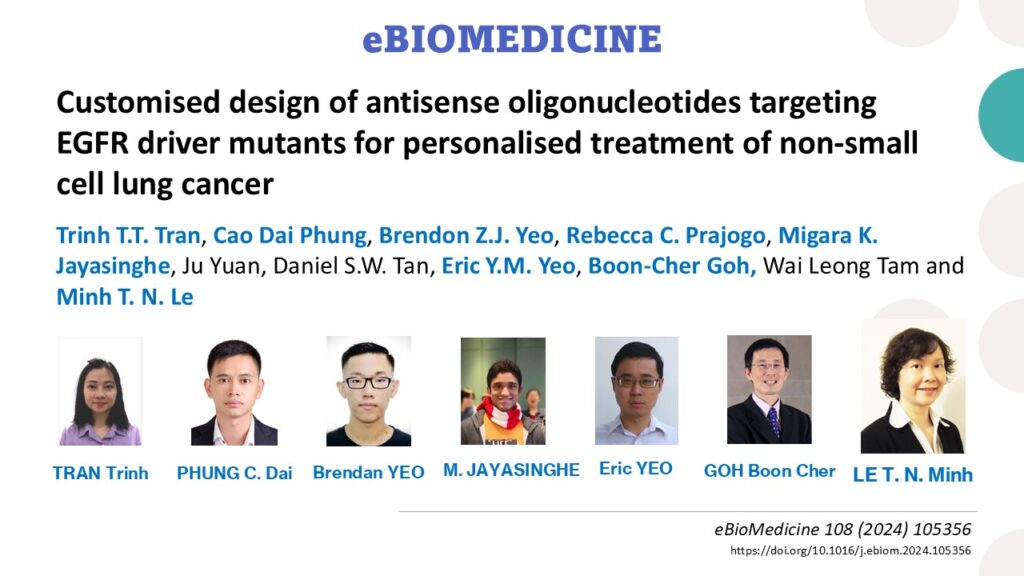
Customised design of antisense oligonucleotides targeting EGFR driver mutants for personalised treatment of non-small cell lung cancer

Summary
Background Tyrosine kinase inhibitors (TKIs) are currently the standard therapy for patients with non-small cell lung cancer (NSCLC) bearing mutations in epidermal growth factor receptor (EGFR). Unfortunately, drug-acquired resistance is inevitable due to the emergence of new mutations in EGFR. Moreover, the TKI treatment is associated with severe toxicities due to the unspecific inhibition of wild-type (WT) EGFR. Thus, treatment that is customised to an individual’s genetic alterations in EGFR may offer greater therapeutic benefits for patients with NSCLC.

( Full Article : https://www.thelancet.com/journals/ebiom/article/PIIS2352-3964(24)00392-X/fulltext )


Customised design of antisense oligonucleotides targeting EGFR driver mutants for personalised treatment of non-small cell lung cancer Read More »

Extracellular vesicles in the HCC microenvironment: Implications for therapy and biomarkers

ABSTRACT

Hepatocellular carcinoma (HCC) stands as the sixth most prevalent cancer and the third leading cause of cancer mortality globally. Despite surgical resection being the preferred approach for early-stage HCC, most patients are diagnosed at intermediate to advanced stages, limiting treatment options to chemotherapy and immunotherapy, which often yield poor outcomes. Extracellular vesicles (EVs), minute lipid-bilayered particles released by diverse cells under various physiological and pathological conditions, are crucial for mediating communication between cells. Mounting evidence indicates that EVs sourced from different cells can profoundly influence the HCC tumor microenvironment (TME), thereby affecting the progression of HCC. Given their immunogenicity and liver-targeting properties, these EVs not only hold promise for HCC treatment but also provide avenues for advancing early diagnostic methods and assessing prognosis. This review not only describes the function of EVs within the HCC tumor microenvironment but also analyzes their therapeutic advantages and explores their significance in various therapeutic approaches for HCC, including chemotherapy, immunotherapy, combination therapy, and their role as innovative drug delivery carriers. Furthermore, it highlights the potential of EVs as biomarkers for the diagnosis and prognosis of HCC.


Full article:https://doi.org/10.1016/j.phrs.2024.107419

Extracellular vesicles in the HCC microenvironment: Implications for therapy and biomarkers Read More »

Investigating the interplay between mitophagy and diabetic neuropathy: Uncovering the hidden secrets of the disease pathology

ABSTRACT

Mitophagy, the cellular process of selectively eliminating damaged mitochondria, plays a crucial role in main­taining metabolic balance and preventing insulin resistance, both key factors in type 2 diabetes mellitus (T2DM) development. When mitophagy malfimctions in diabetic neuropathy, it triggers a cascade of metabolic disrup­tions, including reduced energy production, increased oxidative stress, and cell death, ultimately leading to various complications. Thus, targeting mitophagy to enhance the process may have emerged as a promising therapeutic strategy for T2DM and its complications. Notably, plant-derived compounds with ?-cell protective and mitophagy-stimulating properties offer potential as novel therapeutic agents. This review highlights the intricate mechanisms linking mitophagy dysfunction to T2DM and its complications, particularly neuropathy, elucidating potential therapeutic interventions for this debilitating disease.


Full article:https://doi.org/10.1016/j.phrs.2024.107394

Investigating the interplay between mitophagy and diabetic neuropathy: Uncovering the hidden secrets of the disease pathology Read More »

A new 1,2,3-triazole-indirubin hybrid suppresses tumor growth and pulmonary metastasis by mitigating the HGF/c-MET axis in hepatocellular carcinoma

ABSTRACT

Introduction: Hepatocellular carcinoma (HCC) is a fatal cancer that is often diagnosed at the advanced stages which limits the available therapeutic options. The interaction of HGF with c-MET (a receptor tyrosine kinase) results in the activation of c-MET which subsequently triggers the PI3K/Akt/mTOR axis. Overexpression of c-MET in HCC tissues has been demonstrated to contribute to tumor progression and metastasis.

Objectives: We aimed to synthesize triazole-indirubin conjugates, examine their growth suppressor efficacy in cell-based assays, and investigate the antitumor as well as antimetastatic activity of lead cytotoxic agent in the orthotopic mice model. Methods: A series of triazole-indirubin hybrids were synthesized and cytotoxicity, apoptogenic, and antimigratory effect of the lead compound (CRI9) was evaluated using MTT assay, cell cycle analysis, annexin-V/PI assay, TUNEL assay, and wound healing assay. The effect of CRI9 on the operation of the HGF/c-MET/PI3K/Akt/mTOR axis was examined using western blotting and transfection experiments. Acute toxicity, antitumor, and antimetastatic activity of CRI9 were examined in NCr nude mice. The expression of c-MET/PI3K/Akt/mTOR, CD31, and Ki-67 was examined using immunohistochemistry and western blotting.
Results: Among the new compounds, CRI9 consistently displayed potent cytotoxicity against HGFinduced HCC cells. CRI9 induced apoptosis as evidenced by increased sub G1 cells, annexin-V+/PI+ cells, TUNEL+ cells, and cleavage of procaspase-3 and PARP. CRI9 inhibited HGF-induced phosphorylation of c-METY1234/1235 and subsequently suppressed the PI3K/Akt/mTOR axis. Also, depletion of c-MET or inhibition of c-MET by CRI9 resulted in suppression of the PI3K/Akt/mTOR axis. CRI9 showed no toxic effects in NCr nude mice and displayed a potent antitumor and antimetastatic effect in the orthotopic HCC mice model. CRI9 also reduced the levels of phospho-c-MET, CD31, and Ki-67 and suppressed the activation of the PI3K/Akt/mTOR axis in tumor tissues.
Conclusion: CRI9 has been identified as a new inhibitor of the c-MET/PI3K/Akt/mTOR axis in HCC preclinical models.

Full article:https://doi.org/10.1016/j.jare.2024.08.033

A new 1,2,3-triazole-indirubin hybrid suppresses tumor growth and pulmonary metastasis by mitigating the HGF/c-MET axis in hepatocellular carcinoma Read More »

A novel drug prejudice scaffold-imidazopyridine-conjugate can promote cell death in a colorectal cancer model by binding to b-catenin and suppressing the Wnt signaling pathway

ABSTRACT

Introduction: Globally, colorectal cancer (CRC) is the third most common type of cancer, and its treatment frequently includes the utilization of drugs based on antibodies and small molecules. The development of CRC has been linked to various signaling pathways, with the Wnt/b-catenin pathway identified as a key target for intervention.

Objectives: We have explored the impact of imidazopyridine-tethered chalcone-C (CHL-C) in CRC models.
Methods: To determine the influence of CHL-C on apoptosis and autophagy, Western blot analysis, annexin V assay, cell cycle analysis, acridine orange staining, and immunocytochemistry were performed. Next, the activation of the Wnt/b-catenin signaling pathway and the anti-cancer effects of CHL-C in vivo were examined in an orthotopic HCT-116 mouse model.

Results: We describe the synthesis and biological assessment of the CHL series as inhibitors of the viability of HCT-116, SW480, HT-29, HCT-15, and SNU-C2A CRC cell lines. Further biological evaluations showed that CHL-C induced apoptosis and autophagy in down-regulated b-catenin, Wnt3a, FZD-1, Axin-1, and p-GSK-3b (Ser9), and up-regulated p-GSK3b (Tyr216) and b-TrCP. In-depth analysis using structure-based bioinformatics showed that CHL-C strongly binds to b-catenin, with a binding affinity comparable to that of ICG-001, a well-known b-catenin inhibitor. Additionally, our in vivo research showed that CHL-C markedly inhibited tumor growth and triggered the activation of both apoptosis and autophagy in tumor tissues.

Conclusion: CHL-C is capable of inducing apoptosis and autophagy by influencing the Wnt/b-catenin signaling pathway.

Full article:https://doi.org/10.1016/j.jare.2024.07.022

A novel drug prejudice scaffold-imidazopyridine-conjugate can promote cell death in a colorectal cancer model by binding to b-catenin and suppressing the Wnt signaling pathway Read More »

Autophagy in aging-related diseases and cancer: Principles, regulatory mechanisms and therapeutic potential

ABSTRACT

Macroautophagy/autophagy is primarily accountable for the degradation of damaged organelles and toxic macromolecules in the cells. Regarding the essential function of autophagy for preserving cellular homeostasis, changes in, or dysfunction of, autophagy flux can lead to disease development. In the current paper, the complicated function of autophagy in aging-associated pathologies and cancer is evaluated, highlighting the underlying molecular mechanisms that can affect longevity and disease pathogenesis. As a natural biological process, a reduction in autophagy is observed with aging, resulting in an accumulation of cell damage and the development of different diseases, including neurological disorders, cardiovascular diseases, and cancer. The MTOR, AMPK, and ATG proteins demonstrate changes during aging, and they are promising therapeutic targets. Insulin/lGFl, TOR, PKA, AKT/PKB, caloric restriction and mitochondrial respiration are vital for lifespan.


Full article:https://doi.org/10.1016/j.arr.2024.102428

Autophagy in aging-related diseases and cancer: Principles, regulatory mechanisms and therapeutic potential Read More »

Mechanisms of sensitivity and resistance to CDK4/CDK6 inhibitors in hormone receptor-positive breast cancer treatment

ABSTRACT

Cell cycle dysregulation is a hallmark of cancer that promotes eccessive cell division. Cyclin-dependent kinase 4 (CDK4) and cyclin-dependent kinase 6 (CDK6) are key molecules in the G1-to-S phase cell cycle transition and are crucial for the onset, survival, and progression of breast cancer (BC). Small-molecule CDK4/CDK6 inhibitors (CDK4/6i) block phosphorylation of tumor suppressor Rb and thus restrain susceptible BC cells in G1 phase. Three CDK4/6i are approved for the first-line treatment of patients with advanced/metastatic hormone receptor-positive (HR+)/human epidermal growth factor receptor 2-negative (HER2) BC in combination with endocrine therapy (ET). Though this has improved the clinical outcomes for survival of BC patients, there is no established standard next-line treatment to tackle drug resistance. Recent studies suggest that CDK4/6i can modulate other distinct effects in both BC and breast stromal compartments, which may provide new insights into aspects of their clinical activity. This review describes the biochemistry of the CDK4/6-Rb-E2F pathway in HR+ BC, then discusses how CDK4/6i can trigger other effects in BC/breast stromal compartments, and finally outlines the mechanisms of CDK4/6i resistance that have emerged in recent preclinical studies and clinical cohorts, emphasizing the impact of these findings on novel therapeutic opportunities in BC.


Full article: https://www.sciencedirect.com/science/article/pii/S136876462400061X?via%3Dihub

Mechanisms of sensitivity and resistance to CDK4/CDK6 inhibitors in hormone receptor-positive breast cancer treatment Read More »

Insights from multi-omic modeling of neurodegeneration in xeroderma pigmentosum using an induced pluripotent stem cell system

Summary

Xeroderma pigmentosum(XP) is caused by defective nucleotide excision repair of DNA damage. This results in hypersensitivity to ultraviolet light and increased skin cancer risk, as sunlight-induced photoproducts remain unrepaired. However, many XP patients also display early-onset neurodegeneration, which leads to premature death. The mechanism of neurodegeneration is unknown. Here, we investigate XP neurodegeneration using pluripotent stemcellsderivedfromXPpatients andhealthy relatives, performingfunctional multi-omicsonsamples duringneuronaldifferentiation.We showsubstantially increasedlevels of 50,8-cyclopurineand8-oxopurine in XPneuronalDNAsecondary tomarked oxidative stress. Furthermore,we find that the endoplasmic reticulum stress response is upregulated and reversal of the mutant genotype is associatedwith phenotypic rescue. Critically, XP neurons exhibit inappropriate downregulation of the protein clearance ubiquitin-proteasome system (UPS). Chemical enhancement of UPS activity in XP neuronal models improves phenotypes, albeit inadequately. Although more work is required, this study presents insights with intervention potential.

Full article: https://www.cell.com/cell-reports/fulltext/S2211-1247(24)00571-0

Insights from multi-omic modeling of neurodegeneration in xeroderma pigmentosum using an induced pluripotent stem cell system Read More »

Micelle-engineered nanoplatforms for precision oncology

ABSTRACT

The alliance between nanomaterials and cancer therapy has revolutionized the treatment of tumor patients. After cardiovascular diseases, cancer is the leading cause of death, so interdisciplinary approaches should be used for the treatment of this malignant disease. Both treatment and early diagnosis of cancer are challenging. The micelles belong to lipid-based nanostructures, and they have a hydrophobic core with hydrophilic head regions. The current review article focuses on the application of micelles in cancer suppression. The micelles can provide a platform for co-delivery of non-coding RNAs and RNAi in cancer gene therapy. Both synthetic and natural compounds with anti-tumor activity can be delivered by micelles. Besides, the co-delivery of drugs and genes mediates synergistic cancer therapy. Various kinds of smart micelles, including pH-, light-, redox- and multi-sensitive micellar nanostructures, can support targeted cancer treatment. The modification of micelles with ligands such as hyaluronic acid and aptamers can enhance the selectivity of nanostructures toward tumor cells. The micelles can also be employed for cancer diagnosis. The combination of micelles with other nanostructures, such as polymeric nanoparticles, is served to improve cancer treatment. The studies demonstrate the high biocompatibility and safety profile of micelles. The green modification and synthesis of micelles can enhance their biocompatibility. Therefore, micelles can be utilized in the near future for the treatment and diagnosis of cancer patients.

Full article:https://doi.org/10.1016/j.cej.2024.153438

Micelle-engineered nanoplatforms for precision oncology Read More »

Scroll to Top