News

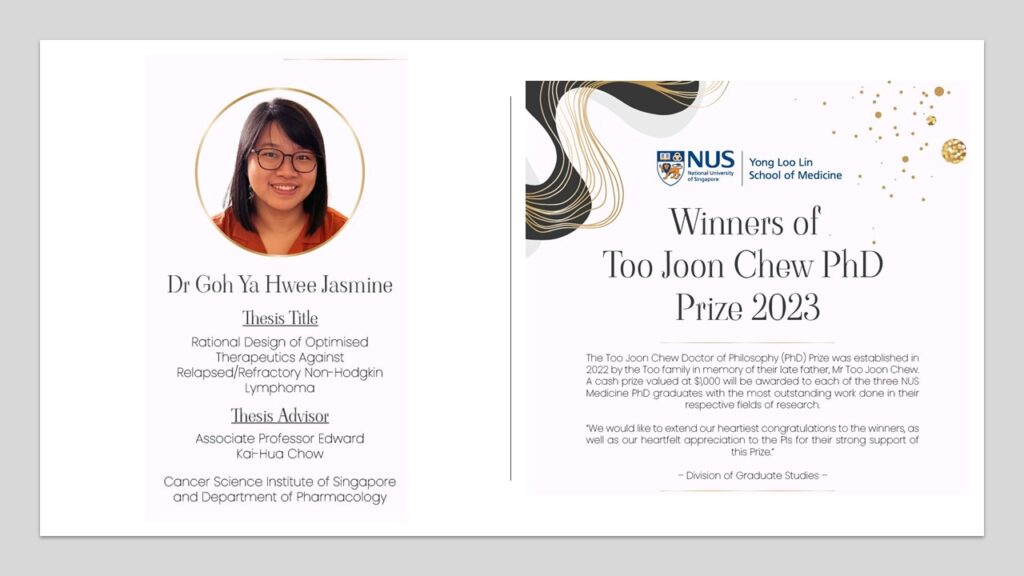
Winner of Too Joon Chew PhD Prize 2023

Congratulation to Dr. GOH Ya Hwee Jasmine for winning the Too Joon Chew PhD Prize 2023!

The Too Joon Chew Doctor of Philosophy (PhD) Prize was established in 2022 by the Too family in memory of their late father, Mr Too Joon Chew. A cash prize valued at $1000 will be awarded to each of the three NUS Medicine PhD graduates with the most outstanding work done in their respective fields of research.

Winner of Too Joon Chew PhD Prize 2023 Read More »

NUS Medicine and Department of Pharmacology Achieve Top Rankings in Asia

The National University of Singapore (NUS) continues to make its mark in higher education, securing leading positions in the latest QS World University Rankings by subject. NUS Medicine has been ranked #20 in the world and #1 in Asia, while NUS Pharmacy & Pharmacology is tied for #10 in the world and also holds the #1 spot in Asia

The rankings highlight NUS’s commitment to providing world-class education and research in the fields of medicine and pharmacology. With a strong focus on innovation and interdisciplinary collaboration, NUS has been recognized for its outstanding performance in both fields. The rankings emphasize the growing influence of the NUS Medicine Department of Pharmacology on the global stage.

These achievements reflect the dedication of the NUS Medicine Department of Pharmacology’s faculty, staff, students, and researchers in pushing the boundaries of knowledge, education, and innovation. As a leading Department of Pharmacology in Asia, the NUS Medicine Department of Pharmacology remains committed to nurturing talent and contributing to the betterment of the region and the world.

For more information on the rankings, visit the Top Universities website and read the full article from The Straits Times (More Details) and see the QS World University Rankings for Pharmacy & Pharmacology 2023 (QS Rankings) via the links below.

NUS Medicine and Department of Pharmacology Achieve Top Rankings in Asia Read More »

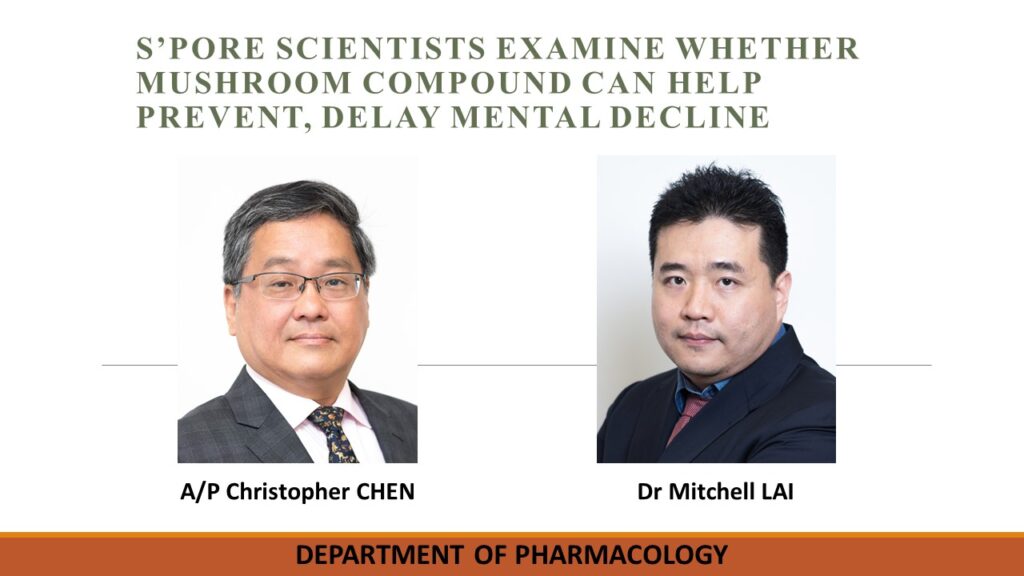
Singapore scientists examine whether mushroom compound can help prevent, delay mental decline

Led by Prof Barry Halliwell from NUS Medicine Department of Biochemistry, and A/Prof Christopher Chen and Dr Mitchell Lai (both NUS Pharmacology) from the Memory, Ageing and Cognition Centre at NUHS, a group of scientists has restarted a clinical trial to look at whether supplementing one’s diet with ergothioneine – a compound found mainly in mushrooms – can help prevent or delay cognitive impairment and dementia, after they found that low levels of ergothioneine in the blood correlate with an increased risk of developing cognitive issues.

Singapore scientists examine whether mushroom compound can help prevent, delay mental decline Read More »

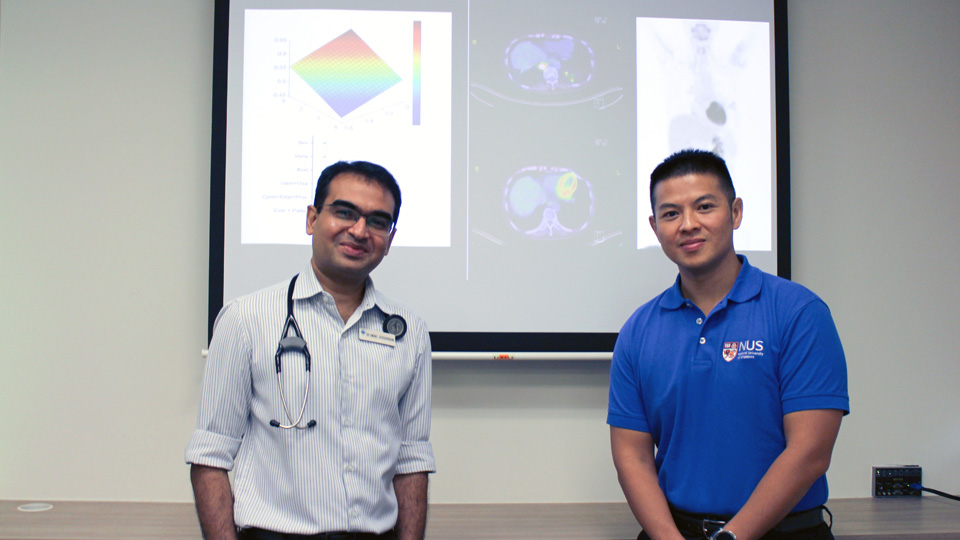
AI platform that suggests drug cocktail for patients with relapsed lymphoma to undergo clinical trial soon

In the near future, patients with relapsed lymphoma can likely enrol in a formal clinical trial that will personalise the most effective cocktail of drugs to treat their disease based on calculations done by an artificial intelligence (AI) platform. Led by Dr Anand Jeyasekharan and A/Prof Edward Chow (Department of Pharmacology) from the NUS Centre for Cancer Research (N2CR) and Cancer Science Institute of Singapore, a study on 17 patients who had suffered multiple lymphoma relapses saw significant improvement in eight of them after they took a cocktail of medication recommended by the platform. Of these eight patients, five had their cancer completely eradicated.

AI platform that suggests drug cocktail for patients with relapsed lymphoma to undergo clinical trial soon Read More »

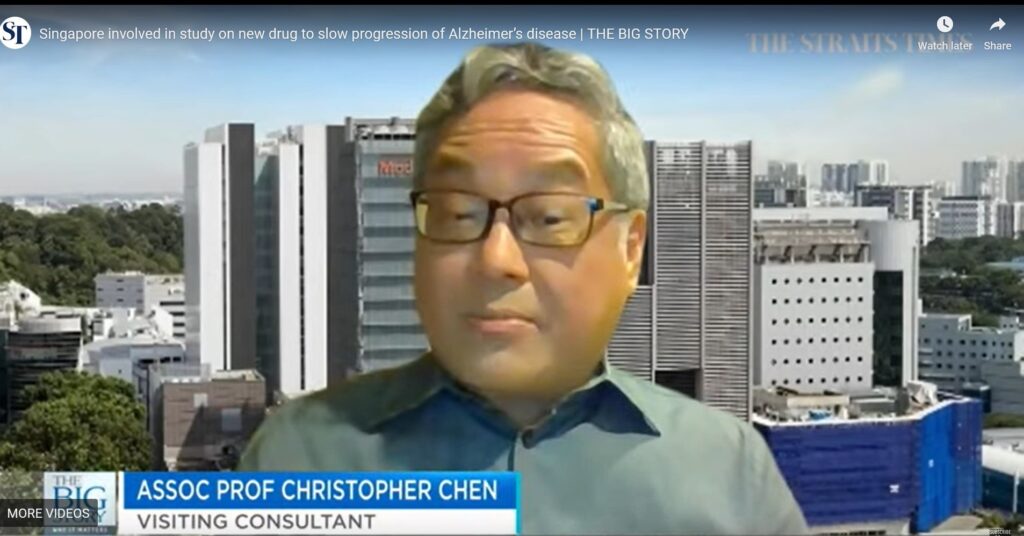
Experimental Alzheimer’s drug found to slow progression of disease

Patients with Alzheimer’s disease – the most common cause of dementia – may soon get a new drug that can slow progression of the disease, a recent study has found.

Speaking to media on Tuesday, visiting consultant in the Department of Psychological Medicine at the National University Hospital (NUH) Christopher Chen (Associate Professor at Department of Pharmacology, NUS) said disease progression for patients who were given the drug known as lecanemab was found to be at least six months behind those who received a placebo after 18 months of treatment.

Experimental Alzheimer’s drug found to slow progression of disease Read More »

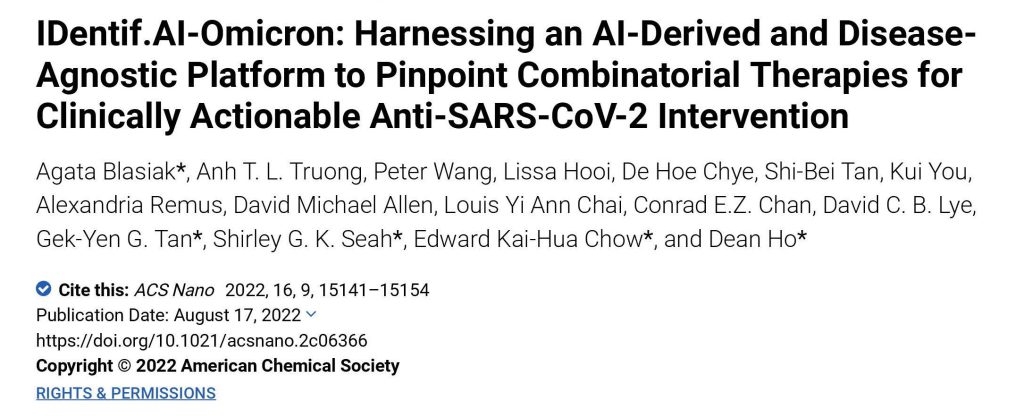
ACS Nano article by Prof. Dean HO and A/P Edward CHOW: IDentif.AI-Omicron

Nanomedicine-based and unmodified drug interventions to address COVID-19 have evolved over the course of the pandemic as more information is gleaned and virus variants continue to emerge. For example, some early therapies (e.g., antibodies) have experienced markedly decreased efficacy. Due to a growing concern of future drug resistant variants, current drug development strategies are seeking to find effective drug combinations. In this study, we used IDentif.AI, an artificial intelligence-derived platform, to investigate the drug–drug and drug–dose interaction space of six promising experimental or currently deployed therapies at various concentrations: EIDD-1931, YH-53, nirmatrelvir, AT-511, favipiravir, and auranofin.

ACS Nano article by Prof. Dean HO and A/P Edward CHOW: IDentif.AI-Omicron Read More »

More than 30 NUS researchers placed among world’s most influential scientific minds

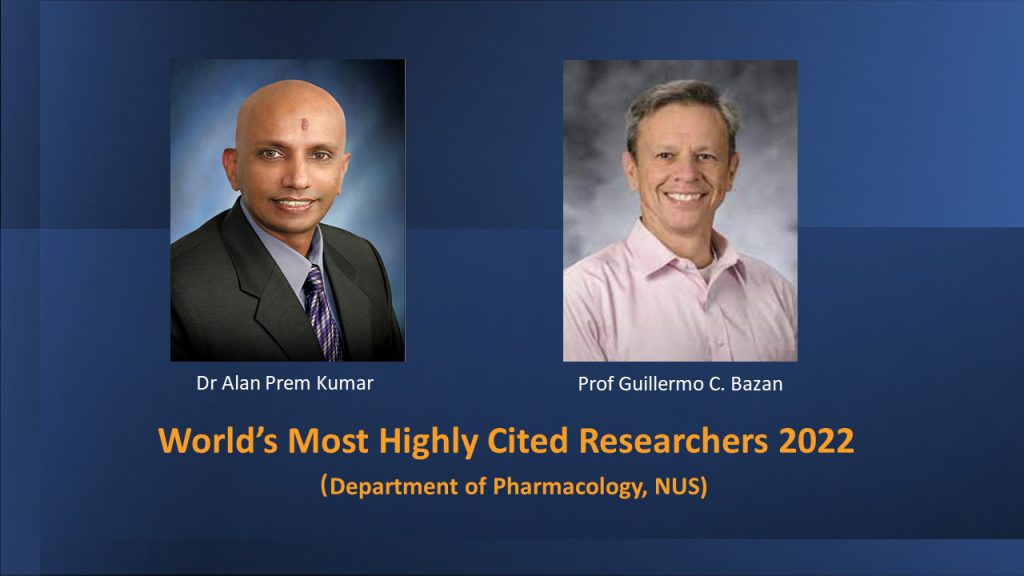
Congratulation to Dr Alan Prem Kumar and Prof. Guillermo C. Bazan (Joint Professor at Pharmacology) on being 2 of the 34 NUS researchers that have been placed among some of the world’s most highly cited researchers, according to the Highly Cited Researchers 2022. List published by data analytics firm Clarivate.

More than 30 NUS researchers placed among world’s most influential scientific minds Read More »

Congratulations to Faculty Recognized Among Top 2% of Scientists Worldwide

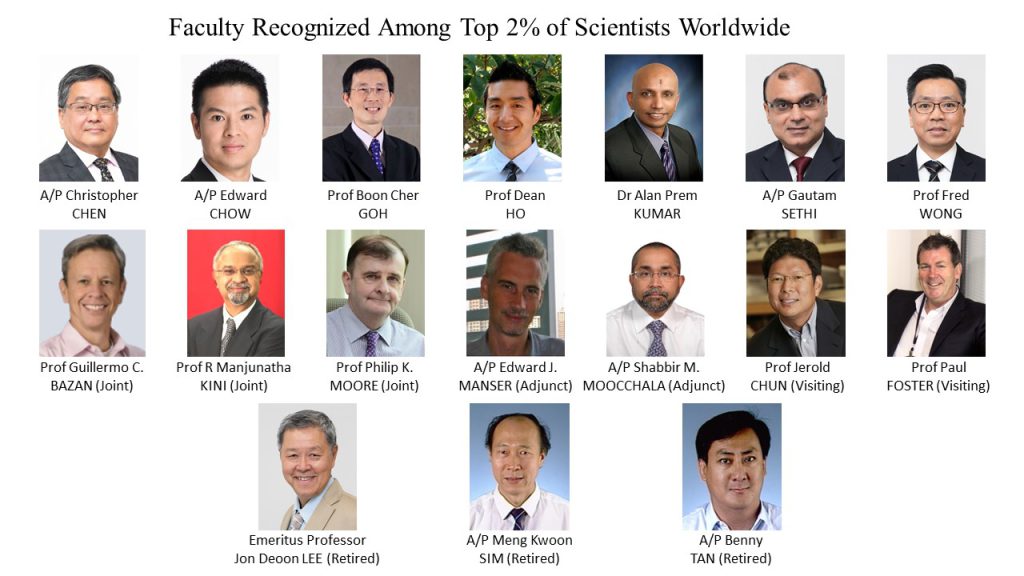
The Department of Pharmacology congratulates 17 faculty members on being recognized among the top 2% of scientists worldwide in a study from Stanford University (Ioannidis, 2022).

Congratulations to faculty members Professor Wong Wai-Shiu, Fred, Professor Goh Boon Cher, Professor Ho, Dean, Associate Professor Gautam Sethi, Associate Professor Chen Li-Hsian, Christopher, Associate Professor Chow Kai-Hua, Edward, Dr Kumar, Alan Prem; joint faculty members Professor Bazan, Guillermo C., Professor Kini, R. Manjunatha, Professor Moore, Philip Keith; adjunct faculty members Associate Professor Manser, Edward J., Associate Professor Moochhala, Shabbir M.; retired faculty members Emeritus Professor Lee Jon Deoon, Edmund, Associate Professor Tan Kwon Huat, Benny; Associate Professor Sim Meng Kwoon; and visiting professors Professor Chun, Jerold, and Professor Foster, Paul S.

Ioannidis, John P.A. (2022), “September 2022 data-update for “Updated science-wide author databases of standardized citation indicators”, Mendeley Data, V4, doi: 10.17632/btchxktzyw.4

Congratulations to Faculty Recognized Among Top 2% of Scientists Worldwide Read More »

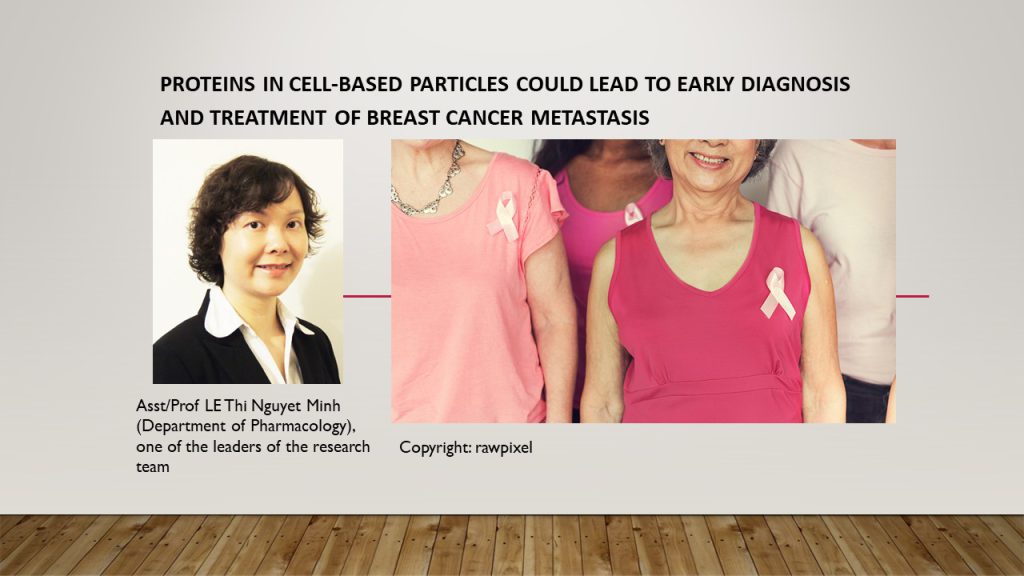
Proteins in cell-based particles could lead to early diagnosis and treatment of breast cancer metastasis

One woman is diagnosed with breast cancer every fourteen seconds somewhere across the globe — based on data showing that an approximate 2.3 million women worldwide were newly diagnosed with breast cancer in 2020.

In Singapore, it is the most common cancer among women, and will likely affect one in thirteen women in their lifespan. Although advances in medicine today allow for treatments for early-stage and non-metastatic breast cancer, advanced stage and metastatic breast cancer is considered incurable with current treatment options, with very poor prognosis.

The early detection of breast cancer metastasis is therefore paramount in the treatment of the condition, and a team of researchers discovered a non-invasive biomarker that could aid with earlier diagnosis.

Led by Assistant Professor Minh Le from the Institute for Digital Medicine (WisDM) and Department of Pharmacology at the National University of Singapore’s Yong Loo Lin School of Medicine (NUS Medicine), and Associate Professor Andrew Grimson from the Department of Molecular Biology and Genetics at Cornell University, the researchers found that particles which are secreted by tumour cells, extracellular vesicles (EVs), displayed a high level of protein integrins αv and β1, in patients with locally advanced and metastatic breast cancer.

Asst Prof Le said, “Metastasis is the chief concern for breast cancer patients. The study highlights the potential of integrins αv and β1 as a promising prognostic and therapeutic target for patients with metastatic breast cancer. Our research has opened several doors, and we hope that future work will help develop new ways to assess, monitor and suppress this hallmark of cancer.”

Proteins in cell-based particles could lead to early diagnosis and treatment of breast cancer metastasis Read More »

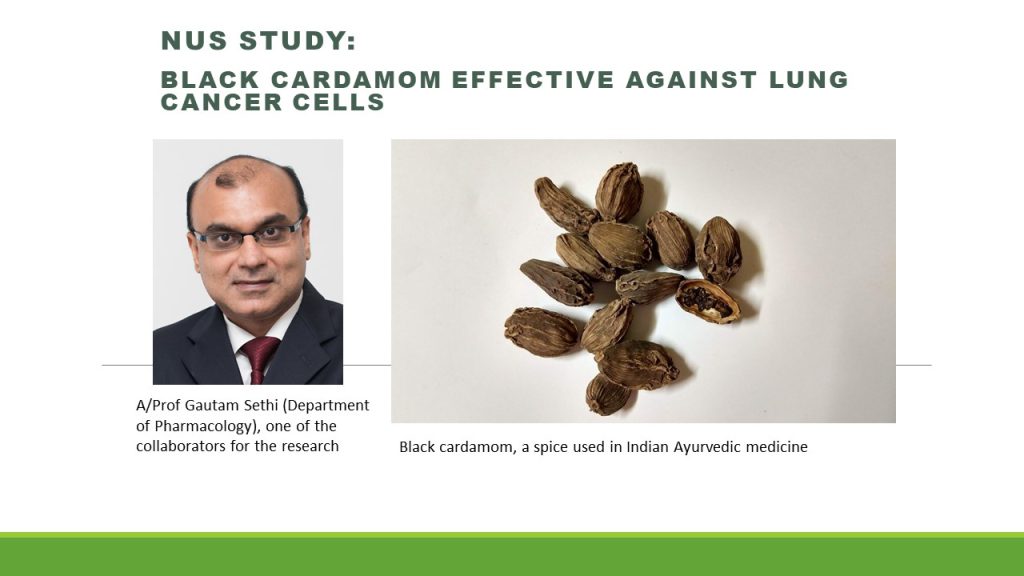
NUS study: Black cardamom effective against lung cancer cells

In Indian Ayurvedic medicine, black cardamom has been used in formulations to treat cancer and lung conditions. A team of researchers from the NUS Faculty of Science, NUS Yong Loo Lin School of Medicine, and NUS College of Design and Engineering studied the scientific basis behind this traditional medicinal practice and provided evidence of the cytotoxic effect of black cardamom on lung cancer cells. The research highlighted the spice as a source of potent bioactives, such as cardamonin and alpinetin, which could be used in the treatment or prevention of lung cancer. The study is the first to report the association of black cardamom extract with oxidative stress induction in lung cancer cells, and compare the spice’s effects on lung, breast and liver cancer cells.

“With black cardamom being commonly used as an important spice in cooking, further in-depth investigation about its impact on lung cancer progression in the pre-clinical models can provide strong evidence in support of the “food as medicine” philosophy of Hippocrates that has been neglected to great extent in the present day,” said Associate Professor Gautam Sethi from the Department of Pharmacology at the NUS Yong Loo Lin School of Medicine, who was a collaborator for the research.

NUS study: Black cardamom effective against lung cancer cells Read More »

Scroll to Top