

Overview
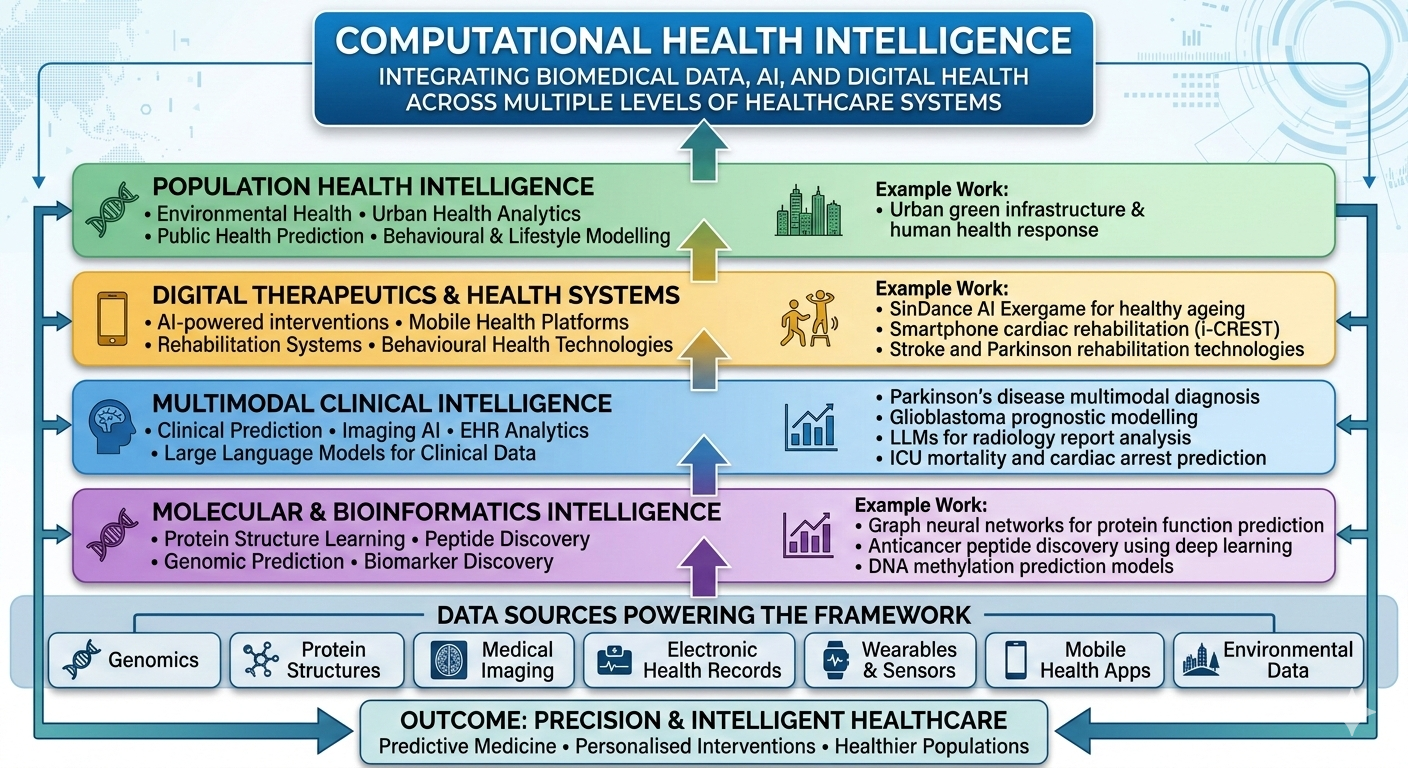
Computational Health Intelligence is an emerging research area that develops computational systems capable of understanding and improving human health across multiple biological and clinical scales. This field integrates advances in bioinformatics, machine learning, clinical informatics, and digital health technologies to transform complex biomedical data into actionable insights for disease prediction, prevention, and personalised intervention.
The rapid growth of high-throughput biological data, electronic health records, medical imaging, wearable sensors, and mobile health platforms has created unprecedented opportunities to model health as a multiscale and dynamic system. Computational Health Intelligence seeks to bridge these data domains by building intelligent models that connect molecular mechanisms, clinical outcomes, and human behaviour.
Distinct from traditional Artificial Intelligence research that focuses primarily on algorithm development, this research area emphasises the translational application of computational methods in real-world healthcare settings. The work spans the continuum from molecular discovery and disease prediction to digital therapeutics and population health, enabling a new generation of intelligent healthcare systems that are predictive, personalised, and preventative.
Research Themes
Translational Research and Collaborative Impact
A defining characteristic of Computational Health Intelligence is its strong emphasis on translational impact and interdisciplinary collaboration. Research in this area is conducted in close partnership with clinicians, healthcare institutions, and international collaborators to ensure that computational innovations are translated into real-world healthcare applications.
This work has been supported through numerous competitive research grants across domains including digital health interventions, rehabilitation technologies, clinical informatics, and biomedical data science. These projects involve collaborations with hospitals, healthcare organisations, and academic partners, enabling the development and evaluation of intelligent healthcare technologies in real clinical and community settings.
Research Vision
The long-term vision of Computational Health Intelligence is to establish a multiscale computational framework for healthcare, where insights generated at the molecular and biological level inform clinical decision-making and personalised health interventions.
By integrating bioinformatics, clinical analytics, and digital health innovation, this research area aims to develop intelligent systems that not only predict disease but also support proactive and personalised approaches to maintaining health and well-being.
Through these efforts, BioDigital Health Intelligence seeks to contribute to the development of future healthcare systems that are data-driven, adaptive, and centred on improving human health outcomes.