The Global RETFound Consortium is using an unprecedented compilation of over
100 million
colour fundus photographs of the human retina, sourced from more than
65 countries

Issue 56
Nov 2025
SCIENCE OF LIFE
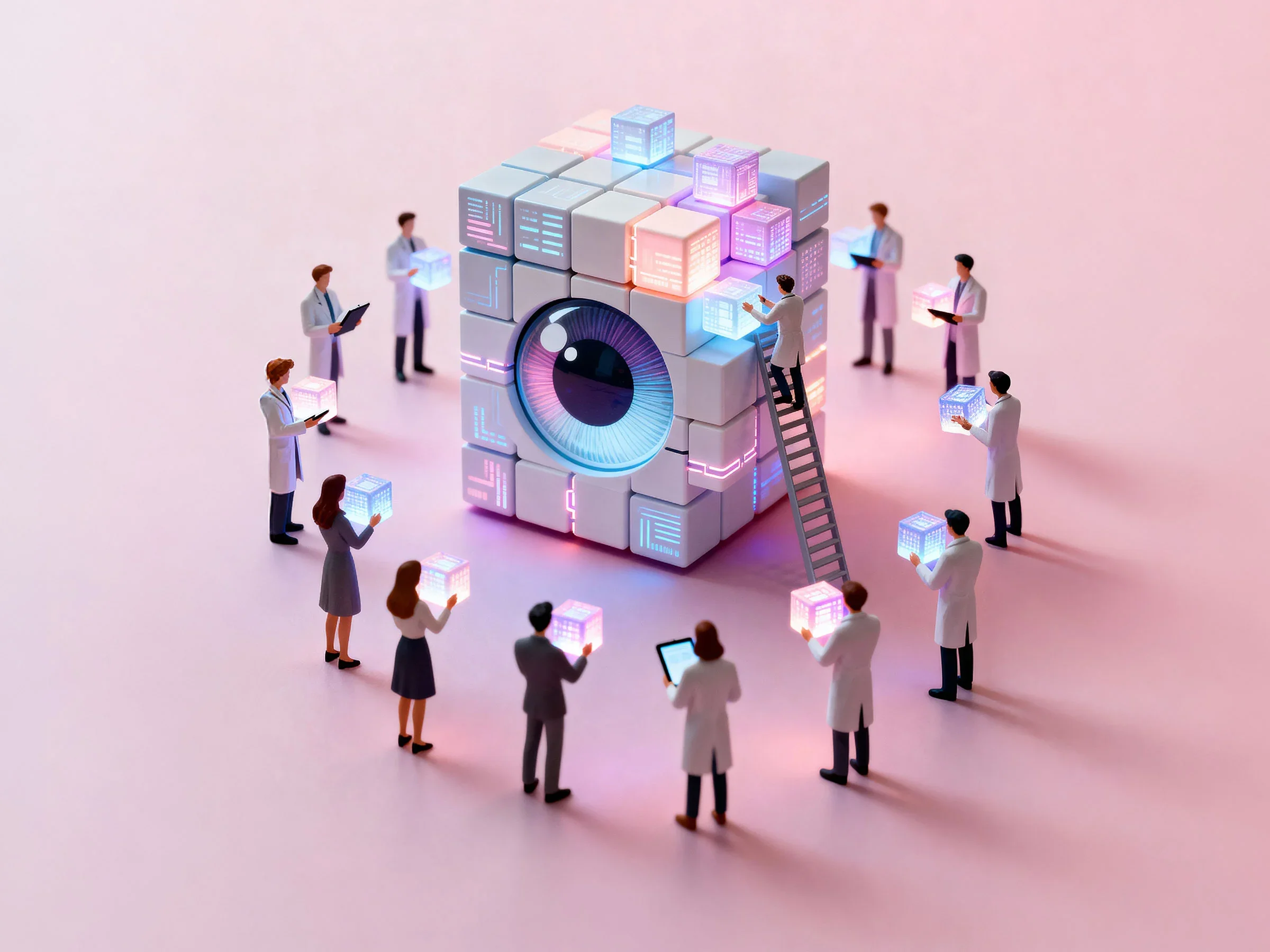
A research consortium of over 100 study groups in more than 65 countries aims to develop the world’s first globally representative Artificial Intelligence (AI) foundation model in Medicine, using 100 million eye images.
Bigger is better. The Global RETFound initiative is one of the largest medical AI collaborations ever undertaken and will produce one of the most geographically and ethnically diverse medical datasets assembled for AI training purposes. The data will span Africa, the Middle East, South America, Southeast Asia, the Western Pacific, and the Caucasus region.
Led by researchers from institutions including the Yong Loo Lin School of Medicine, National University of Singapore (NUS Medicine), Moorfields NHS Foundation Trust, University College London (UCL), and the Chinese University of Hong Kong (CUHK), the consortium will develop its model using an unprecedented compilation of over 100 million colour fundus photographs of the human retina, sourced from more than 65 countries. The study was published in Nature Medicine.
The initiative builds on the success of RETFound, the first foundation model for retinal and systemic disease detection. Published in Nature in 2023, RETFound was developed by researchers at Moorfields Eye Hospital and UCL Institute of Ophthalmology in London, using 1.6 million retinal images curated by the INSIGHT Health Data Research Hub at Moorfields.
While RETFound has already demonstrated significant potential for medical AI applications, the global model will expand the training data to encompass every continent except Antarctica.
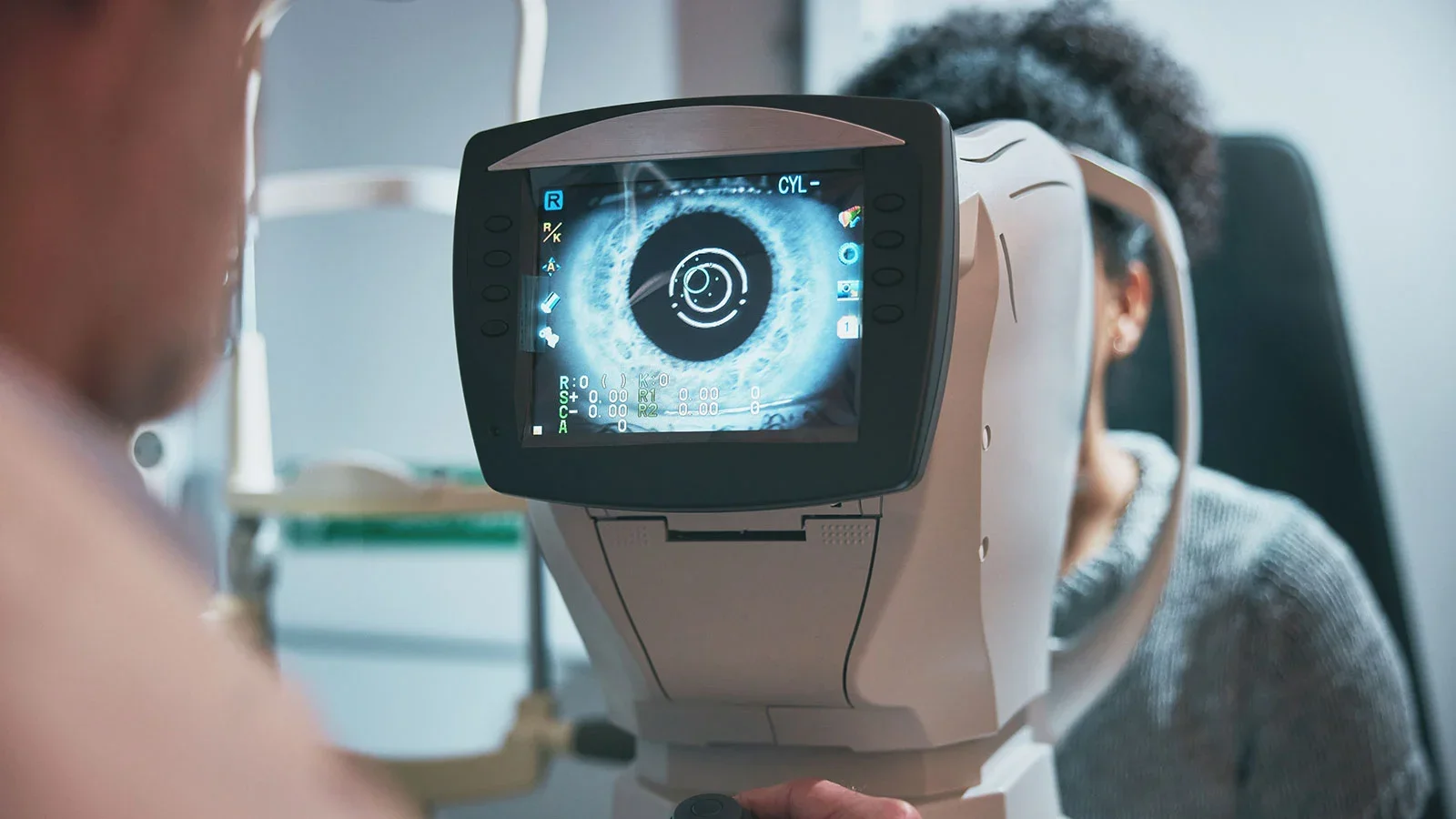
“Current foundational models are trained on data that is geographically and demographically ‘narrow’, which limits their effectiveness and can perpetuate existing health inequalities,” explained Dr Yih Chung Tham, Assistant Professor at NUS Medicine, one of the project leads. “The Global RETFound Consortium addresses this challenge through innovative approaches that enable broad international participation while maintaining strict privacy protections.”
In the first approach, each institution trains the AI model locally using its own patient images, and helping them learn the specific patterns and details in these images. Thereafter, only the eventual fine-tuned model, not the original patient data, is shared with the central team. This means the model can learn from local data, while the data itself never leaves the hospital.
The second approach is designed for institutions that may not have the equipment or technical staff to train models. In this case, they can share anonymised images through a highly secure platform, so the central team can carry out the training on their behalf.
Current foundational models are trained on data that is geographically and demographically ‘narrow’, which limits their effectiveness and can perpetuate existing health inequalities. The Global RETFound Consortium addresses this challenge through innovative approaches that enable broad international participation while maintaining strict privacy protections.”
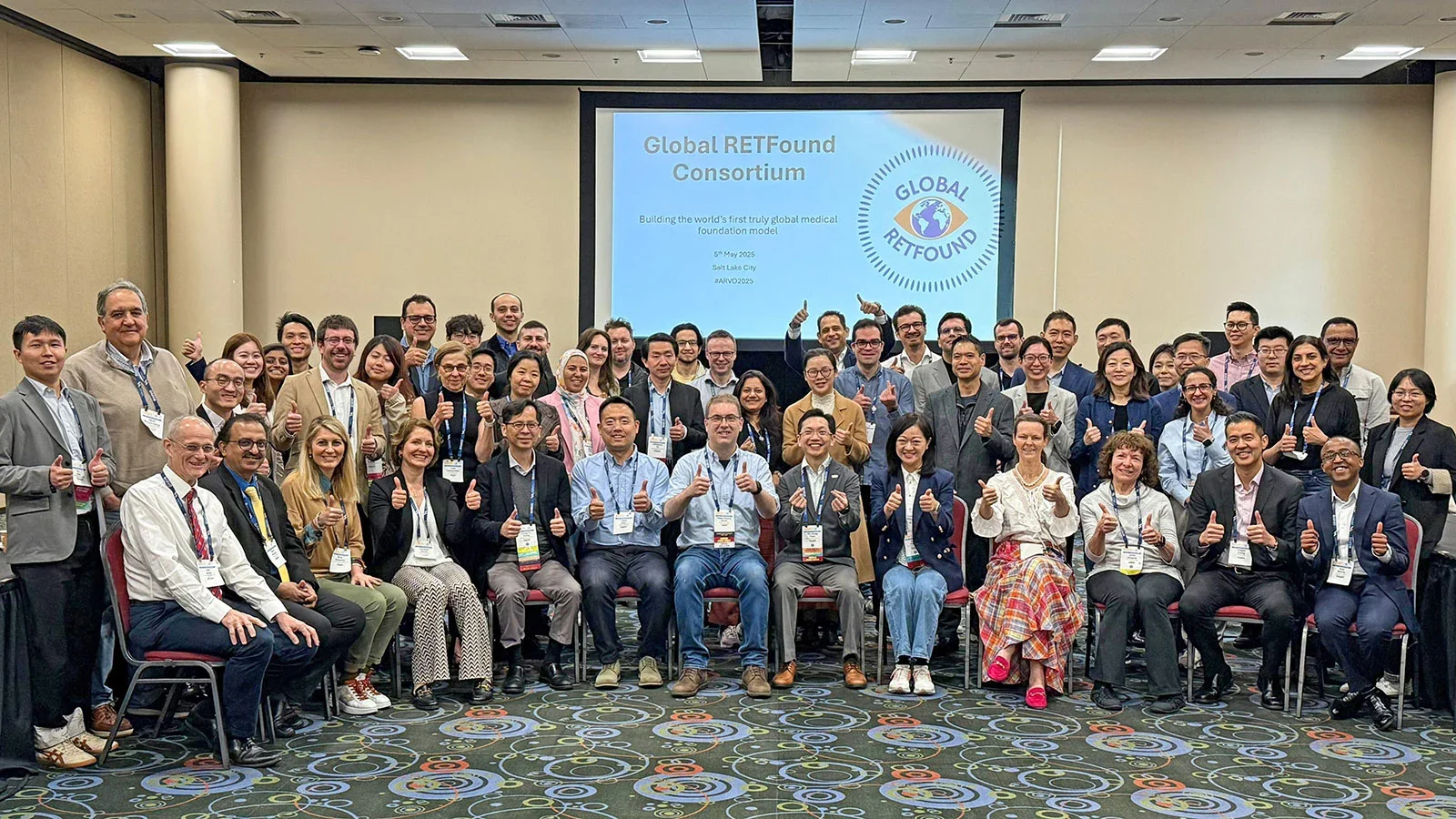
Seated in the front row (seventh to ninth from the left): Prof Pearse Keane, University College London; Asst Prof Tham Yih Chung, NUS Medicine; Prof Carol Cheung, Chinese University of Hong Kong.
“This dual approach allows participation from research groups regardless of their resource levels,” noted Dr Pearse Keane, Professor of Artificial Medical Intelligence at UCL. “By combining real and synthetic data generation techniques, we can build a diverse, globally representative dataset without compromising security.”
The Global RETFound model will undergo comprehensive evaluation across multiple ophthalmic and systemic diseases, including diabetic retinopathy, glaucoma, age-related macular degeneration and cardiovascular disease. The model will be released under a Creative Commons license, making it freely available for non-commercial research worldwide.
Professor Carol Cheung from CUHK emphasised the broader implications: “This initiative has the potential to establish new international benchmarks for generalisability and fairness in medical AI. By providing researchers worldwide with access to a globally-trained foundation model, we can accelerate development of AI tools tailored to local clinical needs with substantially reduced data and computational requirements.”
While ophthalmology serves as the initial proof-of-concept, the researchers aim to share their methodologies widely, laying the groundwork for similar global initiatives across other medical specialities.
The project addresses growing concerns about AI bias in healthcare while demonstrating how international collaboration can advance medical AI development in an equitable way. The consortium welcomes researchers and institutions to join their collaborative effort towards more inclusive medical AI development.
The initiative is supported by NIHR Moorfields Biomedical Research Centre and the Moorfields Eye Charity.
Click here to read the press release.
More from this issue