Issue 56
Nov 2025
THE LAST MILE
By Dr Noreen Chan, Senior Consultant, Division of Palliative Medicine, National University Cancer Institute, Singapore
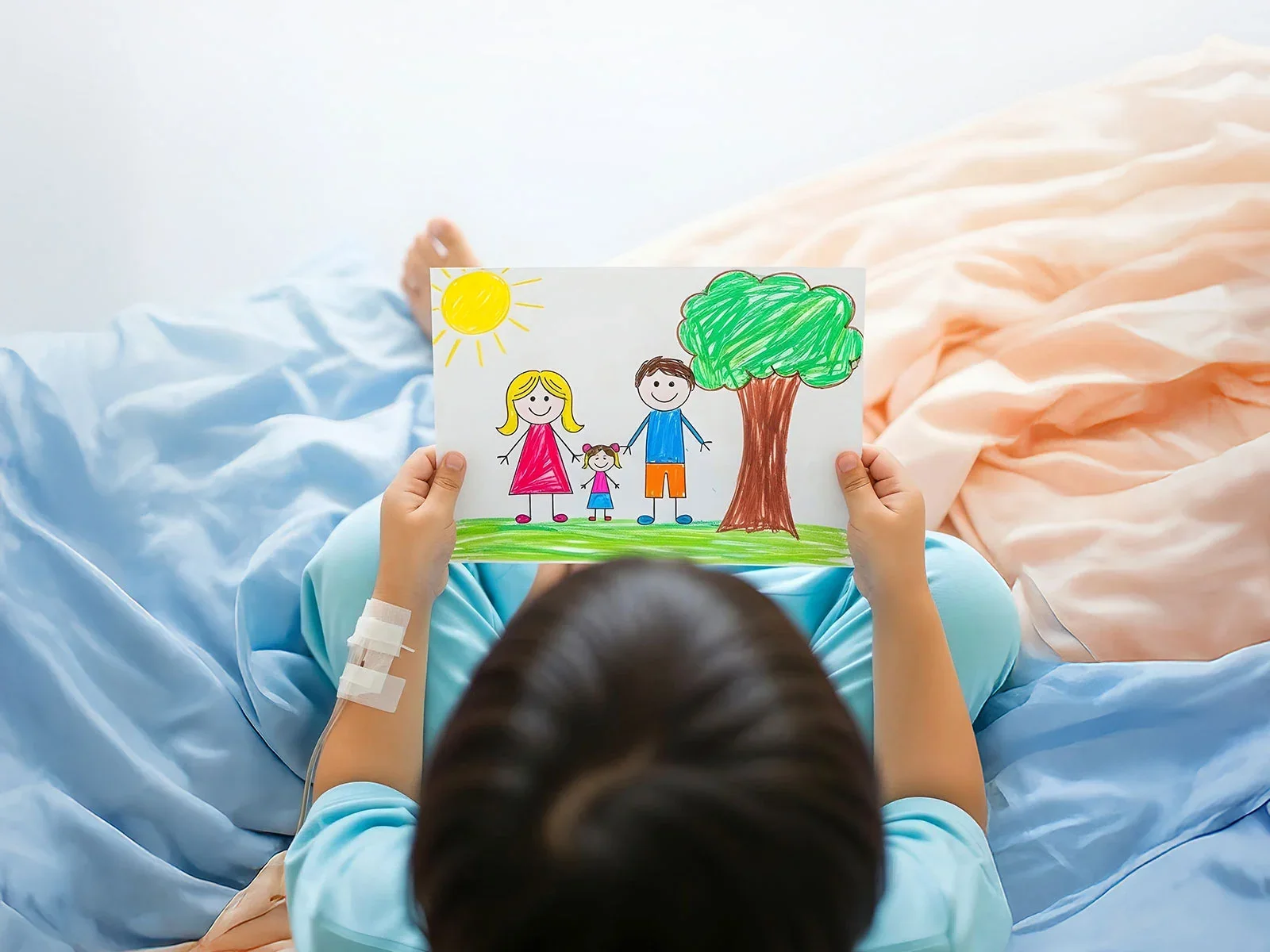
While awareness about Palliative Care has improved over the years, some may be surprised to know that this approach is needed for some children and young adults too. Even more surprising might be the fact that Hospice and Palliative Care services dedicated to this special group of patients have existed in Singapore for more than 10 years.
It is a fact that children and babies die. It is also a fact that worldwide, almost 2.5 million of them die each year with some degree of suffering, and about 98% of them reside in low and middle income countries. The causative conditions and burdens vary between high income and low/middle income countries, with the latter having disproportionate suffering related to infectious diseases, poverty, natural disasters and war.
Generations ago in Singapore, infant mortality was high, such that certain beliefs and rituals arose to drive away evil forces and other dangers. For example, Chinese families might give children names like “dog” or “pig” to mislead malign spirits, or give up a child for adoption to prevent horoscope “clashes” with his or her birth family of origin. This happened to my paternal great-grandfather, who was “given away” to his childless uncle and aunt, after two elder siblings had died in infancy. Thereafter, three younger brothers and five younger sisters were born.
So what is different about Palliative Care for children?
While the principles are shared with adult Palliative Care, children do have unique needs. As pointed out by this publication “Integrating Palliative Care into Paediatrics: A WHO guide for health care planners, implementers and managers 2018” (ISBN 978-92-4-1514), “Children are not little adults”.
Some main differences include:
|
• |
A range of conditions – cancer is a minority diagnosis, unlike for adult Palliative Care; |
|
• |
Life expectancy and illness trajectory may be less clear; |
|
• |
The need to integrate disease-modifying or life-sustaining treatments with Palliative Care (parents should never have to choose); |
|
• |
Palliative Care may take place over a longer period, sometimes even years; |
|
• |
Patients are going through growth and development, all while living with the possibility that they could die; and |
|
• |
Greater emotional burden and more complex decision making, not only for families but also for clinical staff. |
What types of conditions may require paediatric Palliative Care?
The term that we use is “life-limiting condition”, meaning to say, the child may not survive to adulthood, or not much beyond early adulthood. But that definition has to be very loosely applied, because medical advances are such that more children are surviving longer and longer.
Such life-limiting conditions could be:
|
• |
Potentially curable but treatment might fail e.g. cancer; |
|
• |
Progressive from diagnosis e.g. degenerative diseases of nerves and muscles, or genetic abnormalities; and |
|
• |
Non-progressive but leading to a shortened lifespan e.g. severe cerebral palsy. |
A special consideration is that some conditions are exceedingly rare or difficult to diagnose; or some genetic conditions may affect multiple children in a family. This can create tremendous stress, uncertainty or a sense of guilt in parents.
I once noticed the picture of a flower on the door of a mother’s room, and was told that a white lily indicated that a baby had not survived—so that all the staff knew what to do.”
Palliative Care may start even before birth
With modern prenatal care, it is possible to diagnose dangerous conditions that could lead to the baby dying in the womb, or dying soon after being born. Parents are given the choice of continuing with the pregnancy, while knowing they won’t have much time with their child even if he/she survives until delivery.
It takes skill, sensitivity and big hearts to provide this tender care to parents—and from the delivery suite to the postnatal ward, I have observed my colleagues do so with the gentlest care and utmost respect. I once noticed the picture of a flower on the door of a mother’s room, and was told that a white lily indicated that a baby had not survived—so that all the staff knew what to do. Parents are also given ways to remember and honour their child, through keepsakes like foot- or handprints. Charities like Angel Hearts repurpose donated wedding gowns into hand-stitched wraps and gowns in different sizes (ranging from tiny premature babies, to full grown ones).
Palliative Care can continue for years
With better diagnosis and treatments, children who might not have been expected to live long, are now surviving years. It is therefore very difficult to predict the lifespan of such patients, for example those afflicted with Duchenne’s Muscular Dystrophy or DMD, a progressive condition that affects boys, leading to gradual muscle wasting. It is increasingly common that DMD boys are surviving into adulthood, albeit with increasing dependence, including on technology to help them breathe and communicate.
Therefore, a time- or lifespan-based model that is common in adult services—for example in Singapore, hospice home care is suitable for patients whose expected survival is a year or less—would not work for the paediatric population. It also means that specialist Palliative Care services must work with many partners and volunteers, both in hospital and in the community, to be able to support children and families over the long trajectory. By extension, if the situation is more settled and a good support system is up and running, then Palliative Care can take a step back and discharge the case.
Palliative Care is about living and growing, while recognising that death could occur
Children with life-limiting conditions are still developing physically, cognitively, emotionally, and socially. Even if they are not reaching the usual milestones in the expected time, they still need to “grow up” and relate to their peers. Of course, this depends on their stage of development and hopes/dreams, so it is important to ask them.
Many might assume that a teenager afflicted with cancer might be happy to miss school, but I have met many who feel the opposite. One boy with a brain cancer wanted so much to take his ‘A’ Level exams, his school bent over backwards to try to get him ready, and even prepared to have an invigilator be with him in the hospital. In the end, it did not happen as his condition worsened, but it was important to him and his family that we all tried.
Children are a lot more observant than we think, and very considerate of their parents’ well-being. They even feel bad about being ill and causing their parents inconvenience. They appreciate the importance of cherishing the present, and younger children especially, know how to live ʻin the momentʼ.”
Palliative Care is about treasuring the moments
Many of my adult Palliative Care colleagues find looking after children too emotionally draining, but I find myself inspired and amazed time and time again, by their resilience and innate wisdom. They are also very direct; I once told a 16-year-old she had “a bit of diabetes” as a complication of her cancer treatment, and she fixed me with a quizzical look and replied, “you either have diabetes or you don’t, how can you have a bit?” Touche, or in Gen Z speak, so real for that.
Children are a lot more observant than we think, and very considerate of their parents’ well-being. They even feel bad about being ill and causing their parents inconvenience. They appreciate the importance of cherishing the present, and younger children especially, know how to live “in the moment”. I have learnt from them that while it is important to think about the future, we should not forget what is right in front of us, to make today and every day, the best day possible.
UN-IMPOSSIBLE
Though you can’t tell a star
When to lose its sparkle
& the sun to stop shining
Doctor can you ask cancer
To leave my innocent soul
Untouched and unharmed
Though you can’t turn water into gold
Or tell the rain to stop
& wash the malignant cells away
Doctor can you protect my heart
Keep it pure and motivated
To defeat the Devil in me.
Though you can’t turn back time
Or read my future from
The palm of my hand
Doctor can you save my life
So I can live to see
The stars twinkle tonight
Sunrise tomorrow &
To dance in the rain again,
To live to make the impossible
Un-impossible
More from this issue