Issue 55
Sep 2025
ALUMNI VOICES
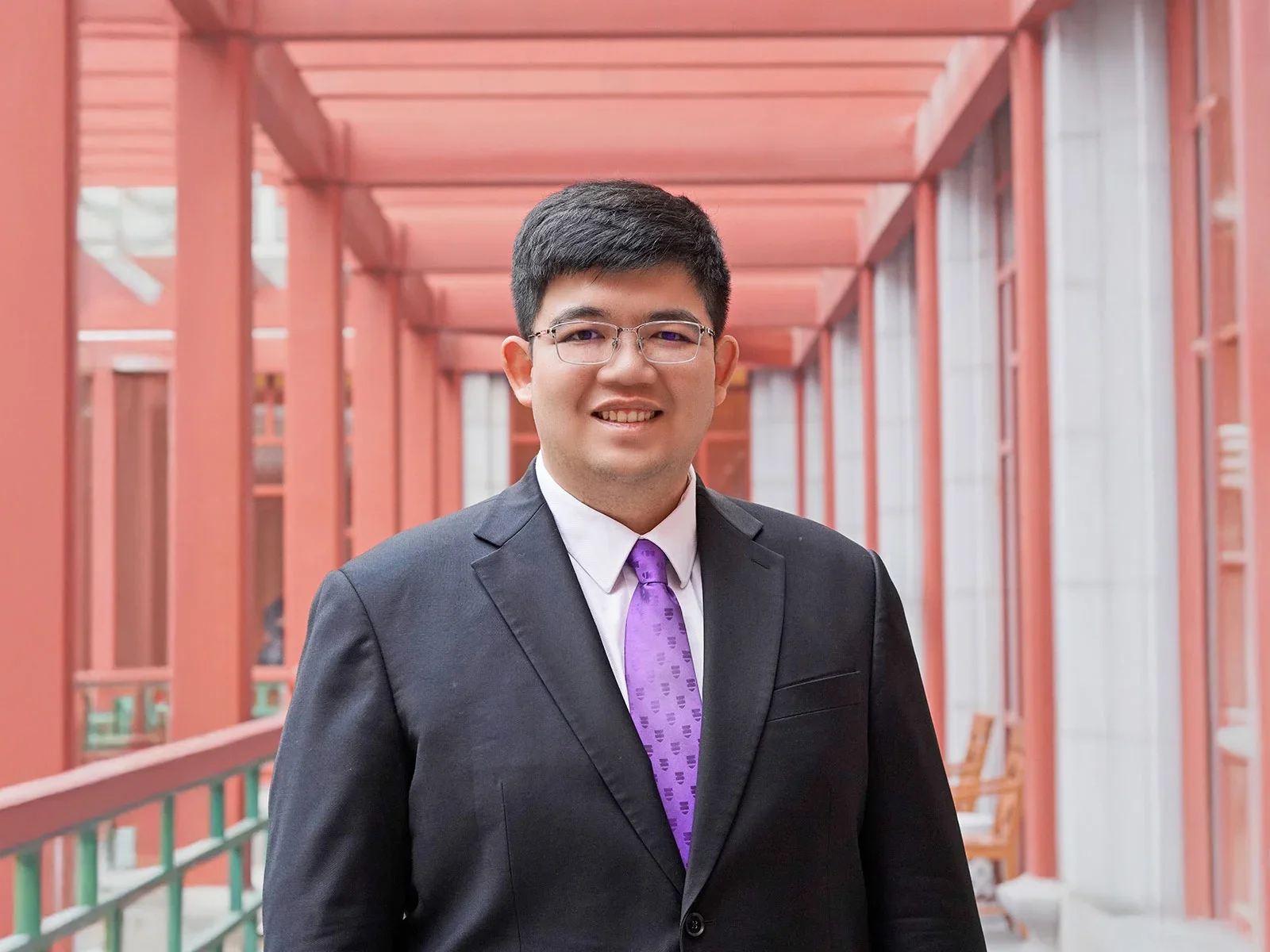
Dr Matthew Chew embodies the 120-year legacy of the Yong Loo Lin School of Medicine, National University of Singapore (NUS Medicine) in pushing boundaries and inspiring change. While his childhood dream was simply to become a doctor, his journey through medical school unexpectedly uncovered a deeper passion—driving innovation in healthcare to address real human needs.
Finding purpose beyond the stethoscope
“NUS Medicine gave me the time to explore and understand more about what it meant to be a doctor,” reflects Matthew, who graduated in 2023. “I am still ‘doctor first’—my time as a house officer was meaningful and gave me the opportunity to do something I love as a job.”
But it was during his time at NUS Medicine that Matthew discovered something that would fundamentally change his approach to healthcare. His participation in the Medical Grand Challenge (MGC)—a student‐led medical innovation competition—turned into a transformative experience that would redefine his career trajectory.
“The original objective for me was actually to just get a participation certificate to improve my resume,” Matthew candidly admits. “But halfway through, we were introduced to a patient with a spinal cord injury, and he told us about how he had difficulty writing.” This chance meeting would become the catalyst for his dedication to medical innovation.
The power of personal connection
Listening to the patient’s challenges stirred something profound in his heart. Over the course of a year, Matthew and his team met regularly with the patient, and 3D-printed a custom splint designed specifically for his needs.
Witnessing the patient use their creation to write for the first time became a pivotal moment for Matthew. “That process of innovating, not as a means to an end, not for the sake of innovating, but innovating to solve a problem for a person we met in real life—it was incredibly meaningful,” he emphasises.
The team named their creation ‘Kenn’ after the patient’s newborn son—a touching parallel as both the innovation and the new life represented hope and possibility. This experience taught Matthew that the most meaningful innovations come from genuine human connections and understanding patients’ real needs.
Solidarity in medicine and innovation
Matthew’s journey hasn’t been without challenges. When discussing what kept him going through difficult times, his answer is surprisingly simple: the people around him.
“What inspired me the most is actually the people that I work with,” he shares. “Being able to work with brilliant people inspired me. One classic example is the night shifts that seem to run forever.” Through these challenging shared experiences, he discovered that survival in medicine transcended traditional metrics. “It was more than knowledge or skill… it was about showing up for each other,” he reflects. The camaraderie forged during these difficult moments has profoundly influenced his approach to both medicine and innovation, valuing collective effort over individual achievement.
It is not just about walking 200 metres. It’s about what those 200 metres enable—getting food, meeting friends, enjoying fresh air.”
Looking beyond Singapore
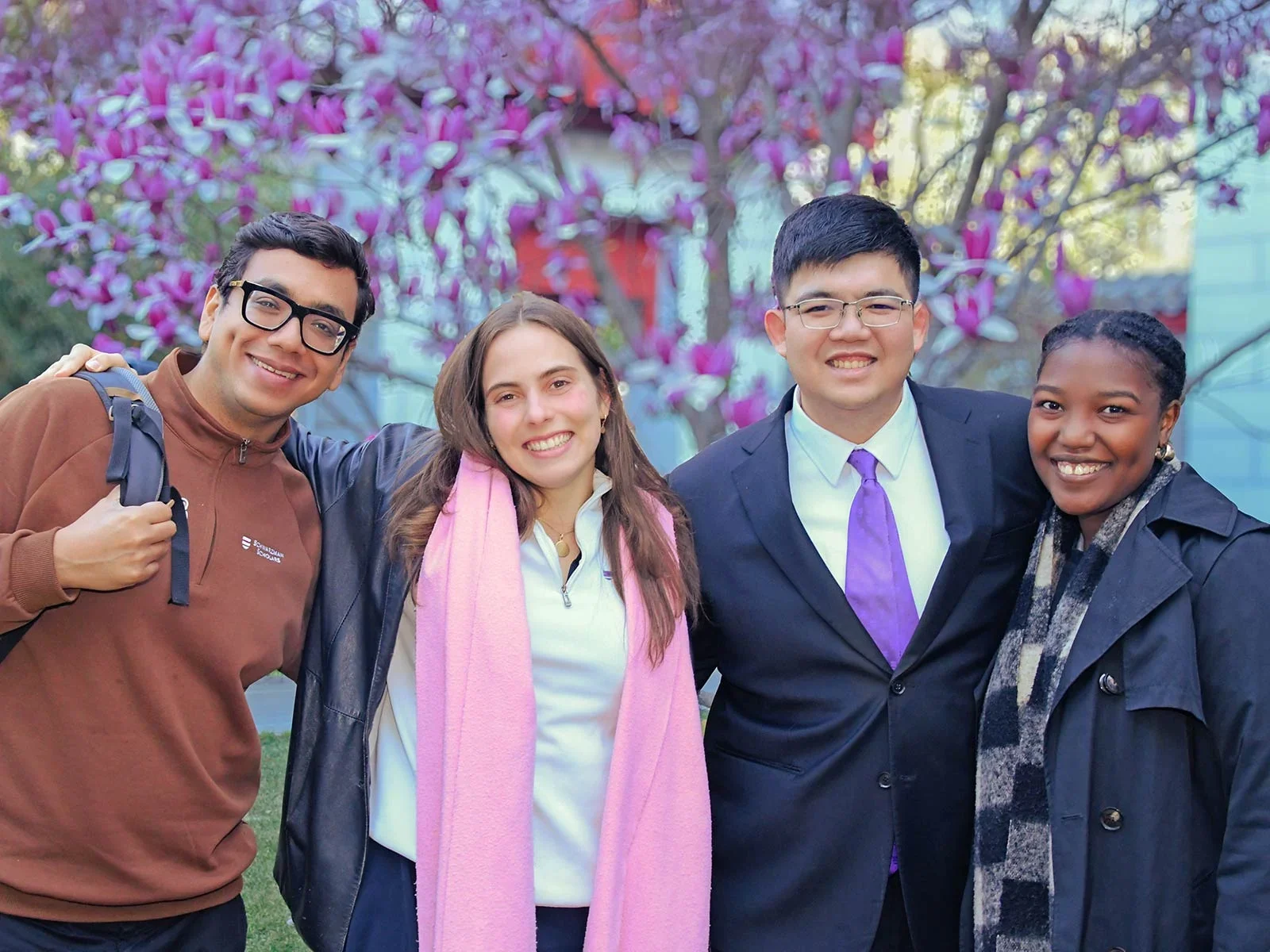
This spirit of collaboration and purpose led Matthew to the prestigious Schwarzman Scholarship programme in Beijing, a one-year, fully funded master’s programme in global affairs at Tsinghua University, one of the world’s top universities. Set to graduate in June 2025 since his entry into the programme in August the year before, Matthew has gained global perspectives on healthcare innovation through interaction with peers from diverse international backgrounds. “Receiving the Schwarzman scholarship was a chance for me to learn from diverse perspectives, engage with global challenges, and bring that knowledge back to contribute to healthcare and innovation in Singapore,” he explains. The cross-cultural insights and varied approaches to healthcare challenges he encountered provide valuable lessons that can be applied to Singapore’s unique context.
His focus remains firmly on addressing Singapore’s evolving healthcare challenges, particularly the ageing population. Having worked on projects ranging from hand splints to exoskeletons, Matthew sees innovative medical technology as a key solution for the future.
“If we integrate these emerging technologies with existing artificial intelligence (AI) and remote monitoring capabilities, we can dramatically reduce the burden on hospitals while simultaneously improving patient outcomes,” he explains. This integrated approach represents his vision for healthcare that extends beyond treating illnesses to enhance the patient’s quality of life.
Inspiring the next generation
For Matthew, mobility aids represent far more than mechanical solutions—they are tools for maintaining human connection and dignity. When explaining the importance of his exoskeleton project to potential partners and stakeholders, he emphasises the human impact rather than technical specifications.
“It is not just about walking 200 metres. It’s about what those 200 metres enable—getting food, meeting friends, enjoying fresh air,” he explains, highlighting how even modest mobility improvements can dramatically enhance quality of life. This perspective transforms medical devices from technical solutions into enablers of human connection and independence.
Matthew’s current professional interests and work reflect NUS Medicine’s ethos that truly transformative healthcare innovations do not stem from technological advancement alone, but from a profound understanding of the human experiences they serve. He sees technology serving as a bridge to enhance human lives, rather than an end in itself.
Looking ahead, Matthew aspires to pursue broader non-clinical work, particularly on the implementation of AI in Singapore healthcare.
More from this issue