Issue 54
Jul 2025
THE BANYAN TREE
As Yong Loo Lin School of Medicine, National University of Singapore (NUS Medicine) celebrates its 120th anniversary, it is an opportune moment to reflect on the transformative impact of its Continuing Education and Training (CET) programmes. Over the years, the School’s CET unit—NUS Medicine CET—has empowered healthcare professionals and organisations through specialised executive education, and has fostered innovation in leadership, digital transformation and medical advancements.
From flagship masterclasses to bespoke executive training, these programmes have enhanced professional development and driven meaningful change in healthcare institutions across Singapore and beyond.
Advancing healthcare leadership: The success of NUS Medicine CET’s masterclasses
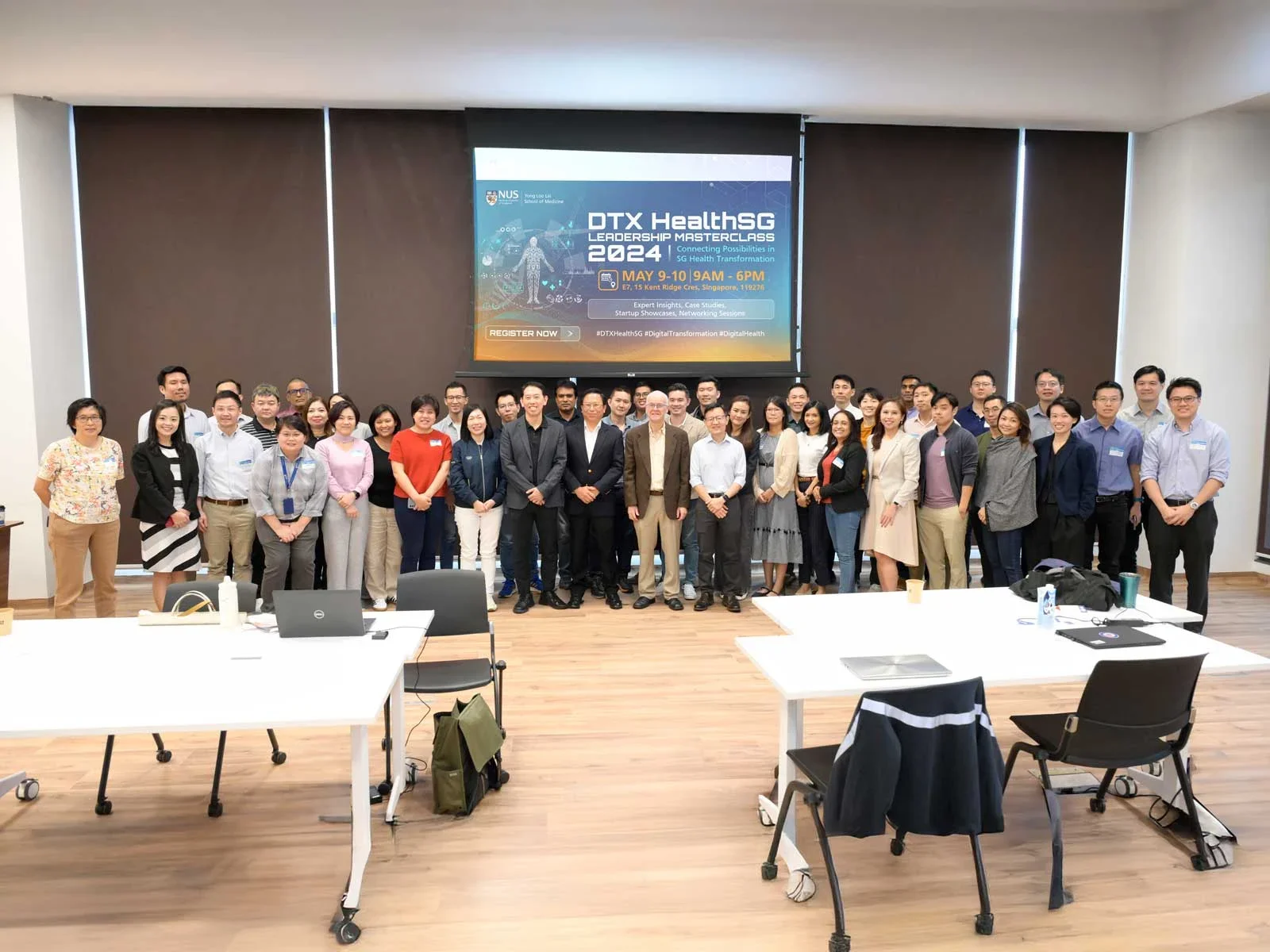
This year, NUS Medicine CET spearheaded three pioneering executive masterclasses—DTX HealthSG Leadership Masterclass, Healthcare Leadership and Hospital Management (HLHM) Executive Masterclass, and the Health.AI Leadership Executive (HALE) Masterclass—designed to equip healthcare leaders with cutting-edge skills in digital health, hospital management, and artificial intelligence (AI).
The DTX HealthSG Leadership Masterclass played a pivotal role in shaping Singapore’s digital health landscape. Healthcare executives, MedTech innovators, and policymakers engaged in critical discussions on AI-driven patient care, regulatory challenges, and the ethical implications of digital transformation. Modules such as Engaging the AI-Empowered Patient provided leaders with frameworks to integrate AI while maintaining a human-centric approach to healthcare.
Similarly, the HLHM Executive Masterclass, developed in collaboration with the Global Academy, NUH Centre for Global Health, strengthened the leadership capabilities of hospital administrators and clinical leaders. Covering strategic planning, operational excellence, and digital transformation, the programme enabled healthcare executives to drive systemic improvements within their organisations.
Meanwhile, the HALE Executive Masterclass, led by renowned expert Adjunct Professor Ngiam Kee Yuan, bridged the gap between AI theory and real-world application. Participants explored predictive analytics, generative AI, and healthcare automation, gaining the expertise to lead AI-driven innovation in their institutions.
Tailored excellence: The Custom Executive Programme (CEP) and its organisational impact
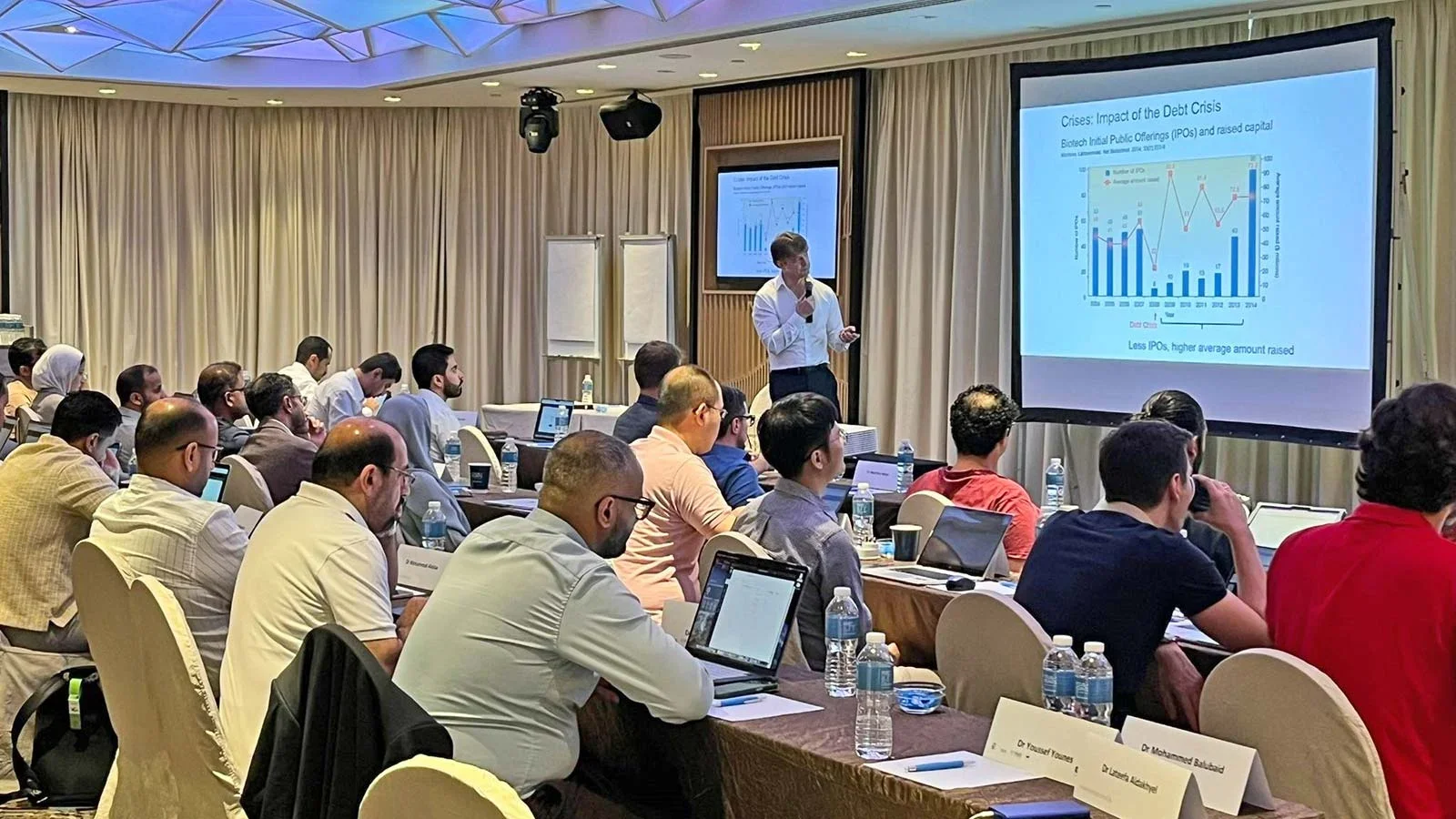
Recognising the diverse needs of health(care) organisations, NUS Medicine CET introduced the Custom Executive Programme (CEP)—a bespoke training solution designed to address industry-specific challenges. CEP has been instrumental in enhancing leadership development, operational efficiency, and healthcare innovation.
Notable CEP success stories:
• |
Leadership Development at Alexandra Hospital – A 4.5-day programme, led by Associate Professor Audrey Chia, equipped senior hospital leaders with essential skills in strategic communication, change management, and team leadership, driving impactful reforms. |
• |
NUS-Pfizer Respiratory Infection Webinar Series – Led by Associate Professor David Allen, this series provided critical insights into managing respiratory infections, including COVID-19, RSV, and influenza, enhancing preparedness and disease control strategies. |
• |
Healthcare Innovation Across Asia – In collaboration with the Frankfurt School of Finance and Management, this programme convened healthcare leaders and industry experts from Asia, the Middle East, the UK, and the US. Covering biotech commercialisation and patient-centric innovation, it provided participants with actionable strategies for healthcare transformation. |
• |
LIA-NUS Genetics Training Programme – A collaboration with the Life Insurance Association (LIA), this programme trained 200 genetic underwriters guided by Professor Roger Foo. Through self-paced learning, participants deepened their expertise in genetic risk assessment and underwriting best practices. |
• |
Pathology CET Course – Designed for 32 AbbVie professionals from 15 countries, this immersive programme combined face-to-face lectures, wet lab demonstrations, and a histopathology lab tour. Key sessions covered immunohistochemistry (IHC) hands-on practice, colorectal cancer diagnosis, non-small cell lung carcinoma, and ovarian cancer biomarker testing. Led by Dr Leong Sai Mun and Associate Professor Nga Min En, with National University Health System (NUHS) faculty and staff support, the course earned an outstanding 4.9/5 rating, praised by participants for its interactivity and practical insights into diagnostic pathology. |
A legacy of excellence and future aspirations
The success of these programmes underscores NUS Medicine CET’s commitment to professional and organisational development. By equipping healthcare professionals with future-ready skills, its initiatives have strengthened leadership, accelerated digital transformation, and contributed to enhanced patient care.
Through an expanding portfolio of innovative learning opportunities, NUS Medicine CET is continuing to help shape the next generation of healthcare leaders.

This column is dedicated to the pursuit of continuous learning and development and takes its name from the banyan tree. It has roots that grow deep, anchoring it firmly in the soil. The tree spreads its shade wide and far and provides space for reflection and discussion. We invite you to come and take a seat under its shade.
More from this issue

SPECIAL FEATURE
A Glimpse into the Past – Medicine in Singapore (Part 3)
MINISTERIAL MESSAGE
A Singaporean Medical School for the 21st Century