



Abstract:
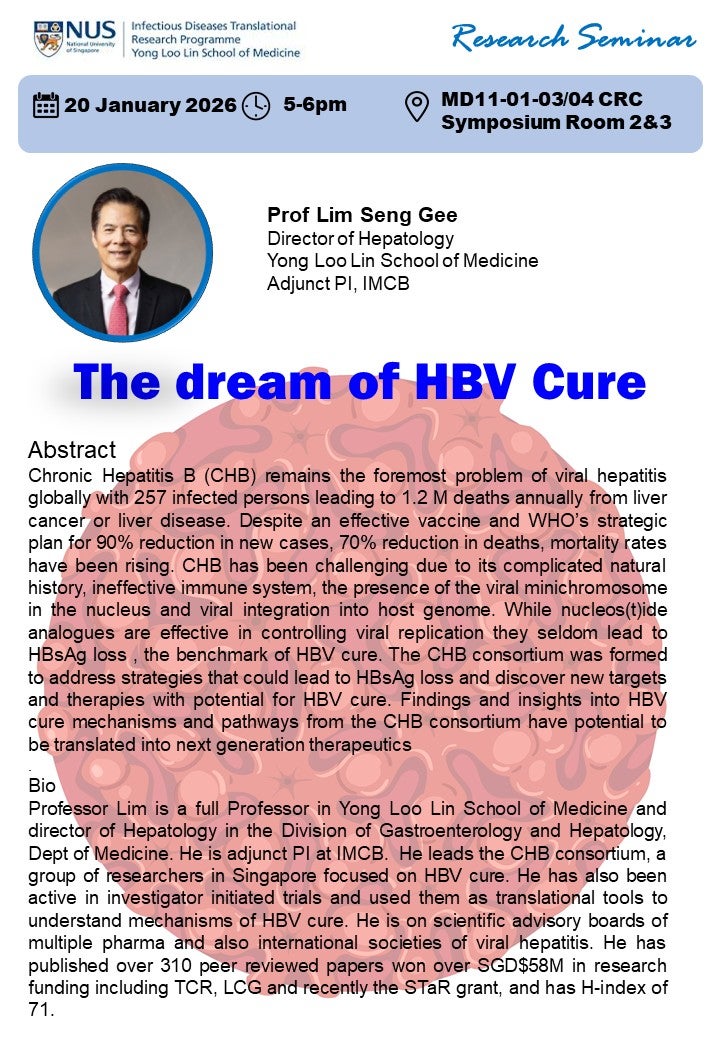
Chronic Hepatitis B (CHB) remains the foremost problem of viral hepatitis globally with 257 infected persons leading to 1.2 M deaths annually from liver cancer or liver disease. Despite an effective vaccine and WHO’s strategic plan for 90% reduction in new cases, 70% reduction in deaths, mortality rates have been rising. CHB has been challenging due to its complicated natural history, ineffective immune system, the presence of the viral minichromosome in the nucleus and viral integration into host genome. While nucleos(t)ide analogues are effective in controlling viral replication they seldom lead to HBsAg loss , the benchmark of HBV cure. The CHB consortium was formed to address strategies that could lead to HBsAg loss and discover new targets and therapies with potential for HBV cure. Findings and insights into HBV cure mechanisms and pathways from the CHB consortium have potential to be translated into next generation therapeutics.
Bio:
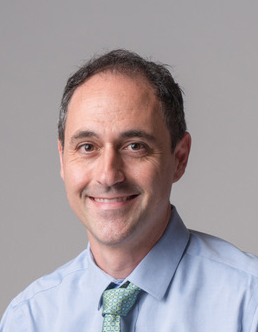
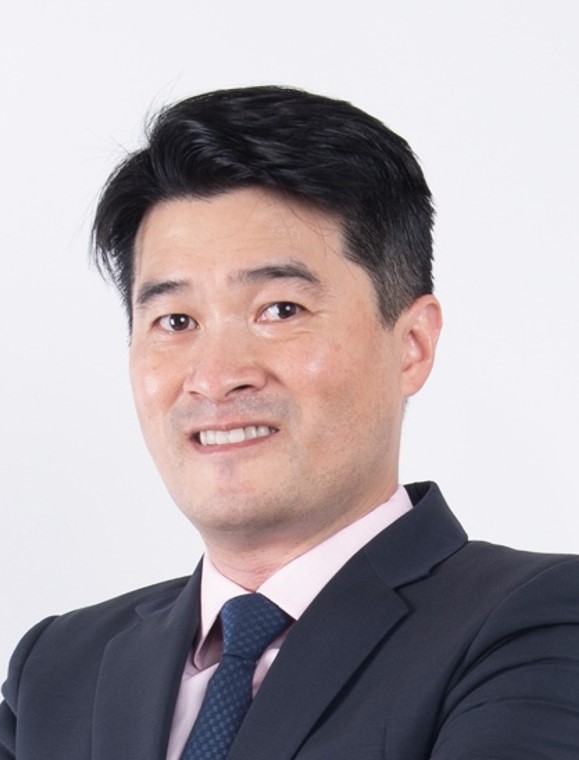
Professor Lim is a full Professor in Yong Loo Lin School of Medicine and director of Hepatology in the Division of Gastroenterology and Hepatology, Dept of Medicine. He is adjunct PI at IMCB. He leads the CHB consortium, a group of researchers in Singapore focused on HBV cure. He has also been active in investigator initiated trials and used them as translational tools to understand mechanisms of HBV cure. He is on scientific advisory boards of multiple pharma and also international societies of viral hepatitis. He has published over 310 peer reviewed papers won over SGD$58M in research funding including TCR, LCG and recently the STaR grant, and has H-index of 71.