



Abstract:
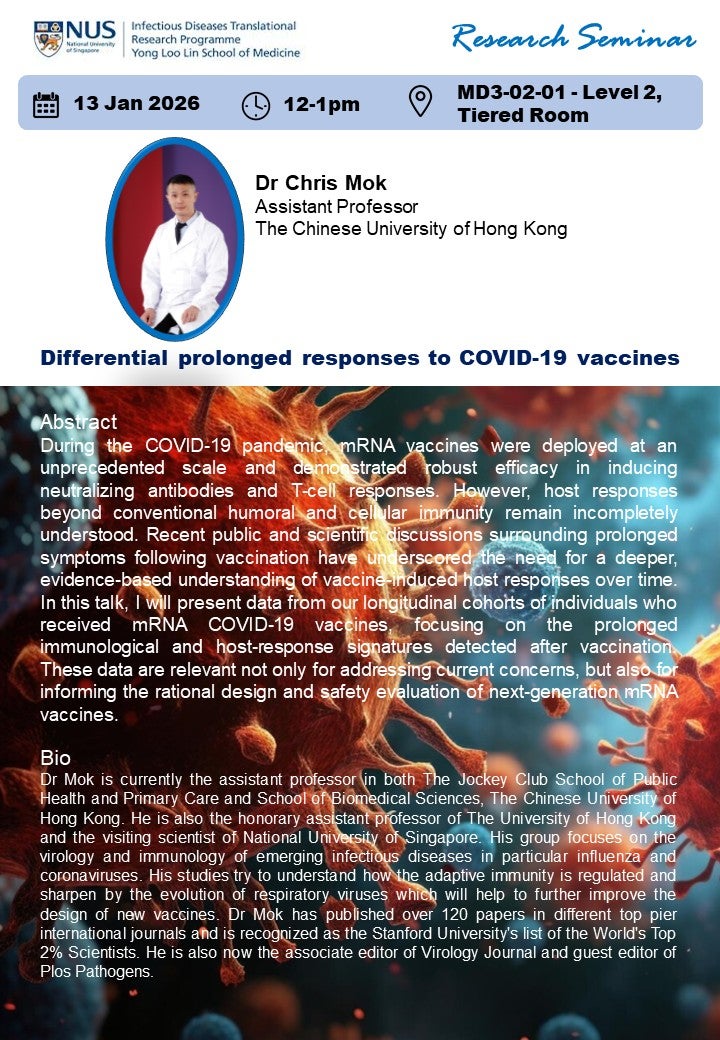
During the COVID-19 pandemic, mRNA vaccines were deployed at an unprecedented scale and demonstrated robust efficacy in inducing neutralizing antibodies and T-cell responses. However, host responses beyond conventional humoral and cellular immunity remain incompletely understood. Recent public and scientific discussions surrounding prolonged symptoms following vaccination have underscored the need for a deeper, evidence-based understanding of vaccine-induced host responses over time. In this talk, I will present data from our longitudinal cohorts of individuals who received mRNA COVID-19 vaccines, focusing on the prolonged immunological and host-response signatures detected after vaccination. These data are relevant not only for addressing current concerns, but also for informing the rational design and safety evaluation of next-generation mRNA vaccines.
Bio:
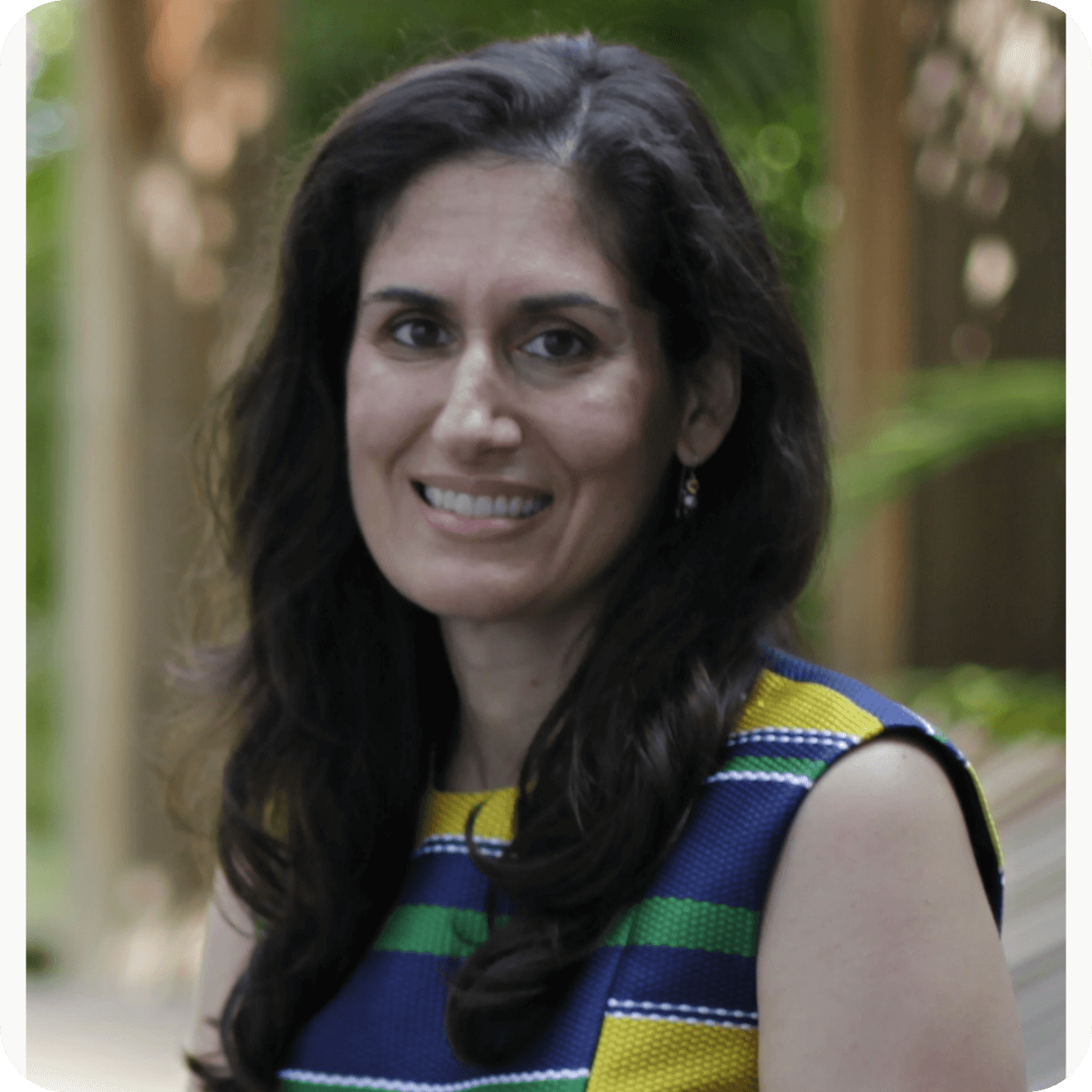
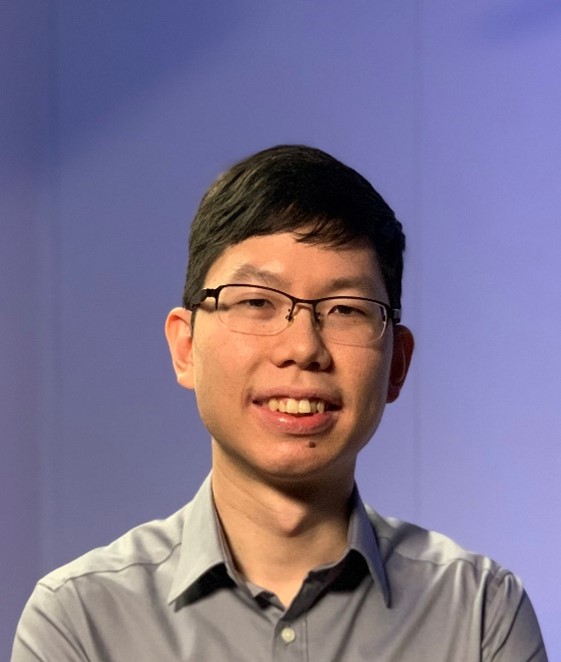
Dr Mok is currently the assistant professor in both The Jockey Club School of Public Health and Primary Care and School of Biomedical Sciences, The Chinese University of Hong Kong. He is also the honorary assistant professor of The University of Hong Kong and the visiting scientist of National University of Singapore. His group focuses on the virology and immunology of emerging infectious diseases in particular influenza and coronaviruses. His studies try to understand how the adaptive immunity is regulated and sharpen by the evolution of respiratory viruses which will help to further improve the design of new vaccines. Dr Mok has published over 120 papers in different top pier international journals and is recognized as the Stanford University’s list of the World’s Top 2% Scientists. He is also now the associate editor of Virology Journal and guest editor of Plos Pathogens.