



Abstract:
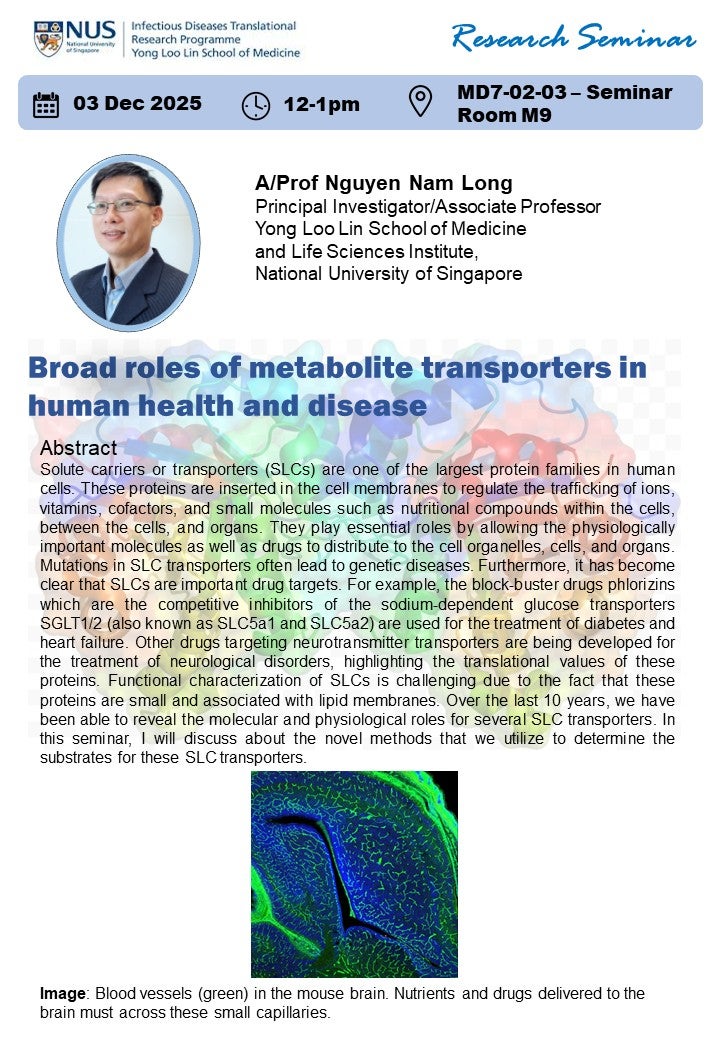
Solute carriers or transporters (SLCs) are one of the largest protein families in human cells. These proteins are inserted in the cell membranes to regulate the trafficking of ions, vitamins, cofactors, and small molecules such as nutritional compounds within the cells, between the cells, and organs. They play essential roles by allowing the physiologically important molecules as well as drugs to distribute to the cell organelles, cells, and organs. Mutations in SLC transporters often lead to genetic diseases. Furthermore, it has become clear that SLCs are important drug targets. For example, the block-buster drugs phlorizins which are the competitive inhibitors of the sodium-dependent glucose transporters SGLT1/2 (also known as SLC5a1 and SLC5a2) are used for the treatment of diabetes and heart failure. Other drugs targeting neurotransmitter transporters are being developed for the treatment of neurological disorders, highlighting the translational values of these proteins. Functional characterization of SLCs is challenging due to the fact that these proteins are small and associated with lipid membranes. Over the last 10 years, we have been able to reveal the molecular and physiological roles for several SLC transporters. In this seminar, I will discuss about the novel methods that we utilize to determine the substrates for these SLC transporters.
Research Direction:
The NNL lab at the Yong Loo Lin school of medicine, National University of Singapore utilizes various cutting edge technologies such as lipidomics and metabolomics to identify the ligands for membrane transporters. The NNL lab also extensively works with cell and animal models to study the physiological functions of these membrane transporters with the aim to translate these findings into the treatment of human diseases.