



Abstract:
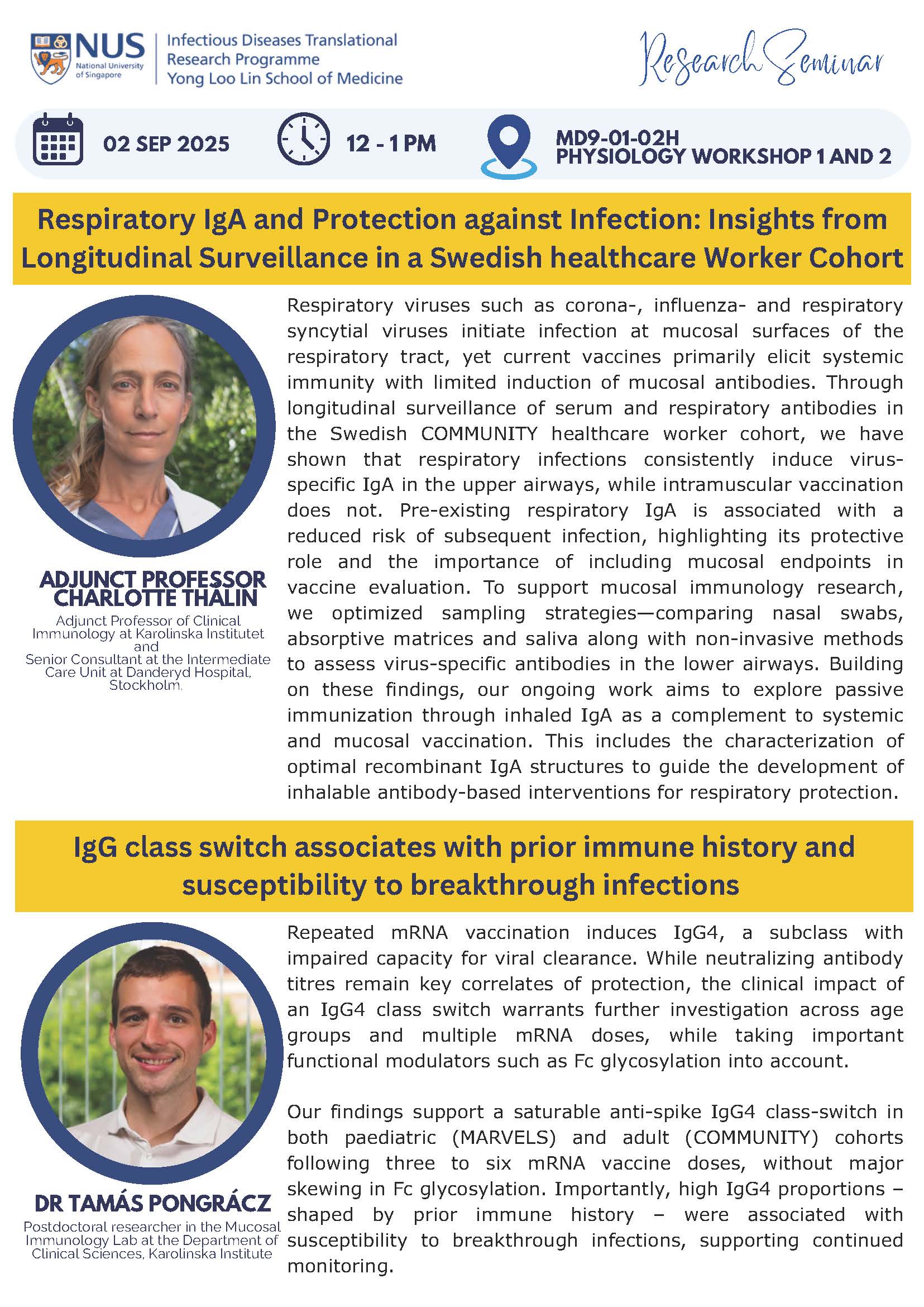
Respiratory viruses such as corona-, influenza- and respiratory syncytial viruses initiate infection at mucosal surfaces of the respiratory tract, yet current vaccines primarily elicit systemic immunity with limited induction of mucosal antibodies. Through longitudinal surveillance of serum and respiratory antibodies in the Swedish COMMUNITY healthcare worker cohort, we have shown that respiratory infections consistently induce virus-specific IgA in the upper airways, while intramuscular vaccination does not. Pre-existing respiratory IgA is associated with a reduced risk of subsequent infection, highlighting its protective role and the importance of including mucosal endpoints in vaccine evaluation. To support mucosal immunology research, we optimized sampling strategies—comparing nasal swabs, absorptive matrices and saliva along with non-invasive methods to assess virus-specific antibodies in the lower airways. Building on these findings, our ongoing work aims to explore passive immunization through inhaled IgA as a complement to systemic and mucosal vaccination. This includes the characterization of optimal recombinant IgA structures to guide the development of inhalable antibody-based interventions for respiratory protection.