


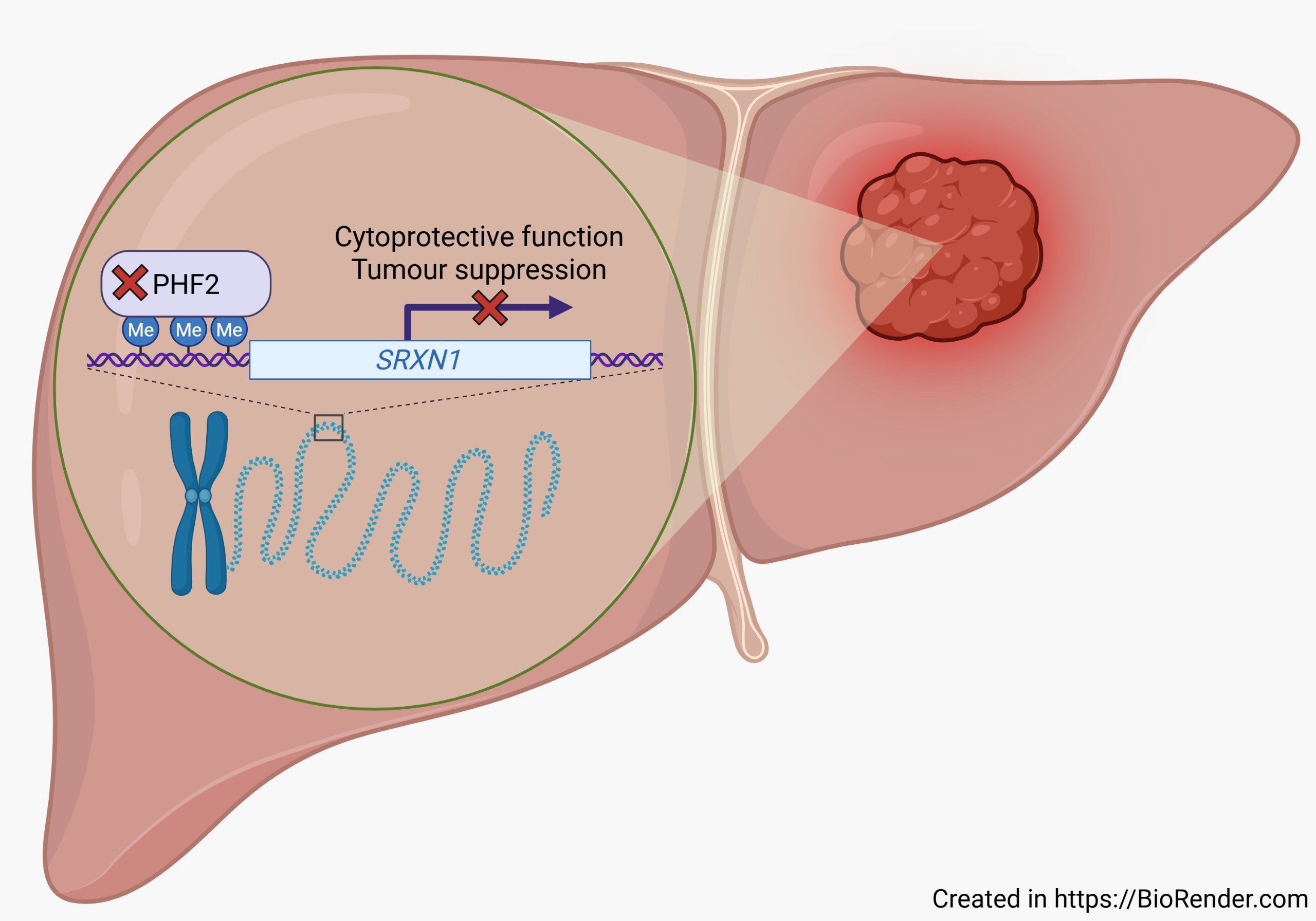
A multidisciplinary team led by D.K.H. Thng, L. Hooi, W.K. Yong, D. Kappei, T.B. Toh*, and E.K.-H. Chow* has published a study in Oncogenesis identifying the histone demethylase PHF2 as a candidate tumour suppressor in hepatocellular carcinoma (HCC), with mechanistic links to the regulation of the cytoprotective protein SRXN1. HCC remains a leading cause of cancer mortality worldwide, with limited effective targeted therapies. Epigenome remodelling has emerged as a frontier for novel therapeutic strategies due to its profound influence on transcriptional programs governing oncogenesis. In this study, the authors performed a high-throughput genetic screen of 497 epigenetic regulators across multiple HCC cell lines to identify candidate oncogenes and tumour suppressors relevant to disease progression. This work provides mechanistic evidence that epigenetic modulation via histone demethylase activity can counter hepatocarcinogenesis, expanding our understanding of tumour suppressor networks in liver cancer. The identification of PHF2’s role opens opportunities for the development of precision oncology strategies targeting chromatin-mediated vulnerabilities, potentially including reactivation of PHF2 or modulation of its downstream effectors such as SRXN1. *Corresponding authors
Read more: https://www.nature.com/articles/s41389-026-00597-2