Publications

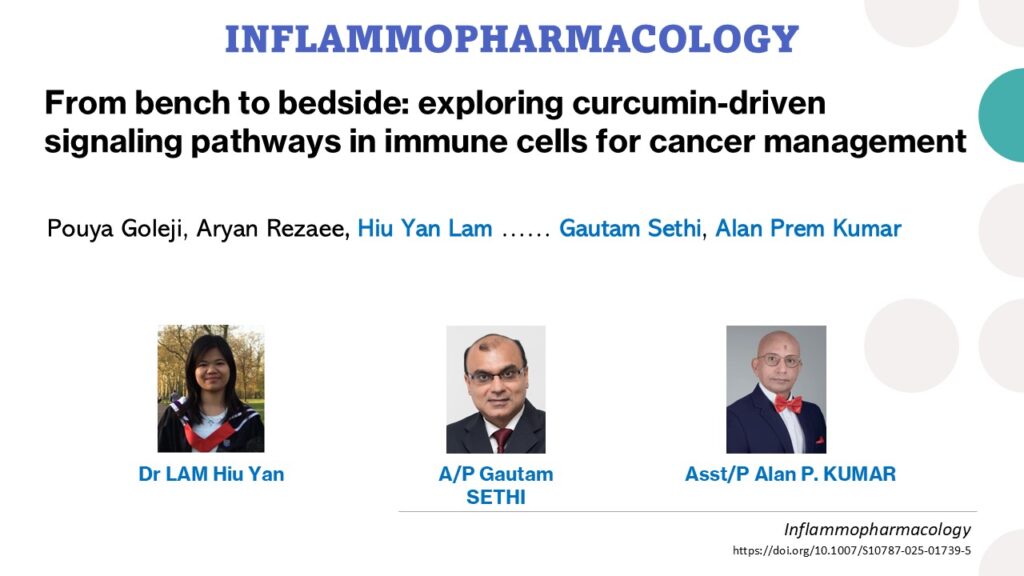
From bench to bedside: exploring curcumin-driven signaling pathways in immune cells for cancer management

Abstract

The use of natural compounds as effective therapeutic agents is an expanding area of health and disease research. Curcumin, a bioactive component derived from the rhizome of the turmeric plant (Curcuma longa L.), has been primarily used in culinary applications for several centuries, but now its potential health benefits are the focus of growing scientific research. Interestingly, some studies have found that curcumin has antitumorigenic effects due to its ability to influence the tumor microenvironment and possibly promote immune system response by modulating specific signaling pathways in immune cells. The interaction of curcumin with immune cells in the field of cancer chemoprevention is a complex area of research. It has been suggested that curcumin might promote T cell recruitment, reduce neutrophil and macrophage accumulation in the tumor microenvironment, and prevent the conversion of infiltrating lymphocytes into immunosuppressive subpopulations. Thus, its possible mechanisms of action also include a shift of the immune balance toward activation by reversing the prevalence of immunosuppressive cells. With innovations and improvements in our understanding of the potential benefits of curcumin on immune cells in cancer prevention and treatment, it is important to have an overview of current findings. Therefore, in this study, we aim to provide a review of the latest discoveries regarding curcumin in the field of cancer and immune cell research.

From bench to bedside: exploring curcumin-driven signaling pathways in immune cells for cancer management Read More »

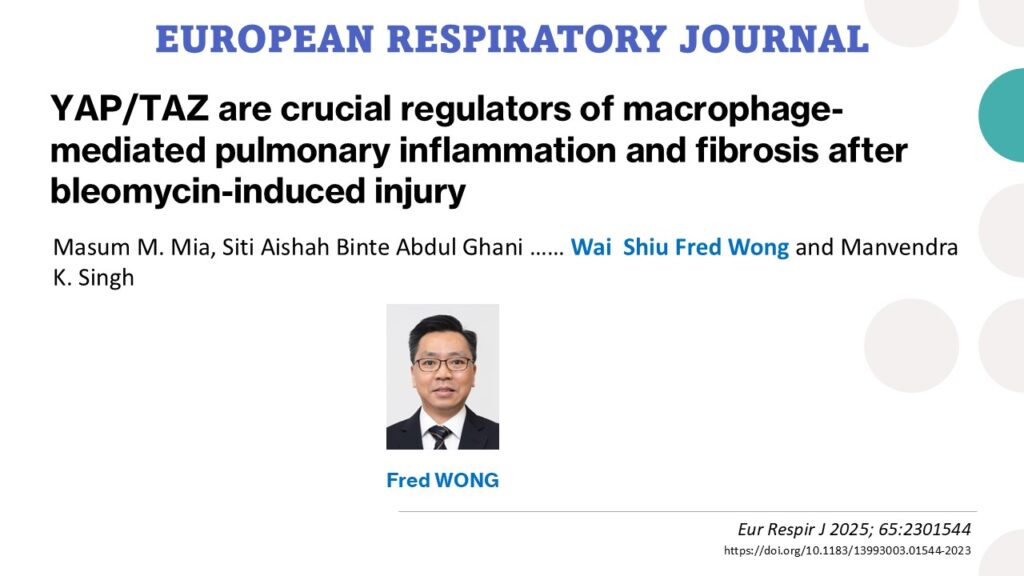
YAP/TAZ are crucial regulators of macrophage-mediated pulmonary inflammation and fibrosis after bleomycin-induced injury

Abstract

Pulmonary fibrosis is the most prevalent and severe form of end-stage interstitial lung disease. Macrophages are crucial players in inflammation-induced pulmonary fibrosis, but the mechanisms driving macrophage polarisation and their specific roles in pulmonary fibrosis pathogenesis remain poorly understood. Here, we demonstrate that both YAP and TAZ are activated in lung macrophages from patients with pulmonary fibrosis as well as in mice with bleomycin-induced pulmonary fibrosis. Myeloid-specific Yap/Taz deletion resulted in reduced recruitment of monocyte-derived alveolar macrophages (Mo-AMs), impaired inflammatory responses, decreased pulmonary fibrosis and enhanced alveolar epithelial cell regeneration following bleomycin treatment. Conversely, the expression of a constitutively active YAP mutant (YAP5SA) exacerbated bleomycin-induced pulmonary fibrosis by increasing Mo-AM recruitment, elevating expression of pro-inflammatory and pro-fibrotic markers, and impairing alveolar epithelial cell regeneration. We demonstrate that YAP/TAZ-CCL2 (C-C motif chemokine ligand 2) signalling plays a crucial role in bleomycin-induced pulmonary fibrosis, as blocking CCL2 with a neutralising antibody effectively abrogated the YAP5SA-induced recruitment of Mo-AMs, inflammatory and fibrotic responses. Additionally, we reveal that the YAP/TAZ-MBD2-TGFβ1-pSMAD2 signalling axis is crucial not only for pro-fibrotic macrophage polarisation, but also for their cross-talk with lung fibroblasts, driving the fibroblast-to-myofibroblast transition. Collectively, these findings suggest that targeting aberrant YAP/TAZ activity to modulate inflammatory and fibrotic response could be a promising strategy for the prevention and treatment of pulmonary fibrosis.

YAP/TAZ are crucial regulators of macrophage-mediated pulmonary inflammation and fibrosis after bleomycin-induced injury Read More »

Discovery of an NF-κB1 p105 Degrader for Anti-Inflammatory Therapy via Structural Optimization of the Coumarin Natural Product Minutuminolate

ABSTRACT

In this study, the coumarin natural product minutuminolate (MNT) was used as a starting point for the development of anti-inflammatory agents. Through structure−activity relationship studies, a lead compound MD-1 was designed and synthesized, exhibiting significantly improved antiinflammatory activities. Mechanistic studies revealed that MD-1 is a degrader of the p105 subunit of NF-κB. Gene knockdown experiments further showed that the Cullin-ring ligase (CRL) SCFβTrCP is involved in MD-1-induced p105 degradation. This leads to suppressed NF-κB transcriptional activity, which is consistent with its potent anti-inflammatory effects. Taken together, our work challenges the longstanding notion that NF-κB is undruggable, as we demonstrate that the p105 subunit of NF-κB is indeed tractable with small molecules. More importantly, our study highlights that natural products are valuable starting points for the discovery and development of antiinflammatory agents with novel mechanisms of action.

Discovery of an NF-κB1 p105 Degrader for Anti-Inflammatory Therapy via Structural Optimization of the Coumarin Natural Product Minutuminolate Read More »

Fecal Microbiota Transplantation from Mice Receiving Magnetic Mitohormesis Treatment Reverses High-Fat Diet-Induced Metabolic and Osteogenic Dysfunction

Abstract

This study compared the metabolic consequences of fecal microbiota transplantation (FMT) from donor mice that had been either administered pulsed electromagnetic field (PEMF) therapy or exercised to recipient mice fed a high-fat diet (HFD). Eight weeks of PEMF treatment (10 min/week) enhanced PGC-1α-associated mitochondrial and metabolic gene expression in white and brown adipose to a greater degree than eight weeks of exercise (30–40 min/week). FMT from PEMF-treated donor mice recapitulated these adipogenic adaptations in HFD-fed recipient mice more faithfully than FMT from exercised donors. Direct PEMF treatment altered hepatic phospholipid composition, reducing long-chain ceramides (C16:0) and increasing very long-chain ceramides (C24:0), which could be transferred to PEMF-FMT recipient mice. FMT from PEMF-treated mice was also more effective at recovering glucose tolerance than FMT from exercised mice. PEMF treatment also enhanced bone density in both donor and HFD recipient mice. The gut Firmicutes/Bacteroidetes (F/B) ratio was lowest in both the directly PEMF-exposed and PEMF-FMT recipient mouse groups, consistent with a leaner phenotype. PEMF treatment, either directly applied or via FMT, enhanced adipose thermogenesis, ceramide levels, bone density, hepatic lipids, F/B ratio, and inflammatory blood biomarkers more than exercise. PEMF therapy may represent a non-invasive and non-strenuous method to ameliorate metabolic disorders.

Full article: https://doi.org/10.3390/ijms26125450

Fecal Microbiota Transplantation from Mice Receiving Magnetic Mitohormesis Treatment Reverses High-Fat Diet-Induced Metabolic and Osteogenic Dysfunction Read More »

Plasma proteomics for cognitive decline and dementia – A Southeast Asian cohort study

Abstract

Introduction: The prognostic utility of plasma proteomics for cognitive decline and dementia in a Southeast Asian population characterized by high cerebrovascular disease (CeVD) burden is underexplored.

Methods: We examined this in a Singaporean memory clinic cohort of 528 subjects (n = 300, CeVD; n = 167, incident cognitive decline) followed-up for 4 years.

Results: Of 1441 plasma proteins surveyed, a 12-protein signature significantly predicted cognitive decline (q-value < .05). Sixteen diverse biological processes were implicated in cognitive decline. Ten proteins independently predicted incident dementia (q-value < .05). A unified prediction model combining plasma proteins with clinical risk factors increased the area under the curve for outcome prediction from 0.62 to 0.85. External validation in the cerebrospinal fluid proteome of an independent Caucasian cohort replicated four of the significantly predictive plasma markers for cognitive decline namely: GFAP, NEFL, AREG, and PPY.

Discussion: The prognostic proteins prioritized in our study provide robust signals in two different biological matrices, representing potential mechanistic targets for dementia and cognitive decline.

Highlights: A total of 1441 plasma proteins were profiled in a Singaporean memory clinic cohort. We report prognostic plasma protein signatures for cognitive decline and dementia. External validation was performed in the cerebrospinal fluid proteome of a Caucasian cohort. A concordant proteomic signature was identified across both biofluids and cohorts. Further studies are needed to explore the therapeutic implications of these proteins for dementia.

Full article: https://doi.org/10.1002/alz.14577

Plasma proteomics for cognitive decline and dementia – A Southeast Asian cohort study Read More »

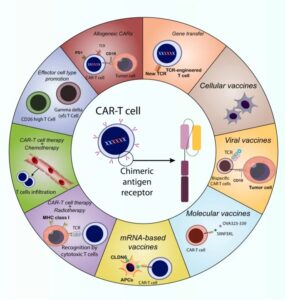
Advances in cancer immunotherapy: historical perspectives, current developments, and future directions

Abstract

Cancer immunotherapy, encompassing both experimental and standard-of-care therapies, has emerged as a promising approach to harnessing the immune system for tumor suppression. Experimental strategies, including novel immunotherapies and preclinical models, are actively being explored, while established treatments, such as immune checkpoint inhibitors (ICIs), are widely implemented in clinical settings. This comprehensive review examines the historical evolution, underlying mechanisms, and diverse strategies of cancer immunotherapy, highlighting both its clinical applications and ongoing preclinical advancements. The review delves into the essential components of anticancer immunity, including dendritic cell activation, T cell priming, and immune surveillance, while addressing the challenges posed by immune evasion mechanisms. Key immunotherapeutic strategies, such as cancer vaccines,
oncolytic viruses, adoptive cell transfer, and ICIs, are discussed in detail. Additionally, the role of nanotechnology, cytokines, chemokines, and adjuvants in enhancing the precision and efficacy of immunotherapies were explored. Combination therapies, particularly those integrating immunotherapy with radiotherapy or chemotherapy, exhibit synergistic potential but necessitate careful management to reduce side effects. Emerging factors influencing immunotherapy outcomes, including tumor heterogeneity, gut microbiota composition, and genomic and epigenetic modifications, are also examined. Furthermore, the molecular mechanisms underlying immune evasion and therapeutic resistance are analyzed, with a focus on the contributions of noncoding RNAs and epigenetic alterations, along with innovative intervention strategies. This review emphasizes recent preclinical and clinical advancements,
with particular attention to biomarker-driven approaches aimed at optimizing patient prognosis. Challenges such as immunotherapy-related toxicity, limited efficacy in solid tumors, and production constraints are highlighted as critical areas for future research. Advancements in personalized therapies and novel delivery systems are proposed as avenues to enhance treatment effectiveness and accessibility. By incorporating insights from multiple disciplines, this review aims to deepen the understanding and application of cancer immunotherapy, ultimately fostering more effective and widely accessible therapeutic solutions.

Full article: http://10.1186/s12943-025-02305-x

Advances in cancer immunotherapy: historical perspectives, current developments, and future directions Read More »

Gut microbiota and their influence in brain cancer milieu

Abstract
Microbial communities are not simply remnants of the past but dynamic entities that continuously evolve under the selective pressures of nature, reflecting the intricate and adaptive processes of evolution. The microbiota residing in the various regions of the human body has numerous roles in different physiological processes such as nutrition, metabolism, immune regulation, etc. In the zeal of achieving empirical insights into the ambit of the gut microbiome, the research over the years led to the revelation of reciprocal interaction between the gut
microbiome and the cognitive functioning of the human body. Dysbiosis in the gut microbial composition disturbs the homeostatic cognitive functioning of the human body. This dysbiosis has been associated with various chronic diseases, including brain cancer, such as glioma, glioblastoma, etc. This review explores the mechanistic role of dysbiosis-mediated progression of brain cancers and their subtypes. Moreover, it demonstrates the regulatory role of microbial metabolites produced by the gut microbiota, such as short-chain fatty acids, amino acids, lipids, etc., in the tumour progression. Further, we also provide valuable insights into the microbiota mediating the efficiency of therapeutic regimens, thereby leveraging gut microbiota as potential biomarkers and targets for improved treatment outcomes.

Full article: https://doi.org/10.1186/s12974-025-03434-2

Gut microbiota and their influence in brain cancer milieu Read More »

Formoterol, the Most Effective Bronchodilator, Has No Anti-Inflammatory nor Metabolic Modulatory Effects in Severe Asthma Induced by Aspergillus fumigatus

Abstract

In an increasing number of asthma studies, modulation of pulmonary metabolic reprogramming using therapeutic agents targeting metabolic enzymes promoted bronchodilatory, anti-inflammatory, and antiremodeling effects. Although formoterol is the bronchodilator of choice for asthma management, its anti-inflammatory and metabolic modulatory effects in severe asthma have not been investigated. The present study aimed to explore formoterol’s anti-inflammatory and metabolic modulatory potential in Aspergillus fumigatus (Af)-induced severe asthma model to establish additional benefits in the difficult-to-treat severe asthma subtype. Formoterol was administered via nebulization in an Af-induced severe asthma mouse model. Airway hyperresponsiveness (AHR), airway inflammation, airway remodeling, and metabolic pathways on glycolysis and oxidative phosphorylation in the lungs were assessed. An in-depth analysis of formoterol’s effect on airway smooth muscle metabolism was also performed. Inhaled formoterol significantly inhibited methacholine-induced AHR in Af-induced severe asthma in a dose-dependent manner (p < 0.001). However, it did not reduce airway immune cell counts, inflammation score of hematoxylin and eosin-stained lung sections, airway mucus hypersecretion, lung levels of proinflammatory cytokines and chemokines, and α-smooth muscle actin-positive airway smooth muscle wall thickness. In addition, formoterol did not show any effects on lung single-cell glycolytic and oxidative phosphorylation activities or on the levels of metabolic enzymes in lung tissues and α-smooth muscle actin-positive airway smooth muscle in Af-induced severe asthma. Inhaled formoterol is an entirely potent and effective bronchodilator against Af-induced severe asthma, with no effect on airway inflammation, airway remodeling, and pulmonary metabolism.

Full article: https://pubs.acs.org/doi/10.1021/acsptsci.4c00672

Formoterol, the Most Effective Bronchodilator, Has No Anti-Inflammatory nor Metabolic Modulatory Effects in Severe Asthma Induced by Aspergillus fumigatus Read More »

Gene therapy for age-related macular degeneration: a promising frontier in vision preservation

Abstract

Age-related macular degeneration (AMD) is a leading cause of central vision loss, progressively impairing the retina and affecting millions worldwide. By 2040, global cases of AMD are projected to reach 300 million, posing a significant public health challenge. While early AMD may only cause mild visual impairment, advanced stages, particularly neovascular (wet) and non-neovascular (dry) AMD, can lead to severe vision loss or legal blindness, substantially affecting daily life. The introduction of anti-angiogenic therapies has revolutionized wet AMD treatment, offering a high probability of preserving or improving vision. However, these therapies do not halt AMD progression, and no definitive treatments exist for dry AMD. The limitations of current therapies, such as frequent injections and treatment resistance, underscore the urgent need for novel strategies. Gene therapy, which has shown success in treating other hereditary retinal diseases, offers a promising long-term solution for AMD by targeting retinal cells to produce therapeutic proteins. This review explores the potential of gene therapy for AMD, examining recent clinical trials and future treatment directions.

Full article: https://biosignaling.biomedcentral.com/articles/10.1186/s12964-025-02246-4

Gene therapy for age-related macular degeneration: a promising frontier in vision preservation Read More »

Endocrine disruption of Triphenyl Phosphate via VIT-2 in Caenorhabditis elegans: A comparative analysis with estradiol and 4-hydroxytamoxifen

Abstract

Triphenyl phosphate (TPHP) is widely used as a flame retardant and plasticizer in consumer products and is frequently detected in the environment. TPHP competitively binds to estrogen receptors, exhibiting both estrogenic and anti-estrogenic effects, leading to ongoing debate about its role. This study demonstrates that TPHP shows a higher affinity for the estrogen receptor NHR-14 in Caenorhabditis elegans (C. elegans) compared to the typical estrogen estradiol (E2) and the estrogen antagonist 4-hydroxytamoxifen (4-HT). The study also examines the production, distribution, and transport of the estrogen biomarker Vitellogenin family member 2 (VIT-2) following exposure to TPHP, E2, and 4-HT. Environmentally-relevant concentrations of TPHP significantly increased VIT-2 transcription and protein expression levels in C. elegans during early pregnancy, similar to the effects observed with E2. However, during peak pregnancy, TPHP exposure led to abnormal accumulation of VIT-2, primarily due to an increase in the Gibbs Free Energy of the VIT-2_RME-2 complex, which reduced their affinity and subsequently impaired the normal transport of VIT-2. These findings provide novel insights into the toxic mechanisms of TPHP in oviparous animals, highlighting its broader environmental impacts and emphasizing the urgency for further research and regulatory actions to mitigate its risks.

Full Article: https://doi.org/10.1016/j.jhazmat.2025.138546

“Our research study presents compelling molecular evidence that Triphenyl Phosphate (TPHP), a widely used organophosphate flame retardant, exhibits a higher binding affinity for the estrogen receptor NHR-14 in C. elegans than endogenous estradiol or 4-hydroxytamoxifen. TPHP-induced endocrine disruption significantly impairs vitellogenin (VIT-2) gene regulation and protein trafficking, leading to adverse effects on growth, reproduction, and embryonic development. Our findings therefore underscore the toxicological risks posed by TPHP and reinforce the need for more stringent environmental and regulatory measures for endocrine-disrupting chemicals”

Endocrine disruption of Triphenyl Phosphate via VIT-2 in Caenorhabditis elegans: A comparative analysis with estradiol and 4-hydroxytamoxifen Read More »

Scroll to Top