Congratulations to Department of Pharmacology Team on receiving the award!
The award recognises teams who have delivered significant, School-wide initiatives or projects at NUS Medicine, resulting in measurable improvements and setting new benchmarks that advance the School’s vision and mission.
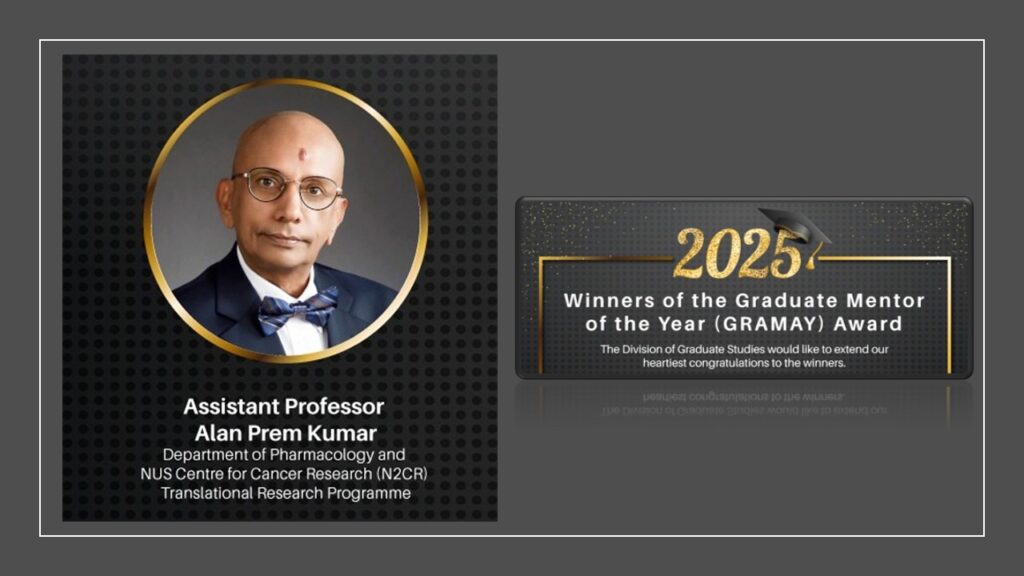
Congratulations to Asst/P Alan Prem Kumar on receiving the Graduate Mentor of the Year (GRAMAY) Award 2025. The GRAMAY Award is an annual award that honors and celebrates faculty staff for their excellence in mentorship and the professional development of graduate students in the Yong Loo Lin School of Medicine. The award is given to recognize the important key roles played by the Faculty staff in inspiring and nurturing future biomedical- and clinician-scientists. The award recipients should have shown excellence in graduate supervision, intellectual and professional development as well as career development of their graduate students.
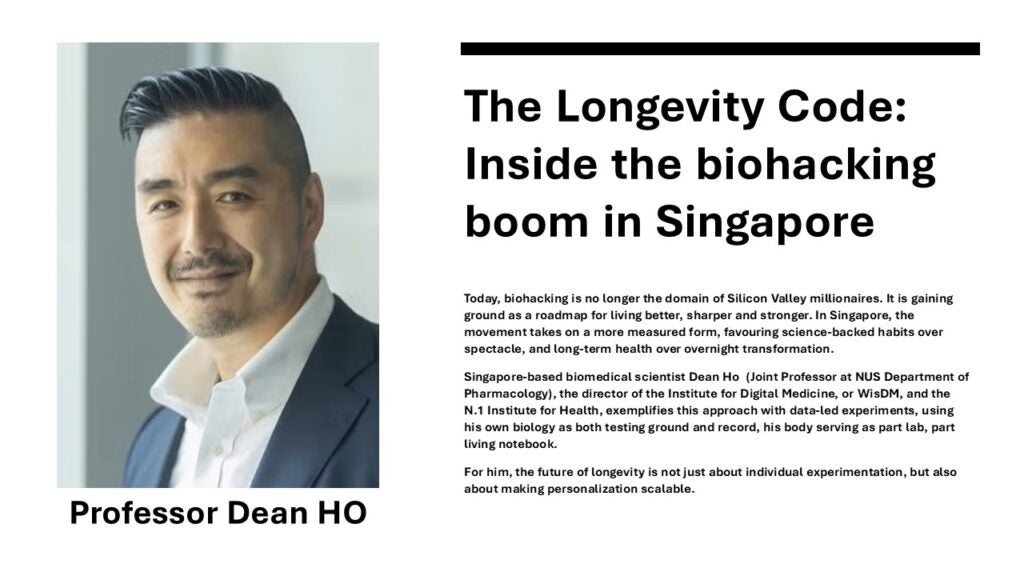
Today, biohacking is no longer the domain of Silicon Valley millionaires. It is gaining ground as a roadmap for living better, sharper and stronger. In Singapore, the movement takes on a more measured form, favouring science-backed habits over spectacle, and long-term health over overnight transformation.
Singapore-based biomedical scientist Dean Ho (Joint Professor at NUS Department of Pharmacology), the director of the Institute for Digital Medicine, or WisDM, and the N.1 Institute for Health, exemplifies this approach with data-led experiments, using his own biology as both testing ground and record, his body serving as part lab, part living notebook.
For him, the future of longevity is not just about individual experimentation, but also about making personalization scalable.
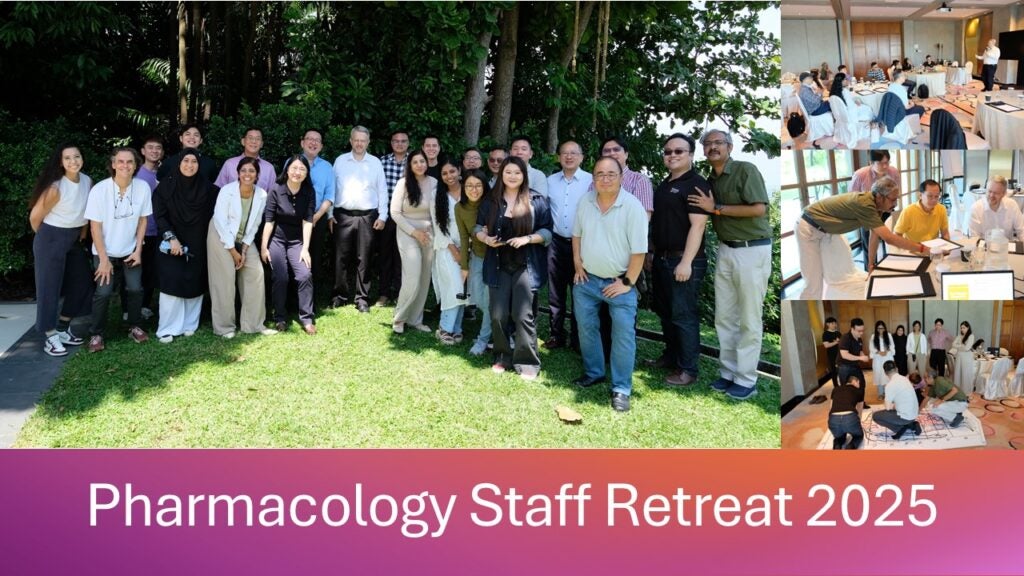
Department of Pharmacology just wrapped up an incredibly refreshing, engaging, and insightful retreat! It was an invigorating experience to reconnect with colleagues, exchange ideas, and reflect on our shared passion for advancing pharmacology education and research. The thought-provoking sessions not only deepened our collective knowledge but also inspired new directions for our work ahead. Grateful for the camaraderie and the opportunity to recharge and reimagine our goals together. Looking forward to translating these insights into impactful actions for our students and the wider medical community!
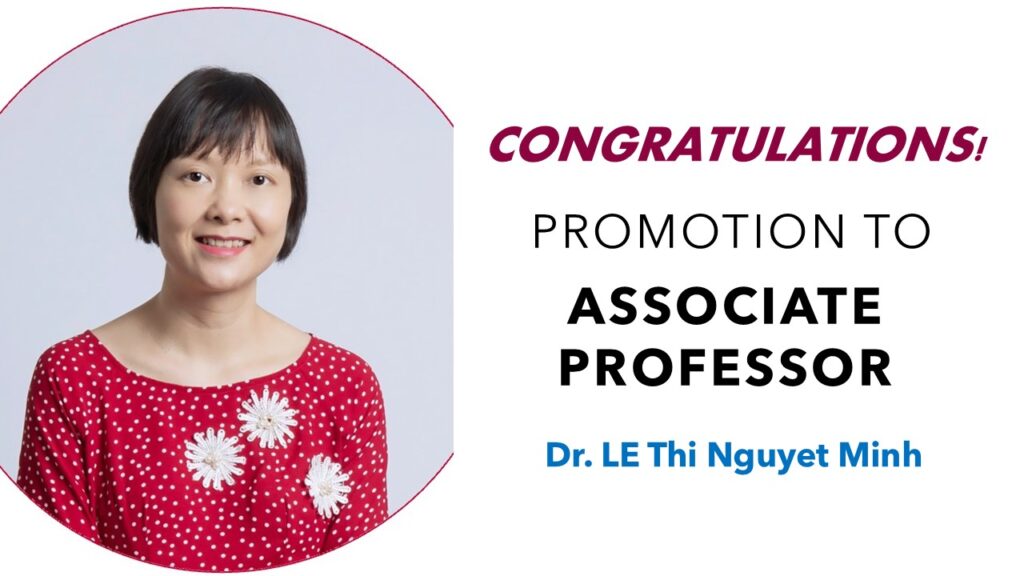
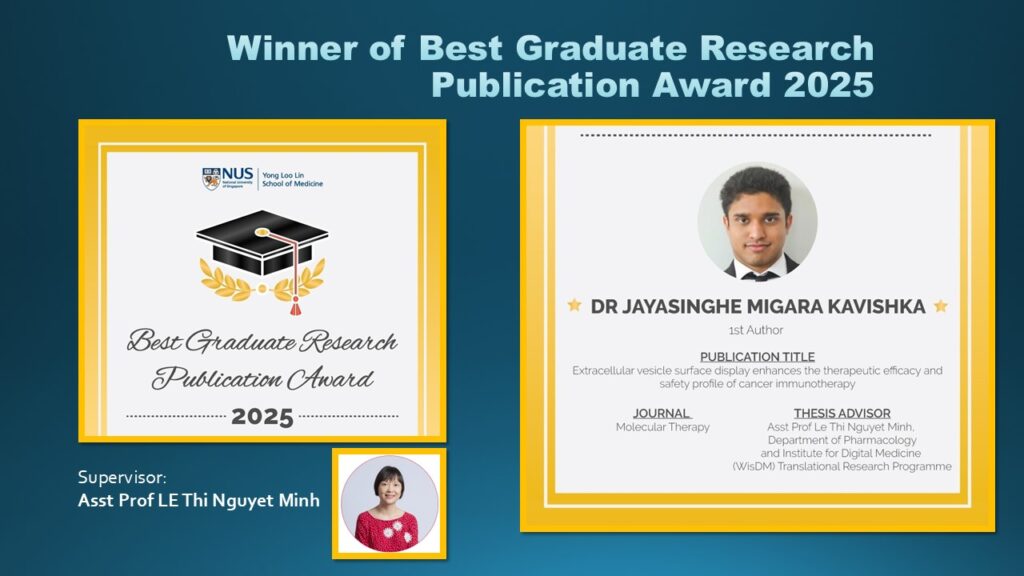
The Department of Pharmacology is delighted to announce the promotion of Dr. Minh LE to Associate Professor, in recognition of her outstanding contributions to research, education and mentorship.
Dr. Le has made significant strides in advancing scientific knowledge through her impactful research, which has been widely recognized both locally and internationally. As a mentor, Dr. Le has been a guiding force for many students and junior colleagues, fostering an environment of curiosity, critical thinking, and personal growth.
The Department wishes Dr. Le continued success and excellence in the years ahead.
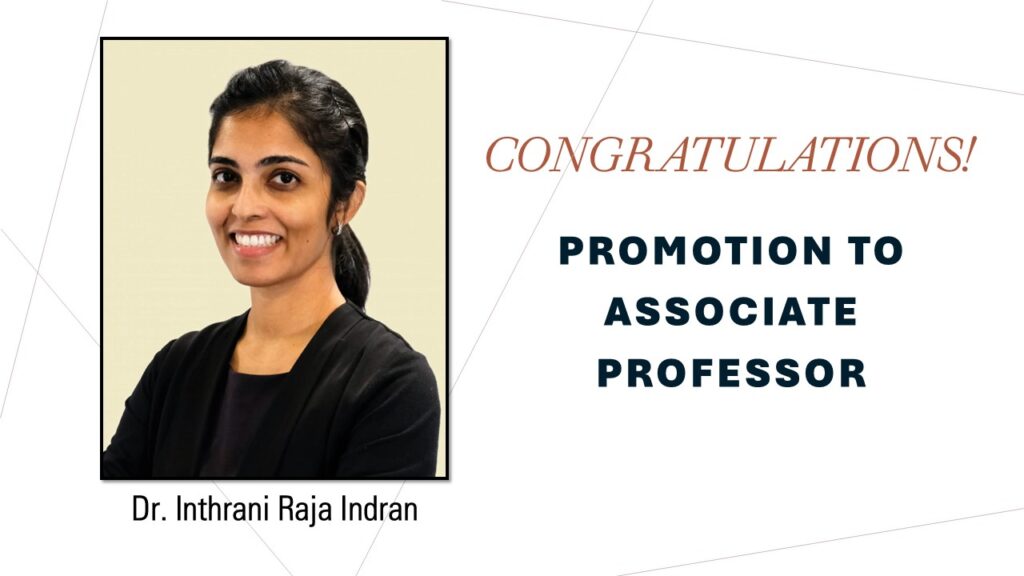
The Department of Pharmacology congratulates Dr. Inthrani Raja Indran on her well-deserved promotion to Associate Professor, in recognition of her outstanding dedication and leadership in medical education.
Dr Inthrani has played a transformational role in enhancing student learning and mentorship since she joined NUS Medicine and her ongoing work will ensure sustainable growth of a student‑centred learning ecosystem at NUS Medicine.
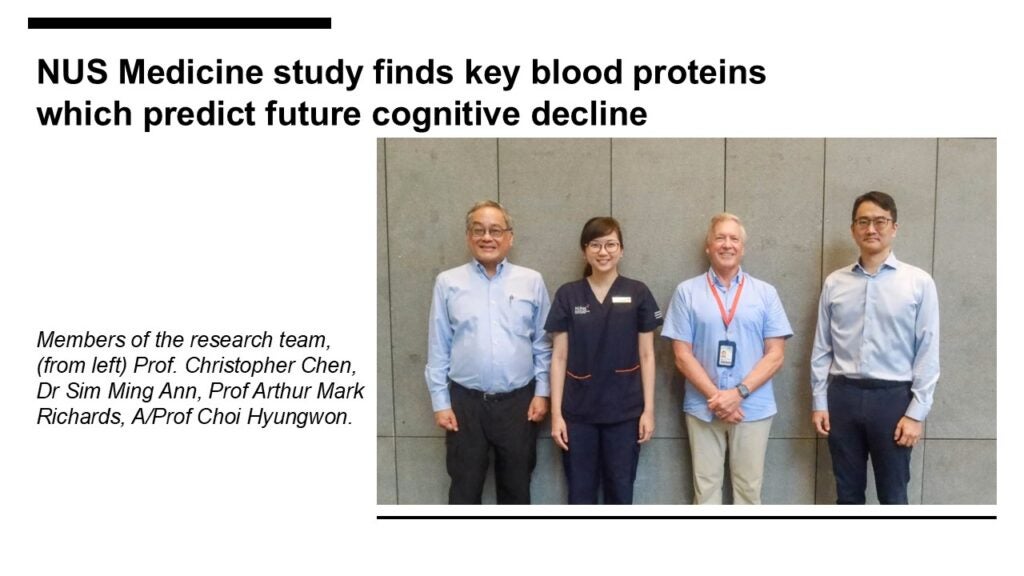
In a study that holds significance for individuals with cerebrovascular disease, scientists from the Yong Loo Lin School of Medicine, National University of Singapore (NUS Medicine), have found proteins in the blood that predict future cognitive decline and dementia.
Led by Professor Christopher Chen, Deputy Chair of the Healthy Longevity Translational Research Programme (TRP) at NUS Medicine, this first-of-its-kind study in Singapore analysed more than 1,000 proteins in the blood of a local patient cohort. The study was conducted on 528 patients from memory clinics at the National University Hospital (NUH) and St Luke’s Hospital in Singapore.
Professor Arthur Mark Richards, co-senior author of the paper published in Alzheimer’s and Dementia, said, “One of our findings was the characterisation of a blood protein signature for future cognitive decline. Using advanced proteomic technologies, we profiled over a thousand blood proteins tied to neurodegeneration, inflammation, and vascular dysfunction, which are key contributors to dementia.” Prof Richards is from the Cardiovascular-Metabolic Diseases TRP at NUS Medicine.
The team found that people with dysregulated levels of these proteins were more likely to develop future dementia and cognitive deterioration, even after accounting for age and other health conditions. These proteins are also linked to changes in brain structure, such as shrinkage in brain volume and signs of small vessel disease, which are early warning signs of dementia. When these biomarkers were combined with clinical risk factors, prognosis of cognitive decline was significantly enhanced, highlighting the potential of integrating blood-based tests with routine clinical assessments for earlier and more accurate diagnosis.
The team further validated these findings in a separate group of patients of Caucasian descent, using cerebrospinal fluid—which refers to fluid that surrounds the brain and spinal cord. The replicated protein markers remained strong predictors of cognitive decline, suggesting these biomarkers may be reliable across different biological fluids and diverse populations.