News

PhD Student Selected to Attend HOPE Meetings 2016

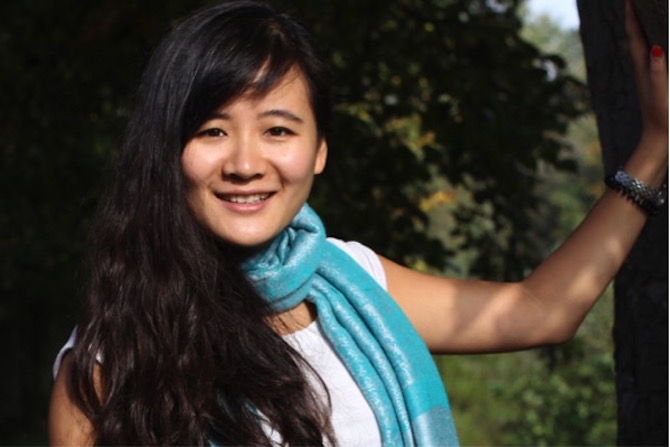
The Department of Pharmacology is proud to have Ms Wang Chao, a PhD student in Dr Alan Prem Kumar’s group, selected to participate in the 8th HOPE Meeting to be held in Japan in March 2016. She will be joining 74 other carefully selected Asian-Pacific and African participants to attend this meeting.

Since 2008, the Japan Society for the Promotion of Science has been organizing HOPE Meetings annually with an aim of advancing science and technology within the Asia-Pacific and Africa region. The title “HOPE” signifies the promise held for young scientists and optimism for a bright science and technology future in the Asia-Pacific and Africa region. It provides opportunities for excellent doctoral students and young researchers to engage in interdisciplinary discussions with Nobel laureates and other distinguished scientists.

PhD Student Selected to Attend HOPE Meetings 2016 Read More »

Scholar-in-Training Travel Award – 2015 San Antonio Breast Cancer Symposium (SABCS), December 8-12, 2015 in San Antonio, Texas.

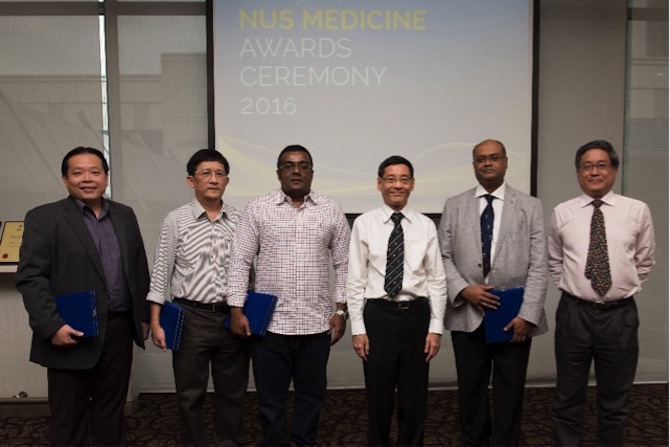
Congratulations to Ms Cai Wanpei, a PhD student from Dr Alan Prem Kumar’s group for receiving the prestigious Avon-AACR International Scholar-in-Training Travel Award in the amount USD$2,000 to attend and present her PhD work at the above conference. Her abstract was chosen for this award because the work is highly rated by the Abstract Selection Committee.

DEAD-box RNA helicase DP103 as a Novel Regulator of Wnt/β-catenin Signaling Pathway and Promotes Cancer Stem Cell-like Behavior in Triple Negative Breast Cancers

Wanpei Cai1,2, Jit Kong Cheong5, Edison5, Arindam Banerjee1,8, Tuan Zea Tan1, Einas M. Yousef9, Louis Gaboury9, Jean Paul Thiery1,3, Peter E. Lobie1,2, David M. Virshup3,5, Celestial T. Yap4, Alan Prem Kumar1,2,6,7

1Cancer Science Institute of Singapore, National University of Singapore; Departments of 2Pharmacology and 3Biochemistry, 4Physiology Yong Loo Lin School of Medicine, National University of Singapore; 5Cancer & Stem Cell Biology Program, Graduate Medical School, Duke-NUS; 6School of Biomedical Sciences, Faculty of Health Sciences, Curtin University, Perth, Western Australia; 7Department of Biological Sciences, University of North Texas, Denton, TX, USA; 8Somers Cancer Research Building, Cancer Research UK Centre, Faculty of Medicine, University of Southampton; 9Department of Pathology and Cell Biology, Faculty of Medicine, Université de Montréal

Despite recent advances in breast cancer therapeutics, mortality of metastatic triple negative breast cancer (TNBC) subtype remains high; due to their lack of hormone receptors expression for targeted therapy. Aberrant activation of Wnt/β-catenin signaling has been associated with breast cancers; where 40% of total breast cancers have elevated β-catenin levels with increased Wnt activity. Recently, we identified DEAD-box RNA helicase DP103 as a novel prognostic biomarker and metastasis-driving oncogene; highly expressed in TNBC subtype. Interestingly, we found high DP103 expression to be positively correlated with high β-catenin expression in clinical specimens (n=400). This led us to hypothesize a possible role of DP103 in modulating the Wnt/β-catenin pathway in TNBCs. Depletion of DP103 in metastatic TNBC cells decreases Wnt/β-catenin activity and expression of downstream Wnt target genes, while overexpression of DP103 increases Wnt activity. Depletion of DP103 also decreases phosphorylation of LRP6 and several important Wnt modulators required for downstream Wnt activation. Moreover, induction of Wnt/β-catenin signaling in Wnt responsive TNBC cells also significantly increased DP103 expression, indicating a possible positive feedback loop. Both canonical and non-canonical Wnt signaling is known to independently promote stem cell growth in mammospheres. Herein, we will also provide evidence on the role of DP103 in promoting breast cancer stem cell-like properties. Collectively, our data show a novel regulatory role of DP103 in the Wnt/β-catenin signaling pathway and in promoting breast cancer stem cell-like behavior, presenting itself as a potential drug target in TNBC patients.

Scholar-in-Training Travel Award – 2015 San Antonio Breast Cancer Symposium (SABCS), December 8-12, 2015 in San Antonio, Texas. Read More »

Dr. Summer Xin Xu is awarded the best poster presentation prize at the 8th Asian Society Against Dementia Conference

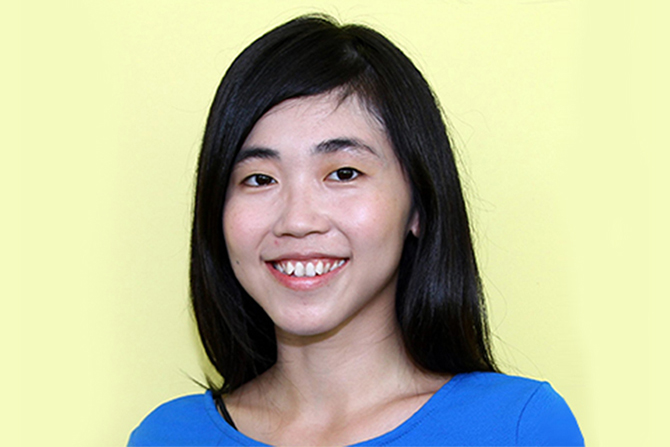
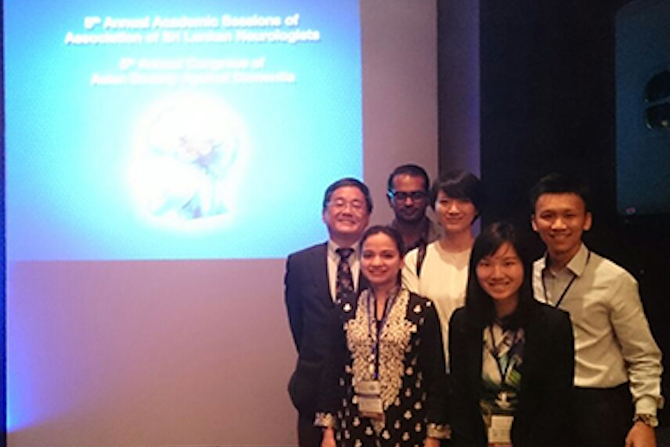
The Asian Society Against Dementia Conference was held in Colombo Sri Lanka from 14th-16th November, 2014. Dr. Summer Xin Xu was selected to present on “The utility of the Mini-Mental State Examination in identifying dementia and non-demented cases in a memory clinic in Singapore” in the research forum free paper poster presentation and won the best poster presenter prize from her work which is part of the Memory Aging and Cognition Centre’s (MACC) at Department of Pharmacology and National University Health System (NUHS) research programme.

Dr. Summer Xin Xu is awarded the best poster presentation prize at the 8th Asian Society Against Dementia Conference Read More »

Dr. Catherine Dong Yanhong received a National Clinician Scientist Program (NCSP) award from Clinician Scientist Unit, NUHS

Dr. Catherine Dong Yanhong was awarded the National Clinician Scientist Program for her research titled: Predictors, Patterns and Mechanisms of Progression of Cognitive Decline in Stroke/TIA Patients: A Longitudinal Study of Stroke Survivors” for the period of 1 Dec 2014 to 30 Nov 2015.

Dr. Catherine Dong Yanhong received a National Clinician Scientist Program (NCSP) award from Clinician Scientist Unit, NUHS Read More »

Medicine from the garden

The usage of fresh medicinal herbs continues to flourish in Singapore, despite increasing urbanisation.

Associate Professor Koh Hwee Ling, PhD student Siew Yin Yin and Dr Sogand Zareisedehizadeh (who graduated recently) from the NUS Department of Pharmacy, together with Associate Professor Tan Chay Hoon from the NUS Department of Pharmacology, have recently published a study in the Journal of Ethnopharmacology on the usage of fresh medicinal plants in Singapore. They found that, in spite of the availability of advanced medical care in the country, segments of the population continue to rely on fresh medicinal herbs for general well-being and health treatment. As such, the authors felt an urgent need to document local usage of these herbs.

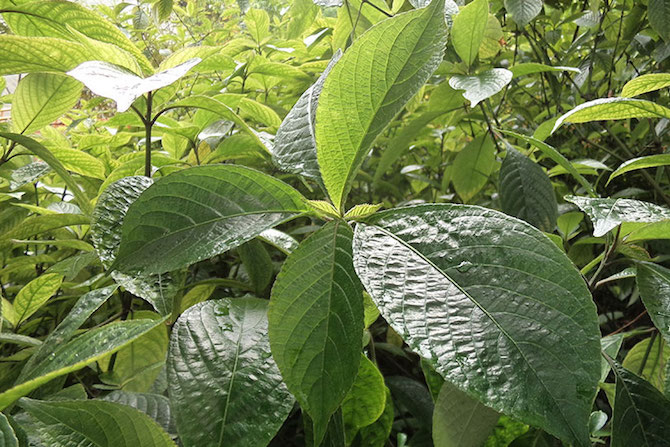
The research team engaged some 200 interviewees over three years and found that 414 plants represented by 104 plant species were reportedly used by the respondents. Five most commonly used plants were Clinacanthus nutans (Sabah Snake Grass), Strobilanthes crispus (Black Face General), Pereskia bleo (Seven Star Needle), aloe vera and ginger. In many cases, leaves were the most popular plant part used, with many respondents boiling them in water to extract the active ingredient. The majority of the respondents shared that in addition to using the plants for health promotion, they depended on the plants for managing respiratory ailments and cancer. Some of the plants used can be found in the wild and by the roadside in Singapore, growing as weeds.

One interviewee said that he had been using aloe vera for the past 10 years to treat burns and relieve congestion. He also used another plant Andrographis paniculata (Chuan Xin Lian) for pimples, believing that it would help to lower one’s amount of body heat.

The benefits of using fresh medicinal plants, as opposed to dried herbs in the form of finished products, include freshness, convenience and low (possibly zero) cost. However, Assoc Prof Koh cautioned that consumers should consult qualified practitioners and healthcare professionals before using any plants for medicinal purposes.

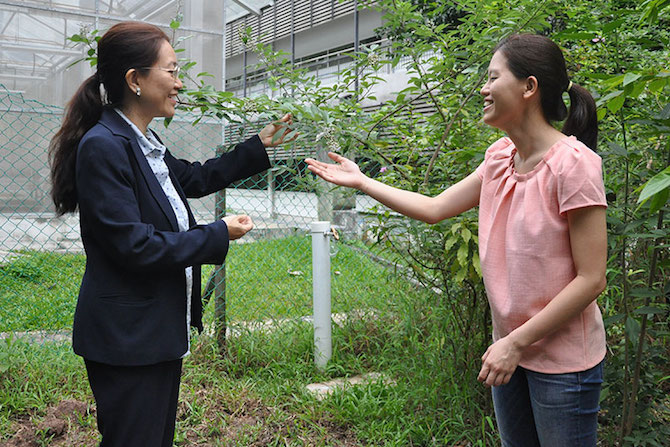
Assoc Prof Koh (left) and PhD student Yin Yin at the Department of Pharmacy’s herb garden

In 2009, Assoc Prof Koh and several authors published A Guide to Medicinal Plants, which provided information on 75 native and non-native medicinal plants growing in Singapore. Assoc Prof Koh is planning to update the guide, based on the plant species discussed during the interviews. She said: “Despite the advanced standard of healthcare in Singapore, fresh medicinal plants continue to play a vital role, representing vast untapped potential.”


The team felt there is insufficient research in this area and believe that this study would serve as a useful resource for identifying promising plants and carrying out scientific evaluations for future drug discovery efforts. Meanwhile, healthcare professionals could actively enquire from the patients about the potential usage of medicinal plants.

Medicine from the garden Read More »

Scroll to Top