

- Home
- Ethinar
The Holistic Management of Children with Gender Identity Development Issues
Date: Friday 16 May 2025
Time: 3.00 to 5.00pm (SGT)
Mode: Online via Zoom
Thank you for joining us at the Ethinar

Video from the Ethinar
Q&A questions and Responses
Click to view the Q&A document
A/Prof Ong Say How: Based on our child guidance clinic’s (CGC) recent retrospective study of 107 patients over a 5-year period from 2017-2021, 71 (67%) first experienced gender-related issues before they turned 13 years old. The median age for the onset of these issues was 11 years. The average age at which participants sought help for their GD concerns was 15.6 years.
A/Prof Oh Jean Yin: The youngest I have seen is 12 years old. Note that the Adolescent Medicine service sees kids in the adolescent age group mainly.
A/Prof Ong Say How: In Child Guidance Clinic, we have not seen young children (referring to children age 6 – 12 years old) who want sex change or that their caregivers insist on sex change. As elucidated in the talk, there are a lot of diagnostic challenges, ethical considerations and health implications when considering medical transitioning in young children with GD.
A/Prof Oh Jean Yin: No, the service has not seen this trend.
A/Prof Chan Mei Yoke: The guiding principles are not that different and make use of frameworks like the 4 Principles of Beauchamp and Childress to identify which principles are involved and which are in conflict; the Jonson 4-box method to find out what information is important and what is missing; and the ABC toolkit to help with consistent decision-making. There are of course other frameworks out there that can be used as well. Every case is different and ultimately, we have to balance the pros and cons of all ethically reasonable options, taking into account individual and societal factors.
A/Prof Ong Say How: Based on a local 2024 retrospective study of 107 patients diagnosed with GD in a tertiary child psychiatric clinic, the incidence rate of GD in Singapore residents aged 6 -19 yrs old has increased from 2.17 per 10,000 population in 2017 to 5.85 per 10,000 population in 2021. The prevalence (2017–2021) of GD in the study was 1:5434 (0.019%).
Western studies estimate the prevalence of GD to range from 0.002% to 0.7%, while Asian studies report a range from 0.0015% to 0.92%. These studies are predominantly on adult populations.
A/Prof Ong Say How: Not all individuals with transgenderism or gender incongruence would experience anxiety, depressive symptoms or emotional distress. Without distress or impairment to academic, occupational or social functioning, it would categorically not be considered as an illness. Hence the term transgenderism has been removed from DSM-5 and replaced by gender dysphoria which connotes a disorder that should be approached from a bio-psychosocial and medical perspective.
A/Prof Ong Say How: The link between GD and ADHD is not strong and there is no known underlying mechanism for the association between the two. However, we have seen children presenting first as having ADHD and a few years later when they become adolescents express having GD experiences.
A/Prof Ong Say How: Having the mental capacity does not connote a straight path to medical transitioning including surgical gender reassignment. The medical indication must be clear and strong before such a recommendation is made. Local age of consent for surgical procedure must be met as well. In adolescents, it is recommended that the consent of two parents be obtained for hormonal treatment if medically indicated and if the patient is under 21 years of age.
A/Prof Ong Say How: A multidisciplinary approach to assessment and management is an essential part of the biopsychosocial approach a doctor should take in all his/her patients with GD. Typically in a mental health clinic, a young person with GD would be referred to a psychologist to explore his/her gender identity, to assess coping skills/styles and to manage any emotional distress arising from unhelpful or negative thought processes or beliefs. Parents and caregivers can be referred to a medical social worker for assessment of parental attitudes and their belief systems, how they could support their child during the medical review process and whether they need any support of their own. The medical review process could take years and if necessary, a handover should be conducted from the child mental health team to the adult team.
A/Prof Oh Jean Yin: Agree that the approach is to ensure all biopsychosocial health aspects is considered. The medical review is to understand if there are any physical health conditions e.g. ambiguous genitalia/ disorders of sex development (DSD), and to assess the pubertal and growth development and nutritional status. A multidisciplinary team who provides developmentally appropriate management should be involved in the care of a patient with GD and their family with the consideration of transitioning to adult care when the young person (and family) is ready.
A/Prof Ong Say How: Agree. Experience tells us that young patients can and do change their mind with the passage of time, after being provided with more information and more time to think about their situations or gender experiences. Any medical interventions come with significant risks, and it is paramount that patients and their caregivers fully understand the implications of going through the medical treatment and procedures, and whether if they could live with the side effects or if they were to be dissatisfied with the treatment outcomes. Clinicians must be guided by scientific evidence of any medical treatments and procedures. Given the paucity of long-term outcome studies on hormonal treatment in young children, certain treatments are not recommended, for example the use of pubertal blockers for pre-pubertal children with GD.
A/Prof Oh Jean Yin: This is the approach that we take with many medical conditions in needing to balance the risks with the benefits of treatment. Even with conditions like severe obesity in adolescents, where there is evidence that Bariatric Surgery is effective in managing the chronic condition – clinicians should be guided by recommendations based on more robust long-term studies which in recent years show significant treatment effectiveness of sleeve gastrectomy in improving metabolic outcomes in young people. And for this surgical intervention which is mostly irreversible, we need to help the adolescent and their family in their consideration of options which are right for them, in the best interest of their biopsychosocial health.
A/Prof Chan Mei Yoke: At this point in time, that is true.
A/Prof Oh Jean Yin: We can’t comment on other countries’ legal framework. For adolescents, we just need to be aware of what material they may be exposed to on social media and help them to understand context and encourage perspective taking.
A/Prof Ong Say How: It is unclear how much of an influence social media has on the development of GD. Studies regarding this is still ongoing. However, there have been anecdotal reports of individuals with GD citing social media as playing a part in their coming out as transgender because they identified with other transgender members online, discovered that they are not alone and then decided to talk about their own experiences. Some sought connections online as they felt lonely or were social isolated while still exploring their gender identity. This can lead to them drawing erroneous conclusions about their own gender identity. It is believed that social media would likely influence those who are already questioning their gender identity but have yet articulated about it or sought professional help.
A/Prof Oh Jean Yin: Even in populations with limited access to social media, their youth have experienced gender identity questioning. For parents and families, it can be hard to know if struggles are going to be transient – so we often need to also support parents and families in still taking their child/ adolescent’s concerns seriously and ensure safety/ function especially if there is distress. The quest of finding root causes/ other triggers can be done over time.
A/Prof Ong Say How: A lot of older teenage or young adult males nowadays use skin care products or cosmetics. Hence in itself, it is not a problem. It becomes a problem only if they adult caregivers disprove of their use. This may cause parent-child conflict.
A/Prof Chan Mei Yoke: Yes, indeed, that is one of the main reasons why the distress caused by GD in children (or by any condition!) needs to be acknowledged and addressed appropriately.
A/Prof Ong Say How: Indeed, very often, a balance has to be struck regarding potential side effects of medical transitioning versus harm reduction (due to suicide attempts arising from GD).
A/Prof Oh Jean Yin: Having solo interactions with adolescent patient’s is a privilege and parents are usually open to this when the purpose is clearly explained and a discussion around confidentiality around patient disclosure is done before the 1-1 time. Patient and parents are told that all information shared to doctor is kept confidential unless there are concerns around safety (self-harm, suicidality, abuse or exposure to violence, involvement in illegal behaviour e.g. substance use etc.). Most of the time, parents are open and majority are glad to leave the consult room.
A/Prof Oh Jean Yin: This sounds challenging. I would question the parent’s motivation in pushing for evaluation. If a 7 year old is not ready for any conversation around a sensitive topic be it gender identity, or being bullied in school etc. etc – I wonder if conversations at home have sufficient empathy and trust that their views will be taken seriously. I would try to frame that some incongruent behaviours related to gender expression, can be normal. Important to screen for abuse/ trauma/ learning disorders/ Autism Spectrum Disorder. Most of time, can wait and see while rapport builds over time.
A/Prof Ong Say How: This is possible though much less common. Through my interactions with my counterparts, I have heard of such cases.
A/Prof Ong Say How: It is unclear how much of an influence social media has on the development of GD. Studies regarding this is still ongoing. However, there have been anecdotal reports of individuals with GD citing social media as playing a part in their coming out as transgender because they identified with other transgender members online, discovered that they are not alone and then decided to talk about their own experiences. Some sought connections online as they felt lonely or were social isolated while still exploring their gender identity. This can lead to them drawing erroneous conclusions about their own gender identity. It is believed that social media would likely influence those who are already questioning their gender identity but have yet articulated about it or sought professional help.
A/Prof Oh Jean Yin: Even in populations with limited access to social media, their youth have experienced gender identity questioning. For parents and families, it can be hard to know if struggles are going to be transient – so we often need to also support parents and families in still taking their child/ adolescent’s concerns seriously and ensure safety/ function especially if there is distress. The quest of finding root causes/ other triggers can be done over time.
A/Prof Ong Say How: For now, yes. GD is a mental health diagnosis. However, this might change with time as what we have seen with homosexuality when there is more research findings and greater consensus about how it should be approached.
A/Prof Ong Say How: If there are no mental health symptoms such as anxiety or depression, a referral to a psychiatrist would not be necessary. The roles of psychiatrists are also to establish the GD diagnosis, determine whether there are other psychiatric co-morbidities (and treat accordingly) and to establish mental capacity should the patients decide to undergo medical transitioning including gender reassignment surgery.
A/Prof Oh Jean Yin: Confidentiality should balance ethical obligation to keep patient information secure (duty to protect), patient autonomy (right to control disclosure), and exceptions (imminent risk from active suicidal ideation). But adolescent is help-seeking and breaking confidentiality can impact trust and continued help seeking decisions.
A/Prof Chan Mei Yoke: Yes, that is largely true, so these resources and evidence can act as a guide to help us develop our own local guidelines..
A/Prof Ong Say How: Yes. Cognitive behavioural therapy (CBT) is typically used to assess the patient’s cognitive processes, identify whether there are any cognitive biases or distortions regarding one’s gender identity and belief systems that would impact on one’s decision making, and explore the possibility of challenging these unhelpful, negative thinking. CBT also involves mood monitoring and conducting of social experiments to debunk previously firmly held ideas or beliefs. Behavioural strategies are also taught and practised during therapy sessions to alleviate anxiety symptoms and distress that may accompany the negative thoughts. CBT is thus also applicable to treating anxiety and mood disorders.
Depending on the nature of the case, other forms of therapy such as supportive psychotherapy, interpersonal therapy and family therapy may be necessary.

Programme
| Time | Topic | Speaker |
| 3.00pm – 3.10pm | Introduction | Emeritus Prof Roy Joseph |
| 3.10pm – 3.35pm | Gender Development in Children and Adolescents | Adj. Assoc Professor Oh Jean Yin |
| 3.35pm – 4.00pm | Psychological Dimension of Gender Development Abnormalities |
Adj. Assoc Professor Ong Say How |
|
4.00pm – 4.25pm |
Ethical Management of Gender Identity Development Issues | Adj. Assoc Professor Chan Mei Yoke |
|
4.25pm – 5.00pm |
Summary and Q&A |
Professor Dominic Wilkinson |
Speakers

Adj. Assoc Professor Ong Say How
Senior Consultant
Child Guidance Clinic
Institute of Mental Health
Psychiatry Lead
Lee Kong Chian School of Medicine
Nanyang Technological University
Dr Ong is a senior consultant child psychiatrist from the Department of Child & Adolescent Psychiatry in IMH. He obtained his Masters in Medicine (Psychiatry) in 1999 and Graduate Diploma in Psychotherapy in 2001 from the National University of Singapore. Since returning from his research fellowship in New York’s Columbia University in 2005, he has been deeply engaged in outpatient services for children and adolescents with psychological problems and has conducted research work in mood disorders, self-harm, cyberbullying and ADHD.

Adj. Assoc Professor Oh Jean Yin
Head & Senior Consultant
KK Women's and Children's Hospital
Dr Oh Jean Yin is a Senior Consultant with the Adolescent Medicine Service and the Head of the Department of Paediatrics at KK Women’s & Children’s Hospital, Singapore. She completed her postgraduate training in Paediatrics with specialist training and experience in Adolescent Medicine from 2006 in KK Hospital and as a Fellow in the Division of Adolescent Medicine, Toronto Sick Children’s Hospital from 2008 to 2009. With support from the Ministry of Health for the promotion of Adolescent Health, the Adolescent Medicine Service initiated and developed services for young people with obesity and eating disorders, pregnant teens, and continues to grow research and programs for adolescent health needs.

Professor Dominic Wilkinson
Professor of Medical Ethics at the University of Oxford
Visiting Toh Chin Chye Professor in Molecular Biology and Medicine, NUS
Dominic Wilkinson is Professor of Medical Ethics at the University of Oxford, and Director of Medical Ethics and Deputy Director at the Oxford Uehiro Centre for Practical Ethics. He is a consultant in newborn intensive care at the John Radcliffe Hospital, Oxford. He is a senior research fellow at Jesus College Oxford
Dominic has published more than 200 academic articles relating to ethical issues in intensive care for adults, children and newborn infants. His co-authored books include ‘Medical Ethics and Law, third edition’ (Elsevier 2019); ‘Ethics, Conflict and Medical treatment for children, from disagreement to dissensus’ (Elsevier, 2018) (BMA President’s Award in 2018 British Medical Association Book Awards). He is also the author of ‘Death or Disability? The ‘Carmentis Machine’ and decision-making for critically ill children’ (Oxford University Press 2013) (“the best book of the decade in bioethics… this is a book that must be read by everybody who is seriously interested in the bioethical issues that arise in neonatal intensive care or, more generally, in decision making for children with chronic, debilitating or life-threatening conditions.” (John Lantos, Notre Dame Philosophical Reviews). He was Editor and Associate Editor of the Journal of Medical Ethics from 2011-2018.
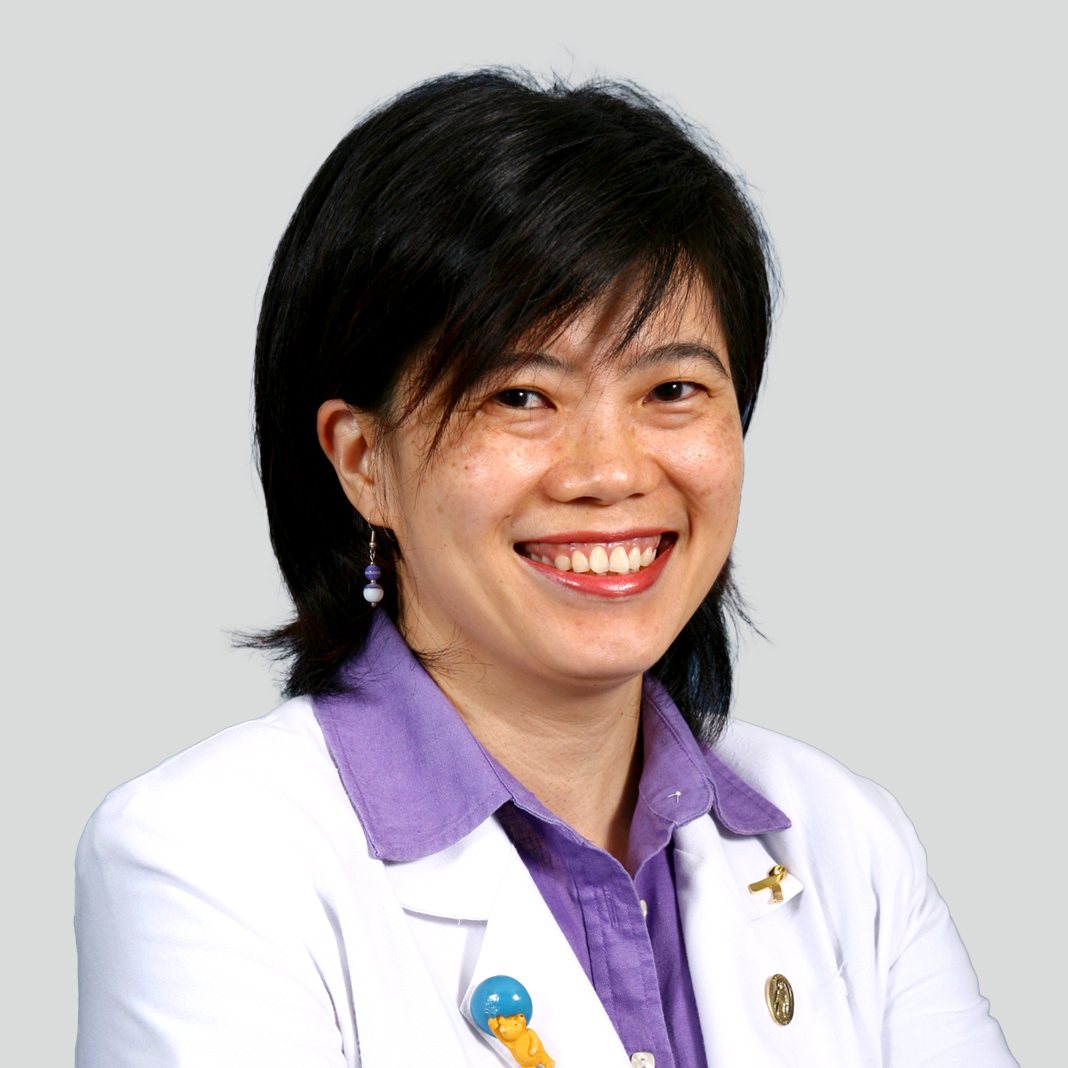
Adj. Assoc Professor Chan Mei Yoke
Senior Consultant in Paediatric Haematology/Oncology
Associate Professor Chan Mei Yoke MBBS, MMed (Paeds), MRCP, FRCPCH, MBE graduated from the National University of Singapore with a Bachelor of Medicine and Bachelor of Surgery. She trained in Paediatrics in Singapore and subspecialised in Paediatric Haematology/Oncology in Royal Marsden Hospital and Great Ormond Street Hospital in London, United Kingdom. She has an interest in Paediatric Palliative Care and helped set up a comprehensive paediatric palliative care service in KK Women’s and Children’s Hospital (KKH) in Singapore in 2004. She also has a keen interest in medical ethics due to the nature of her work and obtained a Masters in Bioethics from Harvard University, USA in 2022.
She is currently a Senior Consultant in Paediatric Haematology/Oncology and is the Chair of the Hospital Clinical Ethics Committee in KKH.
Moderator

Emeritus Professor Roy Joseph
Emeritus Consultant, Department of Neonatology, NUH
Director, Paediatric Ethics Programme @ CBmE
Clinical Ethics, Neonatology and Paediatrics is the sphere of the experience and expertise of Emeritus Professor Roy Joseph. At the Centre for Biomedical Ethics, he directs the newly established Paediatric Ethics Programme.
Dr Roy is Emeritus Consultant in the Department of Neonatology, National University Hospital and chairs the Paediatric Ethics and Advocacy Center in the Department of Paediatrics. Roy also chairs the National Medical Ethics Committee, the Health Ethics Capability Committee and the Institutional Review Board (HBR) at the Singapore Institute of Technology. He is a member of the Bioethics Advisory Committee.
His current research interests are in harnessing technology for improving education in ethics and professionalism and understanding the local empirical basis of Ethical End of life Care and Clinical Innovation. Past research activities aimed at improving medical education, preventing mental and developmental retardation through providing a safe transition into the extrauterine environment and in universal newborn screening for selected congenital conditions.
Contact
For any query, please email to Karen Teo (medtysk@nus.edu.sg)
CME Points
Non-core CME point is pending approval for doctors.
CPE point is pending approval for nurses and pharmacists.