
- Home
- Education
- Continuing Education & Training
- Foundations in Research Ethics (FIRE)
FIRE is organized by CENTRES
Overview
Foundations in Research Ethics (FIRE) is a fully online, self-paced course developed to provide a structured introduction to the core concepts and frameworks that shape ethical research in Singapore. In Singapore’s research landscape, ethics and the law are fundamental to responsible research and maintaining public trust. Through FIRE, participants will develop the knowledge and skills necessary to fulfil their ethical and legal responsibilities when conducting or supporting research.
Who Should Attend
FIRE is intended for:
• Members and administrators of Institutional Review Boards (IRBs)
• Researchers and investigators conducting human participant, clinical, translational, public health, or academic research in Singapore
• Research support staff involved in protocol development, consent processes, data governance, or regulatory submissions
• Graduate students and trainees who require foundational training before participating in human research
What you’ll learn
By the end of this course, you will be able to:
• Identify ethical issues that commonly arise in research involving human participants, human tissue, and health-related data
• Understand key research ethics principles, including respect for persons, beneficence, and justice
• Recognise which governance frameworks may apply to different kinds of research in Singapore
• Apply good practices relating to consent, confidentiality, data management, research integrity, inclusivity, and participant protection
• Use ethical reasoning to reflect on practical research scenarios and seek appropriate guidance where needed
Educators

A/Prof Barnaby Young
Associate Professor
TTSH

Dr Shalom Chalson
Research Fellow
CBmE, NUS

Assoc Prof Michael Dunn
Associate Professor
CBmE, NUS

Prof Jerry Menikoff
Professor
CBmE, NUS
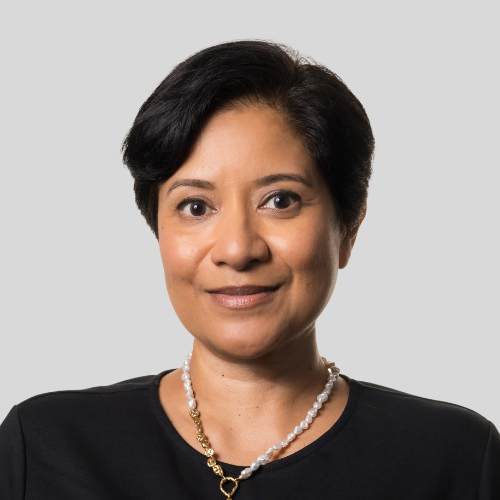
Dr Sumytra Menon
Deputy Director
CBmE, NUS

Dr Harisan Unais Nasir
Research Assistant Professor
CBmE, NUS

Asst Prof Owen Schaefer
Assistant Professor
CBmE, NUS

Mr Joel Seah
PhD Candidate
CBmE, NUS

Ms Mathavi Senguttuvan
Research Associate
CBmE, NUS
Course Structure
Through seven expertly curated units, FIRE provides a structured introduction to the ethical principles, governance frameworks, and practical issues that arise when conducting or reviewing research involving human participants in Singapore.
Each unit covers a key area of research ethics and consists of 2–4 short lectures, supporting resources, and quizzes to reinforce learning and track completion. Participants are encouraged to complete the units in sequence, though individual units may be revisited at any time for reference or refresher learning.
Flexible Learning
Participants may register for specific units that are most relevant to their research activities, areas of interest, or professional responsibilities.
Assessment & Credits
All participating doctors, nurses, and pharmacists are eligible for 1 CME/CPE point per unit.
Participants must watch all videos associated with each selected unit and score at least 75% on the corresponding online quiz.
Learning Platform & Materials
After successful registration, participants will receive an email within three working days containing detailed information on accessing the learning materials on the NUS Learning Management System and completing the requirements to earn CME/CPE points. Each topic includes a pre-recorded video lecture, compulsory online quiz, and/or curated reading materials to support deeper understanding and application.
Registration
Registration information will be communicated to participants through their respective organisations.
Seven Self-Paced Units
Unit A : Ethical Analysis
Educator: Dr Owen Schaefer
By the end of this unit, learners will be able to:
- Understand how historical research abuses and governance failures shaped contemporary research ethics and oversight
- Explain key ethical principles and how they apply in research (e.g., respect for persons, beneficence, justice)
- Conduct a basic risk-benefit assessment to evaluate research protocols
Unit B : Informed Consent
Educator: Dr Sumytra Menon
By the end of this unit, learners will be able to:
- Describe informed consent as a process (information, comprehension, voluntariness) and identify threats to valid consent
- Identify appropriate consent pathways and safeguards for special populations, including minors, adults lacking decision-making capacity, and deceased persons
- Apply Singapore’s legal requirements for consent in human biomedical research and clinical trials, including witnesses, waivers, and special populations
- Recognise common consent pitfalls (e.g., undue influence, therapeutic misconception) and implement practical safeguards
- Understand how to obtain consent through regulated remote or electronic consent processes
Unit C : Researchers' Responsibilities, Laws and Guidelines
Educators: Prof Jerry Menikoff, & Dr Sumytra Menon
By the end of this unit, learners will be able to:
- Explain the role of researchers and IRBs in promoting ethical research, including responsibilities relating to protocol design, recruitment, consent, data protection, incidental findings, and continuing review
- Summarise the purpose and relevance of major international ethics guidance, including the Declaration of Helsinki, Belmont Report, and CIOMS Guidelines
- Determine which governance framework(s) in Singapore may apply to a study, including HBRA; HTF; regulations pertaining to clinical trials, health products, and medical devices, HAS guidance, and institutional IRB/SOP requirements
- Identify key approvals and continuing duties for investigators, sponsors, institutions, tissue banks, and IRBs, including safety reporting, protocol adherence, confidentiality, and collaboration/cross-border arrangements
Unit D : Research Integrity and Data Management
Educators: Prof Jerry Menikoff & Dr Harisan Unais Nasir
By the end of this unit, learners will be able to:
- Apply good data-management and confidentiality practices across the research lifecycle
- Evaluate whether deception or incomplete disclosure may be ethically justified
- Distinguish fabrication, falsification, plagiarism, honest error, and questionable research practices
- Explain why research misconduct undermines participant protection and scientific value
- Recognise integrity risks in authorship, peer review, conflicts of interest, whistleblowing, institutional culture, study design, methodology, and dissemination of findings
Unit E: Inclusivity and Participation in Research
Educators: A/Prof Michael Dunn & Dr Shalom Chalson
By the end of this unit, learners will be able to:
- Explain why advocacy, diversity, equality, and inclusion are ethically relevant to conducting research
- Identify barriers that contribute to under-representation or exclusion of underserved populations
- Assess how advocacy and patient/public involvement may strengthen research design, recruitment, oversight, dissemination, and accountability
- Describe and adapt participatory approaches and democratic methods for conducting research
- Identify practical considerations for ethical engagement, remuneration, communication, privacy, training, and partnership boundaries
Unit F: Research with Particular Populations
Educator: Ms Mathavi Senguttuvan, CBmE
By the end of this unit, learners will be able to:
- Explain vulnerability as a context-sensitive condition, and distinguish varied conceptual and practical approaches to vulnerability in research
- Identify which participants may be vulnerable, and to what, in a specific study
- Apply normative justifications for additional protections
- Develop proportionate safeguards for particular persons, including minors, persons lacking decision-making capacity, pregnant persons, prisoners/institutionalised persons, and other persons from minority population groups susceptible to adverse outcomes from involvement in research
Unit G: Emerging Technologies and Developments
Educators: Prof Barnaby Young, Dr Sumytra Menon & Mr Joel Seah
By the end of this unit, learners will be able to:
- Identify ethical and governance issues raised in research by emerging technologies and contexts, including GenAI/LLMs, big data, healthy longevity medicine, genomic data, pandemics, telehealth, and digital therapeutics
- Apply core research-ethics principles to issues and risks specific to such research
- Assess how IRB review and researcher responsibilities should adapt in emerging and dynamic contexts and settings
- Recognise key risks and challenges pertaining to consent, privacy, bias and accountability when conducting data-intensive and technologically enhanced research
- Apply practical review questions for IRB/REC assessment of protocols involving such research, including disclosure of GenAI use, governance of secondary data, management of genomic/familial findings, agile but rigorous review in pandemics, and oversight of telehealth/wearable/digital-therapeutic research
Contact Us
Have a question about the course? Please get in touch with any of the contact persons below. We will be happy to assist.
For study-specific or institution-specific questions, please also consult your institution’s IRB, research office, or relevant regulatory guidance, as applicable.