From pixels to practice: Using Japanese RPGs in paediatric orthopaedics education for students

Submitted: 25 November 2024
Accepted: 18 November 2025
Published online: 7 July, TAPS 2026, 11(3), 8-16
https://doi.org/10.29060/TAPS.2026-11-3/OA3575
Pasin Tangadulrat, Jongdee Bawornpatarananon & Nisalak Upho
Department of Orthopedics, Faculty of Medicine, Prince of Songkla University, Thailand
Abstract
Introduction: Game-based learning (GBL) is a well-known method for enhanced learning. However, literature suggests varying engagement and outcomes with various types of GBL. Therefore, we aimed to evaluate the effectiveness of a Japanese-style role-playing game (JRPG) on improving the learning of fifth-year medical students.
Methods: We conducted a mixed method explanatory study using a quasi-experimental study with a historical control as the quantitative component. A JRPG was introduced to fifth-year medical students in 2023 and compared with the 2022 cohort using MCQ and MEQ scores. Student experiences were assessed through a Likert-scale questionnaire and focus group interviews analysed by thematic analysis.
Results: We recruited 57 participants. The demographic data, and overall test scores of the participants did not differ from those of their counterparts in the previous year. The mean score for the paediatric orthopaedics MCQ (five questions) test did not differ between the two groups (3.2 ± 0.9 for the 2023 class vs. 3.5 ± 0.8 for the 2022 class, p = 0.477). The 2023 class had slightly higher mean paediatric orthopaedics MEQ test scores than did the 2022 class (66.8 ± 8.8 vs. 62.8 ± 8.7, p = 0.06), with no statistically significant difference. Most students reported good experiences while playing the game, mainly saying that it was fun and interesting and helped motivate them to study more about the subject.
Conclusion: While JRPG did not significantly affect student performance, it is one of the approach that can provide good engagement, motivation, and learning experiences.
Keywords: Game-based Learning, Japanese-style Role-playing Game, Medical Education, Paediatric Orthopaedics, Medical Learning, Academic Knowledge
Practice Highlights
- Game-based learning can enhance student engagement and motivation.
- JRPGs provide a novel and interesting teaching method
- Game genres might help simulate students’ engagement
- Students appreciate the teacher’s effort, leading to better engagement
- Further evaluation is needed to assess the impact on academic performance.
I. INTRODUCTION
Medical education is rapidly evolving with technology playing a significant role in its development. Game-based learning (GBL) has emerged as a promising pedagogical approach within medical education, demonstrating its potential to improve student engagement and learning (Pesare et al., 2016; Van Gaalen et al., 2021; Xu et al., 2023). Various types of GBL have shown promising results, including escape rooms, flashcard applications, and virtual reality-based games (Kakos et al., 2025; Mansoory et al., 2021; Mishall et al., 2023). However, many of the developed games in medical education often lean towards virtual simulations rather than immersive, familiar gaming experiences. For example, the “EMERGE” game is a simulation of the emergency room experience (Chon et al., 2019). “PediatricSim” simulated emergency room management for paediatric patients (Gerard et al., 2018). “Hygie” simulated a general practitioner who needs to treat a variety of patients (Jaunay et al., 2019), and “NEOGAMES,” stimulated neonatal resuscitation (Hu et al., 2021). Moreover, gamification, another proposed teaching method for incorporating gaming elements into the learning environment, is not considered a real game application method (Pesare et al., 2016).
While these GBL approaches are valuable, their focus is often on applying universal game mechanics (gamification) or simulating clinical tasks. Most GBL research does not explore whether a format similar to recreational gaming from a different context can create a more engaging educational experience than functionally designed educational games. To address this gap, we aimed to evaluate a GBL tool developed in the format of a Japanese-style role-playing game (JRPG). A JRPG is a subgenre of role-playing video games characterised by animated pixelated characters, narrative-driven gameplay, often featuring character progression, turn-based combat, and a feedback or rewards system. Some of these features have been proven effective for medical education (Aster et al., 2024; Jackson et al., 2018).
Additionally, this genre holds significant cultural relevance and popularity within our study population in Thailand (Allcorrect Group, 2023; Toyoshima, 2011; Chen, 2022). Therefore, we considered the JRPG format a compelling choice due to its appropriate game mechanics and familiarity. We hypothesised that it would provide a good learning experience and engagement, while also resonating well culturally with our target medical student population.
II. METHODS
A. Game Development and Contents
The game was created using “RPG Maker MZ version 1.6.1”. The game content can be categorised into two parts. The first part is the main story, involving a fifth-year medical student who is accidentally transported to another world and tasked with completing an assignment. During his journey, he meets new allies, helps others, and realises his dream. The second part is the knowledge integration, in which the protagonist must answer paediatric orthopaedics-related questions to pass the story. These questions are presented with relevant clinical case scenarios, together with radiographic findings. Players are asked to diagnose and manage common paediatric traumas and conditions, with questions formatted as multiple-choice questions (MCQ). After answering this question, immediate feedback and a short review of the critical concepts of the topic were provided. At the end of the game, the players are sent to the recollection room, where they can review every question in the game and be provided with the correct answers with explanations. The game features approximately 20 paediatric orthopaedics-related questions covering common paediatric injury such as supracondylar fractures, lateral condyle fractures, femur fracture, and common paediatric orthopaedic conditions such as developmental hip dysplasia, Blount’s disease, and clubfeet. The average gameplay duration was estimated to be around 1 hour, though this varied among individual students. The game is available at https://stonicxx.github.io/PedOrthoEnglish/ (Figure 1).
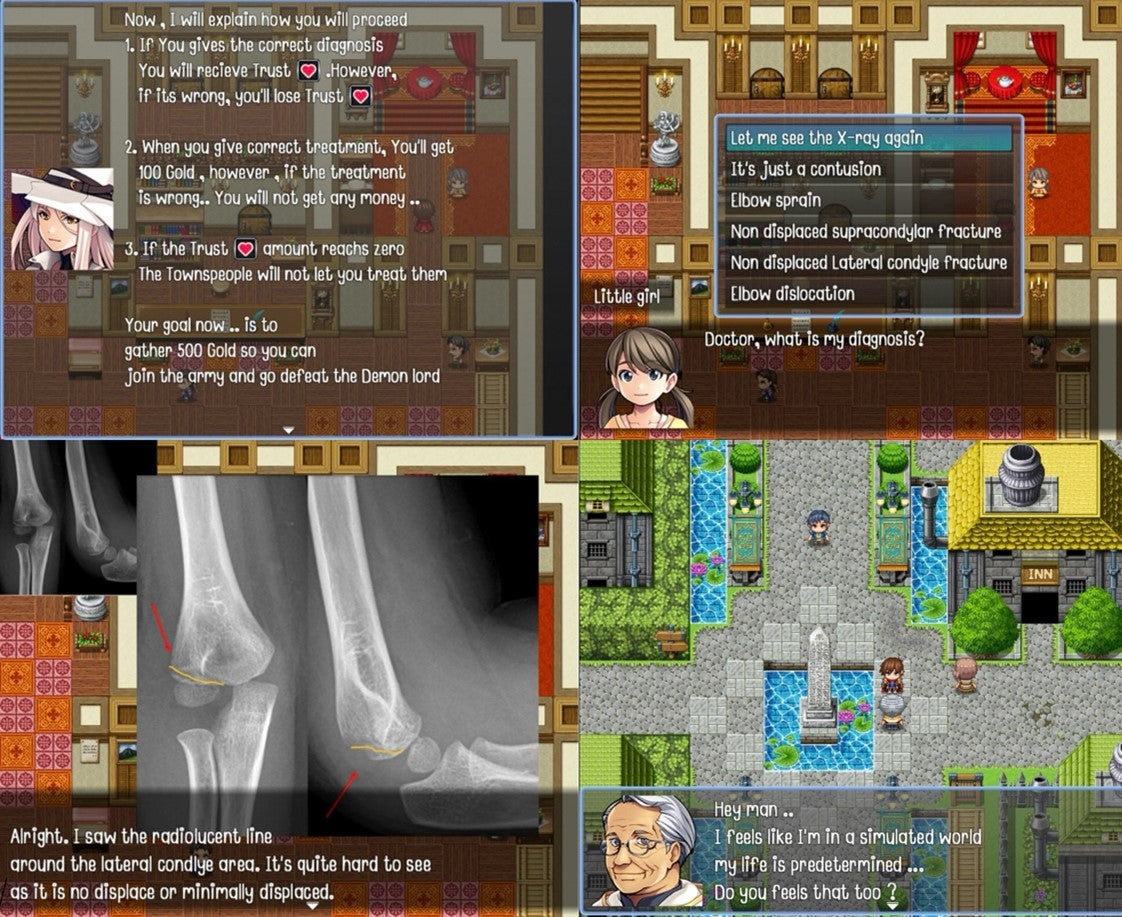
Figure 1. Various screenshots from the game, including in-game explanation of game mechanics (upper left), a multiple-choice style question (upper right), a critical learning point explanation (lower left), and part of the game story with humorous and engaging dialogue (lower right).
B. Participants
We recruited fifth-year medical students for the academic year 2023. At the start of the fifth week of the orthopaedics rotation, a research assistant who was independent of the course instruction, game development, and student assessment briefed the students about the developed GBL. For the participation details, clarification was made that
- Participation is not mandatory
- Participants could stop playing at any time
- The final game score would not be used for grading
- It is an additional activity that should be done in free time and will take about 30-60 minutes to complete. It can be accomplished in a series of short, multiple sessions.
- As a positive reinforcement, participants who scored the highest in the game will receive small rewards.
Informed consent was then obtained from all recruited subjects. A link to the game was then shared with those interested in the programme. During paediatric orthopaedics discussion classes, the instructor (P.T.) discussed common paediatric traumas and diseases. When the discussion involved cases presented in the game, the instructor reverted to the game and reviewed the answers. At the end of the class, three participants with the highest scores received a small gift as positive reinforcement.
C. Outcomes Measure and Data Analysis
1) Quantitative Outcomes:
We recorded participants’ demographic data, including age, sex, and grade point average (GPA). The MCQ, MEQ, and oral examination scores in both the general and paediatric orthopaedics rotations were compared.. We compared the demographic data and test scores of the participants and those of the historical control groups, which consisted of 50 students from the previous academic year’s (2022) rotations. Continuous data were compared using the t-test for normally distributed data. The Wilcoxon rank-sum test was used for non-normally distributed data. Categorical data were compared using the chi-squared test. All statistical analyses were performed using R version 4.3.2. (R Core Team, 2023, Vienna, Austria). We developed a questionnaire to evaluate the experience and satisfaction with the game. It included nine questions that participants will answer using a Likert scale (Strongly Disagree, Disagree, Neutral, Agree, and Strongly Agree). Face and content validity were discussed among the authors, including readability, clarity, comprehensiveness, and agreement on the questions to be retained in the final questionnaire. The questionnaire was then tested with one group of 20 medical students who volunteered to play-test the game and answer the questionnaire. The Cronbach’s alpha result is 0.89, indicating good internal consistency.
2) Qualitative Outcomes:
At the end of the 5-week rotation, focus group semi-structured interviews were conducted by an educational expert, lasting approximately 10 – 15 minutes. The interviewer (J.B.) holds an MSc in Education and has over 10 years of experience as an undergraduate medical education coordinator for the department. The questions were as follows:
- Are there any benefits of using GBL besides the regular curriculum?
- What do you like about this GBL style?
- Are there any aspects you do not like about the game and are there any suggestions for improvement?
The interviewer recorded and transcribed the interviews. To mitigate researcher bias in coding themes, two independent researchers (P.T. and N.U.) initially read the transcribed documents and highlighted key themes independently. Discrepancies were discussed and resolved through consensus, with a third researcher (J.B.) consulted in cases of persistent disagreement. The collected themes were then discussed and combined into appropriate overarching themes.
III. RESULTS
Fifty-seven fifth-year medical students participated in the GBL between January and June 2023. No differences in age, sex proportion, and GPA were observed between the participants and the historical controls (Table 1). The overall MCQ test score did not differ between the two groups (67.4 ± 8.0 for the 2022 class vs. 66.4 ± 7.7 for the 2023 class, p = 0.358). Regarding the paediatric orthopaedics MCQ part, which consists of 5 questions, the mean score did not differ between the two groups (3.5 ± 0.8 for the 2022 class vs. 3.2 ± 0.9 for the 2023 class, p = 0.477). For clear visualisation, the score was scaled to 100, resulting in 69.6 ± 16 for the 2022 class and 64.9 ± 18 for the 2023 class (Figure 2).
The overall MEQ test score, which included all subjects in orthopaedics rotation, did not differ significantly between the two groups (65.8 ± 7.1 for the 2022 class vs. 66.8 ± 4.7 for the 2023 class, p = 0.391). However, when comparing just the paediatric orthopaedics MEQ part, the mean score of the 2023 class was slightly higher than that of the 2022 class. Still, the difference was not statistically significant (62.8 ± 8.7 for the 2022 class vs. 66.8 ± 8.8 for the 2023 class, p = 0.06). The overall oral examination scores did not differ significantly between the two groups (Figure 2).
|
|
2023 Class (n = 57) |
2022 Class (n = 50) |
P. value |
|
Age (median, range) |
23 (22–26) |
23 (22–27) |
0.444 |
|
Male (n,%) |
31 (54.4%) |
29 (58.0 %) |
0.857 |
|
Grade Point Average (Mean±SD) |
3.46±0.30 |
3.41±0.33 |
0.359 |
Table 1. Medical students’ demographic data
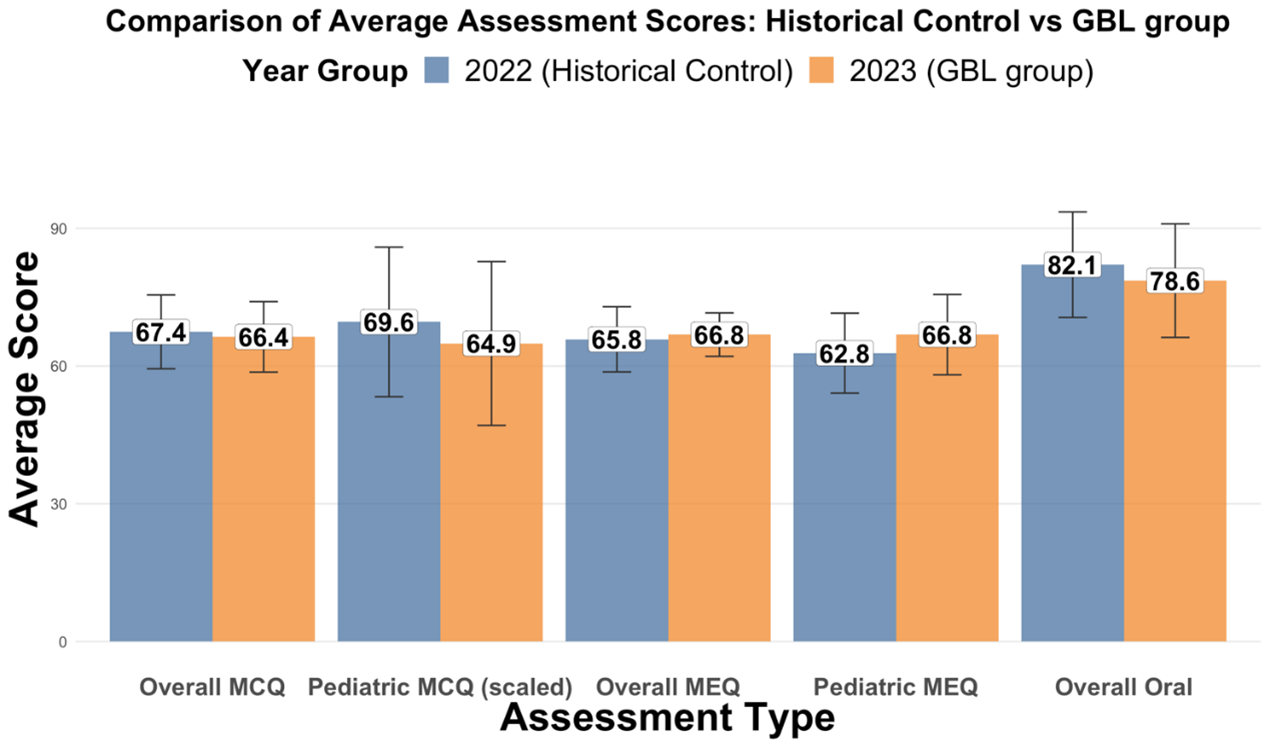
Figure 2. Comparison of various test score between the historical control group and GBL group. The paediatric MCQ score was scaled to 100 to better visualise the difference.
Most students strongly agreed or agreed with a positive statement regarding the game (Table 2). The proportion of students who answered “neutral” was higher than 10% for two of the statements: “I feel that the gameplay is easily understood and easy to play” and “The time taken to finish the game was appropriate”.
|
Questions (N = 57) |
Strongly Agree (n,%) |
Agree (n,%) |
Neutral, Disagree & Strongly Disagree (n,%) |
|
Q1 I am having fun playing this game |
34 (59.6) |
19 (33.3) |
4 (7.1) |
|
Q2 I feel challenged and want to finish the game |
40 (70.2) |
12 (21.1) |
5 (8.7) |
|
Q3 I feel that the gameplay is easily understood and easy to play |
36 (63.2) |
15 (26.3) |
6 (10.5) |
|
Q4 The knowledge presented in the game makes me understand the topic more |
39 (68.4) |
15 (26.3) |
3 (5.3) |
|
Q5 Playing this game motivated me to actively pursue more knowledge about the topic |
37 (64.9) |
19 (33.3) |
1 (1.8) |
|
Q6 The case scenarios in the game and questions that were asked are appropriate for my level of knowledge |
29 (50.9) |
25 (43.8) |
3 (5.3%) |
|
Q7 The knowledge I gained from the game can be used in real practice |
39 (68.4) |
18 (31.6) |
0 (0%) |
|
Q8 The time it took to finish the game was appropriate |
29 (50.9) |
17 (29.8) |
11 (19.3) |
|
Q9 I would recommend this game to fellow medical students |
34 (59.7) |
19 (33.3) |
4 (7.0) |
Table 2. Satisfaction of the students participating in game-based learning
A total of 57 fifth-year medical students participated in the GBL , and all were included in the qualitative analysis through focus group interviews. These interviews were conducted across 7 rotations, with 8-9 students participating in each session. Using thematic analysis, we coded the responses into two themes, along with their supporting subthemes and corresponding responses (Table 3).
|
Theme |
Subtheme |
Illustrative Student Quotes |
|
GBL can stimulate students’ learning experience and engagement |
Novel and interesting teaching method |
– I feel it is like a switch. I know I need to study, but sometimes I feel tired and do not want to open a book. Nevertheless, the game was interesting. Therefore, I decided to play the game. After playing it, it piqued my interest in studying more, and now, I intend to read more about the subject. |
|
Familiarity with the game style |
– It reminded me of a game called Ragnarok, which I used to play a lot when I was in middle school. I did not think that similar educational games could be created.
– The looks of the game were surprising to me, because I used to play a game like this. The in-game system and progression were also interesting to me, because I want to know if the character progression would be similar to what I had experienced in this game genre. |
|
|
Teacher’s efforts and student reciprocity |
– Actually, I am not that familiar with JRPG. However, I know that making this kind of thing probably requires significant time and effort, so I feel I will give it a try for the teacher’s sake.
– I feel that the knowledge inside the game is probably really important because the teacher spent a lot of time making it. I don’t want to waste the teacher’s effort.
|
|
|
Theme 2: Technology-based GBL models should be optimised for the user experience |
Game length and pacing |
– I feel that the time it took to finish the game is too long. I was not interested in the story, but the part where I got to treat patients was interesting. It would be good if there were a skip button for the story. |
|
Technical issues |
– I did not finish the game in one go and wanted to pause and save. However, the saved file was gone, and I had to restart from the beginning, which was very frustrating. |
Table 3. Thematic analysis results, including their supporting subthemes and responses
IV. DISCUSSION
Our study reported results obtained from using a distinct type of JPRG with a case-based study. We found that most students had positive experiences using the game in addition to the current curriculum. However, this did not lead to significantly better test scores.
GBL is an interesting topic in medical education. Many studies have demonstrated that GBL can improve the engagement and learning experiences of medical students (Al-Mugheed et al., 2022; Boeker et al., 2013; Gorbanev et al., 2018). We found that the participants enjoyed playing the game and felt engaged with the subjects. The reasons for feeling engaged were attributed to many factors. First, the novelty of the game likely stimulated curiosity and intrinsic motivation, which are critical for sustained engagement in learning. This was directly evidenced in the interview results, where students expressed excitement for a new, unconventional learning method. In addition, we incorporated many recommended mechanics known to enhance GBL effectiveness, such as using a familiar game style, feedback, and competition via leaderboard (Pitt et al., 2015).
A particularly interesting finding is that familiarity with the game type may have an effect on participants’ engagement. For many students in Thailand, the JRPG format resonated due to their extensive exposure to video games from a young age (Jirasatmathakul & Poovorawan, 2000). A study of the Canadian student population also reveals that students with an East Asian background have significantly more positive experiences with GBL than other cultural groups, which may be attributed to their greater exposure to and familiarity with gaming (Jossan et al., 2021). Game types might also play a role in stimulating engagement. Role-playing games have been shown to have high engagement in younger players and persist throughout young adulthood (Ream et al., 2013). This highlights how leveraging existing gaming culture and game types could help stimulate interest in academic learning.
Lastly, we found an interesting insight regarding the teacher’s perceived effort and student reciprocity. In Asian cultures, a deep-rooted sense of gratitude towards teachers can influence student behaviour. Some students expressed feeling motivated to engage with the game as a reciprocal gesture, appreciating the significant effort involved in its development, even if the game style wasn’t initially their preference. This suggests that the perceived value and investment from the educator, beyond the game’s mechanics, can profoundly enhance student motivation and participation. However, it is crucial to acknowledge that this cultural concept may not apply in other cultural contexts, limiting the generalisability of this factor.
GBL implementations, especially those utilising new or unique technologies, must be carefully optimised for user experience. As shown in our study, some students encountered technical problems, such as issues saving game progress when playing on an iPad. While these problems were eventually addressed, they undeniably disrupted the learning experience for affected students. These technical aspects, alongside other user experience considerations, are reflected in the higher proportion of “Neutral” answers observed for questions regarding gameplay ease and the appropriateness of game length, with some students expressing that the game felt too long, and others struggling to fully grasp the gameplay mechanics.
To enhance future participant experiences, incorporating features such as a skipping or fast-forward system for narrative sections, and providing more detailed orientation on game progression and mechanics, would be beneficial. Furthermore, as medical education integrates newer technologies like virtual reality and advanced high-tech gear for educational games, it is critical that game developers thoroughly check and rigorously play-test the game prior to student deployment. This approach, coupled with immediate support for technical issues, is crucial to prevent disruptions and ensure an optimal learning environment.
Our study reported positive student experiences with a JRPG-style game, yet this did not translate into statistically significant improvements in examination scores. A slight positive trend was, however, observed in the paediatric MEQ scores. Several factors likely explain the lack of a statistically significant effect on test scores. First, our quasi-experimental design used a historical control group and assessed knowledge at the end of the curriculum, rather than in a pre- and post-test fashion. This design introduces potential confounding variables, such as individual student study habits and knowledge retention over the rotation, which may obscure the direct impact of the intervention. A potential recall effect from the in-game questions may have influenced performance, but it is difficult to isolate this from routine self-study.
Second, paediatric orthopaedics questions constituted only about 10% of the total examination content. With such a low weighting, any genuine knowledge gains from the game would be difficult to detect statistically. Third, as the game was an optional, adjunct activity, the “dosage” of the intervention varied significantly among students. This inconsistency in exposure makes it challenging to measure a uniform effect across the cohort. Future implementations could explore mandatory integration to ensure a consistent level of engagement. Our finding that a GBL tool did not produce significantly better test scores aligns with other studies in the field, which have also found that game-based interventions may not outperform traditional teaching methods like didactic lectures (Trevino et al., 2016). Lastly, as our qualitative data revealed, student motivation and familiarity with the JRPG style varied, likely contributing to a wider variance in learning outcomes and diluting the overall mean effect on test scores.
Although overall scores did not significantly improve, the slight increase in MEQ scores suggests a potential alignment between the game’s design and the cognitive skills assessed by that format. The game’s integrated case-based scenarios were designed to promote higher-order cognitive skills such as ‘Application’ and ‘Analysis’ within Bloom’s Taxonomy. These skills are more effectively evaluated by MEQs, which require deeper reasoning and synthesis of information, than by MCQs, which often assess knowledge recall. The trend in MEQ scores may therefore indicate that the GBL was beginning to foster the intended clinical reasoning skills, even if the effect was not powerful enough to be statistically significant.
Our findings also signify that the efficacy of a GBL tool can be deeply influenced by cultural context. The selection of the JRPG genre was a deliberate attempt to leverage its cultural relevance and nostalgic value in Thailand, where the population has a high degree of exposure to this video game genre from a young age (Jirasatmathakul & Poovorawan, 2000). However, this cultural specificity has important implications for generalisability. While familiarity may have boosted engagement for many, it may also have acted as a barrier for those unaccustomed to this game genre.
We observed that some students were motivated by a sense of reciprocity towards the instructor’s effort. In many Asian cultures, deep-seated cultural values of high power distance and collectivism shape a hierarchical teacher-student relationship. This structure, in turn, could frame the teacher’s effort as a form of benevolence that induces a specific form of gratitude, one defined by indebtedness and obligation. This, in turn, motivates a response through the fulfillment of one’s role as a diligent student. Conversely, in Western contexts, where egalitarianism and individualism are more pronounced, this specific motivational response may be less robust (Allen et al., 2024; Chen, 2023; Kee et al., 2008).
A. Limitations
First, the controls were fifth-year medical students in the previous academic year, and their selection might have influenced the test scores. However, it was deemed unethical to include a control group that did not have the chance to experience GBL, which could potentially improve their learning experience. Choosing the historical control group is reasonable because the circumstances regarding the overall curriculum and tests were similar in both academic years. This similarity was evidenced by the absence of significant differences in the overall test scores and demographic data of the students between the two groups. However, we acknowledge that subtle differences in teaching quality or emphasis on specific topics by instructors, and different in student’s motivation between the academic years (2022 and 2023) could not be entirely ruled out as potential confounding variables.
The educational expert’s role as an undergraduate coordinator for the department may influence the responses of participants in the interviews, as students may attempt to provide more positive responses due to the authoritative role of the interviewer. In addition, from the interviews, we noted that some students were more excited or were readily engaged in the game than others, potentially because of their familiarity with this type of game. Therefore, the efficacy of game formats may be culture specific. For example, students who have previously engaged in similar gaming styles, such as those from Southeast Asia, may find the game more appealing. Conversely, students who lack experience with this game type may not demonstrate the same enthusiasm level, therefore, reduce the generalisability of the method beyond Thailand.
Building on these limitations, future research should adopt more rigorous designs. Longitudinal studies would be able to assess long-term knowledge retention and the sustained impact of GBL on clinical reasoning skills. Pre- and post-test designs would also provide a more direct measure of knowledge acquisition attributable to the game, mitigating self-study or recall effects. Comparing the JRPG group with other active intervention group could help isolate its unique benefits.
V. CONCLUSION
In conclusion, JRPG-style game-based learning is one approach that can engage and motivate student learning experiences. Game types and styles may help stimulate learners’ engagement due to familiarity and experience. Lastly, the test score did not show significant improvement; therefore, future evaluations should prioritise rigorous longitudinal or pre- and post-test designs to better assess GBL’s impact on academic performance and clinical reasoning.
Ethical Approval
This study was approved by the Ethics Committee, Faculty of Medicine, Prince of Songkla University (REC-4850).
Data Availability
The data that support the findings of this study are available on request from the corresponding author. The data are not publicly available due to ethical concerns.
Funding
There is no funding for this research.
Declaration of Interest
The authors report there are no competing interests to declare.
References
Al-Mugheed, K., Bayraktar, N., Al-Bsheish, M., AlSyouf, A., Aldhmadi, B. K., Jarrar, M., & Alkhazali, M. (2022). Effectiveness of game-based virtual reality phone application and online education on knowledge, attitude and compliance of standard precautions among nursing students. PLoS One, 17(11), Article e0275130. https://doi.org/10.1371/journal.pone.0275130
Allcorrect Group. (2023, April 25). The gaming market in Thailand. https://allcorrectgames.com/insights/the-gaming-market-in-thailand/
Allen, K-A., Grove, C., May, F. S., Gamble, N., Lai, R., & Saunders, J. M. (2024). Expressions of gratitude in education: An analysis of the #ThankYourTeacher campaign. International Journal for Educational Integrity, 20, 13. https://doi.org/10.1007/s40979-024-00159-2
Aster, A., Laupichler, M. C., Zimmer, S., Zeman, F. D., Schaller, S. E. H. Z., Wirries, A., Strübing, P. G. H. M., König, S., Fischer, M. R., & Weigl, M. (2024). Game design elements of serious games in the education of medical and healthcare professions: A mixed-methods systematic review of underlying theories and teaching effectiveness. Advances in Health Sciences Education, 29, 1825-1848. https://doi.org/10.1007/s10459-024-10327-1
Boeker, M., Andel, P., Vach, W., & Frankenschmidt, A. (2013). Game-based e-learning is more effective than a conventional instructional method: A randomized controlled trial with third-year medical students. PLoS One, 8(12), Article e82328. https://doi.org/10.1371/journal.pone.0082328
Chen, L. (2022). The rise of the East Asian gaming industry: A value-added chain among the East Asian game companies during 2000-2010. Global Media and China, 7(1), 24-42. https://doi.org/10.1177/20594364221074422
Chen, S. W. (2023). Learning motivations and effort beliefs in Confucian cultural context: A dual-mode theoretical framework of achievement goal. Frontiers in Psychology, 14, Article 1058456. https://doi.org/10.3389/fpsyg.2023.1058456
Chon, S. H., Timmermann, F., Dratsch, T., Schuelper, N., Plum, P., Berlth, F., Datta, R. R., Schramm, C., Haneder, S., Späth, M. R., Dübbers, M., Kleinert, J., Raupach, T., Bruns, C., & Kleinert, R. (2019). Serious games in surgical medical education: A virtual emergency department as a tool for teaching clinical reasoning to medical students. JMIR Serious Games, 7(1), Article e13028. https://doi.org/10.2196/13028
Gerard, J. M., Scalzo, A. J., Borgman, M. A., Watson, C. M., Byrnes, C. E., Chang, T. P., Auerbach, M., Kessler, D. O., Feldman, B. L., Payne, B. S., Nibras, S., Chokshi, R. K., & Lopreiato, J. O. (2018). Validity evidence for a serious game to assess performance on critical pediatric emergency medicine scenarios. Simulation in Healthcare: The Journal of the Society for Simulation in Healthcare, 13(3), 168-180. https://doi.org/10.1097/sih.0000000000000283
Gorbanev, I., Agudelo-Londoño, S., González, R. A., Cortes, A., Pomares, A., Delgadillo, V., Yepes, F. J., & Muñoz, Ó. (2018). A systematic review of serious games in medical education: Quality of evidence and pedagogical strategy. Medical Education Online, 23(1), Article 1438718. https://doi.org/10.1080/10872981.2018.1438718
Hu, L., Zhang, L., Yin, R., Li, Z., Shen, J., Tan, H., Wu, J., & Zhou, W. (2021). NEOGAMES: A serious computer game that improves long-term knowledge retention of neonatal resuscitation in undergraduate medical students. Frontiers in Pediatrics, 9, Article 645776. https://doi.org/10.3389/fped.2021.645776
Jackson, L., O’Mara, J., Moss, J., & Jackson, A. (2018). A critical review of the effectiveness of narrative-driven digital educational games. International Journal of Game-Based Learning, 8(4), 32-49. https://doi.org/10.4018/IJGBL.2018100103
Jaunay, L. B., Zerr, P., Peguin, L., Renouard, L., Ivanoff, A. S., Picard, H., Griffith, J., Chassany, O., & Duracinsky, M. (2019). Development and evaluation of a new serious game for continuing medical education of general practitioners (Hygie): Double-blinded randomized controlled trial. Journal of Medical Internet Research, 21(11), Article e12669. https://doi.org/10.2196/12669
Jirasatmathakul, P., & Poovorawan, Y. (2000). Prevalence of video games among Thai children: Impact evaluation. Journal of the Medical Association of Thailand, 83(12), 1509-1513. http://www.jmatonline.com/PDF/83-PB-1509-1513.pdf
Jossan, K. S., Gauthier, A., & Jenkinson, J. (2021). Cultural implications in the acceptability of game-based learning. Computers & Education, 174, Article 104305. https://doi.org/10.1016/j.compedu.2021.104305
Kakos, N. J., Lufler, R. S., Cyr, B., Zwirner, C., Hurley, E., Heinrich, C., & Wilson, A. B. (2025). Unlocking knowledge: A meta-analysis assessing the efficacy of educational escape rooms in health sciences education. Advances in Health Sciences Education: Theory and Practice, 30(3), 837-857. https://doi.org/10.1007/s10459-024-10373-9
Kee, Y. H., Tsai, Y. M., & Chen, L. H. (2008). Relationships between being traditional and sense of gratitude among Taiwanese high school athletes. Psychological Reports, 102(3), 920-926. https://doi.org/10.2466/pr0.102.3.920-926
Mansoory, M. S., Khazaei, M. R., Azizi, S. M., & Niromand, E. (2021). Comparison of the effectiveness of lecture instruction and virtual reality-based serious gaming instruction on the medical students’ learning outcome about approach to coma. BMC Medical Education, 21(1), Article 347. https://doi.org/10.1186/s12909-021-02771-z
Mishall, P. L., Burton, W., & Risley, M. (2023). Flashcards: The preferred online game-based study tool self-selected by students to review medical histology image content. Advances in Experimental Medicine and Biology, 1406, 209-224. https://doi.org/10.1007/978-3-031-26462-7_10
Pesare, E., Roselli, T., Corriero, N., & Rossano, V. (2016). Game-based learning and gamification to promote engagement and motivation in medical learning contexts. Smart Learning Environments, 3(1), Article 5. https://doi.org/10.1186/s40561-016-0028-0
Pitt, M. B., Borman-Shoap, E. C., & Eppich, W. J. (2015). Twelve tips for maximizing the effectiveness of game-based learning. Medical Teacher, 37(11), 1013-1017. https://doi.org/10.3109/0142159x.2015.1020289
Ream, G. L., Elliott, L. C., & Dunlap, E. (2013). A genre-specific investigation of video game engagement and problem play in the early life course. Journal of Addiction Research & Therapy, 6, Article 8. https://doi.org/10.4172/2155-6105.S6-008
Toyoshima, N. (2011). Consuming Japan: The consumption of Japanese cultural products in Thailand [Doctoral dissertation]. Waseda University.
Trevino, R., Majcher, C., Rabin, J., Kent, T., Maki, Y., & Wingert, T. (2016). The effectiveness of an educational game for teaching optometry students basic and applied science. PLoS One, 11(5), Article e0156389. https://doi.org/10.1371/journal.pone.0156389
Van Gaalen, A. E. J., Jaarsma, A. D. C., & Georgiadis, J. R. (2021). Medical students’ perceptions of play and learning: Qualitative study with focus groups and thematic analysis. JMIR Serious Games, 9(3), Article e25637. https://doi.org/10.2196/25637
Xu, M., Luo, Y., Zhang, Y., Xia, R., Qian, H., & Zou, X. (2023). Game-based learning in medical education. Frontiers in Public Health, 11, Article 1113682. https://doi.org/10.3389/fpubh.2023.1113682
*Nisalak Upho
15 Kanchanavanit Road, Hat Yai,
Songkhla, 90110
Email: nisalak20@gmail.com
Announcements
- Best Reviewer Awards 2025
TAPS would like to express gratitude and thanks to an extraordinary group of reviewers who are awarded the Best Reviewer Awards for 2025.
Refer here for the list of recipients. - Most Accessed Article 2025
The Most Accessed Article of 2025 goes to Analyses of self-care agency and mindset: A pilot study on Malaysian undergraduate medical students.
Congratulations, Dr Reshma Mohamed Ansari and co-authors! - Best Article Award 2025
The Best Article Award of 2025 goes to From disparity to inclusivity: Narrative review of strategies in medical education to bridge gender inequality.
Congratulations, Dr Han Ting Jillian Yeo and co-authors! - Best Reviewer Awards 2024
TAPS would like to express gratitude and thanks to an extraordinary group of reviewers who are awarded the Best Reviewer Awards for 2024.
Refer here for the list of recipients. - Most Accessed Article 2024
The Most Accessed Article of 2024 goes to Persons with Disabilities (PWD) as patient educators: Effects on medical student attitudes.
Congratulations, Dr Vivien Lee and co-authors! - Best Article Award 2024
The Best Article Award of 2024 goes to Achieving Competency for Year 1 Doctors in Singapore: Comparing Night Float or Traditional Call.
Congratulations, Dr Tan Mae Yue and co-authors! - Best Reviewer Awards 2023
TAPS would like to express gratitude and thanks to an extraordinary group of reviewers who are awarded the Best Reviewer Awards for 2023.
Refer here for the list of recipients. - Most Accessed Article 2023
The Most Accessed Article of 2023 goes to Small, sustainable, steps to success as a scholar in Health Professions Education – Micro (macro and meta) matters.
Congratulations, A/Prof Goh Poh-Sun & Dr Elisabeth Schlegel! - Best Article Award 2023
The Best Article Award of 2023 goes to Increasing the value of Community-Based Education through Interprofessional Education.
Congratulations, Dr Tri Nur Kristina and co-authors! - Best Reviewer Awards 2022
TAPS would like to express gratitude and thanks to an extraordinary group of reviewers who are awarded the Best Reviewer Awards for 2022.
Refer here for the list of recipients. - Most Accessed Article 2022
The Most Accessed Article of 2022 goes to An urgent need to teach complexity science to health science students.
Congratulations, Dr Bhuvan KC and Dr Ravi Shankar. - Best Article Award 2022
The Best Article Award of 2022 goes to From clinician to educator: A scoping review of professional identity and the influence of impostor phenomenon.
Congratulations, Ms Freeman and co-authors.