Exploring students’ perspectives of choosing speech and language therapy major in Vietnam

Submitted:5 August 2025
Accepted: 5 February 2026
Published online: 7 July, TAPS 2026, 11(3), 17-26
https://doi.org/10.29060/TAPS.2026-11-3/OA3816
Tinh Thi-Thanh Tran1 & Hanh Thi-Bich Tran2
1Department of Anesthesia and Resuscitation, School of Nursing-Medical Technology, University of Medicine and Pharmacy at Ho Chi Minh City, Vietnam; 2Department of Rehabilitation, School of Nursing-Medical Technology, University of Medicine and Pharmacy at Ho Chi Minh City, Vietnam
Abstract
Introduction: Speech and Language Therapy (SLT) plays a critical role in supporting individuals with communication and swallowing difficulties. While well-established in developed countries, SLT remains a nascent discipline in Vietnam with low student enrolment. While studies in other contexts have explored motivations for pursuing SLT major, little is known about the determinants influencing students’ choice of SLT in Vietnam. This study explored the determinants influencing students’ decision to choose SLT as their undergraduate major in Vietnam.
Methods: A phenomenological approach using Focus group discussions (FGDs) was applied with 39 SLT-major students from year 1 to year 3 at University of Medicine and Pharmacy at Ho Chi Minh City (UMP). Students were divided into 5 groups. Data was collected from September 2024 to February 2025. Thematic analysis was conducted.
Results: Five thematic domains emerged: Personal – Curriculum fit, Personal – Vocational fit, Personal – Institutional fit, A gateway to new opportunities, Social and familial factors. In the FGDs, students were asked to identify the strongest factor influencing their choice. Of the 39 participants, 26 described factors that aligned with theme “A gateway to new opportunities”. This recurring emphasis supports the interpretation that “A gateway to new opportunities” was the most decisive factor in shaping their decisions.
Conclusion: “A gateway to new opportunities” emerged as the most decisive factor, with Social and familial influences shaping other themes. The findings highlight the need for structured career guidance and national strategies to strengthen recruitment, curriculum development, and workforce planning for a sustainable SLT workforce in Vietnam.
Keywords: Undergraduate Major Selection, Speech and Language Therapy, Major Decision-Making, Focus Group Discussion, Phenomenology
Practice Highlights
- Identifies five major factors influencing SLT specialisation choice in Vietnam.
- Emphasises alignment between student characteristics and the SLT profession.
- Highlights social and familial influences in major decision-making.
- Shows students’ expectations about job prospects and professional identity.
- Provides insight for recruitment, academic counselling, curriculum development, and workforce development in SLT.
I. INTRODUCTION
Rehabilitation is a core component of universal health coverage, enabling individuals across all ages to maintain independence, participate in education, work, and family life. Yet, with an estimated 2.4 billion people worldwide needing rehabilitation, over half of those in low- and middle-income countries remain without the services they require (WHO, 2024).
The rehabilitation workforce in South-East Asia is critically inadequate, remaining well below the level necessary to ensure sufficient service provision (WHO, 2017). In Vietnam, the availability of rehabilitation personnel is limited, with only 0.25 per 10,000 population, a figure substantially lower than the WHO’s recommended threshold of 0.5 – 1 per 10,000 (Ministry of Health, 2023; Prime Minister, 2023). Across the country, there are 63 rehabilitation hospitals and centres. However, specific data on the workforce in SLT is not yet available within the national health system (Ministry of Health, 2023). A shortage of SLT professionals limits timely access to essential rehabilitation, leaving many individuals with communication and swallowing disorders underserved, particularly in low- and middle-income countries (WHO, 2017).
Although globally recognised as a critical component of the healthcare system, SLT is still in the early stages of development in Vietnam. The Medical Committee Netherlands-Vietnam (MCNV) (n.d.), a non-governmental organisation with longstanding contributions to health and education in Vietnam, played a pivotal role in establishing the country’s SLT education system. Through the USAID-funded “Speech and Language Therapy Education Development in Vietnam” project, and with technical support from Trinh Foundation Australia, MCNV supported the launch of the first university-based SLT programmes: a two-year Master’s course at UMP in 2019, primarily to develop future academic staff for undergraduate training, and a four-year Bachelor’s course at Da Nang University of Medical Technology and Pharmacy in 2018, designed to pilot and refine the undergraduate curriculum. Building on these foundations, UMP introduced its first undergraduate SLT track in 2022 as one of the three specialisations within the Rehabilitation Technology undergraduate programme, alongside Physical Therapy and Occupational Therapy. Prior to entering the track, students were exposed only to foundational science modules and received no formal introduction to SLT, except through orientation sessions; consequently, most students first learned about the profession only after joining the track, during the introductory SLT module. In the first three cohorts, 16 of 92 students (2022), 17 of 89 (2023), and 23 of 103 (2024) selected SLT as their specialisation. These modest proportions highlight the urgent need for systematic workforce development to ensure the sustainability of SLT in Vietnam.
The decision to select a university major can be viewed as a result of a dynamic interaction of personal, social, and contextual factors. Specifically, Social Cognitive Career Theory (SCCT) highlights the role of self-efficacy, outcome expectations, personal goals, and the influence of contextual supports and barriers in shaping academic and career paths (Lent et al., 1994). In general, choosing a university major is a complex decision influenced by parental influence, career guidance, external consultation, financial capacity, and employment opportunities (Reid, 2016; Qiu et al., 2017). For SLT major, desire to help others, interests in language, previous exposure to SLT, family members’ opinions were defined as factors influencing the choice of major (Byrne, 2007; Byrne, 2008). In Vietnam, most studies on career choice have examined established fields such as medicine or accounting (Tran & Nguyen, 2024; Nguyen & Do, 2023; Nguyen et al., 2023). In contrast, SLT major is new, with limited social recognition, low career visibility, and cultural unfamiliarity, making it essential to understand the unique factors shaping students’ decisions.
This study aimed to address this gap by exploring the determinants influencing students’ decision to choose SLT as their undergraduate major at UMP. Understanding these factors informs recruitment strategies, curriculum development in a newly established SLT track, and national policies to strengthen and sustain the SLT workforce in Vietnam. The findings also provide evidence for targeted career guidance and institutional initiatives that align students’ motivations with long-term professional goals.
II. METHODS
A. Study Design
A qualitative phenomenological approach was applied to explore the lived experiences of undergraduate students who selected SLT as their major. The phenomenological design was chosen to capture how participants made meaning of their academic choices in the context of a newly emerging profession in Vietnam.
B. Participants and Sampling
A total sampling strategy was applied. Eligibility criteria included current enrolment in the SLT major and willingness to participate in FGDs, while students who withdrew or transferred were excluded. Of 57 students invited, 41 agreed; two later left the programme, resulting in 39 participants in the final sample. Participants represented three cohorts (15 from year 2022, 7 from year 2023, and 17 from year 2024), with most being female (n = 36, 92.3%) and aged 18–21 years. Geographically, 24 students (61.5%) came from provinces outside Ho Chi Minh City, while 15 (38.5%) resided within the city.
C. Data Collection and Analysis
Data were collected between September 2024 and February 2025 through five Vietnamese focus group discussions with 39 SLT undergraduates (7–9 students per group). Each 60 – 90-minute session was moderated by trained researchers using a semi-structured guide, audio-recorded with informed consent, and transcribed verbatim for analysis.
FGDs were selected to align with the study aim of identifying determinants of SLT major choice and clarify the nature of these factors (Kitzinger, 1995; Nyumba et al., 2018). Given participants were full-time students with demanding timetables, FGDs were more feasible than arranging numerous one-to-one interviews while still meeting the factors-mapping objective (Guest et al., 2016).
The semi-structured interview guide for FGDs was developed based on the study’s central question and theoretical frameworks, including SCCT and Person-Environment fit. It comprised open-ended prompts, observation notes, and reflexive memos to capture both verbal and non-verbal responses. The draft guide was pilot tested with two groups of senior Physiotherapy and Occupational Therapy students, whose disciplines belong to the same Rehabilitation Technology cluster as Speech and Language Therapy. Since the importance of clarity and logical sequencing was recognised, participant feedback was incorporated into revisions, through which the finalised guide was produced (Kallio et al., 2016; Krueger & Casey, 2015).
Dominance of some voices and social desirability bias were explicitly managed during data collection. Before the main discussion began in each session, participants were explicitly informed that there were no right or wrong answers and that all views would be respected, to reduce conformity pressures (Korstjens & Moser, 2017). Each participant was then invited in turn to contribute to balance participation and limit dominance effects (Billups, 2021). Throughout the discussion, key statements were confirmed with participants to ensure accuracy. A consistently respectful, positive, and non-judgemental stance towards all contributions was maintained by the moderator, thereby minimising social desirability bias.
Reflexivity was maintained throughout the study. The research team comprised two lecturers, one from SLT and one from another discipline. To minimise bias, the SLT lecturer did not moderate FGDs involving her own students. Debriefings were conducted after each session, and ambiguous points were clarified with participants. Independent coding followed by consensus discussions was undertaken to enhance credibility and trustworthiness (Adler, 2022; Finlay, 2002; Korstjens & Moser, 2017).
Trustworthiness was ensured following Lincoln and Guba’s framework (Lincoln & Guba, 1985). Credibility was established by total sampling, the achievement of data saturation after five FGDs, and independent coding conducted by two researchers. Dependability and confirmability were strengthened by detailed documentation of the research process, the use of MAXQDA24 for systematic analysis, and secure data storage to allow external verification. Transferability was supported through rich contextual description and the inclusion of verbatim participant quotations. Ethical approval was obtained from the UMP ethics committee, and written informed consent was secured from all participants.
Data saturation was considered achieved when no new codes or themes emerged. Evidence suggests saturation is typically reached within 4–12 FGDs in homogeneous samples, supporting the adequacy of the five groups in this study (Ahmed, 2025; Guest et al., 2006).
Transcripts were imported into MAXQDA 24 for thematic analysis, guided by Braun and Clarke’s six-phase framework (Braun & Clarke, 2006). Particularly, following steps were conducted: (1) Familiarisation with data, (2) Generation of initial codes, (3) Theme search, (4) Theme review, (5) Theme definition and naming, and (6) Report production. Coding was independently performed by two researchers and cross-checked through triangulation to enhance reliability.
After the main themes were identified, their relationships were further examined through repeated comparison of coded data to identify hierarchical and contextual links. Through this step, the relationships among themes were mapped and visually represented.
III. RESULTS
The findings were presented through five themes that reflect the essence of students’ lived experiences when choosing SLT as a major.
A. Theme 1: Personal – Curriculum Fit – “It Just Felt Right”
This theme captures how students’ decision to choose SLT was shaped by their perceived academic strengths and practical considerations related to the structure and demands of the programme. Codes contributing to this theme include academic strengths and learning preferences.
“I’ve always had a knack for language and communication. Back in school, I enjoyed presenting and speaking in public.” – ST22-N2-09
“Among the three majors, this one felt like the best match for me.” – ST22-N2-11
“My exam scores weren’t high enough for other medical majors, but Rehabilitation fit my score range.” – ST22-N1-03
B. Theme 2: Personal – Vocational Fit – “I See Myself In This Job”
This theme reflects students’ reflections on how the nature of SLT aligned with their personal attributes and career expectations. Codes included under this theme are preference for cognitive tasks, helping people with disabilities, and non-shift-based clinical roles.
Some students perceived that their physical condition was more suitable for the SLT major than for other disciplines:
“I didn’t want to spend six years constantly in the hospital. I wanted something more balanced.” – ST22-N1-06
“I think physiotherapy would be really exhausting. I have a small build, and SLT suits me better.” – ST23-04
Others described the emotional satisfaction they may get from helping people with disabilities:
“I enjoy interacting with children and helping them express their needs. That makes me feel this is a meaningful job.” – ST24-N1-09
“My cousin has autism and eating difficulties. I felt this field would give me the skills to help her.” – ST24-N2-13
“My sibling used to get teased for speaking with a lisp. That made me want to study something that could help people like him.” – ST24-N1-09
Some students chose SLT because it offers a stable daytime work schedule without night shifts.
“As for SLT, since it mainly involves language-related work, I feel that it is mostly carried out during the day, within regular office hours. Therefore, it suits my preference for an eight-hour workday lifestyle better.” – ST24-N2-18
“Firstly, I only need to work office hours, and I don’t have to do night shifts.” – ST22-N1-06
C. Theme 3: Personal – Institutional Fit – “Being At UMP Made It Possible”
This theme reflects how institutional factors contributed to students’ confidence and feasibility in selecting SLT. It includes two specific codes: university reputation and location. Students often mentioned the symbolic value of studying at a prestigious institution and the practical advantages of staying near home.
“UMP is a prestigious university. I felt proud even though it was far from home.” – ST22-N1-06
“Honestly, I chose this university partly because it has a campus near my home. Compared to other majors at other schools, UMP’s local campus made it a lot easier for my family.” – ST22-N1-06
“My parents didn’t want me to move far. Studying nearby made them feel at ease.” – ST22-N1-07
D. Theme 4: A Gateway to New Opportunities – “It’s New, But It Opens Many Doors”
This theme captures how students imagined their future with SLT, revealing aspirations for professional development, meaningful work, and long-term stability. Analysis revealed a broad set of codes under this theme, including employment prospects, income potential, and future study opportunities.
Participants repeatedly described SLT as a field with high potential for employment:
“Since this is a new field, graduates won’t face pressure from competition when looking for jobs.” – ST22-N2-09
“I think there’s a real demand for this profession in the future. Being one of the first makes us stand out more.” – ST22-N1-03
Income-related expectations also surfaced frequently:
“Besides working in hospitals, we can open our own clinics or work in schools. That really adds to the income.” – ST22-N1-06
Others envisioned long-term educational opportunities:
“I’m aiming to pursue a master’s degree abroad. SLT seems like a gateway to something even bigger.” – ST23-02
“And honestly, I also have quite a big ambition to study abroad in the future. I’m not sure if it will happen, but I do have that little ambition. That’s one of the reasons why I chose this major.” – ST24-N2-13
E. Theme 5: Social and Familial Influences – “I Didn’t Choose Alone”
This theme highlights how students’ decisions were embedded within their social and familial contexts. It includes family traditions, peer influence, and faculty mentorship.
Family played a pivotal role in shaping choices:
“My brother encouraged me to try for UMP because they had SLT. That was a big reason I found out about this field.” – ST24-N1-02
“My cousin’s condition made me aware of speech therapy. It wasn’t just about interest anymore – it became a purpose.” – ST24-N2-13
Some participants were influenced by peers who had already made their choices:
“My friend chose this major, and it made me feel more secure going the same way.” – ST22-N2-13
In addition to the role of family and peers, the data revealed that many students first encountered SLT only after entering the university. Particularly, several participants described discovering the major through orientation sessions:
“Hearing our lecturers introduce SLT during orientation gave me the confidence that this was a real and promising direction.” – ST24-N1-05
Among the five themes, “A gateway to new opportunities” emerged as the most decisive factor. This theme was the most frequently coded (112 instances), surpassing Personal – Curriculum fit (41), Personal – Vocational fit (63), Personal -Institutional fit (28), and Social and familial influences (47). When explicitly asked to name the single strongest determinant, 26 of 39 students (66.7%) identified aspects of the theme “A gateway to new opportunities”, most often related to employability, income, and opportunities for further study. The high coding frequency and students’ prioritisation confirm that “A gateway to new opportunities” were the most decisive factor in choosing SLT.
Among 39 participants, 36 were female (92.3%) and 3 were male (7.7%). For female students, the most common expected opportunities were job stability and adequate income (83%), followed by social contribution and helping others (67%), personal development through higher education (39%), and becoming pioneers in the profession (25%). In contrast, all three male participants (100%) emphasised career advancement and social status, and high income or opportunities for private practice, while two (67%) highlighted the novelty and potential of the emerging SLT profession, and one (33%) mentioned helping others. Overall, these findings show that female students tended to prioritise security and social value, whereas male students focused on achievement and professional growth.
The five themes identified in this study were closely connected and arranged in a layered structure (Figure 1). A gateway to new opportunities formed the central and most decisive factor shaping students’ decisions. Surrounding this core were three layers of personal alignment: Personal – Curriculum fit, Personal – Institutional fit, and Personal – Vocational fit. These layers appeared in increasing scope of influence – from how students matched their abilities and learning preferences with the SLT curriculum, to how they perceived the suitability of the university environment, and finally to how they envisioned their future professional roles. The outermost layer, Social and familial influences, functioned as the background context encompassing all other themes, reflecting the continuous influence of family, teachers, and community. Together, this layered model illustrates how personal and contextual factors interacted to shape students’ reasoning and decision-making about choosing SLT as their major.
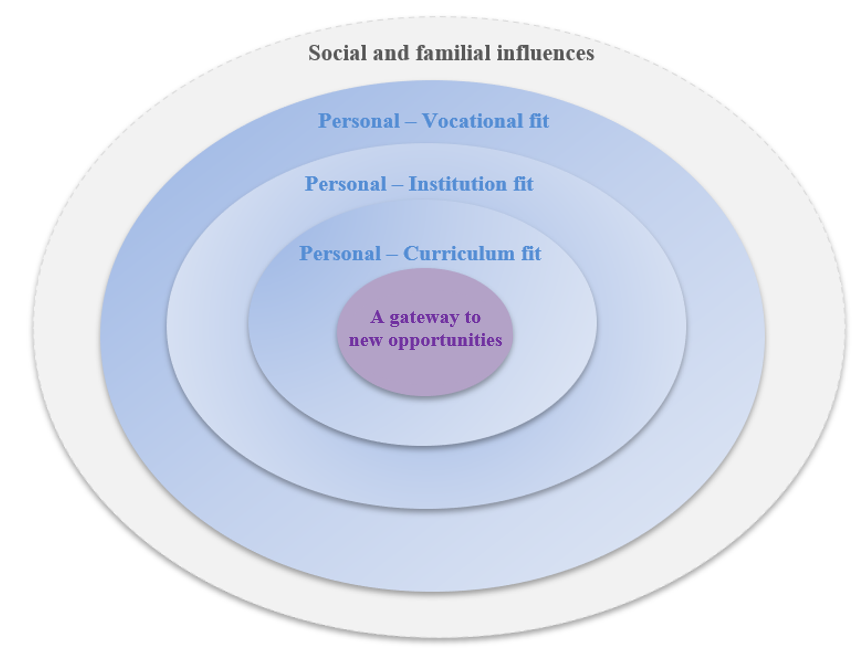
Figure 1. Interrelated themes shaping major choice decisions among SLT students
IV. DISCUSSION
This study aimed to explore the determinants influencing students’ decision to choose SLT as their undergraduate major at the UMP. In addressing this aim, the analysis identified five key themes shaping students’ decision to choose SLT. Personal – Curriculum fit reflects students’ perceptions of their academic strengths and learning preferences. Personal – Vocational fit captures the match between the nature of SLT and students’ preferences for cognitive tasks, helping people with disabilities, and non-shift-based clinical roles. Personal – Institutional fit highlights the importance of the university’s reputation and location in making SLT feel like a realistic and prestigious choice. A gateway to new opportunities show that students viewed SLT as a new but promising field because of employability, good income, and opportunities for further study. Finally, Social and familial influences emphasise that decisions were not made in isolation but were shaped by family traditions, peer influence, and faculty mentorship.
In addition to familial and peer influences, institutional factors also shaped students’ understanding of SLT, particularly because many first encountered the profession only after entering the Rehabilitation Technology programme, through the faculty-led orientation sessions. However, this account indicates that students’ knowledge of SLT was often limited or absent prior to admission. In fact, it was indicated that early curricular exposure significantly shapes major decision-making in emerging health disciplines (Buddeberg-Fischer et al., 2008). For newly established programmes such as SLT at UMP, this highlights the curriculum’s pivotal role as a primary source of information. In other words, strengthening early-course design may support more informed choices and enhance student engagement.
About the central and most decisive factor shaping students’ decisions – A gateway to new opportunities, female students most often expressed expectations related to job stability, social contribution, and work–life balance, whereas male students focused on career advancement, higher income, and recognition. This demonstrates a distinct difference in the nature of theme A gateway to new opportunities between the two groups. Similar differences have been reported in other health professions. In physiotherapy and nursing, women tend to prioritise relational and caring values, while men emphasise technical competence and leadership (Prosen, 2022; Stenberg et al., 2021). In medicine, men are more likely to choose high-status or demanding specialties, whereas women prefer stable and flexible options (Lee, 2013). These consistent findings suggest that the gender differences observed in this study are aligned with patterns widely reported across other health-related fields.
With regards to Social and familial influences, the strong role of family and peers in students’ decisions can be understood within Vietnam’s social and cultural context. In Vietnamese families, parents often act as co-decision makers, giving moral and financial guidance to secure family stability and social mobility (Dormeier Freire & Giang, 2012). Such influence reflects Confucian traditions, where education and career are family responsibilities and ways to bring honour to parents (Truong et al., 2016). At a broader level, Vietnam’s collectivist culture and high respect for authority encourage young people to align their choices with family and community expectations (Hofstede, 2001). Following parental and peer advice is therefore viewed not as a lack of independence but as an expression of filial duty and social harmony deeply rooted in Vietnamese society.
The findings support SCCT theory (Lent et al., 1994). Personal- Curriculum fit reflects students’ self-efficacy, while A gateway to new opportunities highlights perceived career benefits, both key components of SCCT. Personal – Vocational fit demonstrates career goals shaped by personal interests and values. Social and familial influences and Personal – Institutional fit emphasise contextual factors like family, peers, mentors and institution. Together, these themes align well with SCCT in explaining students’ decisions to pursue SLT.
Compared to previous studies in Vietnam, this study identified similar factors influencing the choice of major to others. However, there is no single study covering all factors found here. Besides, unlike previous quantitative studies using linear regression models, this phenomenological study explored students’ voices in depth, identifying five key factors, with social and familial factors embedded in all others. In addition, while other studies in Vietnam emphasised personal competencies, passion, and university reputation (Nguyen & Do, 2023; Nguyen et al., 2023; Tran & Nguyen, 2024), this study found the theme A gateway to new opportunities – such as job prospects, income, and learning opportunities – to be the most decisive factor. This difference reflects the specific decision context, where students chose SLT among three closely related rehabilitation majors, not across all fields. From this study, family influence and exposure to the profession were important to choose SLT. This is similar to Byrne’s studies (Byrne, 2007; Byrne, 2008). However, among the themes, A gateway to new opportunities remained the strongest driver. This finding may relate to the limited development of SLT training in Vietnam (Atherton et al., 2017; Atherton et al., 2020), compared to the long-established and large SLT workforce in other countries (Armstrong et al., 2017; McLeod et al., 2023). Overall, this study adds a distinct perspective by highlighting how factors related to the theme A gateway to new opportunities, shaped by context, influence students’ choice of SLT.
Beyond recruitment and counselling, the findings highlight implications for the long-term development of the SLT workforce in Vietnam. Students voiced ambitions to “be pioneers,” pursue advanced study, and expand SLT services nationwide, showing motivation that extends beyond job attainment. These aspirations point to the need for policies supporting continuous professional development, clear career pathways, and institutional collaboration to strengthen workforce capacity and retention. Such directions reinforce the conclusion that structured career guidance and national planning are essential for building a sustainable SLT workforce in Vietnam.
A. Limitations
This study has several limitations. Firstly, most participants were from the South of Vietnam, and the data were collected from a single institution – UMP. Consequently, the findings may not fully represent the perspectives of students across other regions or universities. Secondly, while focus group discussions encouraged interaction and collective reflection, they may have limited the depth of personal disclosure due to peer influence and social desirability bias (Leung & Savithiri, 2009). Thirdly, the strong gender imbalance among participants could have shaped particular perceptions of SLT. Finally, researcher positionality may have subtly influenced data interpretation, especially since one member of the research team was an SLT lecturer.
Methodological triangulation, such as the combination of focus group discussions and individual interviews, is recommended for future studies to enhance the richness and trustworthiness of the data.
B. Application
The findings of this study have practical implications for both education and policy. At the institutional level, the results can guide the development of targeted recruitment strategies and curriculum development, ensuring that early SLT modules and pedagogical approaches align with students’ motivations and expectations. Because students only learned about SLT after entering the programme, a more effective approach would be to offer the introductory SLT module before students select their major. This may help them understand the profession sooner, make more informed decisions and engage earlier with the SLT track. At the policy level, the study offers evidence to support structured career guidance and national strategies for sustainable SLT workforce development through coordinated recruitment, public awareness, and human resource planning in rehabilitation services. For students, these findings also provide a valuable reference and motivation to pursue and remain committed to this newly emerging profession.
V. CONCLUSION
This study identified five interrelated themes influencing students’ decision to choose SLT as their major: Personal – Curriculum fit, Personal – Vocational fit, Personal – Institutional fit, A gateway to new opportunities, and Social and familial influences. Through iterative thematic analysis, A gateway to new opportunities were recognised as the central driving factor, while Social and familial influences provided the overarching context shaping all other themes. The findings also show that students often gained their first accurate understanding of SLT only after admission, underscoring the important role of early curricular exposure in an emerging profession. Ensuring that introductory SLT modules are offered prior to major selection and designed to provide clear information about the profession, expectations and career pathways may help students make more informed and confident choices. Together, these findings offer an integrated understanding of how personal, institutional, and contextual factors interact in major decision-making within an emerging profession. Building on this, the findings highlight the need for structured career guidance and national strategies to strengthen recruitment, curriculum development, and workforce planning for a sustainable SLT workforce in Vietnam.
Notes on Contributors
Tinh Thi-Thanh Tran, as the principal investigator, was responsible for the conceptualisation, literature review, development of the methodological framework, conducting interviews, transcription, data analysis, drafting the manuscript, and giving final approval. Hanh Thi-Bich Tran contributed to the conceptualisation, literature review, study design, conducting interviews, transcription, data analysis, and writing of the manuscript. All authors have read and approved the final manuscript.
Ethical Approval
Ethical approval was obtained from the Institutional Review Board of UMP (Ref. No. 3406/HDDD-DHYD). Written informed consent was collected from all participants prior to data collection.
Data Availability
The data that support the findings of this study are available from the author upon reasonable request.
Acknowledgement
First of all, this study was made possible through financial support from the University of Medicine and Pharmacy at Ho Chi Minh City. In addition, we are grateful to Yen Thi-Kim Nguyen and Anh Khoa-Dieu Nguyen, students of the School of Nursing-Medical Technology, for their assistance as support staff. Finally, we also extend our thanks to the students of the Department of Rehabilitation, School of Nursing-Medical Technology, whose participation was essential to the completion of this research.
Funding
This research was funded by the University of Medicine and Pharmacy at Ho Chi Minh City under contract number 232/2024/HD-DHYD, dated 10/9/2024.
Declaration of Interest
There is no conflict of interest to declare for the authors.
References
Adler, R. H. (2022). Trustworthiness in qualitative research. Journal of Human Lactation, 38(4), 598-602. https://doi.org/10.1177/08903344221116620
Ahmed, S. K. (2025). Sample size for saturation in qualitative research: Debates, definitions, and strategies. Journal of Medicine, Surgery, and Public Health, 5, Article 100171. https://doi.org/10.1016/j.glmedi.2024.100171
Armstrong, L., Stansfield, J., & Bloch, S. (2017). Content analysis of the professional journal of the Royal College of Speech and Language Therapists, III: 1966-2015 – Into the 21st century. International Journal of Language and Communication Disorders, 52(6), 681-688. https://doi.org/10.1111/1460-6984.12313
Atherton, M., Davidson, B., & McAllister, L. (2017). Exploring the emerging profession of speech-language pathology in Vietnam through pioneering eyes. International Journal of Speech-Language Pathology, 19(2), 109-120. https://doi.org/10.3109/17549507.2016.1159335
Atherton, M., Davidson, B., & McAllister, L. (2020). Growing a profession: Clinician perspectives on the evolving practice of speech-language pathology in Vietnam. International Journal of Speech-Language Pathology, 22(1), 1-11. https://doi.org/10.1080/17549507.2018.1559358
Billups, F. D. (2021). Focus group moderator guides. In F. D. Billups (Ed.), Qualitative data collection tools: Design, development, and applications (pp. 97-132). Sage Publications. https://doi.org/10.4135/9781071878699.n12
Braun, V., & Clarke, V. (2006). Using thematic analysis in psychology. Qualitative Research in Psychology, 3(2), 77-101. https://doi.org/10.1191/1478088706qp063oa
Buddeberg-Fischer, B., Stamm, M., Buddeberg, C., & Klaghofer, R. (2008). The new generation of family physicians – Career motivation, life goals and work-life balance. Swiss Medical Weekly, 138, Article 4142. http://doi.org/10.4414/smw.2008.12473
Byrne, N. (2007). Factors influencing the selection of speech pathology as a career: A qualitative analysis utilising the systems theory framework. Australian Journal of Career Development, 16(3), 11-18. https://doi.org/10.1177/103841620701600304
Byrne, N. (2008). Current and prospective speech-language pathology students’ reports of exposure to speech-language pathology. International Journal of Speech-Language Pathology, 10(5), 297-304. https://doi.org/10.1080/17549500802147018
Dormeier Freire, A., & Giang, H. T. (2012). The role of family in vocational education and training choices: A case study in Vietnam. International Studies in Sociology of Education, 22(3), 237-257. https://doi.org/10.1080/09620214.2012.737692
Finlay, L. (2002). “Outing” the researcher: The provenance, process, and practice of reflexivity. Qualitative Health Research, 12(4), 531-545. https://doi.org/10.1177/104973202129120052
Guest, G., Namey, E., & McKenna, K. (2016). How many focus groups are enough? Building an evidence base for nonprobability sample sizes. Field Methods, 29(1), 3-22. https://doi.org/10.1177/1525822X16639015
Guest, G., Bunce, A., & Johnson, L. (2006). How many interviews are enough? An experiment with data saturation and variability. Field Methods, 18(1), 59-82. https://doi.org/10.1177/1525822X05279903
Hofstede, G. (2001). Culture’s consequences: Comparing values, behaviors, institutions, and organizations across nations (2nd ed). Sage Publications. https://doi.org/10.1016/S0005-7967(02)00184-5
Kallio, H., Pietilä, A. M., Johnson, M., & Kangasniemi, M. (2016). Systematic methodological review: Developing a framework for a qualitative semi- structured interview guide. Journal of Advanced Nursing, 72(12), 2954-2965. https://doi.org/10.1111/jan.13031
Kitzinger, J. (1995). Qualitative research: Introducing focus groups. BMJ, 311, 299-302. http://doi.org/10.1136/bmj.311.7000.299
Korstjens, I., & Moser, A. (2017). Series: Practical guidance to qualitative research. Part 4: Trustworthiness and publishing. European Journal of General Practice, 24(1), 120-124. https://doi.org/10.1080/13814788.2017.1375092
Krueger, R. A., & Casey, M. A. (2015). Focus groups: A practical guide for applied research (5th ed.). Sage Publication.
Lee, C. W. (2013). Gender difference and specialty preference in medical career choice. Korean Journal of Medical Education, 25(1), 15-21. https://doi.org/10.3946/kjme.2013.25.1.15
Lent, R. W., Brown, S. D., & Hackett, G. (1994). Toward a unifying social cognitive theory of career and academic interest, choice, and performance. Journal of Vocational Behavior, 45(1), 79-122. https://doi.org/10.1006/jvbe.1994.1027
Leung, F. H., & Savithiri, R. (2009). Spotlight on focus groups. Canadian Family Physician, 55(2), 218-219. https://pmc.ncbi.nlm.nih.gov/articles/PMC2642503/
Lincoln, Y. S., & Guba, E. G. (1985). Naturalistic inquiry. Beverly Hills, CA: Sage.
McLeod, S., McGill, N., Baldac, S., & Mulcair, G. (2023). Australia’s speech-language pathology profession and its global impact. Perspectives of the ASHA Special Interest Groups, 8(4), 793-798. https://doi.org/10.1044/2023_PERSP-22-00239
Medical Committee Netherlands-Vietnam. (n.d.). Development of speech and language therapy education in Vietnam. https://mcnv.org/development-of-speech-and-language-therapy-education-in-vietnam
Ministry of Health. (2023). Ministry of Health portal. Ministry of Health.
Nguyen, H. H. A., & Do, X. V. (2023). Các yếu tố ảnh hưởng tới quyết định học Kế toán tại trường Đại học Tây Nguyên [Factors influencing the decision to study accounting at the Tay Nguyen University]. Tay Nguyen Journal of Science / Tạp chí Khoa học Tây Nguyên, 17(61), 108-115. https://doi.org/10.5281/zenodo.10117479
Nguyen, T. H., Gian, H. A., Bui, T. M. C., & Vu, N. D. (2023). Các yếu tố ảnh hưởng đến việc chọn ngành bác sĩ đa khoa của sinh viên năm thứ nhất [Factors influencing first-year students’ choice of general practice]. Education Journal / Tạp chí Giáo dục, 23(21), 41-47. https://tcgd.tapchigiaoduc.edu.vn/index.php/tapchi/article/view/1094
Nyumba, T. O., Wilson, K., Derrick, C. J., & Mukherjee, N. (2018). The use of focus group discussion methodology: Insights from two decades of application in conservation. Methods in Ecology and Evolution, 9(9), 20-32. https://doi.org/10.1111/2041-210X.12860
Prime Minister. (2023). Approval of the rehabilitation system development program for the 2023 – 2030 period, with a vision to 2050 (Decision 569/QĐ-TTg dated May 24, 2023). Government Electronic Information Portal. https://vanban.chinhphu.vn/?pageid=27160&docid=207941
Prosen, M. (2022). Nursing students’ perception of gender-defined roles in nursing: A qualitative descriptive study. BMC Nursing, 21, Article 104. https://doi.org/10.1186/s12912-022-00876-4
Qiu, S., Dooley, L., & Palkar, T. (2017). What factors influence the career choice of hotel management major students in Guangzhou? Independent Journal of Management & Production, 8(3), 1092-1115. https://doi.org/10.14807/ijmp.v8i3.618
Reid, H. (2016). Introduction to career counselling & coaching. Sage Publications. https://doi.org/10.4135/9781473958142
Stenberg, G., Fjellman-Wiklund, A., Strömbäck, M., Eskilsson, T., From, C., Enberg, B., & Wiklund, M. (2021). Gender matters in physiotherapy. Physiotherapy Theory and Practice, 38(13), 2316-2329. https://doi.org/10.1080/09593985.2021.1970867
Tran, T. H. D., & Nguyen, T. T. H. (2024). Các nhân tố ảnh hưởng đến định hướng nghề nghiệp của sinh viên ngành Kế toán tại trường Đại học Phan Thiết [Factors influencing students’ accounting career paths at the University of Phan Thiet]. Journal of Science and Technology, Hanoi University of Industry / Tạp chí Khoa học và Công nghệ Trường Đại học Công nghiệp Hà Nội, 60(2), 10-16. https://doi.org/10.57001/huih5804.2024.065
Truong, T. D., Hallinger, P., & Sanga, K. (2016). Confucian values and school leadership in Vietnam: Exploring the influence of culture on principal decision making. Educational Management Administration & Leadership, 45(1), 77-100. https://doi.org/10.1177/1741143215607877
World Health Organization [WHO]. (2017). The need to scale up rehabilitation. No. WHO/NMH/NVI/17.1. https://www.who.int/docs/default-source/documents/health-topics/rehabilitation/call-for-action/need-to-scale-up-rehab-july2018.pdf
World Health Organization [WHO]. (2024). Rehabilitation. https://www.who.int/news-room/fact-sheets/detail/rehabilitation
*Tinh Thi-Thanh Tran
217 Hong Bang, Cho Lon ward,
Ho Chi Minh City, Vietnam
+84 975 337 558
Email: tranthithanhtinh@ump.edu.vn
Announcements
- Best Reviewer Awards 2025
TAPS would like to express gratitude and thanks to an extraordinary group of reviewers who are awarded the Best Reviewer Awards for 2025.
Refer here for the list of recipients. - Most Accessed Article 2025
The Most Accessed Article of 2025 goes to Analyses of self-care agency and mindset: A pilot study on Malaysian undergraduate medical students.
Congratulations, Dr Reshma Mohamed Ansari and co-authors! - Best Article Award 2025
The Best Article Award of 2025 goes to From disparity to inclusivity: Narrative review of strategies in medical education to bridge gender inequality.
Congratulations, Dr Han Ting Jillian Yeo and co-authors! - Best Reviewer Awards 2024
TAPS would like to express gratitude and thanks to an extraordinary group of reviewers who are awarded the Best Reviewer Awards for 2024.
Refer here for the list of recipients. - Most Accessed Article 2024
The Most Accessed Article of 2024 goes to Persons with Disabilities (PWD) as patient educators: Effects on medical student attitudes.
Congratulations, Dr Vivien Lee and co-authors! - Best Article Award 2024
The Best Article Award of 2024 goes to Achieving Competency for Year 1 Doctors in Singapore: Comparing Night Float or Traditional Call.
Congratulations, Dr Tan Mae Yue and co-authors! - Best Reviewer Awards 2023
TAPS would like to express gratitude and thanks to an extraordinary group of reviewers who are awarded the Best Reviewer Awards for 2023.
Refer here for the list of recipients. - Most Accessed Article 2023
The Most Accessed Article of 2023 goes to Small, sustainable, steps to success as a scholar in Health Professions Education – Micro (macro and meta) matters.
Congratulations, A/Prof Goh Poh-Sun & Dr Elisabeth Schlegel! - Best Article Award 2023
The Best Article Award of 2023 goes to Increasing the value of Community-Based Education through Interprofessional Education.
Congratulations, Dr Tri Nur Kristina and co-authors! - Best Reviewer Awards 2022
TAPS would like to express gratitude and thanks to an extraordinary group of reviewers who are awarded the Best Reviewer Awards for 2022.
Refer here for the list of recipients. - Most Accessed Article 2022
The Most Accessed Article of 2022 goes to An urgent need to teach complexity science to health science students.
Congratulations, Dr Bhuvan KC and Dr Ravi Shankar. - Best Article Award 2022
The Best Article Award of 2022 goes to From clinician to educator: A scoping review of professional identity and the influence of impostor phenomenon.
Congratulations, Ms Freeman and co-authors.