Application of artificial intelligence in healthcare: Correlation between perceptions and attitudes of undergraduate healthcare students in Vietnam

Submitted: 16 April 2025
Accepted: 16 June 2026
Published online: 6 October, TAPS 2026, 11(4), 14-23
https://doi.org/10.29060/TAPS.2026-11-4/OA3725
Thuy Thi Luu, Giang Huong Nguyen, Hoai Thi Yen Nguyen, Ly Thi Huynh & Cuc Thi Kim Doan
Faculty of Nursing, Da Nang University of Medical Technology and Pharmacy, Vietnam
Abstract
Introduction: The integration of artificial intelligence (AI) into healthcare is an inevitable global trend. Healthcare students’ perceptions and attitudes are critical in shaping future AI adoption and informing educational reform. This study aimed to examine students’ perceptions and attitudes towards AI in healthcare and to assess the relationship between these constructs.
Methods: A cross-sectional study was conducted among 967 healthcare students from December 2024 to January 2025. Data were collected using a structured questionnaire assessing perceptions and attitudes towards AI. Statistical analyses were performed using SPSS version 26.0. Descriptive statistics summarised the data, while Pearson’s correlation and multivariate linear regression were used to examine associations (p < .05).
Results: Participants demonstrated moderate perceptions (3.43 ± .64) and attitudes (3.45 ± .64) towards AI. Most students recognised AI’s potential in preventive health (65.0%), patient documentation (65.6%), and population health surveillance (54.5%). Additionally, 64.9% of participants reported that AI makes medicine more engaging, and over 61% believed it enhances healthcare delivery and supports career development. A strong positive correlation was observed between perceptions and attitudes (r=.724; p<.001). In the regression analysis, perception remained a strong independent predictor of attitude (β = .718, p < .001) after adjustment.
Conclusion: Healthcare students exhibited moderate readiness for AI adoption, with perceptions strongly influencing attitudes. These findings underscore the importance of integrating AI into healthcare curricula, with emphasis on practical exposure and discipline-specific training. Future research should incorporate perspectives from educators, and healthcare organisations to provide a more comprehensive understanding.
Keywords: Attitudes, Artificial Intelligence (AI), Perceptions, Healthcare Students
Practice Highlights
- Healthcare students’ perceptions and attitudes are key determinants in shaping AI integration within training programmes.
- Students demonstrated moderate perceptions and attitudes, with many recognising AI as beneficial and engaging for future practice.
- A strong positive association was observed between perceptions and attitudes towards AI.
- The findings support the integration of AI into healthcare curricula, with emphasis on practical and discipline-specific training.
- Further research should incorporate perspectives from educators and healthcare institutions to inform effective implementation.
I. INTRODUCTION
Advancements in science and technology have profoundly transformed many sectors, with artificial intelligence (AI) emerging as a rapidly evolving force in modern healthcare (Guo et al., 2020). AI systems are designed to interpret complex data, learn from patterns, and support decision-making processes (Papagiannidis et al., 2023). It is predicted to contribute over 15 trillion dollars to the global economy by 2030 (Murphy et al., 2021). In healthcare, AI has demonstrated significant potential to enhance clinical assessment, diagnosis, and treatment, thereby improving outcomes for both patients and providers (Bengio et al., 2021). In parallel, AI-enabled tools in health professions education can enhance learning outcomes, increase engagement, and reduce cognitive workload, contributing to the development of a digitally competent healthcare workforce (De Gagne, 2023). However, successful integration of AI depends not only on technological advancement but also on users’ perceptions and attitudes, which influence acceptance and adoption.
Attitude, as defined by Ajzen and Fishbein (1977), refers to an individual’s emotional evaluation of a specific task. In this context, attitudes towards AI reflect the extent to which individuals are willing to accept or engage with AI technologies. Perception, on the other hand, encompasses the interpretation and understanding of information, shaping how individuals conceptualise AI and its applications (Schacter et al., 2011). The perceived usefulness of AI is a key determinant of attitudes and may ultimately influence intentions to adopt such technologies (Teo & Zhou, 2014).
In recent years, studies examining students’ perceptions and attitudes towards AI have increased considerably. Perceptions are often conceptualised as students’ awareness, knowledge, and beliefs about AI (Sit et al., 2020), whereas attitudes reflect their level of acceptance and readiness to engage with AI-based tools (Sami et al., 2025). Most studies report generally favourable perceptions and attitudes, although the extent varies across contexts. For example, in Pakistan, 76.7% of students supported the integration of AI into medical curricula (Ahmed et al., 2022), while in Canada, over 70% perceived AI as beneficial for diagnosis and anticipated its growing importance in healthcare (Mehta et al., 2021). Similar positive trends have been reported in high-resource settings, where students tend to demonstrate stronger awareness and acceptance of AI (Bisdas et al., 2021; Swed et al., 2022; Teng et al., 2022). In contrast, findings from Nepal indicate considerably lower levels of confidence in AI capabilities across clinical and public health domains (Jha et al., 2022), highlighting contextual disparities.
Despite the growing body of literature, several gaps remain. Most studies have focused on single disciplines, such as medicine or pharmacy, with limited attention to multidisciplinary healthcare student populations. Evidence from low- and middle-income countries remains scarce, where variations in educational exposure, digital infrastructure, and institutional readiness may influence perceptions of AI. In Vietnam, existing research has primarily been conducted in southern regions, with limited exploration of multidisciplinary perspectives in other settings (Truong et al., 2023).
Given the increasing integration of AI into healthcare, there is a pressing need to better understand how future healthcare professionals perceive and respond to these technologies. Therefore, this study aimed to (1) assess undergraduate healthcare students’ perceptions and attitudes towards AI in healthcare and (2) examine the relationship between these constructs. By including a diverse, multidisciplinary sample in Central Vietnam, this study provides context-specific evidence to inform discipline-tailored and context-adapted strategies for integrating AI into healthcare education.
II. METHODS
A. Research Design
A descriptive cross-sectional study was conducted at Da Nang University of Medical Technology and Pharmacy, Central Vietnam, between December 2024 and January 2025. The study design and reporting were guided by the Appraisal tool for Cross-Sectional Studies (AXIS) to ensure methodological rigour and minimise potential sources of bias (Downes et al., 2016).
B. Setting
Undergraduate programmes at Da Nang University of Medical Technology and Pharmacy range from four to six years, depending on the discipline. Since 2018, students have been introduced to basic Al-related technologies within simulated clinical environments. From the second year onwards, they engage in simulation-based training, which allows them to manage scenarios, communicate with manikins via voice commands, examine symptoms, and perform interventions in a controlled setting. Subsequently, students undertake clinical placements in healthcare facilities. In clinical practice, local hospitals have begun to integrate selected AI applications, particularly for analysing laboratory results and X-ray images, alongside the use of digital systems for appointment scheduling and medication management to reduce staff workload. However, the implementation of AI at both university and hospital levels remains limited, largely due to constraints in infrastructure, human resources, and funding.
C. Study Participants
This study included full-time undergraduate healthcare students who voluntarily agreed to participate. Students who were absent during the data collection period were excluded.
D. Study Sample Size
The sample size was estimated using the formula for cross-sectional studies:
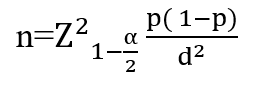
Where Z1- α/2 = 1.96 at a 95% confidence level, d=.05 (precision), and p=.5, assuming maximum variability to yield the largest required sample size (Krejcie & Morgan, 1970). The minimum required sample size was calculated as 384 participants.
To enhance the representativeness of the sample and account for potential non-response, a larger sample was targeted. A total of 967 students were ultimately included, exceeding the minimum requirement. This was achieved through voluntary participation and convenience sampling across multiple healthcare disciplines. The larger sample size would improve statistical power and support more robust analyses across subgroups.
E. Study Measurement
Data were collected using a self-administered questionnaire comprising three sections. The first section captured demographic characteristics, including age, gender, discipline, year of study, grade point average (GPA), self-reported IT skills, prior exposure to AI, and daily Internet use.
The second section assessed students’ perceptions of AI in healthcare using a 16-item scale developed by Mehta et al. (2021). The scale comprises three domains: individual patient care (11 items), the healthcare system (3 items), and population health (2 items). Item were rated on a 5-point Likert scale ranging from 1 (strongly disagree) to 5 (strongly agree). Total scores range from 16 to 80, with higher scores indicating more positive perceptions. The scale’s reliability was previously established, with a Cronbach’s alpha of .60 (Mehta et al., 2021).
The third section measured students’ attitudes towards AI in healthcare using a 16-item scale developed by Truong et al. (2023). This instrument was originally designed for Vietnamese medical and pharmacy students, which was adapted for this study by refining item wording to ensure relevance across healthcare disciplines. Responses were recorded on a 5-point Likert scale, from 1 (strongly disagree) to 5 (strongly agree), with higher total scores indicating more positive attitudes. The original scale demonstrated acceptable reliability, with a Cronbach’s alpha of .67 (Truong et al., 2023).
To facilitate interpretation, mean item scores were interpreted using three levels (low, moderate, and high). Based on the 5-point Likert scale, the cut-off points were defined by dividing the possible score range into three equal intervals: low (1.00–2.33), moderate (2.34–3.66), and high (3.67–5.00). This approach has been applied in previous studies using Likert-type scales (Labrague et al., 2023).
A standardised forward–backward translation procedure was employed to adapt the perception scale into Vietnamese, with permission from the original authors, following the established guideline (Cruchinho et al., 2024). Content validity was evaluated by five healthcare experts, yielding a high scale-level content validity index (S-CVI) of .96. A pilot study involving 30 students demonstrated excellent internal consistency (Cronbach’s alpha = .96). Similarly, the adapted attitude scale showed strong psychometric properties, with an S-CVI of .91 and a Cronbach’s alpha of .95.
F. Data Collection
Participants were recruited using a convenience sampling method. All full-time undergraduate students enrolled in healthcare-related programmes during the study period were invited to participate via their official class email addresses. Data were collected using an online questionnaire administered through Google Forms.
Participation was voluntary, and informed consent was obtained electronically by requiring students to select “Yes” before accessing the questionnaire. A total of 988 responses were received; however, 21 incomplete questionnaires were excluded, resulting in a final sample of 967 participants included in the analysis.
G. Data Analysis
Data analysis was performed using IBM SPSS Statistics (Version 26.0). Descriptive statistics were used to summarise participants’ characteristics, perceptions, and attitudes.
Prior to inferential analysis, the normality of continuous variables (perception and attitude scores) was assessed using graphical methods, including histograms and Q–Q plots. Visual inspection indicated that the distributions approximated normality, with no substantial deviations observed. Pearson’s correlation analysis was conducted to examine the relationship between perceptions and attitudes towards AI. In addition, linear regression analyses were performed to further assess this relationship. An unadjusted model was first used to assess the association between perception and attitude. Subsequently, an adjusted model was applied to control for potential confounding variables, including age, gender, discipline, year of study, GPA, self-reported IT skills, prior exposure to AI, and daily Internet use. Statistical significance was set at p < .05.
III. RESULTS
A total of 967 students were included in this study. The data supporting the findings of this study are openly available on Figshare at: https://doi.org/10.6084/m9.figshare.30164719 (Luu et al., 2025).
A. Characteristics of the Study Population
Among the 967 students surveyed, the mean age was 19.55 ± 1.48 years, and 78.5% were female. The largest proportions of participants were from nursing (34.9%), pharmacy (16.8%), and medicine (16.5%). Most participants were in their first (34.6%) or second (26.4%) year of study. Over half of the participants had a GPA classified as fair (57.0%), and the mean daily Internet usage was 7.48 ± 4.26 hours. Additionally, 55.4% of students rated their IT skills as fair, while 41% reported prior exposure to AI (see Table 1).
|
Characteristic |
N |
% |
|||
|
Age |
Mean ± SD: 19.55 ± 1.48 |
|
|||
|
Gender |
|
||||
|
Female |
759 |
78.5 |
|||
|
Male |
208 |
21.5 |
|||
|
Discipline |
|
||||
|
Nursing |
337 |
34.9 |
|||
|
Pharmacy |
162 |
16.8 |
|||
|
Medicine |
160 |
16.5 |
|||
|
Medical laboratory technology |
142 |
14.7 |
|||
|
Rehabilitation |
100 |
10.3 |
|||
|
Medical image technology |
59 |
6.1 |
|||
|
Public health |
7 |
.7 |
|||
|
Year of study |
|
|
|||
|
First year |
335 |
34.6 |
|||
|
Second year |
255 |
26.4 |
|||
|
Third year |
134 |
13.9 |
|||
|
Fourth year |
183 |
18.9 |
|||
|
Fifth year |
36 |
3.7 |
|||
|
Sixth year |
24 |
2.5 |
|||
|
GPA |
|
||||
|
Excellent |
51 |
5.3 |
|||
|
Good |
209 |
21.6 |
|||
|
Fair |
551 |
57.0 |
|||
|
Average |
143 |
14.8 |
|||
|
Weak |
13 |
1.3 |
|||
|
Self-reported IT skills |
|
||||
|
Excellent |
14 |
1.4 |
|||
|
Good |
183 |
18.9 |
|||
|
Fair |
535 |
55.4 |
|||
|
Average |
221 |
22.9 |
|||
|
Poor |
14 |
1.4 |
|||
|
Prior exposure to AI |
|
||||
|
Yes |
396 |
41.0 |
|||
|
No |
571 |
59.0 |
|||
|
Daily Internet use (hours) |
Mean ± SD: 7.48 ± 4.26 |
||||
Table 1. Characteristics of the participants (n=967)
B. Perceptions of Healthcare Students towards AI in Healthcare
As shown in Table 2, the mean total perception score was 54.80 ± 10.20, corresponding to a mean item score of 3.43 ± .64, indicating moderate perceptions. Within the domain of individual patient care, the majority of students recognised the usefulness of AI in supporting preventive health recommendations (65.0%; 3.72 ± .80) and in monitoring patient adherence to medication, exercise, and dietary regimens (56.5%; 3.54 ± .96).
In the healthcare system domain, the highest levels of agreement were observed for AI’s role in patient documentation (65.6%; 3.73 ± .87) and in supporting hospital capacity planning and workforce management (60.6%; 3.66 ± .84). Regarding the population health domain, over half of the students agreed that AI could support population health surveillance and outbreak prevention (54.5%; 3.52 ± .87).
|
Items |
Disagree N (%) |
Neutral N (%) |
Agree N (%) |
Mean ± SD (Range) |
|
Individual patient care |
36.99 ± 7.61 (11 – 55) |
|||
|
AI provides patients with preventative health recommendations. |
49 (5.1) |
289 (29.9) |
629 (65.0) |
3.72 ± .80 (1-5) |
|
AI monitors patient adherence to prescribed medications, exercise and dietary recommendations. |
136 (14.1) |
285 (29.4) |
546 (56.5) |
3.54 ± .96 (1-5) |
|
AI reads and interprets diagnostic imaging. |
126 (13.1) |
336 (34.7) |
505 (52.2) |
3.46 ± .90 (1-5) |
|
AI analyzes patient information to reach diagnoses. |
142 (14.7) |
371 (38.3) |
454 (47.0) |
3.38 ± .89 (1-5) |
|
AI formulates personalized treatment plans for patients. |
159 (16.4) |
346 (35.8) |
462 (47.8) |
3.38 ± .94 (1-5) |
|
AI evaluates when to refer patients to other healthcare professionals. |
151 (15.6) |
365 (37.7) |
451 (46.7) |
3.37 ± .90 (1-5) |
|
AI provides psychiatric/personal counselling. |
175 (18.1) |
326 (33.7) |
466 (48.2) |
3.36 ± .96 (1-5) |
|
AI analyzes patient information to establish prognoses. |
168 (17.4) |
380 (39.3) |
419 (43.3) |
3.31 ± .90 (1-5) |
|
AI provides empathetic care to patients. |
186 (19.3) |
328 (33.8) |
453 (46.9) |
3.31 ± 1.00 (1-5) |
|
AI formulates personalized medication prescriptions for patients. |
249 (25.8) |
373 (38.5) |
345 (35.7) |
3.11± .99 (1-5) |
|
AI performs surgery |
265 (27.4) |
329 (34.0) |
373 (38.6) |
3.08 ± 1.11 (1-5) |
|
Healthcare system |
10.88 ± 2.23 (3 – 15) |
|||
|
AI provides documentation about patients. |
80 (8.2) |
253 (26.2) |
634 (65.6) |
3.73 ± .87 (1-5) |
|
AI assists hospitals in capacity planning and human resource management. |
74 (7.7) |
307 (31.7) |
586 (60.6) |
3.66 ± .84 (1-5) |
|
AI provides recommendations for quality improvement in practices/hospitals. |
106 (11.0) |
367 (38.0) |
494 (51.0) |
3.49 ± .86 (1-5) |
|
Population health |
6.93 ± 1.55 (2 – 10) |
|||
|
AI conducts population health surveillance and outbreak prevention. |
115 (11.9) |
325 (33.6) |
527 (54.5) |
3.52 ± .87 (1-5) |
|
AI selects the best population health interventions. |
118 (12.1) |
396 (41.0) |
453 (46.9) |
3.41 ± .87 (1-5) |
|
Total perception score |
54.80 ± 10.20 (27– 80) |
|||
|
Mean item score |
3.43 ± .64 (1 – 5) |
|||
Note: Agree includes “agree” and “strongly agree”; disagree includes “strongly disagree” and “disagree”.
Table 2. Perceptions of healthcare students towards AI in healthcare (n=967)
C. Attitudes of Healthcare Students towards AI in Healthcare
As presented in Table 3, participants had a mean total attitude score of 55.24 ± 10.22 and a mean item score of 3.45 ± .64, suggesting moderate attitudes. A substantial proportion of students (64.9%) agreed that advancements in AI make medicine more exciting (3.71 ± .80). Furthermore, over 61% of students believed that AI would improve certain aspects of healthcare (3.63 ± .80) and benefit the careers of healthcare professionals (3.65 ± .81). However, more than half of the students indicated that AI may reduce job opportunities (57.6%) and introduce new ethical challenges (54.0%).
|
Items |
Disagree N (%) |
Neutral N (%) |
Agree N (%) |
Mean ± SD (Range) |
|
New AI developments make medicine more exciting. |
65 (6.7) |
275 (28.4) |
627 (64.9) |
3.71 ± .80 (1-5) |
|
Knowledge of AI will benefit healthcare workers’ career. |
72 (7.5) |
302 (31.2) |
593 (61.3) |
3.65 ± .81 (1-5) |
|
AI will improve some aspects of healthcare. |
76 (7.8) |
294 (30.4) |
597 (61.8) |
3.63 ± .80 (1-5) |
|
Medical training should include training on AI competencies. |
87 (9.0) |
346 (35.8) |
534 (55.2) |
3.57 ± .85 (1-5) |
|
AI will reduce the number of jobs available to healthcare workers. |
114 (11.8) |
296 (30.6) |
557 (57.6) |
3.55 ± .91 (1-5) |
|
AI in medicine will raise new ethical challenges. |
113 (11.7) |
332 (34.3) |
522 (54.0) |
3.53 ± .92 (1-5) |
|
Healthcare students should be required to receive training in AI competencies. |
115 (11.9) |
353 (36.5) |
499 (51.6) |
3.49 ± .87 (1-5) |
|
AI in medicine will raise new social challenges. |
126 (13.0) |
333 (34.4) |
508 (52.6) |
3.47 ± .93 (1-5) |
|
My medical education is adequately preparing me for working alongside AI tools. |
99 (10.3) |
389 (40.2) |
479 (49.5) |
3.47 ± .85 (1-5) |
|
AI in medicine will raise new challenges around health equity |
133 (13.8) |
346 (35.8) |
488 (50.4) |
3.43 ± .93 (1-5) |
|
The Vietnam healthcare system is currently well prepared to deal with challenges having to do with AI. |
110 (11.4) |
404 (41.8) |
453 (46.8) |
3.43 ± .86 (1-5) |
|
AI can replace healthcare workers in providing patients with preventative health recommendations. |
143 (14.8) |
345 (35.7) |
479 (49.5) |
3.40 ± .94 (1-5) |
|
AI will revolutionise medical practice. |
166 (17.2) |
385 (39.8) |
416 (43.0) |
3.31 ± .91 (1-5) |
|
Some human healthcare workers will be replaced by AI in the foreseeable future. |
208 (21.5) |
340 (35.2) |
419 (43.3) |
3.26 ± 1.00 (1-5) |
|
AI technology does threaten my career. |
231(23.8) |
340 (35.2) |
396 (41.0) |
3.19 ± 1.02 (1-5) |
|
AI technology developments frighten me. |
238 (24.6) |
363 (37.5) |
366 (37.9) |
3.14 ± 1.02 (1-5) |
|
Total attitude score |
55.24 ± 10.22 (28 – 80) |
|||
|
Mean item score |
3.45 ± .64 (1 – 5) |
|||
Note: Agree includes “agree” and “strongly agree”; disagree includes “strongly disagree” and “disagree”.
Table 3. Attitudes of healthcare students towards AI in healthcare (n=967)
D. The Relationship between Perceptions and Attitudes towards AI in Healthcare
There was a strong and statistically significant positive association between perceptions and attitudes towards AI (r = .724, p < .001). This indicates that more favourable perceptions of AI were associated with more positive attitudes towards its application in healthcare. Similar positive correlations were observed across all three perception domains (see Table 4).
|
Content |
Attitudes towards AI in healthcare |
|
|
r |
p |
|
|
Perceptions of AI in healthcare |
.724 |
< .001 |
|
Individual patient care |
.684 |
< .001 |
|
Healthcare system |
.563 |
< .001 |
|
Population health |
.592 |
< .001 |
Table 4. Association between perceptions and attitudes towards AI in healthcare (n=967)
To further examine the relationship between perceptions and attitudes towards AI, linear regression analyses were performed. In the unadjusted model (Model 1), perception was strongly associated with attitudes (β = .724, p < .001). After adjusting for potential confounding variables in Model 2, perception remained a strong and independent predictor of attitudes (β = .718, p < .001). Year of study showed a small but statistically significant association with attitudes (β = .152, p = .035), whereas other variables were not statistically significant (p > .05). Importantly, the effect size of perception remained largely unchanged after adjustment, indicating a robust and independent relationship between perception and attitudes towards AI (see Table 5).
|
Variables |
Model 1 (Unadjusted) |
Model 2 (Adjusted) |
||
|
β |
p |
β |
p |
|
|
Perceptions of AI |
.724 |
< .001 |
.718 |
< .001 |
|
Age |
– |
– |
-.108 |
.131 |
|
Gender |
– |
– |
-.001 |
.959 |
|
Discipline |
– |
– |
-.021 |
.347 |
|
Year of study |
– |
– |
.152 |
.035 |
|
GPA |
– |
– |
-.014 |
.571 |
|
Self-reported IT skills |
– |
– |
-.016 |
.486 |
|
Prior exposure to AI |
– |
– |
.025 |
.273 |
|
Daily Internet use |
– |
– |
.028 |
.213 |
Note: β = standardised regression coefficient; Model 1: unadjusted model including perception only;
Model 2: adjusted for demographic variables.
Table 5. Multivariate regression analysis of attitudes towards AI in healthcare (n = 967)
IV. DISCUSSION
This study found that healthcare students demonstrated moderate perceptions of AI, consistent with findings from southern Vietnam (Truong et al., 2023). Compared with results from Nepal (Jha et al., 2022), the higher awareness observed in this study may reflect differences in educational exposure and technological infrastructure. In our context, early exposure to simulation-based learning and emerging AI applications may enhance familiarity and perceived usefulness, whereas limited access in lower-resource settings may reduce awareness and confidence. More broadly, a contextual gradient is evident with students in high-income countries tending to demonstrate greater awareness, whereas those in low- and middle-income countries exhibit more heterogeneous perceptions shaped educational opportunities (Sit et al., 2020; Gillissen et al., 2022). These findings suggest that perceptions of AI are strongly influenced by the surrounding educational and technological environment.
Regarding the individual patient care domain, most participants perceived AI as beneficial for preventive health recommendations and improving adherence to treatment regimens. These findings align with previous studies (Mehta et al., 2021; Truong et al., 2023) but contrast with lower agreement reported in Nepal (Jha et al., 2022), likely reflecting contextual variation in AI exposure, infrastructure, and curricular integration (Jackson et al., 2024; Truong et al., 2023). Collectively, this suggests that students’ perceptions of AI in clinical care are closely linked to digital readiness. Strengthening AI adoption in low- and middle-income settings requires embedding AI literacy into curricula, promoting interdisciplinary learning, and providing structured exposure, alongside improvements in infrastructure, collaboration, and regulatory frameworks.
In Vietnam, AI adoption in the healthcare remains at an early stage. Although digital systems such as electronic health records (EHRs) and hospital information systems (HIS) are developing, implementation is limited. Consequently, students are more likely to encounter AI indirectly rather than through structured clinical application, which may explain why their responses reflect perceptions and expectations rather than experience. This aligns with Truong et al. (2023), who reported that most students had limited understanding of AI in healthcare. National data further indicate fragmented digitalisation, with EHR and HIS coverage reaching only 5–10% of institutions (Wibowo et al., 2025). These constraints suggest that students’ responses largely reflect conceptual awareness. Future research should therefore incorporate measures of practical exposure to better capture real-world engagement.
In the healthcare system domain, students reported the highest agreement with AI’s role in patient documentation, hospital capacity planning, and workforce management. In the population health domain, approximately half of the participants perceived AI as useful for disease surveillance and outbreak prevention. Although lower than findings from Buabbas et al. (2023) and Mehta et al. (2021), these levels exceed those reported in Nepal (Jha et al., 2022), indicating contextual variation. This intermediate perception may reflect students’ indirect exposure to digital tools during internships, supporting a functional understanding of AI in administrative roles rather than advanced clinical applications. Strengthening collaboration between educational institutions and healthcare facilities is therefore essential to provide more structured and practice-based exposure to AI-enabled systems.
Participants demonstrated moderate attitudes towards AI in healthcare. Most students perceived AI as enhancing engagement in medicine, improving healthcare delivery, and supporting professional development, which is consistent with international evidence (Bisdas et al., 2021; Swed et al., 2022; Teng et al., 2022; Truong et al., 2023). This positive outlook highlights the importance of integrating AI into health professions education to enhance readiness for technological change. Developing AI-responsive curricula may play a key role in fostering students’ informed attitudes (Sami et al., 2025).
However, more than half of the respondents expressed concerns about job displacement and ethical challenges, consistent with findings from Nepal and the UAE (Alkhaaldi et al., 2023; Jha et al., 2022). These concerns appear to vary by discipline. Medical students, for example, tend to express greater apprehension, while pharmacy students are more likely to view AI as supportive (Jackson et al., 2024; Truong et al., 2023). This suggests that perceptions of AI-related risks are shaped by disciplinary context and clinical exposure. Accordingly, AI education should be tailored to specific programmes, addressing both technical competencies and ethical implications through context-relevant learning approaches.
These differences should be interpreted within the broader context of Vietnam as a lower-middle-income country undergoing uneven digital transformation. Despite national initiatives, implementation remains constrained by curricular gaps, and limited faculty expertise and infrastructure. Evidence within Vietnam also points to variation across disciplines, with pharmacy students showing greater interest in the operational applications of AI, while medical students express more concern regarding ethical and employment implications (Truong et al., 2023). Students’ attitudes may therefore reflect not only knowledge but also uncertainty about future professional roles and trust in regulatory frameworks. Addressing these contextual factors is essential for developing effective, discipline-sensitive AI education strategies.
The study also found a significant positive association between students’ perceptions and attitudes towards AI. Students with more favourable perceptions consistently reported more positive attitudes. This relationship was further supported by the regression analysis, in which perception remained a strong and independent predictor of attitudes even after adjusting for demographic variables. Notably, the stability of effect size after adjustment reinforces the robustness of this relationship. Given the high academic demands faced by healthcare students (Kiziela et al., 2019), integrating AI into curricula may reduce cognitive burden and enhance learning engagement. Improved understanding of AI may also foster more positive attitudes towards its application. Furthermore, concerns about job displacement, often linked to limited knowledge and uncertainty, could be mitigated through structured and contextually relevant educational interventions (Buabbas et al., 2023; Teng et al., 2022). However, further research is needed to identify the most effective curricular components (Bisdas et al., 2021). Successful integration of AI into healthcare education will require sustained institutional support.
This study addresses important gaps in the literature by examining a multi-disciplinary cohort in a low- and middle-income setting. It provides a more comprehensive understanding of variations in perceptions and attitudes towards AI, particularly in Central Vietnam, where contextual and resource-related factors differ from previously studied regions. The findings confirm the central role of perceptions in shaping attitudes, supporting established technology acceptance frameworks. Overall, these findings highlight the need for context-sensitive and discipline-specific curriculum reforms that integrate AI literacy, practical exposure, and ethical considerations, particularly in resource-constrained settings.
This study has certain limitations that should be taken into consideration. First, it examined students’ perceptions and attitudes towards AI without formally assessing their baseline knowledge, which may have influenced responses. Second, the lack of a standardised measure for AI-related perceptions limits comparability with other studies. Third, the study did not explore the underlying reasons for negative perceptions and attitudes; future research should therefore incorporate both objective knowledge assessments of AI and qualitative approaches to provide a more comprehensive understanding and inform targeted educational interventions. Furthermore, the use of convenience sampling at a single institution may limit generalisability, and self-selection bias is possible, as students with a greater interest in AI may have been more likely to participate. Additionally, the response rate could not be determined because the total number of students who received the survey invitation was unknown. Future studies should examine subgroup differences across disciplines and levels of AI exposure to generate more nuanced insights.
V. CONCLUSION
The findings indicate that healthcare students demonstrate moderate perceptions of AI, with most recognising its role in preventive care, patient documentation, and population health surveillance. Participants also generally viewed AI as enhancing engagement in medicine, improving healthcare delivery, and supporting professional development. A strong positive association between perceptions and attitudes was identified, with regression analysis confirming perception as a robust and independent predictor. These findings support the need for more effective integration of AI into healthcare education. Enhancing students’ understanding of AI may foster more positive attitudes and better prepare them for technological advancements in clinical practice. Future research should examine the perspectives of educators and institutional leaders, whose engagement is critical for the sustainable integration of AI into healthcare training programmes.
Notes on Contributors
Luu Thi Thuy, Dean of the Faculty of Nursing, contributed to the conceptualisation and study design, drafted the manuscript, and critically revised it for important intellectual content.
Nguyen Huong Giang, a student of the Faculty of Nursing, contributed to the study design, literature review, data collection, and data analysis.
Nguyen Thi Yen Hoai, Lecturer of the Faculty of Nursing, contributed to data analysis, interpretation of results, drafting of the manuscript, and critical revision for scientific content.
Huynh Thi Ly, Vice Dean of the Faculty of Nursing, contributed to data analysis, interpretation of results, and drafting of the manuscript.
Doan Thi Kim Cuc, Lecturer of the Faculty of Nursing, contributed to data collection and drafting of the manuscript.
All authors have read and approved the final version of the manuscript.
Ethical Approval
This study was approved by the Ethics Committee in Biomedical Research of Da Nang University of Medical Technology and Pharmacy (Decision No. 630/QD-DHKTYDDN, 10 October 2024). Participants were informed about the study objectives, confidentiality, and their right to refuse or withdraw at any time. Electronic implied informed consent was obtained from all participants before they accessed the questionnaire.
Data Availability
The data supporting the findings of this study are openly available in Figshare repository at https://doi.org/10.6084/m9.figshare.30164719.
Funding
This study did not receive any specific grant from funding agencies in the public, commercial, or not-for-profit sectors.
Declaration of Interest
The authors declare that there are no conflicts of interest associated with this study.
References
Ahmed, Z., Bhinder, K. K., Tariq, A., Tahir, M. J., Mehmood, Q., Tabassum, M. S., Malik, M., Aslam, S., Asghar, M. S., & Yousaf, Z. (2022). Knowledge, attitude, and practice of artificial intelligence among doctors and medical students in Pakistan: A cross-sectional online survey. Annals of Medicine and Surgery, 76, Article 103493. https://doi.org/10.1016/j.amsu.2022.103493
Ajzen, I., & Fishbein, M. (1977). Attitude-behavior relations: A theoretical analysis and review of empirical research. Psychological Bulletin, 84(5), 888–918. https://doi.org/10.1037/0033-2909.84.5.888
Alkhaaldi, S. M. I., Kassab, C. H., Dimassi, Z., Oyoun Alsoud, L., Al Fahim, M., Al Hageh, C., & Ibrahim, H. (2023). Medical student experiences and perceptions of ChatGPT and artificial intelligence: Cross-sectional study. JMIR Medical Education, 9, Article e51302. https://doi.org/10.2196/51302
Bengio, Y., LeCun, Y., & Hinton, G. (2021). Deep learning for AI. Communications of the ACM, 64(7), 58–65. https://doi.org/10.1145/3448250
Bisdas, S., Topriceanu, C.-C., Zakrzewska, Z., Irimia, A.-V., Shakallis, L., Subhash, J., Casapu, M.-M., Leon-Rojas, J., Pinto dos Santos, D., Andrews, D. M., Zeicu, C., Bouhuwaish, A. M., Lestari, A. N., Abu-Ismail, L., Sadiq, A. S., Khamees, A., Mohammed, K. M. G., Williams, E., Omran, A. I., & Ebrahim, E. H. (2021). Artificial intelligence in medicine: A multinational multi-center survey on the medical and dental students’ perception. Frontiers in Public Health, 9, Article 795284. https://doi.org/10.3389/fpubh.2021.795284
Buabbas, A. J., Miskin, B., Alnaqi, A. A., Ayed, A. K., Shehab, A. A., Syed-Abdul, S., & Uddin, M. (2023). Investigating students’ perceptions towards artificial intelligence in medical education. Healthcare, 11(9), Article 1298. https://doi.org/10.3390/healthcare11091298
Cruchinho, P., López-Franco, M. D., Capelas, M. L., Almeida, S., Bennett, P. M., Miranda da Silva, M., Teixeira, G., Nunes, E., Lucas, P., & Gaspar, F. (2024). Translation, cross-cultural adaptation, and validation of measurement instruments: A practical guideline for novice researchers. Journal of Multidisciplinary Healthcare, 17, 2701–2728. https://doi.org/10.2147/jmdh.S419714
De Gagne, J. C. (2023). The state of artificial intelligence in nursing education: Past, present, and future directions. International Journal of Environmental Research and Public Health, 20(6), Article 4884. https://doi.org/10.3390/ijerph20064884
Downes, M. J., Brennan, M. L., Williams, H. C., & Dean, R. S. (2016). Development of a critical appraisal tool to assess the quality of cross-sectional studies (AXIS). BMJ Open, 6(12), Article e011458. https://doi.org/10.1136/bmjopen-2016-011458
Gillissen, A., Kochanek, T., Zupanic, M., & Ehlers, J. (2022). Medical students’ perceptions towards digitization and artificial intelligence: A mixed-methods study. Healthcare, 10(4), Article 723. https://doi.org/10.3390/healthcare10040723
Guo, Y., Hao, Z., Zhao, S., Gong, J., & Yang, F. (2020). Artificial intelligence in healthcare: Bibliometric analysis. Journal of Medical Internet Research, 22(7), Article e18228. https://doi.org/10.2196/18228
Jackson, P., Ponath Sukumaran, G., Babu, C., Tony, M. C., Jack, D. S., Reshma, V. R., Davis, D., Kurian, N., & John, A. (2024). Artificial intelligence in medical education – perception among medical students. BMC Medical Education, 24(1), Article 804. https://doi.org/10.1186/s12909-024-05760-0
Jha, N., Shankar, P. R., Al-Betar, M. A., Mukhia, R., Hada, K., & Palaian, S. (2022). Undergraduate medical students’ and interns’ knowledge and perception of artificial intelligence in medicine. Advances in Medical Education and Practice, 13, 927–937. https://doi.org/10.2147/amep.S368519
Kiziela, A., Viliūnienė, R., Friborg, O., & Navickas, A. (2019). Distress and resilience associated with workload of medical students. Journal of Mental Health, 28(3), 319–323. https://doi.org/10.1080/09638237.2018.1521922
Krejcie, R. V., & Morgan, D. W. (1970). Determining sample size for research activities. Educational and Psychological Measurement, 30(3), 607–610. https://doi.org/10.1177/001316447003000308
Labrague, L. J., Aguilar-Rosales, R., Yboa, B. C., Sabio, J. B., & de Los Santos, J. A. (2023). Student nurses’ attitudes, perceived utilization, and intention to adopt artificial intelligence (AI) technology in nursing practice: A cross-sectional study. Nurse Education in Practice, 73, Article 103815. https://doi.org/10.1016/j.nepr.2023.103815
Luu, T. T., Nguyen, H. G., Nguyen, T. Y. H., Huynh, T. L., & Doan, T. K. (2025). Application of artificial intelligence in healthcare: Correlation between perceptions and attitudes of undergraduate healthcare students in Vietnam [Data set]. Figshare. https://doi.org/10.6084/m9.figshare.30164719
Mehta, N., Harish, V., Bilimoria, K., Morgado, F., Ginsburg, S., Law, M., & Das, S. (2021). Knowledge and attitudes on artificial intelligence in healthcare: A provincial survey study of medical students. MedEdPublish, 10(75), Article 75. https://doi.org/10.15694/mep.2021.000075.1
Murphy, K., Di Ruggiero, E., Upshur, R., Willison, D. J., Malhotra, N., Cai, J. C., Malhotra, N., Lui, V., & Gibson, J. (2021). Artificial intelligence for good health: A scoping review of the ethics literature. BMC Medical Ethics, 22(1), Article 14. https://doi.org/10.1186/s12910-021-00577-8
Papagiannidis, E., Mikalef, P., Conboy, K., & Van de Wetering, R. (2023). Uncovering the dark side of AI-based decision-making: A case study in a B2B context. Industrial Marketing Management, 115, 253–265. https://doi.org/10.1016/j.indmarman.2023.10.003
Sami, A., Tanveer, F., Sajwani, K., Kiran, N., Javed, M. A., Ozsahin, D. U., Muhammad, K., & Waheed, Y. (2025). Medical students’ attitudes toward AI in education: Perception, effectiveness, and its credibility. BMC Medical Education, 25(1), Article 82. https://doi.org/10.1186/s12909-025-06704-y
Schacter, D. L., Gilbert, D. T., & Wegner, D. M. (2011). Psychology. Worth Publishers.
Sit, C., Srinivasan, R., Amlani, A., Muthuswamy, K., Azam, A., Monzon, L., & Poon, D. S. (2020). Attitudes and perceptions of UK medical students towards artificial intelligence and radiology: A multicentre survey. Insights into Imaging, 11(1), Article 14. https://doi.org/10.1186/s13244-019-0830-7
Swed, S., Alibrahim, H., Elkalagi, N. K. H., Nasif, M. N., Rais, M. A., Nashwan, A. J., Aljabali, A., Elsayed, M., Sawaf, B., Albuni, M. K., Battikh, E., Elsharif, L. A. M., Ahmed, S. M. A., Ahmed, E. M. S., Othman, Z. A., Alsaleh, A., & Shoib, S. (2022). Knowledge, attitude, and practice of artificial intelligence among doctors and medical students in Syria: A cross-sectional online survey. Frontiers in Artificial Intelligence, 5, Article 1011524. https://doi.org/10.3389/frai.2022.1011524
Teng, M., Singla, R., Yau, O., Lamoureux, D., Gupta, A., Hu, Z., Hu, R., Aissiou, A., Eaton, S., Hamm, C., Hu, S., Kelly, D., MacMillan, K. M., Malik, S., Mazzoli, V., Teng, Y.-W., Laricheva, M., Jarus, T., & Field, T. S. (2022). Healthcare students’ perspectives on artificial intelligence: Countrywide survey in Canada. JMIR Medical Education, 8(1), Article e33390. https://doi.org/10.2196/33390
Teo, T., & Zhou, M. (2014). Explaining the intention to use technology among university students: A structural equation modeling approach. Journal of Computing in Higher Education, 26(2), 124–142. https://doi.org/10.1007/s12528-014-9080-3
Truong, N. M., Vo, T. Q., Tran, H. T. B., Nguyen, H. T., & Pham, V. N. H. (2023). Healthcare students: Knowledge, attitudes, and perspectives toward artificial intelligence in the southern Vietnam. Heliyon, 9(12), Article e22653. https://doi.org/10.1016/j.heliyon.2023.e22653
Wibowo, M. F., Pyle, A., Lim, E., Ohde, J. W., Liu, N., & Karlström, J. (2025). Insights into the current and future state of AI adoption within health systems in Southeast Asia: Cross-sectional qualitative study. Journal of Medical Internet Research, 27, Article e71591. https://doi.org/10.2196/71591
*Hoai Thi Yen Nguyen
Faculty of Nursing,
Da Nang University of Medical Technology and Pharmacy,
Vietnam
Email: ntyhoai@dhktyduocdn.edu.vn
Announcements
- Best Reviewer Awards 2025
TAPS would like to express gratitude and thanks to an extraordinary group of reviewers who are awarded the Best Reviewer Awards for 2025.
Refer here for the list of recipients. - Most Accessed Article 2025
The Most Accessed Article of 2025 goes to Analyses of self-care agency and mindset: A pilot study on Malaysian undergraduate medical students.
Congratulations, Dr Reshma Mohamed Ansari and co-authors! - Best Article Award 2025
The Best Article Award of 2025 goes to From disparity to inclusivity: Narrative review of strategies in medical education to bridge gender inequality.
Congratulations, Dr Han Ting Jillian Yeo and co-authors! - Best Reviewer Awards 2024
TAPS would like to express gratitude and thanks to an extraordinary group of reviewers who are awarded the Best Reviewer Awards for 2024.
Refer here for the list of recipients. - Most Accessed Article 2024
The Most Accessed Article of 2024 goes to Persons with Disabilities (PWD) as patient educators: Effects on medical student attitudes.
Congratulations, Dr Vivien Lee and co-authors! - Best Article Award 2024
The Best Article Award of 2024 goes to Achieving Competency for Year 1 Doctors in Singapore: Comparing Night Float or Traditional Call.
Congratulations, Dr Tan Mae Yue and co-authors! - Best Reviewer Awards 2023
TAPS would like to express gratitude and thanks to an extraordinary group of reviewers who are awarded the Best Reviewer Awards for 2023.
Refer here for the list of recipients. - Most Accessed Article 2023
The Most Accessed Article of 2023 goes to Small, sustainable, steps to success as a scholar in Health Professions Education – Micro (macro and meta) matters.
Congratulations, A/Prof Goh Poh-Sun & Dr Elisabeth Schlegel! - Best Article Award 2023
The Best Article Award of 2023 goes to Increasing the value of Community-Based Education through Interprofessional Education.
Congratulations, Dr Tri Nur Kristina and co-authors! - Best Reviewer Awards 2022
TAPS would like to express gratitude and thanks to an extraordinary group of reviewers who are awarded the Best Reviewer Awards for 2022.
Refer here for the list of recipients. - Most Accessed Article 2022
The Most Accessed Article of 2022 goes to An urgent need to teach complexity science to health science students.
Congratulations, Dr Bhuvan KC and Dr Ravi Shankar. - Best Article Award 2022
The Best Article Award of 2022 goes to From clinician to educator: A scoping review of professional identity and the influence of impostor phenomenon.
Congratulations, Ms Freeman and co-authors.