A cross-sectional study of distress, coping, resilience, and academic performance in medical students

Submitted: 2 May 2025
Accepted: 8 September 2025
Published online: 7 April, TAPS 2026, 11(2), 89-101
https://doi.org/10.29060/TAPS.2026-11-2/OA3735
Ardo Sanjaya1,2, Ray Sebastian3, Kevin Gunawan3, Christian Edwin4, Nathanael Andry Mianto1 & Cindra Paskaria5
1Department of Anatomy, Faculty of Medicine, Maranatha Christian University, Indonesia; 2Maranatha Biomedical Research Laboratory, Faculty of Medicine, Maranatha Christian University, Indonesia; 3Undergraduate Program in Medicine, Faculty of Medicine, Maranatha Christian University, Indonesia; 4Medical Education Unit, Faculty of Medicine, Maranatha Christian University, Indonesia; 5Department of Public Health, Faculty of Medicine, Maranatha Christian University, Indonesia
Abstract
Introduction: Medical students often face psychological distress affecting their academic performance and well-being. While coping and resilience may buffer this stress, their roles in academic outcomes across different training stages are poorly understood. This study explored how distress, coping, resilience, and learning perception relate to academic performance across semesters.
Methods: A cross-sectional study of 677 pre-clinical medical students was conducted in 2024 across Semesters 1, 3, 5, and 7. Standardised instruments measured psychological distress, burnout, resilience, coping, and perceptions of the learning environment. Data were analysed using ANCOVA to compare constructs across semesters. Principal Component Analysis (PCA) and Structural Equation Modeling (SEM) assessed the direct and indirect pathways linking distress to Grade Point Average (GPA).
Results: Psychological distress and burnout increased during mid-training while resilience traits such as perseverance and help-seeking consistently decreased. Coping styles remained stable. PCA identified three latent constructs: distress, coping, and resilience. SEM revealed that distress negatively predicted GPA both directly (β = –0.186, p < .001) and indirectly via resilience (β = 0.052, p = .003). Coping was positively associated with resilience (β = 0.412, p < .001), but its effect on GPA was marginal. A multi-group SEM confirmed a consistent relationship across academic semesters.
Conclusion: Although the effects were small, psychological distress significantly influenced academic performance, partially mediated by resilience. While coping remained stable, resilience declined and did not recover, highlighting the need for support. Interventions to enhance coping may bolster resilience and improve academic outcomes.
Keywords: Medical Students, Resilience, Coping Strategies, Academic Performance, Psychological Distress
Practice Highlights
- Distress and resilience vary by semester, supporting tailored interventions in medical training.
- Psychological factors weakly predict GPA; wellness should target broader student outcomes.
- Adaptive coping links to greater resilience, underscoring its role in early medical training.
- Early-semester students report more distress, marking a window for mental health support.
- Structural modeling reveals psychological pathways for targeted interventions in education.
I. INTRODUCTION
The medical profession demands lifelong learning and commitment to high standards of care, requiring academic proficiency and a strong foundation of psychological well-being, resilience, and work-life balance (Braquehais & Vargas-Cáceres, 2023; Fares et al., 2016). However, increasing pressures within medical education have led to a mismatch between academic and clinical expectations with available personal resources, placing these students at risk for stress and burnout (Shanafelt, 2021; Siddiqui & Malik, 2019). These challenges are compounded by an often competitive and high-pressure environment that lacks adequate support (Almansour et al., 2024; Kassab et al., 2024; Wasson et al., 2016). Research has shown that the early years are often marked by adjustment difficulties, which heighten stress levels. Reports indicate that the prevalence of stress in medical students ranges from 20.9% to 90%, with burnout affecting up to 75% (Fares et al., 2016). Some students cope through constructive mechanisms like time management, help-seeking, and emotional regulation (van der Merwe et al., 2020), while others turn to avoidance, denial, or emotional withdrawal (Neufeld & Malin, 2021).
Stress and burnout are two related constructs that originated from distinct sources. Stress arises from outside demands exceeding personal resources, while burnout is typically defined as a prolonged response to chronic stress, manifesting as emotional exhaustion and depersonalisation (Bayram Deger, 2024; Dyrbye et al., 2008). Both are influenced by external factors such as academic load, social expectations, and institutional support, as well as internal factors like coping styles and resilience (Dyrbye et al., 2009; Findyartini et al., 2021). According to Lazarus and Folkman’s transactional stress model, individuals experience stress when their perceived demands outweigh their coping resources (Ben-Zur, 2019; Folkman, 2013). Coping mechanisms are broadly categorised into problem-focused, emotion-focused, and avoidant coping. Adaptive coping using problem-focused and emotion-focused strategies is associated with better academic and mental health outcomes (O. Ogoma, 2020; Simons et al., 1999), while avoidant or maladaptive forms of emotion-focused coping are linked to increased distress, poorer performance, and higher dropout risk (Abreu Alves et al., 2022; Ding et al., 2021; Holahan et al., 2005). Resilience, the capacity to recover from adversity, is a protective buffer against stress and burnout. It encompasses traits like perseverance, optimism, and help-seeking behavior (Lin et al., 2019). Resilience is dynamic, and changes are made in response to stressors and interventions (Wang et al., 2022). Programmes that incorporate cognitive, behavioral, and mindfulness strategies have demonstrated success in bolstering resilience and adaptive coping in medical students (Liu & Cao, 2022; Nguyen et al., 2023).
Although stress, coping, and resilience have been widely studied among medical students, most research has focused on these constructs independently and within a single academic stage. Few have examined how these psychological factors evolve across different phases of training or how they interact to influence academic performance. To address this gap, the present study compares levels of psychological distress, coping styles, resilience, and learning perceptions across semesters. Additionally, it integrates these constructs into a structural framework to explore their direct and indirect effects on academic performance, aiming to identify periods and mechanisms for intervention.
II. METHODS
This was a cross-sectional, single-center study involving medical students enrolled in four academic semesters (1, 3, 5, and 7), representing the pre-clinical years, conducted in 2024. The target population comprised 1,012 students, all invited to participate in an on-site survey administered via the SurveyMonkey platform using their electronic devices. 862 students responded, yielding an 85.2% response rate, with 726 students completing the survey. Students who had retaken any semesters were excluded from subsequent analyses to minimise potential confounding effects. Following these exclusions, the final sample consisted of 677 participants.
A. Instruments & GPA Calculations
This study initially gathered data using a set of standardised, validated instruments translated into Indonesian. The full details regarding the instruments and GPA calculations can be found in Appendix 1.
B. Demographics
Descriptive statistics were used to summarise the demographic and contextual characteristics of the participants across the four academic levels. Continuous variables were assessed for normality and were described using either means and standard deviations or medians with interquartile ranges. Categorical variables were reported as frequencies and percentages.
C. Analysis of Covariance
A series of ANCOVA models were conducted to examine differences in psychological and academic variables across semesters, using validated instrument scores as dependent variables (Appendix 1). Assumptions were checked prior to analysis. Minor non-normality was accepted, but models with robust standard errors were used when heteroscedasticity was detected.
Bivariate analyses identified significant demographic and lifestyle covariates, which were included in the models. For significant ANCOVA results, pairwise comparisons with Holm’s correction were performed. Analyses and visualisations were conducted in Python (v3.10.15) using seaborn (v0.13.2) and statsmodels (v0.14.4).
D. Structural Equation Modeling Analysis
A two-step approach was used to develop the Structural Equation Model (SEM). First, Principal Component Analysis (PCA) was performed on nine normalised psychological variables to address conceptual overlap and identify latent components. Variables were grouped, and composite scores were calculated by averaging items within each component for use in the SEM as observed variables.
The SEM tested the hypothesised relationships between psychological stress, coping, resilience, and learning environment perception, with GPA as the primary outcome. The model was guided by theories suggesting that stress negatively impacts academic outcomes (Almarzouki, 2024) and that this effect may be buffered through adaptive responses and psychological resources (Masten, 2001). The models were estimated using maximum likelihood (ML) estimation with bootstrapping (1,000 draws) and evaluated using multiple fit indices. A multi-group SEM was also conducted by semester to assess whether these relationships varied across academic stages. Constrained and unconstrained models were compared using a chi-square difference test. Analyses were conducted in R (v4.4.2) using the lavaan package (v0.6-19) for SEM and psych (v2.4.6.26) for PCA.
III. RESULTS
677 medical students were included in the final analysis. The demographic characteristics of the sample are summarised in Table 1. The majority of the participants are females (71.2%), and a considerable proportion (15.95%) reported having received formal mental health diagnoses. Daily routines such as average sleep duration and social media usage remained relatively stable across groups. However, some variability was observed in study-related behaviors. Similarly, involvement in extracurricular activities was more common among students in semesters 3 and 5, with participation rates exceeding 47% and 50%, respectively, reflecting higher engagement. A series of ANCOVAs were conducted to examine the influence of semester progression, and the full results are available on Figshare.
|
Semesters |
|||||
|
|
|
1 |
3 |
5 |
7 |
|
Age (years) |
17.85 ± 0.63 |
19.00 (0) |
20.00 (0) |
21.00 (0) |
|
|
Average Sleep Time per Day (Hours) |
5.00 (2) |
5.00 (1) |
5.00 (1) |
5.00 (1) |
|
|
Average Social Media Time per Day (Hours) |
3.00 (3) |
4.00 (3) |
4.00 (2) |
4.00 (3) |
|
|
Average Study Time per Day (Hours) |
3.00 (2.75) |
4.00 (5.75) |
3.00 (3) |
3.00 (2) |
|
|
Alcohol Consumptiona |
Yes |
4 (2.9%) |
11 (6.36%) |
5 (2.72%) |
15 (8.29%) |
|
No |
134 (97.1%) |
162 (93.64%) |
179 (97.28%) |
166 (91.71%) |
|
|
Chronic Diseases |
Yes |
5 (3.62%) |
4 (2.3%) |
10 (5.43%) |
9 (4.97%) |
|
No |
133 (96.38%) |
170 (97.7%) |
174 (94.57%) |
172 (95.03%) |
|
|
Gender |
Male |
37 (26.81%) |
52 (29.89%) |
50 (27.17%) |
56 (30.94%) |
|
Female |
101 (73.19%) |
122 (70.11%) |
134 (72.83%) |
125 (69.06%) |
|
|
Mental Health Diagnosis |
Yes |
19 (13.77%) |
33 (18.86%) |
34 (18.48%) |
23 (12.71%) |
|
No |
119 (86.23%) |
142 (81.14%) |
150 (81.52%) |
158 (87.29%) |
|
|
Extracurricular Activities |
Yes |
33 (23.91%) |
82 (47.13%) |
92 (50.0%) |
80 (44.2%) |
|
No |
105 (76.09%) |
92 (52.87%) |
92 (50.0%) |
101 (55.8%) |
|
|
Smoking |
Yes |
2 (1.45%) |
9 (5.17%) |
16 (8.7%) |
18 (9.94%) |
|
No |
136 (98.55%) |
165 (94.83%) |
168 (91.3%) |
163 (90.06%) |
|
|
Tuition Source |
Scholarship / Grants |
2 (1.45%) |
3 (1.72%) |
2 (1.09%) |
4 (2.21%) |
|
Parents / Family Members |
135 (97.83%) |
169 (97.13%) |
182 (98.91%) |
176 (97.24%) |
|
|
|
Others |
1 (0.72%) |
2 (1.14%) |
0 (0.0%) |
1 (0.55%) |
Table 1. Demographic Characteristics of the Research Participants
A. Psychological Distress and Burnout are Affected by Academic Progression
Semester progression had a significant effect on DASS-21 scores (F [3, 663] = 8.35, p < .001, η² = .036). Post-hoc comparisons (Figure 1) revealed that students in Semester 1 reported significantly lower distress compared to those in Semester 3 (adjusted mean difference = –0.27, 95% CI [–0.43, –0.11], p = .006) and Semester 5 ( –0.26, 95% CI [–0.42, –0.09], p = .010), suggesting a rise in psychological burden as students progressed. However, distress levels declined by Semester 7, possibly reflecting increased adaptation and adjustment over time. Mental health diagnosis was an even stronger predictor (p < .001, η² = .057), followed by gender (p < .001, η² = .043) and average sleep and social media time. The full post hoc results are available on Figshare.
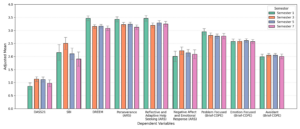
Figure 1. Adjusted Mean Scores of Measured Variables Across Academic Semesters
Barplot displays adjusted means from ANCOVA analyses across four academic stages (Semesters 1, 3, 5, and 7) after adjustment for relevant covariates. Variables include psychological distress (DASS-21), school burnout (SBI), educational environment perception (DREEM), resilience traits (ARS-24), and coping strategies (Brief-COPE). Note that students in Semester 1 showed the most favorable characteristics, with lower distress and burnout and higher DREEM and positive resilience traits. In the middle of their training (particularly Semester 3), students were characterised by high distress, burnout, and low positive resilience traits. Error bars denote the 95% confidence intervals.
Student progression also influenced School Burnout Inventory scores (F [3, 663] = 5.33, p = .001, η² = .024). Post-hoc comparisons revealed that Semester 3 students reported the highest levels of burnout, with greater scores than those in Semester 7 (0.60, 95% CI [0.24, 0.96], p = .006) and a marginally significant difference than those in Semester 5 (0.40, 95% CI [0.08, 0.72], p = .075). These findings suggest a pattern of increased stress during the early-to-mid stages of medical training, which appears to taper off in later semesters. Like DASS-21, students with a mental health diagnosis and more time on social media reported higher burnout (p = .009, η² = .010 and p < .001, η² = .024, respectively).
B. Academic Progression and Lifestyle Factors Influenced Students’ Perception of the Learning Environment
DREEM scores differed significantly by semester (F [3, 663] = 14.53, p < .001, η² = .062) and represent one of the strongest effects observed in this study. These suggest that students’ perceptions are influenced by their stage of training. Post-hoc comparisons revealed that students in Semester 1 reported significantly higher DREEM scores compared to those in Semester 3 (0.31, 95% CI [0.20, 0.43]), Semester 5 (0.30, 95% CI [0.18, 0.42]), and Semester 7 (0.38, 95% CI [0.25, 0.51]). All pairwise comparisons were statistically significant at p < .001. These consistent declines in the perceived learning environment across semesters may reflect growing academic pressures and a gradual expectation shift, although we did not explore these potential causes. DREEM scores were also significantly influenced by chronic illness, sleep duration, daily social media use, and time spent studying (p < .05 for all), suggesting that these factors influence students’ perceptions of the learning environment.
C. Resilience Evolves with Academic Progression, while Coping Styles Remain Stable
Perseverance and Adaptive Help-Seeking differed significantly across semesters (F [3, 663] = 6.09, p < .001, η² = .027 and F [3, 663] = 6.92, p < .001, η² = .030, respectively). Post-hoc analysis revealed a consistent decline from Semester 1 compared to Semester 3 (0.20, 95% CI [0.07, 0.33], p = .013), Semester 5 (0.19, 95% CI [0.06, 0.31], p = .013), and Semester 7 (0.30, 95% CI [0.17, 0.44], p < .001). A similar pattern was observed for Adaptive Help-Seeking, with statistically significant declines in Semester 3 (0.27, 95% CI [0.13, 0.41], p = .002) and Semester 7 (0.22, 95% CI [0.07, 0.37], p = .023), and a marginally significant decline in Semester 5 (0.17, 95% CI [0.03, 0.32], p = .069). These findings suggest that these two resilience traits diminish as students progress through medical school, potentially due to academic fatigue or limited support. Both traits were associated with longer average study time (p < .001, η² = .025 and p < .001, η² = .022, respectively), reflecting a bi-directional relationship between them. In contrast, Negative Affect and Emotional Response did not differ significantly by semester (F [3, 663] = 2.21, p = .086, η² = .010). However, it was strongly associated with a history of mental health diagnosis (p < .001) and greater social media use (p < .001, η² = .026). These findings suggest that positive resilience traits like perseverance and help-seeking change dynamically with academic progression and reflect greater study effort. In contrast, negative emotional responses may reflect underlying mental health challenges and lifestyle factors.
Problem-focused, emotion-focused, and avoidant coping demonstrated non-significant effects during the semester. However, avoidant coping was significantly more prevalent among students with a history of mental health diagnosis (p < .001, η² = .038). The influence may be bidirectional as avoidant coping may exacerbate psychological distress, and vice versa. (Holahan et al., 2005) Additional factors such as chronic illness (p = .018), alcohol consumption (p = .004), and gender (p = .001) also showed small but statistically significant associations with avoidant coping. These findings suggest that coping styles are likely shaped more by individual characteristics and previous experiences than by semester progression.
D. Principal Component Analysis (PCA) Identified Distress, Coping, and Resilience as Latent Constructs
A PCA was conducted on the nine standardised variables to address conceptual overlap among psychological variables and improve model stability. Several prerequisites were tested, indicating that the data were suitable for subsequent PCA (Kaiser-Meyer-Olkin test = 0.77; Bartlett’s test of sphericity = p < .001). As shown in Figure 2A, the scree plot supports a three-component solution, which explains approximately 74.3% of the total variance. The component matrix (Figure 2B) showed the pattern of loadings. We interpret component 1 (RC1) as Distress with strong loadings from DASS-21, SBI, avoidant coping, and negative affect. Component 2 (RC2) was interpreted as Coping, haracterized by loadings from problem-focused and emotion-focused coping strategies. Lastly, Component 3 (RC3) was interpreted as Resilience with loadings from perseverance, adaptive help-seeking, and DREEM. Model fit was adequate, with a root mean square residual (RMSR) of 0.065 and an off-diagonal values fit of 0.969.
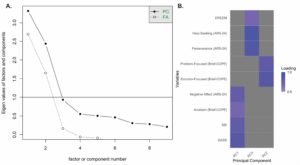 A. Scree plot showing eigenvalues from principal component analysis across component numbers. Note that the inflection point supports a three-component solution.
B. Heatmap of loadings for the three retained principal components. Component 1 (RC1) has strong loadings from DASS-21, SBI, avoidant coping, and negative affect. Component 2 (RC2) has loadings from emotion- and problem-focused coping. Component 3 (RC3) includes loading from perseverance, adaptive help-seeking resilience traits, and DREEM. Loadings below 0.5 are not shown
Figure 2. Dimensional Reduction Using Principal Component Analysis for the Measured Variables
E. Direct and Indirect Pathways Linked Distress to Academic Performance
A structural equation model (SEM) was tested to examine distress’s direct and indirect effects on GPA, with coping and resilience mediating variables (Table 2). The model was just-identified, and global fit indices indicated perfect fit (CFI = 1.000, TLI = 1.000, RMSEA = 0.000). Our interpretation centers on the theoretical basis and the significance of the individual path estimates. Figure 3 shows that distress significantly negatively affected resilience (β = –0.34, p < .001) and weakly positively affected coping (β = 0.08, p = .045). Coping was positively associated with resilience (β = 0.41, p < .001), suggesting that students using more adaptive coping reported higher resilience. Distress also negatively predicted GPA (β = –0.19, p < .001), while resilience (β = –0.15, p = .002) and coping (β = 0.18, p < .001) were also associated with GPA. Mediation analysis revealed a significant indirect effect of distress on GPA via resilience (β = 0.05, p = .003), while the path through coping was not significant (β = 0.02, p = .069). The total indirect effect was significant (β = 0.06, p < .001), supporting the role of coping and resilience as partial mediators. Note that indirect paths are not shown in Figure 3.
|
Paths |
Std. Estimate |
95% CI |
p-value |
|
Direct Effects |
|||
|
Distress → Coping |
0.084 |
[0.00, 0.16] |
0.045 |
|
Distress → Resilience |
-0.341 |
[-0.40, -0.28] |
< .001 |
|
Distress → GPA |
-0.186 |
[-0.21, -0.08] |
< .001 |
|
Coping → Resilience |
0.412 |
[0.34, 0.49] |
< .001 |
|
Coping → GPA |
0.182 |
[0.08, 0.21] |
< .001 |
|
Resilience → GPA |
-0.153 |
[-0.20, -0.04] |
0.002 |
|
Indirect Effects |
|||
|
Distress → Coping → GPA |
0.015 |
[0.00, 0.03] |
0.069 |
|
Distress → Resilience → GPA |
0.052 |
[0.01, 0.07] |
0.003 |
|
Distress → Coping → Resilience → GPA |
-0.005 |
[-0.01, -0.00] |
0.11 |
|
Total Indirect |
0.062 |
[0.02, 0.08] |
< .001 |
Table 2. Direct and Indirect Effects from the Structural Equation Modeling Analysis
The model explains 0.7% of coping, 26.3% of resilience, and 4.7% of GPA variance. While distress and coping predict resilience, they explain little of academic performance and coping, suggesting other factors remain unmeasured and warrant further exploration.
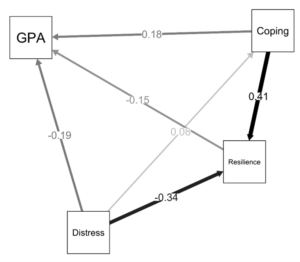
Figure 3. Structural Equation Model Demonstrating the Relationships Between Distress, Coping, Resilience and Academic Performance
Standardised path coefficients are displayed along each arrow. GPA represents academic performance. Distress negatively predicted both resilience (β = -0.34) and GPA (β = -0.19) and had a small positive effect on coping (β = 0.08). Coping was positively associated with resilience (β = 0.41) and GPA (β = 0.18), while resilience negatively predicted GPA (β = -0.15). Arrow thickness reflects the strength of the relationship. All coefficients shown are statistically significant (p < .05). GPA = grade point average. Note that indirect effects are not shown.
F. Psychological Influences on Academic Performance are Stable Across Semesters
A multi-group SEM was conducted using semester as the grouping variable to examine whether the structural relationships in the SEM differed across academic stages. A constrained model was compared to an unconstrained model. This approach allowed us to compare whether the groups’ structural pathways were statistically similar. The chi-square difference test revealed no statistically significant difference between the two models, χ² (18) = 26.75, p = .084. We can conclude that the relationships between psychological predictors and academic performance remained relatively stable throughout the different stages of medical training.
IV. DISCUSSION
This study explored the relationship between psychological distress, coping, resilience, and academic performance among medical students, as well as how these constructs evolved across different stages of training using a pseudo-longitudinal approach. To examine temporal trends, we conducted ANCOVA to compare key variables across academic semesters. We then applied PCA to identify underlying latent constructs, followed by SEM to assess these psychosocial factors’ direct and indirect effects on academic performance. While our findings provide insights into the psychological well-being of medical students, the cross-sectional nature of this study limits our ability to draw causal relationships among distress, coping, resilience, and academic performance.
ANCOVA revealed that psychological distress (DASS-21) and burnout (SBI) varied by semester, following a U-shaped pattern. Distress was lowest in Semester 1, peaked in Semesters 3 and 5, then subsided by Semester 7, reflecting mid‐phase stress during the shift from basic sciences to complex integrated human systems, consistent with prior reports of heightened stress at major curricular transitions (Boni et al., 2018; Hansell et al., 2019; Prendergast et al., 2024; Voltmer et al., 2021). Our results reinforce the importance of implementing preventive mental health measures early in the curriculum to support students during this transition.
Positive resilience traits, including perseverance and help-seeking, declined across semesters and did not recover by Semester 7, unlike distress and burnout. This suggests a lasting impact, likely due to early academic stress. Resilience is known to be dynamic and sensitive to environmental stressors (Köhne et al., 2023; Ollis et al., 2022; Thompson et al., 2016). Wang et al. (2022) longitudinal analysis identified a bidirectional relationship between resilience and burnout, showing that high burnout can degrade resilience over time and vice versa. Our findings support the idea that early distress may weaken resilience, though causality cannot be confirmed due to the study’s cross-sectional design. Perceptions of the learning environment declined steadily across semesters, with Semester 1 students reporting the most positive views. This may reflect rising stress or disillusionment. Prior studies link poor learning climate to burnout, lower academic performance, and reduced quality of life (Edgerton & McKechnie, 2023; Esquerda et al., 2024; Shahzad & Wajid, 2024), highlighting the need for targeted support strategies.
Unlike resilience, coping styles remained stable throughout the semester, supporting their view as enduring personality traits (Kardum & Krapić, 2001). However, avoidant coping was more common in students with mental health diagnoses, chronic illness, or alcohol use, supporting earlier findings linking avoidant strategies with poor psychological outcomes (Thompson et al., 2016; Villasana et al., 2016; Wang et al., 2022). These associations suggest that although coping styles are stable, they may become independent risk factors over time. Since resilience is environmentally influenced and were shown to be modifiable (Rosas-Santiago, 2019), targeting maladaptive coping early may be a viable preventive action. Identifying avoidant patterns and offering structured interventions, especially during curricular transitions, could support well-being, resilience, and academic success.
We employed PCA to combine the nine variables to reduce redundancy and increase stability. PCA analysis identified three main components that explained 74.3% of the total variance. The three interpretable components are distress, coping, and resilience. The conceptual grouping is grounded in established theoretical frameworks and supported by statistical analysis. The distress component, comprising psychological distress, burnout, negative affect, and avoidant coping, captures a multidimensional construct of distress as interactions between demands and coping resources, aligning with Lazarus and Folkman’s transactional model (Folkman, 2013). Avoidant coping and negative affect were factors affecting and causing distress (Holahan et al., 2005; Kardum & Krapić, 2001; Thompson et al., 2016), reinforcing their role as core components.
The resilience component, perseverance, adaptive help-seeking, and perceptions of the learning environment reflect resilience as a positive resource that interacts with students’ perceptions within their learning environment. This aligns with models that conceptualise resilience not as a fixed trait but as a dynamic construct shaped by both the individual and the social and environmental context they are currently in (Béné et al., 2016; Waxman et al., 1997). The coping component, emotion-focused and problem-focused strategies, captures the adaptive behavioral and cognitive responses to stress (Kardum & Krapić, 2001; Thompson et al., 2016). This contrasts with avoidant coping, which was viewed as maladaptive and had a higher association with distress (Holahan et al., 2005). According to Lazarus and Folkman’s model, these strategies serve as the primary means through which individuals attempt to manage stress and maintain psychological equilibrium (Folkman, 2013). The constructs we defined were statistically distinct and theoretically sound, supporting their use as latent constructs in subsequent SEM analysis.
Structural equation modeling supported the framework linking distress, coping, and resilience to academic performance. In line with Lazarus and Folkman’s model (Folkman, 2013), distress negatively affected GPA directly and indirectly via reduced resilience. This highlights how psychological burden can impair concentration and motivation (Almarzouki, 2024). The model confirmed resilience as a buffer that mitigates distress’s impact on performance, aligning with studies showing its protective role against burnout and stress both in academic and work contexts (de la Fuente et al., 2021; Herrero & Díaz, 2025, 2025; Zhang et al., 2024, 2024; Zhu et al., 2024, 2024). While coping had a marginal indirect effect, its strong link to resilience suggests that enhancing adaptive coping may improve both resilience and academic outcomes. Promoting effective coping as an intervention target may boost resilience and, in turn, academic performance.
An unexpected finding of this study was that resilience negatively predicted GPA, a result that contrasts with the literature suggesting resilience supports academic success (Calo et al., 2019, 2024; Ho & Kwek, 2022; Jumat et al., 2020; Sanjaya et al., 2024). Possible explanations include measurement artifacts due to how resilience was defined and its overlap with burnout, and reference bias in self‐ratings. West et al. showed that students in demanding environments judge non‐cognitive traits like grit using their peers as standards, which can obscure their relationship with GPA (West et al., 2016). Future studies should account for this bias by using methods like external observer ratings or vignettes to improve measurement validity.
Although most SEM effect sizes were small, they were significant and consistent with prior research linking distress, resilience, and coping to student well-being and performance. Small effects, when sustained or combined with other stressors, can undermine engagement and outcomes. This highlights the need for early psychological interventions to prevent cumulative impacts throughout medical school. Given the fluctuating mean levels across semesters, we conducted a multi-group SEM using semester as the grouping variable to test whether relationships among distress, coping, resilience, and performance varied across training stages. The non-significant chi-square difference indicates stable structural pathways, suggesting that interventions targeting coping and resilience may be effective across all semesters.
This study helps us understand how distress, coping, and resilience relate to academic performance throughout medical school. One of its strengths is its local setting in Indonesia, offering insight into how unique factors in Southeast Asia, like education systems, cultural expectations, and health care environments, shape students’ mental health and academic experience. These findings add to the limited research from the Asia-Pacific region and point to the need for tailored support and policies.
There are some limitations to this study. Other important factors that could affect stress and performance were not measured. Students’ sense of belonging, which recent studies have shown plays a key role in helping students stay engaged, avoid burnout, and do well academically, was not measured (Aker & Şahin, 2022; Leep Hunderfund et al., 2025). Similarly, impostor syndrome, which affects up to half of medical students (Sotiropoulos, 2021; Villwock et al., 2016) and is linked to burnout, low self-esteem, and poorer academic outcomes (Diaconescu et al., 2024; Faizan Siddiqui & Azaroual, 2024; Villwock et al., 2016), was not assessed. The absence of these constructs may account for unexplained variance in our models and represents important directions for future research.
Additionally, while the tuition source was collected, it was not analysed as a proxy for socio-economic status, and we acknowledge that it may not fully reflect students’ financial circumstances. This is a notable limitation, as socioeconomic status has been consistently linked to academic success (Tan, 2024). Future studies should incorporate measurements, such as parental income or education.
Other limitations regarding the study design are also acknowledged. First, the cross-sectional design of our study prevents causal inferences regarding the relationships among distress, coping, resilience, and academic performance. Although we used a pseudo-longitudinal approach by comparing semester groups, longitudinal data would be needed to confirm how these constructs evolve over time. Second, reliance on self-reported measures introduces potential bias, such as recall and social desirability. Psychological and behavioural data, including alcohol, smoking, and mental health history, were self-reported, which may lead to underreporting, especially among those with higher use (Davis et al., 2010). Future studies should consider objective or multi-source reporting. Third, although PCA and SEM reduced redundancy and improved model stability, they may oversimplify complex psychological constructs. The relatively low explained variance in GPA also suggests other key predictors were not captured. Finally, as this was a single-institution study, generalisability is limited. Future research should adopt a multi-center, longitudinal design to improve validity and capture differences across educational and cultural contexts in the Asia-Pacific region.
V. CONCLUSION
This study presents a robust, theory-driven model that directly and indirectly defines how distress impacts GPA through coping and resilience. Notably, resilience declined over time and did not recover to baseline, even without high psychological stress and burnout, while coping styles remained relatively stable. This suggests that interventions should not focus solely on resilience but also on enhancing coping strategies. Embedding such interventions during academic transition periods may help preserve psychological resources and improve academic outcomes.
Notes on Contributors
Ardo Sanjaya contributed to concept, analysis, and writing. Ray Sebastian helped collect data and draft the paper. Kevin Gunawan assisted in drafting and data collection. Christian Edwin led concept, analysis, and revisions. Nathanael A. Mianto worked on analysis and revisions. Cindra Paskaria contributed to concept and revisions. All authors have read and approved the final version of the manuscript.
Ethical Approval
This study followed the Declaration of Helsinki and received ethical approval from the Research Ethics Committee of Maranatha Christian University (Approval Number: 089/KEP/VII/2024). Electronic informed consent was obtained from all participants before their inclusion, with the consent form presented at the start of the online survey. Participants’ registration numbers, names, and email addresses were initially collected to facilitate accurate data matching and communication. However, all identifiable information was removed, and the dataset was fully anonymised before analysis to ensure confidentiality. Participants were informed that their responses would remain confidential and be used exclusively for research. All data collection and analysis procedures complied with institutional and national ethical standards to safeguard participant privacy and well-being.
Data Availability
The datasets generated during the study are available from the corresponding author upon reasonable request and are subject to ethical considerations. Supplementary materials, including the complete statistical results, complementing the articles, are available on Figshare: https://doi.org/10.6084/m9.figshare.28916246 (Sanjaya, 2025).
Acknowledgement
The authors thank Maranatha Christian University for providing the facilities to create this research.
Funding
This research was supported by an Internal Research Grant from Maranatha Christian University, under grant number 020/SK/AK/UKM/III/2025.
Declaration of Interest
The authors declare no conflict of interest.
References
Abreu Alves, S., Sinval, J., Lucas Neto, L., Marôco, J., Gonçalves Ferreira, A., & Oliveira, P. (2022). Burnout and dropout intention in medical students: The protective role of academic engagement. BMC Medical Education, 22(1), 83. https://doi.org/10.1186/s12909-021-03094-9
Aker, S., & Şahin, M. K. (2022). The relationship between school burnout, sense of school belonging and academic achievement in preclinical medical students. Advances in Health Sciences Education, 27(4), 949–963. https://doi.org/10.1007/s10459-022-10121-x
Almansour, M., Abouammoh, N., Idris, R. Bin, Alsuliman, O. A., Alhomaidi, R. A., Alhumud, M. H., & Alghamdi, H. A. (2024). Exploring medical students’ experience of the learning environment: A mixed methods study in Saudi medical college. BMC Medical Education, 24(1), 723. https://doi.org/10.1186/s12909-024-05716-4
Almarzouki, A. F. (2024). Stress, working memory, and academic performance: A neuroscience perspective. Stress, 27(1). https://doi.org/10.1080/10253890.2024.2364333
Bayram Deger, V. (2024). Editorial: Anxiety, burnout, and stress among healthcare professionals. Frontiers in Psychology, 14. https://doi.org/10.3389/fpsyg.2023.1348250
Béné, C., Al-Hassan, R. M., Amarasinghe, O., Fong, P., Ocran, J., Onumah, E., Ratuniata, R., Tuyen, T. Van, McGregor, J. A., & Mills, D. J. (2016). Is resilience socially constructed? Empirical evidence from Fiji, Ghana, Sri Lanka, and Vietnam. Global Environmental Change, 38, 153–170. https://doi.org/10.1016/j.gloenvcha.2016.03.005
Ben-Zur, H. (2019). Transactional model of stress and coping. In V. Zeigler-Hill & T. Shackelford (Eds.), Encyclopedia of personality and individual differences (pp. 1–4). Springer International Publishing. https://doi.org/10.1007/978-3-319-28099-8_2128-1
Boni, R. A. dos S., Paiva, C. E., de Oliveira, M. A., Lucchetti, G., Fregnani, J. H. T. G., & Paiva, B. S. R. (2018). Burnout among medical students during the first years of undergraduate school: Prevalence and associated factors. PLOS ONE, 13(3), e0191746. https://doi.org/10.1371/journal.pone.0191746
Braquehais, M. D., & Vargas-Cáceres, S. (2023). Psychiatric issues among health professionals. Medical Clinics of North America, 107(1), 131–142. https://doi.org/10.1016/j.mcna.2022.04.004
Calo, M., Judd, B., & Peiris, C. (2024). Grit, resilience and growth‐mindset interventions in health professional students: A systematic review and meta‐analysis. Medical Education, 58(8), 902–919. https://doi.org/10.1111/medu.15391
Calo, M., Peiris, C., Chipchase, L., Blackstock, F., & Judd, B. (2019). Grit, resilience and mindset in health students. The Clinical Teacher, 16(4), 317–322. https://doi.org/10.1111/tct.13056
Davis, C. G., Thake, J., & Vilhena, N. (2010). Social desirability biases in self-reported alcohol consumption and harms. Addictive Behaviors, 35(4), 302–311. https://doi.org/10.1016/j.addbeh.2009.11.001
de la Fuente, J., González-Torres, M. C., Artuch-Garde, R., Vera-Martínez, M. M., Martínez-Vicente, J. M., & Peralta-S’anchez, F. J. (2021). Resilience as a buffering variable between the big five components and factors and symptoms of academic stress at university. Frontiers in Psychiatry, 12. https://doi.org/10.3389/fpsyt.2021.600240
Diaconescu, L. V., Mihăilescu, A. I., Stoian-Bălăşoiu, I. R., Cosma, A.-N., Drakou, A., & Popa-Velea, O. (2024). The predictive value of burnout and impostor syndrome on medical students’ self-esteem and academic performance: A cross-sectional study. Education Sciences, 14(12), 1318. https://doi.org/10.3390/educsci14121318
Ding, Y., Fu, X., Liu, R., Hwang, J., Hong, W., & Wang, J. (2021). The impact of different coping styles on psychological distress during the COVID-19: The mediating role of perceived stress. International Journal of Environmental Research and Public Health, 18(20), 10947. https://doi.org/10.3390/ijerph182010947
Dyrbye, L. N., Thomas, M. R., Harper, W., Massie, F. S., Power, D. V, Eacker, A., Szydlo, D. W., Novotny, P. J., Sloan, J. A., & Shanafelt, T. D. (2009). The learning environment and medical student burnout: A multicentre study. Medical Education, 43(3), 274–282. https://doi.org/10.1111/j.1365-2923.2008.03282.x
Dyrbye, L. N., Thomas, M. R., Massie, F. S., Power, D. V, Eacker, A., Harper, W., Durning, S., Moutier, C., Szydlo, D. W., Novotny, P. J., Sloan, J. A., & Shanafelt, T. D. (2008). Burnout and suicidal ideation among U.S. medical students. Annals of Internal Medicine, 149(5), 334–341. https://doi.org/10.7326/0003-4819-149-5-200809020-00008
Edgerton, E., & McKechnie, J. (2023). The relationship between student’s perceptions of their school environment and academic achievement. Frontiers in Psychology, 13. https://doi.org/10.3389/fpsyg.2022.959259
Esquerda, M., Garcia-Estañ, J., Ruiz-Rosales, A., Garcia-Abajo, J. M., & Millan, J. (2024). Relationship between academic climate and burnout in Spanish medical schools. Educación Médica, 25(6), 100955. https://doi.org/10.1016/j.edumed.2024.100955
Faizan Siddiqui, M., & Azaroual, M. (2024). Combatting burnout culture and imposter syndrome in medical students and healthcare professionals: A future perspective. Journal of Medical Education and Curricular Development, 11. https://doi.org/10.1177/23821205241285601
Fares, J., Al Tabosh, H., Saadeddin, Z., El Mouhayyar, C., & Aridi, H. (2016). Stress, burnout and coping strategies in preclinical medical students. North American Journal of Medical Sciences, 8(2), 75. https://doi.org/10.4103/1947-2714.177299
Findyartini, A., Greviana, N., Putera, A. M., Sutanto, R. L., Saki, V. Y., & Felaza, E. (2021). The relationships between resilience and student personal factors in an undergraduate medical program. BMC Medical Education, 21(1), 113. https://doi.org/10.1186/s12909-021-02547-5
Folkman, S. (2013). Stress: Appraisal and coping. In M. D. Gellman & J. R. Turner (Eds.), Encyclopedia of behavioral medicine (pp. 1913–1915). Springer New York. https://doi.org/10.1007/978-1-4419-1005-9_215
Hansell, M. W., Ungerleider, R. M., Brooks, C. A., Knudson, M. P., Kirk, J. K., & Ungerleider, J. D. (2019). Temporal trends in medical student burnout. Family Medicine, 51(5), 399–404. https://doi.org/10.22454/FamMed.2019.270753
Herrero, R., & Díaz, A. (2025). The role of resilience as a buffer for burden and psychological distress in ads caregivers: A cross-sectional study. Sci, 7(2), 38. https://doi.org/10.3390/sci7020038
Ho, S. W., & Kwek, E. B. (2022). Levels of burnout and its association with resilience and coping mechanisms among orthopaedic surgery residents: A single institution experience from Singapore. Singapore Medical Journal, 63(7), 381–387. https://doi.org/10.11622/smedj.2021010
Holahan, C. J., Moos, R. H., Holahan, C. K., Brennan, P. L., & Schutte, K. K. (2005). Stress generation, avoidance coping, and depressive symptoms: A 10-year model. Journal of Consulting and Clinical Psychology, 73(4), 658–666. https://doi.org/10.1037/0022-006X.73.4.658
Jumat, M. R., Chow, P. K.-H., Allen, J. C., Lai, S. H., Hwang, N.-C., Iqbal, J., Mok, M. U. S., Rapisarda, A., Velkey, J. M., Engle, D. L., & Compton, S. (2020). Grit protects medical students from burnout: A longitudinal study. BMC Medical Education, 20(1), 266. https://doi.org/10.1186/s12909-020-02187-1
Kardum, I., & Krapić, N. (2001). Personality traits, stressful life events, and coping styles in early adolescence. Personality and Individual Differences, 30(3), 503–515. https://doi.org/10.1016/S0191-8869(00)00041-6
Kassab, S. E., Rathan, R., Taylor, D. C. M., & Hamdy, H. (2024). The impact of the educational environment on student engagement and academic performance in health professions education. BMC Medical Education, 24(1), 1278. https://doi.org/10.1186/s12909-024-06270-9
Köhne, S., Engert, V., & Rosendahl, J. (2023). Stability of resilience in times of the COVID-19 pandemic. Personality and Mental Health, 17(1), 55–66. https://doi.org/10.1002/pmh.1560
Leep Hunderfund, A. N., Saberzadeh Ardestani, B., Laughlin-Tommaso, S. K., Jordan, B. L., Melson, V. A., Montenegro, M. M., Brushaber, D. E., West, C. P., & Dyrbye, L. N. (2025). Sense of belonging among medical students, residents, and fellows: Associations with burnout, recruitment retention, and learning environment. Academic Medicine, 100(2), 191–202. https://doi.org/10.1097/ACM.0000000000005892
Lin, Y. K., Lin, C.-D., Lin, B. Y.-J., & Chen, D.-Y. (2019). Medical students’ resilience: A protective role on stress and quality of life in clerkship. BMC Medical Education, 19(1), 473. https://doi.org/10.1186/s12909-019-1912-4
Liu, Y., & Cao, Z. (2022). The impact of social support and stress on academic burnout among medical students in online learning: The mediating role of resilience. Frontiers in Public Health, 10. https://doi.org/10.3389/fpubh.2022.938132
Masten, A. S. (2001). Ordinary magic: Resilience processes in development. American Psychologist, 56(3), 227–238. https://doi.org/10.1037/0003-066X.56.3.227
Neufeld, A., & Malin, G. (2021). How medical students cope with stress: A cross-sectional look at strategies and their sociodemographic antecedents. BMC Medical Education, 21(1), 299. https://doi.org/10.1186/s12909-021-02734-4
Nguyen, T., Pu, C., Waits, A., Tran, T. D., Ngo, T. H., Huynh, Q. T. V., & Huang, S.-L. (2023). Transforming stress program on medical students’ stress mindset and coping strategies: A quasi-experimental study. BMC Medical Education, 23(1), 587. https://doi.org/10.1186/s12909-023-04559-9
O. Ogoma, S. (2020). Problem-focused coping controls burnout in medical students: The case of a selected medical school in Kenya. Journal of Psychology and Behavioural Science, 8(1), 69–79. https://jpbs.thebrpi.org/journals/jpbs/Vol_8_No_1_June_2020/8.pdf
Ollis, L., Cropley, M., Plans, D., & Cogo-Moreira, H. (2022). Disentangling change across the time and true stability of employees’ resilience using latent state model. BMC Psychiatry, 22, 651. https://doi.org/10.1186/s12888-022-04294-3
Prendergast, M., Cardoso Pinto, A. M., Harvey, C.-J., & Muir, E. (2024). Burnout in early year medical students: Experiences, drivers and the perceived value of a reflection-based intervention. BMC Medical Education, 24, 7. https://doi.org/10.1186/s12909-023-04948-0
Rosas-Santiago, F. J. (2019). Cognitive behavioral and psychoeducational intervention to modify coping styles and burnout syndrome in civil servants: An experimental study. Ansiedad y Estrés, 25(2), 91–96. https://doi.org/10.1016/j.anyes.2019.09.001
Sanjaya, A. (2025). A cross-sectional study of distress, coping, resilience, and academic performance in medical students [Data set]. Figshare. https://doi.org/10.6084/m9.figshare.28916246
Sanjaya, A., Mianto, N. A., Wijayanto, K. R., & Edwin, C. (2024). Resilience: A panacea for burnout in medical students during clinical training?: A narrative review. Medicine, 103(49), e40794. https://doi.org/10.1097/MD.0000000000040794
Shahzad, S., & Wajid, G. (2024). Learning environment and its relationship with quality of life and burn-out among undergraduate medical students in Pakistan: A cross-sectional study. BMJ Open, 14(8), e080440. https://doi.org/10.1136/bmjopen-2023-080440
Shanafelt, T. D. (2021). Physician well-being 2.0: Where are we and where are we going? Mayo Clinic Proceedings, 96(10), 2682–2693. https://doi.org/10.1016/j.mayocp.2021.06.005
Siddiqui, F., & Malik, A. A. (2019). Promoting self-regulated learning skills in medical students is the need of time. Journal of Taibah University Medical Sciences, 14(3), 277–281. https://doi.org/10.1016/j.jtumed.2019.03.003
Simons, C. T., Dessirier, J. M., Carstens, M. I., O’Mahony, M., & Carstens, E. (1999). Neurobiological and psychophysical mechanisms underlying the oral sensation produced by carbonated water. The Journal of Neuroscience: The Official Journal of the Society for Neuroscience, 19(18), 8134–8144. https://doi.org/10.1523/JNEUROSCI.19-18-08134.1999
Sotiropoulos, M. G. (2021). Impostor syndrome: A calling for a career in medical education? Postgraduate Medical Journal, 97(1146), 264–265. https://doi.org/10.1136/postgradmedj-2020-138360
Tan, C. Y. (2024). Socioeconomic status and student learning: Insights from an umbrella review. Educational Psychology Review, 36(4), 100. https://doi.org/10.1007/s10648-024-09929-3
Thompson, G., McBride, R. B., Hosford, C. C., & Halaas, G. (2016). Resilience among medical students: The role of coping style and social support. Teaching and Learning in Medicine, 28(2), 174–182. https://doi.org/10.1080/10401334.2016.1146611
van der Merwe, L. J., Botha, A., & Joubert, G. (2020). Resilience and coping strategies of undergraduate medical students at the University of the Free State. South African Journal of Psychiatry, 26, a1471. https://doi.org/10.4102/sajpsychiatry.v26i0.1471
Villasana, M., Alonso-Tapia, J., & Ruiz, M. (2016). A model for assessing coping and its relation to resilience in adolescence from the perspective of “person–situation interaction”. Personality and Individual Differences, 98, 250–256. https://doi.org/10.1016/j.paid.2016.04.053
Villwock, J. A., Sobin, L. B., Koester, L. A., & Harris, T. M. (2016). Impostor syndrome and burnout among American medical students: A pilot study. International Journal of Medical Education, 7, 364–369. https://doi.org/10.5116/ijme.5801.eac4
Voltmer, E., Köslich-Strumann, S., Voltmer, J.-B., & Kötter, T. (2021). Stress and behavior patterns throughout medical education – A six year longitudinal study. BMC Medical Education, 21(1), 454. https://doi.org/10.1186/s12909-021-02862-x
Wang, Q., Sun, W., & Wu, H. (2022). Associations between academic burnout, resilience and life satisfaction among medical students: A three-wave longitudinal study. BMC Medical Education, 22(1), 248. https://doi.org/10.1186/s12909-022-03326-6
Wasson, L. T., Cusmano, A., Meli, L., Louh, I., Falzon, L., Hampsey, M., Young, G., Shaffer, J., & Davidson, K. W. (2016). Association between learning environment interventions and medical student well-being. JAMA, 316(21), 2237. https://doi.org/10.1001/jama.2016.17573
Waxman, H. C., Huang, S.-Y. L., & Wang, M. C. (1997). Investigating the classroom learning environment of resilient and non-resilient students from inner-city elementary schools. International Journal of Educational Research, 27(4), 343–353. https://doi.org/10.1016/S0883-0355(97)90016-1
West, M. R., Kraft, M. A., Finn, A. S., Martin, R. E., Duckworth, A. L., Gabrieli, C. F. O., & Gabrieli, J. D. E. (2016). Promise and paradox: Measuring students’ non-cognitive skills and the impact of schooling. Educational Evaluation and Policy Analysis, 38(1), 148–170. https://doi.org/10.3102/0162373715597298
Zhang, X., Tian, W., Tang, X., Jia, L., Meng, X., Shi, T., & Zhao, J. (2024). Mediating role of resilience on burnout to well-being for hospital nursing staff in Northeast China: A cross-sectional study. BMJ Open, 14(11), e081718. https://doi.org/10.1136/bmjopen-2023-081718
Zhu, Z., Hu, X., & Zhang, B. (2024). The role of resilience in navigating work stress and achieving daily work goals. Journal of Organizational Behavior, 46(8), 1107–1119. https://doi.org/10.1002/job.2839
*Ardo Sanjaya
Maranatha Biomedical Research Laboratory,
Faculty of Medicine,
Maranatha Christian University
Jl. Surya Sumantri No. 65
Bandung, Indonesia, 40164
+62 859 1066 09851
ardo.sanjaya@med.maranatha.edu
Announcements
- Best Reviewer Awards 2025
TAPS would like to express gratitude and thanks to an extraordinary group of reviewers who are awarded the Best Reviewer Awards for 2025.
Refer here for the list of recipients. - Most Accessed Article 2025
The Most Accessed Article of 2025 goes to Analyses of self-care agency and mindset: A pilot study on Malaysian undergraduate medical students.
Congratulations, Dr Reshma Mohamed Ansari and co-authors! - Best Article Award 2025
The Best Article Award of 2025 goes to From disparity to inclusivity: Narrative review of strategies in medical education to bridge gender inequality.
Congratulations, Dr Han Ting Jillian Yeo and co-authors! - Best Reviewer Awards 2024
TAPS would like to express gratitude and thanks to an extraordinary group of reviewers who are awarded the Best Reviewer Awards for 2024.
Refer here for the list of recipients. - Most Accessed Article 2024
The Most Accessed Article of 2024 goes to Persons with Disabilities (PWD) as patient educators: Effects on medical student attitudes.
Congratulations, Dr Vivien Lee and co-authors! - Best Article Award 2024
The Best Article Award of 2024 goes to Achieving Competency for Year 1 Doctors in Singapore: Comparing Night Float or Traditional Call.
Congratulations, Dr Tan Mae Yue and co-authors! - Best Reviewer Awards 2023
TAPS would like to express gratitude and thanks to an extraordinary group of reviewers who are awarded the Best Reviewer Awards for 2023.
Refer here for the list of recipients. - Most Accessed Article 2023
The Most Accessed Article of 2023 goes to Small, sustainable, steps to success as a scholar in Health Professions Education – Micro (macro and meta) matters.
Congratulations, A/Prof Goh Poh-Sun & Dr Elisabeth Schlegel! - Best Article Award 2023
The Best Article Award of 2023 goes to Increasing the value of Community-Based Education through Interprofessional Education.
Congratulations, Dr Tri Nur Kristina and co-authors! - Best Reviewer Awards 2022
TAPS would like to express gratitude and thanks to an extraordinary group of reviewers who are awarded the Best Reviewer Awards for 2022.
Refer here for the list of recipients. - Most Accessed Article 2022
The Most Accessed Article of 2022 goes to An urgent need to teach complexity science to health science students.
Congratulations, Dr Bhuvan KC and Dr Ravi Shankar. - Best Article Award 2022
The Best Article Award of 2022 goes to From clinician to educator: A scoping review of professional identity and the influence of impostor phenomenon.
Congratulations, Ms Freeman and co-authors.