Online medical interview training in preclinical medical education: Educational outcomes comparable to face-to-face training
Submitted: 24 October 2024
Accepted: 5 July 2025
Published online: 7 October, TAPS 2025, 10(4), 26-34
https://doi.org/10.29060/TAPS.2025-10-4/OA3552
Shoko Horita1,2, Masashi Izumiya2, Satoshi Kondo2,3,4, Junki Mizumoto2,5,6, Hiroko Mori6,7 & Masato Eto2
1Department of Medical Education, School of Medicine, Teikyo University, Itabashi-ku, Tokyo, Japan; 2Department of Medical Education Studies, International Research Centre for Medical Education, Graduate School of Medicine, The University of Tokyo, Bunkyo-ku, Tokyo, Japan; 3Department of Medical Education, Graduate School of Medicine, University of Toyama, Toyama, Japan; 4Center for Medical Education and Career Development, Graduate School of Medicine, University of Toyama, Toyama, Japan; 5Department of Family Practice, Ehime Seikyo Hospital, Matsuyama, Ehime, Japan; 6Center for General Medicine Education, School of Medicine, Keio University, Shinjuku, Tokyo, Japan; 7Professional Development Centre, The University of Tokyo Hospital, Bunkyo-ku, Tokyo, Japan
Abstract
Introduction: Conventionally, face-to-face education has been prevalent in medical education because it can help medical students learn interpersonal skills, including medical interviews and physical examination. However, because of the coronavirus disease 2019 pandemic, face-to-face education was suspended to prevent the spread of the infection. As face-to-face classes in Japan were discontinued when the pandemic began in the spring of 2020, we developed an online education program to develop medical interview skills. We were interested in determining the educational outcomes between face-to-face and online medical interview classes. Therefore, we compared them before and after the pandemic.
Methods: Fourth-year students of the University of Tokyo Medical School took medical interview classes. Under consent, the score of the medical interview area of the preclinical clerkship, Objective Structured Clinical Examination (OSCE), as a high-stakes examination, which falls at the top level of the Kirkpatrick’s model, was compared by year or before and after the pandemic.
Results: The online group showed higher item-wise scores of the medical interview of the preclinical clerkship OSCE than the face-to-face group. In terms of the global score, no significant difference was observed. In the computer-based test (CBT), the online group had higher scores compared with the face-to-face group.
Conclusion: The educational outcomes of online medical interview classes were not inferior to those of conventional face-to-face classes, as revealed by high-stakes examination preclinical clerkship OSCE. Similar to face-to-face education, online education is a viable option for developing interpersonal skills.
Keywords: COVID-19 Pandemic, Medical Interview, OSCE, Educational Outcome, Online Education, Interpersonal Skills, Communication Skills
Practice Highlights
- Due to the COVID-19 pandemic, we shifted medical interview classes from face-to-face to online.
- The online group had interview global OSCE scores non-inferior to those of the face-to-face group.
- The online group had higher interview elementary OSCE scores than the face-to-face group.
I. INTRODUCTION
The coronavirus disease 2019 (COVID-19) pandemic severely restricted face-to-face teaching and affected almost all levels and fields of education, including undergraduate preclinical medical education (Bastos et al., 2022; Crawford et al., 2020). Moreover, it resulted in drastic changes in medical education. Globally, face-to-face learning was forcibly discontinued as part of infection control. Thus, to continue medical education, online or remote learning was rapidly introduced (Daniel et al., 2021; Gordon et al., 2020). Various instrumental trans communication devices, including video conferencing tools, simulation, virtual reality, and augmented reality, were used to facilitate online learning. However, this rather hasty shift from face-to-face to online learning brought some confusion into the field of medical education. In the UK, Dost et al. (2020) reported that medical students were unsatisfied with online classes compared with face-to-face classes.
Globally, tele-education is increasingly being encouraged around the world (American Medical Association, 2016). In the field of medical interview (Budakoğlu et al., 2021; Hammersley et al., 2019; Zaccariah et al., 2022), telemedicine is gradually becoming common, showing favourable results. However, because of technical problems, tele-education did not spread smoothly (Zaccariah et al., 2022). Additionally, the educational outcomes of both strategies have not been satisfactorily studied (Khamees et al., 2022). Recently, some reports showing that the educational outcome of online classes are equal or more effective than traditional face-to-face education, however, they are restricted mainly in knowledge-based education (Alshaibani et al., 2023; Basuodan, 2024; Saad et al., 2023). Furthermore, few studies have compared high-stakes examination, including the Objective Structured Clinical Examination (OSCE), and no study has compared the educational results between face-to-face classes and tele-education (online) using the top level of Kirkpatrick’s model (Kirkpatrick, 1996).
The OSCE (Harden et al., 1975) has been widely accepted as a form to assess clinical performance in medical education. Currently, OSCEs are used worldwide to appraise medical students’ communication and clinical skills. Various educational methods have been evaluated using OSCE as one of the indicators of educational outcomes (Guetterman et al., 2019). In Japan, passing the preclinical clerkship (pre-CC) OSCE has become legally obligatory as one of the elements for promotion to the CC course since the spring of 2023. In 2023, the pre-CC OSCE in Japan is conducted in at least eight areas, which are medical interview, “Basic Clinical Procedure”, “Basic Life Support”, and physical examinations of “head and neck”, “chest”, “vital signs”, “abdomen”, and “neurological examinations”.
In the present study, we aimed to determine the educational outcomes between face-to-face and online medical interview classes. We provided medical interview classes to fourth-year medical students before taking the pre-CC OSCE, face-to-face classes before 2019, and tele-education (online) after 2020. We decided to conduct research in medical interview, other than the other areas of the pre-CC OSCE, because of the importance of the medical interview as the basis of medical practice. Moreover, it was inevitable that the medical interview classes had to be implemented as online classes to protect the simulated patients form the risk of infection, which was another main reason for selecting medical interview for this research. In another point of view, medical interview classes were able to implement via online. As mentioned above, no prior studies have compared face-to-face and online medical interview training using both high-stakes OSCE score and Kirkpatrick’s top-level outcomes, our study would have significant importance.
II. METHOD
A. Participants
This study was approved in 2021 by the ethics committee of the University of Tokyo (UTokyo) Faculty of Medicine (Approval No. 2021005NI). All methods were performed in accordance with the relevant guidelines and regulations. Moreover, the data of students who provided consent for the secondary use of their data (Approval No. 11763) in another research approved in 2017 were included.
B. Sample Population
Students in the UTokyo Faculty of Medicine were asked if they were willing to participate in “A Study of the Educational Effectiveness of Online “Medical interviewing Practice” in the post-class reflection questionnaire of the “Online medical interview classes or the waiting period after the pre-CC OSCE. Out of 229 students (2021 and 2022), 87 students participated in this study. A summary of the annual participants is shown in Appendix 1. In early 2020 almost all the classes in UTokyo were stopped due to the COVID-19 pandemic, which made it difficult to contact students face-to-face and to obtain participants in the previous research (Approval No. 11763); and as this research started in 2021, it was practically difficult to obtain consent to participate in this study in 2020. In 2020 the online medical interview classes have just been launched, which significantly improved in 2021. Hence, we thought that it would be better to exclude the small participants of 2020 from the analysis to keep the validity of this study.
C. Details of Medical Interview Classes
Before 2019, the medical interview classes were performed as follows: Early in their fourth year, students joined classes introducing the outline of medical interview. A few days before the class, students watched an instructional video of a medical interview performed by the Common Achievement Tests Organization (CATO) (2005) in Japan. Afterward, students in a group of eight to nine faced the simulated patient in a classroom in the UTokyo and performed a medical interview roleplay. Thereafter, feedback about the technical factor of the medical interview as well as rapport status and nonverbal communications such as faces and gesture was provided by the students themselves, other students, simulated patients, and teachers. Since 2020, most face-to-face classrooms, including those in the present study, were closed because of the COVID-19 pandemic and were replaced with online classes. The present face-to-face class was also held online with the simulated patients and teachers using Zoom(R). Using the “Close-Up” function of Zoom(R), the simulated patient and student were faced with each other, whereas other participants (e.g., other students, other simulated patients, and the teacher) were not on the television (Appendix 2). After the roleplay was over, all students and the teacher came back on the television and provided feedback to the student, similar to face-to-face classes. Moreover, the class was recorded using the function of Zoom(R) and provided to students exclusively for review. After the class students reflected on the reflection sheet (until 2019) or the Learning Management System (from 2020) which was reviewed and commented on by teachers. The contents of the reflections were used for this study to investigate the impressions of the students.
D. Pre-CC OSCE and Computer-Based Test (CBT)
In Japan, medical students usually take the pre-CC OSCE in the fourth year, prior to the two-year CC course. Before 2022, the minimum assessment factors were medical interview, physical examinations (including head and neck, chest, abdomen, neurological examinations), basic clinical procedure, and basic life support. The examinations were administered by CATO. The evaluation criteria are not publicly available because of CATO policy. Two scores are used in the evaluation: global score (GS) which means the evaluation as a total performance and item-wise score (IS) which means scores by checklist. Before 2023, the borderline was set by each institute. At least one certified evaluator per area was responsible, and each evaluator was a faculty member. Moreover, CATO sent at least one external evaluator per area and an external supervisor. After each performance, each examinee was evaluated by two or three evaluators per room. The pre-CC OSCE is one of the examinations that students must pass to proceed to the CC course.
Aside from the pre-CC OSCE, students must also pass the CBT. The CBT corresponds to the assessment of medical knowledge prior to the CC (Horita et al., 2021). In 2023, the pre-CC OSCE and CBT have been made official, and students must pass both examinations before they can take the national board examination in Japan.
E. Data Analysis
The pre-CC OSCE scores were analysed using R, Rstudio, JMP version17.0 (SAS Institute, N.C., USA) and Microsoft Excel (Microsoft Corporation, W.A., USA). Non-paired T test, Mann-Whitney U test, and Steel-Dwass test were used respectively, for parametric or non-parametric comparisons.
III. RESULTS
A. Year-to-Year Comparison of the Pre-CC OSCE Results in the Medical Interview area and CBT Results
First, we compared the year-to-year results of the pre-CC OSCE in the medical interview area. Table 1 and Figure 1 shows a statistical summary of the pre-CC OSCE scores in 2022, 2021, 2019, and 2018. The results of non-parametric tests revealed that the p-values in the IS between 2022 and 2019, 2022 and 2018, and 2021 and 2018 were below 0.05, whereas no significant difference was observed in the GS.
|
Year |
IS/GS |
Average |
SD |
SE |
Bottom 95 |
Upper 95 |
|
2022 |
IS |
85.67 |
9.19 |
1.18 |
83.32 |
88.02 |
|
GS |
4.41 |
0.68 |
0.09 |
4.24 |
4.58 |
|
|
2021 |
IS |
82.69 |
9.71 |
1.90 |
78.77 |
86.61 |
|
GS |
4.62 |
0.75 |
0.15 |
4.31 |
4.92 |
|
|
2019 |
IS |
79.04 |
10.19 |
1.07 |
76.92 |
81.16 |
|
GS |
4.33 |
0.89 |
0.09 |
4.14 |
4.51 |
|
|
2018 |
IS |
73.63 |
9.94 |
1.10 |
71.43 |
75.83 |
|
GS |
4.26 |
0.79 |
0.09 |
4.09 |
4.44 |
Table 1. Averages of IS and GS of the medical interview area per the pre-CC OSCE implementation year. IS, item-wise score; GS, global score; SD, standard deviation; SE, standard error
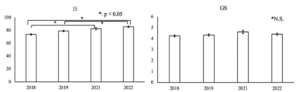
Figure 1. Average of IS and GS. The error bar shows standard error
|
Year |
Average |
SD |
SE |
Bottom 95 |
Upper 95 |
|
2022 |
566.62 |
121.03 |
15.50 |
535.63 |
597.62 |
|
2021 |
576.07 |
106.64 |
20.52 |
533.89 |
618.26 |
|
2019 |
565.02 |
119.91 |
12.71 |
539.76 |
590.28 |
|
2018 |
529.72 |
116.34 |
12.93 |
503.99 |
555.44 |
Table 2. Year-by-year score distribution of CBT (IRT score)
B. Comparison Before and After the Pandemic
The medical interview classes were held face-to-face before the pandemic (2018 and 2019) and online after the pandemic (2021 and 2022). We compared the results of pre-CC OSCE medical interview and CBT before and after the pandemic. A summary of the results is shown in Table 3 and Figure 2. The results of statistical analyses revealed a significant difference in the medical interview IS and CBT between the face-to-face group and the online group (p < 0.001 and 0.032 respectively). However, no significant difference in GS was observed.
|
|
Group |
Number |
Average |
SE |
Bottom 95 |
Upper 95 |
|
OSCE (medical interview) IS |
F-to-F |
164 |
76.18 |
0.79 |
74.62 |
77.74 |
|
online |
85 |
84.71 |
1.10 |
82.54 |
86.87 |
|
|
OSCE (medical interview) GS |
F-to-F |
164 |
4.28 |
0.06 |
4.15 |
4.40 |
|
online |
85 |
4.47 |
0.09 |
4.30 |
4.64 |
|
|
CBT (IRT score) |
F-to-F |
162 |
546.5 |
9.39 |
528.1 |
565.0 |
|
online |
86 |
569.7 |
12.9 |
544.3 |
595.1 |
Table 3. Comparison of pre-CC OSCE (IS and GS respectively) and CBT results between the face-to-face (F-to-F) group and the online group
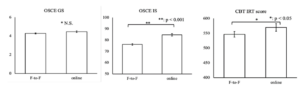
Figure 2. Comparison of pre-CC OSCE (IS and GS respectively) and CBT results between the face-to-face (F-to-F) group and the online group. The error bar shows standard error.
IV. DISCUSSION
We found no significant negative effects in some of the important educational outcomes in medical students’ scores of the medical interview due to online education caused by the COVID-19 pandemic. The quality of the medical interview after the emergence of the pandemic was no less than that before the pandemic. The same could be said for other indicators, including the CBT and other areas of the OSCE (data not shown).
One of the reasons why the scores of the online classes were not inferior to those of face-to-face classes might be because of the availability of each student to review the video recordings. We provided each student with a recording of their own performance in the class for self-review, which was not always provided in face-to-face classes. We also provided students with feedback from the teacher and other students during online classes. This is consistent with the findings of a previous study, which found that video reviewing of the OSCE performance is effective (Mookherjee et al., 2019). Moreover, the students accepted online classes well, and their motivation for learning was not affected despite the lack of face-to-face communication with simulated patients. During the reflection, some students noted that “I learned a lot in this class, though the class was held online” and that “I thought that online classes are not so bad” (data not shown). There were almost no complaints regarding online classes. We guess that in the environment that the face-to-face classes were restricted and the students experienced suspended classes the students felt satisfied for joining the classes even online. Further investigation will be needed regarding this point.
Recently, Khamees et al. (2022) pointed out the lack of control groups and poor transferability in numerous publications due to singularity of institution, department, and program. In the present study, the marks of students on high-stakes examinations before the pandemic were used as a comparison between face-to-face and online classes. Some studies have revealed that there are no significant differences in educational outcomes between face-to-face and online classes in basic medicine (Omole et al., 2023), and pharmacological education (Aoe et al., 2023). However, when it comes to high-stakes examinations, it remains unclear whether online education is not inferior to face-to-face education. Saad et al (2023) have showed that in some areas (clinical reasoning and history taking) of pre-clinical OSCE, students showed no less than comparable results, arguing that these skills are amenable to online learning in a medical school in Australia. Their results in some areas like medical interview in Japanese OSCE support our results. However, in their study, it is not clear about the details of the OSCE assessment, whether the assessment is by item-wise or global. In recent years, the pre-CC OSCE results have been recognized as an important educational outcome also for educational institutions (Hirsh et al., 2012). Our result, the educational outcome in the high-stakes examination, can be considered to fall in the top tier, the result, in the Kirkpatrick’s four-level model (Kirkpatrick, 1996). Moreover, our research is unique and important as few studies have directly compared the educational outcomes between face-to-face classes and online classes in high-stakes examination.
In Japan, the Medical Practitioners Act was revised in 2023, allowing medical students to perform some medical procedures under the supervision of a teaching physician after passing the pre-CC OSCE and CBT. This change also made the pre-CC OSCE a requirement for the national board examination. Hence, the pre-CC OSCE in Japan has become even more important, as much the responsibility for the education even greater. Our results show that online classes can contribute to the practice of “Medical interviews”.
It must be noted that online classes are not a complete alternative to face-to-face classes. Many studies have indicated that online education has some negative aspects (e.g., the need for infrastructure and devices, high cost, lack of personal interaction, etc.) (Arja et al., 2022; Mortazavi et al., 2021; Shaiba et al., 2023). One of the most significant elements that are difficult to teach in online classes is nonverbal communication. However, as Ishikawa et al. (2010) reported, although students are capable of understanding nonverbal communication despite struggling to change their performance through educational intervention, it is well recognized that nonverbal communication is difficult to teach even in face-to-face classes. Additionally, when it comes to procedural skills such as venipuncture, the educational outcomes in the online learning group were inferior to that of face-to-face learning group and students also felt that they were not taught satisfactorily (Dost et al., 2020; Saad et al., 2023). We should keep in mind that online education does not fully replace face-to-face education.
We saw a lack of significant differences in GS, both in year-by-year comparison and comparison between face-to-face and online groups. Although the tasks allocated to each university by CATO differ every year, the checkpoints are essentially common in quite a few areas; so, a comparison was made for both year by year and before and after the pandemic. GS usually reflects holistic assessment, which is difficult to produce results via technical education, whereas it might be easier for learners and teachers to deal with item-wise assessment (Govaerts et al., 2011; Jonsson & Svingby, 2007; Sadler, 2009). Moreover, in online classes, we used a checklist of the students’ performance (not shown to the students, but comments were given according to the checklist), which might have contributed to the improvement of IS. As to CBT, it is standardized by the accumulated examinations and the Item Response Theory and is assessed basically by knowledge base. The educational strategies that mainly should impact on the assessment of CBT, based on the lecture, have not changed before and after the pandemic, in the face-to-face classes or online classes. During the pandemic, the extra-curricular activities of the students were restricted, and several articles argue that self-studying time of the students increased (Barton et al., 2021; Guluma & Brandl, 2023). These might have contributed to the smaller elevation of CBT-IRT than the IS of pre-CC OSCE.
We need to take into consideration the confounding of several factors such as the curriculum changes, instructor training, student characteristics and students’ self-study time. While online classes have been a change in the curriculum, the rest remains unchanged. The instructors and students needed to become familiar with online classes, but there was no change in the educational goals of the class itself. Additionally, in the first year of the pandemic in 2020, we were unable to get enough data and the online class itself was implemented as “being built”. By 2021 and 2022, the class was almost stable. However, getting used to online classes of the instructors and students could be a confounding factor. The class tool (Zoom®) was continuously improved, which might be a minor confounding factor. Additionally, the students might have had excellent ITC skills, which might also be a confounding factor.
Some frameworks describing the evidence of online medical education outcome might contribute to generalizing our results (Martinengo et al., 2024; McGee et al., 2024; Wilcha, 2020). Needless to say, there are confrontations regarding the limitations of these generalizations, pointing out the context-depending factors, high heterogeneity among studies and “The Covid-19 Effects” (Abdull Mutalib et al., 2022; Liu et al., 2016; Martinengo et al., 2024; McGee et al., 2024). However, these frameworks will be applicable in generalizing our results; although there are some potential confounding factors such as the students, the instructors, the educational resources and the “pandemic era” itself, the online medical interview education could be an effective educational curriculum for educating medical interview skills as well as some interpersonal skills.
A. Limitations
One of the limitations of this study is that it was performed in a single institution. Hence, the generalizability of this study may be lower than that of multi-institutional studies. However, not much variation exists in the nature of students and in the educational curriculum they experience. Of course, to make the evidence more robust and further validate, multi-centred or multi-institutional studies are still needed. At the same time, these factors should not be too disparate as it is very difficult to find a suitable population for these factors. In this regard, our participants and classes can be considered as a reasonable population.
Another limitation of this study is the number of participants. In 2020, we could not obtain enough participants because of the pandemic. After the pandemic, our students and staff shifted to online classes, and the number of face-to-face classes decreased. In 2021 and 2022, we decided to obtain consent for participation in this study in the waiting time after face-to-face OSCE examination as it was difficult to obtain consent only during online classes. In this context, the participants may have a positive view of various aspects of student life including studies, which may be a potential bias of sample population. Additionally, the waiting time after the OSCE examination was short for some students, which might have made it difficult to think about understanding the concept of this research and whether consent should be given.
In this study, qualitative analyses investigating if the students were positive about the classes are limited to some extent. During the pandemic, the psychological situation and the learning behaviour of the students might have differed from that of before the pandemic. To investigate this aspect, qualitative studies will be needed.
Moreover, the evaluation criteria of the pre-CC OSCE are not open to the public due to CATO policy. This probably leads to a lack of transparency of the evaluation, causing another limitation of this study. However, Japanese OSCE evaluation criteria is similar to CANMED’s OSCE checklist (Kassam et al., 2016), which will support the validity of the results of Japanese OSCE and our results.
Finally, this study retrospectively compared the educational effect between students before and after the pandemic, which may limit the causal inferences of educational outcome effects of face-to-face versus online in medical interview OSCE. A randomized controlled trial will be needed to verify the results obtained in this study.
V. CONCLUSION
Because of the COVID-19 pandemic, we were forced to change our medical interview classes from face-to-face to be online. However, in high-stakes examinations such as the pre-CC OSCE and CBT, the results of the online group were not inferior to those of the face-to-face group. We consider this result extremely important because we directly compared the educational outcomes of high-stakes examinations between online and face-to-face groups who took the same medical interview classes, and because this evaluation falls in the top level of Kirkpatrick’s model. Our results suggest that online education provides a viable option in teaching interpersonal skills and support the integration of online medical interview training into preclinical curricula, particularly in resource-constrained settings. Randomized controlled trials and multi-institutional studies are needed to further validate our results.
Notes on Contributors
SH and ME conducted the whole research.
SH, MI, SK, JM, HM, and ME performed the classes and collected the data.
SH performed data analyses.
SH, MI, SK, JM, HM, and ME contributed to writing the manuscript.
Ethical Approval
This study was approved by the ethics committee of the UTokyo Faculty of Medicine (Approval No. 2021005NI). All methods were performed in accordance with the relevant guidelines and regulations. Moreover, the data of students who provided consent to the secondary use of their data in another research, given by the ethics committee of the UTokyo Faculty of Medicine (Approval No. 11763), were included.
Data Availability
The data in this study are not publicly available because of confidentiality agreements with the participants, conditions obligating CATO, and confidential nature of the data.
Acknowledgement
We thank the students of the UTokyo Medical School who participated in this study. We also thank the UTokyo Staff for their cooperation.
Funding
This study was funded by JSPS KAKENHI Grant Number 24K06092 and ACRO incubation grants of Teikyo University.
Declaration of Interest
The authors have no potential conflicts to disclose.
References
Abdull Mutalib, A. A., Md. Akim, A., & Jaafar, M. H. (2022). A systematic review of health sciences students’ online learning during the COVID-19 pandemic. BMC Medical Education, 22(1), 524. https://doi.org/10.1186/s12909-022-03579-1
Alshaibani, T., Almarabheh, A., Jaradat, A., & Deifalla, A. (2023). Comparing online and face-to-face performance in scientific courses: A retrospective comparative gender study of Year-1 students. Advances in Medical Education and Practice, 14, 1119–1127. https://doi.org/10.2147/amep.s408791
American Medical Association. (2016, June 15). AMA encourages telemedicine training for medical students, residents. AMA Press Releases.
Aoe, M., Esaki, S., Ikejiri, M., Ito, T., Nagai, K., Hatsuda, Y., Hirokawa, Y., Yasuhara, T., Kenzaka, T., & Nishinaka, T. (2023). Impact of different attitudes toward face-to-face and online classes on learning outcomes in Japan. Pharmacy, 11(1), 16. https://doi.org/10.3390/pharmacy11010016
Arja, S. B., Fatteh, S., Nandennagari, S., Pemma, S. S. K., Ponnusamy, K., & Arja, S. B. (2022). Is emergency remote (online) teaching in the first two years of medical school during the COVID-19 pandemic serving the purpose? Advances in Medical Education and Practice, 13, 199–211. https://doi.org/10.2147/amep.s352599
Barton, J., Rallis, K. S., Corrigan, A. E., Hubbard, E., Round, A., Portone, G., Kuri, A., Tran, T., Phuah, Y. Z., Knight, K., & Round, J. (2021). Medical students’ pattern of self-directed learning prior to and during the coronavirus disease 2019 pandemic period and its implications for Free Open Access Meducation within the United Kingdom. Journal of Educational Evaluation for Health Professions, 18, 5. https://doi.org/10.3352/jeehp.2021.18.5
Bastos, R. A., Carvalho, D. R. D. S., Brandão, C. F. S., Bergamasco, E. C., Sandars, J., & Cecilio-Fernandes, D. (2021). Solutions, enablers and barriers to online learning in clinical medical education during the first year of the COVID-19 pandemic: A rapid review. Medical Teacher, 44(2), 187–195. https://doi.org/10.1080/0142159x.2021.1973979
Basuodan, R. (2024). Comparisons of the academic performance of Medical and Health-Sciences students related to three learning methods: A cross-sectional study. Advances in Medical Education and Practice, 15, 1339–1347. https://doi.org/10.2147/amep.s493782
Budakoğlu, I. İ., Sayılır, M. Ü., Kıyak, Y. S., Coşkun, Ö., & Kula, S. (2021). Telemedicine curriculum in undergraduate medical education: a systematic search and review. Health and Technology, 11(4), 773–781. https://doi.org/10.1007/s12553-021-00559-1
Common Achievement Tests Organization (CATO). (2005). Common Achievement Tests Organization. https://www.cato.or.jp/index.html
Crawford, J., Butler-Henderson, K., Rudolph, J., Malkawi, B., Glowatz, M., Burton, R., Magni, P. A., & Lam, S. (2020). COVID-19: 20 countries’ higher education intra-period digital pedagogy responses. Journal of Applied Learning & Teaching, 3(1). https://doi.org/10.37074/jalt.2020.3.1.7
Daniel, M., Gordon, M., Patricio, M., Hider, A., Pawlik, C., Bhagdev, R., Ahmad, S., Alston, S., Park, S., Pawlikowska, T., Rees, E., Doyle, A. J., Pammi, M., Thammasitboon, S., Haas, M., Peterson, W., Lew, M., Khamees, D., Spadafore, M., … Stojan, J. (2021). An update on developments in medical education in response to the COVID-19 pandemic: A BEME scoping review: BEME Guide No. 64. Medical Teacher, 43(3), 253–271. https://doi.org/10.1080/0142159x.2020.1864310
Dost, S., Hossain, A., Shehab, M., Abdelwahed, A., & Al-Nusair, L. (2020). Perceptions of medical students towards online teaching during the COVID-19 pandemic: A national cross-sectional survey of 2721 UK medical students. BMJ Open, 10(11), e042378. https://doi.org/10.1136/bmjopen-2020-042378
Gordon, M., Patricio, M., Horne, L., Muston, A., Alston, S. R., Pammi, M., Thammasitboon, S., Park, S., Pawlikowska, T., Rees, E. L., Doyle, A. J., & Daniel, M. (2020). Developments in medical education in response to the COVID-19 pandemic: A rapid BEME systematic review: BEME Guide No. 63. Medical Teacher, 42(11), 1202–1215. https://doi.org/10.1080/0142159x.2020.1807484
Govaerts, M. J. B., Schuwirth, L. W. T., Van Der Vleuten, C. P. M., & Muijtjens, A. M. M. (2010). Workplace-based assessment: Effects of rater expertise. Advances in Health Sciences Education, 16(2), 151–165. https://doi.org/10.1007/s10459-010-9250-7
Guetterman, T. C., Sakakibara, R., Baireddy, S., Kron, F. W., Scerbo, M. W., Cleary, J. F., & Fetters, M. D. (2019). Medical students’ experiences and outcomes using a virtual human simulation to improve communication skills: Mixed methods study. Journal of Medical Internet Research, 21(11), e15459. https://doi.org/10.2196/15459
Guluma, K. Z., & Brandl, K. (2022). Virtual learning allows for adaptation of study strategies in a cohort of U.S. medical students. Medical Teacher, 45(1), 89–96. https://doi.org/10.1080/0142159x.2022.2105690
Hammersley, V., Donaghy, E., Parker, R., McNeilly, H., Atherton, H., Bikker, A., Campbell, J., & McKinstry, B. (2019). Comparing the content and quality of video, telephone, and face-to-face consultations: A non-randomised, quasi-experimental, exploratory study in UK primary care. British Journal of General Practice, 69(686), e595–e604. https://doi.org/10.3399/bjgp19x704573
Harden, R. M., Stevenson, M., Downie, W. W., & Wilson, G. M. (1975). Assessment of clinical competence using objective structured examination. BMJ, 1(5955), 447–451. https://doi.org/10.1136/bmj.1.5955.447
Hirsh, D., Gaufberg, E., Ogur, B., Cohen, P., Krupat, E., Cox, M., Pelletier, S., & Bor, D. (2012). Educational outcomes of the Harvard Medical School–Cambridge integrated clerkship. Academic Medicine, 87(5), 643–650. https://doi.org/10.1097/acm.0b013e31824d9821
Horita, S., Park, Y., Son, D., & Eto, M. (2021). Computer-based test (CBT) and OSCE scores predict residency matching and National Board assessment results in Japan. BMC Medical Education, 21(1). https://doi.org/10.1186/s12909-021-02520-2
Ishikawa, H., Hashimoto, H., Kinoshita, M., & Yano, E. (2010). Can nonverbal communication skills be taught? Medical Teacher, 32(10), 860–863. https://doi.org/10.3109/01421591003728211
Jonsson, A., & Svingby, G. (2007). The use of scoring rubrics: Reliability, validity, and educational consequences. Educational Research Review, 2(2), 130–144. https://doi.org/10.1016/j.edurev.2007.05.002
Kassam, A., Cowan, M., & Donnon, T. (2016). An objective structured clinical exam to measure intrinsic CanMEDS roles. Medical Education Online, 21(1), 31085. https://doi.org/10.3402/meo.v21.31085
Khamees, D., Peterson, W., Patricio, M., Pawlikowska, T., Commissaris, C., Austin, A., Davis, M., Spadafore, M., Griffith, M., Hider, A., Pawlik, C., Stojan, J., Grafton-Clarke, C., Uraiby, H., Thammasitboon, S., Gordon, M., & Daniel, M. (2022). Remote learning developments in postgraduate medical education in response to the COVID-19 pandemic: A BEME systematic review: BEME Guide No. 71. Medical Teacher, 44(5), 466–485. https://doi.org/10.1080/0142159x.2022.2040732
Kirkpatrick, D. (1996). Great ideas revisited. Techniques for evaluating training programs. Revisiting Kirkpatrick’s Four-Level model. Training & Development, 50(1), 54–59. https://eric.ed.gov/?id=EJ515660
Liu, Q., Peng, W., Zhang, F., Hu, R., Li, Y., & Yan, W. (2016). The effectiveness of blended learning in health professions: Systematic review and meta-analysis. Journal of Medical Internet Research, 18(1), e2. https://doi.org/10.2196/jmir.4807
Martinengo, L., Ng, M. S. P., De Rong Ng, T., Ang, Y., Jabir, A. I., Kyaw, B. M., & Car, L. T. (2024). Spaced digital education for health professionals: A systematic review and meta-analysis (Preprint). Journal of Medical Internet Research, 26, e57760. https://doi.org/10.2196/57760
McGee, R. G., Wark, S., Mwangi, F., Drovandi, A., Alele, F., & Malau-Aduli, B. S. (2024). Digital learning of clinical skills and its impact on medical students’ academic performance: A systematic review. BMC Medical Education, 24(1). https://doi.org/10.1186/s12909-024-06471-2
Mookherjee, S., Strujik, J., Cunningham, M., Kaplan, E., & Çoruh, B. (2018). Independent and mentored video review of OSCEs. The Clinical Teacher, 16(1), 23–29. https://doi.org/10.1111/tct.12755
Mortazavi, F., Salehabadi, R., Sharifzadeh, M., & Ghardashi, F. (2021). Students’ perspectives on the virtual teaching challenges in the COVID-19 pandemic. Journal of Education and Health Promotion, 10(1), 59. https://doi.org/10.4103/jehp.jehp_861_20
Omole, A. E., Villamil, M. E., & Amiralli, H. (2023). Medical education during COVID-19 pandemic: A comparative effectiveness study of face-to-face traditional learning versus online digital education of basic sciences for medical students. Cureus. https://doi.org/10.7759/cureus.35837
Saad, S., Richmond, C., King, D., Jones, C., & Malau-Aduli, B. (2023). The impact of pandemic disruptions on clinical skills learning for pre-clinical medical students: Implications for future educational designs. BMC Medical Education, 23(1). https://doi.org/10.1186/s12909-023-04351-9
Sadler, D. R. (2008). Indeterminacy in the use of preset criteria for assessment and grading. Assessment & Evaluation in Higher Education, 34(2), 159–179. https://doi.org/10.1080/02602930801956059
Shaiba, H., John, M., & Meshoul, S. (2022). Female Saudi College students’ e-learning experience amidst COVID-19 pandemic: An investigation and analysis. Heliyon, 9(1), e12768. https://doi.org/10.1016/j.heliyon.2022.e12768
Wilcha, R. (2020). Effectiveness of virtual medical teaching during the COVID-19 Crisis: Systematic review. JMIR Medical Education, 6(2), e20963. https://doi.org/10.2196/20963
Zaccariah, Z. R., Irvine, A. W., & Lefroy, J. E. (2022). Feasibility study of student telehealth interviews. The Clinical Teacher, 19(4), 308–315. https://doi.org/10.1111/tct.13490
*Shoko Horita
2-11-1, Kaga, Itabashi-ku,
Tokyo 173-8605, Japan
Email: horitas-tky@umin.ac.jp
Submitted: 19 February 2025
Accepted: 14 May 2025
Published online: 7 October, TAPS 2025, 10(4), 73-76
https://doi.org/10.29060/TAPS.2025-10-4/SC3672
Astrid Pratidina Susilo1, Lucia Pudyastuti Retnaningtyas1, Lisa Aditama2 & Karunia Wijayanti3
1Faculty of Medicine, Universitas Surabaya, Indonesia; 2Faculty of Pharmacy, Universitas Surabaya, Indonesia; 3Faculty of Medicine, Universitas Negeri Surabaya, Indonesia
Abstract
Introduction: Healthcare professionals need to advocate for mothers and understand breastfeeding challenges, especially in a community-based culture. We developed a breastfeeding management course for healthcare professionals and students in health-related majors on an online platform at our university. This study aimed to explore what participants learned from an experiential learning assignment to interview mothers regarding their breastfeeding challenges, and write a reflection on it.
Methods: In this qualitative study, we analysed the written reflections of 56 participants after they interviewed mothers regarding their breastfeeding challenges. Thematic analysis and triangulation among the researchers were conducted to obtain themes.
Results: Four themes were identified: (1) differences in knowledge and beliefs about breastfeeding among mothers and their families, (2) breastfeeding challenges that can be a threat to breastfeeding, (3) healthcare professionals’ central role in providing education and advocating for breastfeeding, and (4) involvement of the family and community in breastfeeding education.
Conclusion: This interview and reflective writing assignment strengthened the participants’ awareness of how to advocate for breastfeeding mothers, including considering the influence of the community context.
Keywords: Breastfeeding, Communal Culture, Experiential Learning, Reflective Writing
I. INTRODUCTION
Breastfeeding is a natural method of providing the best nutritional intake for babies’ growth and development, and strengthening the emotional bond between the mother and the baby. The low rate of breastfeeding is a global problem because only less than half of babies under six months of age are exclusively breastfed (Balogun et al., 2015).
Several factors influence breastfeeding, including stigma and support from people closest to the mother. These factors are prominent in communal cultures where the influence of family and community is strong (Susilo et al., 2019). Healthcare professionals can encourage the success of breastfeeding programs by providing education to mothers and their families. Therefore, they need to learn about breastfeeding management and strategies to increase public knowledge. Apropos this, mother-centred advocacy tailored to mothers’ needs can be offered by healthcare professional (Mulcahy et al., 2022).
We developed a breastfeeding management training program for healthcare professionals and students through an online course platform. One of the assignments in this course was to interview breastfeeding mothers and write reflections on their experiences. According to Kolb’s Experiential Learning Theory, this learning activity can help learners conceptualise the essential principles they must master (Yardley et al., 2012). Such a learning activity is innovative and scarcely reported in the existing literature. Additionally, this assignment is novel in the field of breastfeeding-related education. A systematic review of breastfeeding training reported that only one breastfeeding training program used reflective writing (Mulcahy et al., 2022). This study aimed to explore what participants learned from an experiential learning assignment of interviewing mothers on their breastfeeding challenges and writing reflections afterwards.
II. METHODS
This qualitative study used an interpretive descriptive approach to identify themes and patterns among subjective perspectives based on the reflections of breastfeeding management training participants. The training was conducted online through our university’s open online course platform Ubaya Global Academy (UGA). This online course consisted of six sessions and targeted healthcare professionals and students from different domains (medicine, pharmacy, and midwifery). The six sessions were basic science of breastfeeding, common challenges in breastfeeding for healthy mothers (part 1), common challenges in breastfeeding for healthy mothers (part 2), supporting breastfeeding in mothers with specific health issues (non-communicable disease), supporting breastfeeding in mothers with specific health issues (communicable disease), and essential principles in breastfeeding (wrap up and reflection). Students should have completed their first year of education to have basic exposure to health sciences. We invited all participants who had attended the training to participate in this study. At the beginning of the second session, each participant interviewed a mother who had breastfeeding experience, following which, they wrote a reflective writing of 200-500 words.
|
No |
Question |
|
1 |
Why did mothers choose to provide breast milk for babies? |
|
2 |
What were the challenges in the breastfeeding process, and how can they be overcome? |
|
3 |
What food, medicines, or activities do they believe facilitate or inhibit breast milk production (examples of beliefs: eating katuk leaves and breast massage can facilitate breastfeeding)? Where did the mother or partner get this information about food, medicine, and activities? |
Table 1. Interview Questions
We analysed the data using a thematic analysis approach by reading and re-reading the reflective writings, selecting relevant ideas, coding and grouping them according to their similarities, and organising them into themes and subthemes based on the results of interviews and participants’ reflections. Atlas.ti version 24 was used to manage the data. Data triangulation was conducted between researchers by discussing themes and differences until a consensus was reached.
III. RESULTS
Fifty-six participants agreed to participate in the study and completed the interviews. Forty-five of them were from medicine, eight from pharmacy, and three from midwifery. There were variations in participants’ reflective writing, and the following four themes emerged:
A. Differences in Knowledge and Beliefs about Breastfeeding among Mothers and Their Families
Participants reflected that mothers’ knowledge and beliefs about breastfeeding varied depending on the information they received from their surroundings. Family members were their main sources of information on ways to overcome breastfeeding challenges.
‘The mother tried to commit to breastfeeding for six months. But when she fell ill and was weak, she had to give formula milk to the child on the advice of her mother-in-law, but after that, the child did not want to drink breast milk.’ (P24)
B. Breastfeeding Challenges that can be a Threat to Breastfeeding
Participants indicated that mothers faced various obstacles in breastfeeding, such as the pain experienced by them during breastfeeding, which may force them to switch to formula milk. Problems that triggered pain included low milk production, swelling of the breasts, and sore nipples. Mother’s health was also a reason for the people around her to support breastfeeding cessation. Another challenge in breastfeeding was mother’s readiness to breastfeed, particularly for working mothers to manage their time for breastfeeding. Therefore, healthcare professionals should explore the challenges of breastfeeding before providing appropriate advice.
‘In the Integrated Services Post (Posyandu), midwives or health workers can open a special session on questions about breastfeeding.’ (P28)
C. Healthcare Professionals’ Central Role in Providing Education and Advocating for Breastfeeding
Healthcare professionals should have adequate knowledge of breastfeeding management, good communication skills, ability to demonstrate breastfeeding techniques, and educational strategies to the public. They should also involve community leaders and use social media platforms to promote breastfeeding.
‘It is essential for healthcare workers to provide proper education, not endorse and recommend products such as breast milk supplements, whose ingredients and side effects are unknown. Instead, they must teach and provide education on benefits of breastmilk, breast massages which can facilitate mother’s breast milk production, and on managing stress which can impact breast milk production.’ (P48)
D. Involvement of the Family and Community in Breastfeeding Education
Participants reflected that breastfeeding is influenced by cultural aspects; if the mother does not have prior breastfeeding experience, she is likely to believe information provided by the people around her. Hence, apart from the mothers, breastfeeding education must also be extended to companions and families. Such education must include factors to support breastfeeding such as preparation and methods for giving breast milk, and appropriate information about lactation.
‘We as healthcare workers must pick up the ball by providing mass education to the community, especially to family members who are “always” supposed to be listened to. Breastfeeding education will be in vain if we do not educate the public. We are also responsible for the health and quality of the nation’s future generations.’ (P25)
IV. DISCUSSION
Healthcare professionals must possess mother-centred advocacy skills to promote breastfeeding. Increasing their understanding through educational measures is a commitment to achieving better breastfeeding coverage and improving maternal and child health (Mulcahy et al., 2022). In line with the principles of Kolb’s Experiential Learning Theory, the interviews provided authentic exposure to the participants where they could practice skills to explore mothers’ beliefs and knowledge, and develop an empathetic attitude towards mothers’ challenges. The reflection process also enabled them to strengthen their understanding and conceptualise their interpersonal skills and professional development (Yardley et al., 2012).
Participants reflected that knowledge and beliefs of mothers are essential factors in sustaining breastfeeding. Mothers’ lack of independence from family influence and low self-confidence in overcoming challenges are considered to be related to short duration of breastfeeding (Balogun et al., 2015). The communal culture often affects mothers’ decision-making regarding breastfeeding as they are dependent on informal information from the surrounding people. Though this information may help them overcome breastfeeding-related problems, it may not necessarily be evidence-based (Susilo et al., 2019).
Hence, participants were aware of the urgency with which healthcare professionals must act to provide appropriate breastfeeding counselling. This assignment helped them critically think about mothers’ perceptions of challenges in breastfeeding and their own future actions to support breastfeeding. This comprehensive understanding will help promote breastfeeding, by providing mother-centred advocacy and breastfeeding counselling with appropriate advice and anticipatory steps to overcome breastfeeding obstacles (Radzyminski & Callister, 2015).
Our study showed that the participants were motivated to play a central role in supporting breastfeeding mothers. This assignment served as a strong trigger to motivate participants to improve the knowledge about breastfeeding management they would obtain throughout the course.
This study has two limitations. First, the analysis of participants’ awareness was based on their reflective writing skills, which may be diverse as they have not been consistently introduced in academic institutions in Indonesia. This may have influenced how the participants expressed their understanding in their reflective writing. Oral reflections can yield different themes. Second, this study focused only on the interviews and reflective writing assignments of the course, as we believe that an intensive look at these would provide valuable lessons. Triangulation with other data is necessary to determine the effectiveness of the entire course.
V. CONCLUSION
An assignment based on experiential learning principles made participants aware of the diversity of knowledge and beliefs of breastfeeding mothers in a communal culture and the potential challenges for mothers deciding to stop breastfeeding. The reflection process motivated them to learn about mother-centred advocacy for breastfeeding mothers and their surroundings.
Notes on Contributors
Astrid Pratidina Susilo designed the study, conducted the data collection and analysis, and drafted the manuscript.
Lucia Pudyastuti Retnaningtyas designed the study, conducted the data collection and analysis, and reviewed the manuscript.
Lisa Aditama designed the study, conducted the data collection, and reviewed the manuscript.
Karunia Wijayanti designed the study, conducted the data analysis, and drafted the manuscript.
Ethical Approval
This study was approved by the institutional ethics committee of Universitas Surabaya (No. 179/KE/VII/2023). All the participants provided written informed consent.
Data Availability
We do not share the raw data as the reflective writing assignments were in Indonesian. Readers who are interested in accessing the data can contact the author.
Acknowledgement
We are grateful to the Ubaya Global Academy (UGA) management team for supporting the development and implementation of this online course. We also thank Santi Desi, Denny Herliana, and Laurentia Audi Agatha for their administrative support for this study. This study was presented at the International Conference of the AMEE 2024.
Funding
This research was supported by the Ministry of Education, Culture, Research, and Technology of Indonesia (Grant Number 109/E5/PG.02.00.PL/2024).
Declaration of Interest
No potential conflicts of interest are relevant to this article.
References
Balogun, O. O., Dagvadorj, A., Anigo, K. M., Ota, E., & Sasaki, S. (2015). Factors influencing breastfeeding exclusivity during the first 6 months of life in developing countries: A quantitative and qualitative systematic review. Maternal & Child Nutrition, 11(4), 433-451. https://doi.org/10.1111/mcn.12180
Mulcahy, H., Philpott, L. F., O’Driscoll, M., Bradley, R., & Leahy-Warren, P. (2022). Breastfeeding skills training for health care professionals: A systematic review. Heliyon, 8(11). https://doi.org/10.1016/j.heliyon.2022.e11747
Radzyminski, S., & Callister, L. C. (2015). Health professionals’ attitudes and beliefs about breastfeeding. The Journal of Perinatal Education, 24(2), 102-109. https://doi.org/10.1891/1058-1243.24.2.102
Susilo, A. P., Marjadi, B., Dalen, J. V., & Scherpbier, A. (2019). Patients decision-making in the informed consent process in a hierarchical and communal culture. The Asia Pacific Scholar, 4(3), 57-66. https://doi.org/10.29060/TAPS.2019-4-3/OA2085
Yardley, S., Teunissen, P. W., & Dornan, T. (2012). Experiential learning: AMEE guide No. 63. Medical Teacher, 34(2), e102-e115. https://doi.org/10.3109/0142159X.2012.650741
*Lucia Pudyastuti Retnaningtyas
Faculty of Medicine, University Surabaya, Indonesia
Jl. Raya Kalirungkut, Surabaya 60293
+628113113338
Email: luciaretnaningtyas@staff.ubaya.ac.id
Submitted: 30 December 2024
Accepted: 5 July 2025
Published online: 7 October, TAPS 2025, 10(4), 63-72
https://doi.org/10.29060/TAPS.2025-10-4/OA3777
Chollada Sorasak1, Worayuth Nak-Ai2, Choosak Yuennan3 & Mansuang Wongsapai1
1Intercountry Centre for Oral Health, Department of Health, Thailand; 2Sirindhorn College of Public Health Chonburi, Praboromarajchanok Institute, Thailand; 3Boromarajonani College of Nursing Chiang Mai, Praboromarajchanok Institute, Thailand
Abstract
Introduction: Nutrition literacy represents a critical determinant of oral health outcomes. Guided by Social Cognitive Theory and the Nutrition Literacy Skills Framework, this study evaluated the implementation and effectiveness of a nutrition literacy programme for oral health promotion among village health volunteers (VHVs), key implementers in Thailand’s healthcare system, during January to December 2024.
Methods: A convergent parallel mixed-methods design was employed to address existing methodological gaps in nutrition literacy research. The quantitative component comprised a cross-sectional survey (N=60 VHVs trained in January 2024) and clinical outcome monitoring via electronic health records. The qualitative strand involved a multi-case study approach with purposive sampling (n=20) through in-depth interviews. Data collection occurred at 6-month post-implementation (July 2024), with clinical monitoring through December 2024. Analysis integrated descriptive and inferential statistics with thematic analysis.
Results: Post-implementation analysis revealed significantly enhanced nutrition literacy skills (M=4.14, SD=0.414), with notable improvements in communication (M=4.74, SD=0.511) and implementation (M=4.21, SD=0.440). All six nutrition literacy domains showed strong correlations (r=0.712-0.868, p<.01), supporting the framework’s interconnected nature. Clinical outcomes improved significantly: oral health check-up rates increased from 1.41% to 2.61% (p<.05), and functional teeth retention rose from 87.36% to 92.72% (p<.01). Qualitative findings revealed adaptive knowledge transfer methods and context-specific implementation strategies influenced by community readiness.
Conclusion: Through comprehensive mixed-methods evaluation, the 12-month implementation data demonstrated significant improvements in both VHVs’ nutrition literacy skills and clinical oral health outcomes. Success factors included theoretically-grounded implementation strategies and stakeholder engagement in resource-limited settings.
Keywords: Convergent Parallel, Health Literacy, Mixed Methods, Nutrition, Oral Health, Thailand, Village Health Volunteer
Practice Highlights
- Nutrition literacy among VHVs significantly improved across all six key domains.
- Oral health check-up rates increased from 41% to 2.61% post-programme implementation.
- Functional teeth retention rose from 36% to 92.72% over the 12-month period.
- VHVs used context-specific strategies for community-based nutrition education.
I. INTRODUCTION
Oral health is fundamentally linked to nutrition and dietary behaviours, yet nutritional factors affecting oral health remain a significant public health challenge worldwide, particularly in low- and middle-income countries (Peres et al., 2019; Watt et al., 2019). In Thailand, the high prevalence of dental caries and periodontal diseases related to dietary habits (Chaianant et al., 2022), underscores the urgent need for effective nutrition education strategies for oral health promotion.
Understanding the relationship between nutrition literacy and oral health behaviours requires consideration of multiple theoretical perspectives. Social Cognitive Theory (Bandura, 2004) highlights how personal factors, dietary patterns, and environments interact to shape oral health behaviours, particularly relevant in Thailand’s family-based eating culture. The nutrition literacy skills Framework (Squiers et al., 2012) outlines how individuals develop and apply nutrition literacy competencies through interactions between dietary knowledge and social environments. Additionally, Ecological Systems Theory (Bronfenbrenner, 1979) demonstrates how family and societal systems influence health behaviours and programme implementation.
Within this theoretical context, nutrition literacy for oral health emerges as a critical determinant of oral health outcomes. While health literacy encompasses capacities for accessing and using health information (Sørensen et al., 2012), nutrition literacy for oral health specifically focuses on these competencies in oral healthcare. Evidence consistently shows that individuals with low nutrition literacy tend to exhibit poor oral health behaviours and outcomes (Berkman et al., 2011; Kickbusch et al., 2013). This relationship is particularly significant in reducing oral health disparities (Horowitz & Kleinman, 2012), with higher nutrition literacy correlating with improved oral hygiene practices and health outcomes (Baskaradoss, 2018).
Recent advances in nutrition literacy programmes for oral health promotion have revealed that culturally tailored, context-specific interventions can significantly enhance service accessibility and oral healthcare engagement (Macek et al., 2016). Various programme modalities have emerged, encompassing educational initiatives, community-based activities, and digital media interventions (Dickson-Swift et al., 2014). These approaches align well with Thailand’s dental public health policy, which emphasises proactive oral health promotion and community participation. Systematic review (Firmino et al., 2017) identified several critical gaps in existing research: the absence of mixed-methods studies examining both programme effectiveness and change processes, limited analysis of community-level behavioural change mechanisms, and insufficient research in resource-constrained developing countries where success factors may differ substantially from developed nations.
To address these research gaps, this study aims to evaluate the effectiveness of a nutrition literacy programme for oral health promotion in Thailand’s context. Of particular interest is the role of VHVs as key implementation agents, given their established position in community health promotion (Kowitt et al., 2015). While previous research has demonstrated VHVs’ capacity to utilise technology for expanding health service coverage (Jandee et al., 2015), empirical evidence regarding their role in promoting nutrition literacy for oral health remains limited.
Guided by our theoretical framework, we employed a Convergent Parallel Mixed Methods design (Creswell & Plano Clark, 2017), enabling comprehensive assessment of both quantitative programme effectiveness and qualitative change mechanisms. This approach examines how social modelling, nutrition literacy skill development related to oral health, and environmental factors interact to influence programme outcomes. Ultimately, this study’s findings will contribute to developing contextually appropriate nutrition literacy strategies for oral health promotion in developing countries while aligning with Thailand’s dental public health policies.
II. METHODS
A. Study Design
This study employed a convergent parallel mixed methods design (Creswell & Plano Clark, 2017) to comprehensively evaluate the implementation and effectiveness of a nutrition literacy programme for oral health promotion. The design integrated quantitative outcomes with qualitative insights to achieve deeper understanding than single-method approaches. The quantitative component utilised a cross-sectional survey to assess nutrition literacy skills and clinical outcomes, while the qualitative component employed a multi-case study approach (Yin, 2018) to explore implementation experiences and contextual factors.
B. Population and Sampling
The quantitative phase included all VHVs who completed nutrition literacy training (N=60) in January 2024, with data collection occurring in July 2024. For the qualitative component, 20 VHVs were purposively selected using intensity sampling (Miles et al., 2013) based on four criteria: programme implementation experience exceeding six months, strong communication abilities, representation from varied performance areas, and voluntary informed consent. This sample size achieved theoretical saturation (Creswell, 2013; Guest et al., 2006). Gender distribution differed between samples (quantitative: 98.3% female; qualitative: 70% female) due to purposive sampling for diverse leadership perspectives. Sensitivity analysis confirmed no significant gender-based differences in primary outcomes (p > .05). The six-month assessment period aligned with established behaviour change evaluation timeframes (Glasgow et al., 2019), while monitoring through December 2024 captured seasonal variations and sustainability data.
C. Research Instruments
Two complementary instruments were developed and validated through pilot testing with 30 VHVs sharing similar characteristics with the target population, but excluded from the final sample. The questionnaire was designed according to Nutbeam’s health literacy framework (Nutbeam, 2000), operationalizing three literacy levels into six nutrition literacy components relevant to oral health promotion. Items utilised a five-point Likert scale (1 = “not confident at all” to 5 = “very confident”) for self-assessment of perceived competencies. A panel of five experts including community dentistry, nutrition, public health, health literacy, and health communication specialists assessed content validity, achieving a high IOC index of 0.96, while internal consistency demonstrated excellent reliability (Cronbach’s alpha = 0.929).
The structured interview guide explored knowledge application, teaching methods, implementation challenges, outcomes, and recommendations following established qualitative research principles (Jacob & Furgerson, 2012). Qualitative trustworthiness was ensured through member checking at two stages: during interviews for immediate verification and after preliminary analysis with eight selected participants for validation and refinement.
D. Data Collection
Baseline data was collected prior to programme implementation in January 2024, establishing pre-intervention metrics through public health service records. Following six-month implementation, parallel quantitative and qualitative assessments were conducted in July 2024. Self-assessment questionnaires were administered to all VHVs, followed by in-depth interviews (45-60 minutes) with 20 purposively selected participants until data saturation was achieved (Guest et al., 2006). In accordance with Consolidated Criteria for Reporting Qualitative Studies (COREQ) guidelines (Zachariah et al., 2024), participant confidentiality was maintained throughout the study, with written informed consent obtained after comprehensive briefing on study objectives and participant rights. Monthly data extraction from the Health Data Centre continued through December 2024 to capture sustained programme effects, with systematic collection on the 5th of each month ensuring complete and timely data acquisition.
E. Data Analysis
The analytical approach integrated multiple complementary methods for comprehensive understanding. Quantitative analysis included descriptive statistics (frequencies, percentages, means, standard deviations) with Shapiro-Wilk normality testing. Inferential analyses comprised paired t-tests for pre-post comparisons (α = 0.05), chi-square tests for categorical outcomes, and Pearson’s correlation coefficients examining relationships between nutrition literacy domains. Effect sizes were reported using Cohen’s d with bootstrap confidence intervals (1,000 resamples). Statistical analyses utilised IBM’s Statistical Package for the Social Sciences (SPSS) Statistics software. Missing data patterns were examined using Little’s Missing Completely at Random (MCAR) test, with multiple imputation (5 datasets) addressing missing values following Rubin’s guidelines (2004). Sensitivity analyses compared complete-case and imputed datasets (van Buuren, 2018).
Qualitative data underwent thematic analysis following established frameworks (Braun & Clarke, 2006), involving verbatim transcription, independent coding by two researchers, and iterative thematic framework development through consensus meetings. ATLAS.ti software facilitated systematic organisation and analysis. Quality assurance included investigator triangulation, member checking with eight participants, audit trail documentation, and researcher reflexivity journals.
F. Data Integration
A comprehensive integration strategy synthesised quantitative and qualitative findings through three interconnected phases (Cano & Lomibao, 2023). Joint displays facilitated systematic comparison of results, enabling identification of convergent and divergent patterns. Meta-inferences were constructed through iterative cross-method analysis, with attention to complementary insights. Pattern matching techniques examined alignments between quantitative outcomes and qualitative themes, developing integrated theoretical understandings. Conflicting findings were reconciled by contextualising quantitative results with qualitative explanations, while complementary data enriched overall interpretation, enhancing study rigor and validity.
III. RESULTS
All participants (N=60) completed quantitative assessments at baseline and a 6-month follow-up, with 20 VHVs participating in qualitative interviews. Clinical outcomes were monitored through December 2024 using complete Health Data Centre monthly data. Following convergent parallel design, quantitative and qualitative data streams were systematically merged to achieve comprehensive understanding of programme implementation and outcomes. The integrated analysis revealed that communication skills improvements were explained through qualitative evidence of adaptive teaching strategies, while regional outcome variations were illuminated by implementation challenges identified through qualitative inquiry. This systematic data merging approach provided richer insights than either quantitative or qualitative methods could offer independently.
A. Baseline Characteristics
1. Qualitative Sample (n = 20)
The qualitative sample achieved a full response rate (100%). Participants were predominantly female (70%), with males comprising 30%. The age distribution showed that 70% were between 50–60 years, while 15% each were aged 30–39 and 40–49 years. No participants were over 60. In terms of role, 65% served as Village Health Volunteers (VHVs), and 35% were Caregivers. None held dual roles.
2. Quantitative Sample (n = 60)
The quantitative sample also achieved a 100% response rate. Females constituted the vast majority (98.3%), with only one male respondent (1.7%). Most participants (70%) were aged 50–60 years, with smaller proportions aged 30–39 (11.7%), 40–49 (16.7%), and over 60 (1.7%). Regarding position, 85% were VHVs, 13.3% were Caregivers, and 1.7% held both roles.
B. Programme Implementation and Nutrition Literacy Skills for Oral Health
The intervention (Table 1) demonstrated significant improvements across all six nutrition literacy domains (p< 0.001) with large effect sizes. Communication skills showed the greatest improvement (d = 1.64, mean difference: 0.84 points, 95% CI: 0.66-1.02), followed by Decision Making (d = 0.90), Critical Inquiry (d = 0.88), Understanding (d = 0.85), Application (d = 0.77), and Access (d = 0.74). Other domains improved by 0.36-0.41 points.
C. Clinical Outcomes and Programme Effectiveness
Clinical outcomes significantly improved. Dental check-up rates increased from 1.41% to 2.61% (difference: 1.20 percentage points, 95% CI: 0.90-1.50, p=0.032). Participants with ≥20 functional teeth rose from 87.36% to 92.72% (difference: 5.36 percentage points, 95% CI: 3.38-7.34, p< 0.001), indicating substantial improvements in both knowledge and oral health behaviour.
|
Outcomes |
Baseline (mean±SD) |
6-month (mean±SD) |
Mean difference (95% CI) |
p-value |
|
Nutrition Literacy Skills |
||||
|
Access |
3.80±0.50 |
4.16±0.47 |
0.36 (0.19, 0.53) |
<0.001† |
|
Understanding |
3.75±0.48 |
4.15±0.46 |
0.40 (0.23, 0.57) |
<0.001† |
|
Critical Inquiry |
3.70±0.47 |
4.11±0.46 |
0.41 (0.24, 0.58) |
<0.001† |
|
Decision Making |
3.72±0.46 |
4.13±0.45 |
0.41 (0.25, 0.57) |
<0.001† |
|
Application |
3.85±0.49 |
4.21±0.44 |
0.36 (0.19, 0.53) |
<0.001† |
|
Communication |
3.90±0.52 |
4.74±0.51 |
0.84 (0.66, 1.02) |
<0.001† |
|
Clinical Outcomes |
||||
|
Dental check-up rate (%) |
1.41 |
2.61 |
1.20 (0.90, 1.50) |
0.032‡ |
|
Functional teeth (%) * |
87.36 |
92.72 |
5.36 (3.38, 7.34) |
<0.001‡ |
Note: *Defined as having ≥20 functional natural teeth
†Statistically significant at p< 0.001, Paired t-test
‡Statistically significant at p< .05 for dental check-up rate and p< 0.001 for functional teeth, Chi-square test
Data were retrieved from the Health Data Centre database (Ministry of Public Health, 2024).
Table 1. Changes in Nutrition Literacy Skills Related to Oral Health and Clinical Outcomes After a 6-Month Training Programme (N=60)
|
Health Literacy Domain |
1. Access |
2. |
3. |
4. |
5. Application |
6. Communication |
|
1. |
1 |
|||||
|
2. |
.858** |
1 |
||||
|
3. |
.753** |
.712** |
1 |
|||
|
4. |
.775** |
.817** |
.834** |
1 |
||
|
5. |
.724** |
.770** |
.797** |
.797** |
1 |
|
|
6. |
.812** |
.820** |
.822** |
.868** |
.799** |
1 |
Note: N = 60; **p < .01 (2-tailed) Pearson correlation coefficients are shown.
Table 2. Correlation Analysis of Nutrition Literacy Domains Related to Oral Health
Regional variations in dental check-up rates were substantial, ranging from 0.07% to 38.18% (p < 0.001) across participating health centres, suggesting the need to investigate factors contributing to different implementation outcomes despite similar geographical and healthcare delivery contexts.
The findings support overall programme effectiveness, though the cross-sectional design indicates the need for longitudinal research to confirm long-term impacts. Future nutrition literacy programmes for oral health promotion should emphasize communication skills and context-specific implementation approaches. The qualitative analysis of 20 VHV interviews yielded four main themes (Figure 1).

Figure 1. Qualitative final thematic map
D. Implementation Process and Contextual Factors
1. Knowledge Transfer Patterns
VHVs utilised multiple communication channels and diverse pedagogical approaches. Individual consultations involved direct problem assessment, with participants noting “Face-to-face, asking what problems they have, like sensitive teeth” (P15). Digital platforms expanded reach through “Online communication and inviting others to join our Line group” (P5). Teaching methods included demonstrations, mnemonics, and hands-on practice.
2. Audience Diversity
VHVs encountered heterogeneous learning populations with varying engagement levels. Successful interactions were characterised by high comprehension rates: “Everyone understood and could practice, no problems as they all understood well” (P19). However, engagement challenges persisted, with some noting “One person at home is not very interested” (P16).
3. Implementation Challenges
Communication barriers emerged as significant obstacles. VHVs identified hearing difficulties: “The listener’s hearing, they can’t hear well” (P1), language barriers: “Don’t use too many English terms, some words are not understood” (P10), and content complexity issues: “Some content is difficult to understand, takes a long time and repeated study” (P14).
4. Development Approaches
VHVs suggested practical improvements emphasising “Should practice more than theory” (P1). They recommended age-appropriate strategies: “Elderly may have difficulty learning, but if we can make content easy to understand, they will gain knowledge too” (P15), and streamlined delivery: “Shorter courses might attract more participants” (P5).
E. Integrated Results
The convergent parallel design employed a merging data integration approach to synthesise quantitative and qualitative findings systematically, providing comprehensive understanding of programme effectiveness., as presented in Table 3.
|
Major Themes |
Quantitative |
Qualitative |
Meta-inference |
|
Nutrition Literacy Skills Performance Related to Oral Health |
Overall implementation: M=4.14±0.41, p< 0.001; Highest in communication (M=4.74±0.51); Strong inter-skill correlations (r=.712-.868, p< 0.001) |
Demonstrated multiple teaching approaches: individual counselling, memory techniques, continuous monitoring |
Quantitative high scores validated by qualitative evidence of practical skill application |
|
Clinical Outcome Changes |
Dental check-up: 1.41% to 2.61% (p< .01); Functional teeth: 87.36% to 92.72% (p< .01); Regional variation: 0.07-38.18% |
Implementation variations: successful behaviour adoption, mixed community readiness, diverse response levels |
Outcome improvements linked to implementation quality and community readiness |
|
Implementation Challenges |
Highest in self-monitoring (M=4.25±0.44); Significant regional differences (p< .01) |
Identified barriers: technical language, age-related learning, practice compliance |
Statistical variations explained by specific implementation challenges identified qualitatively |
|
Support Systems |
Strong correlations between: decision-making and communication (r=.868); access and understanding (r=.858); all p< 0.001 |
Multiple support channels: digital platforms, family networks, community groups |
Integrated support systems crucial for programme effectiveness |
Table 3. Integrated Analysis of Mixed Methods Results
The systematic merging of quantitative and qualitative data through meta-inference analysis revealed four key dimensions of programme implementation and outcomes.
1. Nutrition Literacy Skills and Clinical Outcomes
Quantitative findings demonstrated high overall implementation levels (M=4.14±0.41, p< 0.001), with communication skills showing exceptional improvement (M=4.74±0.51). The strong correlation between communication and decision-making skills (r=.868, p< 0.001) was validated through qualitative evidence: “We adapted communication methods based on audience needs” (P15).
Dental check-up rates increased significantly from 1.41% to 2.61% (p< .01), while functional dentition improved from 87.36% to 92.72% (p< .01). Qualitative insights revealed implementation quality influences: “Regular follow-ups and practical demonstrations helped maintain behaviour changes” (P8). Regional outcome variations (0.07-38.18%) aligned with identified barriers and facilitators.
2. Implementation Dynamics and Support Systems
Strong correlations between access and understanding (r=.858, p< 0.001) were complemented by contextual adaptation findings. VHVs balanced cultural factors: “We needed to balance traditional beliefs with modern dental care practices” (P13). Statistical associations among nutrition literacy domains (r=.712-.868, all p< 0.001) were substantiated by interconnected support mechanisms: “The combination of in-person support and online reminders helped maintain engagement” (P5).
The meta-inference demonstrates programme effectiveness through synergy of enhanced nutrition literacy skills and context-sensitive implementation strategies, emerging through systematic integration of quantitative measurements with qualitative insights.
IV. DISCUSSION
A. Programme Effectiveness and Theoretical Framework
This study demonstrates the effectiveness of a Village Health Volunteers (VHVs)-led nutrition literacy programme for oral health promotion in significantly improving nutrition literacy skills and clinical outcomes. The findings align with established empirical evidence at regional and international levels regarding healthcare personnel capacity development and relationships between nutrition literacy for oral health, oral health behaviours, and preventive service utilisation (Baskaradoss, 2018; Nutbeam, 2008; Samarasekera et al., 2024; Batista et al., 2017; Baskaradoss, 2016).
The strong correlation between nutrition literacy components, particularly communication and decision-making (r = .868), reflects their interconnected nature and underscores comprehensive skill development importance (Kunathum, 2023). This finding aligns with Social Cognitive Theory (Bandura, 2004), emphasising behavioural, personal, and environmental factor interdependence in health promotion. Results support the Nutrition Literacy Skills Framework (Squiers et al., 2012), positioning communication and decision-making as essential mediators between nutrition literacy and oral health behavioural outcomes in diverse cultural contexts.
B. Clinical Outcomes and Community Engagement
The increase in dental check-up rates from 1.41% to 2.61%, while statistically significant, represents modest absolute change. However, within rural communities where oral health service access is severely limited and baseline utilisation extremely low, even small improvements may represent important community health engagement shifts (Petersen, 2009). This suggests early evidence of improved health literacy and behaviour change among participants, particularly VHVs who played critical implementation roles.
Future interventions could incorporate community-based incentives, outreach dental services, and proactive VHV follow-up to reinforce preventive behaviours. Evidence demonstrates that community mobilisation and culturally tailored interventions effectively improve oral health behaviours in low-resource settings (Fisher-Owens et al., 2013; Watt, 2007).
C. Domain-Specific Performance and Regional Variations
Communication and skill application emerged as key behavioural change drivers in nutrition literacy for oral health (M = 4.74, SD = 0.51 and M = 4.21, SD = 0.44 respectively). The relatively lower scores in critical inquiry (M = 4.11, SD = 0.46) and decision-making (M = 4.13, SD = 0.45) skills align with identified community health worker limitations (Gall et al., 2023) and indicate the necessity of incorporating hybrid learning approaches to strengthen advanced nutrition literacy competencies (Lin et al., 2024).
Regional analysis revealed significant outcome variations across implementation areas (0.07% to 38.18%, p < .01) (Watt et al., 2019), with stronger outcomes in communities with higher social capital. This pattern aligns with systematic reviews from low- and middle-income countries (Haldane et al., 2019) and documented disparities in Thailand’s healthcare systems (Chaianant et al., 2022). These findings support Asset-Based Community Development theory (Kretzmann & McKnight, 1993), emphasising the importance of leveraging existing community strengths for sustainable oral health improvements.
D. Social Support Systems and Cultural Context
Social support systems proved crucial for programme success, particularly in developing countries where social networks, family support systems, and community resources serve as primary health determinants (Kowitt et al., 2015). The strong correlation between communication and community participation (r = .799, p < .01) reflects these interconnections, aligning with Ecological Systems Theory (Bronfenbrenner, 1979), which emphasises how multiple environmental layers influence nutrition-related oral health behaviours in developing countries where community and cultural contexts play crucial roles.
E. Gender Considerations and Methodological Considerations
The quantitative sample exhibited significant gender imbalance (98.3% female participants), potentially influencing generalisability. In Northern Thailand, approximately 83% of VHVs are female, reflecting traditional social roles where women are often a group highly motivated to engage in volunteer work aimed at assisting others. Furthermore, women’s volunteer roles frequently involve healthcare and activities related to building community resilience (Sukhampha et al., 2023). Women typically exhibit higher health awareness and more proactive health behaviours than men, which may partly explain observed positive outcomes (Tan et al., 2021).
The notably high correlations between nutrition literacy domains (r=0.712-0.868) reflect comprehensive skill development influenced by the holistic training programme and Thai VHVs’ cultural context where integrated health communication is traditionally emphasised. This finding aligns with studies in Asian contexts (Leung et al., 2020; Oh et al., 2022) suggesting important cultural influences on health literacy skill development.
F. Study Strengths and Limitations
This study demonstrates methodological strengths through its convergent parallel mixed-methods design with systematic data integration, enhancing understanding through integrated quantitative and qualitative insights. The qualitative component achieved theoretical saturation (Guest et al., 2006), while community-based implementation aligned with established nutrition literacy research practices (Kowitt et al., 2015).
Key limitations include absence of factor analysis despite high internal consistency (Cronbach’s α = 0.929), pronounced gender imbalance restricting applicability, six-month follow-up potentially inadequate for capturing long-term changes (Baskaradoss, 2018), self-reported data risks and social desirability bias (Althubaiti, 2016), geographical specificity limiting generalisability given Thailand’s varied healthcare systems (Chaianant et al., 2022), and resource constraints precluding randomised controlled design. While the dental check-up rate increase was statistically significant (p=0.032), the modest improvement suggests need for more intensive interventions.
V. CONCLUSION
The VHVs-led nutrition literacy programme for oral health promotion demonstrates clear effectiveness through significant behavioural and clinical changes. Key success factors include local context adaptation and community engagement. For broader implementation, three policy directions are suggested: (1) integration with national health promotion policies, (2) inclusion of nutrition literacy indicators related to oral health in monitoring systems, and (3) development of standardised guidelines allowing local adaptation. Long-term VHVs capacity development should incorporate continuous professional development through structured mentoring programmes, nutrition literacy skill enhancement workshops for oral health promotion, and recognition systems for advanced competencies. Digital health integration should focus on mobile learning platforms, telemedicine support, and electronic health records, while sustainable monitoring mechanisms should include automated data collection, regular feedback loops, and community-based evaluations.
Future studies should have follow-up periods of at least one year to confirm sustainability of nutrition-related oral health behaviour changes (Baskaradoss, 2018). Research priorities should analyse regional variations, conduct economic evaluations, and develop sustainability indicators while integrating diverse learning approaches to enhance effectiveness (Lin et al., 2024). This study confirms the programme’s effectiveness and provides insights into change mechanisms and success factors for future nutrition literacy programmes focused on oral health promotion and public health policy. A phased scaling approach with diverse pilot programmes is recommended to optimise outcomes through cross-regional learning and experience sharing.
Notes on Contributors
Chollada Sorasak led the research design, developed methodology, conducted formal analysis and investigation. She was responsible for writing the original manuscript draft and managing the revision process.
Worayuth Nak-Ai provided expertise in validating the research design, research methodology and supervised the overall research implementation process. He was responsible for proof the original manuscript draft and managing the revision process.
Choosak Yuennan managed the data curation process and provided supervision for data collection and analysis procedures.
Mansuang Wongsapai coordinated resource allocation and managed project administration tasks throughout the study period.
Ethical Approval
This study was approved by the Human Research Ethics Committee of Sirindhorn College of Public Health, Chonburi (COA No. 2023/T07, dated 21 August 2023).
Data Availability
The data supporting the findings of this study, including four tables and one figure used in the analysis, are openly available in Figshare at http://dx.doi.org/10.6084/m9.figshare.28105718.
The dataset includes the complete quantitative and qualitative analysis results, tables, and figures used in this study and can be accessed without restrictions for research purposes.
Acknowledgement
We express our gratitude to Dr. Kwanmuang Kaewdamkoeng, Mr. Songkat Duangkhamsawat, Ms. Jariyakorn Ditjinda, and Ms. Wilawan Tangsattayatistan for their expertise in health literacy. We thank Dr. Chalermpol Kongchit, Ms. Waenkaew Chaiararm from Chiang Mai University for communications guidance, and Ms. Umaporn Nimtrakul and the Health Centre Region 1 Chiang Mai team for networking support. We also acknowledge the institutional support from the Intercountry Centre for Oral Health, Department of Health, Thailand, Sirindhorn College of Public Health Chonburi, and Boromarajonani College of Nursing.
Funding
This research received no external funding. The Intercountry Centre for Oral Health, Department of Health provided in-kind support through equipment, materials, and transportation for data collection. The remaining expenses were self-funded by the corresponding author.
Declaration of Interest
The authors declare no conflicts of interest, financial, consultant, institutional or other relationships that might lead to bias or a conflict of interest.
References
Althubaiti, A. (2016). Information bias in health research: Definition, pitfalls, and adjustment methods. Journal of Multidisciplinary Healthcare, 9, 211–217. https://doi.org/10.2147/JMDH.S104807
Bandura, A. (2004). Health promotion by social cognitive means. Health Education & Behaviour, 31(2), 143–164. https://doi.org/10.1177/1090198104263660
Baskaradoss, J. K. (2016). The association between oral health literacy and missed dental appointments. Journal of the American Dental Association, 147(11), 867–874. https://doi.org/10.1016/j.adaj.2016.05.011
Baskaradoss, J. K. (2018). Relationship between oral health literacy and oral health status. BMC Oral Health, 18(1), 172. https://doi.org/10.1186/s12903-018-0640-1
Batista, M. J., Lawrence, H. P., & Sousa, M. D. L. R. D. (2017). Oral health literacy and oral health outcomes in an adult population in Brazil. BMC Public Health, 18, 60. https://doi.org/10.1186/s12889-017-4443-0
Berkman, N. D., Sheridan, S. L., Donahue, K. E., Halpern, D. J., & Crotty, K. (2011). Low health literacy and health outcomes: An updated systematic review. Annals of Internal Medicine, 155(2), 97–107. https://doi.org/10.7326/0003-4819-155-2-201107190-00005
Braun, V., & Clarke, V. (2006). Using thematic analysis in psychology. Qualitative Research in Psychology, 3(2), 77–101. https://doi.org/10.1191/1478088706qp063oa
Bronfenbrenner, U. (1979). The ecology of human development: Experiments by nature and design. Harvard University Press.
Cano, J. C., & Lomibao, L. S. (2023). A mixed methods study of the influence of phenomenon-based learning videos on students’ mathematics self-efficacy, problem-solving and reasoning skills, and mathematics achievement. American Journal of Educational Research, 11(3), 97–115.
Chaianant, N., Tussanapirom, T., Niyomsilp, K., & Gaewkhiew, P. (2022). Factors associated with oral health check-up in working adults: The 8th Thai National Oral Health Survey 2017. Thai Dental Public Health Journal, 27(2), 112–123.
Creswell, J. W. (2013). Qualitative inquiry and research design: Choosing among five approaches (3rd ed.). SAGE Publications, Inc.
Creswell, J. W., & Plano Clark, V. L. (2017). Designing and conducting mixed methods research (3rd ed.). SAGE Publications, Inc.
Dickson-Swift, V., Kenny, A., Farmer, J., Gussy, M., & Larkins, S. (2014). Measuring oral health literacy: A scoping review of existing tools. BMC Oral Health, 14, Article 148. https://doi.org/10.1186/1472-6831-14-148
Duijster, D., Monse, B., Dimaisip-Nabuab, J., Djuharnoko, P., Heinrich-Weltzien, R., Hobdell, M., Kromeyer-Hauschild, K., Kunthearith, Y., Mijares-Majini, M. C., Siegmund, N., Soukhanouvong, P., & Benzian, H. (2017). “Fit for School” – A school-based water, sanitation and hygiene programme to improve child health: Results from a longitudinal study in Cambodia, Indonesia and Lao PDR. BMC Public Health, 17, Article 302. https://doi.org/10.1186/s12889-017-4203-1
Firmino, R. T., Ferreira, F. M., Paiva, S. M., Granville-Garcia, A. F., Fraiz, F. C., & Martins, C. C. (2017). Oral health literacy and associated oral conditions: A systematic review. Journal of the American Dental Association, 148(8), 604–613. https://doi.org/10.1016/j.adaj.2017.04.012
Fisher-Owens, S. A., Isong, I. A., Soobader, M. J., Gansky, S. A., Weintraub, J. A., Platt, L. J., & Newacheck, P. W. (2013). An examination of racial/ethnic disparities in children’s oral health in the United States. Journal of Public Health Dentistry, 73(2), 166–174. https://doi.org/10.1111/j.1752-7325.2012.00367.x
Gall, M., Schroeder, F., & Heise, G. (2023). Community health worker use of smart devices for health promotion: Scoping review. JMIR mHealth and uHealth, 11(1), e42023. https://doi.org/10.2196/42023
Gholami, M., Pakdaman, A., Montazeri, A., Jafari, A., & Virtanen, J. I. (2014). Assessment of periodontal knowledge following a mass media oral health promotion campaign: A population-based study. BMC Oral Health, 14, Article 31. https://doi.org/10.1186/1472-6831-14-31
Glasgow, R. E., Harden, S. M., Gaglio, B., Rabin, B., Smith, M. L., Porter, G. C., Ory, M. G., & Estabrooks, P. A. (2019). RE-AIM planning and evaluation framework: Adapting to new science and practice with a 20-year review. Frontiers in Public Health, 7, 64. https://doi.org/10.3389/fpubh.2019.00064
Guest, G., Bunce, A., & Johnson, L. (2006). How many interviews are enough? An experiment with data saturation and variability. Field Methods, 18(1), 59–82. https://doi.org/10.1177/1525822X05279903
Haldane, V., Chuah, F. L. H., Srivastava, A., Singh, S. R., Koh, G. C. H., Seng, C. K., & Legido-Quigley, H. (2019). Community participation in health services development, implementation, and evaluation: A systematic review of empowerment, health, community, and process outcomes. PLOS ONE, 14(5), e0216112. https://doi.org/10.1371/journal.pone.0216112
Horowitz, A. M., & Kleinman, D. V. (2012). Oral health literacy: A pathway to reducing oral health disparities in Maryland. Journal of Public Health Dentistry, 72(s1), S26–S30. https://doi.org/10.1111/j.1752-7325.2012.00316.x
Jacob, S. A., & Furgerson, S. P. (2012). Writing interview protocols and conducting interviews: Tips for students new to the field of qualitative research. The Qualitative Report, 17, 1–10.
Jandee, K., Kaewkungwal, J., Khamsiriwatchara, A., Lawpoolsri, S., Wongwit, W., & Wansatid, P. (2015). Effectiveness of using mobile phone image capture for collecting secondary data: A case study on immunization history data among children in remote areas of Thailand. JMIR mHealth and uHealth, 3(3), e75. https://doi.org/10.2196/mhealth.4183
Kickbusch, I., Pelikan, J. M., Apfel, F., & Tsouros, A. D. (2013). Health literacy: The solid facts. World Health Organization Regional Office for Europe. https://apps.who.int/iris/handle/10665/128703
Kowitt, S. D., Emmerling, D., Fisher, E. B., & Tanasugarn, C. J. (2015). Community health workers as agents of health promotion: Analysing Thailand’s Village Health Volunteer Programme. Journal of Community Health, 40(4), 780–788. https://doi.org/10.1007/s10900-015-9999-y
Kretzmann, J. P., & McKnight, J. L. (1993). Building communities from the inside out: A path toward finding and mobilizing a community’s assets. ACTA Publications.
Kunathum, W. (2023). The relationship between health literacy and roles in chronic disease prevention among village health volunteers. Public Health Policy and Laws Journal, 9(3), 431–444.
Leung, A. Y. M., Chau, P. H., & Leung, I. S. H. (2020). Health literacy experiences of multi‐ethnic patients and their health‐care providers in the management of type 2 diabetes in Malaysia. Health Expectations, 23(6), 1442–1452. https://doi.org/10.1111/hex.13095
Lin, G. S. S., Tan, W. W., Ng, Y. S., & Afrashtehfar, K. I. (2024). Enhancing students’ academic performance through hybrid team-based case-based learning. The Asia Pacific Scholar, 9(3), 67–69. https://doi.org/10.29060/TAPS.2024-9-3/CS3189
Macek, M. D., Atchison, K. A., Watson, M. R., Holtzman, J., Wells, W., Braun, B., … Richards, J. (2016). Assessing health literacy and oral health: Preliminary results of a multi-site investigation. Journal of Public Health Dentistry, 76(4), 303–313. https://doi.org/10.1111/jphd.12156
McKinnon, M. A., Odoh, O., Taylor, P., Charlie, D., Morry, J., Mathu-Muju, K., & Donnelly, L. (2022). Developing a land-based oral health promotion project with an Indigenous community in northern British Columbia, Canada. Canadian Journal of Dental Hygiene, 56(3), 172–176.
Miles, M. B., Huberman, A. M., & Saldaña, J. (2013). Qualitative data analysis: A methods sourcebook (3rd ed.). SAGE Publications, Inc.
Ministry of Public Health. (2024). Health Data Centre Service [Dashboard].
Nutbeam, D. (2000). Health literacy as a public health goal: A challenge for contemporary health education and communication strategies into the 21st century. Health Promotion International, 15(3), 259–267. https://doi.org/10.1093/heapro/15.3.259
Nutbeam, D. (2008). The evolving concept of health literacy. Social Science & Medicine, 67(12), 2072–2078. https://doi.org/10.1016/j.socscimed.2008.09.050
Oh, K. M., An, K., Lee, M., & Kreps, G. L. (2022). Cultural factors influencing health literacy, health care access, and health behaviours among Korean-Americans. Health Literacy Research and Practice, 6(2), e89–e97. https://doi.org/10.4324/9781003230243-2
Peres, M. A., Macpherson, L. M. D., Weyant, R. J., Daly, B., Venturelli, R., Mathur, M. R., Listl, S., Celeste, R. K., Guarnizo-Herreño, C. C., Kearns, C., Benzian, H., Allison, P., & Watt, R. G. (2019). Oral diseases: A global public health challenge. The Lancet, 394(10194), 249–260. https://doi.org/10.1016/S0140-6736(19)31146-8
Petersen, P. E. (2009). Global policy for improvement of oral health in the 21st century – Implications to oral health research of World Health Assembly 2007, World Health Organisation. Community Dentistry and Oral Epidemiology, 37(1), 1–8. https://doi.org/10.1111/j.1600-0528.2008.00448.x
Rubin, D. B. (2004). Multiple imputation for nonresponse in surveys (Vol. 81). Wiley.
Samarasekera, D. D., Lee, S. S., Yeo, S. P., Chen, J., Findyartini, A., Greviana, N., & Sherman, L. (2024). The state of continuing professional development in East and Southeast Asia among medical practitioners. The Asia Pacific Scholar, 9(3), 1–14. https://doi.org/10.29060/TAPS.2024-9-3/OA3045
Sørensen, K., Van den Broucke, S., Fullam, J., Doyle, G., Pelikan, J., Slonska, Z., & Brand, H. (2012). Health literacy and public health: A systematic review and integration of definitions and models. BMC Public Health, 12, 80. https://doi.org/10.1186/1471-2458-12-80
Squiers, L., Peinado, S., Berkman, N., Boudewyns, V., & McCormack, L. (2012). The health literacy skills framework. Journal of Health Communication, 17(suppl 3), 30–54. https://doi.org/10.1080/10810730.2012.713442
Sukhampha, R., Khwanriang, P., & Vaisamruat, K. (2023). Women on the frontline of COVID-19: Understanding local women village health volunteers in the northern province of Thailand. BMC Health Services Research, 23, Article 9305. https://doi.org/10.1186/s12913-023-09305-x
Tan, J., Yoshida, Y., Ma, S.-K., & Mauvais-Jarvis, F. (2021). Gender differences in health protective behaviours during the COVID-19 pandemic in Taiwan: An empirical study. medRxiv [Preprint]. https://doi.org/10.1101/2021.04.14.21255448
Tay, R. S. C., Wegner, D. R., Lim, L. S., Ting, J., & Ong, S. T. (2024). Enhancing teaching and learning of evidence-based practice via game-based learning. The Asia Pacific Scholar, 9(3), 41–49. https://doi.org/10.29060/TAPS.2024-9-3/SC3111
van Buuren, S. (2018). Flexible imputation of missing data (2nd ed.). Chapman and Hall/CRC. https://doi.org/10.1201/9780429492259
Walker, D., Tynan, A., Tucker, T., Fisher, B., & Fisher, T. (2023). Engaging with a rural Aboriginal community to identify strategies to improve oral health within their community. Australian Journal of Primary Health, 29(1), 38–46. https://doi.org/10.1071/PY22215
Watt, R. G. (2007). From victim blaming to upstream action: Tackling the social determinants of oral health inequalities. Community Dentistry and Oral Epidemiology, 35(1), 1–11. https://doi.org/10.1111/j.1600-0528.2007.00348.x
Watt, R. G., Daly, B., Allison, P., Macpherson, L. M. D., Venturelli, R., & Benzian, H. (2019). Ending the neglect of global oral health: Time for radical action. The Lancet, 394(10194), 261–272. https://doi.org/10.1016/S0140-6736(19)31133-X
Yin, R. K. (2018). Case study research and applications: Design and methods. SAGE Publications, Inc.
Zachariah, R., Kumar, A. M. V., Isaakidis, P., Sreenivas, A., Bissell, K., Van den Bergh, R., Satyanarayana, S., Van Henten, S., & Reid, A. J. (2024). Reporting guideline for global health qualitative research methods. Global Health Action, 17(1), 2350585. https://www.ncbi.nlm.nih.gov/pmc/articles/PMC11353496/
*Worayuth Nak-Ai
Praboromarajchanok Institute, Thailand
668-3570-5859
Email: worayuth@scphc.ac.th
Submitted: 9 October 2024
Accepted: 25 July 2025
Published online: 7 October, TAPS 2025, 10(4), 90-93
https://doi.org/10.29060/TAPS.2025-10-4/II3539
Shigeki Matsubara
Department of Obstetrics and Gynaecology, Jichi Medical University, Japan; Department of Obstetrics and Gynaecology, Koga Red Cross Hospital, Japan; Medical Examination Centre, Ibaraki Western Medical Centre, Japan
I. INTRODUCTION
The concept of “gamification” has been introduced to medical education: game elements employed for education enhance learning outcomes by making the educational process more interactive and engaging (Lee et al., 2025). Various games have been introduced—serious games, escape rooms, simulation games, and others. Although the theoretical underpinnings of why “gamification” improves educational outcomes are not yet fully clarified, incorporating game mechanics into medical education appears to enhance learner motivation, engagement, and performance, particularly in teaching clinical reasoning and collaborative decision-making (Lee et al., 2025).
In this manuscript, I wish to introduce the application of “gamification” to medical meetings, especially from the viewpoint of the audience. More accurately, I have been practicing it for 30 years—long before the term “gamification” became widely recognised. Here, “gamification” does not refer to a systematic process involving meeting stakeholders, but rather to the individual audience member’s attitude toward how to attend. I believe that “gamification” activates attendees and benefits them: it helps them remain well informed in the face of ever-expanding knowledge.
Medical meetings consist of the audience, presenter, chairperson, and organizers. While some publications focus on how to deliver an effective presentation (Nundy et al., 2022), it is crucial to recognize that the top priority should be the audience (Matsubara & Matsubara, 2024a). A previous report suggested that presenters and chairpersons could activate audience-friendly meetings (Matsubara & Matsubara, 2024a). However, practical suggestions for the audience remain relatively scarce. Some literature merely advises: “Be an active learner; ask questions” (Fisher & Trautner, 2022). To my knowledge, there is limited evidence on whether “active learning and active asking” are truly lacking in real-world settings, and if so, what barriers may underlie this. If the absence of “gamification” factors partly contributes to these barriers, then the present proposal may become more reasonable and persuasive. That said, this proposal is not primarily based on such reasoning. But indeed, publications on active learning and active asking from the viewpoint of “gamification” are lacking, and senior staff are less likely to provide practical advice. Thus, audience members, especially younger generations, may receive little guidance on how to participate effectively in scientific meetings.
I propose a new way of how audiences actively participate in medical meetings. Based on my decade-long experience, I focus on two elements: “listening” and “asking”. These two actions are, I believe, the essence of audience participation. My proposal is to incorporate the concept of “gamification” into personal “listening and asking” activity.
II. “LISTENING”: EFFECTIVE KNOWLEDGE ACQUISITION AT MEDICAL MEETINGS
When I was younger, I took notes on everything and tried to memorise the data presented. For example, I wrote down, “Methotrexate 50 mg cured ectopic pregnancy”. While this approach might work for some, I found that for me, this classroom-like method was neither effective nor reliable. It exhausted my physical and mental energy, sometimes leading to the retention of inaccurate information.
Around 30 years ago, I changed my style. I began to approach meetings as if they were a “game”, the concept now acknowledged as “gamification”. The night before the scientific or medical meetings, I quickly glanced through the program listing titles of the presentations (and abstracts, if available) to form a rough idea of the topics, ignoring details. Before the session starts, I read the presentation titles, for example, “Methotrexate for ectopic pregnancy,” and came up with some likely scenarios (A, B, or C) that the presenter might discuss, akin to forming a hypothesis. If the presenter confirmed scenario A, I thought, “Got it!”. After the presentation, I created a one-line conclusion based on my interpretation, which might align with or differ from the presenter’s. Importantly, this conclusion should always be in my own words (Tip 1 and Additional Notes in the Appendix).
I always did this and made it a routine for medical or scientific meetings. It was useful to skim the titles or abstracts beforehand to become familiar with the field. This enabled me to predict what the presenter might say. Afterwards, I summarised the presentation in my own words. This process mirrors manuscript writing, where I gather general knowledge, form a hypothesis, and craft a key message—essential steps for completing a successful paper (Matsubara & Matsubara, 2024b). Thus, listening to presentations served as practice for writing manuscripts. This procedure changed my attitude toward scientific meetings, and even improved my paper productivity. I began to look forward to the next meeting, anticipating the new ideas I might encounter. I became an active audience member. The one-line conclusion made me continue contemplating whether my interpretation was correct. Even after the meetings, I repeatedly glanced at it, and sometimes a new idea or concept emerged from that single line, which triggered me to write some papers. Thus, this “gamification” concept in listening was effective not only during the scientific meeting but also afterwards. As described, “gamification” has now been widely discussed as an effective measure in medical education (Lee et al., 2025). Here, I propose that involving the concept of “gamification” at a personal level may enhance active participation in scientific meetings, and thereby support life-long learning.
Why not view medical meetings as a “game” rather than a mere duty? This perspective helped me stay relaxed and engaged throughout the session. It renewed my knowledge base and offered a chance for manuscript-writing practice.
III. VALUABLE QUESTIONS AND COMMENTS TO ACTIVATE MEETINGS
Asking questions not only deepens one’s understanding, but also helps activate the meeting itself. The following suggestions may be particularly useful for senior attendants, including meeting leaders, but they are equally relevant to the general audience, including the younger generation.
Valuable questions can:
- help clarify knowledge for the audience and enhance their understanding,
- increase the significance of the study being discussed. Here, “questions” can also refer to general remarks about the presentation.
Some studies present an incorrect message regarding treatment recommendations, which less-experienced doctors may apply without question. Ask questions to clarify. Some presenters may refrain from stating a clear conclusion. Ask for a tentative conclusion. These kinds of questions may also be considered, in a broader sense, a form of “gamification”: such questions can open further discussion and, in that sense, the questioner could act as a “game changer”.
Questions often increase the significance of a study. For example, ask if there’s another relevant interpretation of the data, if similar studies exist that the presenter might not be aware of, or if there are historical perspectives on the issue. Cross-disciplinary perspectives are often useful. For example, perspectives from fields like neurosurgery, gastroenterology, or urology can activate discussions in psychiatry, endoscopy, or nephrology meetings, respectively. Please focus on asking questions that relate to the study’s significance, rather than those solely of personal interest. This approach is akin to how a chairperson should handle the question-answer sessions (Matsubara & Matsubara, 2024a) (Tip 2 and Additional Notes in the Appendix).
Questions can complement presentations much like correspondences enrich published articles by offering additional perspectives. Good questions prompt the presenter and audience to recognise further significance in the presentation. This benefits everyone—the questioner, the presenter, and the general audience. This situation mirrors how good correspondence enriches all parties involved in the academic discussion.
IV. CONCLUSION: PASSING ON THE EXPERIENCE TO THE NEXT GENERATION
I propose a change in perspective: learning at scientific meetings should be viewed as a game. “Listening” and “asking” share similarities with writing a paper. Having a bird’s-eye view, crafting a hypothesis, and forming a key message are essential for both “effective attendance to meetings” and paper writing (Matsubara & Matsubara, 2024b). A good question is like a brief, insightful correspondence. Thus, making an effort to be a good audience also nurtures good researchers and writers.
Finally, I would like to add that, medical meetings provide opportunities not only to gain knowledge, but also to engage in face-to-face communication. Making acquaintances there may broaden future research opportunities, which is especially important for younger physicians. A positive meeting atmosphere encourages such communication. I believe that good “listening” and thoughtful “asking” contribute to this. Active listening and well-considered questions benefit all participants in three ways: deepening understanding for those who ask, helping everyone grasp the presentation’s significance, and fostering a welcoming atmosphere.
Having participated in numerous meetings, I’ve developed this perspective. It’s unclear whether some hierarchical or systemic influences hinder “natural” listening and asking, especially among younger generations. If so, how best to address them should be studied. Regardless, we, as meeting participants, should cultivate the sensitivity to recognise a question that sparks a game-changing moment. I believe the present description offers a way to fully engage in medical and scientific meetings by viewing them as a “game”. This approach has helped me grow as a researcher-physician, contributing to the publication of over 600 PubMed-indexed papers. Thus, for me, this method is time-tested. I believe seasoned doctors like myself have a responsibility to pass on their experiences to the next generation. I invite you to try my perspective, and hope that it serves as a platform for further discussion.
Notes on Contributors
Shigeki Matsubara reviewed the literature, made the concept, wrote and edited the manuscript.
Acknowledgement
I thank Professor Shinya Ito (University of Toronto, Canada), Professor Yasushi Matsuyama (Jichi Medical Univeristy, Japan), and Teppei Matsubara (Harvard Medical School, USA), for their critical reading of this manuscript.
Funding
There are no funding sources for this paper.
Declaration of Interest
Shigeki Matsubara has no conflict of interest to declare.
References
Fisher, J.W. & Trautner, B.W. (2022). Maximizing the academic conference experience: Tips for your career toolkit. Journal of Graduate Medical Education, 14(2), 144-148. https://doi.org/10.4300/jgme-d-21-00943.1
Lee, C.Y., Lee, C.H., Lai, H.Y., Chen, P.J., Chen, M.M., & Yau, S.Y. (2025). Emerging trends in gamification for clinical reasoning education: A scoping review. BMC Medical Education, 25(1), 435. https://doi.org/10.1186/s12909-025-07044-7
Matsubara, S., & Matsubara, D. (2024a). An audience-friendly medical meeting: A good presentation and chairpersonship. JMA journal, 7(3), 406-409. https://doi.org/10.31662/jmaj.2023-0219
Matsubara, S., & Matsubara, D. (2024b). A checklist confirming whether a manuscript for submission adheres to the fundamentals of academic writing: A proposal. JMA journal, 7(2), 276-278. https://doi.org/10.31662/jmaj.2023-0201
Nundy, S., Kakar, A., & Bhutta, Z.A. (2022). How to give an oral presentation? In Nundy S., Kakar A., & Bhutta Z.A. (Eds.), How to practice academic medicine and publish from developing countries?: A practical guide (pp. 357-366). Springer Nature. https://doi.org/10.1007/978-981-16-5248-6
*Shigeki Matsubara
Department of Obstetrics and Gynaecology,
Jichi Medical University
3311-1 Yakushiji, Shimotsuke, Tochigi 329-0498, Japan
Email: matsushi@jichi.ac.jp
Submitted: 28 October 2024
Accepted: 16 June 2025
Published online: 7 October, TAPS 2025, 10(4), 35-43
https://doi.org/10.29060/TAPS.2025-10-4/OA3559
Reshma Mohamed Ansari1,2, Chan Choong Foong3, Hidayah Mohd Fadzil4 & Mohamad Nabil Mohd Noor3
1Institute for Advanced Studies, Universiti Malaya, Malaysia; 2Department of Medical Education, International Medical School, Management and Science University, Malaysia; 3Medical Education and Research Development Unit (MERDU), Faculty of Medicine, Universiti Malaya, Malaysia; 4Department of Mathematics and Science Education, Faculty of Education, Universiti Malaya, Malaysia
Abstract
Introduction: Self-care agency, a core concept that helps alleviate the stressors of medical training, is postulated to be practiced by medical students who exhibit a growth mindset. Hence, this pilot study was designed to measure, compare, and correlate the self-care agency and mindsets of undergraduate medical students to assess the potential for scaling to a national survey.
Methods: This cross-sectional study was conducted at one public and one private medical university using a revised version of the Appraisal of Self-Care Agency Scale to measure self-care agency and the Implicit Theories of Intelligence Scale to measure participants’ mindset. Data was analysed using IBM SPSS.
Results: In total, 329 complete responses were obtained. Among the self-care domains, a higher capacity for self-care and a developing capacity for self-care, with a lower ability to indulge in self-care, were reported. Self-care agency showed a significant difference between pre-clinical and clinical students (p = .027; Cohen’s d = .2). Mindset measurements revealed a higher growth than a fixed mindset. The Pearson correlation coefficient showed a weak positive correlation, (r = 0.19) between the means of self-care agency and a growth mindset. Clinical students showed a higher tendency toward self-care than their pre-clinical counterparts in an independent-samples t-test, with no differences between genders and universities.
Conclusion: This pilot study found a positive correlation between self-care agency and growth mindset among undergraduate medical students. Although limited by two prototype universities and response bias, this study provides a solid foundation for future nationwide or cross-country studies.
Keywords: Self-care Agency, Growth Mindset, Fixed Mindset, Medical Education, Undergraduate Medical Students, Pilot Study
Practice Highlights
- Undergraduate medical students acknowledge importance of self-care agency and growth mindset.
- Growth mindset correlates with self-care agency necessitating inculcation of both.
- Growth mindset combats the stressors of medical training by indulging in proactive self-care.
I. INTRODUCTION
Orem et al. (1995, p. 19) defined self-care as the “practice of activities that individuals start and perform for their benefit, for the maintenance of life, health, and well-being”. Self-care agency, a component of the self-care deficit nursing theory, is “the acquired, complex capacity to meet the requirements to take care of oneself, regulating life processes, maintaining or promoting integrity, structure, and functioning, as well as one’s development and promotion of well-being” (Oliveira et al., 2022, p. 20; Orem et al., 1995). Research has elucidated that the stressors of medical training, which can cause high rates of burnout, anxiety, depression and poor physical health in students (Ayala et al., 2017; Bostock et al., 2018), could be alleviated through self-care (Ayala et al., 2018).
However, during medical training, students find little to no time to engage in self-care; factors such as increased pressure, poor time management, and a negative environment often acting as barriers (Ayala et al., 2017; Ayala et al., 2018). Guldner et al. (2020) suggested that mindset is a predictor of depression and burnout among medical residents, highlighting the relationship between mindset and poor psychological well-being, alleviated by self-care practices (Carter et al., 2025).
Carol Dweck coined the terms “growth mindset” and “fixed mindset” as part of the implicit theories of intelligence, in which individuals could view intelligence as fixed (entity theory) or as a dimension that can be improved with effort (incremental theory) (Cook et al., 2018; Dweck, 2013). The mindset theory, when applied to the medical education context, suggests that a growth mindset views effort as a means to develop abilities (Theard et al., 2021). In contrast, a fixed mindset could lead to poorer outcomes in a high-pressure educational environment (Bostock et al., 2018) and resultant poor psychological well-being (Root Kustritz, 2017).
Studies have measured participants’ mindsets and correlated them with scales measuring anxiety or overall well-being (Guldner et al., 2020; Root Kustritz, 2017; Wolcott et al., 2021). One of the reasons for a growth mindset to aid students’ well-being is by allowing them to place greater value on health and fitness and exhibit health-seeking behaviours (Orvidas et al., 2018; Thomas et al., 2019).
Adding on, identification of stressors, the burnout caused by them, mental health issues, active self-care seeking behaviours including coping strategies are associated with a growth mindset (Burnette et al., 2020). Nursing students who were exposed to structured activities fostering a growth mindset, reported indulging in student-preferred strategies such as viewing obstacles from a newer perspective, working for competency, and indulging in self-care practices, thus directly relating a growth mindset to better self-care agency (Carter et al., 2025).
Medical students in Malaysia, akin to their global counterparts have reported increased levels of stress and psychological distress (Masilamani et al., 2020), due to stringent admission processes, higher cognitive load, and an assessment-based curriculum (Yusoff et al., 2013). Studies across four public medical schools in Malaysia have shown that students tend to alleviate stress through religious activities, active coping strategies, positive reinterpretation, acceptance, and planning (Yusoff et al., 2011), which could be viewed as a subtle expression of a growth mindset. Despite the postulation that a growth mindset accentuates self-care agency, there is a dearth of studies on the self-care agency of Malaysian medical students and its correlation with mindset.
Hence, this pilot study was conducted with the objective of measuring, comparing, and correlating self-care agency and the mindsets of Malaysian undergraduate medical students to gauge the feasibility of a nationwide survey (Lowe, 2019).
II. METHODS
This cross-sectional pilot study was conducted at a public and a private medical university in Malaysia. which were accessible to researchers. The selected public university is a prototype of Malaysian public universities characterised by highly qualified students with excellent examination results paying subsidised fees, as the operation of the university is funded by the government (Wan, 2007). The selected private university is representative of Malaysian private universities, which primarily provide an alternate pathway for the high school students who are not placed in public universities. Being self-funded, the fees are relatively higher, and the students are typically of paying capacity (Wan, 2007).
Permission to conduct this study was obtained from the ethics committees of both the public and private universities (UM.TNC2/UMREC_2872 and RMC/SEP/2023/EC02, respectively). Generally, although every medical school in Malaysia is homegrown and has variations in its curriculum, both the universities chosen for this study had a similar integrated curriculum spanning over five years for the Bachelor of Medicine, Bachelor of Surgery (MBBS) program, with two years of pre-clinical and three years of clinical studies.
The study instrument consisted of three sections. Data collection was anonymous, and the first section recorded the details of the participants’ age, gender, institution of study, and year of study. Section two included the revised version of the Appraisal of Self-care Agency Scale (ASAS-R), used to measure self-care agency (Oliveira et al., 2022). The ASAS is a 24-item scale developed by Evers et al. in 1986 (Evers, 1989) and modified by Sousa et al. (2010) into a 15-item scale that can be applied to adults aged over 18 years.
The three domains of ASAS-R holistically measure the three types of personal trait components that characterise the concept of self-care agency (Oliveira et al., 2022). The responses were ranked on a 5-point Likert scale (1 = totally disagree; 5 = totally agree). The total scores ranged from 15 to 75, with higher scores indicating greater self-care agency (Oliveira et al., 2022).
Sousa et al. (2010) divided the items into the following domains: Domain I: having the capacity for self-care (items 1, 2, 3, 5, 6, and 10; maximum domain score = 30); Domain II: developing the capacity to self-care (items 7, 8, 9, 12, and 13; maximum domain score = 25); and Domain III: inability to self-care (items 4, 11, 14, and 15; maximum domain score = 20), with acceptable Cronbach’s alpha values of 0.86, 0.83, and 0.79, respectively. The instrument has been validated among the general population in countries such as China, Spain, and Brazil, and among medical students in Portugal (Alhambra-Borrás et al., 2017; Guo et al., 2017; Oliveira et al., 2022; Yuan et al., 2021).
Section three consisted of the Implicit Theories of Intelligence Scale (ITIS), adopted from the published version of the ITIS by Cook et al. (2017), to measure the mindset of medical students. The ITIS is an eight-item instrument with four items related to incremental beliefs (1, 2, 3, and 4) and four items related to entity beliefs (5, 6, 7, and 8) regarding intelligence and ability. Responses were based on a 6-point Likert scale (1 = strongly disagree; 6 = strongly agree) (Cook et al., 2017). For each domain, the scores ranged from 4 to 24.
A confirmatory factor analysis of the ITIS scores demonstrated an overall acceptable model fit; an exploratory factor analysis confirmed a two-factor structure (Cook et al., 2017), with the Cronbach’s alpha ≥ 0.77 for each domain (Cook et al., 2018).
The sample size of the study was calculated using Raosoft online software (http://www.raosoft.com/samplesize.html).
With an approximate total population of 1300 (public university = approximately 900; private university = approximately 400), based on a confidence level of 95%, a response distribution of 50%, and a margin of error of 5%, the sample size was determined to be 297. A quota sampling technique was applied to ensure adequate sample representation for each university: 204 from the public university and 93 from the private university.
The questionnaire items were entered into a Google Form, and the link was distributed to all the students of both the universities where they were asked to answer the questionnaire after reading the participant information sheet and providing informed consent.
The data were collected over four weeks, starting on November 1 – November 30, 2023, which was two months from the start of the new semester (September 2023) in both universities which gives ample time for the students to experience the learning environment and respond to the questionnaire. A reminder was provided two weeks after the start of data collection, and data collection ended two weeks after the reminder. The students were informed of the closure of data collection.
The data were analysed using the IBM Statistical Package for Social Sciences (SPSS) v.26 via descriptive and inferential tests. The normality of the data distribution was screened. Pearson’s product-moment correlation was used to analyse the relationship between self-care agency and mindset, whereas independent-samples t-tests were used for comparative analyses between gender and years of study.
III. RESULTS
A. Participants’ Characteristics
A total of 329 valid responses were received. The participants’ demographic characteristics are presented in Table 1.
The distribution of the participants according to their year of study followed the same pattern in both universities, with more female than male respondents and more pre-clinical than clinical students, implying that the sample was representative of the population.
|
Age |
Range (years) |
Mean |
|
|||
|
|
18–28 |
20.8 |
|
|||
|
Year of study |
Private university n (%) |
n=118 (35%) |
Pre-clinical n (%) |
68 57.63% |
Year 1 n (%) |
n=31 45.5% |
|
Year 2 n (%) |
n=37 54.5% |
|||||
|
Clinical n (%) |
50 42.37% |
Year 3 n (%) |
n=28 56% |
|||
|
Year 4 n (%) |
n=12 24% |
|||||
|
Year 5 n (%) |
n=10 20% |
|||||
|
Public university n (%) |
n=211 (65%) |
Pre-clinical n (%) |
127 60.2% |
Year 1 n (%) |
n=78 61.4% |
|
|
Year 2 n (%) |
n=49 38.6% |
|||||
|
Clinical n (%) |
84 39.8% |
Year 3 n (%) |
n=20 23.8% |
|||
|
Year 4 n (%) |
n=8 9.5% |
|||||
|
Year 5 n (%) |
n=56 66.7% |
|||||
|
Gender |
Male n (%) |
n=112 34.1%
|
Private university n (%) |
n=38 33.9% |
|
|
|
Public university n (%) |
n=74 66.1% |
|||||
|
Female n (%)
|
n=217 65.9% |
Private university n (%) |
n=80 36.9% |
|||
|
Public university n (%) |
n=137 63.1% |
|||||
Table 1. Participants’ demographic characteristics (N = 329)
B. Descriptive Statistics
The key descriptive statistics and reliability indices of the ASAS-R are presented in Table 2.
|
Item No. |
Itemsa |
Minimum |
Maximum |
Mean (SD) |
|
|
|
ASAS-R Cronbach’s alpha |
.841 |
|||||
|
ASAS-R total score Mean (SD) |
55.74 (8.10) |
|||||
|
Domain I: Having the capacity for self-care (items 1, 2, 3, 5, 6 & 10 of ASAS-R) |
||||||
|
|
Domain total score (SD) |
|
|
|
24.14 (4.17) |
|
|
|
Domain Cronbach’s alpha |
|
|
|
.875 |
|
|
Domain II: Developing the capacity for self-care (items 7, 8, 9, 12 & 13 of ASAS-R) |
||||||
|
|
Domain total score (SD) |
|
|
|
19.69 (3.61) |
|
|
|
Domain Cronbach’s alpha |
|
|
|
.762 |
|
|
Domain III: Inability to self-care (items 4, 11, 14 & 15 of ASAS-R) |
||||||
|
4 |
* I often lack energy to care for myself in the way that I know I should. |
1.00 |
5.00 |
3.09 (1.18) |
|
|
|
11 |
* In my daily activities I seldom take time to care for myself. |
1.00 |
5.00 |
2.82 (1.19) |
||
|
14 |
* I seldom have time for myself. |
1.00 |
5.00 |
2.82 (1.18) |
||
|
15 |
* I am not always able to care for myself in a way I would like. |
1.00 |
5.00 |
3.15 (1.20) |
||
|
Domain total score (SD) |
11.90 (3.63) |
|||||
|
Domain Cronbach’s alpha |
.761 |
|||||
*Negatively worded items; the answers were reversely scored.
a5-point Likert scale: 1 (totally disagree) to 5 (totally agree).
Table 2. ASAS-R and its scores
The domain scores for Domains I (M = 24.14, SD = 4.17) and II (M = 19.69, SD = 3.61; maximum scores = 30 and 25, respectively) were higher than those for Domain III (M = 11.90, SD = 3.63; maximum score = 20). The items of Domains I and II showed mean scores varying from 3.7 to 4.1, indicating global positive scores for one’s self-perception of having and developing self-care abilities. The mean scores of the items of Domain III varied from 2.8 to 3.15, suggesting that the students acknowledged a lack of means to self-care (all four items were reversely worded) (Damásio & Koller, 2013).
Table 3 presents the key descriptive statistics and reliability indices of the ITIS questionnaire. The maximum score for each domain was 24. The score for the incremental domain (Min: 1.00 and Max: 6.00; M = 18.49, SD = 4.13) was higher than that for the entity domain (Min: 1.00 and Max: 6.00; M = 12.33, SD = 5.24), indicating that the students were more aligned toward a growth mindset than a fixed mindset (Sun et al., 2021). The mean of the items indicating a fixed mindset (entity domain) showed a range of 2.8 to 3.3, compared with the mean of the items indicating a growth mindset (incremental domain), which showed a range of 4.5 to 4.7 (Hong et al., 1999).
|
ITIS Cronbach’ alphaa |
.724 |
|
Domain: Entity (items 1, 2 3 & 4 of ITIS) |
|
|
Domain total score Mean (SD) |
12.33 (5.24) |
|
Domain Cronbach’s alpha |
.930 |
|
Domain: Incremental (items 5, 6, 7 & 8 of ITIS) |
|
|
Domain total score Mean (SD) |
18.49 (4.13) |
|
Domain Cronbach’s alpha |
.907 |
a6-point Likert scale: 1 (strongly disagree) to 6 (strongly agree).
Table 3. ITIS and its scores
C. Correlational Analysis
For inferential statistics, the total score of self-care agency and the mindset domains were subjected to tests of normality using the applied statistical methods of skewness and kurtosis; z-values were not considered as the sample size was greater than 300 (Kim, 2013). The resultant absolute skew values were less than 2, and the absolute kurtosis values were less than 7. Hence, the data were considered to be normally distributed, and parametric tests were applied (Hair et al., 2006; Kim, 2013). All values were considered significant if the p value was less than 0.05.
The relationship between self-care agency (total score) and growth mindset (domain score) was investigated using Pearson’s product-moment correlation coefficient. There was a significant positive correlation between the two variables (r = .19, n = 329, p < .01 (two-tailed)), indicating that self-care agency behaviour is associated with a growth mindset. In contrast, the Pearson correlation between self-care agency (total score) and a fixed mindset (domain score) was not significant (r = .060, n = 329, p = .278 (two-tailed)). Pearson’s correlation did not show significant correlations between the domains of growth and a fixed mindset with the individual domains of capacity for self-care, developing capacity for self-care, and inability to perform self-care.
D. Comparative Analysis
An independent-samples t-test was performed to compare the self-care agency (total score) between pre-clinical and clinical students. The analysis showed a significant difference in the total scores of pre-clinical (M = 54.92, SD = 8.86) and clinical students (M = 56.93, SD = 6.71; t (329) = -2.22, p = .027, two-tailed). Though the magnitude of the differences in the means (mean difference = -2.00, 95% CI: -3.78 to -.23) was small (Cohen’s d = .2), it implicates that the factors that hinder self-care could be further explored and mindset interventions could be targeted for pre-clinical students. However, the independent-samples t-test performed to compare the domain scores of fixed and growth mindsets did not show any significant difference between pre-clinical and clinical students (t (329) = -1.668, p = .096, two-tailed) and (t (329) = .216, p = .829, two-tailed), indicating that their mindsets did not differ in this population.
An independent-samples t-test performed to compare the means of self-care agency, fixed mindset, and growth mindset among private and public university students exhibited no significant differences (t (329) = .772, p = .441, two-tailed), (t (329) = -.916, p = .360, two-tailed), (t (329) = -.252, p = .801, two-tailed) indicating that similar stressors and barriers to self-care agency existed in both types of institutions.
An independent-samples t-test was performed to compare the means of self-care agency, fixed mindset, and growth mindset among genders; no significant differences were found (t (329) = -.58, p = .954 two-tailed), (t (329) = .936, p = .350, two-tailed), (t (329) = .052, p = .959, two-tailed) suggesting that both the genders had similar views on the problems encountered in medical schools which could hinder self-care despite possessing a growth mindset. A one-way ANOVA was performed to compare the means of self-care agency, growth mindset, and fixed mindset with respect to the year of study (Year 1–Year 5). The post-hoc Tukey test also did not reveal any significant differences.
IV. DISCUSSION
The total ASAS-R score in this pilot study is comparable to Guo et al.’s (2017) study of older Chinese individuals (55.29 ± 5.22) and Schönenberg et al.’s (2022) study of adults with at least one chronic disorder (52.81 ± 8.39). A study conducted in Brazil among fibromyalgia patients showed similar baseline total scores of 51.9 ± 9.7 and 53.5 ± 11.0 in two samples (Yuan et al., 2021). Oliveira et al. (2022) did not report the total ASAS-R score among Portuguese medical students, but the higher means of Domains I and II and the lower mean of Domain III in this pilot study resonated with their findings which could be further explored by qualitative research. Despite that, Portuguese medical students reported higher mean with Domain II rather than Domain I unlike participants of the current pilot study. This indicates that Portuguese students though lack self-care currently, are positive to be able develop self-care abilities in future. On the other hand, Malaysian students are quite satisfied with their current self-care abilities rather than develop the abilities (Oliveira et al., 2022). The factors for this difference of opinion could be that the Portuguese respondents were of higher age (Mean = 22) and possible cultural factors which could be explored by research as well.
Two items in Domain III (items 11 and 14) scored the lowest in this pilot study and can be likened to the study by Guo et al. (2017) who reported that item number 15 in Domain III “I am not always able to care for myself in the way I would like” scored the lowest (2.83 ± 0.93). The opinion that our students also agree that they lack time and energy for self-care are similar to a study conducted at Yale University, and in the United States of America (USA), where medical students neglected self-care and attributed it to lack of time and high stress levels in their academic journey (Ayala et al., 2018; Gold et al., 2015). Similar factors including organisation for self-care, attributable to an intense medical curriculum were voiced out by Portuguese and Malaysian medical students alike (Oliveira et al., 2022; Yusoff et al., 2013). A worldwide analogous opinion among medical students should be taken into account by medical educators to act on easing the academic journey through early detection and targeted interventions.
In this pilot study, there was no difference in gender in the self-care agency domain, which differs from a study conducted by Ayala et al. (2018), who reported higher stress and self-care activities among female students. However, nursing students in Turkey reported a more optimistic approach to stress management by male students, which correlated with self-care agency among them as well (Komser & Özakgül, 2023). The difference in study results pertaining to gender necessitates a multi-institutional future study with a robust sample size to yield comparable outcomes. Higher self-care agency among clinical students reported in this study is similar to another Malaysian study by Aida et al (2014). Clinical students initially sought predominantly informal ways (peers, friends, and parents) for health seeking rather than formal channels (counselling and psychiatrists) (Aida et al., 2014). Active coping strategies, reframing (focusing on the process not results, viewing failures as opportunities) and planning as means of self-care was also reported by clinical students (Masilamani et al., 2020). Students have reported struggle in self-care behaviours within the first 12 weeks of medical school training regardless of their gender in USA as they struggle with poor sleep and physical activity (Boyd et al., 2023). Though it can be hypothesised that older students with more experience and maturity learn self-care behaviours along their student journey, it is still open to research. Since there is no difference in self-care agency between public and private universities similar to other studies, (Ayala et al. 2018), we can deduce that the factors for poor self-care are alike across different institutions.
In this pilot study, more medical students were found to exhibit a growth mindset rather than a fixed mindset with comparable means with a study among international students in USA, where the growth mindset score was 19.51 ± 1.362, and the fixed mindset score was 14.34 ± 1.557 (Winfrey, 2020) comparable to clinical veterinary students (Guldner et al., 2020; Whittington et al., 2017). There was no difference between fixed and growth mindsets between genders in this pilot study. However, Bostock et al. (2018) reported that more females had a fixed mindset and poorer mental health than their male counterparts. There was no difference in mindset among the students of different years of study in this pilot study. This finding differs from the results of Root Kustritz (2017), who reported that year–two veterinary students showed a more growth-oriented mindset, while Bostock et al. (2018) reported that year–four students had a higher growth-oriented mindset.
Studies that establish a link between psychological distress and mindset predict overall psychological well-being and better mental health in people with a growth mindset due to their adjustment skills (Whittington et al., 2017). Although there have been limited studies directly correlating growth mindsets and self-care, Orvidas et al. (2018) reported that mindsets lead to self-regulatory actions to help people engage in exercise and healthy eating habits, which are attributed to two of the ten domains of self-care by Ayala et al. (2017). This is due to the fact that growth mindsets are important for increasing the capacity to engage in activities even when challenges arise, as it enables understanding of the value and self-relevance of such activities (Ayala et al., 2017).
Individuals with a growth mindset have intrinsic motivation and show resilience, which translates into self-care abilities during periods of distress (Alatorre et al., 2020; Root Kustritz, 2017). Additionally, growth-mindset individuals value personal growth, autonomy, purpose in life, and self-acceptance, which could explain their self-care abilities and psychological well-being (Whittington et al., 2017). Individuals with a fixed mindset are more prone to stress and unhealthy perfectionism, which are linked to suicidal behaviours (Dweck, 2013). A fixed mindset does not believe in change, and self-care to bring about positive change may not be appreciated (Root Kustritz, 2017). A meta-analysis conducted by Burnette et al. (2020) concluded that there is a negative relationship between growth mindset and psychological distress, but a positive correlation with active coping and treatment values, indicating that a growth mindset places value on self-care (Burnette et al., 2020).
Selection, complexity, reliability and generalisability biases could occur with quota sampling employed in this study. Selection bias was mitigated by calculating the sample size based on the population in the respective medical schools and complexity was avoided by including two protype schools only. The alpha values for the data ensured reliability. Since this was a pilot study the findings were not generalised but were intended to gauge the logistic and statistical feasibility of a nationwide study. Although respondents were informed of their anonymity prior to answering the questionnaire to minimise bias, some respondents might have wanted to demonstrate their positive side and, therefore, present themselves as having self-care abilities and a growth mindset, giving rise to response bias.
V. CONCLUSION
The findings of this pilot study indicate that although students are in favour of self-care capacity and its development, they lack of self-care ability in practice, factors of which could be explored qualitatively in future research. The positive correlation between a growth mindset and self-care ability could be utilised in medical curricula by integrating mindset training to enhance self-care capacity among the students. This pilot study also provides justification for a nationwide, multi-institutional global research.
Notes on Contributors
RMA was involved in literature search, data acquisition and analysis, manuscript preparation and revision.
FCC was involved in the study conception and design, data analysis, manuscript editing, and review.
HMF was involved in the study conception and design and manuscript review.
MNMN was involved in data acquisition and manuscript revision.
All the authors approved the final version of the manuscript and its revised versions.
Ethical Approval
Ethical approval was obtained from the research ethics committees of both the public and private universities, (UM.TNC2/UMREC_2872 and RMC/SEP/2023/EC02, respectively) in accordance with the Declaration of Helsinki.
Data Availability
As per the requirements of the local ethics committees, data will be stored in an enclosed and dedicated facility in the faculty building. The datasets used and/or analysed in the current study are available from the corresponding author upon reasonable request.
Acknowledgement
The authors express their sincere gratitude to all the students who participated in this study.
Funding
The authors declare no sources of funding.
Declaration of Interest
The authors declare that they have no competing interests.
References
Aida, J., Hizlinda, T., Siti Fatimah, S., Mohd Muhaimin, A., Chai, S. Y., Sahrina, W., & Teo, B. H. (2014). Psychological disorders and help seeking behaviour among Malaysian medical students in their clinical years. Medicine & Health, 9(2), 114–23. https://www.researchgate.net/publication/272093951
Alatorre, A. I., DePaola, R. V., & Haeffel, G. J. (2020). Academic achievement and depressive symptoms: Are fixed mindsets distinct from negative attributional style? Learning and Individual Differences, 77, 101811. https://doi.org/10.1016/j.lindif.2019.101811
Alhambra-Borrás, T., Durá-Ferrandis, E., Garcés-Ferrer, J., & Sánchez-García, J. (2017). The Appraisal of Self-Care Agency Scale – Revised (ASA-R): Adaptation and validation in a sample of Spanish older adults. The Spanish Journal of Psychology, 20, E48. https://doi.org/10.1017/sjp.2017.52
Ayala, E. E., Omorodion, A. M., Nmecha, D., Winseman, J. S., & Mason, H. R. C. (2017). What do medical students do for self-care? A student-centered approach to well-being. Teaching and Learning in Medicine, 29(3), 237–246. https://doi.org/10.1080/10401334.2016.1271334
Ayala, E. E., Winseman, J. S., Johnsen, R. D., & Mason, H. R. C. (2018). U.S. medical students who engage in self-care report less stress and higher quality of life. BMC Medical Education, 18(1), 189. https://doi.org/10.1186/s12909-018-1296-x
Bostock, R., Kinnison, T., & May, S. A. (2018). Mindset and its relationship to anxiety in clinical veterinary students. Veterinary Record, 183(20), 623–623. https://doi.org/10.1136/vr.104621
Boyd, A., Mealand, K., Briggs Early, K., & Oestreich, E. (2023). Perceived stress, grit, and self-care behaviours in first-year medical students. American Journal of Lifestyle Medicine, 17(6), 803-812. https://doi.org/10.1177/15598276221124576
Burnette, J. L., Knouse, L. E., Vavra, D. T., O’Boyle, E., & Brooks, M. A. (2020). Growth mindsets and psychological distress: A meta-analysis. Clinical Psychology Review, 77, 101816. https://doi.org/10.1016/j.cpr.2020.101816
Carter, A. N., Evans, J., Seibert, S. A., & Weir, S. (2025). Growth mindset enhancement for new nursing students. Teaching and Learning in Nursing, 20(1), e258-e262. https://doi.org/10.1016/j.teln.2024.10.023
Cook, D. A., Castillo, R. M., Gas, B., & Artino Jr., A. R. (2017). Measuring achievement goal motivation, mindsets and cognitive load: Validation of three instruments’ scores. Medical Education, 51(10), 1061–1074. https://doi.org/10.1111/medu.13405
Cook, D. A., Gas, B. L., & Artino, Jr., A. R. (2018). Measuring mindsets and achievement goal motivation: A validation study of three instruments. Academic Medicine, 93(9), 1391–1399. https://doi.org/10.1097/ACM.0000000000002290
Damásio, B. F., & Koller, S. H. (2013). The Appraisal of Self-Care Agency Scale – Revised (ASAS-R): Adaptation and construct validity in the Brazilian context. Cadernos de Saúde Pública, 29(10), 2071–2082. https://doi.org/10.1590/0102-311X00165312
Dweck, C. S. (2013). Self-theories: Their role in motivation, personality, and development. Psychology Press.
Evers, G. C. (1989). Appraisal of Self-Care Agency ASA-scale: Reliability and validity testing of the Dutch version of the ASA-scale measuring Orem’s concept’ Self-Care Agency’. [Doctoral thesis, Maastricht University]. https://doi.org/10.26481/dis.19890629ge
Gold, J. A., Johnson, B., Leydon, G., Rohrbaugh, R. M., & Wilkins, K. M. (2015). Mental health self-care in medical students: A comprehensive look at help-seeking. Academic Psychiatry, 39(1), 37–46. https://doi.org/10.1007/s40596-014-0202-z
Guldner, G., Siegel, J., Ellis, B., & Brafford, A. (2020, February 27–29). The role of mindset, impostorism, and irrational beliefs in resident wellness: Results from the HCA Nationwide Longitudinal Resident Wellness Study [Poster presentation]. ACGME 2020 Annual Educational Conference, San Diego, CA. https://scholarlycommons.hcahealthcare.com/teaching-learning/5/
Guo, L., Zauszniewski, J. A., Ding, X., Zhang, L., Gao, H., Guo, Q., & Liu, K. (2017). The Appraisal of Self-Care Agency Scale – Revised (ASAS-R): Reliability and validity among older Chinese people. Western Journal of Nursing Research, 39(11), 1459–1476. https://doi.org/10.1177/0193945916672821
Hair, J. F., Black, W. C., Babin, B. J., Anderson, R. E., & Tatham, R. L. (2006). Multivariate data analysis (6th ed.). Pearson Prentice Hall.
Hong, Y. Y., Chiu, C. Y., Dweck, C. S., Lin, D. M. S., & Wan, W. (1999). Implicit theories, attributions, and coping: A meaning system approach. Journal of Personality and Social Psychology, 77(3), 588–599. https://doi.org/10.1037/0022-3514.77.3.588
Kim, H. Y. (2013). Statistical notes for clinical researchers: Assessing normal distribution (2) using skewness and kurtosis. Restorative Dentistry & Endodontics, 38(1), 52–54. https://doi.org/10.5395/rde.2013.38.1.52
Komser, N., & Özakgül, A. (2023). Attitudes of coping with stress and self-care agency levels of nursing students. Journal of Education and Research in Nursing, 20(1), 28–34. https://doi.org/10.5152/jern.2023.21004
Lowe, N. K. (2019). What is a pilot study? Journal of Obstetric, Gynecologic & Neonatal Nursing, 48(2), 117–118. https://doi.org/10.1016/j.jogn.2019.01.005
Masilamani, R., Jabbar, M. A., Liang, C. S., You, H. L. S., Jonathan, L. J. K., Pei-Suen, W., Yuan, Y.X. & Ling, Y. M. (2020). Stress, stressors, and coping strategies between pre-clinical and clinical medical students at Universiti Tunku Abdul Rahman. Malaysian Journal of Public Health Medicine, 20(1), 175-183. https://doi.org/10.37268/mjphm/vol.20/no.1/art.503
Oliveira, L., Teixeira, A., & Duarte, I. (2022). The Appraisal of Self-Care Agency Scale – Revised (ASAS-R): Reliability and validity among Portuguese medical students. International Journal of Environmental Research and Public Health, 19(17), 10848. https://doi.org/10.3390/ijerph191710848
Orem, D. E., Taylor, S. G., & Renpenning, K. M. (1995). Nursing: Concepts of practice. Mosby.
Orvidas, K., Burnette, J. L., & Russell, V. M. (2018). Mindsets applied to fitness: Growth beliefs predict exercise efficacy, value and frequency. Psychology of Sport and Exercise, 36, 156–161. https://doi.org/10.1016/j.psychsport.2018.02.006
Root Kustritz, M. V. (2017). Pilot study of veterinary student mindset and association with academic performance and perceived stress. Journal of Veterinary Medical Education, 44(1), 141–146. https://doi.org/10.3138/jvme.1115-181R1
Schönenberg, A., Teschner, U., Prell, T., & Mühlhammer, H. M. (2022). Validation and psychometric analysis of the German translation of the appraisal of self-care agency scale-revised. Healthcare, 10(9), 1785. https://doi.org/10.3390/healthcare10091785
Sousa, V. D., Zauszniewski, J. A., Bergquist-Beringer, S., Musil, C. M., Neese, J. B., & Jaber, A. F. (2010). Reliability, validity and factor structure of the Appraisal of Self‐Care Agency Scale – Revised (ASAS‐R). Journal of Evaluation in Clinical Practice, 16(6), 1031–1040. https://doi.org/10.1111/j.1365-2753.2009.01242.x
Sun, X., Nancekivell, S., Gelman, S. A., & Shah, P. (2021). Growth mindset and academic outcomes: A comparison of US and Chinese students. NPJ Science of Learning, 6(1), 21. https://doi.org/10.1038/s41539-021-00100-z
Theard, M. A., Marr, M. C., & Harrison, R. (2021). The growth mindset for changing medical education culture. eClinicalMedicine, 37, 100972. https://doi.org/10.1016/j.eclinm.2021.100972
Thomas, F. N., Burnette, J. L., & Hoyt, C. L. (2019). Mindsets of health and healthy eating intentions. Journal of Applied Social Psychology, 49(6), 372–380. https://doi.org/10.1111/jasp.12589
Wan, C. D. (2007). Public and private higher education institutions in Malaysia: Competing, complementary or crossbreed as education providers. Kajian Malaysia, 25(1), 1–14. https://www.researchgate.net/publication/49583836
Whittington, R. E., Rhind, S., Loads, D., & Handel, I. (2017). Exploring the link between mindset and psychological well-being among veterinary students. Journal of Veterinary Medical Education, 44(1), 134–140. https://doi.org/10.3138/jvme.1215-192R
Winfrey, S. E. (2020). Validating the mindset scale for use with international students attending college in the United States [Doctoral dissertation, North Dakota State University]. https://hdl.handle.net/10365/32293
Wolcott, M. D., McLaughlin, J. E., Hann, A., Miklavec, A., Beck Dallaghan, G. L., Rhoney, D. H., & Zomorodi, M. (2021). A review to characterise and map the growth mindset theory in health professions education. Medical Education, 55(4), 430–440. https://doi.org/10.1111/medu.14381
Yuan, S. L. K., Couto, L. A., & Marques, A. P. (2021). Effects of a six-week mobile app versus paper book intervention on quality of life, symptoms, and self-care in patients with fibromyalgia: A randomized parallel trial. Brazilian Journal of Physical Therapy, 25(4), 428–436. https://doi.org/10.1016/j.bjpt.2020.10.003
Yusoff, M. S. B., Abdul Rahim, A. F., Baba, A. A., Ismail, S. B., Mat Pa, M. N., & Esa, A. R. (2013). The impact of medical education on psychological health of students: A cohort study. Psychology, Health & Medicine, 18(4), 420–430. https://doi.org/10.1080/13548506.2012.740162
Yusoff, M. S. B., Yee, L. Y., Wei, L. H., Meng, L. H., Bin, L. X., Siong, T. C., & Rahim, A. F. A. (2011). A study on stress, stressors and coping strategies among Malaysian medical students. International Journal of Students’ Research, 1(2), 45–50. https://www.researchgate.net/publication/50944546_A_study_on_stress_stressors_and_coping_strategies_among_Malaysian_medical_students
*Foong Chan Choong
Medical Education and Research Development Unit,
Faculty of Medicine, Universiti Malaya, Malaysia
+0060 12-419 1248
Email: foongchanchoong@um.edu.my
Submitted: 24 September 2024
Accepted: 14 May 2025
Published online: 7 October, TAPS 2025, 10(4), 84-89
https://doi.org/10.29060/TAPS.2025-10-4/II3528
Seema Tanaji Methre1, Ramya Jayakumar1, Sugata Sunil Jadhav1, Chhaya Anil Saraf 2, Rajkumar Sansarchand Sood1 & Ashwini Namdeorao Patil3
1Department of Physiology, Dr. D. Y. Patil Medical College, Hospital & Research Centre, India; 2Department of Physiology, Vydehi Institute of Medical Sciences and Research Centre, India; 3Department of Physiology, Symbiosis Medical College for Women, Symbiosis (International) (Deemed University), India
I. INTRODUCTION
Soft skills help a person to boost his or her own performance. They are necessary for professional development. Effective communication and decision making are an integral part of good clinical care. Introduction to soft skills during undergraduate training helps students to appreciate and learn effective interpersonal communication with patients and their families. Soft skills training was not a part of academic curriculum in formal traditional medical training. (Sancho-Cantus et al., 2023).
However, since 2019, AETCOM module was added in medical profession in India, in which students need to learn attitude, ethics and communication (Medical Council of India [MCI], 2018). In addition to verbal communication, non-verbal communication including body language, eye contact, facial expression, touch and gestures are equally important in building trust in doctor-patient relationships. In order to inculcate these soft skills in their future profession, students need to practice these skills again and again.
Various professional bodies and medical students have revealed the need for soft skills training in the curriculum (Modi et al., 2016). Integrating these soft skills with clinical skills training is a big challenge. The concept of role play has been widely used to introduce soft skills in medical profession. Role play promotes active learning among the students and motivates them to work as a team. In contrast to lectures, students get completely involved while performing the act during the role play. This enables them to retain and remember the concepts for longer duration. Role play helps the students to have an in-depth understanding of the topic at hand as they are made to think, script and act out the complete scenario on their own. (Goothy et al., 2019). Role play promotes better understanding and leaves an impact not only amongst the participating students but also in peers who are observing them (Rønning & Bjørkly, 2019). The current study aimed to evaluate effectiveness of role play in nourishing various soft skills in the first-year medical students.
II. METHODS
An interventional study was conducted at a teaching medical institute in Western Maharashtra, India. Ethics clearance from the Institutional Ethical Committee was taken before the commencement of the study (Reference Code: I.E.S.C./159/2022). Selection of participants was purely on a voluntary basis.
A. Pre-Role-Play Self-Assessment of Skills
Topics for role play were given 15 days prior to role play. Five students gave verbal consent for this study. The study procedure was explained to the participants. Topics were given as shown in Appendix 2. They wrote their own script for the role play. Pre-test was conducted through Google form which included following types of questions related to various skills like communication, interpersonal, intellectual, self-management and learning. Pre-validated questionnaire was adapted from the website of College of Physiotherapists of Ontario which was modified and rectified by senior faculties as per the need of our study.
This questionnaire allows students to self-assess their own skills so that they know where they may need to improve. Each question has 3 columns as A, B & C. Each column should be filled per the instructions given below as shown in supplementary table (Appendix 1).
1. Column A
How important is the skill for the participant that he/she thinks should possess/acquire? Need to write the number as per the scale given below:
6 – very important
5 – important
4 – slightly important
3 – slightly unimportant
2 – unimportant
1 – very unimportant
2. Column B
Where does participant see himself/herself in already possessing the following skills (i.e., his/her self-assessment of present skill level)? Need to write the number as per scale given below:
6 – Expert, no need for further training
5 – Expert, needs self-training
4 – Good, needs occasional training from experts
3 – Average, needs frequent training
2 – Poor, needs regular training
1 – Bad, needs handholding and training
3. Column C
Participants need to subtract column B number from column A number (column A – column B). The highest number in this column C shows a major disparity between what he/she thinks about the importance of a particular skill and its current expertise level. These are the skills where participants need to improve whenever she gets opportunity in future.
B. Role Play Enactment Sessions (Intervention)
A total of 3 role plays were enacted by the participants focusing on-bad followed by good 1) attitude, 2) behavior and 3) communication of doctor with patients as per topics given to them (Appendix 2).
C. Post-Role-Play Self-Assessment of Skills
Post-test was conducted for participants using the same questionnaire.
1. Statistical Analysis
Scores of pre-test and post-test were copied into excel sheet and data was analysed by paired t -test using Primer of Biostatistics software, version 7.0.
III. RESULTS
Mean score of post-tests in communication skill (0.35±0.14) was highly reduced compared to pretest (2.64±0.36) and was statistically significant (p<0.0001***).
Mean score of post-tests in interpersonal skill (0.5±0.20) was highly reduced compared to pretest (2.55±0.19) and was statistically significant (p<0.0001***).
Mean score of post-tests in self-management skill (0.54±0.25) was highly reduced compared to pretest (1.33±0.21) and was statistically significant (p<0.0001***.
Mean score of post-tests in intellectual skill (0.67±0.39) was also reduced compared to pretest (2.73±0.46) and was statistically significant (p=0.002**).
Mean score of post-tests in learning skills (0.5±0.31) was also reduced compared to pretest (1.32±0.30) and was statistically significant (p=0.002**). Self-assessed improvement of communication skills, interpersonal skills and self-management skills by the participants in role play showed highly significant results (Table 1).
|
Sl No |
Skill |
Mean (SD) |
SEM |
95% Confidence Interval |
t |
dF |
p |
||
|
Upper Limit |
Lower Limit |
|
|
|
|||||
|
1 |
Communication (Q1 – Q5) |
Pre-test |
2.64 (0.36) |
0.16 |
1.99 |
2.59 |
21.5 |
4 |
<0.0001*** |
|
Post-test |
0.35 (0.14) |
0.06 |
|||||||
|
2 |
Interpersonal skills (Q6-Q9)
|
Pre-test |
2.55 (0.19) |
0.09 |
1.88 |
2.22 |
37.9 |
3 |
<0.0001*** |
|
Post-test |
0.5 (0.20) |
0.10 |
|||||||
|
3 |
Intellectual skills (Q10-Q12) |
Pre-test |
2.73 (0.46) |
0.27 |
1.67 |
2.47 |
22.2 |
2 |
0.002** |
|
Post-test |
0.67 (0.39) |
0.22 |
|||||||
|
4 |
Self-Management Skill (Q13-Q18) |
Pre-test |
1.33 (0.21) |
0.08 |
0.59 |
0.99
|
10.1 |
5 |
<0.0001*** |
|
Post-test |
0.54 (0.25) |
0.1 |
|||||||
|
5 |
Learning skills (Q19-Q23) |
Pre-test |
1.32 (0.30) |
0.14 |
0.51 |
1.13 |
7.4 |
4 |
0.002** |
Data presented as mean of scores ± SD, p- value calculated by paired t-test, p*** – highly significant & p** – significant
Table 1. Self-assessed improvement of various skills by the participants in role play
IV. DISCUSSION
Present study showed self-assessed improvement in communication skills, interpersonal skills and self–management skills due to role play in the participants which was highly significant. Intellectual skills and learning skills also improved significantly in this study. Role play promotes active learning. Participants write scripts on their own, think about the characters, plan for acting and do rehearsal also. Role play helps to build leadership qualities and teamwork amongst participants (Goothy et al., 2019). In order to provide good quality health care, soft skills training is necessary to strengthen these skills in professional training. Improvement in soft skills like communication, interpersonal, intellectual, self-management & learning skills enhances academic performance as well as overall professional development of the student (Sancho-Cantus et al., 2023). Cognitive and psychomotor skills are also enhanced through such activities (Goothy et al., 2019). Such soft skill training also improves coping abilities during disturbances as seen in COVID 19 pandemic and also reduces the incidence of anxiety and depression (Sancho-Cantus et al., 2023).
Only five students volunteered to participate in this study. Improvement in these skills was based on self-assessment. Due to small sample size, social desirability bias and self-report bias, statistical significance may vary and might affect the generalisation of the findings. But this pilot study can be extended with large sample size for getting more appropriate results. Focus group discussions, direct observations and reflective essays might give more in-depth information in future studies.
V. CONCLUSION
Soft skills like communication skills, interpersonal skills and self–management skill may be improved along with Intellectual skills and learning skills by the role play in students of medical profession. Role play can be used as an effective tool to enhance soft skills in the students. Such studies should be facilitated in larger population.
Notes on Contributors
Seema Tanaji Methre was involved in conceptualisation, methodology, project administration and supervision, data analysis and writing (original draft and editing).
Ramya Jayakumar was involved in conceptualisation, methodology, project administration and supervision, data analysis and writing (editing).
Sugata Sunil Jadhav was involved in methodology, project administration and supervision, data analysis and writing (editing).
Chhaya Anil Saraf was involved in project administration and supervision.
Rajkumar Sansarchand Sood was involved in conceptualisation, methodology and writing (editing).
Ashwini Namdeorao Patil was involved in conceptualisation, methodology, data analysis and writing (editing).
Ethical Approval
This study was reviewed by the Institutional Ethics Sub-Committee Committee from the Dr. D. Y. Patil Vidyapeeth, Pune (Deemed to be University), Dr. D. Y. Patil Medical College, Hospital & Research Centre, Pimpri, Pune with an exemption from IRB review and the approval to conduct research at institute (Reference Code: I.E.S.C./159/2022).
Acknowledgement
We would like to acknowledge our participants whose efforts were truly appreciable in this study.
Funding
This study was self-funded.
Declaration of Interest
The authors declare no conflicts of interest.
References
Goothy, S. K., Sirisha, D., & Movva, S. (2019). Effectiveness of academic role-play in understanding the clinical concepts in medical education. International Journal of Research in Pharmaceutical Sciences, 10(2), 1205-1208. https://www.researchgate.net/publication/332734016_Effectiveness_of_Academic_Role-play_in_Understanding_the_Clinical_Concepts_in_Medical_Education
Medical Council of India. (2018). Attitude, Ethics and Communication (AETCOM) competencies for the Indian Medical. https://www.nmc.org.in/wpcontent/uploads/2020/01/AETCOM_book.pdf
Modi, J. N., Chhatwal, A. J., Gupta, P., & Singh, T. (2016). Teaching and assessing communication skills in medical undergraduate training. Indian Pediatrics, 53(15), 497-504. https://www.indianpediatrics.net/june2016/497.pdf
Rønning, S. B., & Bjørkly, S. (2019). The use of clinical role-play and reflection in learning therapeutic communication skills in mental health education: An integrative review. Advances in Medical Education and Practice, 10, 415-425. http://doi.org/10.2147/AMEP.S202115
Sancho-Cantus, D., Cubero-Plazas, L., Botella Navas, M., Castellano-Rioja, E., & Cañabate Ros, M. (2023). Importance of soft skills in health sciences students and their repercussion after the COVID-19 epidemic: Scoping review. International Journal of Environmental Research and Public Health, 20(4901), 1-10. https://doi.org/10.3390/ijerph20064901
*Ramya Jayakumar
Department of Physiology,
Dr. D. Y. Patil Medical College, Hospital & Research Centre,
Dr D. Y. Patil Vidyapeeth, Sant Tukaram Nagar, Pimpri,
Pune. Maharashtra – 411018
8446428137
Email: ramyajksk@gmail.com
Submitted: 19 August 2025
Accepted: 30 September 2025
Published online: 7 October, TAPS 2025, 10(4), 1-4
https://doi.org/10.29060/TAPS.2025-10-4/GP3858
Dujeepa D. Samarasekera1, Gominda Ponnamperuma2, Lee Shuh Shing1 & Han Ting Jillian Yeo1
1Centre for Medical Education (CenMED), Yong Loo Lin School of Medicine, National University of Singapore, Singapore; 2Faculty of Medicine, University of Colombo, Sri Lanka
Abstract
Introduction: Medical education aims to produce healthcare professionals who are not only competent, but also able to perform effectively in clinical practice settings. Assessment systems are critical to achieving this by guiding learning, ensuring competence, and certifying readiness for independent practice. This article proposes a staged assessment approach that integrates both competence and performance to ensure safe and empathetic healthcare practice.
Methods: First, we analysed the strengths and limitations of the existing assessment methods and their roles in medical education. Then, we explored strategies to integrate diverse assessment tools into a cohesive assessment system capable of effectively and reliably evaluating the competencies required for developing holistic practitioners.
Results: Competence is assessed via structured assessment tools such as written assessments. Clinical performance in real-world settings relies on Supervised in-practice assessments (SuPs), including tools like Direct Observation of Procedural Skills (DOPS) and Mini-Clinical Evaluation Exercises (mini-CEXs). Assessment tools used to evaluate performance rely on expert judgement, which, although subjective, is essential for evaluating non-cognitive skills such as empathy and professionalism.
Conclusion: This article outlines the design of a progressive assessment system, transitioning from objective assessment methods such as Multiple-Choice Questions (MCQs) to performance-focused methods, anchored by Entrustable Professional Activities (EPAs), using Workplace-Based Assessment tools and portfolios. The progression from early objective assessment tools to those which leverage expert judgement and situational specificity are highlighted as essential for preparing safe, effective, and empathetic healthcare practitioners.
Practice Highlights
- Modern assessment systems focus on both competence in non-practice settings and performance in authentic clinical practice settings.
- A combination of tools is required to assess from “knows” to “is” level of clinical performance.
- Expert evaluations provide qualitative insights into candidate performance.
I. INTRODUCTION
Traditionally, assessments in clinical education strived for standardisation, structuredness and objectivity. A single quantitative method, such as paper-based Multiple-Choice Questions (MCQs), was often used to assess a student’s competence in knowledge. Similarly, the Objective Structured Clinical Examinations (OSCEs) or long/short clinical cases were used for assessing psychomotor and affective domains related to clinical skills. To deliver healthcare effectively and empathetically, a broad range of skills must be cultivated. Over the years, there has been a gradual yet noteworthy transition from exclusively focusing on the development and assessment of one’s competence in clinical skills to placing greater emphasis on enhancing clinical performance within specific clinical contexts (Hays et al,2024).
Miller’s Pyramid (1990) of Clinical Competence illustrates this progression: from “knows” to “knows how”, “shows how”, and finally “is” as proposed by Cruess et al. (2016). At present, medical and health professional training programs judiciously select a combination of assessment methods to ensure learners are task-ready, empathetic, and safe for clinical practice. This article proposes and elaborates on the use of a staged assessment approach in health professional training, progressing from the development of competence to the refinement of clinical performance within specific practice contexts. The core idea is that competence alone does not ensure effective clinical practice. Both competence and performance must be developed to ensure safe and compassionate care.

Figure 1: The diagram adapted from Cruess et al (2016) article on “Amending Miller’s Pyramid to Include Professional Identity Formation”, to illustrate a shift in focus as trainees progress to the later stages of training from assessment of competence to assessment of performance.
II. COMPETENCE AND ITS ASSESSMENT
As illustrated in Figure 1, competence or “Readiness to Practice” refers to an individual’s “ability”, encompassing knowledge, psychomotor or clinical skills, and attitudes, which together form the foundation of medical practice. Knowledge-based skills include problem-solving and clinical reasoning, psychomotor skills involve physical examinations and procedural techniques, while affective skills pertain to empathetic communication. Historically, our assessments have primarily focused on evaluating competence, employing a range of assessment tools as the following.
Written assessments, such as MCQs and Modified Essay Questions (MEQs), are designed to evaluate the “knows” and “knows how” levels of Miller’s Pyramid. These assessments primarily focus on theoretical knowledge, including understanding disease pathophysiology, as well as the procedural steps involved in performing clinical skills and managing medical conditions.
In contrast, practical and competence-based assessments, such as OSCEs, evaluate psychomotor and affective competencies, including procedural skills, diagnostic reasoning, patient interaction and communication in a controlled environment. Long and short cases, on the other hand, assess the same abilities within semi-controlled environments. These assessment formats target the “shows” level of Miller’s Pyramid, emphasising the development and demonstration of clinical skills in structured, controlled testing settings.
The feature of “shows” assessment methods is that they promote standardisation and assessment based on a rubric. Hence, they are “objective” and fairly reliable for assessing specific aspects of competence.
III. PERFORMANCE AND THE ROLE OF SUPERVISED IN-PRACTICE ASSESSMENTS (SuPs)
As illustrated in Figure 1, as learners progressed from early stages to later or final stages of learning, the focus shifts from assessment of competence to assessment of performance. While the assessment of knowledge continues to play an important role, the focus increasingly shifts towards ensuring that graduates are ready for clinical practice. Performance or “Quality in Practice” requires learners to apply their competence in dynamic, high-pressure clinical settings. These situations are both context-specific and situation-specific. In modern medical education, Entrustable Professional Activities (EPAs) anchor these authentic clinical tasks. EPAs focus on specific professional responsibilities, such as managing acute care or conducting patient handovers. These tasks are assessed by an “expert” using professional judgement. Entrustment decisions are based on evaluations from multiple experts (Cate & Schumacher, 2022).
Common tools used during SuPs include Direct Observation of Procedural Skills (DOPS), Case-Based Discussions (CBDs), multi-rater or 360 assessments, and Mini-Clinical Evaluation Exercises (mini-CEXs). These tools provide real-time feedback on a student’s or resident’s clinical performance in specific contexts. Collectively, they are also known as Workplace-Based Assessment tools (WBAs).
As students’ progress through clinical rotations or clerkships, these SuPs are compiled into an assessment portfolio. This portfolio includes case logs, feedback from supervisors and learner reflections. Together, these elements document the student’s longitudinal development. At certain time points, the portfolio is assessed by a Committee of Experts (CoE), and an Entrustment Decision is given. SuP assessments immerse learners in authentic clinical environments, enabling them to demonstrate how they apply competence gained in clinical practice. Final judgement of a student or a trainee’s performance and fitness for clinical practice then should be based on the CoE’s value judgement based on the portfolio.
IV. ADVOCATING FOR EXPERT JUDGEMENT: HOLISTIC EVALUATION OF A LEARNER
Expert judgement by assessors when conducting SuP assessments is commonly perceived to be subjective and bias-laden as it shifts away from quantitative to qualitative measures. However, we offer a different insight on how SuP assessments can triangulate with other more “objective” assessment tools to formulate a complete evaluation of a learner.
Expert judgement made by assessors can synthesise multiple facets of performance of a task such as that involving clinical reasoning, empathy and professionalism, in a specific context, into an interconnected evaluation, something that an objective assessment is unable to measure authentically. Multiple ‘subjective’ evaluations by many experts often provide richer, more personalised feedback that helps learners understand their strengths and areas for improvement, promoting deeper learning and growth. At the same time, in WBA, if multiple cases (i.e., patients with varying disease conditions) in many situations/contexts are assessed by multiple expert assessors, both validity and reliability of such assessment are not compromised.
Expert judgement is essential for performance assessments. While often viewed as subjective, expert judgement is vital for evaluating attributes like clinical reasoning, empathy, and professionalism. For example, in EPA-based assessments, experts determine whether learners can perform specific tasks independently, considering not just technical skills but also communication, prioritisation, and adaptability (Cate & Regehr, 2018). To ensure consistency, assessors require thorough calibration through training. Standardised tools, rating scales, and regular discussions among assessors enhance reliability and minimise bias.
Non-cognitive skills such as empathy and professionalism are essential for safe practice but challenging to assess. Portfolios which incorporate Multi-Source Feedback (MSF) provide avenues to evaluate these qualities, incorporating input from patients, peers, and supervisors. Reflective exercises encourage learners to explore biases, communication styles, and values, fostering self-awareness and empathy, and continued learning.
V. PRACTICAL CONSIDERATIONS
A. Balancing Objectivity and Subjectivity
The challenge lies in balancing “objective” assessments with “subjective” evaluations of performance. While MCQs and OSCEs provide standardised measures, expert judgement is crucial for situational assessments. Safeguards need to be in place to maximise the value of subjectivity while ensuring fairness and reliability. These include developing a structured rating scale, calibrating assessors on the scale through vocalising their thought process, discussion on biases, and using judgements from many assessors and contexts before an assessment decision is made.
B. Resource Allocations
SuP assessments demand significant resources, including trained assessors, robust documentation systems, and protected time for feedback as well as the transience of the judgement. Institutions must prioritise these investments to sustain an effective assessment system.
C. Prioritising Transparency
Ensuring transparency of expectations and standards for all assessment tools for educators and learners is important. This involves clearly defining and effectively communicating the criteria for both “objective and subjective” components of the assessment process. Judgements should be documented and explained, with a clear linkage to observable behaviours or outcomes, to foster understanding and trust in the assessment process.
VI. COMPETENCE AND ITS ASSESSMENT
Designing an assessment system to develop a safe, effective, and empathetic practitioners requires a staged, integrated approach. Competency-based assessments build foundational skills, while SuP assessments evaluate task-specific performance through expert judgement. The gradual shift from competence to performance ensures learners are prepared for the complexities of clinical practice. By incorporating EPAs, expert feedback and portfolios, the system prepares graduates to deliver patient-centred, professional, and safe care.
Future innovations like simulation-based assessments, AI-driven capture of assessor comments and feedback systems hold promise for further improving the credibility, transferability, dependability and confirmability of assessments processes for health professional programmes. The ultimate goal is to prepare practitioners for high-quality, empathetic care in an evolving healthcare landscape.
Notes on Contributors
Dujeepa Samarasekera contributed to the concept and writing of the manuscript.
Lee Shuh Shing and Han Ting Jillian Yeo contributed to writing and editing the manuscript.
Gominda Ponnamperuma contributed to reviewing the manuscript.
Funding
This study has not received any funding.
Declaration of Interest
There are no conflicts of interests related to the content presented in the paper.
References
Cate, O. T., & Regehr, G. (2018). The power of subjectivity in the assessment of medical trainees. Academic Medicine, 94(3), 333–337. https://doi.org/10.1097/ACM.0000000000002495
Cate, O. T., & Schumacher, D. J. (2022). Entrustable professional activities versus competencies and skills: Exploring why different concepts are often conflated. Advances in Health Sciences Education, 27(2), 491–499. https://doi.org/10.1007/s10459-022-10098-7
Cruess, R. L., Cruess, S. R., & Steinert, Y. (2016). Amending Miller’s Pyramid to Include Professional Identity Formation. Academic medicine: Journal of the Association of American Medical Colleges, 91(2), 180–185. https://doi.org/10.1097/ACM.0000000000000913
Hays, R.B., Wilkinson, T., Green-Thompson, L., McCrorie, P., Bollela, V., Nadarajah, V.D., Anderson, M.B., Norcini, J., Samarasekera, D.D., Boursicot, K. and Malau-Aduli, B.S. (2024). Managing assessment during curriculum change: Ottawa consensus statement. Medical Teacher, 1-11. https://doi.org/10.1080/0142159X.2024.2350522
Miller, G. E. (1990). The assessment of clinical skills/competence/performance. Academic Medicine, 65(9), S63-7. https://doi.org/10.1097/00001888-199009000-00045
*Dujeepa D. Samarasekera
Yong Loo Lin School of Medicine,
National University of Singapore,
Block MD 11, #01-11,
Clinical Research Centre 10 Medical Drive,
Singapore 117597
Email: dujeepa@nus.edu.sg
Submitted: 1 January 2025
Accepted: 12 August 2025
Published online: 7 October, TAPS 2025, 10(4), 44-54
https://doi.org/10.29060/TAPS.2025-10-4/OA3613
Dinushee Atapattu-Bakmeewewa1, Bhagya Devagiri1, Gayanthi Kodituwakku1 & Madawa Chandratilake2
1Department of Disability Studies, Faculty of Medicine, University of Kelaniya, Sri Lanka; 2Department of Medical Education, Faculty of Medicine, University of Kelaniya, Sri Lanka
Abstract
Introduction: Tele-clinical training is an effective approach, increasingly adopted post-pandemic and in resource-limited settings. However, it requires systematic development. This study details the first-time implementation of a tele-clinical training in an undergraduate Speech and Hearing Sciences programme, exploring student experiences and validating a novel evaluation tool, specifically designed for tele-clinical training programmes.
Methods: The study used a mixed-method approach. Quantitative data were gathered from 128 students using the developed 23-item Kelaniya Tele-Clinical Evaluation Tool (KeTCET), which covers three broad areas: Learning Environment, Supervisory Attributes, and Telehealth Teaching Practices. Qualitative insights from 13 participants were thematically analysed. The tool was validated for reliability and psychometric robustness using expert feedback and statistical evidence.
Results: Quantitative analysis showed high domain scores: Learning Environment 80.64%, Supervisory Attributes 81.67%, and Telehealth Teaching Practices 80.31%. Strong positive correlations between domains (r > 0.86, p < 0.001) indicated interconnectedness. The 23-item evaluation tool demonstrated high internal consistency (Cronbach Alpha = 0.98) and a single-factor structure (Eigenvalue = 17.12, 74.44% variance explained). Qualitative data highlighted strengths in supervisor interaction and resource availability, also noting challenges such as issues in connectivity and limited peer learning. Students appreciated structured feedback and supervisor presence during tele-clinical sessions.
Conclusions: The successful development of a tele-clinical programme requires consideration of multiple elements broadly categorised as pedagogical environment, supervisory characteristics, and virtual teaching practices. Well-structured programmes can effectively meet training needs in resource-limited settings, although strengths and challenges may vary across learning environments. The validated 23-item KeTCET offers a reliable framework for evaluating and improving tele-clinical programmes.
Keywords: Tele-clinical Programmes, Tele-clinical Supervision, Speech and Language Therapy, Audiology, Tele-clinical Evaluation, Tool Development, Undergraduate Clinical Training, KeTCET
Practice Highlights
- Tele-Practice based clinical programmes can be delivered successfully even in countries with limited resources.
- Robust planning is required to ensure that tele-clinical programmes address specific training needs and satisfy student expectations.
- Incorporating virtual clinical training modules into the regular curriculum can effectively address some of the barriers students have identified in tele-clinical learning.
- The unique features of tele-clinical training should guide the formulation of tailored guidelines and supervisory models for the virtual format.
- The evaluation of tele-clinical programmes is most effective when customised tools are developed to incorporate elements of the virtual format of training.
I. INTRODUCTION
The COVID-19 pandemic necessitated a global shift to online platforms in healthcare and education. Higher education institutions implemented online teaching methods, including webinars and interactive sessions (Hameed et al., 2020), while healthcare education adopted tele-medicine as a platform to continue clinical training, ensuring graduate preparedness for professional practice. Speech and language therapy and audiology professionals swiftly utilised tele-therapy, a method previously endorsed by the American Speech-Language-Hearing Association (ASHA, n.d.). This model of service delivery employs synchronous, asynchronous, and hybrid methods, tailored to patient needs and available resources. Beyond the pandemic, tele-medicine programmes offer enduring benefits, including improved access to care for remote and underserved populations, enhanced patient satisfaction and cost-effectiveness (Car et al., 2020). The World Health Organization emphasises the role of tele-medicine in broadening healthcare access, especially for people in remote areas and underserved communities (WHO, 2022).
Tele-clinical programmes, that is, clinical training conducted using tele-therapy have proven to be an effective method in clinical teaching and skills training. Considerable evidence demonstrates the tele-clinical programmes can be successfully used for clinical training, not limiting it to practical skills (Anderson et. al., 2023) but also addressing attitudinal changes (Wearne et. al., 2015) and clinical soft skills (Bramstedt et. al., 2014; Liu et. al., 2022).
Clinical supervision, distinct from classroom teaching, involves case-based learning, critical thinking, and professional behaviour modelling (Council of Academic Programmes in Communication Sciences and Disorders (CAPCSD), 2013). Traditionally conducted face-to-face clinical supervision shifted to tele-clinical supervision during the pandemic, utilizing a variety of strategies (Shawwa, 2023). However, much of the available literature on tele-supervision does not clearly state whether important aspects of clinical teaching, such as supervisor–student relationships and feedback (Kilminster & Jolly, 2000), were considered during programme design.
Evidence suggests that the effectiveness of tele-supervision depends significantly on the qualities of both the supervisor and the supervisee (Martin et al., 2017). Positive supervisory relationships, characterised by structure and support (Martin et al., 2014) are achievable in both virtual and face-to-face formats (Reese et al., 2009). Effective tele-supervision also depends on communication strategies, supervisor availability, and feedback models (Gibson et al., 2007; Snowdon et. al., 2019). Technological barriers, such as poor connectivity and equipment issues, can hinder outcomes, necessitating proactive solutions (Martin et al., 2017; Reese et al., 2009; Tarlow et al., 2020).
Systematic evaluation of student experiences in tele-clinical programmes is essential to understand their effectiveness. Most studies that report on tele-clinical programmes in allied health sciences (e.g., Bacon et al., 2023; Snowdon et al., 2019) and medicine (e.g,. Pit et al., 2021; Wearne et al., 2015) rely primarily on qualitative interview data. Ideally, such qualitative data should be supplemented with the use of a validated and reliable tools specifically designed to evaluate a virtual model of clinical training. This ensures that tele-clinical learning meets the professional standards and training requirements of audiology and speech and language therapy. The objectives of this study were to evaluate student experiences in an undergraduate Speech and Hearing Sciences tele-clinical training programme, and to validate a feedback tool to evaluate similar tele-clinical programmes.
II. METHODS
A. Context and Setting
The BSc (Hons) Speech and Hearing Sciences is a full-time, four-year undergraduate programme. The qualification allows graduates to practice as speech and language therapists or audiologists following registration at the national medical regulatory body. The programme consists of theoretical classroom-based sessions, synchronous to intensive supervised clinical training offered across the four years of study. Speech and Language Therapy (SLT) undergraduates are trained to work with communication and swallowing disorders while audiology undergraduates train in the detection and management of hearing loss, across the life span.
The data gathered in this study reflects experiences from the pandemic period, when clinic and hospital-based teaching was significantly limited. For almost two and a half years since the commencement of the pandemic, SLT and audiology service provision shifted fully into a tele-therapy programme. Simultaneously, students were enrolled in a tele-clinical programme, offered two to three times per week, where they worked with the patient under the supervision of an academic or qualified clinician. All sessions took place using the Zoom platform, which was made freely available to students by the university. Tele-therapy for adult patients requiring SLT services was delivered primarily using a synchronous method and for paediatric clients using an asynchronous or a mixed method. Audiology clinical services were primarily synchronous. The tele-clinical training was designed to align with the method of tele-therapy (Table 1).
|
Format |
Synchronous Method |
Asynchronous Method |
Hybrid Method |
|
Tele-therapy |
Conducted in real time using audio or video interactive sessions. |
Clinical management through stored images and captured data. |
Combines both synchronous and asynchronous methods. |
|
Tele-clinical Supervision |
Students conduct session. Supervisor joins in. Feedback is provided simultaneously and after session. |
Students join session. Supervisor shares recorded videos and relevant clinical information/documentation. Students are given time to reflect. |
Students conduct session. Supervisor joins in. Following a short real-time session, a recorded video is watched together. A discussion follows. |
Table 1. Modes of Tele-therapy and tele-supervision delivery
The general arrangement of a synchronous session was that the patient, student and supervisor joined the session at a mutually agreed time, but from three separate locations. Material for the therapy session, if required, was developed and shared on the screen by the student. For paediatric clients, parents arranged the toys needed. In audiology, students gathered patient data through interviews and questionnaires with limited use of conventional hearing tests. Auditory verbal training (AVT sessions) in audiology followed a similar format to SLT synchronous sessions. The supervisor remained a silent observer unless intervention was required. In all sessions, supervision concluded with an interactive patient discussion, facilitated by the supervisor using Zoom features such as whiteboard, break out rooms etc.
The evaluation of the tele-clinic programme was conducted using mixed methods by collecting students’ perceptions quantitatively (Phase I) and qualitatively (Phase II).
B. Phase 1- Development of Evaluation Tool and Quantitative Feedback
The quantitative evaluation of the tele-clinical programme was conducted with the aim of developing and validating a standardised tool for evaluating similar programmes.
1. Tool Development
As there are no existing tools available to evaluate SLT or audiology clinical programmes, whether face-to-face or virtual, a new evaluation tool was developed based on the Clinical Learning Environment, Supervision and Nurse Teacher evaluation scale (CLES +T ) (Mikkonen et al., 2017) and the Nursing Clinical Facilitator Questionnaire (NCFQ) (Espeland & Indrehus, 2003). The resulting 23-item tool, named the Kelaniya Tele-Clinical Evaluation Tool (KeTCET), was designed to map onto three primary domains: pedagogical/learning environment (LE; 9 items), supervisory relationship (SA; 6 items), and telehealth teaching practices (TTP; 8 items). The stem question used here was, how often did you experience this aspect in the online clinical learning sessions provided for the SHS programme during university closure? (Table 2). Participants rated each item on a 5-point Likert scale (0 – never, 1 – rarely, 2 – sometimes, 3 – often and 4 – always).
To enhance face and content validity, a panel of 10 experts in speech and language therapy and/or audiology rated the tool items on a five-point scale for [a] content appropriateness, [b] relevance, and [c] technical accuracy (1 = Very Low, 5 = Very High). Experts could also provide comments to refine the items. The panel scored the items high across all three aspects (mean[a]=4.8; mean[b]= 4.8; mean[c]=4.7). A measure of item relevance, I-CVI (Item- Content validity Index) scores for all items (n=23) were > 0.9. Minor language adjustments suggested were incorporated. The tool was then translated into Sinhala and Tamil and pre-tested with five students (three Sinhala speakers and two Tamil speakers) to confirm clarity and translation accuracy.
2. Study Participants
All 155 SLT undergraduate students in the SLT and audiology programmes who had attended at least 80% of the tele-clinical training sessions were considered eligible for participation in phase I. All eligible students were invited to participate in the study. At the time of data collection, these students were in their second, third, and fourth years of study. The minimum sample size required was calculated based on the recommended item-to-response ratio of 1:5 for factor analysis (Bujang et al., 2012; Gorsuch, 1983), requiring at least 115 responses. A total of 128 students responded (82.6%) to phase I.
|
Learning Environment |
|
1. Professionalism and mutual trust |
|
2. Enabling identity formation and promoting learning |
|
3. Developing relationships with supervisor and peers |
|
4. Optimised logistics and access to an interactive virtual learning platform |
|
5. Mechanism for constructive and timely feedback |
|
6. Encouraging autonomy in learning |
|
7. Promoting teamwork |
|
8. Equity and equal opportunity to participate and learn |
|
9. Known session structure |
|
Supervisor Attribute |
|
1. Expertise |
|
2. Ability to integrate taught content with remote clinical learning |
|
3. Supervision skills including timely feedback |
|
4. Communication skills to suit virtual training |
|
5. Preparation |
|
6. Familiarity (knowing the supervisor through face-to-face contact priorly |
|
Telehealth Teaching Practices |
|
1. Patient care and rapport building with the patient with a virtual space |
|
2. Learning with virtual clinical encounters |
|
3. Dedicated or adapted resources to suit virtual learning |
|
4. Clinical documentation development and maintenance for virtual learning |
|
5. Creating meaningful learning situations |
|
6. Supervision and personalised attention |
|
7. Peer learning |
|
8. Competency marking for virtual learning/ Adapted assessment methods |
Table 2. List of 23 items included in the developed tool
3. Data Collection
The participant information sheet and the online-converted 23-item tool were disseminated to participants through a link shared by an independent assistant lecturer, who was not a teacher on the programme, in order to avoid bias and any undue pressure to participants. In the first section of the online response form, participants provided written, informed consent by clicking on the ‘I agree to participate’ icon. At the time of evaluation, all students had received a minimum of 18 months training through the tele-clinical programme.
4. Data Analysis
The reported frequency of student experience was dichotomised as ‘never to sometimes’ (0-2) and ‘often or always’ (3 and 4). The initial analysis involved generating item-wise dichotomised frequencies to identify the aspects most frequently experienced in the offered programme. Subsequently, evidence supporting the validity and reliability of the evaluation tool was obtained through responses, assessed using internal consistency (Cronbach’s alpha), correlations between subjectively identified domains, and exploratory factor analysis.
C. Phase II – Qualitative evaluation of the Programme
1. Participants
In Phase II, 10% of the population (n= 13) who participated in Phase I of the study were purposively selected. These students represented the socio-demographic and educational characteristics of the population.
2. Data Collection
The selected participants were invited to participate in a focus group discussion, which was conducted by the researchers in native languages. The discussion lasted for approximately 65 minutes. It was audio-recorded and transcribed verbatim.
3. Data Analysis
Data analysis was guided by the procedure outlined by Braun and Clarke (2006). Transcripts were first coded by two team members (GK and BD) and reviewed by the third (DB). Data collection and analysis happened synchronously, where new codes were identified after each interview. Thematic analysis was inductively performed; themes were not identified a priori but emerged from the data. These themes reflected the subjective domains of the questionnaire but were not limited to them, allowing for the exploration of novel insights.
III. RESULTS
The findings are reported in terms of participants’ characteristics, students’ perceptions about the programme, and the psychometric properties of the evaluation tool.
A. Participants Characteristics
A total of 128 responded to phase I of the study (82.6%); 122 females and 6 males. The mean age was 24.43 years (SD= l4.24). 98 students were from the Speech and Language Therapy programme and 30 were from the Audiology programme. Out of the respondents, 48 were in their second year, 49 in their third year and 31 in their final year. The composition of the 13 students who participated in the focus group discussion is as follows: 12 females and 1 male student; four students from the second year, four students from the third and five students from the final year.
B. Perception about the Tele-clinical Programme
Quantitative analysis showed that the tele-clinical programme achieved high average scores (>80%) across all domains. Teachers appeared to have fostered professionalism and equity in the virtual learning environment, prepared well, and brought in meaningful learning situations. However, they may need to focus on building better familiarity with the student, encouraging peer learning and reflecting on strategies to better develop clinical skills in the virtual learning environment (Table 3).
|
Domain |
Max Domain |
Mean Score |
% Score |
High-Scoring |
Low-Scoring |
|
Learning |
36 |
29.03 |
80.64% |
Professionalism, |
Supervisor familiarity |
|
Supervisory |
24 |
19.6 |
81.67% |
Supervisor |
Facilitating peer |
|
Telehealth Teaching |
32 |
25.7 |
80.31% |
Meaningful |
Clinical skill |
Table 3. Domains-level perception scores
In the correlational analysis, a strong interconnectedness between the three domains was observed which suggests that improvements or strengths in one domain are likely to support and enhance the effectiveness of the others (Table 4).
|
Domains |
Learning Environment |
Supervisory Attributes |
Telehealth Teaching |
|
Learning Environment |
1 |
0.876 (p < 0.001) |
0.881 (p < 0.001) |
|
Supervisory Attributes |
0.876 (p < 0.001) |
1 |
0.863 (p < 0.001) |
|
Telehealth Teaching |
0.881 (p < 0.001) |
0.863 (p < 0.001) |
1 |
Table 4. Correlation between subjective domains of the evaluation tool
In the correlational analysis, a strong interconnectedness between the three domains; LE, SA and TTP was observed which suggests that improvements or strengths in one domain are likely to support and enhance the effectiveness of the others (Table 3).
The qualitative data highlight both the strengths and challenges of the tele-clinical programme. Participants in the tele-clinical programme highlighted various experiences across the three subjective domains, Learning Environment (LE), Supervisory Attributes (SA), and Telehealth Teaching Practices (TTP). These findings help explain the pattern of rating of items observed in the qualitative analysis.
Under LE, students appreciated the time supervisors took to interact with them, fostering a sense of connection. “The interaction with the lecturer was good. We had an opportunity for that” (P17). However, many noted that the lack of structure in sessions hindered effective task management. “If it were more structured, and if we had a better plan to submit documents within like two hours after the session, that would have been ideal” (P94). Virtual clinics also presented environmental challenges, with frequent disruptions due to background noise or technical issues. “Sometimes there was so much noise we couldn’t focus” (P52). Additionally, students had to creatively adapt therapy methods for the virtual format, often requiring supervisor feedback. “We really had to think of different ways to test and manage hearing issues” (P49).
In the SA domain, participants valued supervisors who provided context before and after sessions, which clarified the learning process. “Supervisors gave us a description about the client before they came into the session and then did the same after the session” (P3). Supervisory styles had a significant impact on student confidence. For example, students noted that when supervisors turned on their video cameras, their visible presence positively influenced their performance.
“Some supervisors turned on their videos. It made us feel confident” (P23). Students also expressed a need for independent practise opportunities, even within the limitations of tele-clinics. “Supervisors allowed us to do exactly what we did in FTF sessions” (P19).
For TTP, students appreciated resources like a shared material library, which facilitated session preparation. “The best part of it was the material library that the staff made for us” (P12). However, connectivity issues, such as poor internet connections and power outages, often disrupted sessions. “It was terrible when my clinical partner had a very poor connection” (P53). Technical limitations, such as using small phone screens or faulty laptops, further impeded learning. “Some didn’t have laptops and used phones. The screen is small so we can’t see” (P19). Patient-related factors, like poor camera positioning or noisy environments, added stress to students. “Parents kept the tab on a table, then sat on the floor to play. So, we couldn’t see anything” (P23).
In summary, it appeared that while students valued interaction, feedback, and innovative resources, they faced issues with session structure, connectivity, and technical limitations. Supervisory presence and adaptability were crucial for building confidence and overcoming challenges.
|
Item |
Component 1 |
|
|
SA3 |
Supervision skills including timely feedback |
.923 |
|
SA2 |
Ability to integrate taught content with remote clinical learning |
.900 |
|
SA1 |
Expertise |
.893 |
|
LE5 |
Mechanism for constructive and timely feedback |
.888 |
|
SA4 |
Communication skills to suit virtual training |
.884 |
|
TTP6 |
Supervision and personalised attention |
.880 |
|
LE8 |
Equity and equal opportunity to participate and learn |
.876 |
|
TTP5 |
Creating meaningful learning situations |
.874 |
|
LE3 |
Developing relationships with supervisor and peers |
.871 |
|
SA5 |
Preparation |
.871 |
|
TTP1 |
Patient care and rapport building with the patient with a virtual space |
.864 |
|
TTP4 |
Clinical documentation development and maintenance for virtual learning |
.861 |
|
TTP2 |
Learning with virtual clinical encounters |
.859 |
|
LE2 |
Enabling identity formation and promoting learning |
.858 |
|
LE6 |
Encouraging autonomy in learning |
.856 |
|
TTP7 |
Peer learning |
.856 |
|
TTP3 |
Dedicated or adapted resources to suit virtual learning |
.851 |
|
LE7 |
Promoting teamwork |
.851 |
|
LE9 |
Known session structure |
.850 |
|
TTP8 |
Competency marking for virtual learning/ Adapted assessment methods |
.842 |
|
SA6 |
Familiarity (knowing the supervisor through face-to-face contact priorly |
.836 |
|
LE1 |
Professionalism and mutual trust |
.812 |
|
LE4 |
Optimised logistics and access to an interactive virtual learning platform |
.775 |
a Extraction Method: Principal Component Analysis only one component was extracted. Cannot be rotated.
Table 5. The Principal Component Analysis of the 23 items of the evaluation tool
C. The Psychometric Properties of the Tool
The internal consistency of the 23 items, as measured by Cronbach’s alpha, was very high (α = 0.98). While a high alpha value may indicate internal consistency, it can also suggest item redundancy. To assess this, inter-item and item-total correlations were examined. All items showed acceptable item-total correlations (>0.3), suggesting minimal redundancy. Although only one factor was extracted in the principal component analysis (Eigenvalue = 17.12), varimax rotation was initially applied during the exploratory analysis phase to evaluate whether multiple factor structures might emerge. This step was performed prior to confirming the single-factor solution. Since all items loaded strongly (>0.7) onto a single component and no additional eigenvalues exceeded 1 (Table 5), the use of rotation was ultimately deemed unnecessary, and only the unrotated solution is reported. Although the tool was originally structured around three subdomains (Learning Environment, Supervisory Attributes, and Telehealth Teaching Practices), exploratory factor analysis revealed a single latent factor structure. This suggests that in the context of tele-clinical learning, these domains may not function as distinct constructs but rather as interrelated facets of a unified student experience. While this does not contradict theoretical expectations, it highlights the integrated nature of tele-clinical learning, where pedagogical, supervisory, and teaching practice components coalesce in a single virtual training environment.
The data gathered for this study and analysed above can be accessed by readers for viewing purposes only, from the Figshare data repository at https://doi.org/10.6084/m9.figshare.28116863 (Atapattu-Bakmeewewa et. al., 2025).
IV. DISCUSSION
This study evaluated undergraduate SLT students’ experiences in a tele-clinical programme revealing positive outcomes with domain scores exceeding 80%. Qualitative insights highlighted professionalism, equity and meaningful learning to be the strengths of this programme. The validated 23-item tool demonstrated strong psychometric properties, with high reliability (α = 0.98) and a single-factor structure, supporting its adaptability.
A. Student Experiences in a Tele-Clinical Programme
Although prior studies have shown a preference for face-to-face clinical teaching (Bacon et al., 2023), findings from our study add to growing evidence that support a shift in thinking. Our tele-clinical programme was implemented over an extended period and was well-established at the time of evaluation. This may have contributed to higher acceptance scores reported. Evaluating the effectiveness of virtual clinical training has often relied on either qualitative research (e.g., Gammon et al., 1998; Gibson et al., 2007) or quantitative surveys (e.g., Heckner & Giard, 2005). This study employed a robust mixed-methods approach, analysing quantitative data from 128 participants and complementing it with qualitative insights from 13 randomly selected individuals. High ratings across the 23 evaluated items, with over 80% agreement, suggest that delivering an effective tele-clinical programme is feasible, even in resource-limited contexts. Qualitative findings, however, highlight the importance of thorough planning and holistic design, also the need to integrate elements from multiple domains.
Our findings indicated that students had similar expectations in the virtual programme as those in face-to-face training, particularly support for developing online materials. Learning material such as scaffolds and scripts have been identified by students as enablers of tele-clinical learning (Bacon et al., 2023). Gracious et al. (2024) report that the versatility of virtual environments may at times lead to unrealistic expectations, such as improved grades or increased institutional support. Unmet expectations may in turn be associated with dissatisfaction with the virtual tele-clinical concept. We therefore comprehensively discussed student expectations before the programme delivery to enhance the acceptance and effectiveness of virtual clinical programmes. Technical disruptions, reduced reading of non-verbal cues, background noise, patient camera placement and limited IT literacy were shared challenges (See, Gibson et al., 2007; Tarlow et al., 2020). Training (Pit et al., 2021) and pre-session briefings (Heckner & Giard, 2005) are considered effective strategies to mitigate such barriers.
There is evidence that supervisory familiarity, that is prior supervisor contact, improves outcomes in tele-clinical programmes (Martin et al., 2018). Supervisor familiarity was included as an item in our tool but was not a high-scoring attribute possibly because our tele-clinical programme was taught by permanent academic staff, already familiar to the students. As a result, students may have focused more on the other attributes. Participants, however, emphasised the need for supervisory traits that foster supervisor-student engagement. This aligns with findings from Reese et al. (2009), who reported no significant differences in supervisory satisfaction between virtual and face-to-face formats, if the supervisor maintained a supportive attitude.
Students in our study not only advocated for equal participation and autonomy within the tele-clinical programme (Gracious et al., 2024; Tarlow et al., 2020) but also used it as a descriptor when differentiating between different supervisory styles. This reflects findings by Miller and Gibson (2004) who emphasised the importance of power balance and involvement in clinical supervision, which may hold even greater significance in virtual settings. The study further suggests that the successful delivery of tele-clinical programmes depends on trainee characteristics; more mature students or those with prior face-to-face experience, may adapt better (Martin et al., 2023; Reese et al., 2009). Integrating virtual clinical modules into undergraduate curricula presents a viable strategy for providing students with essential tele-clinical experience. This would additionally address evolving training demands, support the development of competencies among future therapists and contribute to a sustainable transformation in patient access to healthcare services (Iancu et al., 2020; Jeffries et al., 2022).
Our findings indicate that educators overlooked certain elements, such as promoting peer learning. This highlights the importance of robust planning in tele-clinical practice. Without it, critical elements such as opportunities for continuing professional development (CPD), skills around ethics, concepts of multidisciplinary collaboration and patient and family advocacy may be inadvertently overlooked, especially in simulated environments (Jeffries et al., 2022). Such elements if missed, can lead to a potentially negative impact on the long-term professional growth of learners. Recognizing and addressing the pitfalls in tele-clinical practice, as applicable to the setting in which it is delivered, is a crucial step to optimizing its effectiveness. Tutors must assess training needs, patient suitability, human resources, and available infrastructure for both teachers and trainees, during programme development. Research shows that integrating synchronous (live) and asynchronous (self-paced) learning helps make tele-clinical programmes more effective (Perle & Zheng, 2024; Snowdon et al., 2019).
The unique features of tele-clinical training should guide the formulation of context-specific guidelines and supervisory frameworks (Gibson et al., 2007), taking in to account the unique training requirements of allied-health professions such as speech and language therapy, audiology, occupational therapy, and physiotherapy (Bacon et al., 2023), all of which require a combination of direct and reflective supervision.
B. Development of the Evaluation Tool
Our findings suggest that the success of a tele-clinical programme relies on the integrated consideration of the pedagogical environment, supervisory attributes and virtual teaching practices. Data showed these aspects appeared to be highly complementary to each other as the statistical analyses strongly suggest that they are highly interconnected and strongly correlated. The 23-item single-domains tool, which we wish to name as KeTCET (Kelaniya Tele-Clinical Evaluation Tool), has provided basic but strong psychometric evidence as a tool for evaluating tele-clinical programmes. The KeTCET aligns closely with established practices in educational tool design and draws on the strengths of existing instruments in clinical education evaluation. Its 23-item structure is consistent with tools like the (CLES+T) scale, which features 34 items across subdomains such as pedagogical environment and supervisory attributes (Saarikoski et al., 2008), and the Manchester Clinical Supervision Scale (MCSS), which comprises 26 items to evaluate supervision quality (Winstanley & White, 2011). The compact structure of KeTCET balances comprehensiveness and practicality, making it an efficient yet thorough evaluation tool.
KeTCET’s development followed a rigorous validation process involving item selection from already existing validated instruments and expert feedback for content appropriateness, cultural relevance, and technical accuracy. This aligns with recommended methodologies for reliable tool development (DeVellis & Xie, 2021). The tool underwent pilot testing to ensure clarity and relevance, a process comparable to the development of other notable tools like the Surgical Mini-CEX and the Physician Work Environment Survey (Friedberg et al., 2014; Norcini et al., 2003). KeTCET demonstrated high internal consistency (α = 0.98), surpassing the widely accepted reliability benchmark (Nunnally, 1978) and factor analysis confirmed a single-factor structure (Eigenvalue = 17.12, 74.44% variance explained), supporting its psychometric robustness (Kline, 1999).
The domains assessed by KeTCET, pedagogical environment, supervisory traits, and virtual teaching practices, mirror the constructs of established tools but are uniquely tailored to address the challenges of tele-clinical education. By integrating these domains synchronously, KeTCET effectively evaluates the complexities of virtual supervision, bridging a gap left by tools primarily designed for face-to-face settings. Its strong psychometric properties establish it as a reliable and effective instrument for assessing tele-clinical programmes, particularly in speech and hearing sciences.
While existing tools like CLES+T and MCSS are used successfully to evaluate traditional clinical education and supervision, KeTCET extends this utility to tele-clinical settings. Its tailored approach involving a synchronous integration of pedagogical elements, supervisory attributes, and virtual teaching practices positions it as a highly appropriate tool for evaluating tele-clinical programmes. The initial psychometric evidence supporting KeTCET underscores its potential to advance the evaluation of tele-clinical supervision, ensuring robust assessments that inform programme development and improvement.
Beyond individual programme evaluation, KeTCET shows potential as a comparison tool for checking institutional programmes and as a starting point for changes in clinical education. Its organised framework could help make evaluation practices more uniform across institutions and different settings. This may lead to fairer and more consistent assessments in tele-clinical training.
C. Future Directions
While the study highlights the potential use of telehealth for medical education, further improvements could consider including supervisor experiences for a more comprehensive perspective. Future work can also expand to involve diverse programmes and evaluating long-term impacts of tele-clinical programmes. Validation in varied contexts and exploration of peer learning mechanisms would enhance its applicability and effectiveness in clinical training.
V. CONCLUSION
Tele-clinical supervision programmes offer a viable solution to train healthcare professionals, especially in resource-limited settings. This study shows their potential for high student acceptance and effectiveness when systematically designed. Addressing pedagogical environments, supervisor traits, and virtual teaching practices with synchronous and asynchronous elements is crucial. The validated 23-item tool (KeTCET) provides a strong framework for the evaluation of tele-clinical programmes, paving the way for future longitudinal research on long-term outcomes.
Notes on Contributors
Dinushee Atapattu-Bakmeewewa, Bhagya Devagiri, Gayanthi Kodituwakku and Madawa Chandratilake contributed to the conceptualization and implementation of this research and have also contributed to the writing of this manuscript.
Ethical Approval
This study was reviewed and approved by the Ethical Review Committee of the Faculty of Medicine, University of Kelaniya, Sri Lanka (Ref. no. P-84-08-2021).
Data Availability
The data set generated for the quantitative part of this study is available at the following URL:
https://doi.org/10.6084/m9.figshare.28116863.
Acknowledgement
The authors wish to thank all students for their participation and Emeritus Prof. Pathmeswaran for his guidance in the analysis of data.
Funding
This project and manuscript did not receive any funding.
Declaration of Interest
None of the authors has any conflict of interest or financial interest to declare.
References
Anderson, H. K., Hayes, S., Smith, J. P., & Currie, S. (2023). Comparing two methods of clinical supervision. Internet Journal of Allied Health Sciences and Practice, 21(2), 10. https://doi.org/10.46743/1540-580X/2023.2319
Atapattu Bakmeewewa, A. D. S., Devagiri, B., Kodituwakku, G. K., & Chandratilake, M. (2025). Tele-clinical item rating_dataset.xlsx (Version 1). figshare. https://doi.org/10.6084/m9.figshare.28116863
Bacon, R., Hopkins, S., Georgousopoulou, E., Nahon, I., Hilly, C., Millar, C., Flynn, A., Smillie, L., Chapman, S., & Brown, N. (2023). While allied health students prefer face-to-face clinical placement, telehealth can support competency development: Results from a mixed-methods study. Frontiers in Medicine, 10, 1151980. https://doi.org/10.3389/fmed.2023.1151980
Bramstedt, K. A., Prang, M., Dave, S., Shin, P. N. H., Savy, A., & Fatica, R. A. (2014). Telemedicine as an ethics teaching tool for medical students within the nephrology curriculum. Progress in Transplantation, 24(3), 294–297. https://doi.org/10.7182/PIT2014289
Braun, V., & Clarke, V. (2006). Using thematic analysis in psychology. Qualitative Research in Psychology, 3(2), 77–101. https://doi.org/10.1191/1478088706qp063oa
Bujang, M. A., Ab Ghani, P., Soelar, S. A., & Zulkifli, N. A. (2012, September). Sample size guideline for exploratory factor analysis when using small sample: Taking into considerations of different measurement scales. International Conference on Statistics in Science, Business and Engineering (ICSSBE), (pp. 1-5). IEEE. https://doi.org/10.1109/ICSSBE.2012.6396605
Car, J., Koh, G. C. H., Foong, P. S., & Wang, C. J. (2020). Video consultations in primary and specialist care during the COVID-19 pandemic and beyond. BMJ, 371. https://doi.org/10.1136/BMJ.M3945
Council of Academic Programmes in communication sciences and disorders. (2013, April 11). White paper: Preparation of speech-language pathology clinical educators. American Speech-Language-Hearing Association. https://wordpressstorageaccount.blob.core.windows.net/wp-media/wp-content/uploads/sites/1023/2019/06/White-Paper-Prep-of-SLP-Clinical-Education-Final-April-11-2013.pdf
DeVellis, R. F., & Xie, Y. (2021). Scale development: Theory and applications (5th ed.). SAGE Publications.
Espeland, V., & Indrehus, O. (2003). Evaluation of students’ satisfaction with nursing education in Norway. Journal of Advanced Nursing, 42(3), 226–236. https://doi.org/10.1046/j.1365-2648.2003.02611.x
Friedberg, M. W., Chen, P. G., Van Busum, K. R., Aunon, F., Pham, C., Caloyeras, J., Mattke, S., Pitchforth, E., Quigley, D. D., Brook, R. H., Crosson, F. J., & Tutty, M. (2014). Factors affecting physician professional satisfaction and their implications for patient care, health systems, and health policy. Rand Health Quarterly, 3(4), 1. https://pubmed.ncbi.nlm.nih.gov/28083306
Gammon, D., Sørlie, T., Bergvik, S., & Høifødt, T. S. (1998). Psychotherapy supervision conducted by videoconferencing: A qualitative study of users’ experiences. Journal of Telemedicine and Telecare, 4(SUPPL. 1), 33–35. https://doi.org/10.1258/1357633981931353
Gibson, A., Miller, R., & King, R. (2007). Staying connected: Video conferenced supervision for rural provisional psychologists. InPsych: The Bulletin of the Australian Psychological Society Ltd, 29(5), 16.
Gracious, P. D., Armah, J., Boateng, E. A., Bam, V., Dzomeku, V., Kyei-Dompim, J., Oklodu-Abbey, A. D., & Amponsah, A. K. (2024). Expectations, experiences and challenges of nursing students using the virtual learning medium during the COVID-19 pandemic: A descriptive phenomenological study. PLOS ONE, 19(3), e0299967–e0299967. https://doi.org/10.1371/JOURNAL.PONE.0299967
Gorsuch, R. L. (1997). Exploratory factor analysis: Its role in item analysis. Journal of Personality Assessment, 68(3), 532–560. https://doi.org/10.1207/s15327752jpa6803_5
Hameed, T., Husain, M., Jain, S. K., Singh, C. B., & Khan, S. (2020). Online medical teaching in COVID-19 era: Experience and Perception of Undergraduate Students. Mædica, 15(4), 440. https://doi.org/10.26574/MAEDICA.2020.15.4.440
Heckner, C., & Giard, A. (2005). A comparison of on-site and telepsychiatry supervision. Journal of the American Psychiatric Nurses Association, 11(1), 35–38. https://doi.org/10.1177/1078390305275602
Iancu, A. M., Kemp, M. T., & Alam, H. B. (2020). Unmuting medical students’ education: Utilizing telemedicine during the COVID-19 pandemic and beyond. Journal of Medical Internet Research, 22(7), e19667–e19667. https://doi.org/10.2196/19667
Jeffries, P. R., Bushardt, R. L., DuBose-Morris, R., Hood, C., Kardong-Edgren, S., Pintz, C., Posey, L., & Sikka, N. (2022). The role of technology in health professions education during the COVID-19 pandemic. Academic Medicine Journal of the Association of American Medical Colleges, 97(3S), S104–S109. https://doi.org/10.1097/ACM.0000000000004523
Kilminster, S. M., & Jolly, B. C. (2000). Effective supervision in clinical practice settings: A literature review. Medical Education, 34(10), 827–840. https://doi.org/10.1046/j.1365-2923.2000.00758.x
Kline, R. B. (1999). [Review of the book Psychometric theory (3rd ed.), by J.C. Nunally & I. H. Bernstein]. Journal of Psychoeducational Assessment, 17(3), 275-280. https://doi.org/10.1177/073428299901700307
Liu, Y., Guo, S., Yang, Z., Hirata, H., & Tamiya, T. (2022). A home-based tele-rehabilitation system with enhanced therapist-patient remote interaction: A Feasibility study. IEEE Journal of Biomedical and Health Informatics, 26(8), 4176–4186. https://doi.org/10.1109/JBHI.2022.3176276
Martin, P., Copley, J., & Tyack, Z. (2014). Twelve tips for effective clinical supervision based on a narrative literature review and expert opinion. Medical Teacher, 36(3), 201–207. https://doi.org/10.3109/0142159X.2013.852166
Martin, P., Hulme, A., Fallon, T., Kumar, S., McGrail, M., Argus, G., Gurney, T., & Kondalsamy-Chennakesavan, S. (2023). Impact of the COVID-19 pandemic on student supervision and education in health care settings: A state-wide survey of health care workers. Australian Journal of Rural Health, 31(3), 484–492. https://doi.org/10.1111/AJR.12969
Martin, P., Kumar, S., & Lizarondo, L. (2017). Effective use of technology in clinical supervision. Internet Interventions, 8, 35–39. https://doi.org/10.1016/J.INVENT.2017.03.001
Martin, P., Lizarondo, L., & Kumar, S. (2018). A systematic review of the factors that influence the quality and effectiveness of tele supervision for health professionals. Journal of Telemedicine and Telecare, 24(4), 271–281. https://doi.org/10.1177/1357633X17698868
Mikkonen, K., Elo, S., Miettunen, J., Saarikoski, M., & Kääriäinen, M. (2017). Clinical learning environment and supervision of international nursing students: A cross-sectional study. Nurse Education Today, 52, 73–80. https://doi.org/10.1016/J.NEDT.2017.02.017
Miller, R. J., & Gibson, A. M. (2004). Supervision by videoconference with rural probationary psychologists. International Journal of Innovation in Science and Mathematics Education, 11(1). https://openjournals.library.sydney.edu.au/CAL/article/view/6065
Nunnally, J. C. (1978). An overview of psychological measurement. In M. M. Katz, J.e. Barrett, & F. F. Williams (Eds.), Clinical diagnosis of mental disorders: A Handbook (pp. 97-146). Springer. https://doi.org/10.1007/978-1-4684-2490-4_4
Norcini, J. J., Blank, L. L., Duffy, F. D., & Fortna, G. S. (2003). The mini-CEX: A method for assessing clinical skills. Annals of Internal Medicine, 138(6), 476–481. https://doi.org/10.7326/0003-4819-138-6-200303180-00012
Perle, J. G., & Zheng, W. (2024). A primer for understanding and utilizing tele supervision with healthcare trainees. Journal of Technology in Behavioural Science, 9(1), 46–52. https://doi.org/10.1007/S41347-023-00322-5
Pit, S. W., Velovski, S., Cockrell, K., & Bailey, J. (2021). A qualitative exploration of medical students’ placement experiences with telehealth during COVID-19 and recommendations to prepare our future medical workforce. BMC Medical Education, 21(1). https://doi.org/10.1186/s12909-021-02719-3
Reese, R. J., Aldarondo, F., Anderson, C. R., Lee, S. J., Miller, T. W., & Burton, D. (2009). Telehealth in clinical supervision: A comparison of supervision formats. Journal of Telemedicine and Telecare, 15(7), 356–361. https://doi.org/10.1258/JTT.2009.090401
Saarikoski, M., Isoaho, H., Warne, T., & Leino-Kilpi, H. (2008). The nurse teacher in clinical practice: developing the new sub-dimension to the clinical learning environment and supervision (CLES) scale. International Journal of Nursing Studies, 45(8), 1233–1237. https://doi.org/10.1016/J.IJNURSTU.2007.07.009
Shawwa, L. (2023). The use of telemedicine in medical education and patient care. Cureus, 15(4). https://doi.org/10.7759/cureus.37766
Snowdon, D. A., Sargent, M., Williams, C. M., Maloney, S., Caspers, K., & Taylor, N. F. (2019). Effective clinical supervision of allied health professionals: A mixed methods study. BMC Health Services Research, 20(1). https://doi.org/10.1186/S12913-019-4873-8
Tarlow, K. R., McCord, C. E., Nelon, J. L., & Bernhard, P. A. (2020). Comparing in-person supervision and tele supervision: A multiple baseline single-case study. Journal of Psychotherapy Integration, 30(2), 383–393. https://doi.org/10.1037/INT0000210
Wearne, S. M., Teunissen, P. W., Dornan, T., & Skinner, T. (2015). Physical isolation with virtual support: Registrars’ learning via remote supervision. Medical Teacher, 37(7), 670–676. https://doi.org/10.3109/0142159X.2014.947941
Winstanley, J., & White, E. (2011). The MCSS-26: Revision of the Manchester clinical supervision scale using the rasch measurement model. Journal of Nursing Measurement, 19(3), 160–178. https://doi.org/10.1891/1061-3749.19.3.160
World Health Organization (WHO). (2022, November 10). WHO issues consolidated guide to running effective telemedicine services. WHO News. https://www.who.int/news/item/10-11-2022-who-issues-new-guide-to-running-effective-telemedicine-services
*D Atapattu Bakmeewewa
Department of Disability Studies, Faculty of Medicine
PO Box 6, Thalagolla road, Ragama, 11010 Sri Lanka
Email: dinushee@kln.ac.lk
https://doi.org/10.29060/TAPS.2025-10-4/TT004
Lambert Schuwirth
Professor of Medical Education
NewMedSchool, Australia
We are currently living in a time in which different assessment paradigms co-exist. There are contexts in which assessment is purely seen as a measurement, for instance national licensing. There are contexts in which assessment is predominantly judgement, such as in VIVAs and there are contexts in which these are combined to form an integral programmatic assessment for learning program.
Although a programmatic assessment for learning aims to combine both measurements and judgements, the manner in which all assessment data is synthesised and fed back to the learner is always through judgement and narratives. That is inevitable because numerical outcomes without added narratives are as meaningless as a scientific paper without an introduction, methods and discussion section and only the tables of the results. Numerical outcomes can only drive learning purely by punishment and reward and cannot provide the learner agency or support with meaningful self-regulation of their learning. Modern professionals, however, need capabilities to self-regulate their learning.
Assessment for learning therefore always needs to be programmatic – as opposed to formative assessment which can simply be a test that does not count.
But are narratives defensible? This is a common concern as we tend to trust quantitative outcomes more than qualitative. I find this odd. We trust healthcare as a system, even though the history, physical examination results, pathology and imaging reports and even contextualised lab values are all narratives, as are the diagnosis and management plan.
In an educational context, I would therefore plea that assessment should be more like a diagnostic and therapeutic relationship with the medical student. Assessment should guide them to become the best doctor they can be, and with our intake of the brightest and most hard-working young people the vast majority are. But what about the minority? Yes, they need to be identified as well but focusing an entire system on an issue with a low prevalence (the irremediable student) creates a huge NNT problem and is a waste of money and resources.
But assessment needs to be credible and fair. That is where programmatic assessment differs from a testing approach. Testing defines fairness as equality – everybody receives the same standardised test. Programmatic assessment defines fairness as equity – everybody receives the same quality of assessment. Just like we don’t push all patients through the same template in healthcare, but offer bespoke and high-quality diagnostic and therapeutic care, we should do the same with assessment.
Submitted: 10 March 2025
Accepted: 5 July 2025
Published online: 7 October, TAPS 2025, 10(4), 55-62
https://doi.org/10.29060/TAPS.2025-10-4/OA3690
Aaron Tigor Sihombing1,2, Antonia Kartika3,4 & Anglita Yantisetiasti2,5
1Department of Surgery, Division of Urology, Faculty of Medicine, Universitas Padjadjaran, Bandung, Indonesia; 2Hasan Sadikin General Hospital, Bandung, Indonesia; 3National Eye Center-Cicendo Eye Hospital, Bandung, Indonesia; 4Department of Ophthalmology, Faculty of Medicine, Universitas Padjadjaran, Bandung, Indonesia; 5Department of Anatomical Pathology, Faculty of Medicine, Universitas Padjadjaran, Bandung, Indonesia
Abstract
Introduction: Music preferences have been linked to personality traits, which in turn may influence career choices. This study explores the potential relationship between music genre preferences and medical specialty selections among residents at Padjadjaran University, Indonesia.
Methods: A cross-sectional survey was conducted among all residents trained in urology, ophthalmology, and anatomic pathology. Data collected included demographic characteristics, music genre preferences, and work habits related to music. Independent t-tests are used when data are normally distributed, whereas Kruskal-Wallis tests are used when data are not normally distributed.
Results: The study included 125 residents (19 pathology anatomy, 33 urology, 73 ophthalmology). Pop was the most preferred music genre across all specialties (48% in urology, 61% in ophthalmology, 52% in pathology anatomy). However, secondary preferences varied: rock (21%) was the second most popular among urology residents, jazz (10.9%) and indie (10.9%) among ophthalmology residents, and classical music (26%) among pathology anatomy residents. Demographic differences were noted, with pathology anatomy residents being older and urology residents having a higher proportion of males. Ethnic distribution was relatively consistent across specialties, primarily mixed ethnicity, Sundanese, and Javanese.
Conclusion: While pop music was the predominant preference across all specialties, secondary music preferences varied, potentially reflecting different personality traits associated with each specialty. The study’s findings are limited by its single-institution sample and cross-sectional design, necessitating further research with larger, more diverse populations to explore the underlying mechanisms linking music preferences to medical specialisation choices.
Keywords: Music Preferences, Medical Specialty Selection, Personality Traits
Practice Highlights
- Personality traits could predict specialty preferences among medical students.
- Music genre preferences are associated with personality traits, thus are drawn to particular type of music.
- Residents in different specialties distributed music genres differently.
I. INTRODUCTION
The notion that music genres reflect and influence personality traits is a topic of much debate and interest. Research has shown a correlation between musical preferences and personality traits, with certain genres being associated with specific characteristics (Andrews et al., 2022; Wang et al., 2024). For example, music in slow tempo and music in minor keys were significantly predicted by emotional stability and optimism, whereas music in fast tempo and music in major keys was significantly predicted by openness to experiences, introversion, and gender (Dobrota & Reić, 2014; Upadhyay et al., 2017). Some evidence suggests that individuals drawn to certain music genres may exhibit personality profiles that align with specific career paths. For instance, individuals who prefer classical music tend to score higher in openness and introversion—traits associated with analytical or solitary professions—while those who enjoy rock or pop may display extraversion and sensation-seeking behaviors, often linked to high-energy or interactive professions (Rentfrow & Gosling, 2003; Schäfer & Mehlhorn, 2017). Moreover, individuals with high levels of achievement tend to prefer music that reflects their professional identity, indicating a potential association between occupational roles and musical preferences (Knox & McDonald, 2017).
Similarly, in the field of medicine, there is a growing interest in understanding how personality traits may influence medical residency preferences. Studies suggest that certain personality types may be drawn to specific medical specialties, and this alignment could impact their satisfaction and performance within that field. This intersection of music, personality, and medical career choices highlights the complex ways in which our preferences and personalities shape and reflect our identities and professional paths.
Culture and environment have a profound effect on a person’s personality (Smaldino et al., 2019; Triandis & Suh, 2002). Culture provides a framework within which individuals develop beliefs, values, and behaviours that are in harmony with their societal norms. It shapes personality through language, customs, and social norms, which guide an individual’s actions and interactions. Environment, encompassing family dynamics, social relationships, and educational experiences, also plays a pivotal role in molding personality traits. As individuals navigate through different environmental contexts, their personalities adapt and evolve, reflecting the dynamic interplay between their innate dispositions and external influences. This complex interconnection suggests that personality is not a static entity but a fluid construct that changes over time, influenced by the cultural and environmental landscapes we inhabit.
Indonesia’s rich of cultures is indeed a testament to its diversity, with over 300 ethnic groups calling it home. This multicultural environment offers a unique blend of traditions, languages, and beliefs, which can significantly shape an individual’s personality. Exposure to diverse cultural practices and values can foster open-mindedness, adaptability, and a complex worldview. Research suggests that multicultural experiences can enhance creativity, reduce stereotypes, and provide a broader perspective on life. Moreover, individuals who navigate multiple cultures may develop a multicultural identity, integrating different cultural influences into their personal identity, which can contribute to their overall well-being and social harmony.
The exploration of a potential correlation between musical preferences and medical specialty choice in Indonesia is indeed a fascinating subject. Since music has been noted to affect personality, which in turn influences the choice of medical specialisation, Indonesia is a multicultural country, and this correlation is intriguing. As a result, this study aims to determine if there is a distribution difference between music genre preferences and healthcare specialisations in Indonesia.
II. METHODS
This research employed a cross-sectional study design, with total sampling of all Padjadjaran University resident utilising a comprehensive survey administered to all residents. The study population comprised residents specialising in three distinct medical disciplines: urology, ophthalmology, and anatomic pathology. All residents in urology, ophthalmology, and anatomic pathology were eligible to be included. Exclusion criteria included incomplete responses or refusal to provide consent. This selection allowed for a comparative analysis across specialties with varying degrees of procedural and cognitive demands. In this study we utilised total sampling, all eligible residents during the study period were invited to participate. The survey instrument was designed to collect a range of demographic and preference-based data. Participants were asked to provide information regarding their age, current year of residency training, and their preferred music genres. Crucially, the survey also explored the residents’ work habits related to music, specifically inquiring whether they typically worked with or without background music and their preferred music genre. The survey also collected information on spouse employment status, which was divided into two groups: physicians and non-physicians.
Statistical analysis was performed to assess the difference between groups within the collected data. The independent t-test was employed to analyse continuous data that demonstrated a normal distribution. For continuous data that did not meet the assumptions of normality, the non-parametric Kruskal-Wallis test was utilised. In all statistical analyses, a significance level (p-value) of 0.05 was established as the threshold for statistical significance, indicating a 5% risk of concluding a relationship exists when it does not. All participants have given informed consent before any data were collected.
III. RESULTS
A total of 125 residents participated in this study. Nineteen pathology anatomy residents, 33 urology resident and 73 ophthalmology residents were included. The descriptive statistic of age and sex are presented in Table 1. Marital status and ethnicity are presented in Appendix 1.
|
|
|
Pathology Anatomy (n = 19) |
Urology (n = 33) |
Ophthalmology (n = 73) |
p-value |
|
Age |
|
|
|
|
|
|
|
Mean ± SD |
33.16 ± 3.11 |
30.09 ± 2.11 |
30.51 ± 2.55 |
0.002* |
|
|
Median (Range) |
34.00 (29-39) |
30.00 (27-37) |
30.00 (26-36) |
|
|
Sex |
|
|
|
|
|
|
|
Male |
4 (21.1%) |
26 (79.8%) |
22 (30.1%) |
<0.01 |
|
|
Female |
15 (78.9%) |
7 (21.2%) |
51 (69.9%) |
|
*Kruskal Wallis Test
Table 1. Age, sex, ethnicity and marital status of the residents
In male resident population, distribution between married and not married is quite equal between specialty (Figure 1). In urology, married male residents is 58%, while it is 68% and 50% in ophthalmology and pathology, respectively. There is sharp difference in female urology resident compared to other specialties. There are only 14% female urology residents who is married, while in ophthalmology and pathology is 63% and 67%, respectively.

Figure 1. Marital status proportion in male (A) and female (B) residents

Figure 2. Proportion of married residents with physician spouse
In urology, 81% of residents also married to physicians, while it is only 55% in ophthalmology and 42% in pathology (Figure 2).
Most residents in urology (69.70%) and pathology (73.68%) reported that they were listening to musical background while working (Figure 3). While only 38.36% in ophthalmology that worked with musical background.

Figure 3. Comparison between residents working with musical background and those without
In those three specialties, most of the residents prefer pop music compared to others. A total of 48.48%, 52.63%, and 61.64% residents in urology, pathology and ophthalmology prefers pop music (Figure 4). Rock music was the 2nd most popular music among urology residents (21.21%), while it is classical music in pathology residents (26.32%).

Figure 4. Residents’ music genre preference (in percentage)
IV. DISCUSSION
This study explored the relationship between music genre preferences and medical specialty selections among residents at Padjadjaran University. There is a higher median age among pathology anatomy residents than among urology and ophthalmology residents, and there is a greater proportion of males in the urology department (Table 1). In spite of this, all residents from the three departments belong to the same generation (Juekiewicz, 2023). As residents in the same generation (generation Y), they are influenced by similar external influences, values, and ethical principles which influence their music genre preferences (Juekiewicz, 2023; Krumhansl, 2017).
Given that Indonesia is composed of multiple ethnic groups, and ethnicity could influence music genre preference, we found that the top three ethnic groups that reside in the three departments are somewhat similar, namely mixed ethnicity, Sundanese, and Javanese (Table 1). This percentage ranking differs from that of the Badan Pusat Statistik (BPS), which indicates that the top three groups by population are Java (40.22%), Sundanese (15.5%), and Batak (3.58%) (Badan Pusat Statistik [BPS], 2010).
Since music serves as a connection function between people, we evaluate the marital status of the residents (Bamford et al., 2024). In urology, 52% of residents are married, while in pathology and anatomy, 37% and 36% are married, respectively (Table 1). While females comprise only 21% of urology residents, the majority of them are unmarried (86%), which is compared to only 33% and 37% of female pathology anatomy and ophthalmology residents who are unmarried, respectively (Figure 1).
Eighty-one percent of urology residents are married to a physician compared to 55% of ophthalmology residents and 42% of pathology anatomy residents (Figure 2). Study by Dutta RR, et all showed that only 26.1% of physician married with physician (Dutta et al., 2024). However, the study did not compare the percentage of physicians who are married to other physicians in each specialty.
Compared with urology residents (69.7%) and pathology anatomy residents (73.68%), only 38.36% of ophthalmology residents listen to music while working (Figure 3).
Pop genre is the most preferred genre among three groups of residents, comprising 48% of residents in the urology and 61% of residents in the ophthalmology groups, as well as 52% of residents in the pathology anatomy groups (Figure 4). This finding is similar to a study by Krumhansl that the pop genre is the most preferred genre for individuals born between 1940 and 1999 (Krumhansl, 2017). However, the second most preferred genre among urology residents is rock (21%), while jazz (10.9%) and indie (10.9%) are the second most preferred genres in ophthalmology, and classical music (26%) is the second most preferred genre in pathology anatomy. The difference in genre music preference can also be observed in the third to last rank on the list (Figure 4).
The variation in secondary music genre preferences among specialties may be partially explained by psychological theories of personality, particularly the Five-Factor Model (FFM), which posits five broad domains of personality: openness, conscientiousness, extraversion, agreeableness, and neuroticism. Prior research has shown that individuals who prefer classical music tend to score high in openness and introversion—traits often linked to reflective and analytical disciplines such as pathology. In contrast, rock and pop fans tend to exhibit higher levels of extraversion and openness to experience, traits more commonly observed in high-intensity, procedurally driven fields like urology (Rentfrow & Gosling, 2003; Schäfer & Mehlhorn, 2017). However, in our study, most residents prefer pop music.
From a sociological perspective, medical specialties may be seen as “occupational subcultures” (Becker, 1963), each with distinct values, stress profiles, and interaction patterns. These subcultures attract individuals whose identities align with the implicit norms of the field (Light, 1979), potentially explaining the alignment between music preference and specialty. For example, the high-paced, team-intensive nature of urology might attract residents who identify with more energetic and expressive music like rock. Conversely, fields like pathology, which involve solitary analysis, may appeal to those who appreciate structured and introspective genres like classical music.
This study has several limitations that affect generalisability of the findings. While the study used a total sample of residents from three departments, the number of residents from each specialty varies, with 19 respondents from pathology anatomy, 33 respondents from urology, and 73 respondents from ophthalmology. In addition, the study’s sample was drawn exclusively from residents of one university.
Despite its limitations, this study presents several strengths that contribute to its value. The study explores a unique and interesting relationship between music genre preferences and medical specialty selection, particularly within the Indonesian cultural context. This area is relatively understudied and by focusing on medical residents, a specific population facing unique career pressures, the research addresses a relevant and understudied group. Furthermore, we acknowledgment of Indonesia’s diverse cultural influences, highlighting the potential impact of environment on both musical tastes and professional choices. We hope that this study will open avenues for further research and raising awareness about the potential influence of external factors like music on medical professionals.
V. CONCLUSION
This cross-sectional study explored the relationship between music genre preferences and medical specialty selections among residents at Padjadjaran University in Indonesia. While the study revealed variations in music preferences distribution across different specialties, pop being the most favored genre and different preference in second to last rank.
We found that there are differences in demographic distributions, particularly age and gender, among the resident groups, it is important to acknowledge the limitations of the study’s design. The use of a single-institution sample and the cross-sectional methodology limit the generalisability of the findings and preclude the establishment of causal relationships. Nevertheless, the study offers a preliminary investigation into the potential interplay between musical tastes and career choices within the medical field, raising intriguing questions for future research.
Further studies with larger and more diverse samples, are needed to expand upon these findings, and to explore the underlying mechanisms that might link music preferences to medical specialisation.
Notes on Contributors
ATS contributed to the conceptualisation, data curation, methodology, formal analysis, project administration, validation, investigation, funding acquisition, resources, visualisation, software, supervision, writing of the original draft, review and editing.
AK contributed to the methodology, formal analysis, resources, visualisation, software, supervision, writing of the original draft, review and editing.
AY contributed to the investigation, visualisation, software, supervision, writing of the original draft, review and editing.
Ethical Approval
This study was performed under the ethical approval from Hasan Sadikin Hospital Ethical Committee (Approval Number: DP.04.03/D.XXIV.16/14527/2024). This study is in line with the 1964 Declaration of Helsinki and existing ethical standards.
Data Availability
The data supporting this study are available upon reasonable request to Corresponding Author.
Funding
The authors received no financial support for the research, authorship, and/or publication of this article.
Declaration of Interest
The authors declare no relevant financial or non-financial competing interest from any party.
References
Andrews, C., Gardiner, K., Jain, T. K., Olomi, Y., & North, A. C. (2022). Culture, personal values, personality, uses of music, and musical taste. Psychology of Aesthetics, Creativity, and the Arts, 16(3), 468–486. https://doi.org/10.1037/aca0000318
Badan Pusat Statistik. (2010). Kewarganegaraan, suku bangsa, agama, dan bahasa sehari-hari penduduk Indonesia (Ch. 3, Komposisi penduduk, p. 9). Badan Pusat Statistik. https://www.bps.go.id/id/publication/2012/05/23/55eca38b7fe0830834605b35/kewarganegaraan-suku-bangsa-agama-dan-bahasa-sehari-hari-penduduk-indonesia.html
Bamford, J. S., Vigl, J., Hämäläinen, M., & Saarikallio, S. H. (2024). Love songs and serenades: A theoretical review of music and romantic relationships. Frontiers in Psychology, 15, 1302548. https://doi.org/10.3389/fpsyg.2024.1302548
Becker, H. S. (1963). Outsiders: Studies in the sociology of deviance. Free Press.
Dobrota, S., & Reić, E. I. (2014). The relationship between music preferences of different mode and tempo and personality traits – Implications for music pedagogy. Music Education Research, 17(2), 234–247. https://doi.org/10.1080/14613808.2014.933790
Dutta, R. R., Wu, A. T., Picton, B., Shah, S., Chernyak, M., Bauer, K., Solomon, S., Chang, J., Nguyen, B., Jiang, M., & Hurria, A. (2024). Physician marriage survey reveals sex and specialty differences in marital satisfaction factors. Scientific Reports, 14(1), 5159. https://doi.org/10.1038/s41598-024-55437-3
Jurkiewicz, C. L. (2023). Age diversity and generational ethics. In L. C. Becker & C. B. Becker (Eds.), Encyclopedia of ethics (pp. 54–62). Springer. https://doi.org/10.1007/978-3-030-22767-8
Knox, D., & MacDonald, R. (2016). Broadcasting personalities: The relationship between occupation and music preferences in the BBC radio programme Desert Island Discs. Psychology of Music, 45(5), 645–664. https://doi.org/10.1177/0305735616670497
Krumhansl, C. L. (2017). Listening niches across a century of popular music. Frontiers in Psychology, 8, 431. https://doi.org/10.3389/fpsyg.2017.00431
Light, D. W. (1979). Becoming psychiatrists: The professional transformation of self. W. W. Norton & Company.
Rentfrow, P. J., & Gosling, S. D. (2003). The do re mi’s of everyday life: The structure and personality correlates of music preferences. Journal of Personality and Social Psychology, 84(6), 1236–1256. https://doi.org/10.1037/0022-3514.84.6.1236
Schäfer, T., & Mehlhorn, C. (2017). Can personality traits predict musical style preferences? A meta-analysis. Personality and Individual Differences, 116, 265–273. https://doi.org/10.1016/j.paid.2017.04.061
Smaldino, P. E., Lukaszewski, A., von Rueden, C., & Gurven, M. (2019). Niche diversity can explain cross-cultural differences in personality structure. Nature Human Behaviour, 3, 1276–1283. https://doi.org/10.1038/s41562-019-0730-3
Triandis, H. C., & Suh, E. M. (2002). Cultural influences on personality. Annual Review of Psychology, 53, 133–160. https://doi.org/10.1146/annurev.psych.53.100901.135200
Upadhyay, D. K., Shukla, R., Tripathi, V. N., & Agrawal, M. (2017). Exploring the nature of music engagement and its relation to personality among young adults. International Journal of Adolescence and Youth, 22(4), 484–496. https://doi.org/10.1080/02673843.2016.1245150
Wang, Y., Qu, W., & Ge, Y. (2024). Relationship between personality and music preference: Psychometric adaptation of the music preference scales in a Chinese sample. Musicae Scientiae, 29(1), 109-130. https://doi.org/10.1177/10298649241287072
*Aaron Tigor Sihombing
Jl. Raya Jatinangor, Cikeruh, Kec. Jatinangor,
Kabupaten Sumedang, Jawa Barat 45363
+62 813-2132-9126
Email: aarontigor@gmail.com
Announcements
- Best Reviewer Awards 2025
TAPS would like to express gratitude and thanks to an extraordinary group of reviewers who are awarded the Best Reviewer Awards for 2025.
Refer here for the list of recipients. - Most Accessed Article 2025
The Most Accessed Article of 2025 goes to Analyses of self-care agency and mindset: A pilot study on Malaysian undergraduate medical students.
Congratulations, Dr Reshma Mohamed Ansari and co-authors! - Best Article Award 2025
The Best Article Award of 2025 goes to From disparity to inclusivity: Narrative review of strategies in medical education to bridge gender inequality.
Congratulations, Dr Han Ting Jillian Yeo and co-authors! - Best Reviewer Awards 2024
TAPS would like to express gratitude and thanks to an extraordinary group of reviewers who are awarded the Best Reviewer Awards for 2024.
Refer here for the list of recipients. - Most Accessed Article 2024
The Most Accessed Article of 2024 goes to Persons with Disabilities (PWD) as patient educators: Effects on medical student attitudes.
Congratulations, Dr Vivien Lee and co-authors! - Best Article Award 2024
The Best Article Award of 2024 goes to Achieving Competency for Year 1 Doctors in Singapore: Comparing Night Float or Traditional Call.
Congratulations, Dr Tan Mae Yue and co-authors! - Best Reviewer Awards 2023
TAPS would like to express gratitude and thanks to an extraordinary group of reviewers who are awarded the Best Reviewer Awards for 2023.
Refer here for the list of recipients. - Most Accessed Article 2023
The Most Accessed Article of 2023 goes to Small, sustainable, steps to success as a scholar in Health Professions Education – Micro (macro and meta) matters.
Congratulations, A/Prof Goh Poh-Sun & Dr Elisabeth Schlegel! - Best Article Award 2023
The Best Article Award of 2023 goes to Increasing the value of Community-Based Education through Interprofessional Education.
Congratulations, Dr Tri Nur Kristina and co-authors! - Best Reviewer Awards 2022
TAPS would like to express gratitude and thanks to an extraordinary group of reviewers who are awarded the Best Reviewer Awards for 2022.
Refer here for the list of recipients. - Most Accessed Article 2022
The Most Accessed Article of 2022 goes to An urgent need to teach complexity science to health science students.
Congratulations, Dr Bhuvan KC and Dr Ravi Shankar. - Best Article Award 2022
The Best Article Award of 2022 goes to From clinician to educator: A scoping review of professional identity and the influence of impostor phenomenon.
Congratulations, Ms Freeman and co-authors.