From conflict zones to classrooms: Humanitarian deployments as catalysts for medical education
Submitted: 17 December 2025
Accepted: 6 April 2026
Published online: 7 July, TAPS 2026, 11(3), 1-7
https://doi.org/10.29060/TAPS.2026-11-3/GP3968
Mohamad Hamim Mohamad Hanifah1 & Jubaida Paraja2
1Department of Emergency Medicine and 2Department of Pathology and Microbiology, Faculty of Medicine and Health Sciences, Universiti Malaysia Sabah, Kota Kinabalu, Sabah, Malaysia
Abstract
Introduction: Medical education increasingly values experiential learning, yet the profound pedagogical potential of humanitarian deployments remains underexplored. This narrative review, based on a clinician-educator’s first-hand field experiences, argues that humanitarian fieldwork in conflict and resource-limited settings serves as a powerful catalyst for innovation in medical education, offering unique lessons that can transform teaching and learning.
Methods: Drawing on the author’s humanitarian missions in Bangladesh, Myanmar, Afghanistan, and Lebanon, this paper employs a reflective, practice-based analysis from a clinician-educator’s perspective. Key experiences are examined and systematically aligned with established educational theories, including transformative and experiential learning, to extract transferable educational principles and pedagogical strategies.
Results: The analysis identifies four critical themes from humanitarian fieldwork: ethics-in-action, cultural humility, resilience, and clinical improvisation. These themes were translated into concrete educational strategies–low-resource simulation, narrative medicine, case-based ethics, and train-the-trainer models–when integrated into formal curricula, significantly enrich student learning. They foster not only clinical competence but also empathy, ethical reasoning, and a sense of global citizenship.
Conclusion: Humanitarian medicine represents a powerful form of transformative professional development, where discomfort becomes a catalyst for growth. Integrating these field-derived lessons enhances teaching effectiveness, deepens reflective practice, and strengthens institutional capacity for global health education. These insights highlight the educational value of humanitarian experiences in cultivating resilient, ethical, and compassionate educators–qualities essential for preparing future-ready healthcare professionals.
Practice Highlights
- Humanitarian fieldwork generates critical educational themes.
- Low-resource simulation is a powerful, transferable pedagogical tool.
- Integrating authentic field narratives and ethical dilemmas into curricula.
- The “Train-the-Trainer” model empowers learners and builds sustainable capacity.
- Humanitarian deployments should be recognised as valuable faculty development.
I. INTRODUCTION
Modern medical education prioritises experiential learning to shape competent and compassionate healthcare professionals (Taylor & Hamdy, 2013). Among the most potent yet underutilised sources of this learning are humanitarian deployments. These missions place clinicians in conflict zones, disaster areas, and resource-limited settings, demanding not only clinical skill but also ethical sensitivity, cultural awareness, and logistical adaptability. For educators, they offer a transformative lens through which to re-examine teaching and curriculum design.
This narrative review is grounded in my first-hand experiences with humanitarian organisations in Bangladesh, Myanmar, Afghanistan, and Lebanon. Each mission, set against a backdrop of crisis, provided unique insights into healthcare delivery under extreme duress. More importantly, they revealed the essential competencies for humane and effective practice–skills increasingly vital in today’s unpredictable global health landscape.
I argue that humanitarian fieldwork, when critically reflected upon, is a powerful engine for educational innovation. By aligning field-based lessons with established educational frameworks, I demonstrate how these experiences can enrich mainstream medical education. My aim is to advocate their structured integration to foster a new standard of clinical excellence, empathy, resilience, and global citizenship.
II. FIELD-BASED LEARNING: THE WORLD AS A CLASSROOM
Humanitarian deployments are immersive, high stakes learning environments where conventional medical training is both tested and transcended. Far from the structured confines of academia, these missions unfold in unpredictable and resource-constrained contexts. They demand real-time clinical decision-making, deep cultural sensitivity, and the ability to improvise–skills often peripheral in standard curricula. My experiences across four distinct settings illustrate how such environments become unparalleled classrooms.
A. Bangladesh-Myanmar Food Flotilla (2017): Learning through Adaptability
During a maritime aid mission, bureaucratic delays in port clearance were inevitable. Instead of idling, we transformed this time into a training opportunity. Onboard the vessel, we conducted capacity-building sessions for volunteers, using realistic simulation drills for man-overboard and mass casualty scenarios. This was not abstract theory; it was essential preparation for potential emergencies at sea. The core educational insight was clear: when original plans fail, meaningful learning can still thrive if we reimagine our objectives with flexibility and purpose.
B. Afghanistan (2024): Education Amidst Extreme Scarcity
A mission to a high-volume maternity hospital in Kabul presented a starkly different challenge: profound resource scarcity. With only two CTG monitors for hundreds of high-risk patients, the constraint was omnipresent. Yet, the commitment of local staff was extraordinary.
Despite exhausting clinical shifts, they engaged deeply in hands-on workshops on basic life support (BLS), advanced life support (ALS), neonatal resuscitation, obstetric emergencies, and point-of-care ultrasound (POCUS). Navigating Dari and Pashto language barriers through interpreters and translated materials embedded inclusivity into our teaching. The most powerful validation came hours into the training, when a resident successfully revived a newborn using the techniques just practiced–a direct testament to the life-saving impact of contextually relevant education.
C. Lebanon (2025): Building Community Capacity
In Beirut’s Shatila refugee camp, the focus shifted to sustainable, community-based learning. Within the camp’s dense and fragile infrastructure, we delivered interactive simulation workshops on BLS, ALS, trauma care, and pain management to Palestinian healthcare providers. Physical space was limited, necessitating creative scheduling and use of communal areas. A pivotal moment occurred when a volunteer physiotherapist excelled in an ALS simulation. Recognising her potential, we empowered her to become a trainer herself. This outcome embodies a core educational principle: sustainable capacity is built by identifying and empowering talent within the community.
Collectively, these missions reveal field-based learning as a multidimensional crucible. It forges not only clinical competence but also emotional intelligence, cultural humility, and emergent leadership. This process aligns perfectly with Kolb’s (1984) experiential learning cycle, where concrete experience sparks reflection, conceptualisation, and active experimentation. In each setting, the field itself–with all its challenges–became the most authentic and relevant curriculum. A summary of these missions, their challenges, and derived educational themes is provided in Table 1.
|
Mission Location |
Context |
Key Challenges |
Educational Themes |
Pedagogical Translation |
|
Bangladesh (2017) |
Maritime humanitarian aid |
Restricted clinical access |
Flexibility, resilience |
Emergency drills, BLS training |
|
Afghanistan (2024) |
Maternity hospital |
Resource scarcity, language barriers |
Ethics-in-action, cultural humility |
Low-resource simulation, translated materials |
|
Lebanon (2025) |
Refugee camp |
Infrastructure limitations |
Empowerment, improvisation |
Train-the-Trainer model, peer teaching |
Table 1. Summary of Humanitarian Missions and Educational Insights
III. CORE EDUCATIONAL THEMES FROM THE FIELD
Beyond technical skills, humanitarian deployments expose broader, transformative themes that are difficult to replicate in a traditional classroom. From my missions, four essential themes emerge as critical for holistic physician development.
A. Ethics in Action
Medical ethics are often taught as abstract principles. In Kabul’s maternity hospital, they became urgent, daily dilemmas. With only two CTG monitors, deciding which high-risk patient received monitoring was a matter of distributive justice in real time. Allocating the last ICU bed or final dose of a critical drug required instant ethical reasoning rooted in clinical urgency and compassion. These experiences underscore that ethics must be taught as a dynamic, context-sensitive process, not a detached philosophical debate.
B. Cultural Humility and Linguistic Sensitivity
Effective cross-cultural practice requires cultural humility–an ongoing openness to self-reflection and acknowledgment of one’s limitations. In Kabul, this meant adapting all materials and using interpreters for Dari and Pashto speakers. In Shatila, it involved localising content into Arabic and framing it within the Palestinian refugee experience. These efforts shift the paradigm from one-way knowledge transfer to building collaborative learning partnerships that respect and integrate linguistic and cultural realities.
C. Resilience and Emotional Intelligence
The emotional weight of humanitarian work is profound. In Bangladesh, our team faced moral distress when logistical barriers prevented direct clinical care. Pivoting our role from healers to educators required significant emotional resilience and a reframing of purpose. Witnessing local providers in Lebanon continue to offer dignified care amidst overwhelming adversity highlighted the indispensable role of emotional intelligence–self-awareness, empathy, and peer support–as a core clinical competency.
D. Improvisation and Clinical Agility
Each mission demanded creative problem-solving. On a ship’s rolling deck in Myanmar, we adapted emergency drills to the moving environment. In Afghanistan, we taught ALS using minimal equipment, relying on inventive substitutions. In Lebanon’s cramped spaces, we redesigned schedules and used community resources innovatively. These experiences cement the value of “thinking on one’s feet”–maintaining safety and efficacy despite severe constraints, a skill of increasing relevance in all healthcare settings.
IV. PEDAGOGICAL TRANSLATION: FROM FIELD TO CURRICULUM
Transforming the raw lessons of humanitarian fieldwork into structured medical education requires more than storytelling–it demands intentional pedagogical design (Milota et al., 2019). My experiences have been translated into educational strategies, simulations, and reflective exercises that enrich clinical teaching and professional identity formation. These core strategies, their origins, and their educational benefits are outlined in Table 2.
|
Strategy |
Origin |
Educational Benefit |
Classroom Application |
|
Low resource simulation |
Afghanistan, Myanmar |
Adaptability, teamwork |
Emergency medicine modules |
|
Narrative medicine |
Lebanon, Bangladesh |
Empathy, identity formation |
Reflective writing assignments |
|
Train-the-Trainer |
Lebanon |
Leadership, sustainability |
Peer-led BLS/ALS sessions |
|
Case-based ethics |
Kabul |
Ethical reasoning |
Tutorials on distributive justice |
Table 2. Pedagogical Strategies Derived from Humanitarian Deployments
A. Simulation-Based Learning in Low-Resource Contexts
Simulation was a cornerstone of all field missions, proving that high-fidelity learning doesn’t require advanced technology. Inspired by maritime drills in Myanmar and low-equipment ALS simulations in Afghanistan, I developed low-resource simulation modules for students. These exercises challenge learners to manage emergencies with limited personnel and tools, emphasising adaptability, teamwork, and clinical reasoning over technical dependence.
B. Ethics and Cultural Humility through Case-Based Discussion
The ethical dilemmas of Kabul and the cultural adaptations of Shatila have been transformed into compelling case studies. Students now grapple with scenarios like triaging the last ICU bed, sparking deep discussions on justice in resource-poor settings. Cases involving language barriers prompt reflection on informed consent and cross-cultural trust-building, grounding abstract ethical principles in tangible complexity.
C. Narrative Medicine and Reflective Writing
Authentic field stories are powerful catalysts for discussion. The journey of the Shatila physiotherapist who became a trainer sparks conversations about identity, potential, and medicine’s social mission. Reflections on the pivot from clinical care to training in Bangladesh form the basis of writing assignments that help students process concepts of frustration, failure, and purpose, humanising their own educational journey.
D. Train-the-Trainer and Peer Teaching Models
The success of empowering local providers in Lebanon inspired the adoption of peer-teaching models in my home institution. Senior medical students now co-facilitate BLS and trauma sessions for their juniors. This reinforces their knowledge while developing essential skills in leadership, communication, and mentorship, creating a self-sustaining educational culture.
These translations are rooted in Mezirow’s (1991) transformative learning theory. The “disorienting dilemmas” faced in the field–ethical, cultural, logistical–act as powerful triggers for critical reflection. When imported into the classroom via simulation and narrative, they disrupt students’ assumptions about healthcare and their role within it, fostering the perspective shift essential for transformative growth. The complete model for translating humanitarian fieldwork into curricular innovation is illustrated in Figure 1.
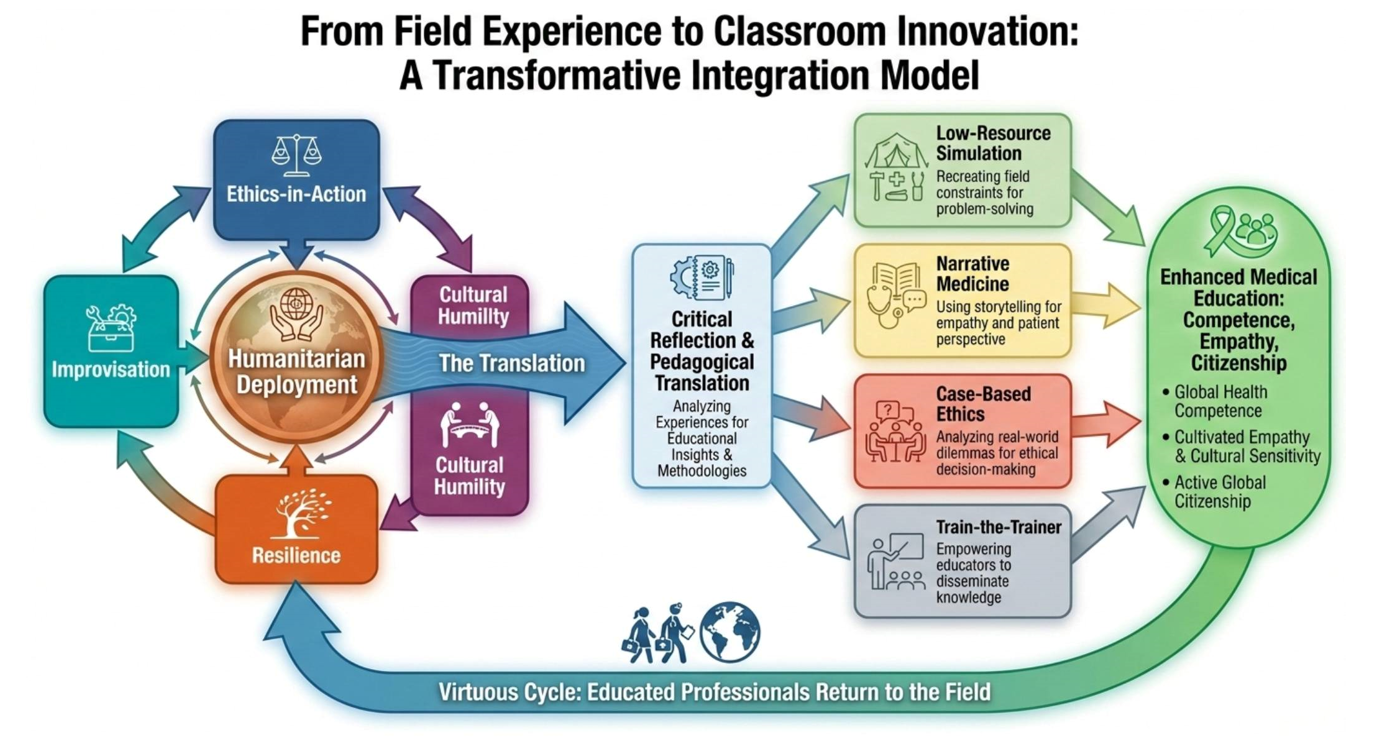
Figure 1: From Humanitarian Fieldwork to Curricular Innovation: A Model for Transformative Integration in Medical Education
(Note: This diagram illustrates the authors’ original conceptual framework and was visually rendered using OpenAI’s DALL-E 3 image generation tool on 17 December 2025.)
V. DISCUSSION: THEORETICAL ALIGNMENT AND INSTITUTIONAL IMPLICATIONS
The case for integrating humanitarian field experiences into medical education is strengthened by its firm grounding in foundational learning theories. This alignment provides a robust rationale for formal inclusion in faculty development and curriculum design.
A. Transformative Learning in Practice
Mezirow’s (1991) theory finds vivid expression in these missions. The discomfort and dissonance encountered are not impediments but the essential catalysts for deep learning. When educators model the vulnerability of grappling with ethical ambiguity or logistical failure, they give students permission to engage in the critical self-reflection necessary for their own transformative professional development.
B. Enacting the Experiential Cycle
These deployments perfectly illustrate Kolb’s (1984) experiential learning cycle. The concrete experience of teaching neonatal resuscitation in Kabul leads to reflective observation (debriefing), then to abstract conceptualisation (understanding the power of low-resource simulation), and finally to active experimentation (designing and implementing a new curriculum module). This cycle ensures field learning is an active, iterative process of knowledge creation, not a passive event.
C. Building Communities of Practice
The Train-the-Trainer model’s success in Lebanon is a direct embodiment of Lave and Wenger’s (1991) situated learning theory. By progressing from peripheral participant to central trainer, local volunteers fully entered their community of practice. Similarly, when students engage with these global health narratives, they begin to envision themselves as part of an international community of healthcare providers, fostering a sense of shared responsibility and belonging.
To harness this potential, institutions must act. Humanitarian work should be formally recognised as valuable Continuing Professional Development (CPD) for educators. Faculty development programs should incorporate modules on “contextual pedagogy,” teaching in low-resource settings, and using narrative and simulation drawn from global health. Creating structured platforms–such as dedicated grand rounds or digital story repositories–for faculty to share field-based insights can enrich an institution’s entire educational ecosystem.
Ultimately, humanitarian medicine teaches us to reframe discomfort. The field’s unpredictability, emotional intensity, and ethical complexity create a fertile ground for the deepest form of learning. By embracing these experiences as central to our educational mission, we can prepare a generation of physicians who are not only clinically expert but also emotionally intelligent, culturally humble, and equipped to lead in an uncertain future.
VI. CONCLUSION
Humanitarian medicine is more than service; it is a transformative educational journey. Stepping beyond institutional comfort zones fosters profound growth. These missions demanded a synthesis of clinical expertise, emotional resilience, cultural humility, and ethical clarity–the very qualities that define a compassionate, globally minded physician.
Challenges like language barriers, scarcity, and human suffering were not obstacles but essential catalysts for learning. These “disorienting dilemmas” prompted deep reflection, reshaped my professional identity, and inspired innovative approaches to teaching.
By integrating humanitarian narratives, low-resource simulations, and real-world ethical dilemmas into curricula, we bridge the gap between theoretical knowledge and practical wisdom. We invite learners to explore not just how to treat disease, but what it means to serve, lead, and care in adversity. These lessons cultivate empathy, global citizenship, and a service-oriented mindset–qualities indispensable in our interconnected world.
For educators, humanitarian deployments are unparalleled faculty development. They refine pedagogy, deepen reflective practice, and foster knowledge co-creation with diverse communities. Academic institutions must recognise and support these experiences not as extracurricular, but as essential to health professions education.
The most powerful education occurs in the messiness of real life–in refugee camps, on ships, in under-equipped hospitals, in moments of shared humanity. Here, textbook knowledge meets compassion, theory is tested by reality, and both learners and educators grow. Humanitarian medicine must be embraced not only as service but as a transformative force that teaches with both knowledge and heart.
Notes on Contributors
Mohamad Hamim Mohamad Hanifah conceived the work based on firsthand field experiences; acquired and interpreted the narrative data and drafted the initial manuscript and its critical intellectual content.
Jubaida Paraja contributed to the conceptual design of the pedagogical translation framework and critically revised the manuscript for important intellectual content.
All Authors provided final approval of the version to be published and agree to be accountable for all aspects of the work.
Acknowledgement
We are deeply grateful to the humanitarian partners and the dedicated local health teams in each field location for their partnership, resilience, and shared commitment to care under extreme conditions. Their work is the foundation of this reflection. We also thank our peers for their insightful comments during the development of this article.
Funding
No specific grant was received from any funding agency for the writing of this manuscript. The humanitarian deployments described were conducted in a voluntary capacity with various non-governmental organisations.
Declaration of Interest
The authors declare no conflicts of interest related to the research, authorship, or publication of this article.
Declaration of AI and AI-assisted Technologies in the Writing Process
All structural mapping, pedagogical pathways, and textual content were defined solely by the authors. Figure 1 illustrates the authors’ original conceptual framework and was visually rendered using OpenAI’s DALL-E 3 image generation tool on 17 December 2025.
References
Kolb, D. A. (1984). Experiential learning: Experience as the source of learning and development. Prentice-Hall.
Lave, J., & Wenger, E. (1991). Situated learning: Legitimate peripheral participation. Cambridge University Press. https://doi.org/10.1017/CBO9780511815355
Mezirow, J. (1991). Transformative dimensions of adult learning. Jossey-Bass.
Milota, M. M., van Thiel, G. J. M. W., & van Delden, J. J. M. (2019). Narrative medicine as a medical education tool: A systematic review. Medical Teacher, 41(7), 802–810. https://doi.org/10.1080/0142159X.2019.1584274
Taylor, D. C. M., & Hamdy, H. (2013). Adult learning theories: Implications for learning and teaching in medical education: AMEE Guide No. 83. Medical Teacher, 35(11), e1561–e1572. https://doi.org/10.3109/0142159X.2013.828153
*Assoc. Prof. Dr. Jubaida Paraja
Faculty of Medicine and Health Sciences,
Universiti Malaysia Sabah,
88400 Kota Kinabalu,
Sabah, Malaysia
Email: jubaida@ums.edu.my
Submitted: 25 November 2024
Accepted: 18 November 2025
Published online: 7 July, TAPS 2026, 11(3), 8-16
https://doi.org/10.29060/TAPS.2026-11-3/OA3575
Pasin Tangadulrat, Jongdee Bawornpatarananon & Nisalak Upho
Department of Orthopedics, Faculty of Medicine, Prince of Songkla University, Thailand
Abstract
Introduction: Game-based learning (GBL) is a well-known method for enhanced learning. However, literature suggests varying engagement and outcomes with various types of GBL. Therefore, we aimed to evaluate the effectiveness of a Japanese-style role-playing game (JRPG) on improving the learning of fifth-year medical students.
Methods: We conducted a mixed method explanatory study using a quasi-experimental study with a historical control as the quantitative component. A JRPG was introduced to fifth-year medical students in 2023 and compared with the 2022 cohort using MCQ and MEQ scores. Student experiences were assessed through a Likert-scale questionnaire and focus group interviews analysed by thematic analysis.
Results: We recruited 57 participants. The demographic data, and overall test scores of the participants did not differ from those of their counterparts in the previous year. The mean score for the paediatric orthopaedics MCQ (five questions) test did not differ between the two groups (3.2 ± 0.9 for the 2023 class vs. 3.5 ± 0.8 for the 2022 class, p = 0.477). The 2023 class had slightly higher mean paediatric orthopaedics MEQ test scores than did the 2022 class (66.8 ± 8.8 vs. 62.8 ± 8.7, p = 0.06), with no statistically significant difference. Most students reported good experiences while playing the game, mainly saying that it was fun and interesting and helped motivate them to study more about the subject.
Conclusion: While JRPG did not significantly affect student performance, it is one of the approach that can provide good engagement, motivation, and learning experiences.
Keywords: Game-based Learning, Japanese-style Role-playing Game, Medical Education, Paediatric Orthopaedics, Medical Learning, Academic Knowledge
Practice Highlights
- Game-based learning can enhance student engagement and motivation.
- JRPGs provide a novel and interesting teaching method
- Game genres might help simulate students’ engagement
- Students appreciate the teacher’s effort, leading to better engagement
- Further evaluation is needed to assess the impact on academic performance.
I. INTRODUCTION
Medical education is rapidly evolving with technology playing a significant role in its development. Game-based learning (GBL) has emerged as a promising pedagogical approach within medical education, demonstrating its potential to improve student engagement and learning (Pesare et al., 2016; Van Gaalen et al., 2021; Xu et al., 2023). Various types of GBL have shown promising results, including escape rooms, flashcard applications, and virtual reality-based games (Kakos et al., 2025; Mansoory et al., 2021; Mishall et al., 2023). However, many of the developed games in medical education often lean towards virtual simulations rather than immersive, familiar gaming experiences. For example, the “EMERGE” game is a simulation of the emergency room experience (Chon et al., 2019). “PediatricSim” simulated emergency room management for paediatric patients (Gerard et al., 2018). “Hygie” simulated a general practitioner who needs to treat a variety of patients (Jaunay et al., 2019), and “NEOGAMES,” stimulated neonatal resuscitation (Hu et al., 2021). Moreover, gamification, another proposed teaching method for incorporating gaming elements into the learning environment, is not considered a real game application method (Pesare et al., 2016).
While these GBL approaches are valuable, their focus is often on applying universal game mechanics (gamification) or simulating clinical tasks. Most GBL research does not explore whether a format similar to recreational gaming from a different context can create a more engaging educational experience than functionally designed educational games. To address this gap, we aimed to evaluate a GBL tool developed in the format of a Japanese-style role-playing game (JRPG). A JRPG is a subgenre of role-playing video games characterised by animated pixelated characters, narrative-driven gameplay, often featuring character progression, turn-based combat, and a feedback or rewards system. Some of these features have been proven effective for medical education (Aster et al., 2024; Jackson et al., 2018).
Additionally, this genre holds significant cultural relevance and popularity within our study population in Thailand (Allcorrect Group, 2023; Toyoshima, 2011; Chen, 2022). Therefore, we considered the JRPG format a compelling choice due to its appropriate game mechanics and familiarity. We hypothesised that it would provide a good learning experience and engagement, while also resonating well culturally with our target medical student population.
II. METHODS
A. Game Development and Contents
The game was created using “RPG Maker MZ version 1.6.1”. The game content can be categorised into two parts. The first part is the main story, involving a fifth-year medical student who is accidentally transported to another world and tasked with completing an assignment. During his journey, he meets new allies, helps others, and realises his dream. The second part is the knowledge integration, in which the protagonist must answer paediatric orthopaedics-related questions to pass the story. These questions are presented with relevant clinical case scenarios, together with radiographic findings. Players are asked to diagnose and manage common paediatric traumas and conditions, with questions formatted as multiple-choice questions (MCQ). After answering this question, immediate feedback and a short review of the critical concepts of the topic were provided. At the end of the game, the players are sent to the recollection room, where they can review every question in the game and be provided with the correct answers with explanations. The game features approximately 20 paediatric orthopaedics-related questions covering common paediatric injury such as supracondylar fractures, lateral condyle fractures, femur fracture, and common paediatric orthopaedic conditions such as developmental hip dysplasia, Blount’s disease, and clubfeet. The average gameplay duration was estimated to be around 1 hour, though this varied among individual students. The game is available at https://stonicxx.github.io/PedOrthoEnglish/ (Figure 1).
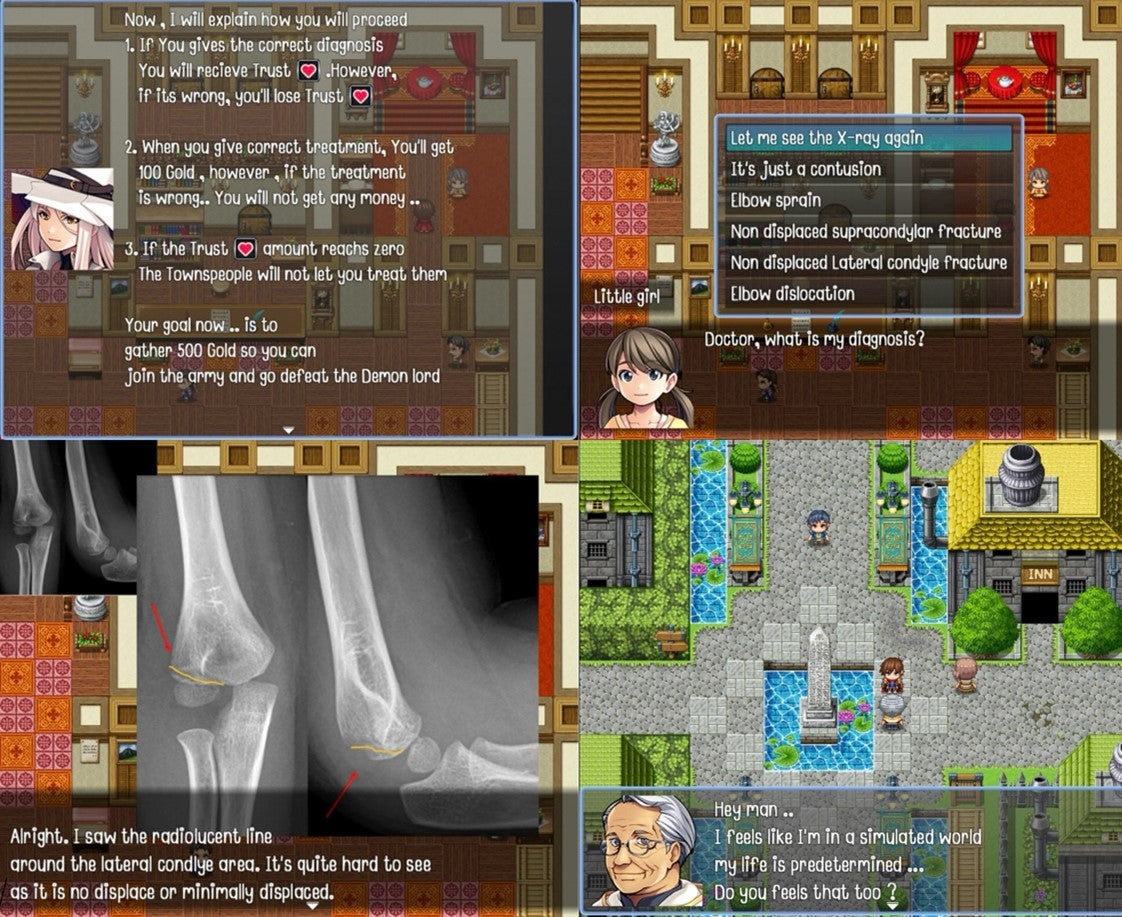
Figure 1. Various screenshots from the game, including in-game explanation of game mechanics (upper left), a multiple-choice style question (upper right), a critical learning point explanation (lower left), and part of the game story with humorous and engaging dialogue (lower right).
B. Participants
We recruited fifth-year medical students for the academic year 2023. At the start of the fifth week of the orthopaedics rotation, a research assistant who was independent of the course instruction, game development, and student assessment briefed the students about the developed GBL. For the participation details, clarification was made that
- Participation is not mandatory
- Participants could stop playing at any time
- The final game score would not be used for grading
- It is an additional activity that should be done in free time and will take about 30-60 minutes to complete. It can be accomplished in a series of short, multiple sessions.
- As a positive reinforcement, participants who scored the highest in the game will receive small rewards.
Informed consent was then obtained from all recruited subjects. A link to the game was then shared with those interested in the programme. During paediatric orthopaedics discussion classes, the instructor (P.T.) discussed common paediatric traumas and diseases. When the discussion involved cases presented in the game, the instructor reverted to the game and reviewed the answers. At the end of the class, three participants with the highest scores received a small gift as positive reinforcement.
C. Outcomes Measure and Data Analysis
1) Quantitative Outcomes:
We recorded participants’ demographic data, including age, sex, and grade point average (GPA). The MCQ, MEQ, and oral examination scores in both the general and paediatric orthopaedics rotations were compared.. We compared the demographic data and test scores of the participants and those of the historical control groups, which consisted of 50 students from the previous academic year’s (2022) rotations. Continuous data were compared using the t-test for normally distributed data. The Wilcoxon rank-sum test was used for non-normally distributed data. Categorical data were compared using the chi-squared test. All statistical analyses were performed using R version 4.3.2. (R Core Team, 2023, Vienna, Austria). We developed a questionnaire to evaluate the experience and satisfaction with the game. It included nine questions that participants will answer using a Likert scale (Strongly Disagree, Disagree, Neutral, Agree, and Strongly Agree). Face and content validity were discussed among the authors, including readability, clarity, comprehensiveness, and agreement on the questions to be retained in the final questionnaire. The questionnaire was then tested with one group of 20 medical students who volunteered to play-test the game and answer the questionnaire. The Cronbach’s alpha result is 0.89, indicating good internal consistency.
2) Qualitative Outcomes:
At the end of the 5-week rotation, focus group semi-structured interviews were conducted by an educational expert, lasting approximately 10 – 15 minutes. The interviewer (J.B.) holds an MSc in Education and has over 10 years of experience as an undergraduate medical education coordinator for the department. The questions were as follows:
- Are there any benefits of using GBL besides the regular curriculum?
- What do you like about this GBL style?
- Are there any aspects you do not like about the game and are there any suggestions for improvement?
The interviewer recorded and transcribed the interviews. To mitigate researcher bias in coding themes, two independent researchers (P.T. and N.U.) initially read the transcribed documents and highlighted key themes independently. Discrepancies were discussed and resolved through consensus, with a third researcher (J.B.) consulted in cases of persistent disagreement. The collected themes were then discussed and combined into appropriate overarching themes.
III. RESULTS
Fifty-seven fifth-year medical students participated in the GBL between January and June 2023. No differences in age, sex proportion, and GPA were observed between the participants and the historical controls (Table 1). The overall MCQ test score did not differ between the two groups (67.4 ± 8.0 for the 2022 class vs. 66.4 ± 7.7 for the 2023 class, p = 0.358). Regarding the paediatric orthopaedics MCQ part, which consists of 5 questions, the mean score did not differ between the two groups (3.5 ± 0.8 for the 2022 class vs. 3.2 ± 0.9 for the 2023 class, p = 0.477). For clear visualisation, the score was scaled to 100, resulting in 69.6 ± 16 for the 2022 class and 64.9 ± 18 for the 2023 class (Figure 2).
The overall MEQ test score, which included all subjects in orthopaedics rotation, did not differ significantly between the two groups (65.8 ± 7.1 for the 2022 class vs. 66.8 ± 4.7 for the 2023 class, p = 0.391). However, when comparing just the paediatric orthopaedics MEQ part, the mean score of the 2023 class was slightly higher than that of the 2022 class. Still, the difference was not statistically significant (62.8 ± 8.7 for the 2022 class vs. 66.8 ± 8.8 for the 2023 class, p = 0.06). The overall oral examination scores did not differ significantly between the two groups (Figure 2).
|
|
2023 Class (n = 57) |
2022 Class (n = 50) |
P. value |
|
Age (median, range) |
23 (22–26) |
23 (22–27) |
0.444 |
|
Male (n,%) |
31 (54.4%) |
29 (58.0 %) |
0.857 |
|
Grade Point Average (Mean±SD) |
3.46±0.30 |
3.41±0.33 |
0.359 |
Table 1. Medical students’ demographic data
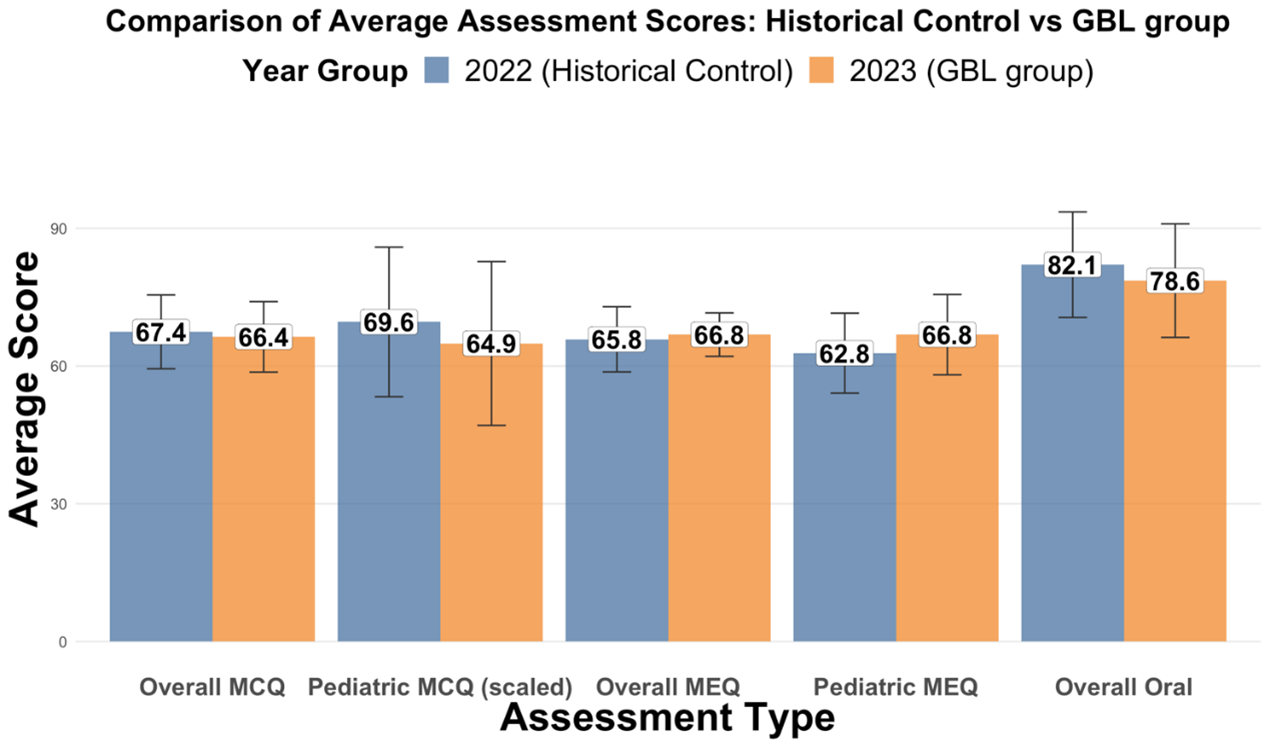
Figure 2. Comparison of various test score between the historical control group and GBL group. The paediatric MCQ score was scaled to 100 to better visualise the difference.
Most students strongly agreed or agreed with a positive statement regarding the game (Table 2). The proportion of students who answered “neutral” was higher than 10% for two of the statements: “I feel that the gameplay is easily understood and easy to play” and “The time taken to finish the game was appropriate”.
|
Questions (N = 57) |
Strongly Agree (n,%) |
Agree (n,%) |
Neutral, Disagree & Strongly Disagree (n,%) |
|
Q1 I am having fun playing this game |
34 (59.6) |
19 (33.3) |
4 (7.1) |
|
Q2 I feel challenged and want to finish the game |
40 (70.2) |
12 (21.1) |
5 (8.7) |
|
Q3 I feel that the gameplay is easily understood and easy to play |
36 (63.2) |
15 (26.3) |
6 (10.5) |
|
Q4 The knowledge presented in the game makes me understand the topic more |
39 (68.4) |
15 (26.3) |
3 (5.3) |
|
Q5 Playing this game motivated me to actively pursue more knowledge about the topic |
37 (64.9) |
19 (33.3) |
1 (1.8) |
|
Q6 The case scenarios in the game and questions that were asked are appropriate for my level of knowledge |
29 (50.9) |
25 (43.8) |
3 (5.3%) |
|
Q7 The knowledge I gained from the game can be used in real practice |
39 (68.4) |
18 (31.6) |
0 (0%) |
|
Q8 The time it took to finish the game was appropriate |
29 (50.9) |
17 (29.8) |
11 (19.3) |
|
Q9 I would recommend this game to fellow medical students |
34 (59.7) |
19 (33.3) |
4 (7.0) |
Table 2. Satisfaction of the students participating in game-based learning
A total of 57 fifth-year medical students participated in the GBL , and all were included in the qualitative analysis through focus group interviews. These interviews were conducted across 7 rotations, with 8-9 students participating in each session. Using thematic analysis, we coded the responses into two themes, along with their supporting subthemes and corresponding responses (Table 3).
|
Theme |
Subtheme |
Illustrative Student Quotes |
|
GBL can stimulate students’ learning experience and engagement |
Novel and interesting teaching method |
– I feel it is like a switch. I know I need to study, but sometimes I feel tired and do not want to open a book. Nevertheless, the game was interesting. Therefore, I decided to play the game. After playing it, it piqued my interest in studying more, and now, I intend to read more about the subject. |
|
Familiarity with the game style |
– It reminded me of a game called Ragnarok, which I used to play a lot when I was in middle school. I did not think that similar educational games could be created.
– The looks of the game were surprising to me, because I used to play a game like this. The in-game system and progression were also interesting to me, because I want to know if the character progression would be similar to what I had experienced in this game genre. |
|
|
Teacher’s efforts and student reciprocity |
– Actually, I am not that familiar with JRPG. However, I know that making this kind of thing probably requires significant time and effort, so I feel I will give it a try for the teacher’s sake.
– I feel that the knowledge inside the game is probably really important because the teacher spent a lot of time making it. I don’t want to waste the teacher’s effort.
|
|
|
Theme 2: Technology-based GBL models should be optimised for the user experience |
Game length and pacing |
– I feel that the time it took to finish the game is too long. I was not interested in the story, but the part where I got to treat patients was interesting. It would be good if there were a skip button for the story. |
|
Technical issues |
– I did not finish the game in one go and wanted to pause and save. However, the saved file was gone, and I had to restart from the beginning, which was very frustrating. |
Table 3. Thematic analysis results, including their supporting subthemes and responses
IV. DISCUSSION
Our study reported results obtained from using a distinct type of JPRG with a case-based study. We found that most students had positive experiences using the game in addition to the current curriculum. However, this did not lead to significantly better test scores.
GBL is an interesting topic in medical education. Many studies have demonstrated that GBL can improve the engagement and learning experiences of medical students (Al-Mugheed et al., 2022; Boeker et al., 2013; Gorbanev et al., 2018). We found that the participants enjoyed playing the game and felt engaged with the subjects. The reasons for feeling engaged were attributed to many factors. First, the novelty of the game likely stimulated curiosity and intrinsic motivation, which are critical for sustained engagement in learning. This was directly evidenced in the interview results, where students expressed excitement for a new, unconventional learning method. In addition, we incorporated many recommended mechanics known to enhance GBL effectiveness, such as using a familiar game style, feedback, and competition via leaderboard (Pitt et al., 2015).
A particularly interesting finding is that familiarity with the game type may have an effect on participants’ engagement. For many students in Thailand, the JRPG format resonated due to their extensive exposure to video games from a young age (Jirasatmathakul & Poovorawan, 2000). A study of the Canadian student population also reveals that students with an East Asian background have significantly more positive experiences with GBL than other cultural groups, which may be attributed to their greater exposure to and familiarity with gaming (Jossan et al., 2021). Game types might also play a role in stimulating engagement. Role-playing games have been shown to have high engagement in younger players and persist throughout young adulthood (Ream et al., 2013). This highlights how leveraging existing gaming culture and game types could help stimulate interest in academic learning.
Lastly, we found an interesting insight regarding the teacher’s perceived effort and student reciprocity. In Asian cultures, a deep-rooted sense of gratitude towards teachers can influence student behaviour. Some students expressed feeling motivated to engage with the game as a reciprocal gesture, appreciating the significant effort involved in its development, even if the game style wasn’t initially their preference. This suggests that the perceived value and investment from the educator, beyond the game’s mechanics, can profoundly enhance student motivation and participation. However, it is crucial to acknowledge that this cultural concept may not apply in other cultural contexts, limiting the generalisability of this factor.
GBL implementations, especially those utilising new or unique technologies, must be carefully optimised for user experience. As shown in our study, some students encountered technical problems, such as issues saving game progress when playing on an iPad. While these problems were eventually addressed, they undeniably disrupted the learning experience for affected students. These technical aspects, alongside other user experience considerations, are reflected in the higher proportion of “Neutral” answers observed for questions regarding gameplay ease and the appropriateness of game length, with some students expressing that the game felt too long, and others struggling to fully grasp the gameplay mechanics.
To enhance future participant experiences, incorporating features such as a skipping or fast-forward system for narrative sections, and providing more detailed orientation on game progression and mechanics, would be beneficial. Furthermore, as medical education integrates newer technologies like virtual reality and advanced high-tech gear for educational games, it is critical that game developers thoroughly check and rigorously play-test the game prior to student deployment. This approach, coupled with immediate support for technical issues, is crucial to prevent disruptions and ensure an optimal learning environment.
Our study reported positive student experiences with a JRPG-style game, yet this did not translate into statistically significant improvements in examination scores. A slight positive trend was, however, observed in the paediatric MEQ scores. Several factors likely explain the lack of a statistically significant effect on test scores. First, our quasi-experimental design used a historical control group and assessed knowledge at the end of the curriculum, rather than in a pre- and post-test fashion. This design introduces potential confounding variables, such as individual student study habits and knowledge retention over the rotation, which may obscure the direct impact of the intervention. A potential recall effect from the in-game questions may have influenced performance, but it is difficult to isolate this from routine self-study.
Second, paediatric orthopaedics questions constituted only about 10% of the total examination content. With such a low weighting, any genuine knowledge gains from the game would be difficult to detect statistically. Third, as the game was an optional, adjunct activity, the “dosage” of the intervention varied significantly among students. This inconsistency in exposure makes it challenging to measure a uniform effect across the cohort. Future implementations could explore mandatory integration to ensure a consistent level of engagement. Our finding that a GBL tool did not produce significantly better test scores aligns with other studies in the field, which have also found that game-based interventions may not outperform traditional teaching methods like didactic lectures (Trevino et al., 2016). Lastly, as our qualitative data revealed, student motivation and familiarity with the JRPG style varied, likely contributing to a wider variance in learning outcomes and diluting the overall mean effect on test scores.
Although overall scores did not significantly improve, the slight increase in MEQ scores suggests a potential alignment between the game’s design and the cognitive skills assessed by that format. The game’s integrated case-based scenarios were designed to promote higher-order cognitive skills such as ‘Application’ and ‘Analysis’ within Bloom’s Taxonomy. These skills are more effectively evaluated by MEQs, which require deeper reasoning and synthesis of information, than by MCQs, which often assess knowledge recall. The trend in MEQ scores may therefore indicate that the GBL was beginning to foster the intended clinical reasoning skills, even if the effect was not powerful enough to be statistically significant.
Our findings also signify that the efficacy of a GBL tool can be deeply influenced by cultural context. The selection of the JRPG genre was a deliberate attempt to leverage its cultural relevance and nostalgic value in Thailand, where the population has a high degree of exposure to this video game genre from a young age (Jirasatmathakul & Poovorawan, 2000). However, this cultural specificity has important implications for generalisability. While familiarity may have boosted engagement for many, it may also have acted as a barrier for those unaccustomed to this game genre.
We observed that some students were motivated by a sense of reciprocity towards the instructor’s effort. In many Asian cultures, deep-seated cultural values of high power distance and collectivism shape a hierarchical teacher-student relationship. This structure, in turn, could frame the teacher’s effort as a form of benevolence that induces a specific form of gratitude, one defined by indebtedness and obligation. This, in turn, motivates a response through the fulfillment of one’s role as a diligent student. Conversely, in Western contexts, where egalitarianism and individualism are more pronounced, this specific motivational response may be less robust (Allen et al., 2024; Chen, 2023; Kee et al., 2008).
A. Limitations
First, the controls were fifth-year medical students in the previous academic year, and their selection might have influenced the test scores. However, it was deemed unethical to include a control group that did not have the chance to experience GBL, which could potentially improve their learning experience. Choosing the historical control group is reasonable because the circumstances regarding the overall curriculum and tests were similar in both academic years. This similarity was evidenced by the absence of significant differences in the overall test scores and demographic data of the students between the two groups. However, we acknowledge that subtle differences in teaching quality or emphasis on specific topics by instructors, and different in student’s motivation between the academic years (2022 and 2023) could not be entirely ruled out as potential confounding variables.
The educational expert’s role as an undergraduate coordinator for the department may influence the responses of participants in the interviews, as students may attempt to provide more positive responses due to the authoritative role of the interviewer. In addition, from the interviews, we noted that some students were more excited or were readily engaged in the game than others, potentially because of their familiarity with this type of game. Therefore, the efficacy of game formats may be culture specific. For example, students who have previously engaged in similar gaming styles, such as those from Southeast Asia, may find the game more appealing. Conversely, students who lack experience with this game type may not demonstrate the same enthusiasm level, therefore, reduce the generalisability of the method beyond Thailand.
Building on these limitations, future research should adopt more rigorous designs. Longitudinal studies would be able to assess long-term knowledge retention and the sustained impact of GBL on clinical reasoning skills. Pre- and post-test designs would also provide a more direct measure of knowledge acquisition attributable to the game, mitigating self-study or recall effects. Comparing the JRPG group with other active intervention group could help isolate its unique benefits.
V. CONCLUSION
In conclusion, JRPG-style game-based learning is one approach that can engage and motivate student learning experiences. Game types and styles may help stimulate learners’ engagement due to familiarity and experience. Lastly, the test score did not show significant improvement; therefore, future evaluations should prioritise rigorous longitudinal or pre- and post-test designs to better assess GBL’s impact on academic performance and clinical reasoning.
Ethical Approval
This study was approved by the Ethics Committee, Faculty of Medicine, Prince of Songkla University (REC-4850).
Data Availability
The data that support the findings of this study are available on request from the corresponding author. The data are not publicly available due to ethical concerns.
Funding
There is no funding for this research.
Declaration of Interest
The authors report there are no competing interests to declare.
References
Al-Mugheed, K., Bayraktar, N., Al-Bsheish, M., AlSyouf, A., Aldhmadi, B. K., Jarrar, M., & Alkhazali, M. (2022). Effectiveness of game-based virtual reality phone application and online education on knowledge, attitude and compliance of standard precautions among nursing students. PLoS One, 17(11), Article e0275130. https://doi.org/10.1371/journal.pone.0275130
Allcorrect Group. (2023, April 25). The gaming market in Thailand. https://allcorrectgames.com/insights/the-gaming-market-in-thailand/
Allen, K-A., Grove, C., May, F. S., Gamble, N., Lai, R., & Saunders, J. M. (2024). Expressions of gratitude in education: An analysis of the #ThankYourTeacher campaign. International Journal for Educational Integrity, 20, 13. https://doi.org/10.1007/s40979-024-00159-2
Aster, A., Laupichler, M. C., Zimmer, S., Zeman, F. D., Schaller, S. E. H. Z., Wirries, A., Strübing, P. G. H. M., König, S., Fischer, M. R., & Weigl, M. (2024). Game design elements of serious games in the education of medical and healthcare professions: A mixed-methods systematic review of underlying theories and teaching effectiveness. Advances in Health Sciences Education, 29, 1825-1848. https://doi.org/10.1007/s10459-024-10327-1
Boeker, M., Andel, P., Vach, W., & Frankenschmidt, A. (2013). Game-based e-learning is more effective than a conventional instructional method: A randomized controlled trial with third-year medical students. PLoS One, 8(12), Article e82328. https://doi.org/10.1371/journal.pone.0082328
Chen, L. (2022). The rise of the East Asian gaming industry: A value-added chain among the East Asian game companies during 2000-2010. Global Media and China, 7(1), 24-42. https://doi.org/10.1177/20594364221074422
Chen, S. W. (2023). Learning motivations and effort beliefs in Confucian cultural context: A dual-mode theoretical framework of achievement goal. Frontiers in Psychology, 14, Article 1058456. https://doi.org/10.3389/fpsyg.2023.1058456
Chon, S. H., Timmermann, F., Dratsch, T., Schuelper, N., Plum, P., Berlth, F., Datta, R. R., Schramm, C., Haneder, S., Späth, M. R., Dübbers, M., Kleinert, J., Raupach, T., Bruns, C., & Kleinert, R. (2019). Serious games in surgical medical education: A virtual emergency department as a tool for teaching clinical reasoning to medical students. JMIR Serious Games, 7(1), Article e13028. https://doi.org/10.2196/13028
Gerard, J. M., Scalzo, A. J., Borgman, M. A., Watson, C. M., Byrnes, C. E., Chang, T. P., Auerbach, M., Kessler, D. O., Feldman, B. L., Payne, B. S., Nibras, S., Chokshi, R. K., & Lopreiato, J. O. (2018). Validity evidence for a serious game to assess performance on critical pediatric emergency medicine scenarios. Simulation in Healthcare: The Journal of the Society for Simulation in Healthcare, 13(3), 168-180. https://doi.org/10.1097/sih.0000000000000283
Gorbanev, I., Agudelo-Londoño, S., González, R. A., Cortes, A., Pomares, A., Delgadillo, V., Yepes, F. J., & Muñoz, Ó. (2018). A systematic review of serious games in medical education: Quality of evidence and pedagogical strategy. Medical Education Online, 23(1), Article 1438718. https://doi.org/10.1080/10872981.2018.1438718
Hu, L., Zhang, L., Yin, R., Li, Z., Shen, J., Tan, H., Wu, J., & Zhou, W. (2021). NEOGAMES: A serious computer game that improves long-term knowledge retention of neonatal resuscitation in undergraduate medical students. Frontiers in Pediatrics, 9, Article 645776. https://doi.org/10.3389/fped.2021.645776
Jackson, L., O’Mara, J., Moss, J., & Jackson, A. (2018). A critical review of the effectiveness of narrative-driven digital educational games. International Journal of Game-Based Learning, 8(4), 32-49. https://doi.org/10.4018/IJGBL.2018100103
Jaunay, L. B., Zerr, P., Peguin, L., Renouard, L., Ivanoff, A. S., Picard, H., Griffith, J., Chassany, O., & Duracinsky, M. (2019). Development and evaluation of a new serious game for continuing medical education of general practitioners (Hygie): Double-blinded randomized controlled trial. Journal of Medical Internet Research, 21(11), Article e12669. https://doi.org/10.2196/12669
Jirasatmathakul, P., & Poovorawan, Y. (2000). Prevalence of video games among Thai children: Impact evaluation. Journal of the Medical Association of Thailand, 83(12), 1509-1513. http://www.jmatonline.com/PDF/83-PB-1509-1513.pdf
Jossan, K. S., Gauthier, A., & Jenkinson, J. (2021). Cultural implications in the acceptability of game-based learning. Computers & Education, 174, Article 104305. https://doi.org/10.1016/j.compedu.2021.104305
Kakos, N. J., Lufler, R. S., Cyr, B., Zwirner, C., Hurley, E., Heinrich, C., & Wilson, A. B. (2025). Unlocking knowledge: A meta-analysis assessing the efficacy of educational escape rooms in health sciences education. Advances in Health Sciences Education: Theory and Practice, 30(3), 837-857. https://doi.org/10.1007/s10459-024-10373-9
Kee, Y. H., Tsai, Y. M., & Chen, L. H. (2008). Relationships between being traditional and sense of gratitude among Taiwanese high school athletes. Psychological Reports, 102(3), 920-926. https://doi.org/10.2466/pr0.102.3.920-926
Mansoory, M. S., Khazaei, M. R., Azizi, S. M., & Niromand, E. (2021). Comparison of the effectiveness of lecture instruction and virtual reality-based serious gaming instruction on the medical students’ learning outcome about approach to coma. BMC Medical Education, 21(1), Article 347. https://doi.org/10.1186/s12909-021-02771-z
Mishall, P. L., Burton, W., & Risley, M. (2023). Flashcards: The preferred online game-based study tool self-selected by students to review medical histology image content. Advances in Experimental Medicine and Biology, 1406, 209-224. https://doi.org/10.1007/978-3-031-26462-7_10
Pesare, E., Roselli, T., Corriero, N., & Rossano, V. (2016). Game-based learning and gamification to promote engagement and motivation in medical learning contexts. Smart Learning Environments, 3(1), Article 5. https://doi.org/10.1186/s40561-016-0028-0
Pitt, M. B., Borman-Shoap, E. C., & Eppich, W. J. (2015). Twelve tips for maximizing the effectiveness of game-based learning. Medical Teacher, 37(11), 1013-1017. https://doi.org/10.3109/0142159x.2015.1020289
Ream, G. L., Elliott, L. C., & Dunlap, E. (2013). A genre-specific investigation of video game engagement and problem play in the early life course. Journal of Addiction Research & Therapy, 6, Article 8. https://doi.org/10.4172/2155-6105.S6-008
Toyoshima, N. (2011). Consuming Japan: The consumption of Japanese cultural products in Thailand [Doctoral dissertation]. Waseda University.
Trevino, R., Majcher, C., Rabin, J., Kent, T., Maki, Y., & Wingert, T. (2016). The effectiveness of an educational game for teaching optometry students basic and applied science. PLoS One, 11(5), Article e0156389. https://doi.org/10.1371/journal.pone.0156389
Van Gaalen, A. E. J., Jaarsma, A. D. C., & Georgiadis, J. R. (2021). Medical students’ perceptions of play and learning: Qualitative study with focus groups and thematic analysis. JMIR Serious Games, 9(3), Article e25637. https://doi.org/10.2196/25637
Xu, M., Luo, Y., Zhang, Y., Xia, R., Qian, H., & Zou, X. (2023). Game-based learning in medical education. Frontiers in Public Health, 11, Article 1113682. https://doi.org/10.3389/fpubh.2023.1113682
*Nisalak Upho
15 Kanchanavanit Road, Hat Yai,
Songkhla, 90110
Email: nisalak20@gmail.com
Submitted:5 August 2025
Accepted: 5 February 2026
Published online: 7 July, TAPS 2026, 11(3), 17-26
https://doi.org/10.29060/TAPS.2026-11-3/OA3816
Tinh Thi-Thanh Tran1 & Hanh Thi-Bich Tran2
1Department of Anesthesia and Resuscitation, School of Nursing-Medical Technology, University of Medicine and Pharmacy at Ho Chi Minh City, Vietnam; 2Department of Rehabilitation, School of Nursing-Medical Technology, University of Medicine and Pharmacy at Ho Chi Minh City, Vietnam
Abstract
Introduction: Speech and Language Therapy (SLT) plays a critical role in supporting individuals with communication and swallowing difficulties. While well-established in developed countries, SLT remains a nascent discipline in Vietnam with low student enrolment. While studies in other contexts have explored motivations for pursuing SLT major, little is known about the determinants influencing students’ choice of SLT in Vietnam. This study explored the determinants influencing students’ decision to choose SLT as their undergraduate major in Vietnam.
Methods: A phenomenological approach using Focus group discussions (FGDs) was applied with 39 SLT-major students from year 1 to year 3 at University of Medicine and Pharmacy at Ho Chi Minh City (UMP). Students were divided into 5 groups. Data was collected from September 2024 to February 2025. Thematic analysis was conducted.
Results: Five thematic domains emerged: Personal – Curriculum fit, Personal – Vocational fit, Personal – Institutional fit, A gateway to new opportunities, Social and familial factors. In the FGDs, students were asked to identify the strongest factor influencing their choice. Of the 39 participants, 26 described factors that aligned with theme “A gateway to new opportunities”. This recurring emphasis supports the interpretation that “A gateway to new opportunities” was the most decisive factor in shaping their decisions.
Conclusion: “A gateway to new opportunities” emerged as the most decisive factor, with Social and familial influences shaping other themes. The findings highlight the need for structured career guidance and national strategies to strengthen recruitment, curriculum development, and workforce planning for a sustainable SLT workforce in Vietnam.
Keywords: Undergraduate Major Selection, Speech and Language Therapy, Major Decision-Making, Focus Group Discussion, Phenomenology
Practice Highlights
- Identifies five major factors influencing SLT specialisation choice in Vietnam.
- Emphasises alignment between student characteristics and the SLT profession.
- Highlights social and familial influences in major decision-making.
- Shows students’ expectations about job prospects and professional identity.
- Provides insight for recruitment, academic counselling, curriculum development, and workforce development in SLT.
I. INTRODUCTION
Rehabilitation is a core component of universal health coverage, enabling individuals across all ages to maintain independence, participate in education, work, and family life. Yet, with an estimated 2.4 billion people worldwide needing rehabilitation, over half of those in low- and middle-income countries remain without the services they require (WHO, 2024).
The rehabilitation workforce in South-East Asia is critically inadequate, remaining well below the level necessary to ensure sufficient service provision (WHO, 2017). In Vietnam, the availability of rehabilitation personnel is limited, with only 0.25 per 10,000 population, a figure substantially lower than the WHO’s recommended threshold of 0.5 – 1 per 10,000 (Ministry of Health, 2023; Prime Minister, 2023). Across the country, there are 63 rehabilitation hospitals and centres. However, specific data on the workforce in SLT is not yet available within the national health system (Ministry of Health, 2023). A shortage of SLT professionals limits timely access to essential rehabilitation, leaving many individuals with communication and swallowing disorders underserved, particularly in low- and middle-income countries (WHO, 2017).
Although globally recognised as a critical component of the healthcare system, SLT is still in the early stages of development in Vietnam. The Medical Committee Netherlands-Vietnam (MCNV) (n.d.), a non-governmental organisation with longstanding contributions to health and education in Vietnam, played a pivotal role in establishing the country’s SLT education system. Through the USAID-funded “Speech and Language Therapy Education Development in Vietnam” project, and with technical support from Trinh Foundation Australia, MCNV supported the launch of the first university-based SLT programmes: a two-year Master’s course at UMP in 2019, primarily to develop future academic staff for undergraduate training, and a four-year Bachelor’s course at Da Nang University of Medical Technology and Pharmacy in 2018, designed to pilot and refine the undergraduate curriculum. Building on these foundations, UMP introduced its first undergraduate SLT track in 2022 as one of the three specialisations within the Rehabilitation Technology undergraduate programme, alongside Physical Therapy and Occupational Therapy. Prior to entering the track, students were exposed only to foundational science modules and received no formal introduction to SLT, except through orientation sessions; consequently, most students first learned about the profession only after joining the track, during the introductory SLT module. In the first three cohorts, 16 of 92 students (2022), 17 of 89 (2023), and 23 of 103 (2024) selected SLT as their specialisation. These modest proportions highlight the urgent need for systematic workforce development to ensure the sustainability of SLT in Vietnam.
The decision to select a university major can be viewed as a result of a dynamic interaction of personal, social, and contextual factors. Specifically, Social Cognitive Career Theory (SCCT) highlights the role of self-efficacy, outcome expectations, personal goals, and the influence of contextual supports and barriers in shaping academic and career paths (Lent et al., 1994). In general, choosing a university major is a complex decision influenced by parental influence, career guidance, external consultation, financial capacity, and employment opportunities (Reid, 2016; Qiu et al., 2017). For SLT major, desire to help others, interests in language, previous exposure to SLT, family members’ opinions were defined as factors influencing the choice of major (Byrne, 2007; Byrne, 2008). In Vietnam, most studies on career choice have examined established fields such as medicine or accounting (Tran & Nguyen, 2024; Nguyen & Do, 2023; Nguyen et al., 2023). In contrast, SLT major is new, with limited social recognition, low career visibility, and cultural unfamiliarity, making it essential to understand the unique factors shaping students’ decisions.
This study aimed to address this gap by exploring the determinants influencing students’ decision to choose SLT as their undergraduate major at UMP. Understanding these factors informs recruitment strategies, curriculum development in a newly established SLT track, and national policies to strengthen and sustain the SLT workforce in Vietnam. The findings also provide evidence for targeted career guidance and institutional initiatives that align students’ motivations with long-term professional goals.
II. METHODS
A. Study Design
A qualitative phenomenological approach was applied to explore the lived experiences of undergraduate students who selected SLT as their major. The phenomenological design was chosen to capture how participants made meaning of their academic choices in the context of a newly emerging profession in Vietnam.
B. Participants and Sampling
A total sampling strategy was applied. Eligibility criteria included current enrolment in the SLT major and willingness to participate in FGDs, while students who withdrew or transferred were excluded. Of 57 students invited, 41 agreed; two later left the programme, resulting in 39 participants in the final sample. Participants represented three cohorts (15 from year 2022, 7 from year 2023, and 17 from year 2024), with most being female (n = 36, 92.3%) and aged 18–21 years. Geographically, 24 students (61.5%) came from provinces outside Ho Chi Minh City, while 15 (38.5%) resided within the city.
C. Data Collection and Analysis
Data were collected between September 2024 and February 2025 through five Vietnamese focus group discussions with 39 SLT undergraduates (7–9 students per group). Each 60 – 90-minute session was moderated by trained researchers using a semi-structured guide, audio-recorded with informed consent, and transcribed verbatim for analysis.
FGDs were selected to align with the study aim of identifying determinants of SLT major choice and clarify the nature of these factors (Kitzinger, 1995; Nyumba et al., 2018). Given participants were full-time students with demanding timetables, FGDs were more feasible than arranging numerous one-to-one interviews while still meeting the factors-mapping objective (Guest et al., 2016).
The semi-structured interview guide for FGDs was developed based on the study’s central question and theoretical frameworks, including SCCT and Person-Environment fit. It comprised open-ended prompts, observation notes, and reflexive memos to capture both verbal and non-verbal responses. The draft guide was pilot tested with two groups of senior Physiotherapy and Occupational Therapy students, whose disciplines belong to the same Rehabilitation Technology cluster as Speech and Language Therapy. Since the importance of clarity and logical sequencing was recognised, participant feedback was incorporated into revisions, through which the finalised guide was produced (Kallio et al., 2016; Krueger & Casey, 2015).
Dominance of some voices and social desirability bias were explicitly managed during data collection. Before the main discussion began in each session, participants were explicitly informed that there were no right or wrong answers and that all views would be respected, to reduce conformity pressures (Korstjens & Moser, 2017). Each participant was then invited in turn to contribute to balance participation and limit dominance effects (Billups, 2021). Throughout the discussion, key statements were confirmed with participants to ensure accuracy. A consistently respectful, positive, and non-judgemental stance towards all contributions was maintained by the moderator, thereby minimising social desirability bias.
Reflexivity was maintained throughout the study. The research team comprised two lecturers, one from SLT and one from another discipline. To minimise bias, the SLT lecturer did not moderate FGDs involving her own students. Debriefings were conducted after each session, and ambiguous points were clarified with participants. Independent coding followed by consensus discussions was undertaken to enhance credibility and trustworthiness (Adler, 2022; Finlay, 2002; Korstjens & Moser, 2017).
Trustworthiness was ensured following Lincoln and Guba’s framework (Lincoln & Guba, 1985). Credibility was established by total sampling, the achievement of data saturation after five FGDs, and independent coding conducted by two researchers. Dependability and confirmability were strengthened by detailed documentation of the research process, the use of MAXQDA24 for systematic analysis, and secure data storage to allow external verification. Transferability was supported through rich contextual description and the inclusion of verbatim participant quotations. Ethical approval was obtained from the UMP ethics committee, and written informed consent was secured from all participants.
Data saturation was considered achieved when no new codes or themes emerged. Evidence suggests saturation is typically reached within 4–12 FGDs in homogeneous samples, supporting the adequacy of the five groups in this study (Ahmed, 2025; Guest et al., 2006).
Transcripts were imported into MAXQDA 24 for thematic analysis, guided by Braun and Clarke’s six-phase framework (Braun & Clarke, 2006). Particularly, following steps were conducted: (1) Familiarisation with data, (2) Generation of initial codes, (3) Theme search, (4) Theme review, (5) Theme definition and naming, and (6) Report production. Coding was independently performed by two researchers and cross-checked through triangulation to enhance reliability.
After the main themes were identified, their relationships were further examined through repeated comparison of coded data to identify hierarchical and contextual links. Through this step, the relationships among themes were mapped and visually represented.
III. RESULTS
The findings were presented through five themes that reflect the essence of students’ lived experiences when choosing SLT as a major.
A. Theme 1: Personal – Curriculum Fit – “It Just Felt Right”
This theme captures how students’ decision to choose SLT was shaped by their perceived academic strengths and practical considerations related to the structure and demands of the programme. Codes contributing to this theme include academic strengths and learning preferences.
“I’ve always had a knack for language and communication. Back in school, I enjoyed presenting and speaking in public.” – ST22-N2-09
“Among the three majors, this one felt like the best match for me.” – ST22-N2-11
“My exam scores weren’t high enough for other medical majors, but Rehabilitation fit my score range.” – ST22-N1-03
B. Theme 2: Personal – Vocational Fit – “I See Myself In This Job”
This theme reflects students’ reflections on how the nature of SLT aligned with their personal attributes and career expectations. Codes included under this theme are preference for cognitive tasks, helping people with disabilities, and non-shift-based clinical roles.
Some students perceived that their physical condition was more suitable for the SLT major than for other disciplines:
“I didn’t want to spend six years constantly in the hospital. I wanted something more balanced.” – ST22-N1-06
“I think physiotherapy would be really exhausting. I have a small build, and SLT suits me better.” – ST23-04
Others described the emotional satisfaction they may get from helping people with disabilities:
“I enjoy interacting with children and helping them express their needs. That makes me feel this is a meaningful job.” – ST24-N1-09
“My cousin has autism and eating difficulties. I felt this field would give me the skills to help her.” – ST24-N2-13
“My sibling used to get teased for speaking with a lisp. That made me want to study something that could help people like him.” – ST24-N1-09
Some students chose SLT because it offers a stable daytime work schedule without night shifts.
“As for SLT, since it mainly involves language-related work, I feel that it is mostly carried out during the day, within regular office hours. Therefore, it suits my preference for an eight-hour workday lifestyle better.” – ST24-N2-18
“Firstly, I only need to work office hours, and I don’t have to do night shifts.” – ST22-N1-06
C. Theme 3: Personal – Institutional Fit – “Being At UMP Made It Possible”
This theme reflects how institutional factors contributed to students’ confidence and feasibility in selecting SLT. It includes two specific codes: university reputation and location. Students often mentioned the symbolic value of studying at a prestigious institution and the practical advantages of staying near home.
“UMP is a prestigious university. I felt proud even though it was far from home.” – ST22-N1-06
“Honestly, I chose this university partly because it has a campus near my home. Compared to other majors at other schools, UMP’s local campus made it a lot easier for my family.” – ST22-N1-06
“My parents didn’t want me to move far. Studying nearby made them feel at ease.” – ST22-N1-07
D. Theme 4: A Gateway to New Opportunities – “It’s New, But It Opens Many Doors”
This theme captures how students imagined their future with SLT, revealing aspirations for professional development, meaningful work, and long-term stability. Analysis revealed a broad set of codes under this theme, including employment prospects, income potential, and future study opportunities.
Participants repeatedly described SLT as a field with high potential for employment:
“Since this is a new field, graduates won’t face pressure from competition when looking for jobs.” – ST22-N2-09
“I think there’s a real demand for this profession in the future. Being one of the first makes us stand out more.” – ST22-N1-03
Income-related expectations also surfaced frequently:
“Besides working in hospitals, we can open our own clinics or work in schools. That really adds to the income.” – ST22-N1-06
Others envisioned long-term educational opportunities:
“I’m aiming to pursue a master’s degree abroad. SLT seems like a gateway to something even bigger.” – ST23-02
“And honestly, I also have quite a big ambition to study abroad in the future. I’m not sure if it will happen, but I do have that little ambition. That’s one of the reasons why I chose this major.” – ST24-N2-13
E. Theme 5: Social and Familial Influences – “I Didn’t Choose Alone”
This theme highlights how students’ decisions were embedded within their social and familial contexts. It includes family traditions, peer influence, and faculty mentorship.
Family played a pivotal role in shaping choices:
“My brother encouraged me to try for UMP because they had SLT. That was a big reason I found out about this field.” – ST24-N1-02
“My cousin’s condition made me aware of speech therapy. It wasn’t just about interest anymore – it became a purpose.” – ST24-N2-13
Some participants were influenced by peers who had already made their choices:
“My friend chose this major, and it made me feel more secure going the same way.” – ST22-N2-13
In addition to the role of family and peers, the data revealed that many students first encountered SLT only after entering the university. Particularly, several participants described discovering the major through orientation sessions:
“Hearing our lecturers introduce SLT during orientation gave me the confidence that this was a real and promising direction.” – ST24-N1-05
Among the five themes, “A gateway to new opportunities” emerged as the most decisive factor. This theme was the most frequently coded (112 instances), surpassing Personal – Curriculum fit (41), Personal – Vocational fit (63), Personal -Institutional fit (28), and Social and familial influences (47). When explicitly asked to name the single strongest determinant, 26 of 39 students (66.7%) identified aspects of the theme “A gateway to new opportunities”, most often related to employability, income, and opportunities for further study. The high coding frequency and students’ prioritisation confirm that “A gateway to new opportunities” were the most decisive factor in choosing SLT.
Among 39 participants, 36 were female (92.3%) and 3 were male (7.7%). For female students, the most common expected opportunities were job stability and adequate income (83%), followed by social contribution and helping others (67%), personal development through higher education (39%), and becoming pioneers in the profession (25%). In contrast, all three male participants (100%) emphasised career advancement and social status, and high income or opportunities for private practice, while two (67%) highlighted the novelty and potential of the emerging SLT profession, and one (33%) mentioned helping others. Overall, these findings show that female students tended to prioritise security and social value, whereas male students focused on achievement and professional growth.
The five themes identified in this study were closely connected and arranged in a layered structure (Figure 1). A gateway to new opportunities formed the central and most decisive factor shaping students’ decisions. Surrounding this core were three layers of personal alignment: Personal – Curriculum fit, Personal – Institutional fit, and Personal – Vocational fit. These layers appeared in increasing scope of influence – from how students matched their abilities and learning preferences with the SLT curriculum, to how they perceived the suitability of the university environment, and finally to how they envisioned their future professional roles. The outermost layer, Social and familial influences, functioned as the background context encompassing all other themes, reflecting the continuous influence of family, teachers, and community. Together, this layered model illustrates how personal and contextual factors interacted to shape students’ reasoning and decision-making about choosing SLT as their major.
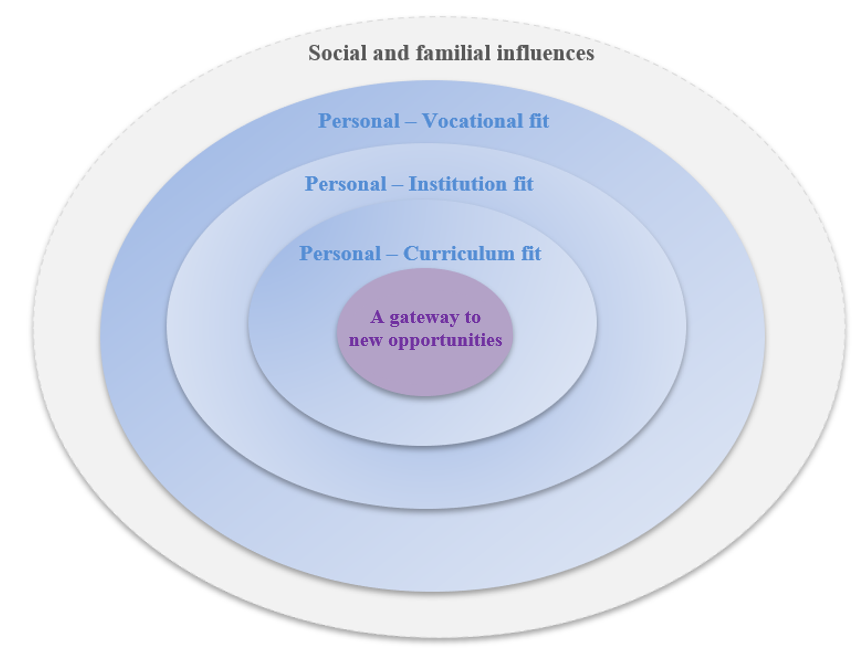
Figure 1. Interrelated themes shaping major choice decisions among SLT students
IV. DISCUSSION
This study aimed to explore the determinants influencing students’ decision to choose SLT as their undergraduate major at the UMP. In addressing this aim, the analysis identified five key themes shaping students’ decision to choose SLT. Personal – Curriculum fit reflects students’ perceptions of their academic strengths and learning preferences. Personal – Vocational fit captures the match between the nature of SLT and students’ preferences for cognitive tasks, helping people with disabilities, and non-shift-based clinical roles. Personal – Institutional fit highlights the importance of the university’s reputation and location in making SLT feel like a realistic and prestigious choice. A gateway to new opportunities show that students viewed SLT as a new but promising field because of employability, good income, and opportunities for further study. Finally, Social and familial influences emphasise that decisions were not made in isolation but were shaped by family traditions, peer influence, and faculty mentorship.
In addition to familial and peer influences, institutional factors also shaped students’ understanding of SLT, particularly because many first encountered the profession only after entering the Rehabilitation Technology programme, through the faculty-led orientation sessions. However, this account indicates that students’ knowledge of SLT was often limited or absent prior to admission. In fact, it was indicated that early curricular exposure significantly shapes major decision-making in emerging health disciplines (Buddeberg-Fischer et al., 2008). For newly established programmes such as SLT at UMP, this highlights the curriculum’s pivotal role as a primary source of information. In other words, strengthening early-course design may support more informed choices and enhance student engagement.
About the central and most decisive factor shaping students’ decisions – A gateway to new opportunities, female students most often expressed expectations related to job stability, social contribution, and work–life balance, whereas male students focused on career advancement, higher income, and recognition. This demonstrates a distinct difference in the nature of theme A gateway to new opportunities between the two groups. Similar differences have been reported in other health professions. In physiotherapy and nursing, women tend to prioritise relational and caring values, while men emphasise technical competence and leadership (Prosen, 2022; Stenberg et al., 2021). In medicine, men are more likely to choose high-status or demanding specialties, whereas women prefer stable and flexible options (Lee, 2013). These consistent findings suggest that the gender differences observed in this study are aligned with patterns widely reported across other health-related fields.
With regards to Social and familial influences, the strong role of family and peers in students’ decisions can be understood within Vietnam’s social and cultural context. In Vietnamese families, parents often act as co-decision makers, giving moral and financial guidance to secure family stability and social mobility (Dormeier Freire & Giang, 2012). Such influence reflects Confucian traditions, where education and career are family responsibilities and ways to bring honour to parents (Truong et al., 2016). At a broader level, Vietnam’s collectivist culture and high respect for authority encourage young people to align their choices with family and community expectations (Hofstede, 2001). Following parental and peer advice is therefore viewed not as a lack of independence but as an expression of filial duty and social harmony deeply rooted in Vietnamese society.
The findings support SCCT theory (Lent et al., 1994). Personal- Curriculum fit reflects students’ self-efficacy, while A gateway to new opportunities highlights perceived career benefits, both key components of SCCT. Personal – Vocational fit demonstrates career goals shaped by personal interests and values. Social and familial influences and Personal – Institutional fit emphasise contextual factors like family, peers, mentors and institution. Together, these themes align well with SCCT in explaining students’ decisions to pursue SLT.
Compared to previous studies in Vietnam, this study identified similar factors influencing the choice of major to others. However, there is no single study covering all factors found here. Besides, unlike previous quantitative studies using linear regression models, this phenomenological study explored students’ voices in depth, identifying five key factors, with social and familial factors embedded in all others. In addition, while other studies in Vietnam emphasised personal competencies, passion, and university reputation (Nguyen & Do, 2023; Nguyen et al., 2023; Tran & Nguyen, 2024), this study found the theme A gateway to new opportunities – such as job prospects, income, and learning opportunities – to be the most decisive factor. This difference reflects the specific decision context, where students chose SLT among three closely related rehabilitation majors, not across all fields. From this study, family influence and exposure to the profession were important to choose SLT. This is similar to Byrne’s studies (Byrne, 2007; Byrne, 2008). However, among the themes, A gateway to new opportunities remained the strongest driver. This finding may relate to the limited development of SLT training in Vietnam (Atherton et al., 2017; Atherton et al., 2020), compared to the long-established and large SLT workforce in other countries (Armstrong et al., 2017; McLeod et al., 2023). Overall, this study adds a distinct perspective by highlighting how factors related to the theme A gateway to new opportunities, shaped by context, influence students’ choice of SLT.
Beyond recruitment and counselling, the findings highlight implications for the long-term development of the SLT workforce in Vietnam. Students voiced ambitions to “be pioneers,” pursue advanced study, and expand SLT services nationwide, showing motivation that extends beyond job attainment. These aspirations point to the need for policies supporting continuous professional development, clear career pathways, and institutional collaboration to strengthen workforce capacity and retention. Such directions reinforce the conclusion that structured career guidance and national planning are essential for building a sustainable SLT workforce in Vietnam.
A. Limitations
This study has several limitations. Firstly, most participants were from the South of Vietnam, and the data were collected from a single institution – UMP. Consequently, the findings may not fully represent the perspectives of students across other regions or universities. Secondly, while focus group discussions encouraged interaction and collective reflection, they may have limited the depth of personal disclosure due to peer influence and social desirability bias (Leung & Savithiri, 2009). Thirdly, the strong gender imbalance among participants could have shaped particular perceptions of SLT. Finally, researcher positionality may have subtly influenced data interpretation, especially since one member of the research team was an SLT lecturer.
Methodological triangulation, such as the combination of focus group discussions and individual interviews, is recommended for future studies to enhance the richness and trustworthiness of the data.
B. Application
The findings of this study have practical implications for both education and policy. At the institutional level, the results can guide the development of targeted recruitment strategies and curriculum development, ensuring that early SLT modules and pedagogical approaches align with students’ motivations and expectations. Because students only learned about SLT after entering the programme, a more effective approach would be to offer the introductory SLT module before students select their major. This may help them understand the profession sooner, make more informed decisions and engage earlier with the SLT track. At the policy level, the study offers evidence to support structured career guidance and national strategies for sustainable SLT workforce development through coordinated recruitment, public awareness, and human resource planning in rehabilitation services. For students, these findings also provide a valuable reference and motivation to pursue and remain committed to this newly emerging profession.
V. CONCLUSION
This study identified five interrelated themes influencing students’ decision to choose SLT as their major: Personal – Curriculum fit, Personal – Vocational fit, Personal – Institutional fit, A gateway to new opportunities, and Social and familial influences. Through iterative thematic analysis, A gateway to new opportunities were recognised as the central driving factor, while Social and familial influences provided the overarching context shaping all other themes. The findings also show that students often gained their first accurate understanding of SLT only after admission, underscoring the important role of early curricular exposure in an emerging profession. Ensuring that introductory SLT modules are offered prior to major selection and designed to provide clear information about the profession, expectations and career pathways may help students make more informed and confident choices. Together, these findings offer an integrated understanding of how personal, institutional, and contextual factors interact in major decision-making within an emerging profession. Building on this, the findings highlight the need for structured career guidance and national strategies to strengthen recruitment, curriculum development, and workforce planning for a sustainable SLT workforce in Vietnam.
Notes on Contributors
Tinh Thi-Thanh Tran, as the principal investigator, was responsible for the conceptualisation, literature review, development of the methodological framework, conducting interviews, transcription, data analysis, drafting the manuscript, and giving final approval. Hanh Thi-Bich Tran contributed to the conceptualisation, literature review, study design, conducting interviews, transcription, data analysis, and writing of the manuscript. All authors have read and approved the final manuscript.
Ethical Approval
Ethical approval was obtained from the Institutional Review Board of UMP (Ref. No. 3406/HDDD-DHYD). Written informed consent was collected from all participants prior to data collection.
Data Availability
The data that support the findings of this study are available from the author upon reasonable request.
Acknowledgement
First of all, this study was made possible through financial support from the University of Medicine and Pharmacy at Ho Chi Minh City. In addition, we are grateful to Yen Thi-Kim Nguyen and Anh Khoa-Dieu Nguyen, students of the School of Nursing-Medical Technology, for their assistance as support staff. Finally, we also extend our thanks to the students of the Department of Rehabilitation, School of Nursing-Medical Technology, whose participation was essential to the completion of this research.
Funding
This research was funded by the University of Medicine and Pharmacy at Ho Chi Minh City under contract number 232/2024/HD-DHYD, dated 10/9/2024.
Declaration of Interest
There is no conflict of interest to declare for the authors.
References
Adler, R. H. (2022). Trustworthiness in qualitative research. Journal of Human Lactation, 38(4), 598-602. https://doi.org/10.1177/08903344221116620
Ahmed, S. K. (2025). Sample size for saturation in qualitative research: Debates, definitions, and strategies. Journal of Medicine, Surgery, and Public Health, 5, Article 100171. https://doi.org/10.1016/j.glmedi.2024.100171
Armstrong, L., Stansfield, J., & Bloch, S. (2017). Content analysis of the professional journal of the Royal College of Speech and Language Therapists, III: 1966-2015 – Into the 21st century. International Journal of Language and Communication Disorders, 52(6), 681-688. https://doi.org/10.1111/1460-6984.12313
Atherton, M., Davidson, B., & McAllister, L. (2017). Exploring the emerging profession of speech-language pathology in Vietnam through pioneering eyes. International Journal of Speech-Language Pathology, 19(2), 109-120. https://doi.org/10.3109/17549507.2016.1159335
Atherton, M., Davidson, B., & McAllister, L. (2020). Growing a profession: Clinician perspectives on the evolving practice of speech-language pathology in Vietnam. International Journal of Speech-Language Pathology, 22(1), 1-11. https://doi.org/10.1080/17549507.2018.1559358
Billups, F. D. (2021). Focus group moderator guides. In F. D. Billups (Ed.), Qualitative data collection tools: Design, development, and applications (pp. 97-132). Sage Publications. https://doi.org/10.4135/9781071878699.n12
Braun, V., & Clarke, V. (2006). Using thematic analysis in psychology. Qualitative Research in Psychology, 3(2), 77-101. https://doi.org/10.1191/1478088706qp063oa
Buddeberg-Fischer, B., Stamm, M., Buddeberg, C., & Klaghofer, R. (2008). The new generation of family physicians – Career motivation, life goals and work-life balance. Swiss Medical Weekly, 138, Article 4142. http://doi.org/10.4414/smw.2008.12473
Byrne, N. (2007). Factors influencing the selection of speech pathology as a career: A qualitative analysis utilising the systems theory framework. Australian Journal of Career Development, 16(3), 11-18. https://doi.org/10.1177/103841620701600304
Byrne, N. (2008). Current and prospective speech-language pathology students’ reports of exposure to speech-language pathology. International Journal of Speech-Language Pathology, 10(5), 297-304. https://doi.org/10.1080/17549500802147018
Dormeier Freire, A., & Giang, H. T. (2012). The role of family in vocational education and training choices: A case study in Vietnam. International Studies in Sociology of Education, 22(3), 237-257. https://doi.org/10.1080/09620214.2012.737692
Finlay, L. (2002). “Outing” the researcher: The provenance, process, and practice of reflexivity. Qualitative Health Research, 12(4), 531-545. https://doi.org/10.1177/104973202129120052
Guest, G., Namey, E., & McKenna, K. (2016). How many focus groups are enough? Building an evidence base for nonprobability sample sizes. Field Methods, 29(1), 3-22. https://doi.org/10.1177/1525822X16639015
Guest, G., Bunce, A., & Johnson, L. (2006). How many interviews are enough? An experiment with data saturation and variability. Field Methods, 18(1), 59-82. https://doi.org/10.1177/1525822X05279903
Hofstede, G. (2001). Culture’s consequences: Comparing values, behaviors, institutions, and organizations across nations (2nd ed). Sage Publications. https://doi.org/10.1016/S0005-7967(02)00184-5
Kallio, H., Pietilä, A. M., Johnson, M., & Kangasniemi, M. (2016). Systematic methodological review: Developing a framework for a qualitative semi- structured interview guide. Journal of Advanced Nursing, 72(12), 2954-2965. https://doi.org/10.1111/jan.13031
Kitzinger, J. (1995). Qualitative research: Introducing focus groups. BMJ, 311, 299-302. http://doi.org/10.1136/bmj.311.7000.299
Korstjens, I., & Moser, A. (2017). Series: Practical guidance to qualitative research. Part 4: Trustworthiness and publishing. European Journal of General Practice, 24(1), 120-124. https://doi.org/10.1080/13814788.2017.1375092
Krueger, R. A., & Casey, M. A. (2015). Focus groups: A practical guide for applied research (5th ed.). Sage Publication.
Lee, C. W. (2013). Gender difference and specialty preference in medical career choice. Korean Journal of Medical Education, 25(1), 15-21. https://doi.org/10.3946/kjme.2013.25.1.15
Lent, R. W., Brown, S. D., & Hackett, G. (1994). Toward a unifying social cognitive theory of career and academic interest, choice, and performance. Journal of Vocational Behavior, 45(1), 79-122. https://doi.org/10.1006/jvbe.1994.1027
Leung, F. H., & Savithiri, R. (2009). Spotlight on focus groups. Canadian Family Physician, 55(2), 218-219. https://pmc.ncbi.nlm.nih.gov/articles/PMC2642503/
Lincoln, Y. S., & Guba, E. G. (1985). Naturalistic inquiry. Beverly Hills, CA: Sage.
McLeod, S., McGill, N., Baldac, S., & Mulcair, G. (2023). Australia’s speech-language pathology profession and its global impact. Perspectives of the ASHA Special Interest Groups, 8(4), 793-798. https://doi.org/10.1044/2023_PERSP-22-00239
Medical Committee Netherlands-Vietnam. (n.d.). Development of speech and language therapy education in Vietnam. https://mcnv.org/development-of-speech-and-language-therapy-education-in-vietnam
Ministry of Health. (2023). Ministry of Health portal. Ministry of Health.
Nguyen, H. H. A., & Do, X. V. (2023). Các yếu tố ảnh hưởng tới quyết định học Kế toán tại trường Đại học Tây Nguyên [Factors influencing the decision to study accounting at the Tay Nguyen University]. Tay Nguyen Journal of Science / Tạp chí Khoa học Tây Nguyên, 17(61), 108-115. https://doi.org/10.5281/zenodo.10117479
Nguyen, T. H., Gian, H. A., Bui, T. M. C., & Vu, N. D. (2023). Các yếu tố ảnh hưởng đến việc chọn ngành bác sĩ đa khoa của sinh viên năm thứ nhất [Factors influencing first-year students’ choice of general practice]. Education Journal / Tạp chí Giáo dục, 23(21), 41-47. https://tcgd.tapchigiaoduc.edu.vn/index.php/tapchi/article/view/1094
Nyumba, T. O., Wilson, K., Derrick, C. J., & Mukherjee, N. (2018). The use of focus group discussion methodology: Insights from two decades of application in conservation. Methods in Ecology and Evolution, 9(9), 20-32. https://doi.org/10.1111/2041-210X.12860
Prime Minister. (2023). Approval of the rehabilitation system development program for the 2023 – 2030 period, with a vision to 2050 (Decision 569/QĐ-TTg dated May 24, 2023). Government Electronic Information Portal. https://vanban.chinhphu.vn/?pageid=27160&docid=207941
Prosen, M. (2022). Nursing students’ perception of gender-defined roles in nursing: A qualitative descriptive study. BMC Nursing, 21, Article 104. https://doi.org/10.1186/s12912-022-00876-4
Qiu, S., Dooley, L., & Palkar, T. (2017). What factors influence the career choice of hotel management major students in Guangzhou? Independent Journal of Management & Production, 8(3), 1092-1115. https://doi.org/10.14807/ijmp.v8i3.618
Reid, H. (2016). Introduction to career counselling & coaching. Sage Publications. https://doi.org/10.4135/9781473958142
Stenberg, G., Fjellman-Wiklund, A., Strömbäck, M., Eskilsson, T., From, C., Enberg, B., & Wiklund, M. (2021). Gender matters in physiotherapy. Physiotherapy Theory and Practice, 38(13), 2316-2329. https://doi.org/10.1080/09593985.2021.1970867
Tran, T. H. D., & Nguyen, T. T. H. (2024). Các nhân tố ảnh hưởng đến định hướng nghề nghiệp của sinh viên ngành Kế toán tại trường Đại học Phan Thiết [Factors influencing students’ accounting career paths at the University of Phan Thiet]. Journal of Science and Technology, Hanoi University of Industry / Tạp chí Khoa học và Công nghệ Trường Đại học Công nghiệp Hà Nội, 60(2), 10-16. https://doi.org/10.57001/huih5804.2024.065
Truong, T. D., Hallinger, P., & Sanga, K. (2016). Confucian values and school leadership in Vietnam: Exploring the influence of culture on principal decision making. Educational Management Administration & Leadership, 45(1), 77-100. https://doi.org/10.1177/1741143215607877
World Health Organization [WHO]. (2017). The need to scale up rehabilitation. No. WHO/NMH/NVI/17.1. https://www.who.int/docs/default-source/documents/health-topics/rehabilitation/call-for-action/need-to-scale-up-rehab-july2018.pdf
World Health Organization [WHO]. (2024). Rehabilitation. https://www.who.int/news-room/fact-sheets/detail/rehabilitation
*Tinh Thi-Thanh Tran
217 Hong Bang, Cho Lon ward,
Ho Chi Minh City, Vietnam
+84 975 337 558
Email: tranthithanhtinh@ump.edu.vn
Submitted: 15 August 2025
Accepted: 5 February 2026
Published online: 7 July, TAPS 2026, 11(3), 27-37
https://doi.org/10.29060/TAPS.2026-11-3/OA3851
Hidayatul Radziah Ismawi, Azril Shahreez Abdul Ghani, Wan Fatein Nabeila Wan Omar, Wan Muhamad Salahudin WS & Nurulhasanah Mustapar
Department of Basic Medical Sciences, Kulliyyah of Medicine, International Islamic University Malaysia, Malaysia
Abstract
Introduction: Mentoring plays a crucial role in pre-clinical medical education, providing academic, emotional, personal, and professional support to students during early medical training. Although established in 2015, the impact of the pre-clinical undergraduate mentor-mentee programme at the Kulliyyah of Medicine, International Islamic University Malaysia (KOM, IIUM), has yet to be studied. This study aimed to explore the experiences and perceptions of pre-clinical students participating in the programme to assess its effectiveness and identify areas for improvement.
Methods: A cross-sectional study was conducted using a self-administered online questionnaire distributed to all Year 1 and Year 2 students. The survey included 5-point Likert-scale items measuring satisfaction and perceived helpfulness, alongside open-ended questions for qualitative insights. Quantitative data were analysed using descriptive statistics, while qualitative responses underwent thematic synthesis, involving open, axial, and selective coding.
Results: Results showed high satisfaction (mean score: 4.74 ± 0.74) and perceived helpfulness (mean score: 4.69 ± 0.81), with students praising the programme for fostering academic improvement, mental health support, peer collaboration, and holistic development. Thematic analysis revealed four categories: benefits of sessions, characteristics of effective sessions, challenges, and suggestions for improvement. Key themes included a safe and supportive environment, motivational reassurance, Islamic ethical guidance, and challenges such as infrequent interactions and emotional barriers. Strengthening frequency of interactions, mentor training, and feedback mechanisms was suggested for improvement.
Conclusion: This study highlights the holistic value of the structured mentor-mentee programme at KOM, IIUM in enhancing students’ academic and personal growth, providing valuable feedback for improvement.
Keywords: Feedback, Medical Student, Mentoring, Qualitative Research
Practice Highlights
- Pre-clinical students were highly satisfied, finding it helpful for academic and personal growth.
- Academic, mental, and peer support with values-based mentorship rooted in Islamic principles.
- Students urged more mentor-mentee interaction, better mentor training, and structured feedback.
I. INTRODUCTION
A. Background
Medical mentoring is crucial in pre-clinical education, as it bridges foundational knowledge and clinical practice, while supporting students both academically and personally. Mentors help students grasp challenging medical concepts, improve performance, and contextualise learning within patient care, which is especially vital during crises like the COVID-19 pandemic (Gaur et al., 2020). Beyond academics, mentoring develops critical thinking, communication, and professionalism essential for healthcare roles (Santiesteban et al., 2022). It also fosters a sense of belonging by connecting students with experienced professionals who offer insights into the culture and ethics of medicine, enhancing motivation, resilience, and mental well-being. Longitudinal mentoring programmes have been shown to improve students’ quality of life and reinforce lifelong learning and service values (Dent et al., 2021).
B. Previous Research on Medical Mentoring
Previous studies have explored mentoring in medical education, emphasising its significance in fostering academic, professional, and personal growth. One study demonstrated how mentorship programmes significantly improved academic performance among first year MBBS students in a medical school in India, alleviating academic pressures during their transition into medical education (Guhan et al., 2020). Similarly, another study highlighted the role of mentoring in enhancing mentees’ confidence, academic skills, and emotional resilience at the Universiti Kebangsaan Malaysia Medical Centre during clinical years (Kamarudin et al., 2021). Both studies underline the importance of a structured mentoring approach with clear communication and alignment of goals.
Mentoring also supports a broader sense of well-being and professional preparation by addressing critical gaps in medical education, such as emotional support and skill-building for clinical practice, which are often underemphasised (Bhatnagar et al., 2020). A longitudinal mentorship programme for Brazilian medical students was found to improve their mental health, quality of life, and motivation, underscoring the importance of sustained mentoring efforts (Secchin et al., 2020). Such programmes go beyond academics to strengthen resilience and promote holistic development.
Moreover, mentoring helps clarify professional roles and fosters lifelong learning. Mentoring is distinct from advising or coaching, focusing on personalised guidance that nurtures professional identity formation, clinical reasoning, and ethical values (Santiesteban et al., 2022). This distinction highlights mentoring’s unique contribution to developing well-rounded medical professionals capable of adapting to the complexities of healthcare delivery. Together, these findings affirm that mentoring, when carefully designed and implemented, serves as a cornerstone of comprehensive medical education.
Mentoring serves as a foundational element in medical education, providing students with support to navigate the complex demands of their training. It aids in bridging the gap between theoretical knowledge and practical application, especially during critical transitions such as moving from pre-clinical to clinical training. Mentoring helps students adapt to clinical environments by fostering professional development, teamwork, and communication skills (Malau-Aduli et al., 2020). Moreover, mentoring programmes often address stress and mental health challenges faced by medical students. For example, one study highlighted that mentoring interventions could reduce stress levels, improve coping mechanisms, and promote well-being. They also found that pre-clinical mentoring enhances personal development, helping students manage stress, improve time management, and strengthen peer support networks (Dederichs et al., 2020). It also cultivates professional behaviours and provides insights into clinical roles, as seen in mentoring programmes designed to prepare students for placements (Ng et al., 2020). Effective mentorship can bridge the gap between academic knowledge and clinical skills while promoting resilience, empathy, and professionalism (Brown et al., 2021; Corcoran et al., 2020). By providing role models and guidance, mentoring instils essential competencies such as empathy, ethical practice, and lifelong learning.
C. Teacher as Mentor in Medical Education
It is important to distinguish the teacher-as-mentor role from conventional educational supervision or academic advising. Teacher-mentors typically provide longitudinal, holistic support that includes academic coaching, psychosocial reassurance, professional identity formation, and, in our context, ethical and spiritual guidance (Addai et al., 2023). By contrast, academic advisors or educational supervisors more commonly focus on academic progress, curricular navigation, assessment requirements, and administrative or remediation tasks (McKinney et al., 2024; Wenham et al., 2019) Emphasising the lecturer-mentor role targets not only students’ study skills but also their well-being, values formation, and early professional socialisation. These components have been associated with improved resilience and professional development in recent studies. (Brown et al., 2021; Kusner et al., 2022; Santiesteban et al., 2022).
Mentoring in medical education is often framed within two key theoretical perspectives. Mentoring is viewed as a complex adaptive system (CAS) in which students learn through participation in a professional community, gradually gaining confidence and internalising professional norms through interaction with experienced faculty (Teo et al., 2024). Professional Identity Formation (PIF) further emphasises the role of mentoring in shaping students’ values, behaviours and sense of purpose as future doctors (Krishna et al., 2023). These frameworks clarify how lecturer-led mentoring differs from academic advising, which typically focuses on administrative or academic progress.
D. Specific Challenges of Pre-Clinical Mentoring
Pre-clinical mentoring presents unique challenges. One challenge is maintaining consistent engagement and effective communication, where mismatched expectations between mentors and mentees occasionally hinder the programme’s success (Kamarudin et al., 2021). Time constraints and varying mentor availability also pose obstacles to achieving programme objectives (Ng et al., 2020).
Although mentoring in medical education is widely discussed in the literature, the novelty of this study lies in its cultural and institutional context and its emphasis on holistic student development. At the International Islamic University Malaysia (IIUM), mentoring extends beyond academic and emotional support to include ethical and spiritual dimensions in line with the university’s educational philosophy. This aspect has received limited attention in existing studies, which largely focus on Western or secular settings. Within this unique context, the programme facilitates academic, professional, and personal growth through structured interactions between students and lecturers, providing a distinctive opportunity to examine the perceived benefits, challenges, and areas for improvement within a formal mentoring framework that has not previously been explored at this institution. The objective of this study is to explore the experiences and perceptions of pre-clinical students in the International Islamic University Malaysia participating in the mentor-mentee programme.
II. METHODS
A. Research Context
This study investigates the experiences of pre-clinical medical students participating in the mentor-mentee programme at the Kulliyyah of Medicine, International Islamic University Malaysia (KOM, IIUM). The programme comprises 67 groups, each with 4 to 5 students and a pre-clinical lecturer from Department of Basic Medical Sciences and Department of Pathology and Laboratory Medicine as the mentor, mandating one meeting every 10 weeks to discuss academic and non-academic issues such as study progress, difficulties encountered while studying, exam results, family issues, financial constraints, emotional and spiritual well-being, and other issues important to each student. While this meeting is mandatory, mentors and students are welcomed to arrange additional informal meetings for ongoing support. Each mentor is provided with general guidelines by the faculty on how to conduct these sessions, ensuring a structured approach while allowing flexibility to address specific mentee needs.
B. Research Design and Approach
This study employed a cross-sectional design.
C. Study Population
The study included all Year 1 and Year 2 medical students (n = 305) enrolled in the mentor–mentee programme during the 2023/2024 academic session. Given that the programme is organised into 67 small groups comprising 4 to 5 students each, and mentoring activities are primarily delivered at the group level rather than through one-to-one interactions, the sampling strategy required at least one response from every mentor–mentee group. This ensured that feedback was obtained from all groups represented within the programme while minimising non-response and reducing the logistical burden of data collection. This approach enabled broad coverage of the diverse experiences and perceptions across the programme’s group-based structure. Participation was voluntary, and no incentives were offered.
D. Data Collection Methods
Data were collected using a self-administered online questionnaire distributed through the social media WhatsApp Messenger application designed to capture both quantitative and qualitative feedback, with approval from IIUM Research Ethics Committee (IREC) – IREC 2024-336 from October to November 2024. The questionnaire was developed by the authors, based on the Kulliyyah of Medicine in-house student feedback survey, and adapted specifically for the mentor-mentee programme. It included two Likert-scale questions on satisfaction and perceived helpfulness, and five open-ended questions exploring experiences, challenges, and suggestions (see Appendix A). Content validity was ensured through review by a medical educationist and the mentor-mentee coordinator, with minor revisions made for clarity and relevance. Following their feedback, minor revisions were made to enhance clarity and alignment with the study objectives. As this was a novel adaptation rather than a previously validated instrument, formal reliability testing (Cronbach’s alpha) was not conducted; however, pilot feedback confirmed that the questionnaire was clear, appropriate, and capable of capturing the intended information. All students were informed of the study purpose at the start of the questionnaire, and by choosing to complete it, they indicated their understanding and provided implied consent to participate.
To ensure participants’ anonymity, the questionnaire was administered using an online survey platform that did not require users to sign in, thereby preventing the capture of email addresses or other identifiable login credentials. No personal identifiers such as name, student identification number, or contact information were collected however, mentor name was requested to keep track of group submissions. Although the survey link was disseminated through a social media application for convenience and wider reach, all responses were submitted independently and anonymously through the survey platform itself. The research team was therefore unable to trace responses back to individual students or specific devices, maintaining full confidentiality throughout the data collection process.
E. Quantitative Analysis: Data Analysis
Quantitative data from the two 5-point Likert scale questions were analysed using descriptive statistics to summarise participants’ satisfaction with and perceived helpfulness of the mentor-mentee programme. The mean scores, standard deviations, and 95% confidence intervals were calculated for each metric to provide insights into the overall trends and the consistency of responses across participants.
F. Qualitative Analysis: Thematic Synthesis
The qualitative data were analysed using thematic analysis, following the six-phase approach outlined by Braun and Clarke (2006, 2021). This method was selected for its flexibility and suitability in identifying patterns across short, open-ended reflections. The analysis was conducted in three stages: open coding, axial coding, and the development of overarching categories (See Table 1). During the initial stage, responses were examined line by line to identify distinct codes representing specific ideas, perceptions, or experiences. For example, phrases such as “felt supported during challenges” and “gained useful feedback on academics” were coded as emotional support and academic guidance, respectively. Then the open codes were grouped into related categories by exploring connections and relationships among them for axial coding. For instance, codes such as confidence-building, peer collaboration, and stress reduction were clustered under the category personal development, while guidance on ethical practice and improved study techniques were grouped under academic and professional growth. Finally, the axial codes were synthesised into four overarching categories to provide a comprehensive structure for interpretation. The researchers reviewed the codes and themes independently, and discrepancies were resolved through discussion to achieve consensus.
|
Stage |
Process |
Examples |
Output |
|
Open Coding |
Line-by-line coding of responses to identify specific ideas, perceptions, or experiences |
– “Felt supported during challenges” → Emotional Support |
Initial Codes |
|
Axial Coding |
Grouping related codes by identifying patterns and relationships |
– Confidence-building, Peer collaboration, Stress reduction → Personal Development |
Thematic Categories |
|
Overarching Categories |
Synthesising themes into broad, interpretable structures |
– Personal Development |
Final Thematic Framework |
Table 1. Three-Stage Thematic Synthesis Process for Analysing Open-Ended Responses
III. RESULTS
A total of 83 students responded to the survey out of 305 eligible Year 1 and Year 2 students, yielding a response rate of 27.2%. The responses were received from 65 of the 67 mentor–mentee groups, yielding a group response rate of 97.0%. The quantitative results showed high levels of satisfaction and perceived helpfulness among participants in the mentor-mentee programme. The mean satisfaction score was 4.74 ± 0.74 (95% CI: 4.58 – 4.89), while the mean perceived helpfulness score was 4.69 ± 0.81 (95% CI: 4.51– 4.86) on a 5-point Likert scale.
A. Benefits of Mentor–Mentee Sessions
Students consistently highlighted the positive impacts of the mentor-mentee sessions on their academic, personal, and emotional well-being. Many reported that their mentors provided a safe space where they felt acknowledged and supported.
“I feel safe and acknowledged with my efforts. My mentor would always reassure me and the other mentees even though our results are not exceptional.” – Student 54
“My mentor always reassures me and believes that I can do well in my exams. It gives me a lot of comfort as a person who always felt anxious about exams.” – Student 49
These statements emphasise the role of mentors in offering motivation and reassurance, particularly to students experiencing academic and emotional challenges. Students also appreciated the academic guidance received during these sessions, which contributed to their academic performance improvement. Mentors provided study techniques and advice on how to excel in exams, further enhancing students’ confidence. They also highlight the impact of Islamic-based spiritual guidance during the session.
“My mentor’s spiritual guidance is invaluable. We get reminded to become a good, safe Muslim doctor in each session. Great supporting and inspiring advice, both mentally and spiritually, for both dunia and akhirat.” – Student 3
The peer collaborative environment was another significant benefit, with one student stating,
“Whenever I share something or other people sharing (sic), all of us could learn a lot between each other.” – Student 79
This highlights how sessions facilitated collective learning and mutual support among mentees.
B. Characteristics of Effective Mentor-Mentee Sessions
Thematic analysis revealed key characteristics that defined effective mentoring practices (Figure 1). Students emphasised the importance of mentors who provided consistent academic encouragement, empathetic communication, and a sense of trust. Islamic-based encouragement was particularly valued, as it integrated spiritual guidance with professional and academic development. Effective sessions were described as those that fostered holistic well-being and supported mentees emotionally, psychologically, and academically. Mentors who actively listened, offered personalised feedback, and encouraged open communication were viewed as instrumental in creating a positive mentoring experience.
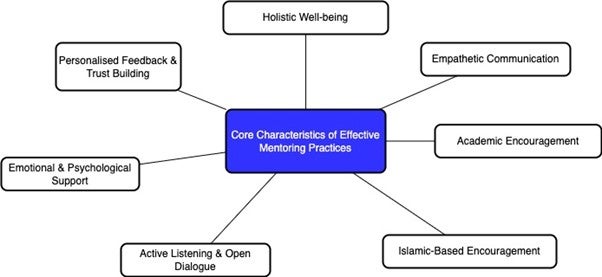
Figure 1. Key characteristics of effective mentoring practices
C. Challenges and Barriers
Despite these benefits, some students reported several challenges, including emotional and psychological barriers that hindered open communication. A few students also mentioned having a language barrier with some mentors. Some felt hesitant to share personal struggles due to anxiety or a lack of rapport with their mentors. Time constraints and limited opportunities for interaction also posed challenges, highlighting the need for more frequent and structured meetings.
D. Suggested Improvements
Students suggested enhancing support structures and improving interaction and communication within the programme. Recommendations included providing additional mentor training to ensure consistent quality across groups, more group activities, and increasing the frequency of sessions to address the emotional and academic needs of mentees more effectively. Focusing on mental health within the sessions was another key recommendation to further align the programme with the students’ values and holistic development needs (Table 2).
|
Recommendations |
Quote |
|
Providing additional mentor training |
“Provide comprehensive training for mentors to enhance their coaching, communication, and interpersonal skills, ensuring they are well-equipped to support their mentees effectively.” – Student 67 |
|
Additional group activities |
“Maybe we can hold some activities involving our mentor to strengthen the bond like sports or celebrations.” – Student 24
“Bonding activities with mentor and between the mentees.” – Student 35 |
|
Increase frequency of sessions |
“I think the session should be often.” – Student 15
“Add more session so that we could spend more time together.” – Student 39 |
|
Focusing on mental health and emotional well-being |
“Ensure that mentors are trained to recognize signs of stress or mental health issues and can guide mentees to appropriate professional support services.” – Student 67
“If mentor can focus on mental health issues especially for the year 1 students, I think it would be very beneficial and helpful.” – Student 76 |
Table 2. Recommendations to improve mentor-mentee system
IV. DISCUSSION
The results of this study emphasise the vital role of holistic mentoring programmes in supporting the academic, personal, and emotional growth of pre-clinical medical students. High satisfaction and perceived helpfulness scores underscore the programme’s positive impact, with benefits such as academic encouragement, collaborative peer learning, mental health support, and guidance aligned with Islamic principles. These findings align with broader evidence that mentoring enhances confidence, reduces stress, and improves well-being (Ng et al., 2020; Sonawane et al.2021).
In this study, “holistic mentoring” refers to an approach that supports students’ academic, personal, professional, and ethical development within a single integrated framework. This aligns with the principles of the Humanistic Mentoring Model, which emphasises attending to the whole person, intellectually, emotionally, socially, and morally to foster well-rounded growth (Schirmer & Osterberg, 2022). In the KOM, IIUM context, holistic mentoring additionally incorporates values-based guidance grounded in the institution’s educational philosophy. By nurturing not only academic competence but also character, well-being, and professional identity, the programme reflects a broader conceptualisation of mentoring that other institutions may adapt according to their cultural or pedagogical priorities.
Furthermore, the inclusion of ethical and spiritual dimensions within the IIUM mentoring approach distinguishes it from more conventional models and aligns with recent calls for culturally sensitive mentorship frameworks (Drossard & Härtl, 2024; Whitfield et al., 2024). Studies highlight the importance of tailoring mentorship to students’ values and identities, supporting this programme’s emphasis on integrating character development with academic and professional guidance (Hill et al., 2022; Vieira et al., 2022). Such culturally aligned mentoring offers a foundation for more inclusive and responsive programmes for diverse student populations. Future research should examine how these approaches function across different cultural settings and their long-term effects on students’ academic, psychological, and professional development (Sethia et al., 2020; Whitfield et al., 2024).
Challenges identified include infrequent interactions and emotional barriers that hinder effective communication, a finding consistent with issues reported in other institutions, such as difficulties in rapport-building (Aziz et al., 2020; Sephien et al.,2021; Zainol & Salam, 2021). Enhancing mentor training to improve emotional sensitivity and communication skills, as well as increasing session frequency, could address these challenges and ensure the programme’s consistency and effectiveness (Fulton-Ward et al., 2023; Kusner et al., 2022; Sethia et al., 2020).
Despite occasional less favourable feedback, most students positively perceived the mentoring experience, highlighting its potential to improve academic outcomes and engagement. To maximise impact, the programme could increase session frequency, strengthen support structures for mental health and academic development, and implement robust feedback mechanisms to adapt and refine mentoring practices (Brown et al., 2021; Corcoran et al., 2020; Mohd Shafiaai et al., 2020; Sonawane et al., 2020).
The findings of this study offer several practical insights for institutions seeking to strengthen or redesign their mentoring programmes. Although the KOM, IIUM model incorporates Islamic ethical and spiritual elements, its core features of structured group engagement, attention to holistic well-being, and supportive teacher-as-mentor relationships are broadly adaptable across diverse educational settings. Institutions serving culturally or religiously diverse student populations may tailor the framework by embedding their own value systems, such as professional identity formation, character education, or culturally responsive guidance. Implementing small, stable mentor-mentee groups, equipping mentors with simple communication guidelines, and encouraging regular yet flexible touchpoints can enhance continuity, rapport, and early identification of student needs. Inclusivity can be further strengthened by forming groups with diverse backgrounds, establishing respectful group norms, and providing mentors with training in culturally sensitive communication. Together, these strategies enable other institutions to adopt group mentoring models that are scalable, supportive, and responsive to the needs of diverse learners.
A. Advantages and Limitations
The mixed-methods approach utilised in this study provided a comprehensive understanding of participants’ experiences by combining quantitative and qualitative data, allowing for a nuanced exploration of perspectives. The electronic distribution of the questionnaire enhanced accessibility, enabling participants to respond at their convenience and potentially increasing the response rate. A key strength of this study is its novel contribution to the mentoring literature: it examines a group-based, faculty-led mentoring model situated within a non-Western, Islamic educational context and adopts a holistic framework that integrates academic, emotional, ethical, and spiritual support. This culturally grounded perspective is underrepresented in existing literature, which is largely centred on Western or secular models of mentoring.
However, the study has limitations. Requiring only a minimum response per group, rather than from every individual, may have led to less comprehensive data collection. Additionally, the reliance on self-reported data introduces the possibility of response bias, as participants may have been influenced by social desirability or recall limitations. Furthermore, although content validity was established through review by subject-matter experts, the questionnaire was not formally validated for face and construct validity. Additionally, reliability was not assessed using measures like Cronbach’s alpha, which may affect the robustness of the findings. The study’s focus on a single institution may also limit the generalisability of the findings to other contexts or settings. These factors should be considered when interpreting the results and designing future research.
V. CONCLUSION
Pre-clinical students of KOM, IIUM perceive the mentor mentee programme as highly beneficial and reported high satisfaction. The high satisfaction and perceived helpfulness ratings highlight the programme’s success in providing academic guidance, peer collaboration, mental health support, and spiritual and ethical mentoring, which were particularly valued by students. These findings reinforce the importance of a holistic approach to mentoring in medical education. Key aspects of effective mentoring practices included addressing holistic wellbeing, providing targeted academic support, offering personalised feedback, active listening, and fostering open communication between mentors and mentees. Identified areas for improvement include increasing the frequency of meetings, standardising mentor training to enhance empathy and communication skills as well as incorporating spiritual and ethical guidance for the students. To enhance the programme, the Kulliyyah may consider revising existing mentor guidelines to ensure consistency and provide targeted training to address emotional barriers and communication challenges. Structuring meetings more frequently and effectively can facilitate regular feedback and support. Future research should explore the perspectives of mentors, assess long-term impacts through longitudinal studies, and evaluate mentoring in diverse institutional contexts. These efforts will refine the programme and better prepare students for the demands of clinical practice while supporting their holistic development.
Notes on Contributors
Hidayatul Radziah Ismawi was involved in conceptualisation, methodology, investigation, formal analysis, data curation, writing both the original draft and editing, and reviewing the final draft, visualisation of data and project administration.
Wan Fatein Nabeila Wan Omar was involved in conceptualisation, methodology, data curation, editing and reviewing the final draft, and visualisation of data.
Azril Shahreez Abdul Ghani was involved in conceptualisation, methodology, investigation, formal analysis, data curation, editing and reviewing the final draft, and visualisation of data.
Wan Muhamad Salahudin Wan Salleh was involved in conceptualisation, methodology, editing, and reviewing the final draft.
Nurulhasanah Mustapar was involved in conceptualisation, methodology, editing, and reviewing the final draft.
Ethical Approval
Ethical approval from IIUM Research Ethics Committee (IREC) – IREC 2024-336 was obtained for data collection from October to November 2024.
Data Availability
Given the personal nature of the data, all data will only made available upon written request to the corresponding author with the agreement of all authors and IIUM.
Acknowledgement
Part of the results was presented as a poster presentation at the 37th MSPP Scientific Meeting in conjunction with the 9th Medical Research Symposium 2024. The abstract was published in Medicine and Health Journal as part of the proceedings. The authors would like to thank the Department of Basic Medical Sciences and Department of Medical Education Quality, Kulliyyah of Medicine, International Islamic University Malaysia.
Funding
The authors did not receive any funding for this study.
Declaration of Interest
The authors report no conflict of interest. The authors alone are responsible for the content and writing of the paper; a grammar-checking software was used to ensure the language was accurate.
References
Addai, P., Okyere, I., Ako, M., Wiafe-Kwagyan, M., & Sarfo, J. O. (2023). Lecturer-student mentorship and engagement in student’s organizational citizenship behaviour among university students: Mediating role of supportive institutional policies. European Journal of Contemporary Education, 12(4), 30–35. https://doi.org/10.13187/ejced.2023.4.1101
Aziz, A., Mahboob, U., & Sethi, A. (2020). What problems make students struggle during their undergraduate medical education? A qualitative exploratory study. Pakistan Journal of Medical Sciences, 36(5), 1020–1025. https://doi.org/10.12669/pjms.36.5.2267
Bhatnagar, V., Diaz, S., & Bucur, P. A. (2020). The need for more mentorship in medical school. Cureus, 12(5), Article e7984. https://doi.org/10.7759/cureus.7984
Braun, V., & Clarke, V. (2006). Using thematic analysis in psychology. Qualitative Research in Psychology, 3(2), 77–101. https://doi.org/10.1191/1478088706qp063oa
Braun, V., & Clarke, V. (2021). Thematic analysis: A practical guide. SAGE Publications.
Brown, W. C., Magaña, L., Crespo, C. J., & White, W. B. (2021). Mentoring underrepresented minoritized students for success. Pedagogy in Health Promotion, 7(Suppl. 1), 20S–22S. https://doi.org/10.1177/23733799211054086
Corcoran, K., Weintraub, M. R., Silvestre, I., Moriarty, J., Choi, K., & Dicke, J. M. (2020). An evaluation of the SCORE program: A novel research and mentoring program for medical students in obstetrics/gynecology and otolaryngology. The Permanente Journal, 24, Article 19.153. https://doi.org/10.7812/TPP/19.153
Dederichs, M., Weber, J., Muth, T., Angerer, P., & Loerbroks, A. (2020). Students’ perspectives on interventions to reduce stress in medical school: A qualitative study. PLOS ONE, 15(10), Article e0240587. https://doi.org/10.1371/journal.pone.0240587
Dent, J., Harden, R. M., & Hunt, D. (2021). A practical guide for medical teachers (6th digital ed.). Elsevier Health Sciences.
Drossard, S., & Härtl, A. (2024). Development and implementation of digital peer mentoring in small groups for first-year medical students. GMS Journal for Medical Education, 41(1), Article Doc11. https://doi.org/10.3205/zma001666
Fulton-Ward, T., Bain, R., Khoury, E. G., Menon, R., Mansuri, F., Rahman, F., & Halawa, A. (2023). Benefits of mentoring in oncology education for mentors and mentees: Pre-post interventional study of the British Oncology Network for Undergraduate Societies’ National Oncology Mentorship Scheme. JMIR Medical Education, 9, Article e48263. https://doi.org/10.2196/48263
Gaur, U., Majumder, M. A. A., Sa, B., Sarkar, S., Williams, A., & Singh, K. (2020). Challenges and opportunities of preclinical medical education: COVID-19 crisis and beyond. SN Comprehensive Clinical Medicine, 2, 1992–1997. https://doi.org/10.1007/s42399-020-00528-1
Guhan, N., Krishnan, P., Dharshini, P., Abraham, P., & Thomas, S. (2020). The effect of mentorship program in enhancing the academic performance of first MBBS students. Journal of Advances in Medical Education & Professionalism, 8(4), 196–201. https://doi.org/10.30476/jamp.2019.82591.1061
Hill, S. E., Ward, W. L., Seay, A., & Buzenski, J. (2022). The nature and evolution of the mentoring relationship in academic health centers. Journal of Clinical Psychology in Medical Settings, 29(3), 557–569. https://doi.org/10.1007/s10880-022-09893-6
Kamarudin, M. A., Shah, S. A. M. M., Ismail, N. A. S., Tuan, M. A. T., Ahmad, S. N. A., Mohd, N. S., Mohd, I., Yusof, R., & Mohd, R. (2021). Perceptions of mentors and mentees towards the mentoring system at the Universiti Kebangsaan Malaysia Medical Centre. Education in Medicine Journal, 13(2), 63–72. https://doi.org/10.21315/eimj2021.13.2.5
Krishna, L. K. R., Pisupati, A., Ong, Y. T., Teo, K. J. H., Teo, M. Y. K., Venktaramana, V., Quek, C. W. N., Chua, K. Z. Y., Raveendran, V., Singh, H., Wong, S. L. C. H., Ng, V. W. W., Loh, E. K. Y., Yeoh, T. T., Owyong, J. L. J., Chiam, M., Ong, E. K., Phua, G. L. G., Hill, R., … Mason, S. (2023). Assessing the effects of a mentoring program on professional identity formation. BMC Medical Education, 23, Article 799. https://doi.org/10.1186/s12909-023-04748-6
Kusner, J. J., Chen, J. J., Saldaña, F., & Potter, J. (2022). Aligning student-faculty mentorship expectations and needs to promote professional identity formation in undergraduate medical education. Journal of Medical Education and Curricular Development, 9, 1-7. https://doi.org/10.1177/23821205221096307
Malau-Aduli, B. S., Roche, P., Adu, M., Jones, K., Alele, F. O., & Drovandi, A. (2020). Perceptions and processes influencing the transition of medical students from pre-clinical to clinical training. BMC Medical Education, 20(1), 1–13. https://doi.org/10.1186/s12909-020-02186-2
McKinney, L., Bourdeau, G. V., Burridge, A. B., Lee, M., Miller-Waters, M., & Barnes, Y. M. (2024). “I advise, you decide”: How academic advisors shape community college students’ enrollment and credit load decisions. The Review of Higher Education, 47(4), 519–547. https://doi.org/10.1353/rhe.2024.a930108
Mohd Shafiaai, M. S. F., Kadirvelu, A., & Pamidi, N. (2020). Peer mentoring experience on becoming a good doctor: Student perspectives. BMC Medical Education, 20(1), 1–9. https://doi.org/10.1186/s12909-020-02408-7
Ng, K. Y. B., Lynch, S., Kelly, J., & Mba, O. (2020). Medical students’ experiences of the benefits and influences regarding a placement mentoring programme preparing them for future practice as junior doctors: A qualitative study. BMJ Open, 10(8), Article e032643. https://doi.org/10.1136/bmjopen-2019-032643
Santiesteban, L., Young, E., Tiarks, G. C., Boemi, M. G., Patel, R. K., Bauckman, K. A., Fine, L., Padilla, M. E., & Rajput, V. (2022). Defining advising, coaching, and mentoring for student development in medical education. Cureus, 14(7), Article e26817. https://doi.org/10.7759/cureus.27356
Schirmer, C., & Osterberg, L. (2022). The humanistic mentoring model: A holistic approach. In Mentoring In Health Professions Education: Evidence-Informed Strategies Across the Continuum (pp. 57–63). Springer.
Secchin, L. D. S. B., da Silva Ezequiel, O., Vitorino, L. M., Lucchetti, A. L. G., & Lucchetti, G. (2020). Implementation of a longitudinal mentorship program for quality of life, mental health, and motivation of Brazilian medical students. Academic Psychiatry, 44(2), 200–204. https://doi.org/10.1007/s40596-019-01141-8
Sephien, A., Hatch, L., Karsch, J., Bond, R., Golding, J., Hagood, M., Hicks, J., Izzy, S., Lee, E., Ponder, A., Tang, M., & Stentz, M. (2021). Prevalence of, qualities, and barriers associated with mentoring relationships from medical students’ perspective: A multi-institutional cross-sectional study. Southern Medical Journal, 114(12), 789–796. https://doi.org/10.14423/smj.0000000000001334
Sethia, R., Sheehan, C. C., Danforth, D., Chi, J. J., DeSanto, J. R., Naunheim, M. R., & Chan, J. Y. K. (2020). ENT mentorship program for preclinical medical students. Otolaryngology–Head and Neck Surgery, 163(2), 198–203. https://doi.org/10.1177/0194599819900261
Sonawane, T., Meshram, R., Jagia, G., Gajbhiye, R., & Adhikari, S. (2021). Effects of mentoring in first-year medical undergraduate students using DASS-21. Journal of Clinical and Diagnostic Research, 15(4), JC01–JC04.
Teo, M. Y. K., Ibrahim, H., Lin, C. K. R., Hamid, N. A. B. A., Govindasamy, R., Somasundaram, N., Lim, C., Goh, J. L., Zhou, Y., Tay, K. T., Ong, R. R. S., Tan, V., Toh, Y., Pisupati, A., Raveendran, V., Chua, K. Z. Y., Quah, E. L. Y., Sivakumar, J., Senthilkumar, S. D., … Krishna, L. K. R. (2024). Mentoring as a complex adaptive system–A systematic scoping review of prevailing mentoring theories in medical education. BMC Medical Education, 24(1), Article 726. https://doi.org/10.1186/s12909-024-05707-5
Vieira, A., Cabri, M. M., Spijkers, S., Vieira, A. C., & Maas, M. (2022). Mentoring in radiology: An asset worth exploring! European Journal of Radiology, 155, Article 110133. https://doi.org/10.1016/j.ejrad.2021.110133
Wenham, K. E., Valencia-Forrester, F., & Backhaus, B. (2019). Make or break: The role and support needs of academic advisors in work-integrated learning courses. Higher Education Research & Development, 39(5), 1026-1039. https://doi.org/10.1080/07294360.2019.1705254
Whitfield, S., Hazard, C., Haynes, B., Heafner, K., Miller, A., Alston, S., & Patterson, D. (2024). On-site peer mentorship’s effect on personal and professional development, stress reduction, and ease of transition into the medical education system. Journal of Osteopathic Medicine. https://doi.org/10.1515/jom-2023-0086
Zainol, J., & Salam, A. (2021). An audit on mentor-mentee program: Mentees’ perceptions on mentors. Bangladesh Journal of Medical Science, 20(4), 729–734. https://doi.org/10.3329/bjms.v20i4.54143
*Hidayatul Radziah Ismawi
Department of Basic Medical Sciences,
Kulliyyah of Medicine,
International Islamic University Malaysia,
Jalan Sultan Ahmad Shah, Indera Mahkota,
25200 Kuantan, Pahang, Malaysia
+60 127526064
hidayatulradziah@iium.edu.my
Submitted: 22 July 2025
Accepted: 9 March 2026
Published online: 7 July, TAPS 2026, 11(3), 38-42
https://doi.org/10.29060/TAPS.2026-11-3/SC3828
Kaho Hayakawa1, Osamu Nomura1, Chihiro Kawakami1, Kazuhiko Fujisaki1, Keiko Abe2 & Takuya Saiki1
1Medical Education Development Centre, Gifu University, Japan; 2Department of Nursing, Kinjo Gakuin University, Japan
Abstract
Introduction: Simulated patients (SPs) are individuals trained to portray patients in medical education. With the adoption of Objective Structured Clinical Examinations (OSCEs) in Japan, high-quality SP training is increasingly important. The Socially Shared Regulation of Learning (SSRL) model is useful to enhance SP collaboration and reflection during OSCE preparation. This study uses the SSRL framework to examine SPs’ learning processes and perceptions of their collaborative roles.
Methods: A qualitative study was conducted with 14 SPs from a Japanese medical university. Semi-structured interviews (approximately 30–60 minutes, in-person or online) explored participants’ experiences and roles. We conducted a thematic analysis for the interview transcripts guided by the SSRL model. Two researchers independently coded the data and resolved discrepancies through discussion. Ethical approval and informed consent were obtained.
Results: Analysis yielded four main themes. 1) Clear goals from educators: SPs valued learning goals and felt anxious when objectives were ambiguous. 2) Educator-facilitated shared regulation: Debriefing and feedback from educators supported SPs’ reflection and collaboration. 3) Support from Senior SPs for Junior SPs: Seniors provided role modelling, emotional support, and motivation for novice SPs. 4) Co-regulation among SPs: SPs respected peers’ roles and learned collaboratively.
Conclusion: SP learning was enhanced through socially shared regulation when supported by clear goals, peer collaboration, and educator guidance. Educators play a key role in setting objectives and facilitating reflection to deepen collaborative learning. Challenges in self- and peer-assessment highlight the need for structured support. These insights can inform the design of SP educator development programs emphasising facilitation of collaborative learning.
Keywords: Simulated Patient, Communication, Socially Shared Regulation of Learning, Medical Education, Educator Role
I. INTRODUCTION
A simulated patient (SP) is an individual trained to realistically portray patients with specific symptoms and backgrounds. As patient-centred care gains importance, healthcare professionals are increasingly expected to collaborate with patients while respecting diverse values. Therefore, SPs have become essential educational resources in medical education (Lewis et al., 2017). Furthermore, in Japan, the introduction of the Objective Structured Clinical Examination into the national licensing system has emphasised the need for high-quality SPs in clinical communication assessments. Consequently, SPs must develop greater professionalism and competencies. This has led to the creation of SP certification systems in Japan based on international training guidelines (Lewis et al., 2017). SP groups in Japan are operated by universities and nonprofit organisations, with universities often serving as the main managing bodies. However, many institutions lack faculties dedicated to specialised SP training. Moreover, many SPs work on a volunteer basis, and improvements in acting and feedback techniques are largely left to self-directed or peer learning. Under such conditions, opportunities for collaborative learning among SPs are essential, along with timely and supportive interventions.
The Socially Shared Regulation of Learning (SSRL) model offers a useful framework for theoretically understanding this type of learning (Järvelä et al., 2013). SSRL describes a collaborative process in which learners engage in four phases:
- sharing a common understanding of the significance of the task (task perceptions),
- setting goals and planning the direction of learning (goal setting and planning),
- selecting concrete strategies to achieve objectives (strategy use), and
- adjusting learning content based on reflections (adaptation) (Panadero, 2017).
Unlike Self-Regulated Learning, which focuses on individuals’ internal cognitive processes, SSRL involves multiple learners co-constructing their learning through dialogue and interaction and bridges individual and group regulation processes, aligning with SP team training (Panadero, 2017). However, little is known about how SPs collaboratively regulate learning and how educators facilitate this process within training environments. This study aimed to explore how SPs perceive their learning processes and relationships with peers and educators through the SSRL model lens.
II. METHODS
This study employed a qualitative research design, and thematic analysis was used to interpret the data. All members of the SP group affiliated with the study site university in Japan were invited. The final sample consisted of 14 female SPs aged in their 50s to 70s. Their experience as SPs varied: seven had less than five years, three had five to ten years, and four had more than ten years of experience. Data was collected through semi-structured interviews exploring participants’ reflections on their involvement and roles as SPs. Each interview lasted approximately 30 to 60 minutes and was conducted either in person or online. All interviews were audio-recorded and transcribed verbatim. Data analysis followed the six-phase approach to thematic analysis proposed by Braun and Clarke (2006): 1) familiarisation with the data, 2) generation of initial codes, 3) searching for themes, 4) reviewing themes, 5) defining and naming themes, and 6) producing the report.
A. Context, Reflexivity, and Trustworthiness
Educators coordinated the SP program, delivering training before monthly SP activities and facilitating debriefs afterward. Outside scheduled activities, SPs practiced independently. The first and second authors collaboratively analysed interview transcripts using a theory‑informing inductive approach (Varpio et al., 2020). To enhance reflexivity and reduce bias, the team reviewed systematically and cross‑checked codes and themes through researcher triangulation. Written informed consent was obtained from the participants prior to the interviews. This study was approved by the Ethics Committee of the Faculty of Medicine at Gifu University (Approval No: 28-407).
III. RESULTS
Thematic analysis identified four key themes around SPs’ perceptions of their learning processes and relationships with peers and educators. Examples of interview quotes supporting each theme are presented in Table 1.
A. Theme 1: Clear Goals from Educators
Although SPs understood that each practicum had different objectives, they worried whether their performance matched educators’ expectations. This uncertainty was particularly pronounced during early training, when they strongly wished for educators to clearly explain these goals and roles. Many stated that “not knowing what to do or how to act is the most troubling part”, and educators’ clear articulation of these goals was essential.
B. Theme 2: Educator-facilitated Shared Regulation
Peer-to-peer feedback among SPs was not always straightforward. Participants reported difficulty identifying areas for improvement in themselves and others. Within this context, the involvement of SP educators in debriefing and reflection was seen as pivotal. SP educators’ facilitation helped promote dialogue and deepened group learning. Specifically, educators’ concrete feedback supported SPs in articulating their reflections effectively, enhancing collaborative regulation of learning.
C. Theme 3: Support from Senior SPs for Junior SPs
Senior SPs were sometimes reluctant to offer direct feedback, especially when concerned about preserving harmony within the group. Some voiced hesitancy to criticize junior members for fear of straining relationships. Nevertheless, when senior SPs shared their experiences, demonstrated specific performance techniques, or expressed empathy, novice SPs found this emotionally supportive and motivating. The role of expert SPs extended beyond skill transmission to include crucial emotional support, reducing anxiety and encouraging engagement among SPs.
D. Theme 4: Co-regulation Among SPs
SPs demonstrated a strong peer‑learning orientation marked by mutual respect and active engagement. However, several participants reported diminished motivation when peers displayed self-centred behaviours that conflicted with the shared goal of supporting student learning. Some felt discouraged when peers prioritised personal convenience or criticized others in ways misaligned with educational goals, undermining the collaborative atmosphere.
|
Theme |
Interview Quotes |
Summary of Theme |
|
1. Clear goals from educators |
|
Clarity of objectives and criteria stabilises task perceptions, reducing anxiety and aligning performance early in training. Educator actions–briefings, explicit goals, and rubrics–anchor subsequent planning. |
|
2. Educator-facilitated shared regulation
|
|
Facilitation turns diffuse reflection into actionable plans, strengthening group coordination across strategy use and adaptation. Structured debriefs, feedback norms, and metacognitive prompts are key educator competencies. |
|
3. Support from Senior SPs for Junior SPs |
|
Near‑peer role modelling enhances skills and psychological safety, but reluctance to critique limits effectiveness. Formal mentoring and training in how to give respectful, evidence‑based feedback leverages senior expertise without eroding harmony. |
|
4. Co-regulation among SPs |
|
Peer climate is pivotal: shared purpose sustains engagement, while self‑focused behaviours disrupt task perceptions and motivation. Clear collaborative norms and educator oversight help preserve effective co‑regulation. |
Table 1. Qualitative interview data for each theme
IV. DISCUSSION
The findings of this study indicate that learning among SPs is facilitated through collaborative regulation toward shared goals, as conceptualised in the SSRL framework (Järvelä et al., 2013). Our analysis revealed that each phase of this collaborative process plays an important role in SP learning. Many SPs reported anxiety when the purpose and significance of their tasks–understanding what they were doing and why–were unclear, particularly during initial training. This corresponds to the task perceptions and goal setting and planning phases of the SSRL framework (Panadero, 2017). Although SPs recognised that each practicum or examination has its own objectives and that expected roles may differ, many struggled to translate these differences into their performance and feedback. SPs should not be left to gain an understanding of objectives and roles on their own; rather, these should be explicitly presented as a foundation by educators. Clear communication from educators regarding learning objectives and specific roles was shown to be essential for building shared understanding and enabling SPs to engage with greater confidence and security. Additionally, several SPs were often reluctant to offer direct peer critique for fear of straining relationships. This tendency likely reflects local professional and cultural norms valuing harmony and hierarchical respect, which constrain open criticism–especially toward peers or seniors. These dynamics shape how shared regulation unfolds in SP groups, favouring indirect feedback (e.g., educator‑facilitated debriefing) and consensus‑building over explicit peer challenge. Furthermore, in the strategy use phase of SSRL, learning among SPs was strongly promoted through sharing specific methods and experiences. When senior SPs shared their experiences and practical tips, it not only facilitated technical skill development but also provided significant emotional support. Such mutual support fostered smoother collaboration and enhanced SPs’ sense of self-efficacy.
Additionally, in the adaptation phase, it is critical for SPs to consider how experiences and feedback gained through practice can be applied to future activities. However, this study found that many SPs experienced challenges with self-assessment and peer evaluation. In such situations, educator support–scaffolding, feedback facilitation, and goal alignment–is vital to learning (Lewis et al., 2017). Scaffolding clarifies task perceptions and criteria; feedback facilitation establishes norms for evidence‑based judgment; goal alignment links individual and group’s aim to student learning. Concrete guidance helps SPs organise thinking, calibrate judgments, and coordinate next steps, strengthening shared regulation across goal‑setting, strategy use, and adaptation. Overall, SP learning rests on collaboration plus educator competencies in scaffolding, feedback facilitation, goal alignment, and psychological safety, with just‑in‑time interventions to guide adaptation.
From an integrative perspective, the four themes map onto SSRL phases: “Clear goals from educators” corresponds to task perceptions and goal setting; “Educator-facilitated shared regulation” aligns with strategy use; “Support from senior SPs for junior SPs” reflects additional strategy use that co‑constructs learning; and “Co-regulation among SPs” relates to adaptation via motivational and collaborative adjustments. This alignment shows how SP learning unfolds across SSRL in practice. Future research should develop SSRL‑based educator training modules that provide practical strategies for scaffolding SP learning, facilitating structured reflective dialogue, and fostering shared regulation within SP groups.
A. Limitations
This study was conducted with a single SP group, limiting the transferability of findings. SPs’ experiences and perceptions may be influenced by institutional cultural contexts. Different settings may present unique trends and challenges. Future research should conduct comparative studies across diverse SP groups and incorporate quantitative methods for broader understanding.
V. CONCLUSION
This study highlights that SPs enhance their learning through socially shared regulation, guided by clear goals and mutual collaboration. These insights can inform the design of SP educator development programs emphasising facilitation of collaborative learning.
Notes on Contributors
Kaho Hayakawa, who served as one of the SP educators in the study site program, conducted all interviews and acted as the lead researcher, overseeing the thematic analysis, contributed to the conception and design of the study, data collection, analysis, and drafting of the manuscript. Osamu Nomura, who is a medical education research specialist with a master’s degree in medical education and substantial experience in thematic analysis, participated in the interpretation of results and critical revision of the manuscript for important intellectual content. Chihiro Kawakami, Kazuhiko Fujisaki, Keiko Abe, and Takuya Saiki critically reviewed the manuscript. All authors approved the final manuscript.
Ethical Approval
Participants were recruited through convenience sampling, and those who provided informed consent participated in this study. This study was approved by the Ethics Committee of the Faculty of Medicine at Gifu University (Approval No: 28-407). Written informed consent was obtained from all participants.
Data Availability
Owing to restrictions imposed by the Institutional Review Board (IRB) at the time of ethical approval, public sharing of the research data via a repository is not permitted. However, the data supporting the findings of this study are available from the corresponding author upon reasonable request.
Acknowledgement
We would like to thank all the simulated patients who participated in this study and Ms. Shino Kurimoto for her support in editing the manuscript. We also thank Ms. Kyoko Kubota and Ms. Rieko Fujii for supporting SP training in our university. We thank Mr. Oliver Stanyon for editing the manuscript.
Funding
This work was not supported by any funding agency.
Declaration of Interest
No conflicts of interest to disclose.
References
Braun, V., & Clarke, V. (2006). Using thematic analysis in psychology. Qualitative Research in Psychology, 3(2), 77–101. https://doi.org/10.1191/1478088706qp063oa
Järvelä, S., Järvenoja, H., Malmberg, J., & Hadwin, A. F. (2013). Exploring socially shared regulation in the context of collaboration. Journal of Cognitive Education and Psychology, 12(3), 267–286. https://doi.org/10.1891/1945-8959.12.3.267
Lewis, K. L., Bohnert, C. A., Gammon, W. L., Hölzer, H., Lyman, L., Smith, C., Thompson, T. M., Wallace, A., & Gliva-McConvey, G. (2017). The association of standardized patient educators (ASPE) standards of best practice (SOBP). Advances in Simulation, 2, 1–8. https://doi.org/10.1186/s41077-017-0043-4
Panadero, E. (2017). A review of self-regulated learning: Six models and four directions for research. Frontiers in Psychology, 8, 422. https://doi.org/10.3389/fpsyg.2017.00422
Varpio, L., Paradis, E., Uijtdehaage, S., & Young, M. (2020). The distinctions between theory, theoretical framework, and conceptual framework. Academic Medicine, 95(7), 989–994. https://doi.org/10.1097/ACM.0000000000003075
*Kaho Hayakawa
1-1 Yanagido, Gifu, Japan
Email: hayakawa.kaho.w2@f.gifu-u.ac.jp
Submitted: 14 August 2025
Accepted: 9 December 2025
Published online: 7 July, TAPS 2026, 11(3), 43-47
https://doi.org/10.29060/TAPS.2026-11-3/SC3850
Hirohisa Fujikawa1,2,3, Takuya Aoki4,5 & Masato Eto3
1Department of General Medicine, Juntendo University Faculty of Medicine, Japan; 2Center for General Medicine Education, School of Medicine, Keio University, Japan; 3Department of Medical Education Studies, International Research Center for Medical Education, Graduate School of Medicine, The University of Tokyo, Japan; 4Division of Clinical Epidemiology, The Jikei University School of Medicine, Japan; 5Section of Clinical Epidemiology, Department of Community Medicine, Graduate School of Medicine, Kyoto University, Japan
Abstract
Introduction: Workplace social capital (WSC), a workplace resource focusing on employees’ perceptions of trust, reciprocity, and network interactions among colleagues and individuals of different hierarchical levels or organisations, has recently gained substantial attention in the field of medical education. The Japanese ikyoku system, a traditional unique postgraduate educational system that governs education, research, and patient care, could plausibly shape these relational climates; however, its association with WSC among medical residents remains unclear. In this study, we focused on the ikyoku system and aimed to elucidate the association between affiliation with ikyoku and WSC among residents of postgraduate year 3–6.
Methods: We conducted this cross-sectional study in December 2024 using an anonymous online self-administered survey in Japan. The survey was distributed to senior residents in 25 hospitals via their training directors. We assessed WSC using the Japanese medical resident version of the WSC Scale (score range: 1–5), which has previously demonstrated good validity and reliability. To investigate the association between affiliation with an ikyoku and WSC, we performed multivariable linear regression analysis, with adjustment for possible confounders.
Results: Sixty-one residents (response rate: 13.0%) were included in the final analysis. The majority were male (41, 67.2%) and in postgraduate years 3–4 (36, 59.0%). The results showed that there was no significant association between affiliation with an ikyoku and WSC score. The low response rate may limit generalisability.
Conclusion: The findings of this study will provide in-depth understanding of WSC. However, further larger-scale studies to confirm these findings are required.
Keywords: Workplace Social Capital, Ikyoku System, Japan, Medical Education
I. INTRODUCTION
Social capital refers to the resources available to individuals and groups through membership in their social networks (Fujikawa et al., 2024). While social capital can be observed at different levels, workplace social capital (WSC) is of particular interest internationally. WSC is defined as a workplace resource that focuses on employees’ perceptions of trust, reciprocity, and network interactions that exist both among colleagues and among individuals belonging to different hierarchical levels or organisations (Tsounis et al., 2023). In the field of medical education, a recent study has found that there are positive associations between WSC, subjective well-being, and work engagement among medical residents (Fujikawa et al., 2024). Thus, WSC is important for working-age individuals, including residents.
Although a number of determinants of WSC have been identified in fields outside medical education (e.g. cultural factors, employee demographics), few studies have elucidated the determinants of WSC in postgraduate medical education. In Japan, medical trainees progress to a two-year early residency program after graduating from medical school (postgraduate years (PGY) 1–2). Upon successful completion of the program, they typically enter specialty training phase as senior residents (typically PGY 3–5, with some in later PGY levels such as PGY 6–7) (Nishigori, 2024). In this phase, many become affiliated with an ikyoku that is a Japanese organisational hierarchical system for physicians that have completed their early program. Each clinical department within university hospitals has an ikyoku, whose role is as follows: education, research, and patient care (Kuwabara et al., 2015). The heads of ikyoku are responsible for the teaching and research programs in their respective departments, as well as for the placement of ikyoku members in other affiliated hospitals. The ikyoku system has also been identified as a unique stressor affecting physicians in Japan (Ihara et al., 2020), further suggesting that ikyoku affiliation may possibly influence WSC and is therefore a meaningful determinant to examine in postgraduate training.
Here, we aimed to examine the association between affiliation with the ikyoku system and WSC among senior residents in Japan.
II. METHODS
A. Study Design, Setting, and Participants
We performed this cross-sectional study in December, 2024. The study formed one component of a series of WSC research projects in Japan. We distributed an anonymous, online, self-administered survey to senior residents (senkoui in Japanese) in PGY 3–6 at 25 hospitals via their training directors across Japan. The participants were informed that participation was voluntary. Follow-up email reminders were sent twice during the three-week survey period.
B. Outcome Variable: WSC
The outcome variable of the study was WSC, as assessed using the Japanese medical resident version of the WSC (JMR-WSC) Scale (Fujikawa et al., 2023; Kouvonen et al., 2006). The instrument has good reliability and validity (Fujikawa et al., 2023). It is composed of eight items. It also has the following two subscales; horizontal trust (i.e., trust in coworkers; Q1–5) and vertical trust (i.e., trust in supervisors; Q6–8) (Fujikawa et al., 2023).
All eight items are answered on a five-point Likert scale from strongly disagree (1) to strongly agree (5). The JMR-WSC Scale score is the average of all eight items. The subscale score is the average of its corresponding items. These scores range from 1 to 5, with a higher score indicating a higher level of WSC.
C. Explanatory Variable: Affiliated with an Ikyoku or Not
We asked the participants to choose one of the following three options regarding their relationship with ikyoku and used their responses as explanatory variables: (1) not affiliated with an ikyoku (reference category); (2) affiliated with an ikyoku and currently working at a university hospital; or (3) affiliated with an ikyoku and currently working at a hospital other than a university hospital. In this study, “affiliation with an ikyoku” referred to senior residents who were registered members of a university department’s ikyoku, even if they were currently assigned to and working at an affiliated non-university hospital. In this model, the university department (through ikyoku leadership) continues to oversee staffing decisions and professional development, and may rotate members across hospitals within its network. Thus, ikyoku affiliation reflects an ongoing organisational and sociocultural link to the university, rather than merely the resident’s current physical workplace.
To reduce misclassification, the questionnaire included brief definitions of each category (including “affiliated with an ikyoku and currently working at a university hospital” and “affiliated with an ikyoku and currently working at a non-university hospital”).
D. Covariates
Covariates were selected with reference to previous studies (Fujikawa et al., 2024; Kouvonen et al., 2006; Tsounis et al., 2023), and included gender (man (reference category), woman, or non-binary), PGYs (3–4 (reference category) or 5–6), and clinical department (internal medicine (reference category), surgical medicine, or other departments (e.g., dermatology, psychiatry)).
E. Statistical Analysis
We conducted multivariable linear regression analysis, with adjustment for possible confounders. We reported regression coefficients with 95% confidence intervals (Cis) to allow interpretation of effect sizes. Prior to the analysis, statistical assumptions for the linear regression analysis (e.g., normality, linearity) were checked and met. We decided to choose complete case analysis because of the small amount of missing data (i.e., less than 5% in our data). A two-tailed p-value < 0.05 was considered significant. All statistical analyses were performed using SPSS ver. 29.0.2.0 (IBM Corp).
F. Ethical Considerations
The study was approved by the ethics committee of Keio University School of Medicine (approval number: 20231224).
III. RESULTS
Of the 470 potential participants, 63 provided responses to our questionnaire. After excluding 2 with missing data, the remaining 61 were included in the analysis. The participants’ characteristics are summarised in Table 1.
Table 1 also demonstrates the results of multivariable linear regression analysis. There was no significant association between affiliation with an ikyoku and WSC total score (affiliated with an ikyoku and currently working at a university hospital: adjusted mean difference -0.23, 95% CI -0.74 to 0.28, p = 0.37; affiliated with an ikyoku and currently working at a hospital other than a university hospital: adjusted mean difference -0.33, 95% CI -0.87 to 0.21, p = 0.22). There were also no significant associations between affiliation with an ikyoku and WSC subscale score.
|
Participant profile |
||||
|
Characteristics |
Total (N = 61) |
Not affiliated with an ikyoku (N = 19) |
Affiliated with an ikyoku and currently working at a university hospital (N =23) |
Affiliated with an ikyoku and currently working at a hospital other than a university hospital (N = 19) |
|
Gender, N (%) Woman Man Non-binary |
19 (31.1) 41 (67.2) 1 (1.6) |
6 (31.6) 13 (68.4) 0 |
8 (34.8) 14 (60.9) 1 (4.3) |
5 (26.3) 14 (73.7) 0 |
|
PGY, N (%) 3–4 5–6 |
36 (59.0) 25 (41.0) |
12 (63.2) 7 (36.8) |
14 (60.9) 9 (39.1) |
10 (52.6) 9 (47.4) |
|
Clinical department, N (%) Internal medicine Surgical medicine Others |
29 (47.5) 26 (42.6) 6 (9.8) |
13 (68.4) 3 (15.8) 3 (15.8) |
9 (39.1) 12 (52.2) 2 (8.7) |
7 (36.8) 11 (57.9) 1 (5.3) |
|
WSCa, mean (SD) Total Horizontal trust Vertical trust |
4.20 (0.73) 4.12 (0.75) 4.33 (0.84) |
4.37 (0.66) 4.28 (0.72) 4.51 (0.70) |
4.16 (0.78) 4.13 (0.76) 4.22 (0.96) |
4.09 (0.75) 3.96 (0.77) 4.30 (0.85) |
|
Association between affiliation with an ikyoku and WSC |
||||
|
|
Unadjusted mean difference (95% CI) |
p-value |
Adjustedb mean difference (95% CI) |
p-value |
|
WSC totala Not affiliated with an ikyoku |
Ref. |
Ref. |
Ref. |
Ref. |
|
Affiliated with an ikyoku and currently working at a university hospital |
-0.21 (-0.66 to 0.25) |
0.37 |
-0.23 (-0.74 to 0.28) |
0.37 |
|
Affiliated with an ikyoku and currently working at a hospital other than a university hospital |
-0.28 (-0.76 to 0.20) |
0.24 |
-0.33 (-0.87 to 0.21) |
0.22 |
|
Horizontal trusta Not affiliated with an ikyoku |
Ref. |
Ref. |
Ref. |
Ref. |
|
Affiliated with an ikyoku and currently working at a university hospital |
-0.15 (-0.62 to 0.31) |
0.51 |
-0.23 (-0.75 to 0.29) |
0.38 |
|
Affiliated with an ikyoku and currently working at a hospital other than a university hospital |
-0.33 (-0.81 to 0.16) |
0.19 |
-0.43 (-0.97 to 0.12) |
0.13 |
|
Vertical trusta Not affiliated with an ikyoku |
Ref. |
Ref. |
Ref. |
Ref. |
|
Affiliated with an ikyoku and currently working at a university hospital |
-0.29 (-0.82 to 0.24) |
0.27 |
-0.23 (-0.81 to 0.35) |
0.43 |
|
Affiliated with an ikyoku and currently working at a hospital other than a university hospital |
-0.21 (-0.76 to 0.34) |
0.45 |
-0.18 (-0.80 to 0.44) |
0.56 |
Abbreviations: CI, confidence interval; PGY, postgraduate year; SD, standard deviation; WSC, workplace social capital
aRanging from 1 to 5, with higher scores indicating greater WSC
bAdjusted for gender, postgraduate year, and clinical department
Table 1. Participant profile and association between affiliation with an ikyoku and WSC
IV. DISCUSSION
We found that affiliation with an ikyoku was not significantly associated with WSC. This finding suggests that, in Japan and in other Asia–Pacific training systems with comparable hierarchical, university- or specialty-based networks, formal affiliation alone may not be sufficient to enhance WSC.
This study revealed that there was no significant association between affiliation with an ikyoku and WSC. This finding was unexpected, given a previous study that suggested that WSC is contextually patterned (Kouvonen et al., 2006; Oksanen et al., 2013). The ikyoku system has the potential to exert a dual impact on WSC, exhibiting both favorable and unfavorable outcomes. While the system can function as an organised support structure and likely cultivates interpersonal trust and mutual support, it is also subject to the possibility of being linked to distinctive stressors, such as rigid hierarchies and limited autonomy in career decision-making (Kuwabara et al., 2015). These stressors may inhibit the formation of psychologically safe and supportive workplace environment (Ihara et al., 2020). Taken together, these opposing mechanisms – formal support and continuity of supervision versus hierarchical control and constrained autonomy – may coexist and offset one another, which could help explain the absence of a statistically significant association in this sample. However, the results of our study indicated that the point estimates for affiliation with an ikyoku were all negative. This pattern suggests that, in practice, the restrictive and hierarchical aspects of ikyoku may potentially outweigh its benefits for trust and reciprocity. Consequently, a negative association between affiliation with an ikyoku and WSC may become evident in a larger-scale study.
Finally, we should note the limitations of the study. First, the number of participants and the response rate were relatively low. As described above, it is possible that the relatively small sample size led to inadequate statistical power, and consequently yielded non-significant results. The relatively low response rate (13.0%) might raise concerns for the potential of non-response bias. Busier residents may have been less likely to respond to the questionnaire. Future studies should include more participants and try to maximise the response rate (e.g., direct recruitment, incentives). Second, the participant characteristics showed male dominance (67.2%) and skew toward internal/surgical medicine, limiting generalisability. Third, the survey was distributed via training directors, which may have led some residents to respond in a socially desirable manner, even though the responses were anonymised and not accessible to the directors. Fourth, although covariates were selected based on previous studies, unknown confounding factors might have affected the results. For example, while measuring residents’ cooperativeness and career orientation is indeed challenging, these factors could be unmeasured confounders.
V. CONCLUSION
This preliminary study suggests that relying solely on traditional departmental structures may not be enough to promote WSC. Supervisors may need to intentionally cultivate WSC at the local level. Although the findings provide in-depth insight into WSC, confirmation in further larger-scale studies is warranted.
Notes on Contributors
HF conceptualised the study, developed the methodology, conducted the data analysis, wrote the original draft, and reviewed and edited the manuscript. TA supervised the conceptualisation and methodology of the study, and reviewed and edited the manuscript. ME supervised the conceptualisation and methodology of the study, and reviewed and edited the manuscript. Finally, all authors discussed, proofread, and approved the final version of the manuscript.
Ethical Approval
Prior to participation, all study participants provided informed consent by checking a consent box on the survey. This study was approved by the ethical committee of Keio University School of Medicine (no. 20231224).
Data Availability
The data that support the findings of this study are not publicly available; however, upon reasonable request, the data can be obtained from the corresponding author.
Acknowledgement
The authors would like to thank the study participants. The authors would also like to acknowledge the valuable assistance of ChatGPT-5 from OpenAI in refining the academic writing.
Funding
This work was supported by the Japan Society for the Promotion of Science, Japan (grant no. JP24K20148).
Declaration of Interest
The authors report there are no competing interests to declare.
References
Fujikawa, H., Aoki, T., & Eto, M. (2024). Associations between workplace social capital, well-being, and work engagement in medical residents: A multicenter cross-sectional study. BMC Medical Education, 24, Article 1063. https://doi.org/10.1186/s12909-024-06055-0
Fujikawa, H., Son, D., & Eto, M. (2023). Cultural adaptation and validation of Japanese medical resident version of the workplace social capital scale: A cross-sectional study. BMC Medical Education, 23, Article 487. https://doi.org/10.1186/s12909-023-04469-w
Ihara, Y., Son, D., Nochi, M., & Takizawa, R. (2020). Work-related stressors among hospital physicians: A qualitative interview study in the Tokyo metropolitan area. BMJ Open, 10(9), Article e034848. https://doi.org/10.1136/bmjopen-2019-034848
Kouvonen, A., Kivimaki, M., Vahtera, J., Oksanen, T., Elovainio, M., Cox, T., Virtanen, M., Pentti, J., Cox, S. J., & Wilkinson, R. G. (2006). Psychometric evaluation of a short measure of social capital at work. BMC Public Health, 6, Article 251. https://doi.org/10.1186/1471-2458-6-251
Kuwabara, N., Yamashita, M., Yee, K., & Kurahara, D. (2015). The evolution of the Japanese medical education system: A historical perspective. Hawaii Journal of Medicine & Public Health, 74(3), 96-100. https://www.ncbi.nlm.nih.gov/pubmed/25821652
Nishigori, H. (2024). Medical education in Japan. Medical Teacher, 46(sup1), S4-S10. https://doi.org/10.1080/0142159X.2024.2372108
Oksanen, T., Kawachi, I., Kouvonen, A., Takao, S., Suzuki, E., Virtanen, M., Pentti, J., Kivimaki, M., & Vahtera, J. (2013). Workplace determinants of social capital: Cross-sectional and longitudinal evidence from a Finnish cohort study. PLoS One, 8(6), Article e65846. https://doi.org/10.1371/journal.pone.0065846
Tsounis, A., Xanthopoulou, D., Demerouti, E., Kafetsios, K., & Tsaousis, I. (2023). Workplace social capital: Redefining and measuring the construct. Social Indicators Research, 165, 555-583. https://doi.org/10.1007/s11205-022-03028-y
*Hirohisa Fujikawa
Department of General Medicine,
Juntendo University Faculty of Medicine
2-1-1 Hongo, Bunkyo-ku,
Tokyo 113-8421, Japan
+81-3-3813-3111
Email: hirohisa.fujikawa@gmail.com
Submitted: 7 January 2026
Accepted: 16 February 2026
Published online: 7 July, TAPS 2026, 11(3), 48-49
https://doi.org/10.29060/TAPS.2026-11-3/LE3985
Sulthan Al Rashid & Anbarasu Kanchana Mala
Department of Pharmacology, Saveetha Medical College and Hospital, Saveetha Institute of Medical and Technical Sciences, India
Dear Editor,
Concept mapping is a recognised active learning strategy that promotes meaningful learning by enabling students to organise and integrate complex information (Al Rashid & Rahman, 2023; Al Rashid et al., 2024). With the increasing integration of digital technologies into medical education, concept maps are created in both handwritten and digital formats. However, comparative evidence regarding students’ perceptions of these modalities remains limited. We report findings from a preliminary cross-sectional study comparing undergraduate medical students’ perceptions of handwritten versus digital concept maps.
The study was conducted among second-year MBBS students at Saveetha Medical College and Hospital, India, during routine teaching sessions in Pharmacology, Pathology, and Microbiology. Of 250 eligible students, 213 participated (response rate: 85.2%). Students were exposed to both handwritten and digital concept mapping. Perceptions were assessed using a structured questionnaire comprising seven Likert-scale items for each modality, assessing ease of use, conceptual understanding, recall, organisation of information, overall learning experience, time efficiency, and ease of modification, along with one item assessing overall preference. Responses were recorded on a 5-point Likert scale (0–4). As paired scores were non-normally distributed, comparisons were analysed using the Wilcoxon signed-rank test.
Across all domains, handwritten concept maps received higher perception scores than digital concept maps. The overall mean perception score was significantly higher for handwritten maps (2.73 ± 1.16) than for digital maps (2.15 ± 1.20; p < 0.001). Overall, 44.1% of students preferred handwritten concept maps, 23.5% preferred digital maps, 28.2% perceived both modalities as equally effective, and 4.2% preferred neither.
The preference for handwritten concept maps may reflect enhanced generative processing, deeper conceptual integration, and reduced extraneous cognitive load. Although digital concept maps offer advantages such as ease of storage and modification, limited familiarity with digital tools and interface complexity may reduce perceived effectiveness. The proportion of students who rated both modalities as equally effective highlights individual variation in learning preferences.
This study is limited by its single-institution, cross-sectional, perception-based design. Important covariates such as prior digital exposure, baseline digital literacy, and learning preferences were not measured, introducing potential confounding. Blinding was not feasible, as participants were aware of the modality used, and response bias cannot be excluded.
In conclusion, handwritten concept maps were perceived as more effective than digital concept maps. Structured training in digital concept-mapping tools may enhance their educational value and support a blended instructional approach.
Notes on Contributors
Sulthan Al Rashid contributed to the conceptualisation of the study, manuscript drafting, critical revision, and final proofreading.
Anbarasu Kanchana Mala assisted with data collection and contributed to manuscript writing.
Acknowledgement
ChatGPT was used to improve the English language and stylistic clarity of the manuscript.
Funding
No funding was received for this study.
Declaration of Interest
The authors declare no conflicts of interest.
References
Al Rashid, S., & Rahman, S. Z. (2023). Pharmacology teaching by concept map method. Bangladesh Journal of Medical Science, 22(4), 942–944. https://doi.org/10.3329/bjms.v22i4.67119
Al Rashid, S., Rahman, S. Z., Patil, S. R., & Karobari, M. I. (2024). Enhancing concept map teaching technology with students’ handwritten concept map notes. The Asia Pacific Scholar, 9(4), 71–75. https://doi.org/10.29060/TAPS.2024-9-4/CS3161
*Sulthan Al Rashid
Department of Pharmacology,
Saveetha Medical College and Hospital,
Saveetha Institute of Medical & Technical Sciences (SIMATS),
Chennai, Tamil Nadu, India
+919629696523
Email: sulthanalrashid@gmail.com
Submitted: 28 January 2026
Accepted: 3 February 2026
Published online: 7 July, TAPS 2026, 11(3), 50-51
https://doi.org/10.29060/TAPS.2026-11-3/LE4010
Galvin Sim Siang Lin
Department of Restorative Dentistry, Kulliyyah of Dentistry, International Islamic University Malaysia, Malaysia
Dear Editor,
As an early-career dental educator navigating the formative years of an academic journey, I write to share reflections on what it means to grow within health professions education today. Across Asia and beyond, rapid shifts in healthcare delivery, digital innovation, and interprofessional practice are reshaping educational expectations. Amidst these changes, the sustainability of our educational systems depends significantly on how we support and empower educators at the beginning of their academic journeys. The transition from clinician to academician is challenging. Many early-career educators enter academia with strong clinical expertise, only to realise that effective teaching, curriculum design, assessment, research, and leadership demand additional competencies. Clinical excellence does not automatically translate into educational effectiveness, and thus, structured faculty development becomes a strategic investment in educational excellence and institutional sustainability.
For dental educators, this moment presents a call to action. Dentistry should not remain insular within the broader health professions education discourse. Engagement in interprofessional scholarship, collaborative curriculum initiatives, and shared development platforms enables dental academicians to both contribute to and benefit from collective advancement. Conferences such as the Asia Pacific Medical Education Conference (APMEC) exemplify the power of the academic community. Beyond research presentations (Centre for Medical Education, 2026), they provide opportunities for networking, mentorship, visibility, and create spaces to initiate collaborations that transcend institutional and national boundaries. Yet external opportunities alone are insufficient. Early-career academicians must pursue intentional growth through continuous professional development in education, whether via attending conferences, workshops, certifications, or postgraduate study. Journals such as The Asia Pacific Scholar (TAPS) play an important role in legitimising and disseminating educational scholarship within the region. Faculty development must also address the human dimension of academic life (Sabedra et al., 2025). Burnout, imposter syndrome, and competing responsibilities frequently affect early-career faculty, making mentorship, peer support, and institutional recognition essential.
Reflecting on my journey, I have come to appreciate that academic growth is not solitary. It is sustained through collaboration, humility, and shared purpose. Supporting early-career educators is not simply an act of mentorship; it is an investment in the future of health professions education. I encourage fellow early-career academicians across all health professions to step forward with confidence; share your ideas, engage actively in dialogue, seek collaborations beyond your discipline, and invest intentionally in your development as both educator and researcher. In doing so, we not only shape our own trajectories but collectively strengthen the communities we serve.
Notes on Contributors
Galvin Sim Siang Lin contributed to the concept, scientific content, and manuscript preparation.
Acknowledgement
The author would like to express sincere appreciation to the Centre for Medical Education (CenMED), Yong Loo Lin School of Medicine, National University of Singapore, and the Faculty of Medicine and Pharmaceutical Sciences, Zhejiang University, China, for organising the Asia Pacific Medical Education Conference (APMEC) 2026 and for providing a valuable platform for health professions educators to learn, connect, and grow together.
Funding
No funding is provided.
Declaration of Interest
The author claims to have no conflicts of interest.
References
Centre for Medical Education. (2026). Abstracts of the Asia Pacific Medical Education Conference (APMEC) 2026. The Asia Pacific Scholar, 11(Suppl.1). https://doi.org/10.29060/TAPS.2026-11-Suppl.1
Sabedra, A., Freiermuth, C., Santen, S., & Leenellett, E. (2025). Faculty development committee: Evolution through engagement and empowerment. AEM Education and Training, 9(S1), S66-S72. https://doi.org/10.1002/aet2.70017
*Galvin Sim Siang Lin
Department of Restorative Dentistry,
Kulliyyah of Dentistry,
International Islamic University Malaysia,
Kuantan Campus, 25200, Pahang, Malaysia
Email: galvin@iium.edu.my
Submitted: 17 June 2025
Accepted: 20 November 2025
Published online: 7 July, TAPS 2026, 11(3), 52-55
https://doi.org/10.29060/TAPS.2026-11-3/II3790
Mohamad Hamim Mohamad Hanifah1, Jubaida Paraja2, Zhen Zhen Lo1 & Fairrul Kadir1
1Department of Emergency Medicine, Faculty of Medicine and Health Sciences, Universiti Malaysia Sabah, Malaysia; 2Department of Pathology and Microbiology, Universiti Malaysia Sabah, Malaysia
I. INTRODUCTION
Wilderness and remote medicine have evolved into a recognised subspecialty addressing healthcare in resource-limited, austere, and geographically isolated settings. Globally, its relevance is growing due to environmental emergencies, adventure travel incidents, and humanitarian missions (Wilderness Medical Society, 2024). Training in this field cultivates competencies beyond conventional hospital-based education – such as trauma care in low-resource environments, environmental physiology, medical improvisation, and decision-making under delayed access to definitive care.
In Malaysia, the need is acute. The country’s diverse geography – from Mount Kinabalu’s high-altitude terrain to Sarawak’s remote riverine communities and Peninsular Malaysia’s marine zones – poses unique challenges (Wilderness and Austere Medicine Society Malaysia, 2024). Clinicians often face floods, forest injuries, marine envenomation, and logistical barriers in rural healthcare.
Despite this, undergraduate medical education remains urban-centric and hospital-focused, leaving future doctors underprepared for remote and disaster-prone environments (Malaysian Qualifications Agency, 2024). Addressing this gap through a structured wilderness and remote medicine curriculum is essential to develop a resilient, adaptable, and globally relevant healthcare workforce capable of serving all Malaysians.
II. RATIONALE FOR INTEGRATION
Malaysia’s healthcare system spans advanced urban centres to remote rainforests and coastal communities. Delivering care in rural clinics, flood zones, and mountainous terrain demands specific competencies often absent from hospital-centric undergraduate curricula. This gap leaves future doctors underprepared for real-world challenges in low-resource and disaster-prone settings.
Integrating wilderness and remote medicine directly addresses this gap. It aligns with national priorities in the Malaysian Education Blueprint and disaster risk reduction strategies, emphasising community-based care, emergency responsiveness, and public health preparedness (Malaysian Qualifications Agency, 2024). It also supports Malaysia’s commitment to global and planetary health frameworks by equipping students with skills in tropical medicine, improvisational care, and disaster response.
Beyond clinical skills, the module fosters resilience, adaptability, cultural humility, and leadership – attributes essential for modern medical practice. It also opens pathways to international recognition through certifications like Fellowship in the Academy of Wilderness Medicine (FAWM) and the National Outdoor Leadership School (NOLS) (National Outdoor Leadership School, 2024).
Importantly, wilderness medicine is inherently interprofessional. Effective care in remote settings requires collaboration among physicians, nurses, paramedics, public health officials, and rescue personnel. Early exposure to this teamwork culture prepares students for integrated healthcare systems, especially in outreach and disaster scenarios where coordination is critical.
III. GLOBAL AND REGIONAL PRECEDENTS
Wilderness medicine has matured into an established academic discipline globally, with robust training frameworks informing this proposal. The FAWM by the Wilderness Medical Society offers a modular, competency-based pathway covering essential topics including altitude illness, environmental exposure, and expedition medicine. Similarly, the United Kingdom’s Royal College of Surgeons of Edinburgh has integrated these competencies through its Faculty of Remote, Rural and Humanitarian Healthcare (FRRHH), while organisations like World Extreme Medicine (WEM) (2024) and the NOLS provide additional field-based training standards recognised worldwide.
Regionally, Malaysia demonstrates growing leadership through the Wilderness and Austere Medicine Society Malaysia (WAMS Malaysia), which has successfully developed workshops and certifications tailored to local environmental challenges. This established local expertise, combined with adaptable global frameworks, provides a solid foundation for curriculum integration. The proposed model specifically emphasises interdisciplinary collaboration, engaging emergency medicine, public health, family medicine, and allied health professionals from its inception. This ensures graduates are prepared for the team-based care essential in remote settings, while the framework’s modular design allows for future adaptation across Southeast Asia, where neighbouring nations face comparable geographical and healthcare challenges.
IV. CURRICULUM FRAMEWORK OVERVIEW
The proposed Wilderness and Remote Medicine module follows a three-phase structure integrated across five years of undergraduate training. It combines classroom instruction, simulation-based learning, certified practical skills, rural postings, and immersive field experiences – anchored in global standards and Malaysian realities.
A. Phase 1: Foundational Knowledge (Years 1–2)
Students are introduced to environmental physiology, jungle medicine, marine envenomation, diving emergencies, and tropical diseases. Ethics, risk management, and medicolegal aspects of remote care are taught via lectures, e-learning, and tutorials.
The assessment methods are:
- MCQs and short-answer questions embedded in pre-clinical subjects
- Group presentations and case-based discussions
- Online quizzes and reflective writing assignments
B. Phase 2: Applied Skills and Certification (Years 3–4)
Students acquire certifications in Wilderness Basic Life Support (WBLS) and Wilderness First Aid (WFA). They learn improvisational trauma care, survival skills, and point-of-care ultrasound (POCUS) applications. Training is delivered through hybrid workshops and supervised field exercises.
The assessment methods are:
- Skills checklists during workshops
- Simulation-based OSCEs (e.g., trauma improvisation, POCUS scenarios)
- Peer and instructor evaluations during team-based exercises
- Certification exams (WBLS, WFA)
C. Phase 3: Immersive Application (Year 5)
This capstone phase transitions students into real-world practice. They undertake rural health postings, humanitarian field attachments (e.g., MERCY Malaysia, WAMS Malaysia), and participate in complex field simulations.
|
Phase |
Year |
Key Components |
|
Phase 1: Foundational Knowledge |
Years 1–2 |
Environmental physiology, jungle medicine, marine envenomation, diving-related emergencies, tropical medicine topics, ethics and medicolegal considerations. |
|
Phase 2: Applied Skills and Certification |
Years 3–4 |
Certifications (WBLS, WFA), POCUS applications, survival and rescue skills, syndromic management of tropical diseases. |
|
Phase 3: Immersive Application |
Year 5 |
Rural health postings, humanitarian field attachments (e.g., MERCY Malaysia, WAMS Malaysia), capstone field simulations and team-based learning. |
Table 1. Three-Phase Framework for Wilderness and Remote Medicine Integration
The capstone Phase 3 is designed to transition students from simulated environments to real-world application. This phase would be conducted through structured partnerships with existing rural health clinics (e.g., Klinik Kesihatan in rural Sabah and Sarawak), humanitarian organisations (MERCY Malaysia, WAMS Malaysia), and national agencies (e.g., the Fire and Rescue Department of Malaysia (BOMBA) and the Department of Orang Asli Development (JAKOA)).
Vital resources for Phase 3 include:
- Partnership Agreements: Formal MoUs with rural clinics and NGOs to define supervision and roles.
- Trained Field Preceptors: Oriented via a dedicated ‘train-the-trainer’ program.
- Reflective Learning Framework: Guided debriefings and structured logbooks to foster resilience.
- Safety Infrastructure: SOPs, risk assessments, satellite communication tools, and insurance coverage.
The assessment methods are:
- Remote-context OSCEs (e.g., managing envenomation, altitude illness)
- Structured logbooks reviewed by field preceptors
- Reflective portfolios on ethical dilemmas and team dynamics
- Capstone simulation evaluations (disaster response, rescue missions)
- Preceptor feedback and peer review using standardised rubrics
V. ANTICIPATED CHALLENGES AND SOLUTIONS
Integrating wilderness and remote medicine into Malaysia’s undergraduate curriculum presents several challenges: curriculum overload, limited faculty expertise, logistical complexities of field components, and the need for valid assessment tools.
To mitigate curriculum overload, a modular and elective-based approach can be adopted initially. Phase 1 topics may be embedded into existing pre-clinical subjects, while Phases 2 and 3 can begin as selective postings or Special Study Modules (SSMs), allowing gradual scaling.
A robust Faculty Development (FD) programmed is essential to build teaching capacity:
- Train-the-Trainer Certification: Conducted with WMS, NOLS, and WAMS Malaysia to certify instructors in wilderness-specific pedagogy, simulation facilitation, and field safety.
- Interprofessional Engagement: Involving educators from emergency medicine, family medicine, public health, surgery, and allied health to reflect the collaborative nature of wilderness medicine.
- Curriculum Co-Creation: FD workshops serve as platforms to adapt global content to Malaysian contexts, ensuring cultural and environmental relevance.
- Simulation and Field Instruction Training: Faculty are trained in designing high-fidelity simulations and supervising immersive field activities.
- Continuous Professional Development (CPD): Supported through annual retreats, online modules, and inter-institutional teaching exchanges.
Nationwide implementation may be phased. Initial pilots can be launched in institutions with strong emergency or rural health programs, community partnerships, or proximity to relevant environments (e.g., East Malaysia). A national consortium of medical schools can facilitate resource sharing, simulation scenarios, and faculty expertise, ensuring standardisation and reducing institutional burden.
Strategic engagement with stakeholders – Ministry of Higher Education (MOHE), MQA, and medical school deans – is essential to formally recognise wilderness medicine as a core competency. This structured rollout ensures feasibility, sustainability, and alignment with national health and education goals.
VI. CONCLUSION
Integrating wilderness and remote medicine into Malaysia’s undergraduate curriculum is timely and aligned with national health priorities, educational reforms, and global best practices. As Malaysia faces increasing public health challenges in remote and disaster-prone areas, equipping future doctors with relevant competencies is essential for national health resilience.
The proposed three-phase framework responds to Malaysia’s unique healthcare needs while aligning with international standards from FAWM, WEM, and NOLS. It also leverages local expertise through WAMS Malaysia, ensuring contextual relevance.
Importantly, the framework promotes interdisciplinary collaboration – engaging emergency medicine, family medicine, public health, and allied health professionals. This prepares students for integrated, team-based care essential in remote and austere environments.
While Malaysia is the primary focus, the framework is scalable to other Southeast Asian nations with similar geographic and healthcare challenges, such as Indonesia, the Philippines, and Thailand. Its modular design and emphasis on local adaptation make it a viable blueprint for regional implementation.
Long-term sustainability is achievable through embedding foundational knowledge into core curricula and leveraging partnerships with national agencies and humanitarian organisations. By pioneering this integration, Malaysia is poised not only to enhance its own healthcare resilience but also to emerge as a definitive regional leader in wilderness and austere medicine education.
Notes on Contributors
Mohamad Hamim Mohamad Hanifah conceptualised the curriculum framework, integrated global and local elements, and drafted the manuscript. He ensured alignment with national and international standards in wilderness medicine education.
Jubaida Paraja critically reviewed the manuscript and provided expertise on tropical medicine.
Zhen Zhen Lo critically reviewed the manuscript, contributed to refining the final structure, and provided expertise on POCUS module.
Fairrul Kadir critically reviewed the manuscript, contributed to refining the final structure, and provided expertise on field-based applications relevant to Malaysian contexts.
Ethical Approval
This article does not involve human subjects or identifiable data requiring ethical approval.
Acknowledgement
The authors would like to thank colleagues and mentors who have provided valuable feedback and support in refining this manuscript.
Funding
No external funding was received for the preparation of this manuscript.
Declaration of Interest
The authors declare no conflicts of interest related to this work.
References
Malaysian Qualifications Agency. (2024). Programme standards: Medical and health sciences. Malaysian Qualifications Agency. https://www.mqa.gov.my
National Outdoor Leadership School. (2024). Wilderness medicine courses. NOLS. https://www.nols.edu/en/courses/wilderness-medicine
Wilderness and Austere Medicine Society Malaysia. (2024). Wilderness medicine programs in Malaysia. WAMS Malaysia. https://www.wamsmalaysia.com/
Wilderness Medical Society. (2024). Fellowship in the Academy of Wilderness Medicine (FAWM). Wilderness Medical Society. https://wms.org/fawm
World Extreme Medicine. (2024). Extreme medicine conferences and training. World Extreme Medicine. https://worldextrememedicine.com
*Assoc. Prof. Dr. Mohamad Hamim Mohamad Hanifah
Faculty of Medicine and Health Sciences,
Universiti Malaysia Sabah,
88400 Kota Kinabalu, Sabah, Malaysia
+60128951525
Email: hamim@ums.edu.my
https://doi.org/10.29060/TAPS.2026-11-3/TT007
Pacifico Eric Eusebio Calderon
St. Luke’s Medical Center College of Medicine,
William H. Quasha Memorial,
Philippines
UCL Faculty of Laws,
University College London,
United Kingdom
Professional identity formation (PIF) denotes the ‘who’ of medical training, complementing the ‘what’ articulated in competency frameworks (Cruess et al., 2019; Monrouxe, 2010). It integrates knowledge, skills, values and self-understanding into a dependable professional self. When values are internalised within an identity oriented to the public good, they are more likely to guide behaviour in practice. However, recent disruptions – most notably COVID-19 – have reshaped the pace and content of identity work, heightening attention to social responsibility, advocacy and wellbeing (Moula et al., 2022).
Because identity is formed through curricula, local routines, relationships and episodes of moral uncertainty, educational support should be deliberate, context-sensitive and feasible. The aim is to link values and judgement to reliable action, not to add another task list (Cruess et al., 2019). Drawing on our professionalism, ethics and humanities teaching at St Luke’s in the Philippines, and recent scholarship, I outline five approaches that pair a brief rationale with a workable practice:
1. Clarify the value at stake.
Name the value in feedback and link it to observable behaviour – for example, accurate documentation as integrity and attentive listening as respect. Audit teaching practices and materials for alignment so the signal is consistent (Cruess et al., 2019).
2. Examine value-based tensions.
Professional identity develops amid competing goods, not through rule-following alone. Use structured dialogue to surface tensions between institutional efficiency and meaningful consent, or between team needs and patient priorities, and ask what should change, what must be safeguarded, and who needs protection (Monrouxe, 2010).
3. Acknowledge moral difficulty.
Uncertainty, distress and disorientation are features of practice and can be educative. After near misses, losses or constraints, guide discussion to define the problem, outline options and agree one next action; reflections may include social responsibility, advocacy, wellbeing and trust (Hodges, 2016).
4. Facilitate reflective encounters.
Busy programmes fragment experience. Protect debriefs, narrative work and mentoring that reconnect events with values, allow disagreement, attend to power relations and link insights to service obligations; close with reflection prompts and one practical commitment for future practice (Hutchinson & Smilovitch, 2016).
5. Engage the humanities.
Literature and visual arts cultivate perspective-taking and value appraisal alongside technical reasoning. Tie activities to clear aims and proportionate assessment so these capacities count as part of competence (Hutchinson & Smilovitch, 2016).
These approaches have proved adaptable across settings. Evaluation can recognise reflection, ethical reasoning and collaboration alongside performance. Sustaining the work will require attentiveness to systems and learners – and continuing dialogue among educators, clinicians and regulators – so PIF remains ethically grounded, whilst responsive to the changing realities of practice.
References
Cruess, S. R., Cruess, R. L., & Steinert, Y. (2019). Supporting the development of a professional identity: General principles. Medical Teacher, 41(6), 641-649. https://doi.org/10.1080/0142159X.2018.1536260
Hodges, B. D. (2016). Professional identities of the future: Invisible and unconscious or deliberate and reflexive? In R. L. Cruess, S. R. Cruess, & Y. Steinert (Eds.), Teaching medical professionalism (2nd ed., pp. 277-287). Cambridge University Press. https://doi.org/10.1017/CBO9781316178485.021
Hutchinson, T. A., & Smilovitch, M. (2016). Experiential learning and reflection to support professionalism and professional identity formation. In R. L. Cruess, S. R. Cruess, & Y. Steinert (Eds.), Teaching medical professionalism (2nd ed., pp. 97-112). Cambridge University Press. https://doi.org/10.1017/CBO9781316178485.009
Monrouxe, L. V. (2010). Identity, identification and medical education: Why should we care? Medical Education, 44(1), 40-49. https://doi.org/10.1111/j.1365-2923.2009.03440.x
Moula, Z., Horsburgh, J., Scott, K., Rozier-Hope, T., & Kumar, S. (2022). The impact of COVID-19 on professional identity formation: An international qualitative study of medical students’ reflective entries in a Global Creative Competition. BMC Medical Education, 22, Article 545. https://doi.org/10.1186/s12909-022-03595-1
Announcements
- Best Reviewer Awards 2025
TAPS would like to express gratitude and thanks to an extraordinary group of reviewers who are awarded the Best Reviewer Awards for 2025.
Refer here for the list of recipients. - Most Accessed Article 2025
The Most Accessed Article of 2025 goes to Analyses of self-care agency and mindset: A pilot study on Malaysian undergraduate medical students.
Congratulations, Dr Reshma Mohamed Ansari and co-authors! - Best Article Award 2025
The Best Article Award of 2025 goes to From disparity to inclusivity: Narrative review of strategies in medical education to bridge gender inequality.
Congratulations, Dr Han Ting Jillian Yeo and co-authors! - Best Reviewer Awards 2024
TAPS would like to express gratitude and thanks to an extraordinary group of reviewers who are awarded the Best Reviewer Awards for 2024.
Refer here for the list of recipients. - Most Accessed Article 2024
The Most Accessed Article of 2024 goes to Persons with Disabilities (PWD) as patient educators: Effects on medical student attitudes.
Congratulations, Dr Vivien Lee and co-authors! - Best Article Award 2024
The Best Article Award of 2024 goes to Achieving Competency for Year 1 Doctors in Singapore: Comparing Night Float or Traditional Call.
Congratulations, Dr Tan Mae Yue and co-authors! - Best Reviewer Awards 2023
TAPS would like to express gratitude and thanks to an extraordinary group of reviewers who are awarded the Best Reviewer Awards for 2023.
Refer here for the list of recipients. - Most Accessed Article 2023
The Most Accessed Article of 2023 goes to Small, sustainable, steps to success as a scholar in Health Professions Education – Micro (macro and meta) matters.
Congratulations, A/Prof Goh Poh-Sun & Dr Elisabeth Schlegel! - Best Article Award 2023
The Best Article Award of 2023 goes to Increasing the value of Community-Based Education through Interprofessional Education.
Congratulations, Dr Tri Nur Kristina and co-authors! - Best Reviewer Awards 2022
TAPS would like to express gratitude and thanks to an extraordinary group of reviewers who are awarded the Best Reviewer Awards for 2022.
Refer here for the list of recipients. - Most Accessed Article 2022
The Most Accessed Article of 2022 goes to An urgent need to teach complexity science to health science students.
Congratulations, Dr Bhuvan KC and Dr Ravi Shankar. - Best Article Award 2022
The Best Article Award of 2022 goes to From clinician to educator: A scoping review of professional identity and the influence of impostor phenomenon.
Congratulations, Ms Freeman and co-authors.