Mindful practice in medicine: A global program to reduce burnout and improve healthcare quality

Submitted: 29 January 2025
Accepted: 16 April 2025
Published online: 6 January, TAPS 2026, 11(1), 9-13
https://doi.org/10.29060/TAPS.2026-11-1/GP3651
Michael Krasner
Department of Medicine, University of Rochester School of Medicine and Dentistry, United States of America
Abstract
Introduction: The growing prevalence of burnout among healthcare professionals has emerged as a global crisis, adversely affecting individual well-being, patient care, and healthcare systems while imposing significant economic burdens. Addressing this systemic problem requires innovative, scalable interventions that target the root causes of burnout. Mindful Practice in Medicine (MPIM), developed at the University of Rochester School of Medicine and Dentistry, represents a promising approach. MPIM fosters self-awareness, emotional intelligence, teamwork, and compassion. With over 20 years of evidence-based implementation, MPIM has demonstrated substantial improvements in clinician well-being, burnout, empathy, teamwork, and patient-centered care.
Methods: This global perspective highlights the program’s global impact through case studies of MPIM-trained facilitators who have embeded these programs into undergraduate, graduate, and postgraduate medical education as well as into institutional healthcare systems.
Results: Examples from Switzerland, the United States, the United Kingdom, Australia, and Canada illustrate MPIM’s adaptability and effectiveness for fostering systemic cultural changes, restoring joy in medicine, and promoting organisational resilience.
Conclusion: These efforts underscore the potential of MPIM to catalyse a global paradigm shift in healthcare, improving outcomes for both professionals and patients. Further research and strategic scaling are necessary to maximise MPIM’s reach and sustainability and to address the intertwined crises of professional burnout and healthcare quality.
Practice Highlights
- MPIM programs integrates contemplative practices, narrative medicine, and appreciative inquiry.
- MPIM demonstrates sustainable improvement in burnout, wellness, teamwork, and patient centered care.
- MPIM facilitators have implemented global programs across the medical training and care continuum.
- MPIM interventions can be scaled to address individual and systemic health professional challenges.
- MPIM may help provide solutions for improving healthcare quality and health professional wellbeing.
Everybody complains about the weather, but nobody does anything about it.
Charles Dudley Warner
I. THE PROBLEM OF HEALTH PROFESSIONAL BURNOUT AND WELLBEING
Awareness of physician and health professional burnout and efforts to promote their well-being have gained significant attention in recent years, especially as the COVID-19 pandemic underscored the critical role of physician wellbeing in achieving healthcare’s mission of providing quality patient care. Burnout, a work-related syndrome characterised by emotional exhaustion, depersonalisation, and a reduced sense of personal accomplishment, has become a global public health crisis. More than 50% of physicians, both in training and in practice, exhibit burnout symptoms, leading to negative impacts on patient care, healthcare systems, and health professionals’ mental health, compromising professionalism and care quality, and imposing substantial economic costs. The worldwide economic impact is difficult to assess but estimates six years ago from within the United States healthcare system amounted to $4.6 billion, or approximately $7,600 per employed physician annually (Han et al., 2019).
The drivers of health professional burnout are not rooted in the health professional’s individual shortfalls, a lack of resilience, or insufficient experience managing complex personal, interpersonal, and medical dynamics within the complicated maze found in healthcare systems. Rather, it is derived primarily from systemic issues including excessive workloads, inefficient processes, administrative burdens, work-life conflicts, and a lack of organisational support and control over workplace decisions (West et al., 2018). Demographic factors also contribute, with burnout rates higher among female and younger physicians. Addressing this crisis thus requires organisational level strategies like redesigning work processes and increasing clinical support as well as fostering a culture of supportive leadership and collaboration.
Yet, many interventions developed in response to this crisis fall short of addressing these systemic and medical cultural challenges. Among such interventions that show promise are mindfulness-based stress reduction programs, small-group community building programs, and initiatives to promote meaning and connection in the workplace. These interventions, primarily individually oriented, have demonstrated tangible benefits when aligned with the specific drivers of burnout and hold the potential to mitigate its widespread effects and enhance both physician well-being and healthcare system performance. However, in many ways they are not designed nor intended to specifically address systemic issues, and thus far have failed to improve causal structural and cultural factors (Shanafelt, 2021).
II. MINDFUL PRACTICE IN MEDICINE/FLOURISHING IN MEDICINE
This Global Perspective discusses an intervention called Mindful Practice in Medicine (MPIM). In addition to empirically published evidence on its salutary effects on physician burnout and wellbeing and its demonstrated flexibility, the work of a growing number of trained MPIM facilitators worldwide has begun to address the systemic, organisational, and medical culture changes needed to begin to have an impact on this epidemic and move healthcare systems toward healthier, stabler, and higher quality. This report presents an overview of MPIM programs and training, and a sampling of how its trained facilitators impact systems of medicine across the continuum of undergraduate, graduate, and post-graduate medical education, as well as within academic healthcare educational and delivery culture.
MPIM/Flourishing in Medicine, developed at the University of Rochester School of Medicine and Dentistry 20 years ago, provides educational skills training designed to empower health professionals and organisations to thrive by restoring joy in medicine, fostering community, and promoting excellence in healthcare. Through interactive in-person and online workshops, seminars, and presentations, these programs serve physicians, medical educators, trainees, other health professionals, and leaders within the healthcare ecosystem at individual, organisational, and institutional levels. The approach emphasises self-awareness, emotional intelligence, deep listening, interpersonal dynamics, teamwork, and compassion, while actively engaging participants with a focus on relationship-centered care.
Rooted in a biopsychosocial framework, MPIM integrates contemplative and awareness-building practices, narrative medicine, and appreciative inquiry to enhance clinician well-being, relational dynamics, individual and group resilience, and quality of patient care. Research conducted at the University of Rochester and replicated globally demonstrates significant improvements in well-being, burnout, empathy, teamwork, work satisfaction, and a stronger psychosocial orientation in patient care delivery. Participants consistently highlight the program’s emphasis on its ability to foster collegial community, the contemplative practices, narrative medicine skills, the application of appreciative inquiry, and a focus on self-care as keys to its effectiveness in transforming both individual and organisational healthcare experiences. (Epstein et al., 2022; Krasner et al., 2009). Several thousand health professionals worldwide have participated in this training with nearly two hundred completing facilitator or advanced teacher training. The following examples highlight a few interventions and programs that MPIM teacher trainees have implemented in their medical communities across the globe. These demonstrate real-world responses to the crisis in healthcare systems and medical culture across a continuum of medical education.
MPIM is being implemented globally with adaptations that align with diverse cultural and educational contexts, ensuring its relevance and effectiveness in various healthcare environments. Unlike conventional mindfulness programs, MPIM is specifically designed for the medical professional, integrating self-awareness, emotional intelligence, and relationship-centered care into clinical practice. Its flexibility allows trained facilitators to tailor interventions to local healthcare systems, addressing both individual well-being and systemic cultural challenges. By embedding mindfulness-based principles within medical education and institutional frameworks, MPIM goes beyond individual stress reduction, acting as a catalyst for systemic change in healthcare, ultimately improving physician well-being, team dynamics, and patient care quality on a global scale. Figure 1 shows the global presence of mindful practice in medicine programmes.
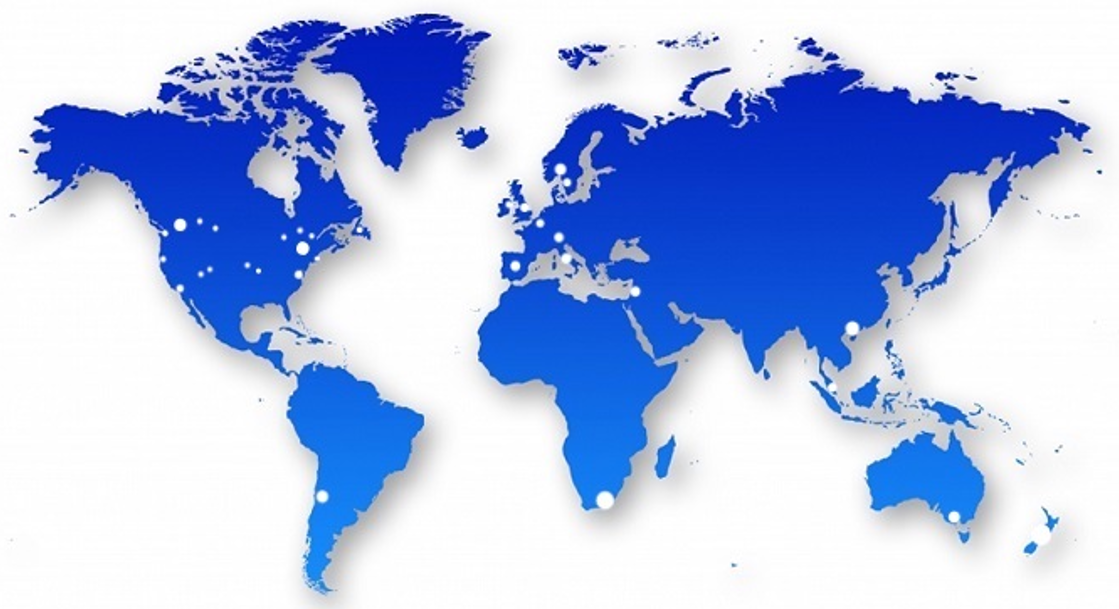
Figure 1. Global presence of mindful practice in medicine programs (locations of intensive workshops or advanced teacher trainees)
III. GLOBAL APPLICATIONS ACROSS LEVELS OF MEDICAL EDUCATION
A. Undergraduate Medical Training, University of Fribourg, Switzerland
Dr. Raphael Bonvin, an MPIM Advanced Teacher Training graduate, came to the University of Fribourg Faculty of Science and Medicine to improve academic performance by addressing the intrinsic motivations of undergraduate medical students. Directing the second half of the six-year undergraduate medical education curriculum, he has embedded pedagogy and programs influenced by MPIM. The new curriculum highlights contemplative practices, self-awareness and self-care, mind-body medicine, and a humanistic approach to assessments that focus on formative assessment as a primary motivator of the development of individual learning plans with the goal of improved preparation for graduate medical training and the practice of medicine. Outcomes to date of this curricular redesign, now in its fifth year, demonstrate this program as leading Swiss medical schools’ federal licensing exam scores that reflect clinical skills and knowledge. The undergraduate medical education at Fribourg also demonstrates significantly improved sense of autonomy and efficacy among graduates who have now moved on to graduate medical training programs.
B. School of Medicine, The University of Missouri Kansas City, USA
Dr. Jodi Jackson, an MPIM Advanced Teacher Training graduate, created the Mindfulness in Medicine Scholars Program, now in its second full year. It is a yearlong training program for a combined group of undergraduate medical students and medical school faculty with a goal of enhancing self-awareness, professional relationships, quality of medical care, and personal wellness, leading to a designation for the students of Distinction in Mindfulness in Medicine upon graduation. The program is based directly on the MPIM formal curriculum and taught over a ten-month period. Outcomes to date (not yet published) have demonstrated significant improvements in self-efficacy, mindfulness, and burnout for students, and improvements in mindfulness and burnout for faculty.
C. University of Warwick Medical School, West Midlands, UK
Dr. Majid Khan, an MPIM Advanced Teacher Training graduate, and Dr. Manuel Villareal, an MPIM Facilitator Training graduate, along with their colleague Dr. Petra Hanson, have developed an MPIM program for graduate medical education general practitioner trainees in the United Kingdom. They have demonstrated not only feasibility for this program but also significant improvements in burnout, wellbeing, engagement, stress, and mindfulness. Based on these findings they are implementing a more widespread integration of this MPIM program into other graduate medical training programs at their institution.
D. Barwon Health, Geelong, Victoria, Australia
Based on his experience as an MPIM Advanced Teacher Training graduate, and to introduce MPIM to clinician members of his hospital staff, Dr. Ross Carne has created an MPIM-informed program called Belonging in Medicine which is delivered as a post-graduate educational experience within a community hospital setting. Feedback from the first few cohorts of this program include a request for more MPIM-informed programming for medical staff, a strong recommendation of the program to physicians more junior in training to support their professional development and health, and a greater sense of connection of participants with their colleagues, their work, and themselves.
E. University of Calgary Cumming School of Medicine, Calgary, Alberta, Canada
Dr. Todd Hill and Dr. Ward Flemon, both MPIM Facilitator Training graduates, have engaged senior leadership at their institution to support the training of a critical number of MPIM facilitators within their institution with the goal of embedding MPIM-informed programs vertically and longitudinally into the healthcare institution at every level (undergraduate, graduate, and post-graduate medical education as well as more broadly across other health professional teams such as behavioral health, nursing, public health, and community health). Over the past several years over one-hundred thirty faculty physicians and medical trainees have undergone MPIM Core Training, and sixteen faculty have recently completed the MPIM Facilitator Training and are now developing and implementing MPIM-informed interventions that are supported by senior administration leadership within their academic medical center to improve the institutional culture, the work experience of health professionals, and the quality of care delivered to patients.
IV. CONCLUSION
The increasing prevalence of burnout among healthcare professionals jeopardises the well-being of the practitioners, adversely affects patient care, and imposes significant economic burdens on healthcare systems. Addressing this issue necessitates creative and comprehensive organisational strategies that impact underlying systemic and cultural factors. The healthcare system globally finds itself in the initial stages of developing feasible, effective, and scalable interventions to address this problem, and requires more efforts to succeed.
The MPIM program, with its flexibility, broad applications as demonstrated in this Global Perspective across educational domains within medical training and healthcare delivery, and its global presence, represents one such intervention. MPIM programs integrate individual and group skills training that are relevant to the multiple layers of stakeholders within Medicine and focuses not solely on individual factors. As a result of MPIM’s impact on the experience of learners from levels of students to seasoned clinicians, it also function as a systemic change dynamic, creating ripples of effects horizontally (to other learners at the participant’s level), as well as vertically (to teams and staff as well as leadership and management), and thereby effects positive changes within the nested relationships in healthcare systems (the patients, the colleagues, the staff, the leaders, the management, and the larger community).
The challenges of scaling this program to impact larger numbers of healthcare systems and communities are significant, but not unsolvable. More research is required to consolidate MPIM’s feasibility and scalability as well as its impact on end points such as quality measures of patient care, sustainability of health professional wellbeing improvements, diminished job turnover, and demonstrable healthcare cost benefits. However daunting these challenges seem, the examples featured in this perspective provide a foundation for solutions. Equipping committed and trained health professionals with the facilitation and orgainsational skills and experience to design MPIM interventions tailored to their specific community’s needs provide the key. These efforts have the potential for more widespread acceptance, impact, and improvements in the experience of care and the experience of caring for both the patients we serve, and the professionals we are.
Notes on Contributors
Michael Krasner contributed to the conception of the work, the acquisition of data for the work, drafts the work or revising it critically for important intellectual content, approves the final version to be published, and agrees to be accountable for all aspects of the work.
Acknowledgement
The author acknowledges the commitment and creativity of the colleagues mentioned, listed in alphabetical order: Raphael Bonvin, M.D., Ross Carne, M.B.B.S., M.D., Ward Flemons, M.D., Todd Hill, Ph.D., Jodi Jackson, M.D., Majid Khan, M.D., & Manuel Villareal, M.D.
Funding
There is no funding involved.
Declaration of Interest
The author declares that there are no conflicts of interest.
References
Epstein, R. M., Marshall, F., Sanders, M., & Krasner, M. S. (2022). Effect of an intensive mindful practice workshop on patient-centered compassionate care, clinician well-being, work engagement, and teamwork. Journal of Continuing Education in the Health Professions, 42(1), 19-27. https://doi.org/10.1097/CEH.0000000000000379
Han, S., Shanafelt, T. D., Sinsky, C. A., Awad, K. M., Dyrbye, L. N., Fiscus, L. C., Trockel, M., & Goh, J. (2019). Estimating the attributable cost of physician burnout in the United States. Annals of Internal Medicine, 170(11), 784-790. https://doi.org/10.7326/M18-1422
Krasner, M. S., Epstein, R. M., Beckman, H., Suchman, A. L., Chapman, B., Mooney, C. J., & Quill, T. E. (2009). Association of an educational program in mindful communication with burnout, empathy, and attitudes among primary care physicians. JAMA, 302(12), 1284-1293. https://doi.org/10.1001/jama.2009.1384
Shanafelt, T. D. (2021). Physician well-being 2.0: Where are we and where are we going? Mayo Clinic Proceedings, 96(10), 2682-2693. https://doi.org/10.1016/j.mayocp.2021.06.005
West, C. P., Dyrbye, L. N., & Shanafelt, T. D. (2018). Physician burnout: Contributors, consequences and solutions. Journal of Internal Medicine, 283(6), 516-529. https://doi.org/10.1111/joim.12752
*Michael Krasner
601 Elmwood Ave,
Rochester, NY 14642,
United States
Email: m.krasner@medmal.com
Announcements
- Best Reviewer Awards 2025
TAPS would like to express gratitude and thanks to an extraordinary group of reviewers who are awarded the Best Reviewer Awards for 2025.
Refer here for the list of recipients. - Most Accessed Article 2025
The Most Accessed Article of 2025 goes to Analyses of self-care agency and mindset: A pilot study on Malaysian undergraduate medical students.
Congratulations, Dr Reshma Mohamed Ansari and co-authors! - Best Article Award 2025
The Best Article Award of 2025 goes to From disparity to inclusivity: Narrative review of strategies in medical education to bridge gender inequality.
Congratulations, Dr Han Ting Jillian Yeo and co-authors! - Best Reviewer Awards 2024
TAPS would like to express gratitude and thanks to an extraordinary group of reviewers who are awarded the Best Reviewer Awards for 2024.
Refer here for the list of recipients. - Most Accessed Article 2024
The Most Accessed Article of 2024 goes to Persons with Disabilities (PWD) as patient educators: Effects on medical student attitudes.
Congratulations, Dr Vivien Lee and co-authors! - Best Article Award 2024
The Best Article Award of 2024 goes to Achieving Competency for Year 1 Doctors in Singapore: Comparing Night Float or Traditional Call.
Congratulations, Dr Tan Mae Yue and co-authors! - Best Reviewer Awards 2023
TAPS would like to express gratitude and thanks to an extraordinary group of reviewers who are awarded the Best Reviewer Awards for 2023.
Refer here for the list of recipients. - Most Accessed Article 2023
The Most Accessed Article of 2023 goes to Small, sustainable, steps to success as a scholar in Health Professions Education – Micro (macro and meta) matters.
Congratulations, A/Prof Goh Poh-Sun & Dr Elisabeth Schlegel! - Best Article Award 2023
The Best Article Award of 2023 goes to Increasing the value of Community-Based Education through Interprofessional Education.
Congratulations, Dr Tri Nur Kristina and co-authors! - Best Reviewer Awards 2022
TAPS would like to express gratitude and thanks to an extraordinary group of reviewers who are awarded the Best Reviewer Awards for 2022.
Refer here for the list of recipients. - Most Accessed Article 2022
The Most Accessed Article of 2022 goes to An urgent need to teach complexity science to health science students.
Congratulations, Dr Bhuvan KC and Dr Ravi Shankar. - Best Article Award 2022
The Best Article Award of 2022 goes to From clinician to educator: A scoping review of professional identity and the influence of impostor phenomenon.
Congratulations, Ms Freeman and co-authors.